From Database to Visualization

         Prof Alvarado
          MDST 3705
         5 March 2013
Business
• Quiz 2 to be posted this evening
  – Covers everything between the last quiz and
    last week
  – Database theory and practice
Review
• Last week, we explored the idea of the
  database as a ―symbolic form‖ and ―genre‖
  – The Database is a mode of representation
    comparable to such things a linear perspective in
    painting and the novel in writing
• The Database has certain representational
  qualities
  –   Everything is a list (like an array)
  –   Order does not matter
  –   No inherent beginning or end
  –   Endlessly reconfigurable (SELECT, JOIN, etc.)
Review
• The Database stands in contrast to
  narrative
  – Traditional narrative is sequential and fixed
  – Endings matter; novels have an arc.
• The Database reverses the relationship
  between paradigm and syntagm
  – Traditional works are final products of a
    process that is hidden and forgotten
  – The products of a database are ephemeral
    and contingent – the database itself is the
    thing
Review
• Databases have a logic that is used in the
  arts
  – Stories in which the order of events or
    perspectives are mixed up. Manovich calls the
    ‗database logic‘
  – An example is the film, Man with a Movie
    Camera
• Databases can be more effective than
  books in organizing works of art and
  literature
  – E.g. The Whitman Project
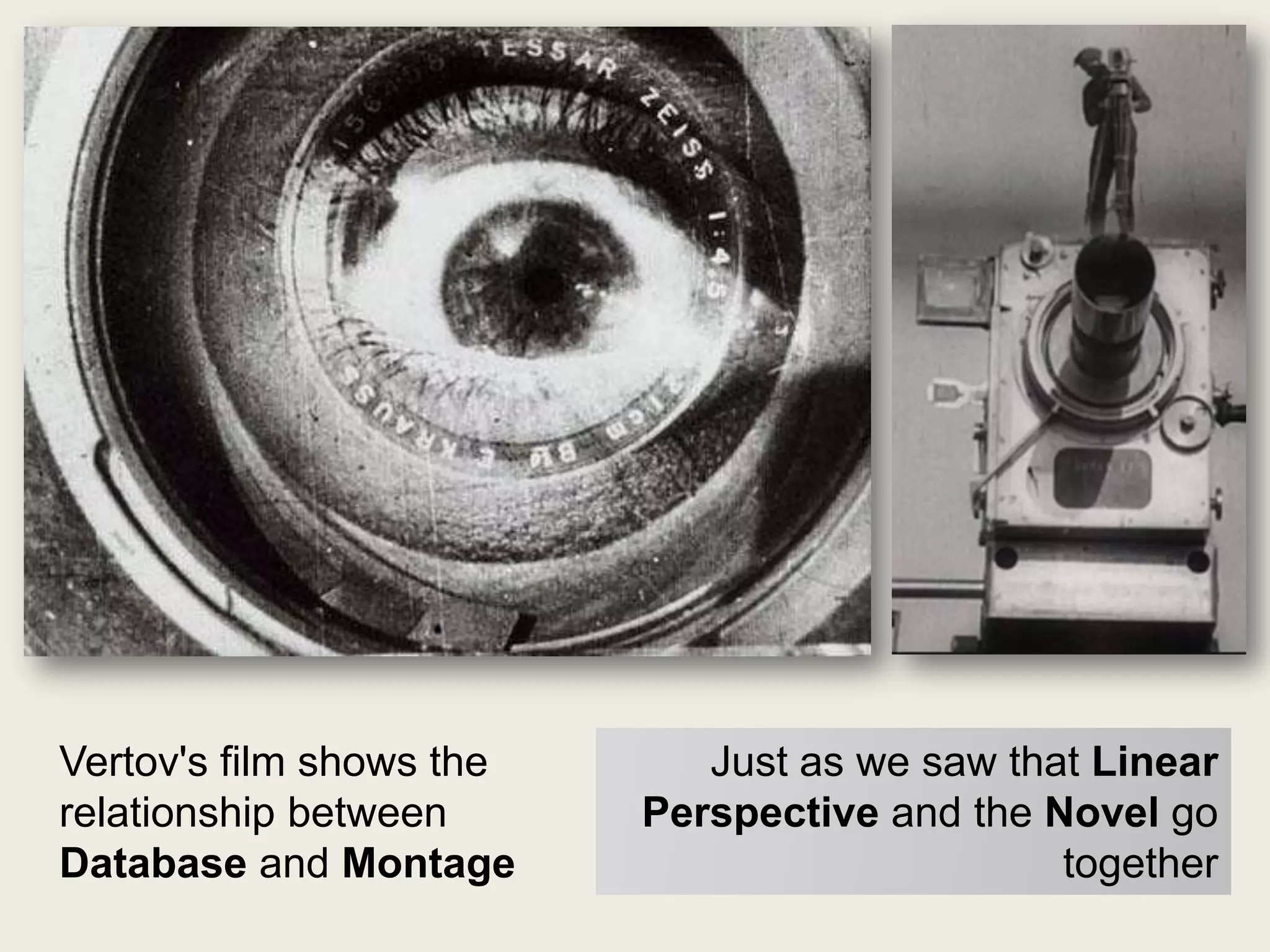
Vertov's film shows the      Just as we saw that Linear
relationship between      Perspective and the Novel go
Database and Montage                           together
Data(bases) can be visualized

More than that, they lend themselves to
             visualization

 Let‘s look at a couple of examples …
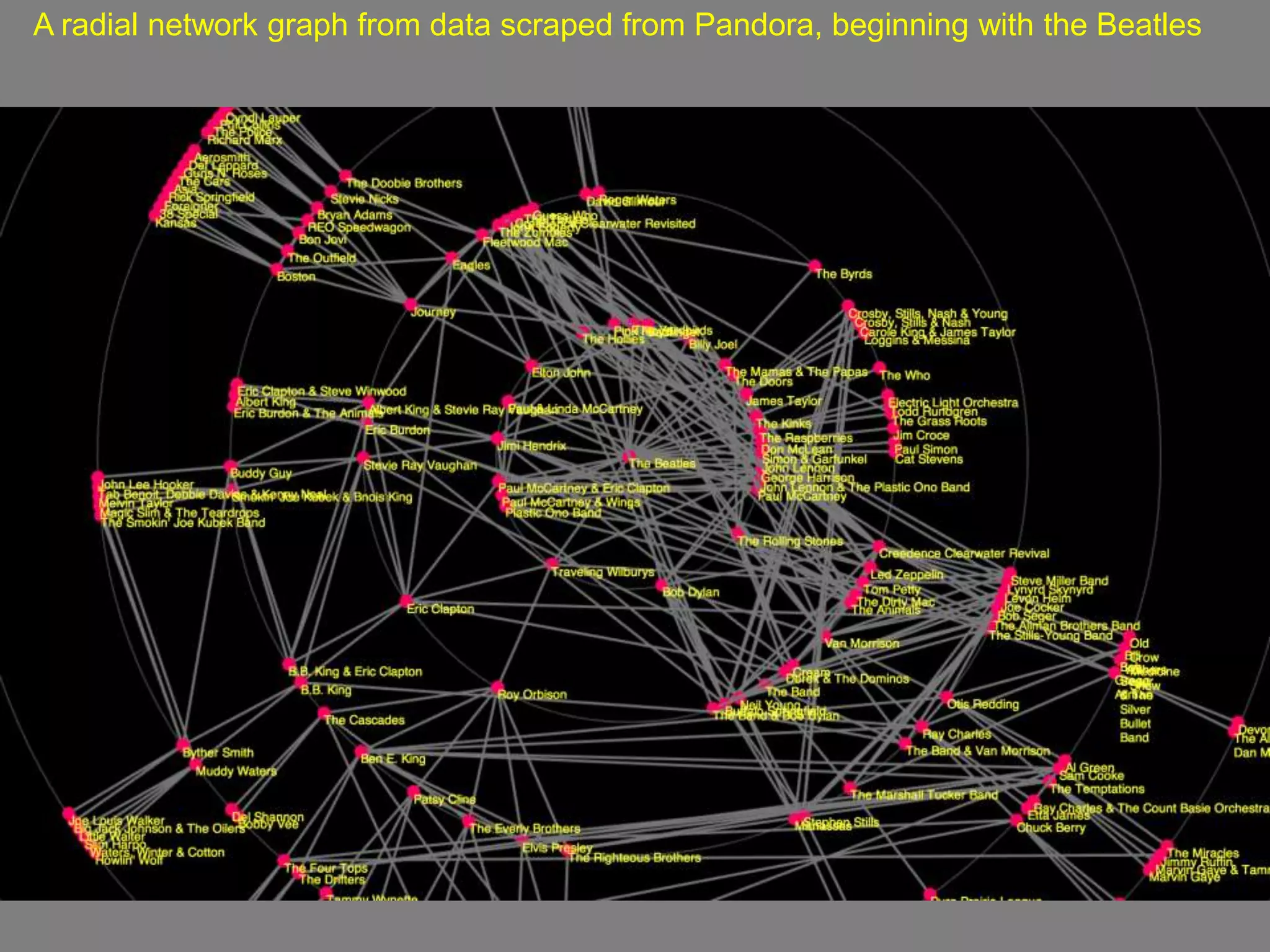
A radial network graph from data scraped from Pandora, beginning with the Beatles
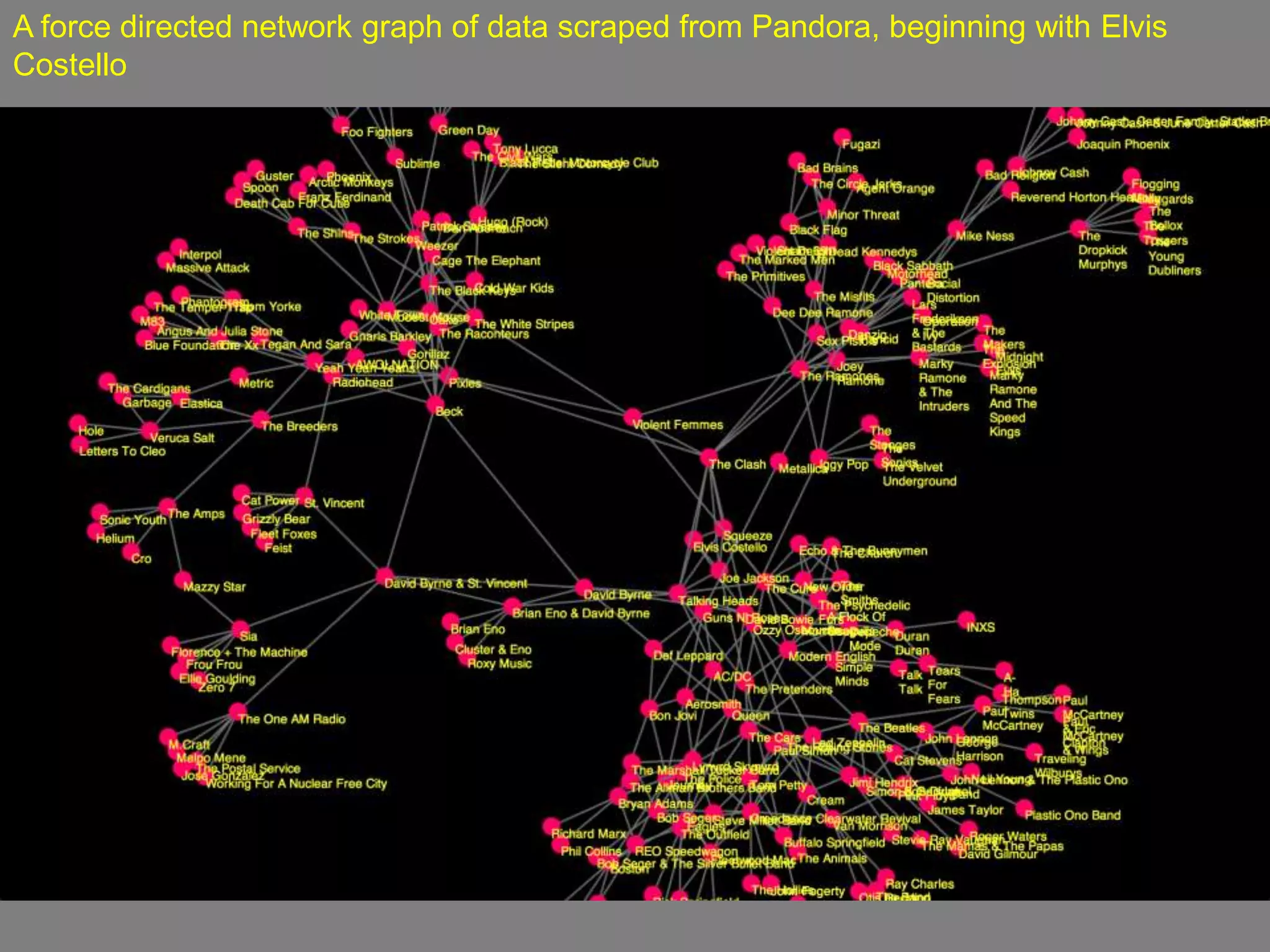
A force directed network graph of data scraped from Pandora, beginning with Elvis
Costello
These network visualizations show the
    database as a genre – a way of
       representing information

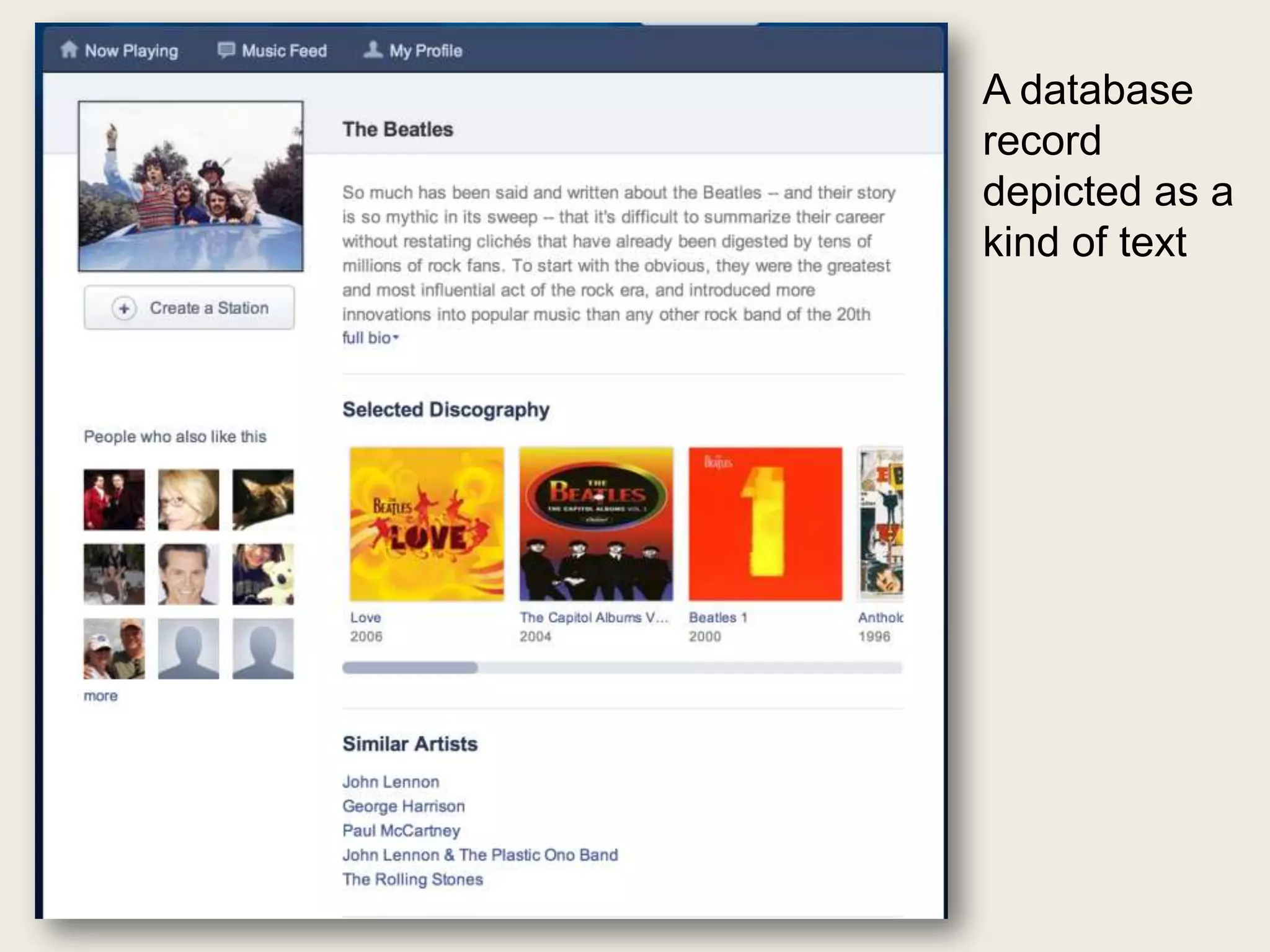
  Compare them to a catalog of musical
artists in a book (itself a kind of database)
A database
record
depicted as a
kind of text
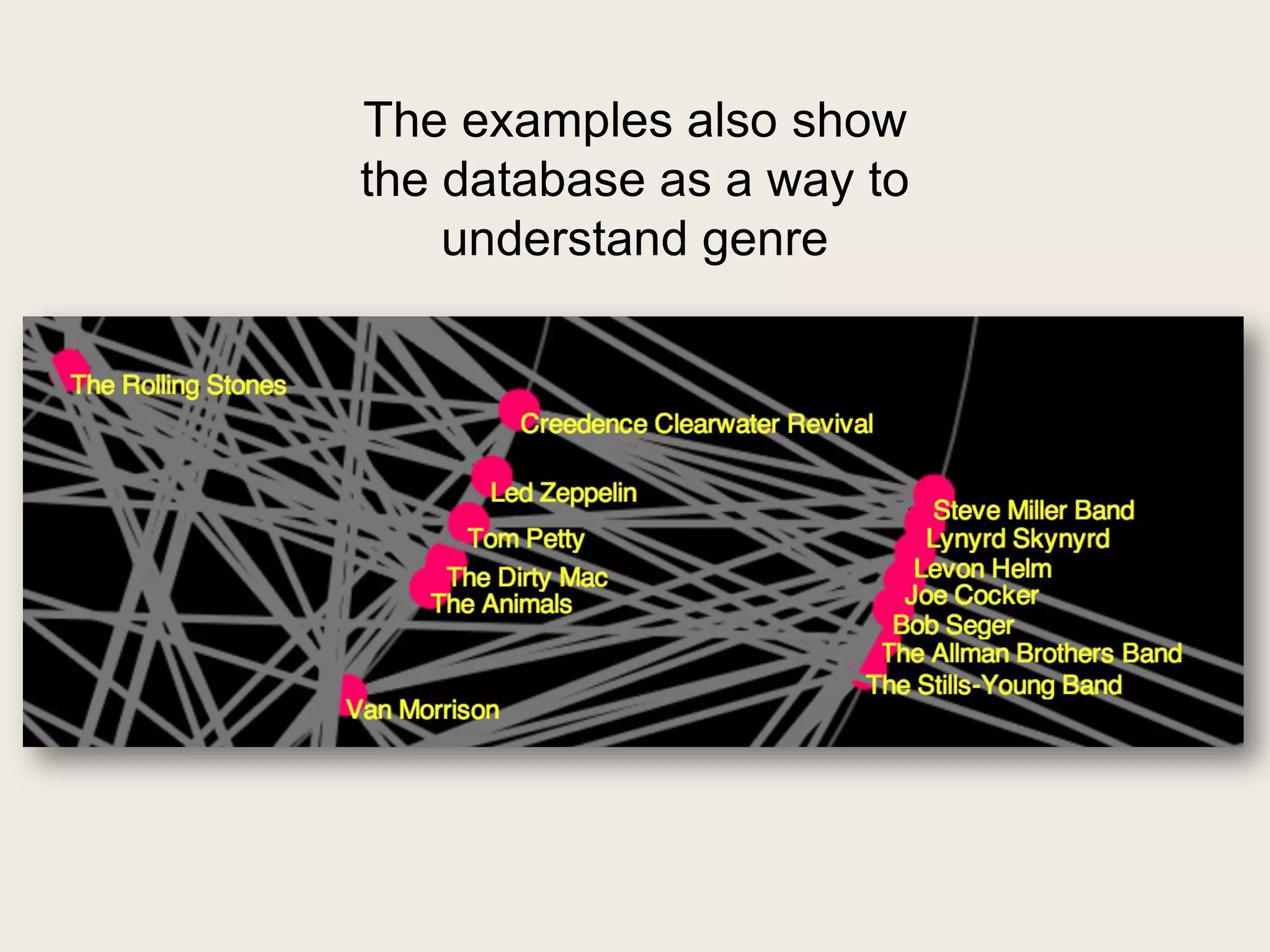
The examples also show
the database as a way to
    understand genre
What is visualization?
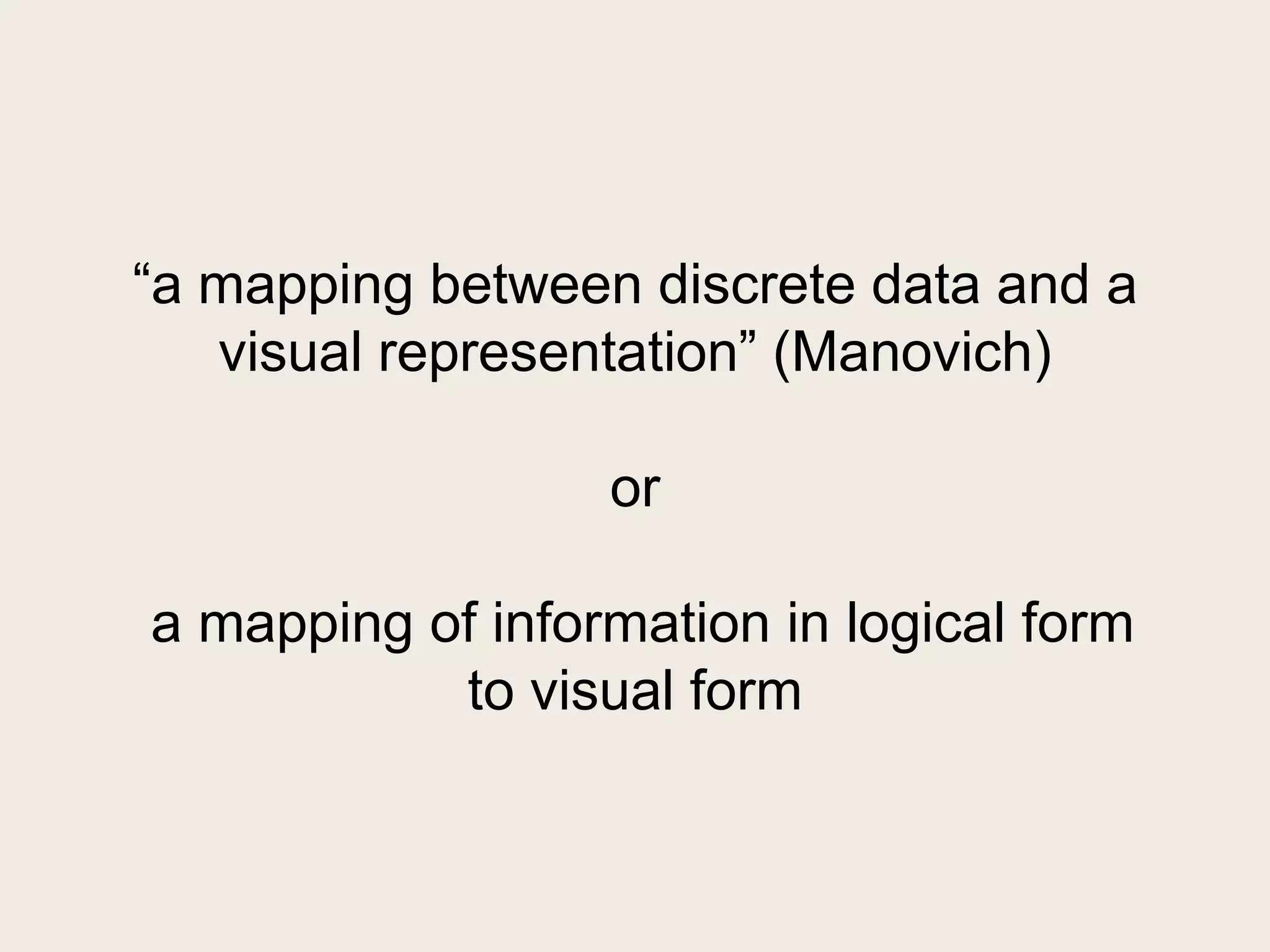
―a mapping between discrete data and a
   visual representation‖ (Manovich)

                  or

a mapping of information in logical form
           to visual form
Manovich defines two types:

 Information Visualization

    Media Visualization
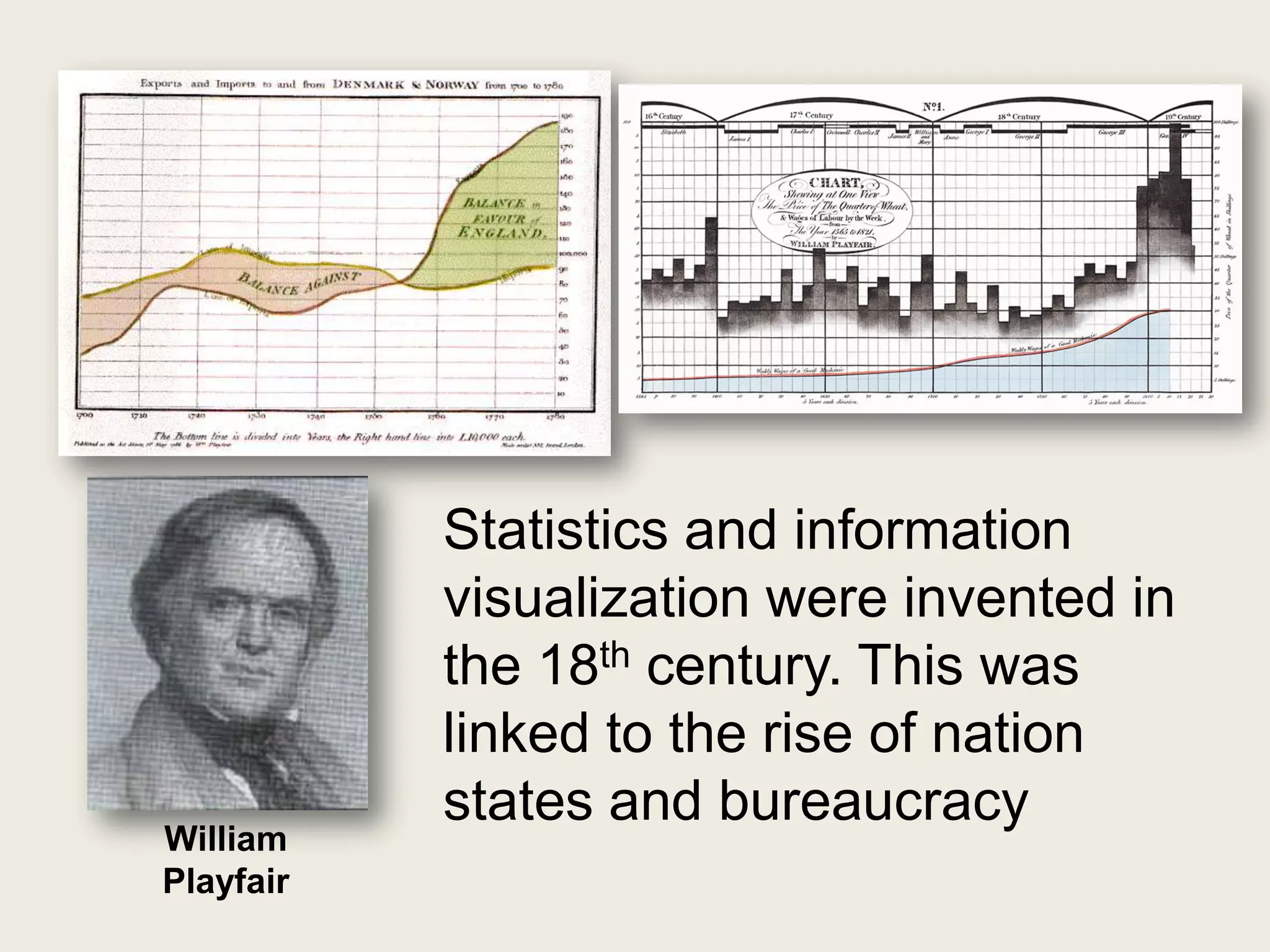
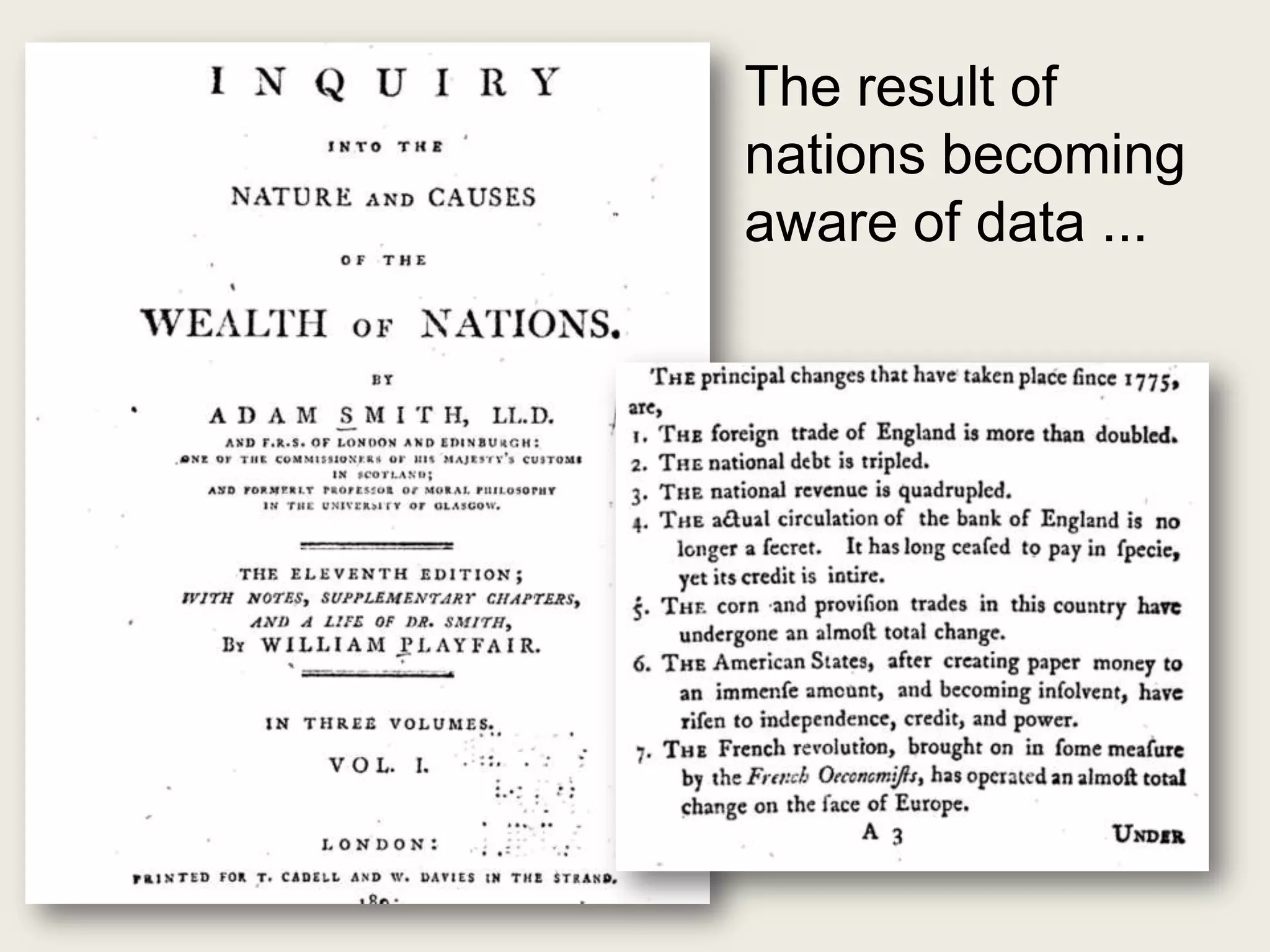
Statistics and information
           visualization were invented in
           the 18th century. This was
           linked to the rise of nation
           states and bureaucracy
William
Playfair
The result of
nations becoming
aware of data ...
According to Manovich, the salient
 features of information visualization are

(1) The reduction of data items to points,
               lines, etc.

                   and

(2) the use of space (size, shape, etc.) as
   the primary vehicle of representation

 Color is used, but as an embellishment
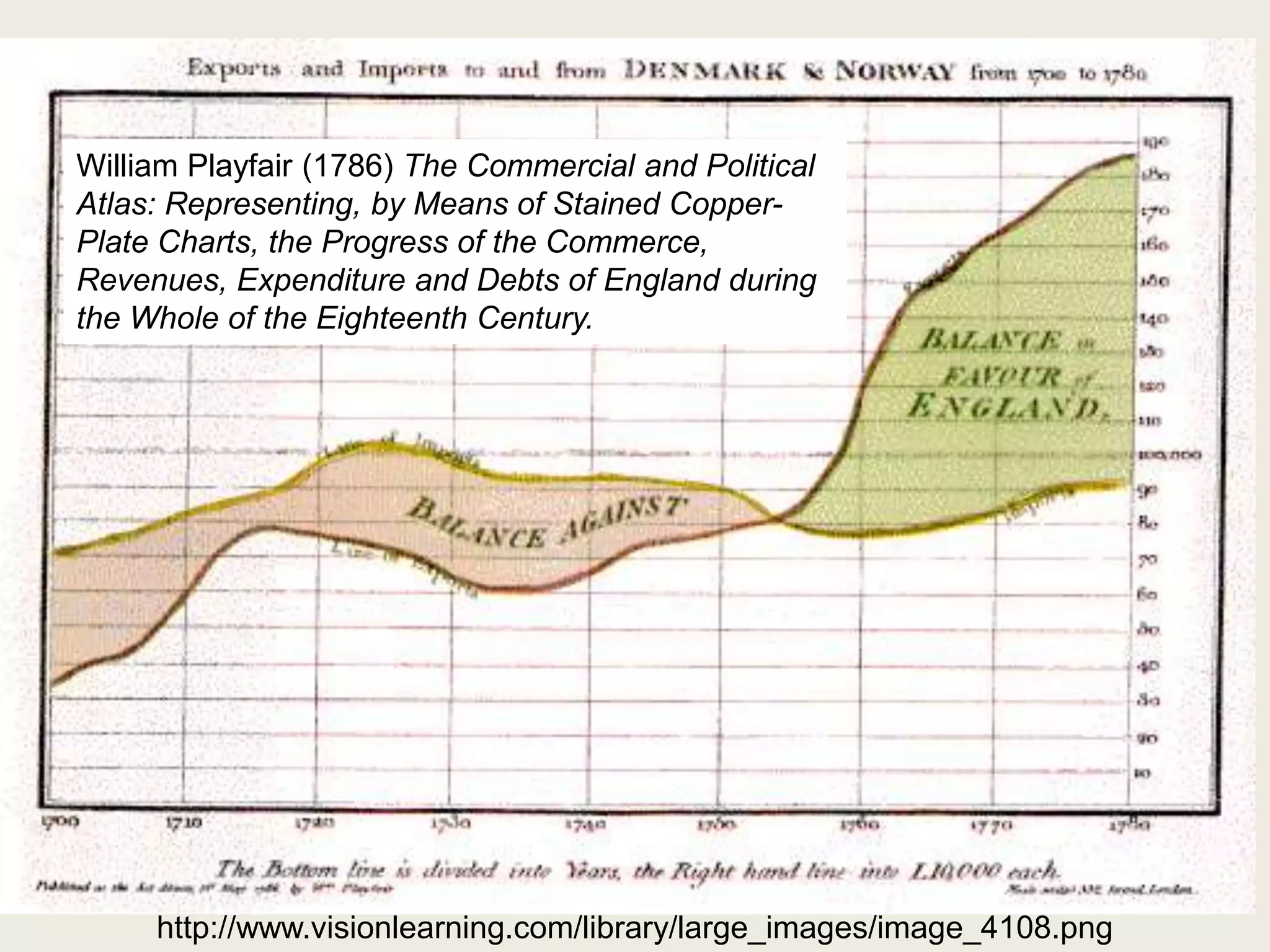
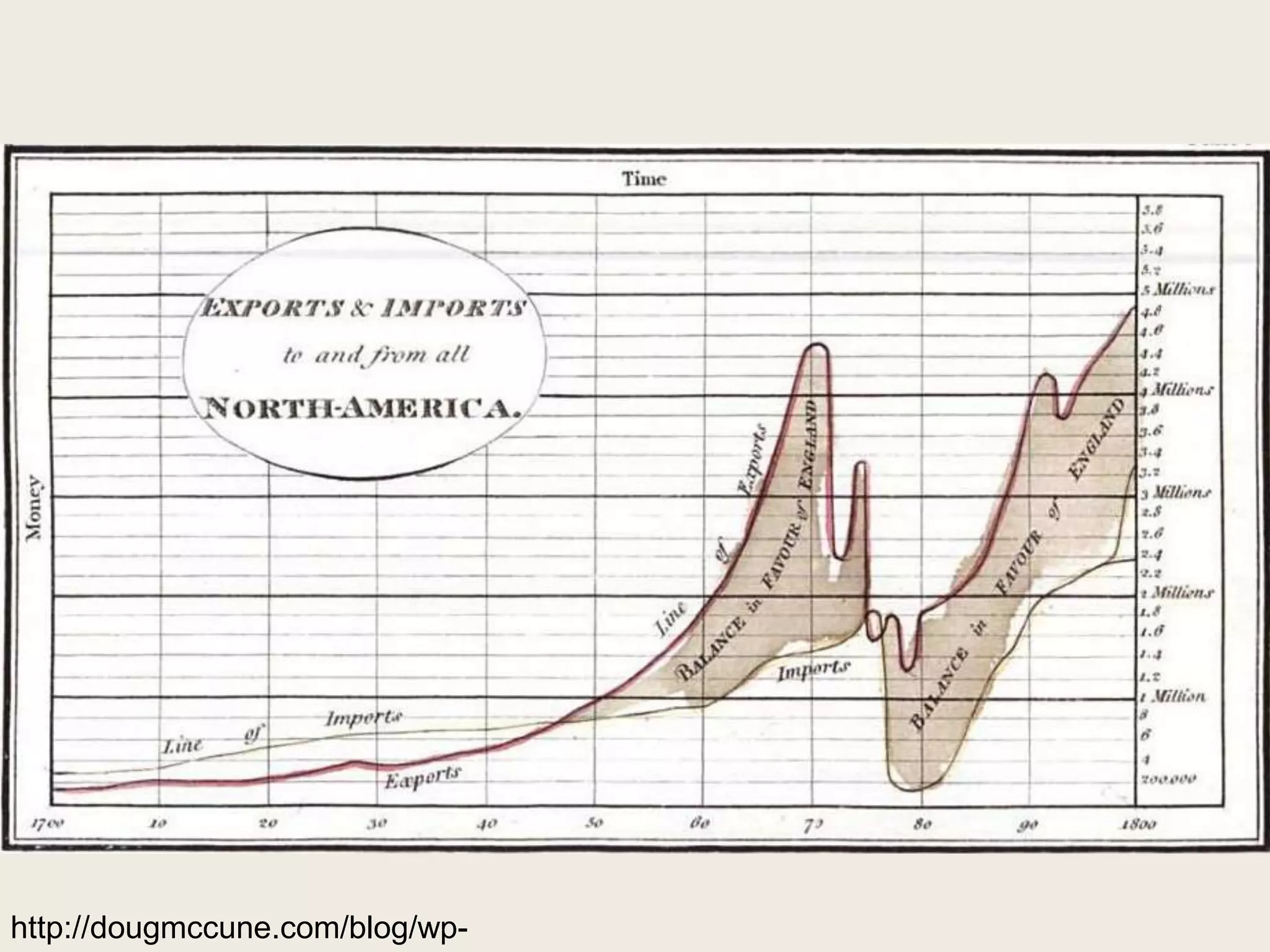
Here are some examples …
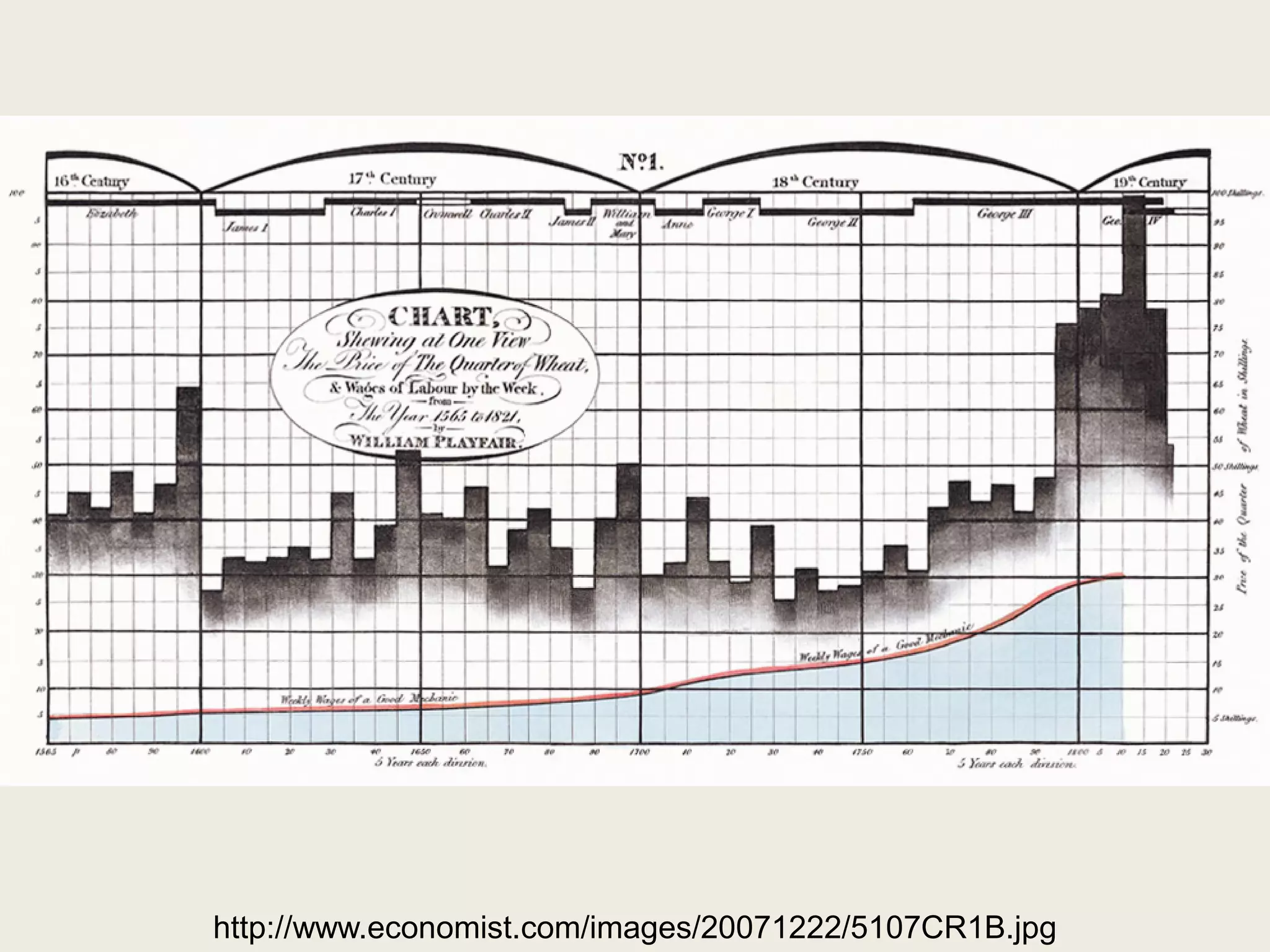
William Playfair (1786) The Commercial and Political
Atlas: Representing, by Means of Stained Copper-
Plate Charts, the Progress of the Commerce,
Revenues, Expenditure and Debts of England during
the Whole of the Eighteenth Century.


     http://www.visionlearning.com/library/large_images/image_4108.png
http://dougmccune.com/blog/wp-
http://www.economist.com/images/20071222/5107CR1B.jpg
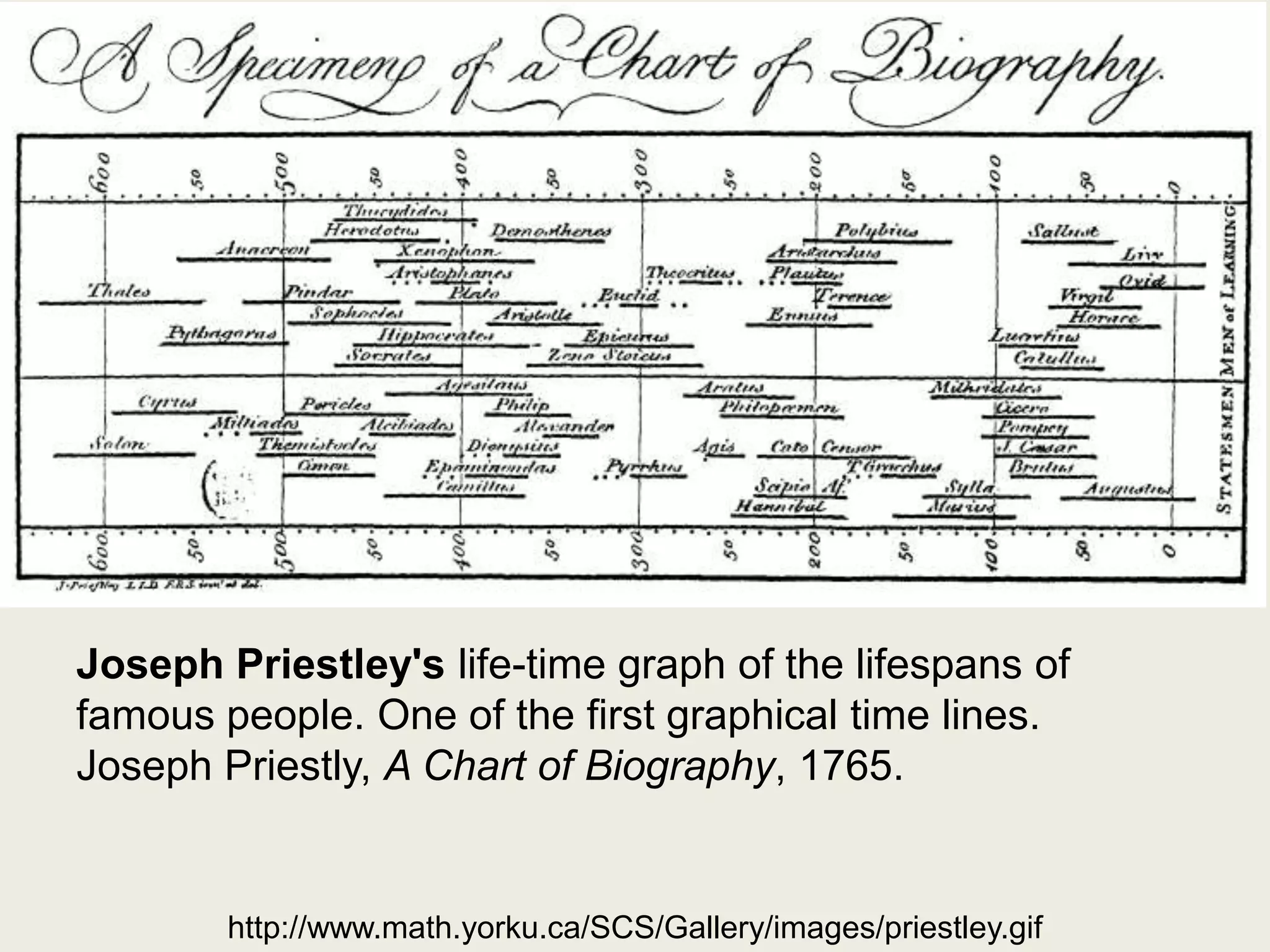
Joseph Priestley's life-time graph of the lifespans of
famous people. One of the first graphical time lines.
Joseph Priestly, A Chart of Biography, 1765.


        http://www.math.yorku.ca/SCS/Gallery/images/priestley.gif
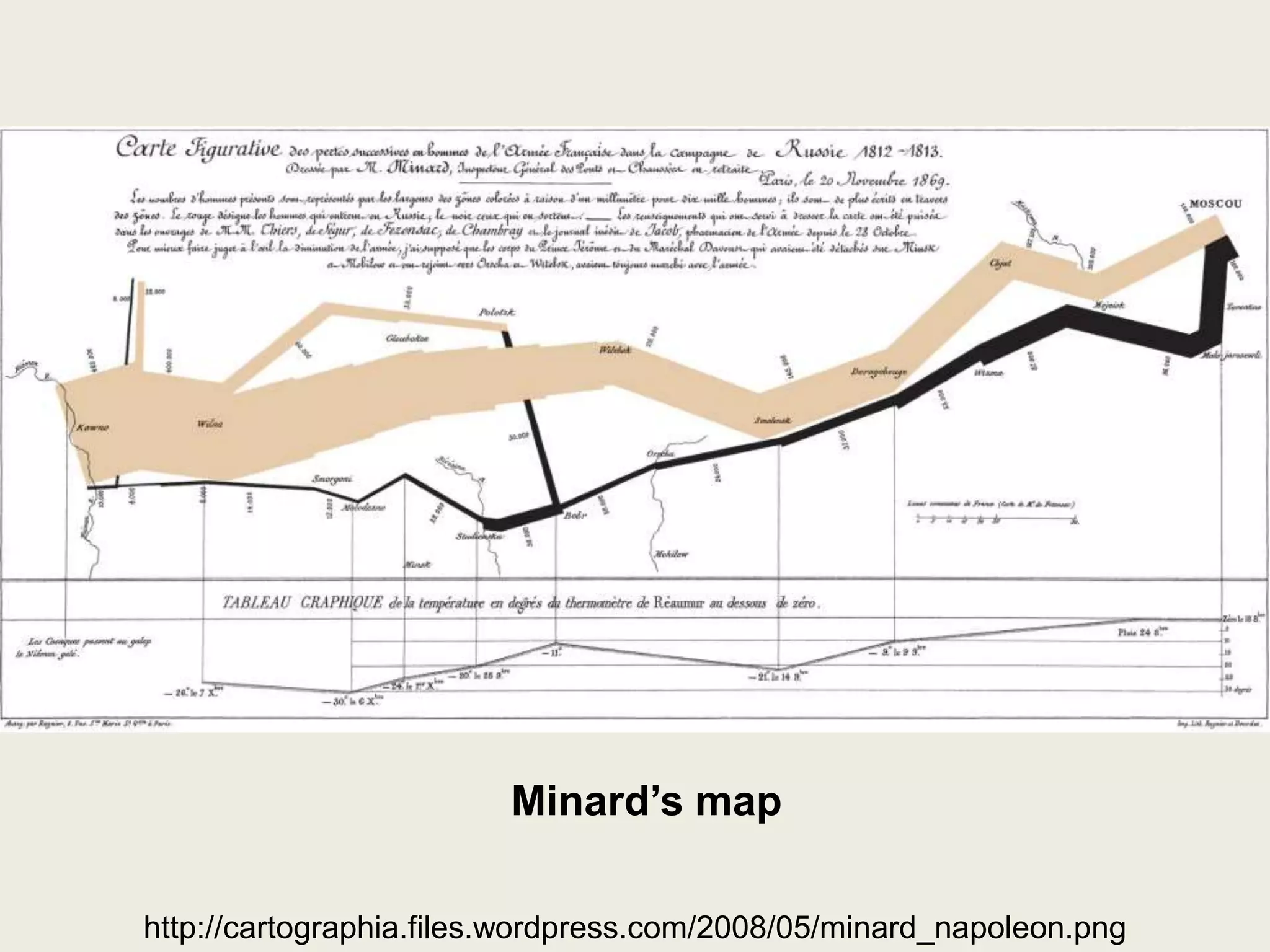
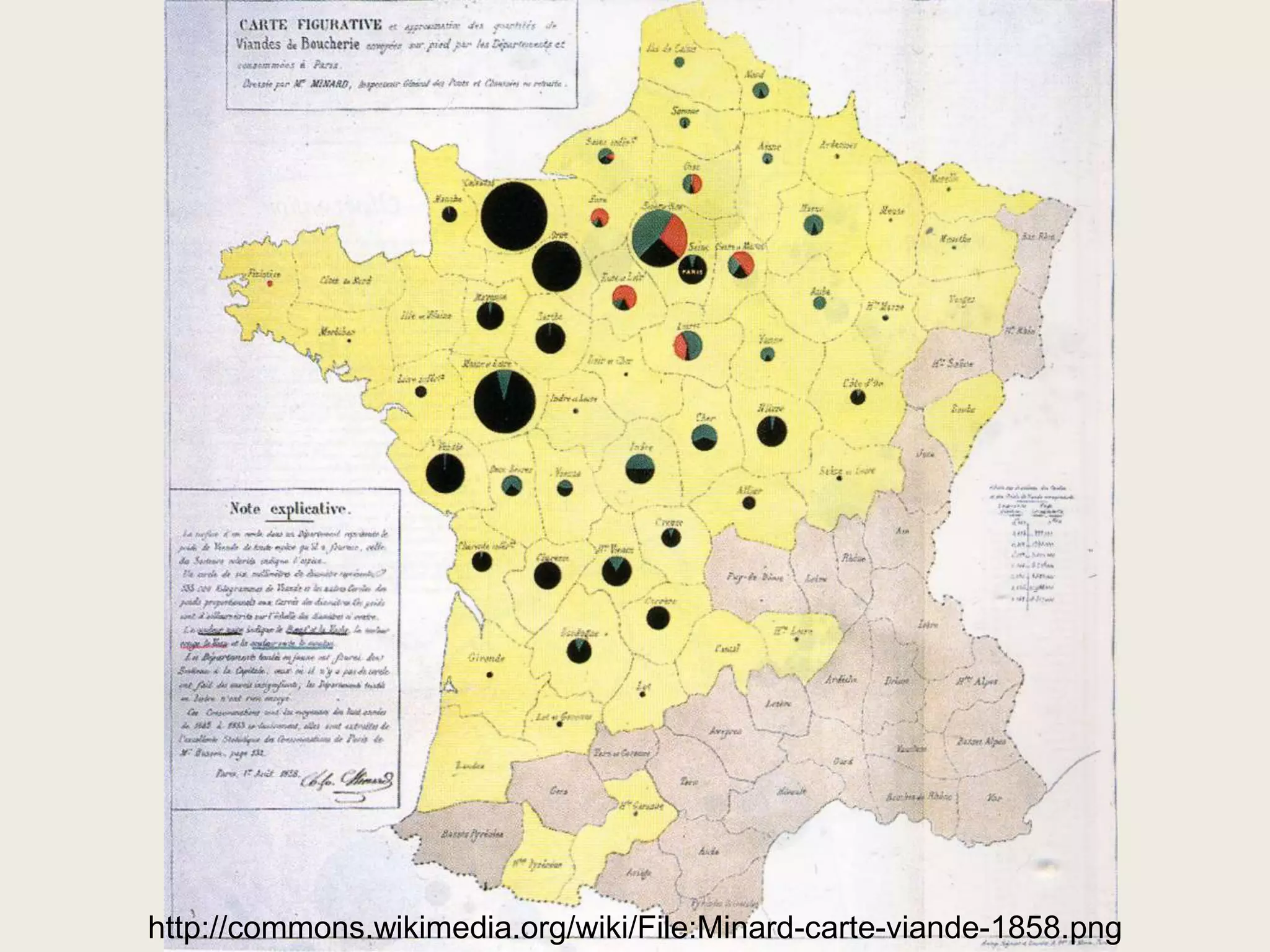
Minard’s map

http://cartographia.files.wordpress.com/2008/05/minard_napoleon.png
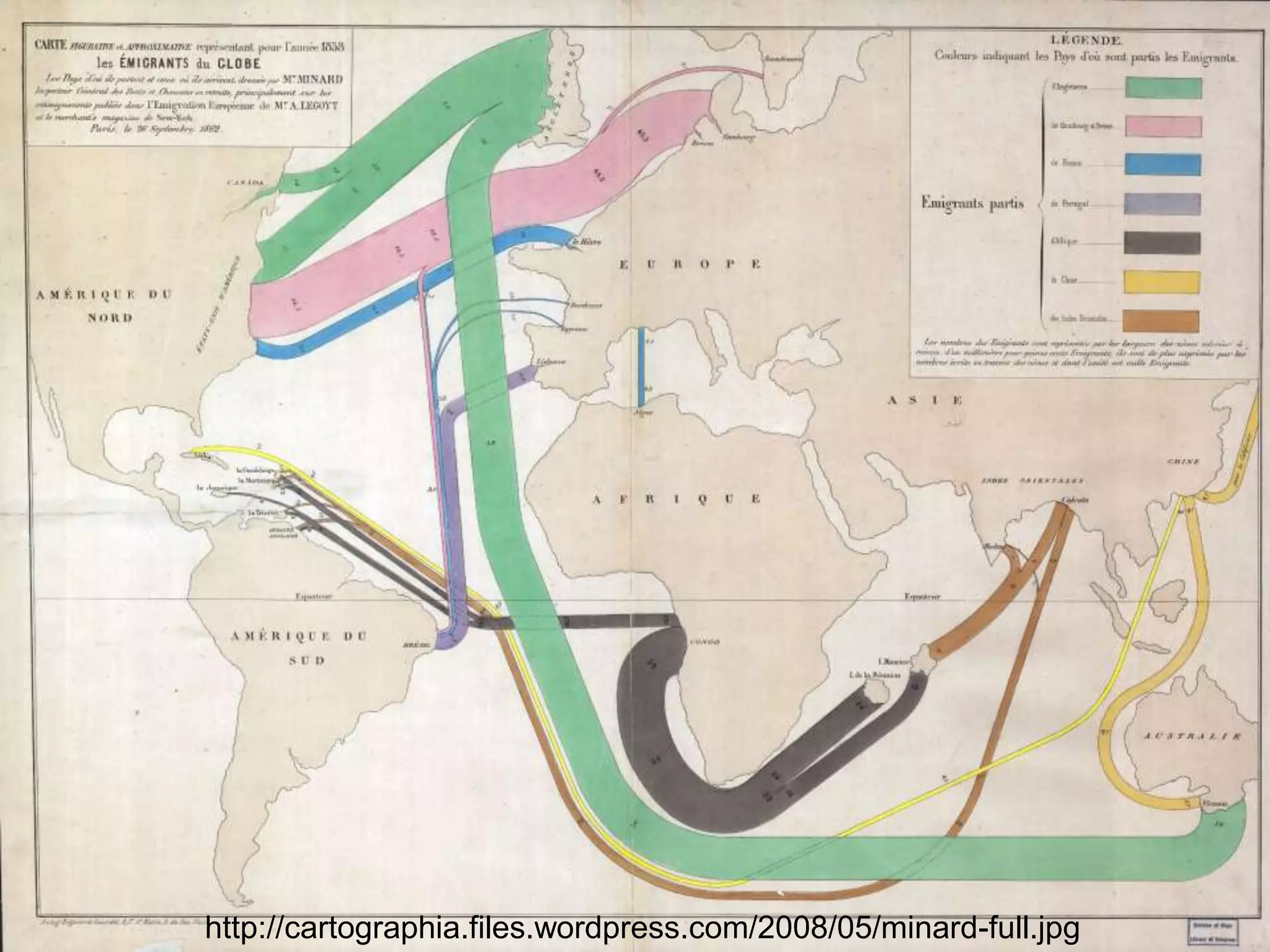
http://cartographia.files.wordpress.com/2008/05/minard-full.jpg
http://commons.wikimedia.org/wiki/File:Minard-carte-viande-1858.png
The difference is that
 information visualizations
reveal patterns in the data,
whereas info graphics use
patterns to present a point
    or to present an idea
Media Visualizations are not essentially
reductive, and they use color as much as
                  space
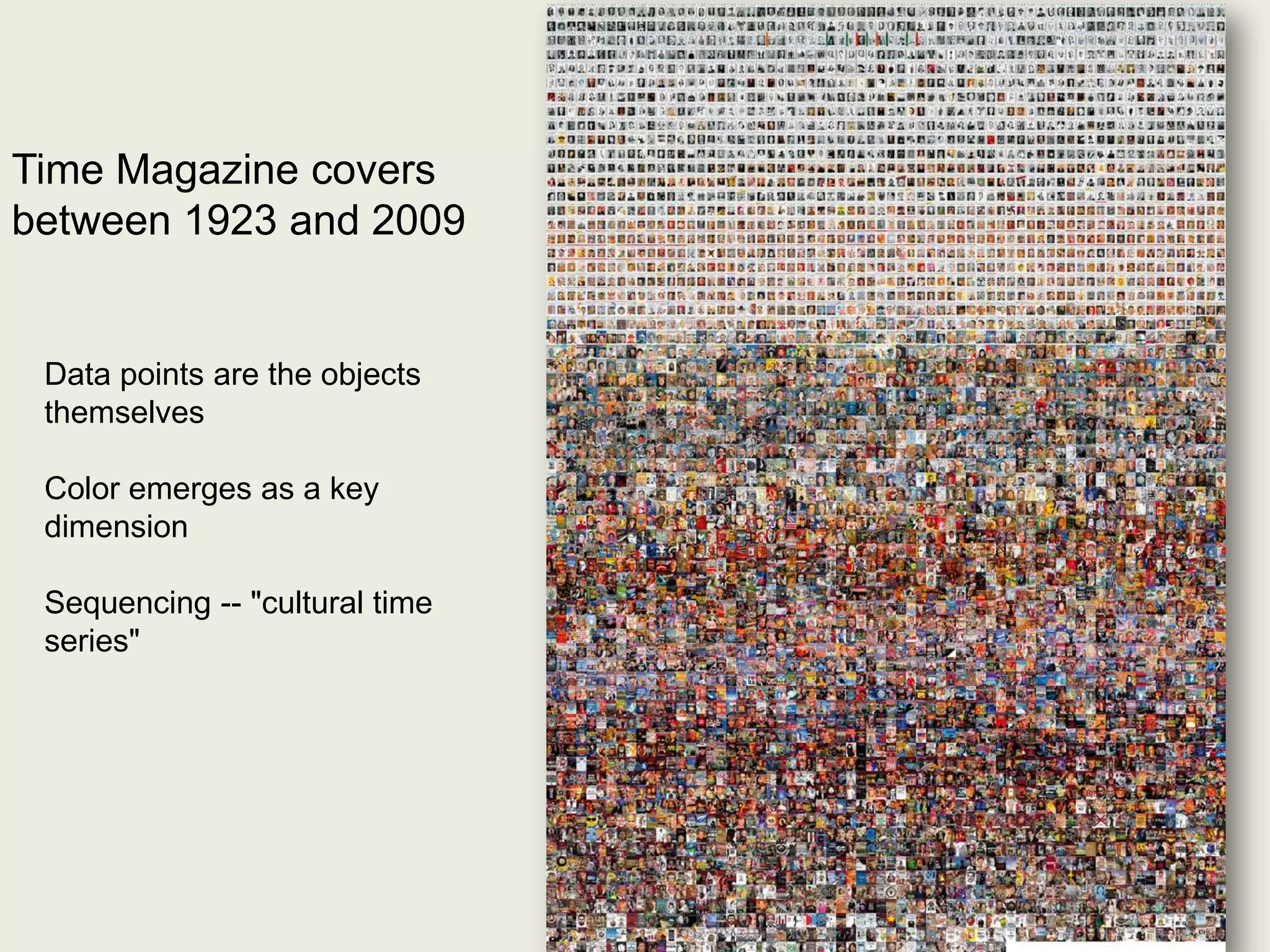
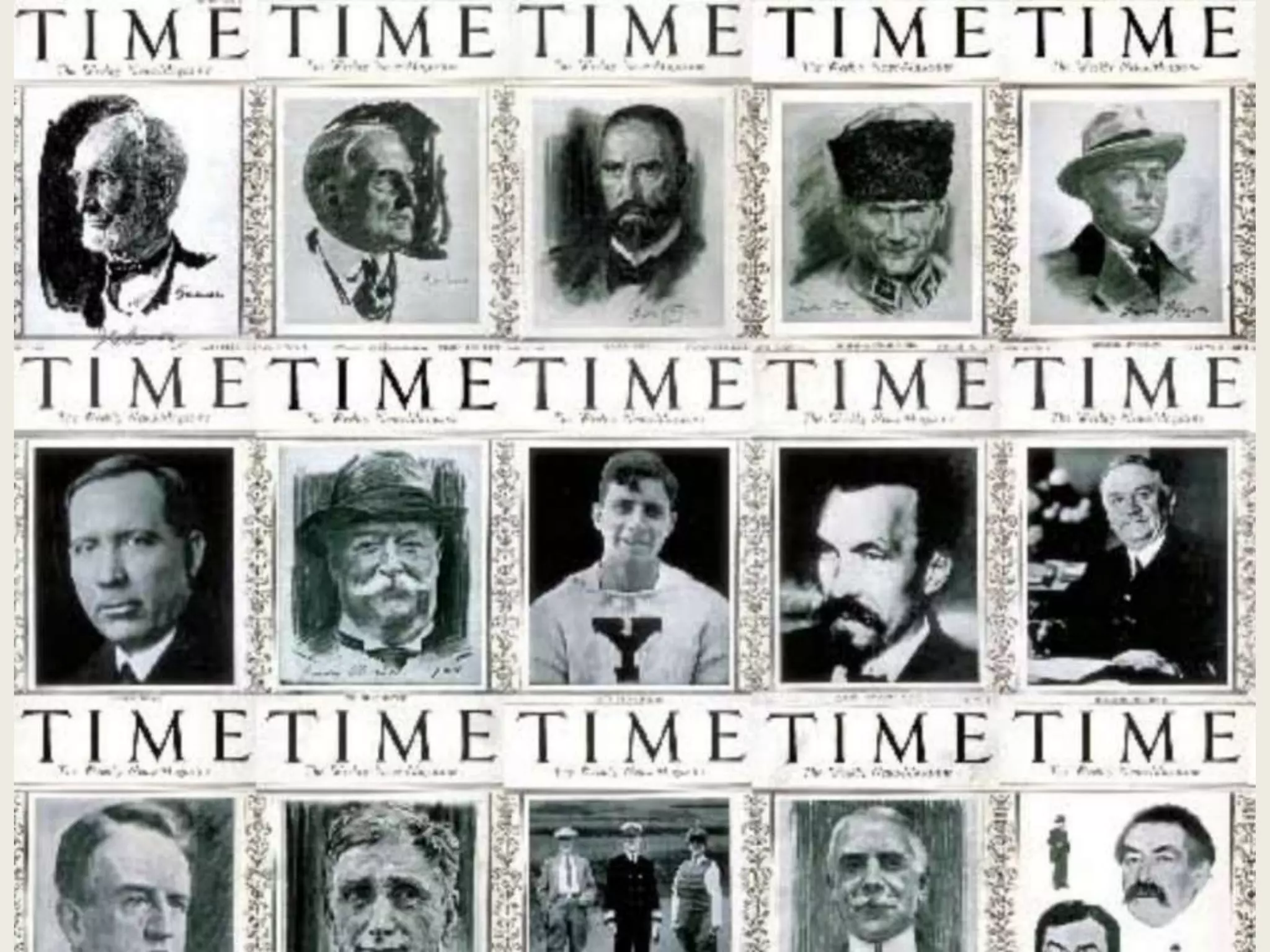
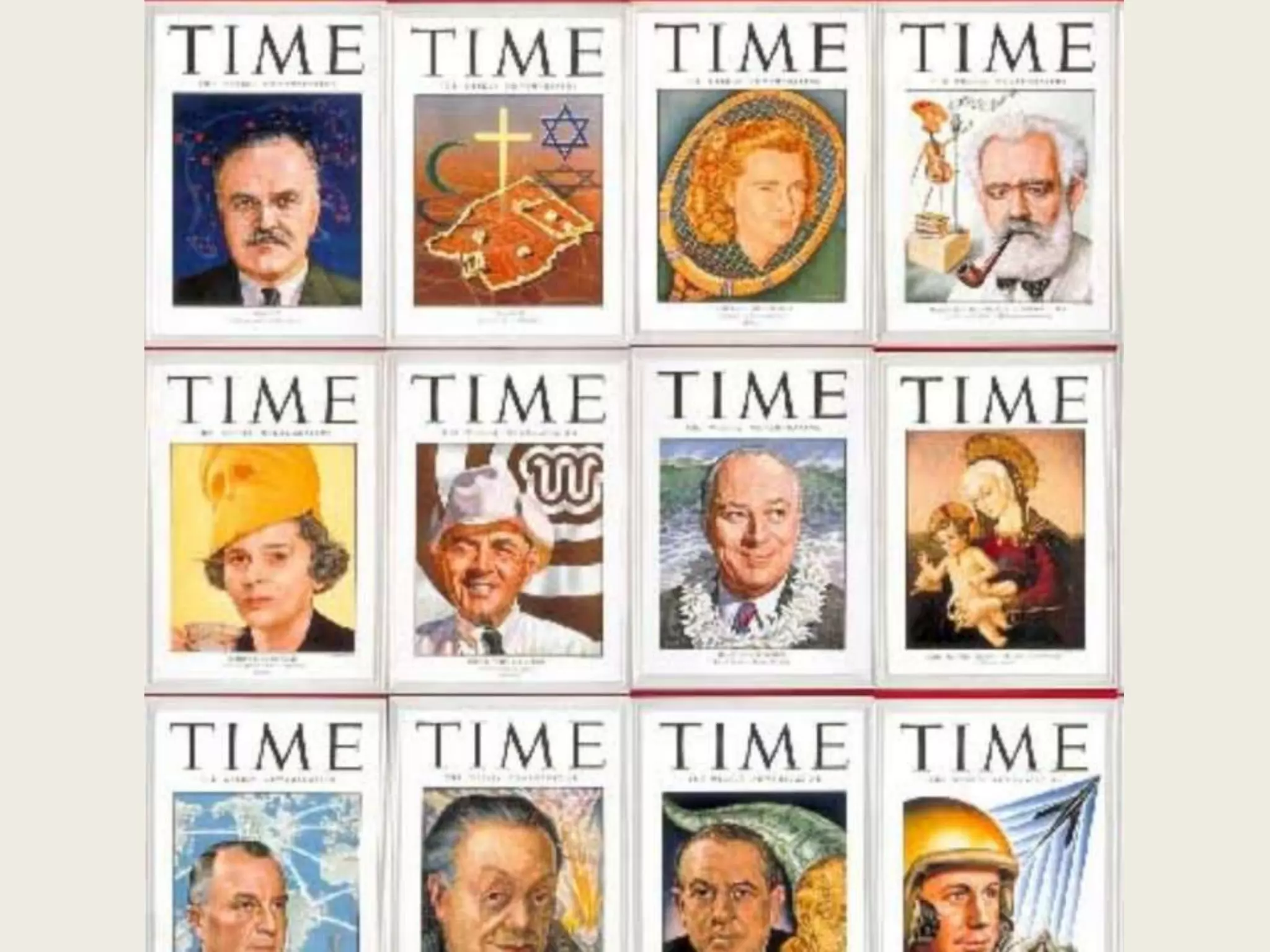
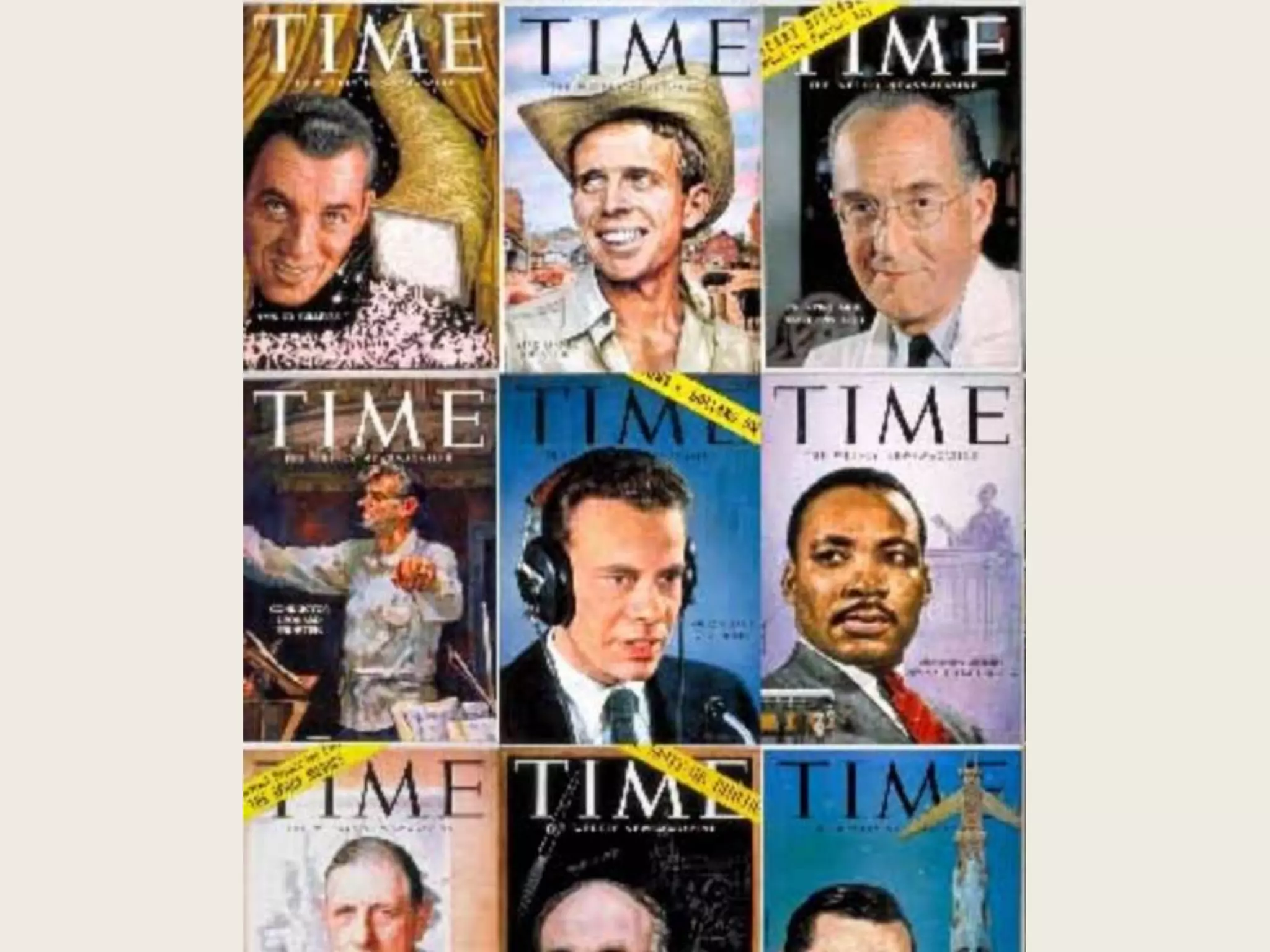
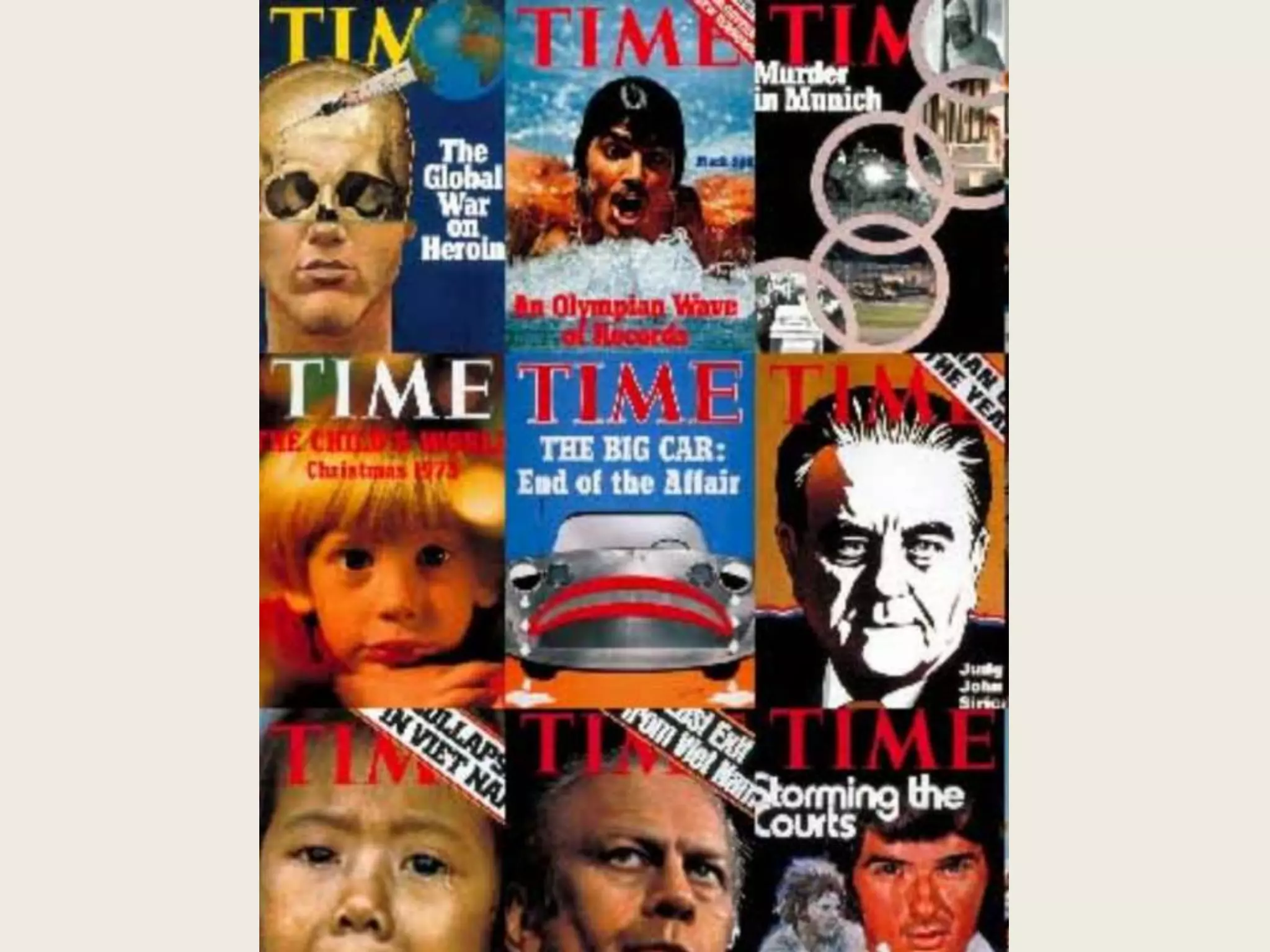
Time Magazine covers
between 1923 and 2009


 Data points are the objects
 themselves

 Color emerges as a key
 dimension

 Sequencing -- "cultural time
 series"
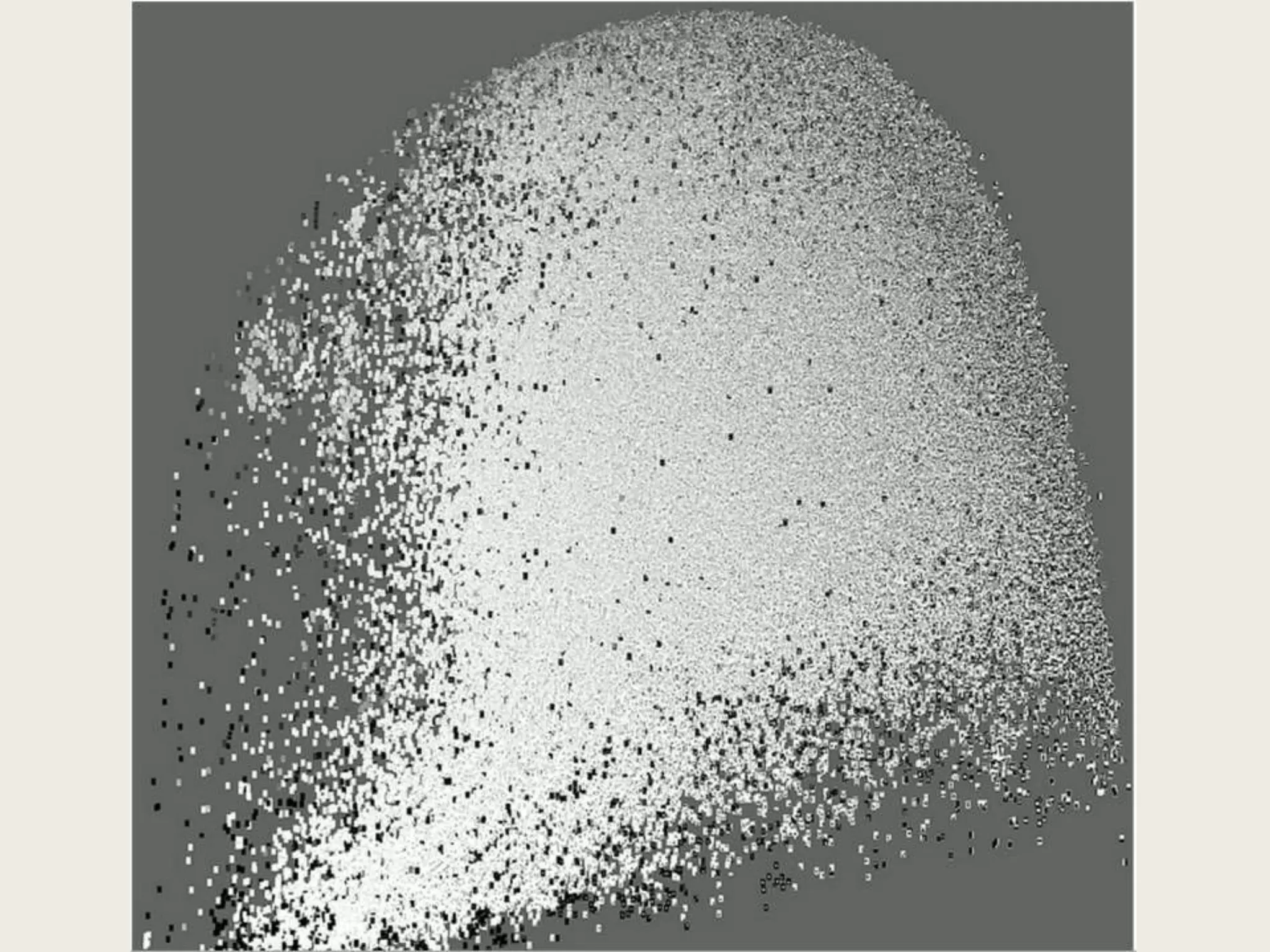
What can you learn from this
      visualization?
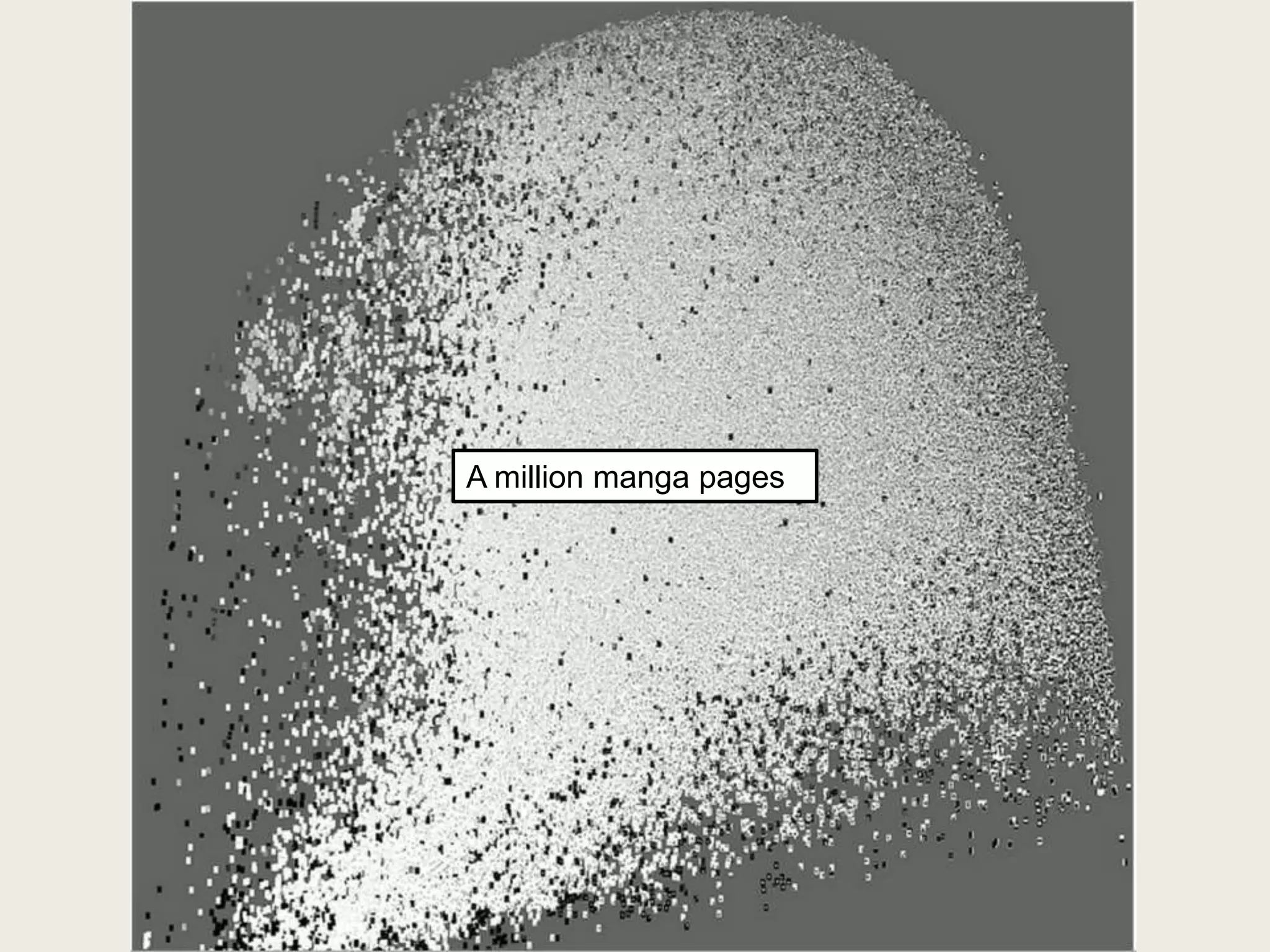
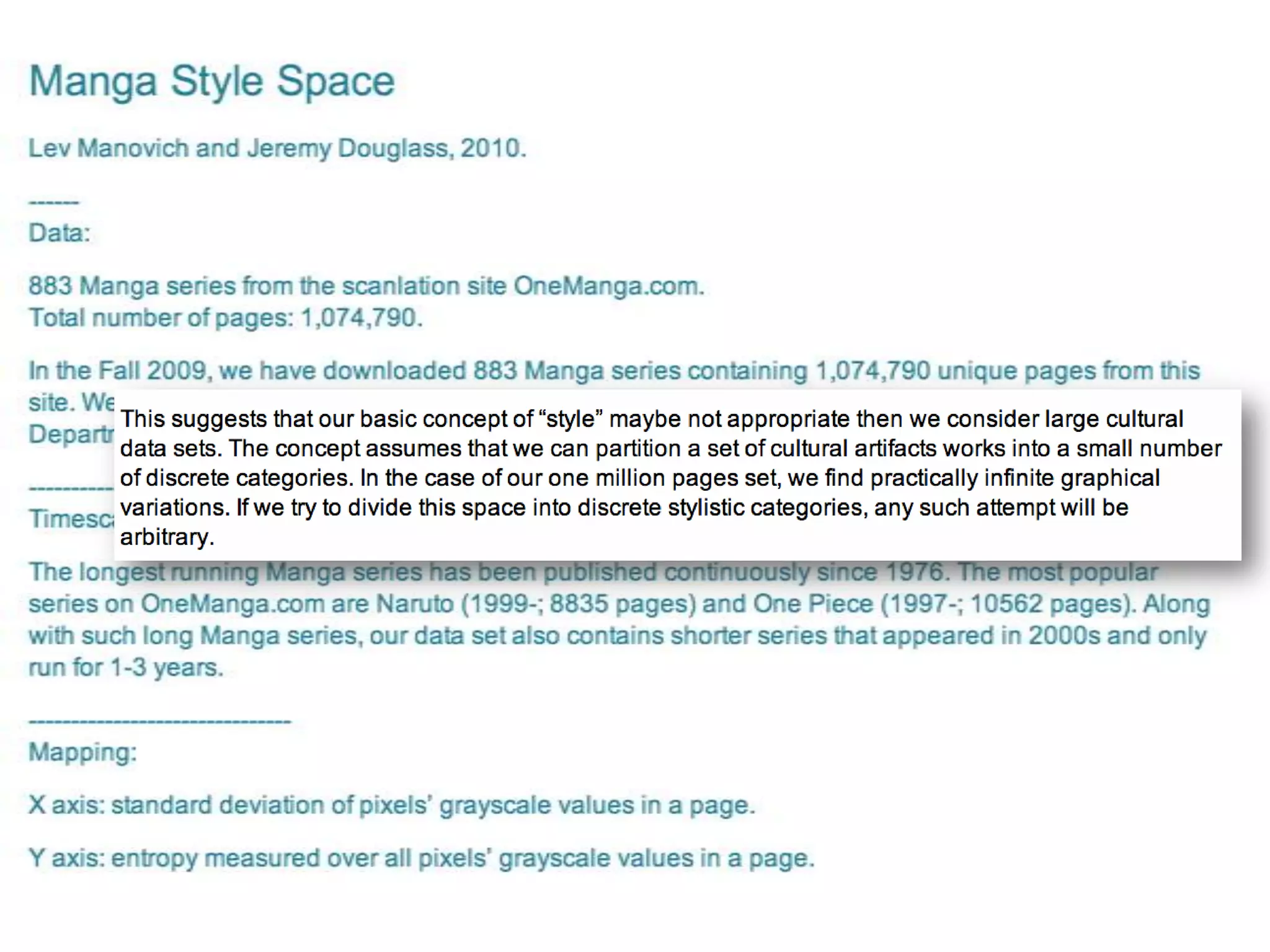
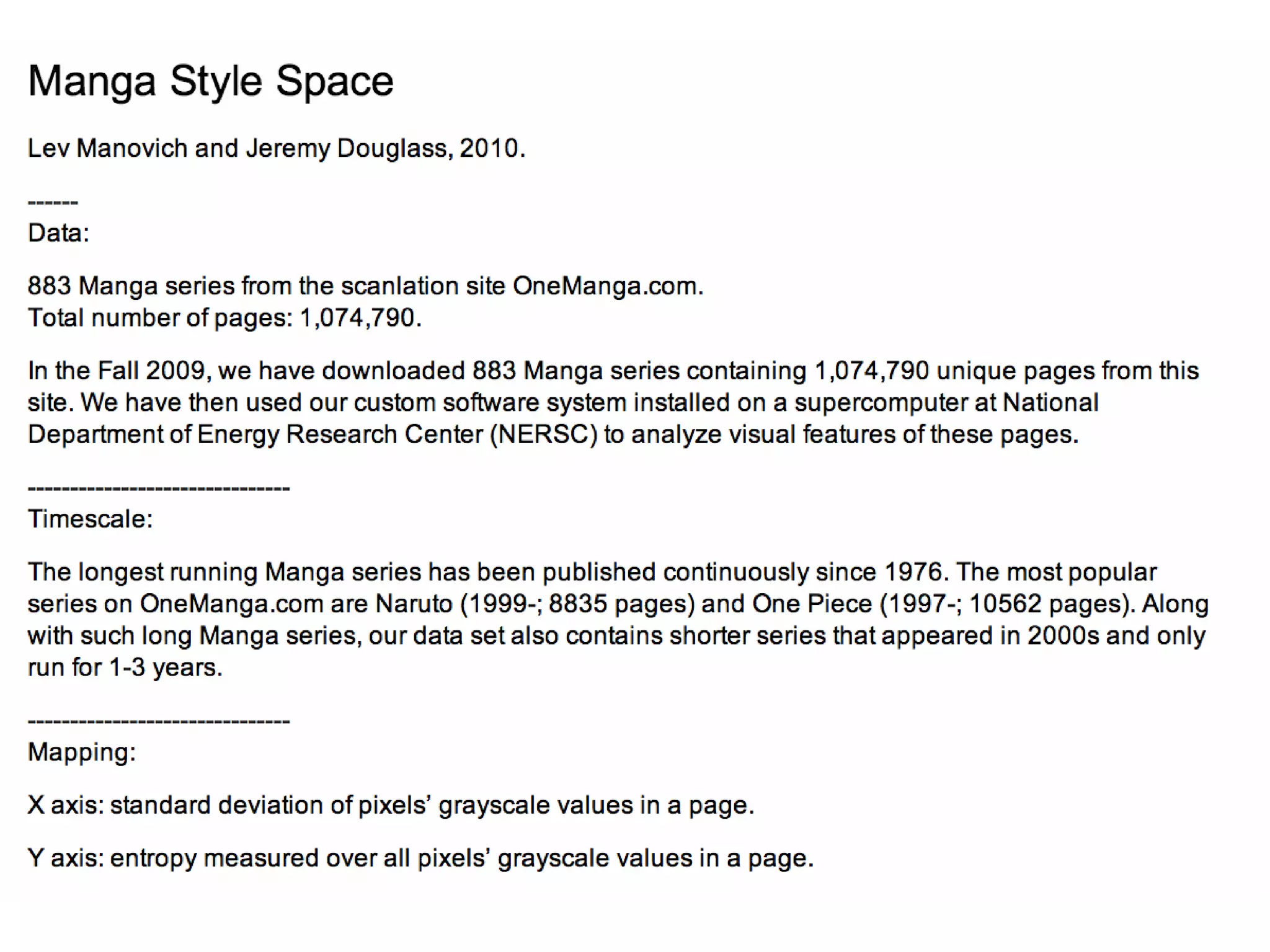
A million manga pages
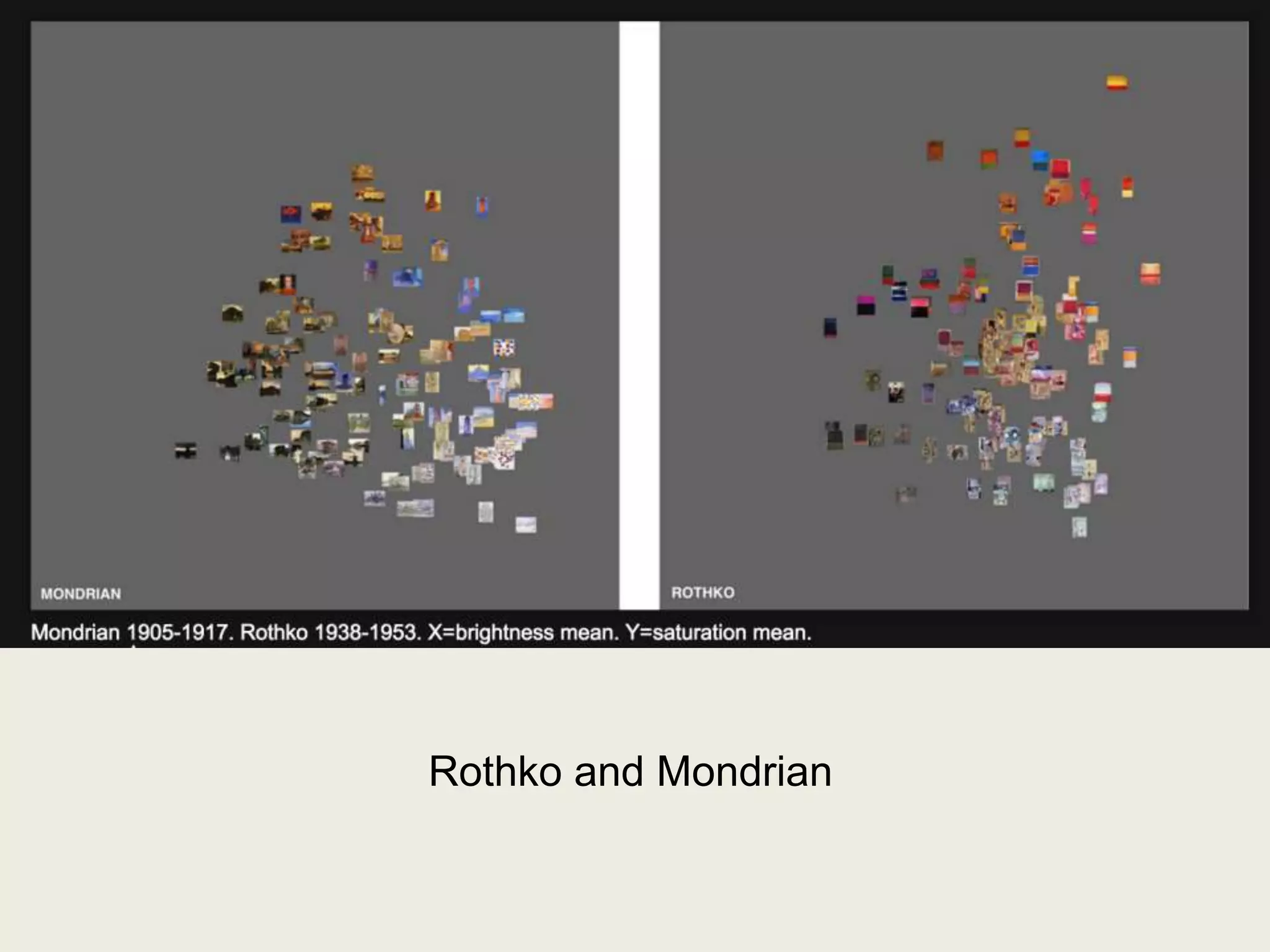
Rothko and Mondrian
Not all visualizations are
information visualizations in
    Manovich's sense ...

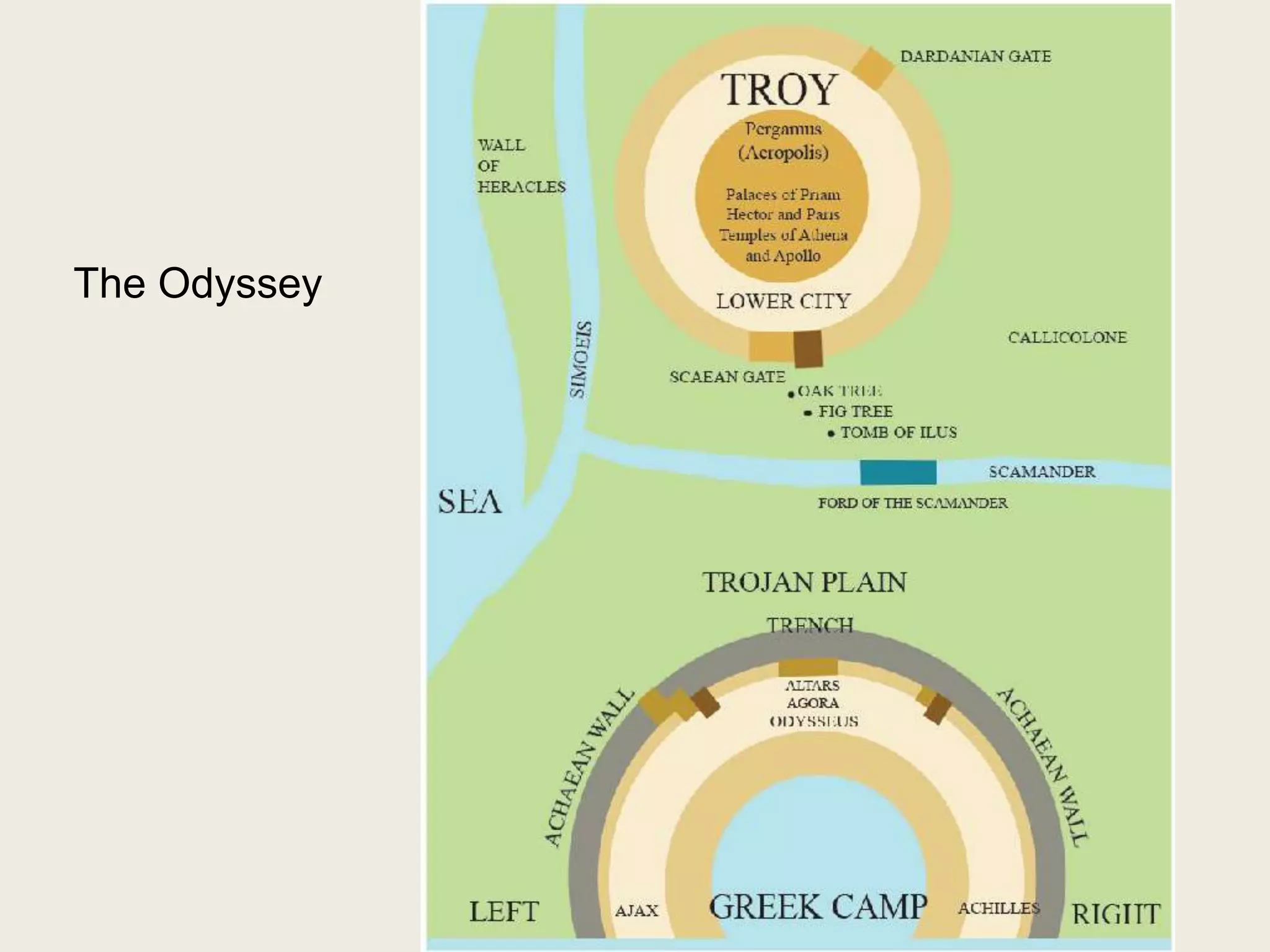
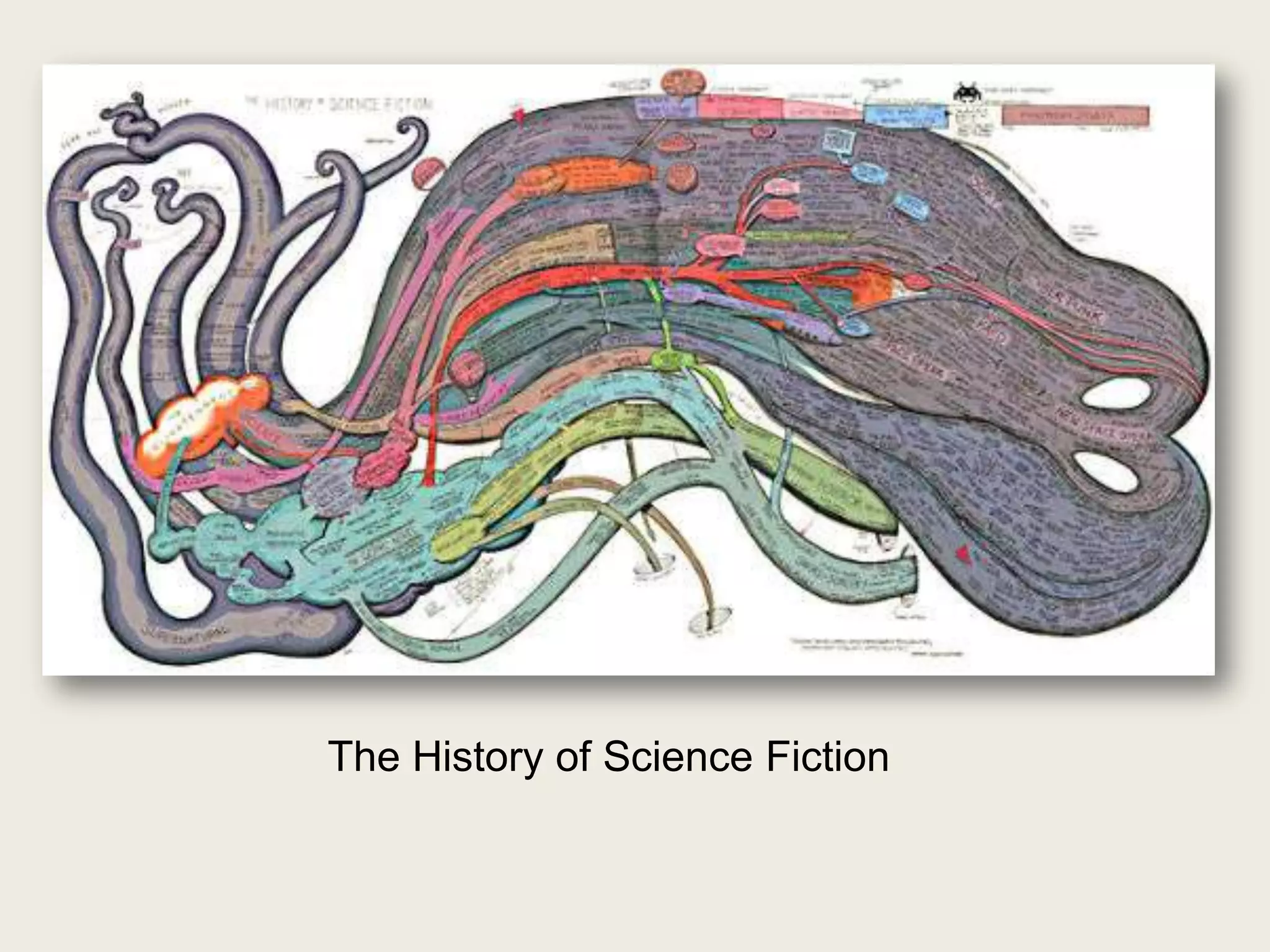
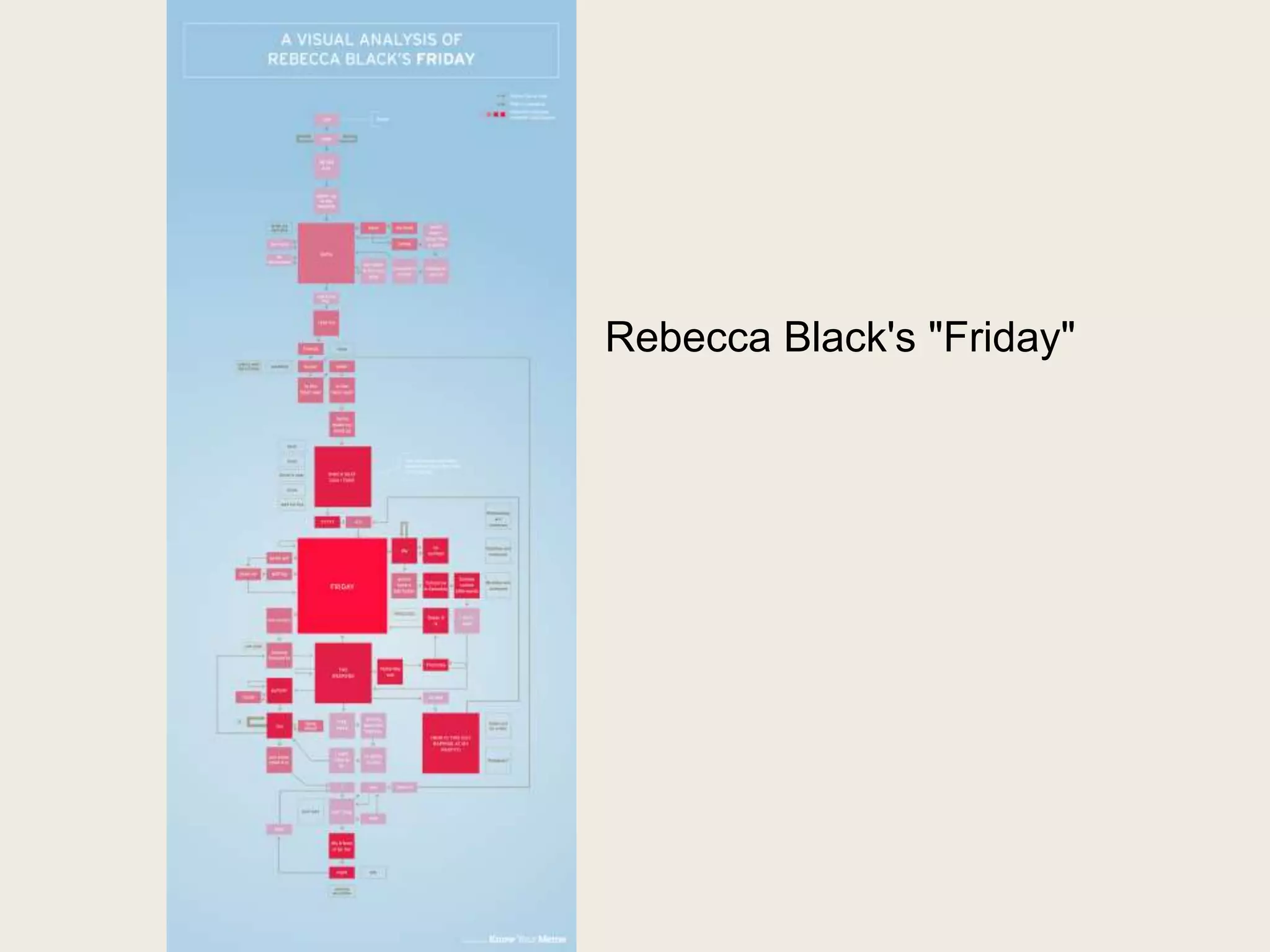
   The following are ―info
         graphics‖
The Odyssey
The History of Science Fiction
Rebecca Black's "Friday"
What’s the big difference?
Information and media visualizations are
       generated algorithmically

   Info graphics tend to be hand made
  creations (although they may emulate
                algorithms)

The former exemplify Manovich‘s principle
 that databases generate works – in this
           case, visualizations
Are information and media visualizations
more truthful than information graphics?
graphesis
graphesis
Information embodied in
material form
graphesis
Opposite of mathesis –
Science, math as
universal language
Think of the relationship between geometry
                  and algebra

Database: Visualization :: Algebra : Geometry

 Which is more real? Which depends on the
                  other?
Can we imagine what a point is without
           visualizing it?

Is information separable from matter?
graphesis
the basis of mathesis
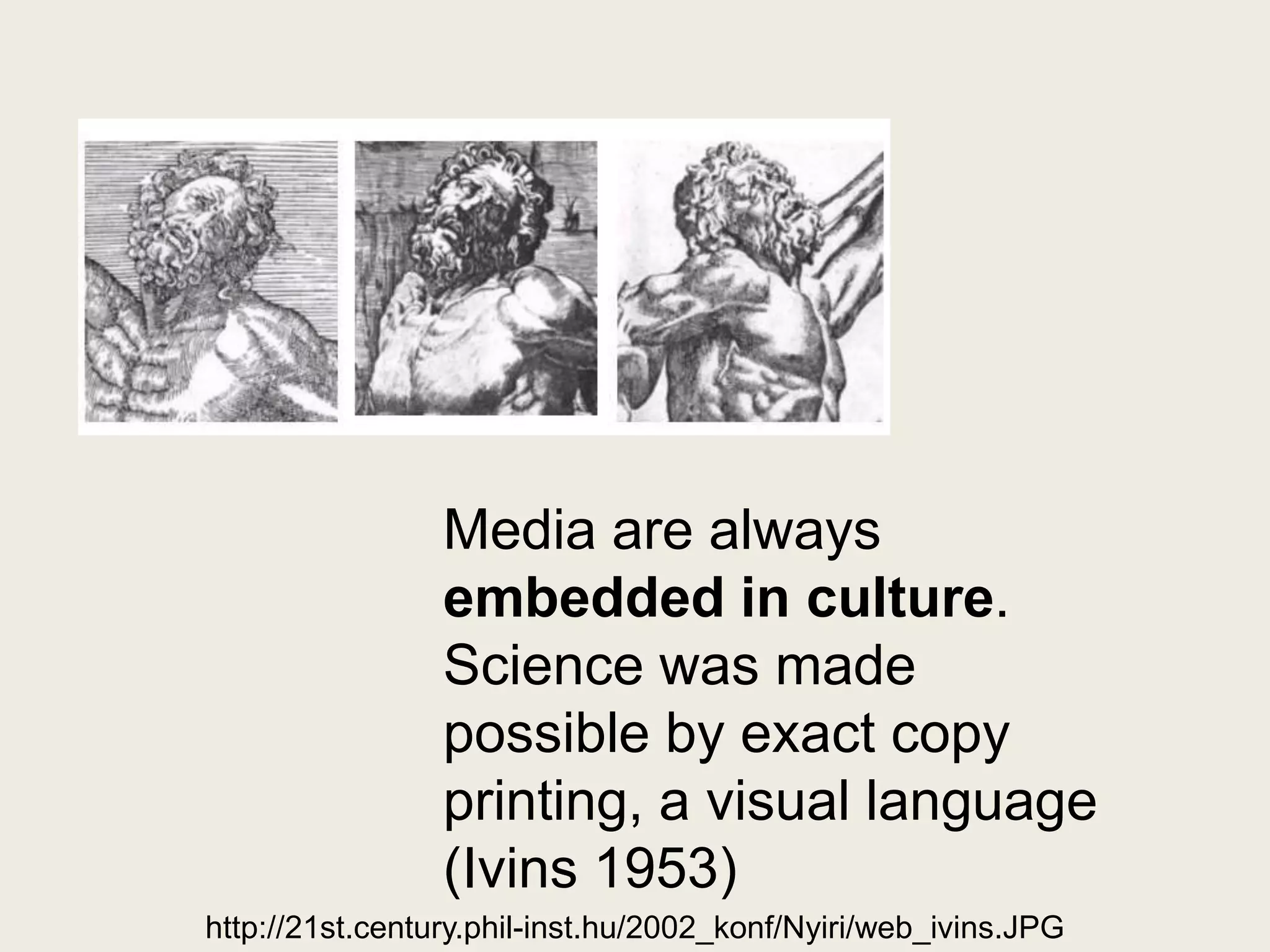
Media are always
                 embedded in culture.
                 Science was made
                 possible by exact copy
                 printing, a visual language
                 (Ivins 1953)
http://21st.century.phil-inst.hu/2002_konf/Nyiri/web_ivins.JPG
These images are both
beautiful and effective

As digital scholars, our job
is to learn how to read,
review, and produce them
The theory of graphesis
teaches us that images
have an epistemology, or
―cognitive style‖
Paradoxes
• Computers are based on mathesis, or
  logico-mathematical thinking
• And visualization is based on computing
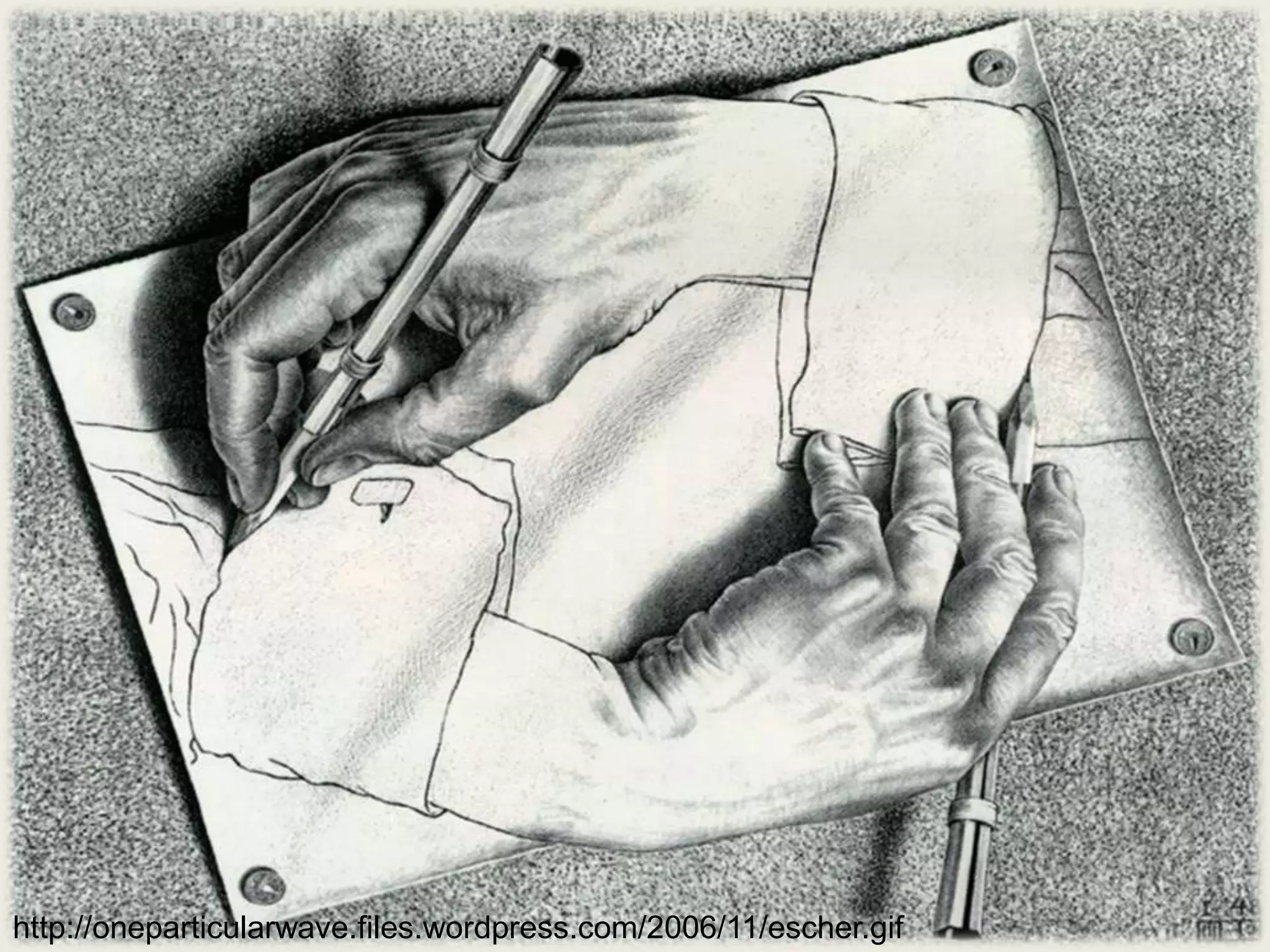
• Ergo, mathesis precedes graphesis
• But, mathesis rests on graphesis
  – The iconography of mathematical symbols
  – The products of mathesis must always be
    visualized with forms that have a rhetoric
http://oneparticularwave.files.wordpress.com/2006/11/escher.gif
All visualization involves
      transformation

Raw Data  Data Models 
Queries  Arrays  Visual
      Arrangements
The ―final‖ transformation
• The visual product encodes a series of
  transformations from raw data to visual
  design
• A key element of this design is the use of
  space
• Space is complex—it involves the
  concepts of dimension, location, distance,
  and shape
• Each visualization uses these elements
  differently
What is transformation?

   Review Examples
Patterns of Transformation (i)
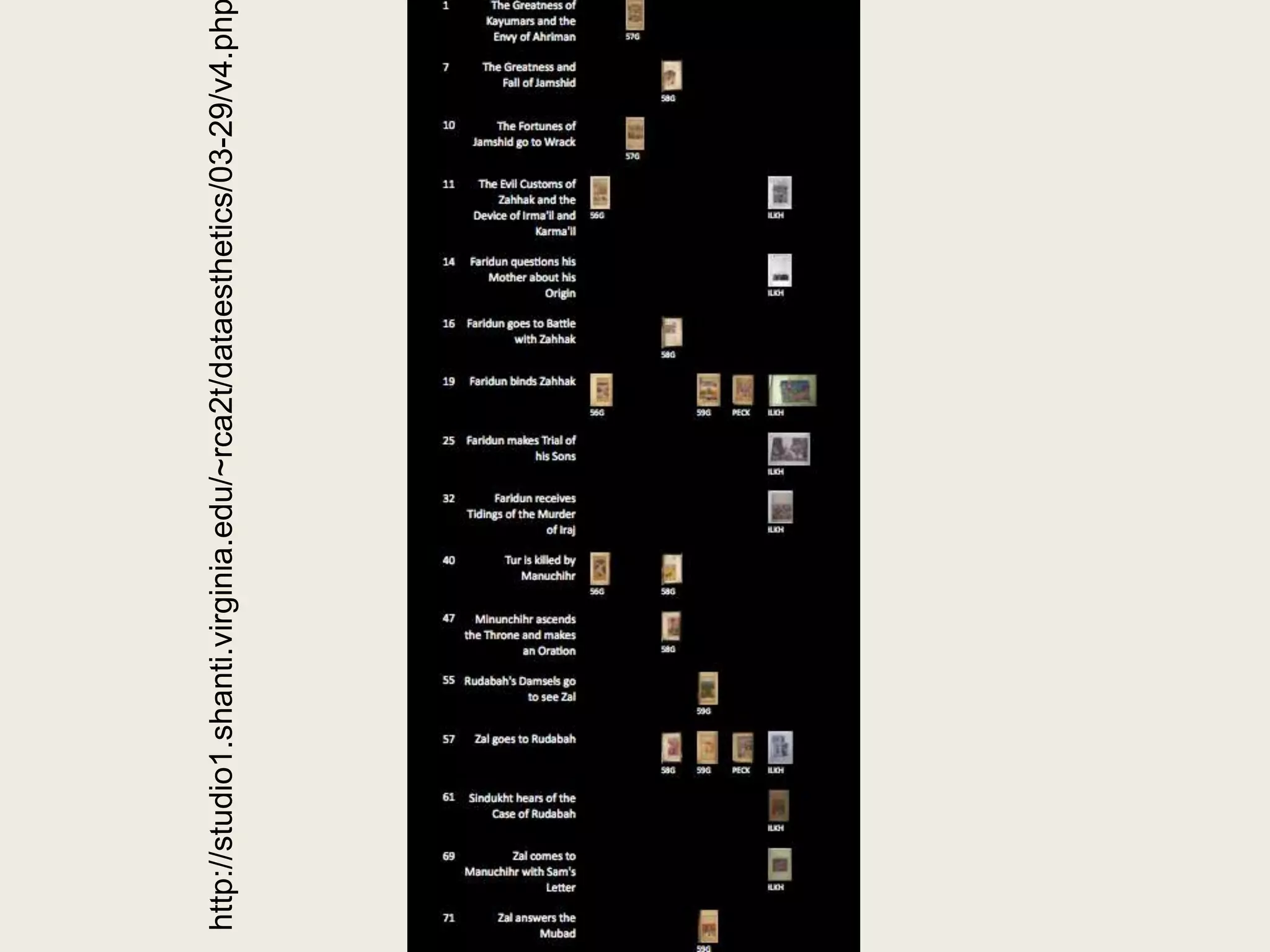
• Image Grids (aka Image Graphs)
  – Purpose: Creates 2D qualitative space
    • Space is uniform, Cartesian
    • ―Points‖ are actually not atomic, but contain
      content
    • Designed to show ―hot spots‖
  – Method:
    • Identify X and Y in which to plot objects of type A
    • Create query to generate A, X and Y columns
    • Convert query data into 3D array $DATA[$X][$Y] =
      $A
    • Convert array into HTML
http://studio1.shanti.virginia.edu/~rca2t/dataesthetics/03-29/v4.ph
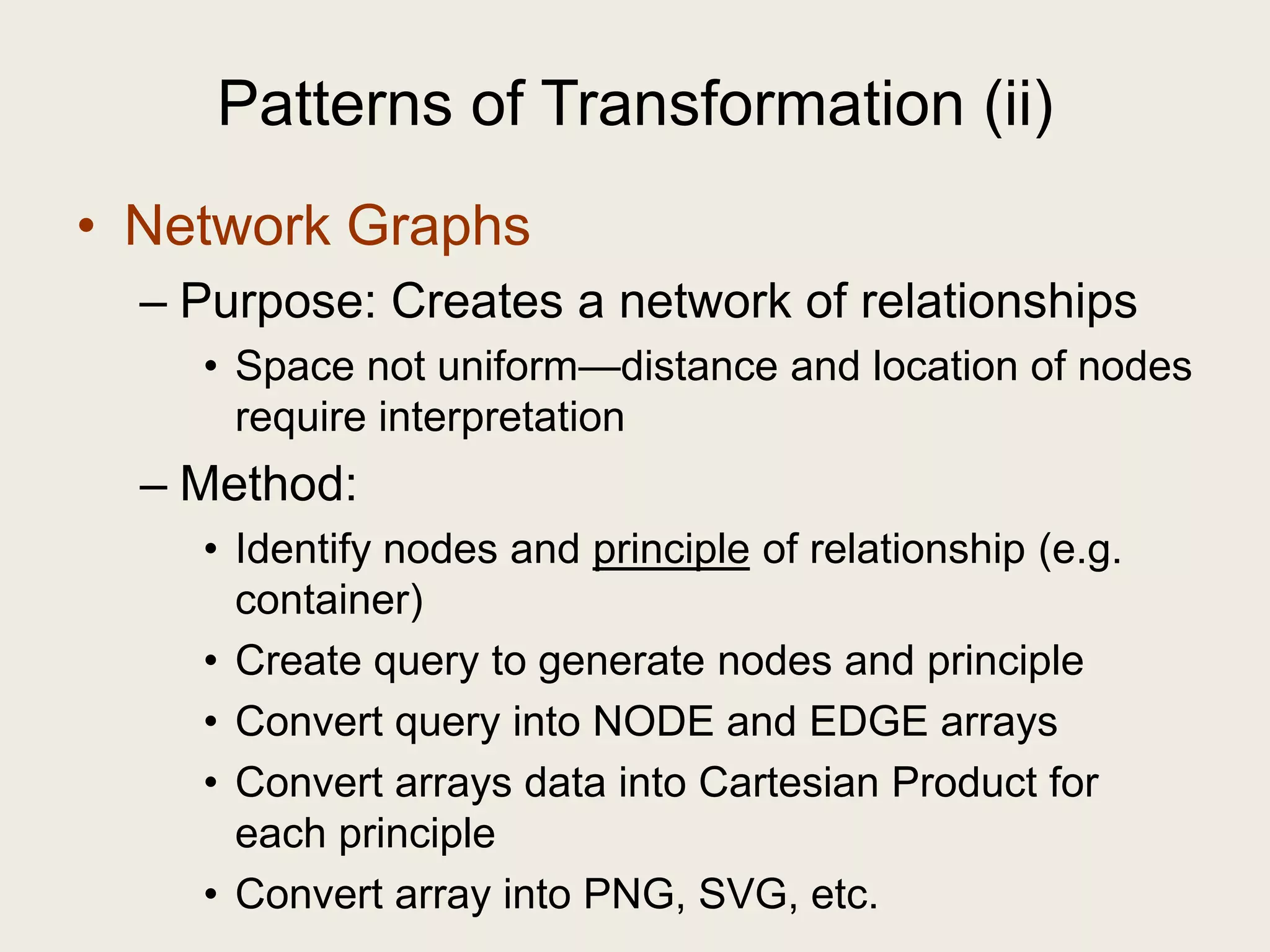
Patterns of Transformation (ii)
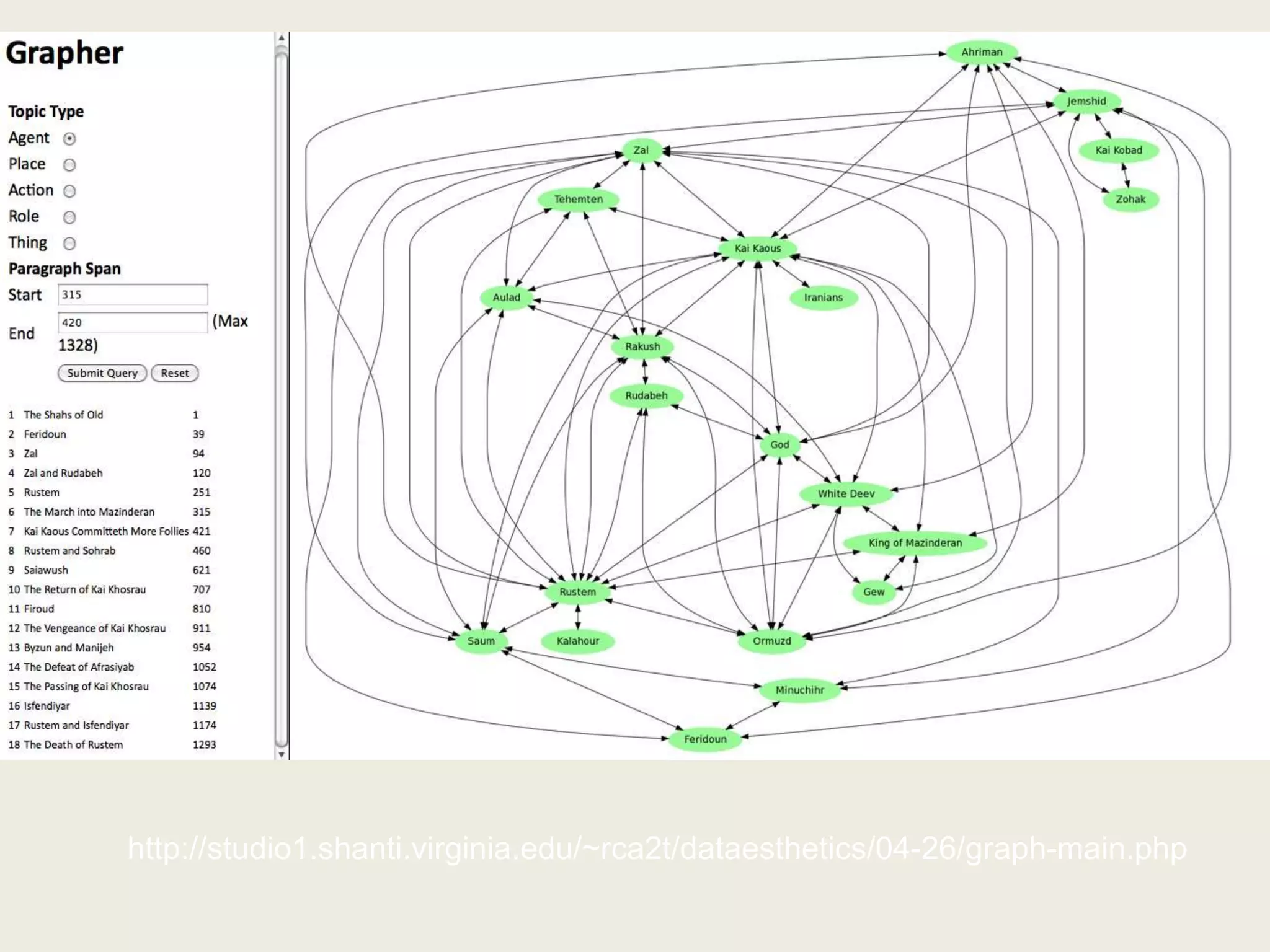
• Network Graphs
  – Purpose: Creates a network of relationships
    • Space not uniform—distance and location of nodes
      require interpretation
  – Method:
    • Identify nodes and principle of relationship (e.g.
      container)
    • Create query to generate nodes and principle
    • Convert query into NODE and EDGE arrays
    • Convert arrays data into Cartesian Product for
      each principle
    • Convert array into PNG, SVG, etc.
http://studio1.shanti.virginia.edu/~rca2t/dataesthetics/04-26/graph-main.php
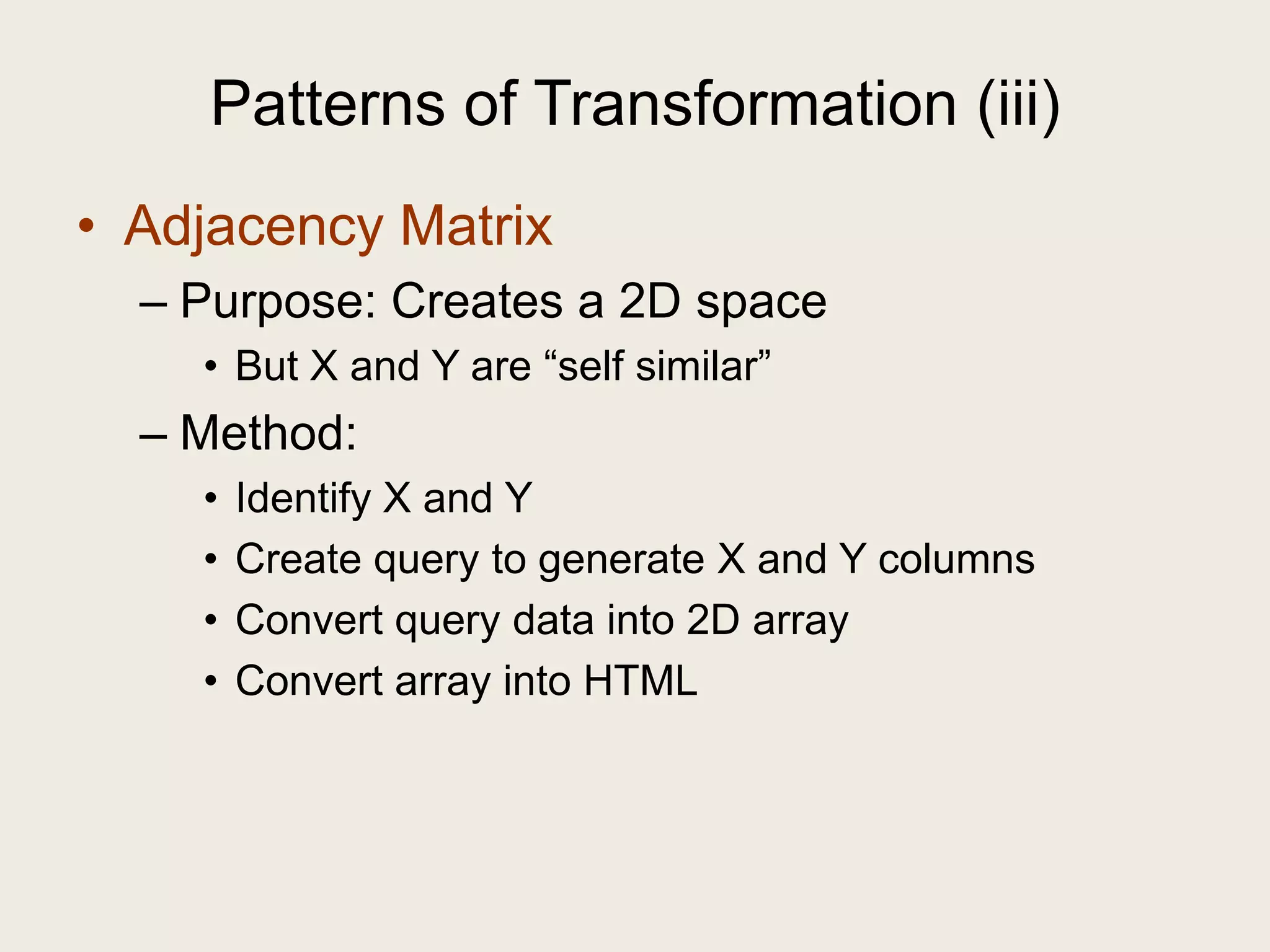
Patterns of Transformation (iii)
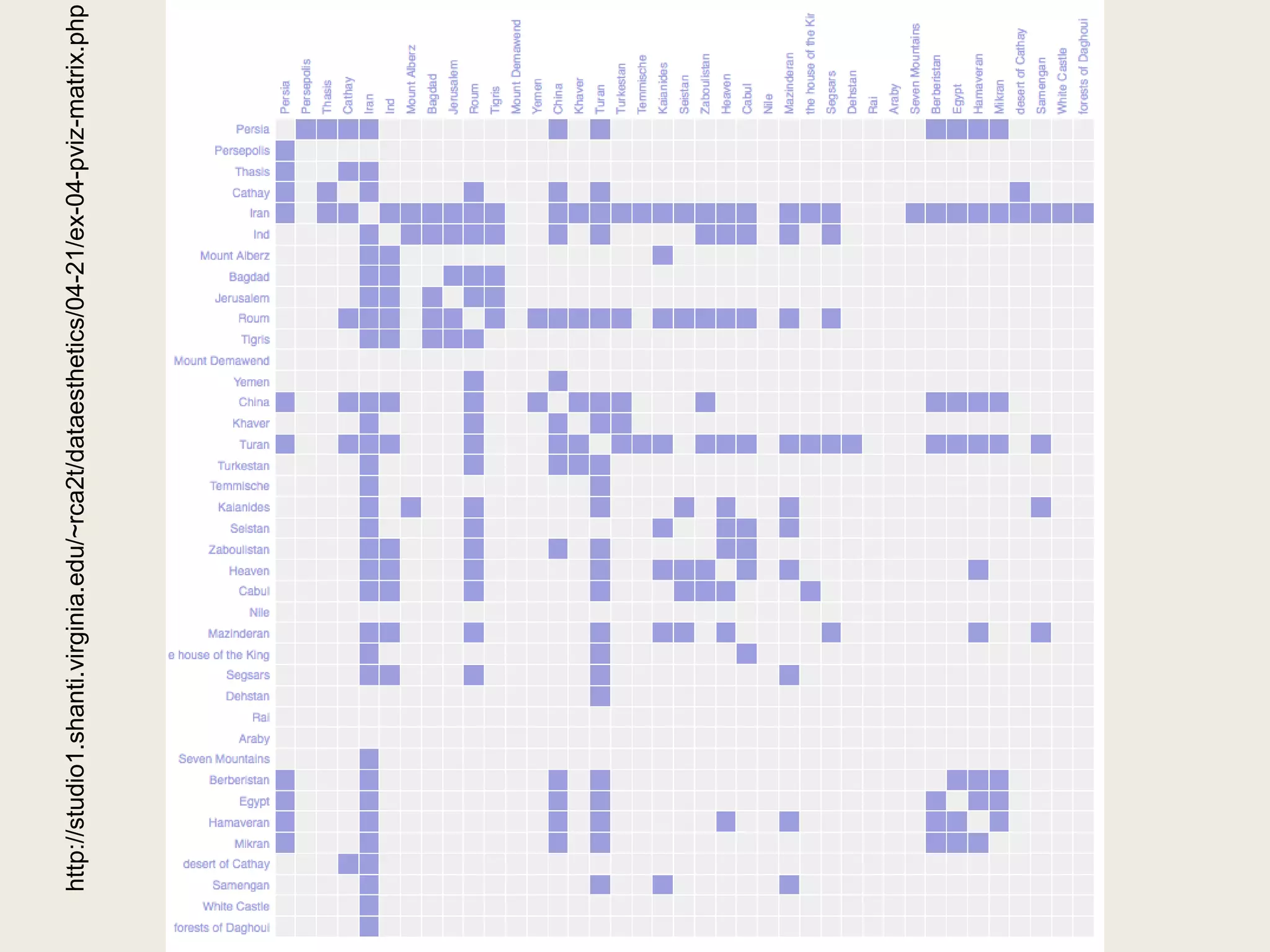
• Adjacency Matrix
  – Purpose: Creates a 2D space
    • But X and Y are ―self similar‖
  – Method:
    •   Identify X and Y
    •   Create query to generate X and Y columns
    •   Convert query data into 2D array
    •   Convert array into HTML
http://studio1.shanti.virginia.edu/~rca2t/dataesthetics/04-21/ex-04-pviz-matrix.php
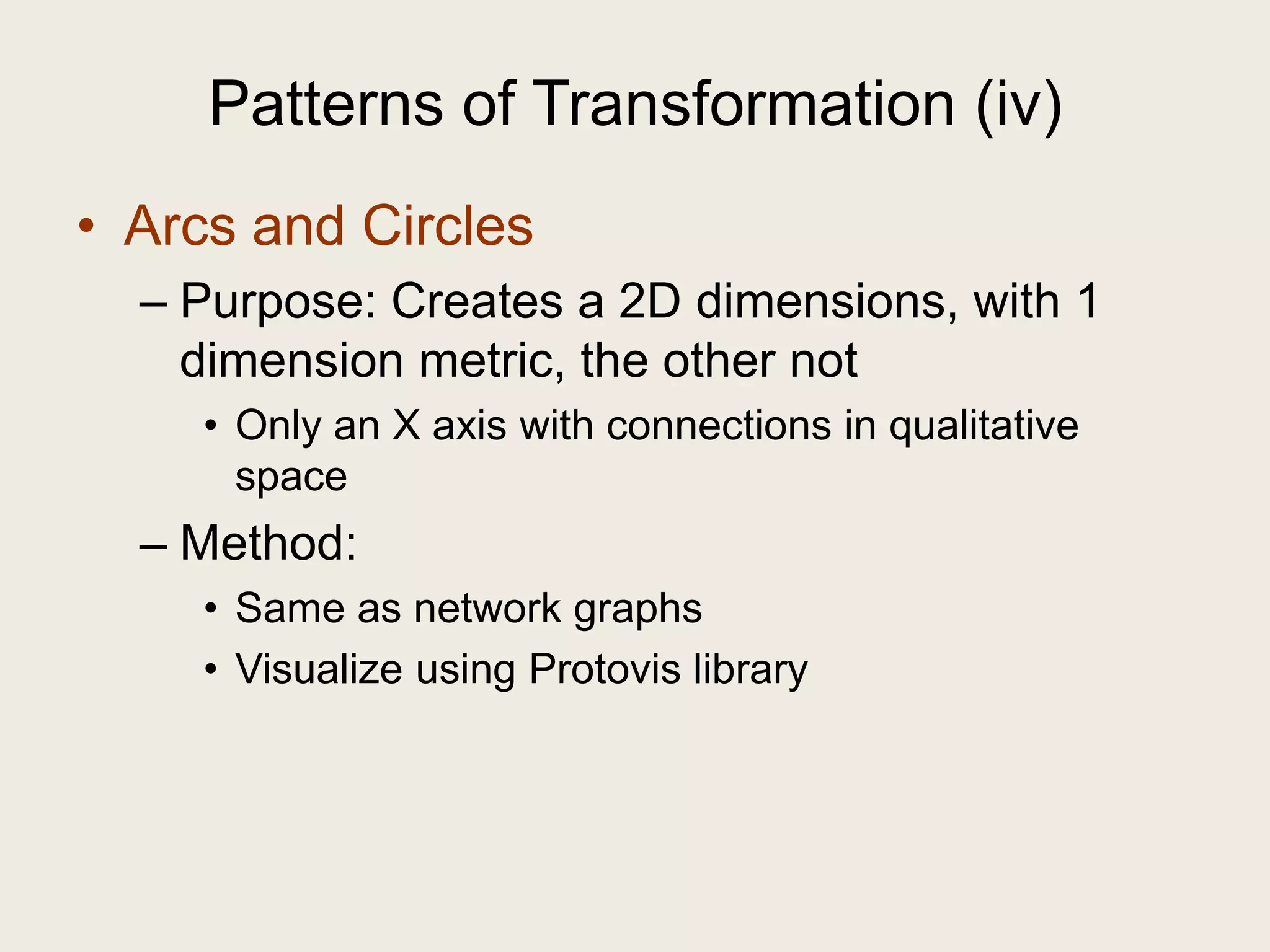
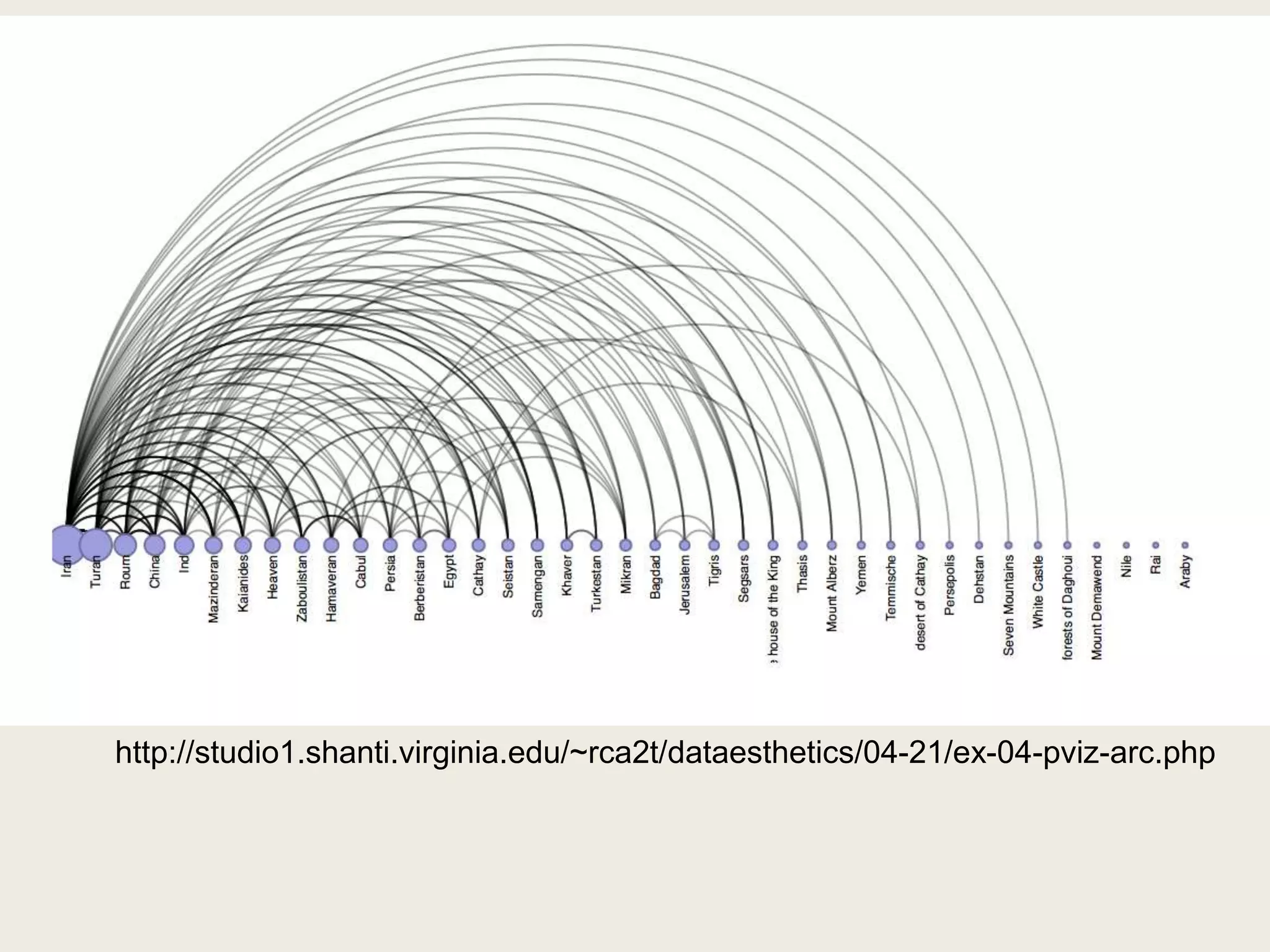
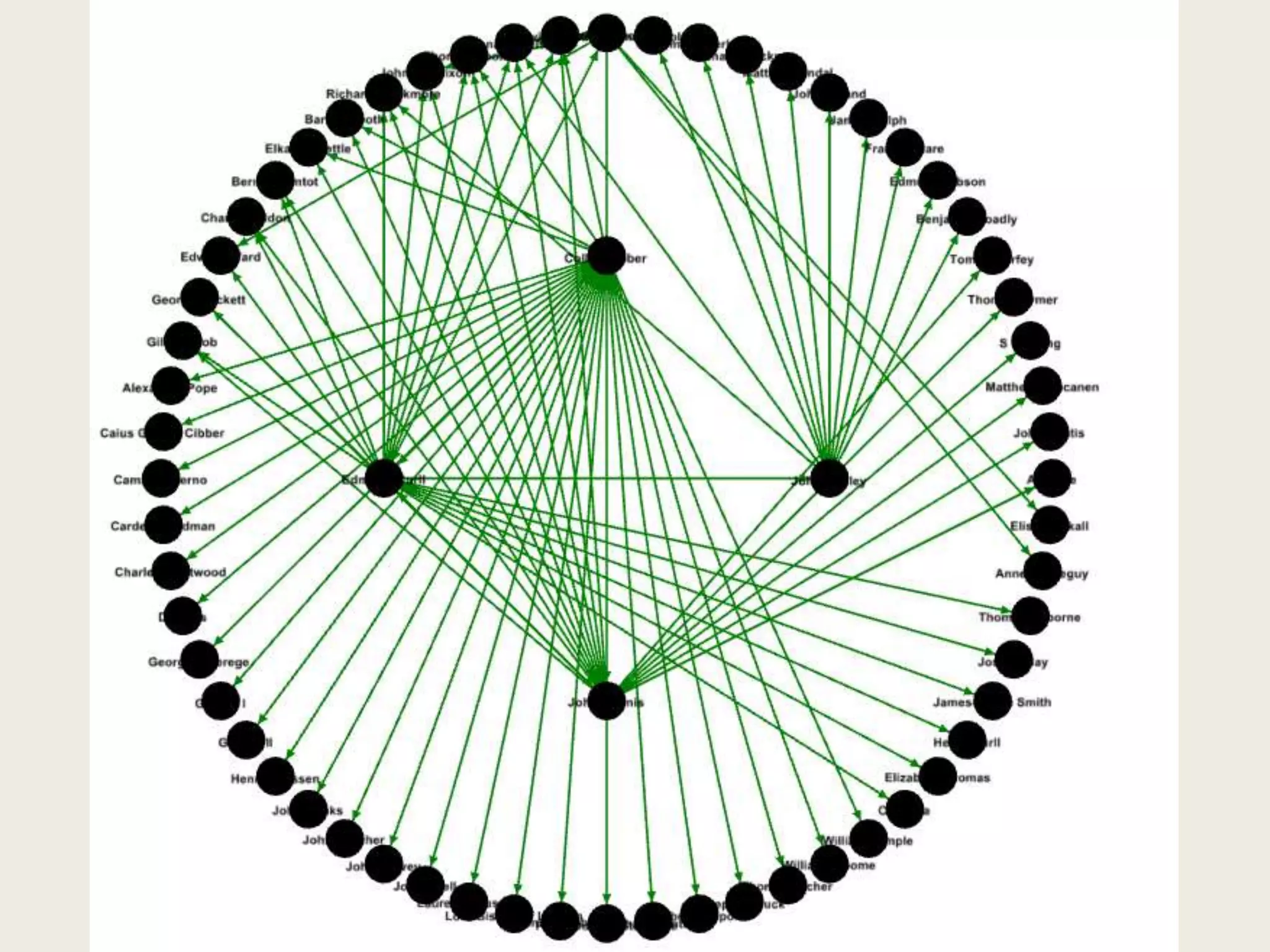
Patterns of Transformation (iv)
• Arcs and Circles
  – Purpose: Creates a 2D dimensions, with 1
    dimension metric, the other not
    • Only an X axis with connections in qualitative
      space
  – Method:
    • Same as network graphs
    • Visualize using Protovis library
http://studio1.shanti.virginia.edu/~rca2t/dataesthetics/04-21/ex-04-pviz-arc.php
Patterns of Transformation (v)
• Hand-made
  – Purpose: Creates a free-form qualitative
    space
  – Method:
    • Draw!

MDST 3705 2012-03-05 Databases to Visualization

Editor's Notes

  • #9 https://shiva.virginia.edu/sites/all/modules/shivanode/SHIVA/go.htm?m=//shiva.virginia.edu/data/json/873
  • #10 https://shiva.virginia.edu/sites/all/modules/shivanode/SHIVA/go.htm?m=//shiva.virginia.edu/data/json/909
  • #17 Note that statistics and visualization rise togetherNOT A BAD THING
  • #23 mashup
  • #25 mashup
  • #32 See http://www.flickr.com/photos/culturevis/4038907270/sizes/o/in/set-72157624959121129/ for full image
  • #51 What is graphesis?
  • #52 What is it the opposite of?
  • #53 Mathesis = ontology = foundation of computing
  • #58 Note that statistics and visualization rise togetherNOT A BAD THING
  • #59 Note that statistics and visualization rise togetherNOT A BAD THING