The Stack of Scholarship:
   Ayers’ Experiment
       Prof. Alvarado
      MDST 3703/7703
     25 September 2012
Business
• Quizzes graded
  – Questions, see me
• Comments
  – By Monday evening
  – Please write comments, not posts, for the
    responses to the readings
Review
• Thematic Research Collections
  – Remain bound to the metaphor of the library and
    the book
  – Partly due to remediation
• Other examples
  – Blake Project
  – World of Dante
  – House Divided
  – Princeton Dante Project
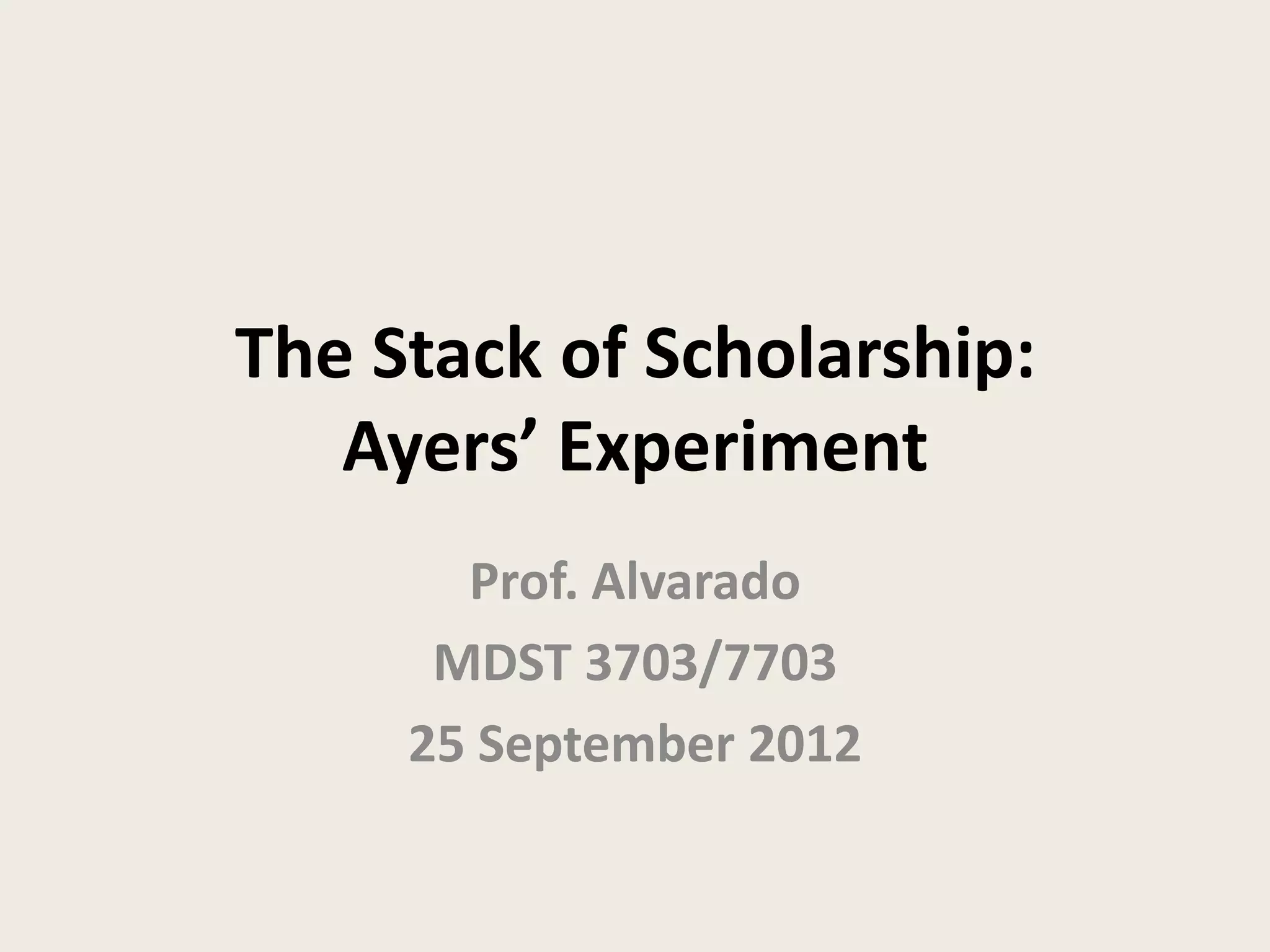
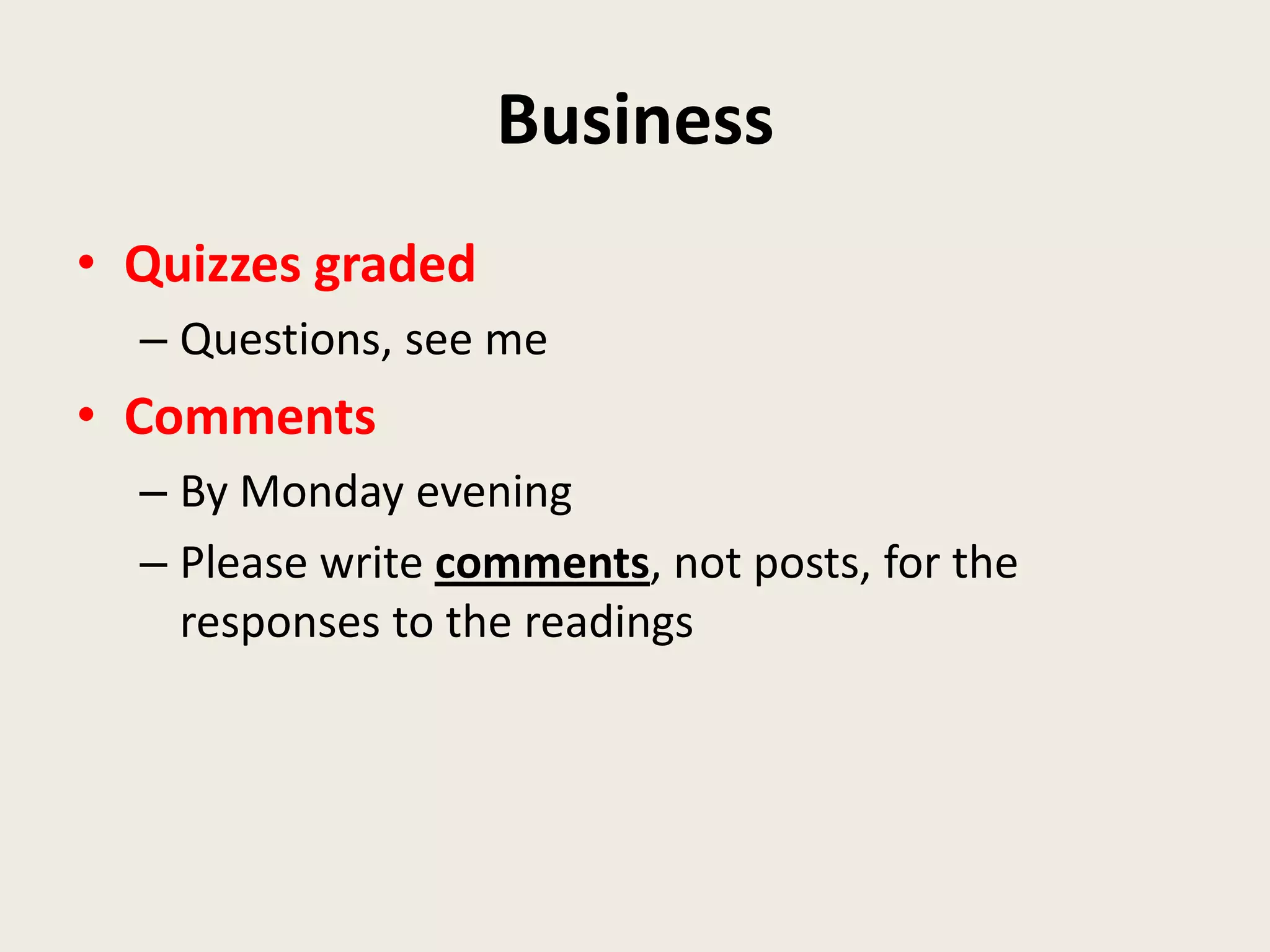
BLAKE ARCHIVE                          WORLD OF DANTE
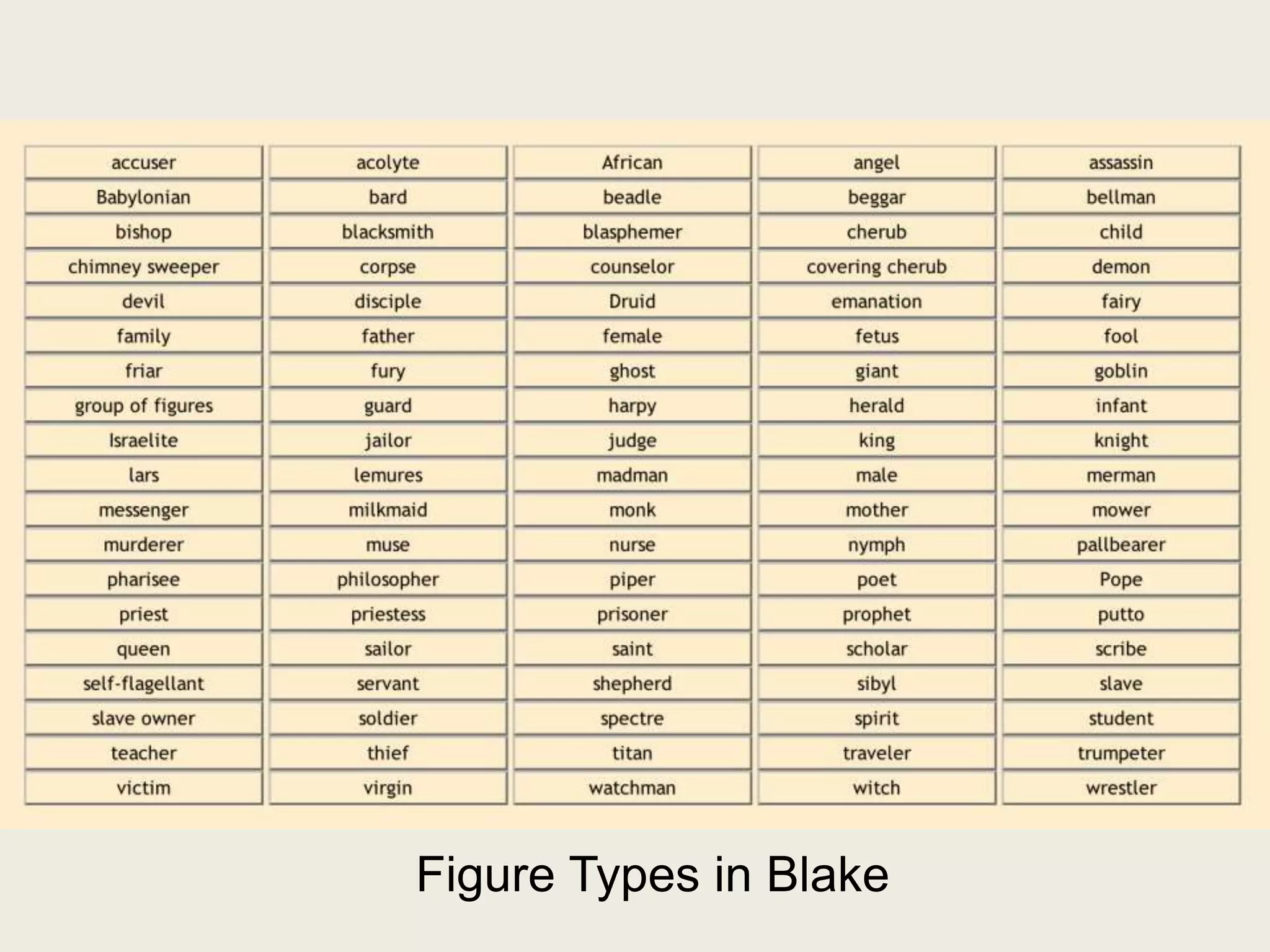
• Figure types                         • Maps
• Comparison viewer                    • Annotations


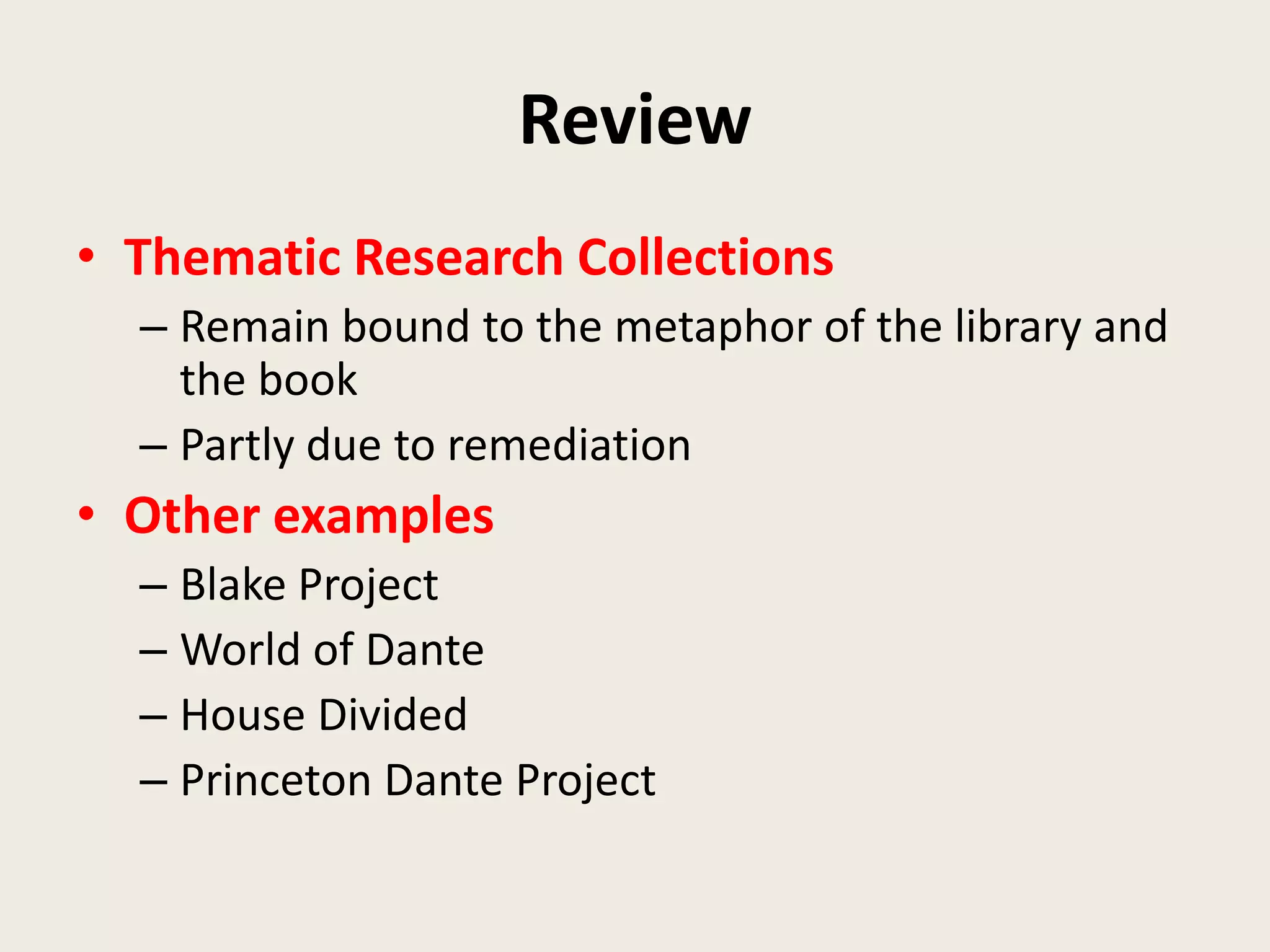
               PRINCETON DANTE PROJECT
               • Commentaries
               • Voice

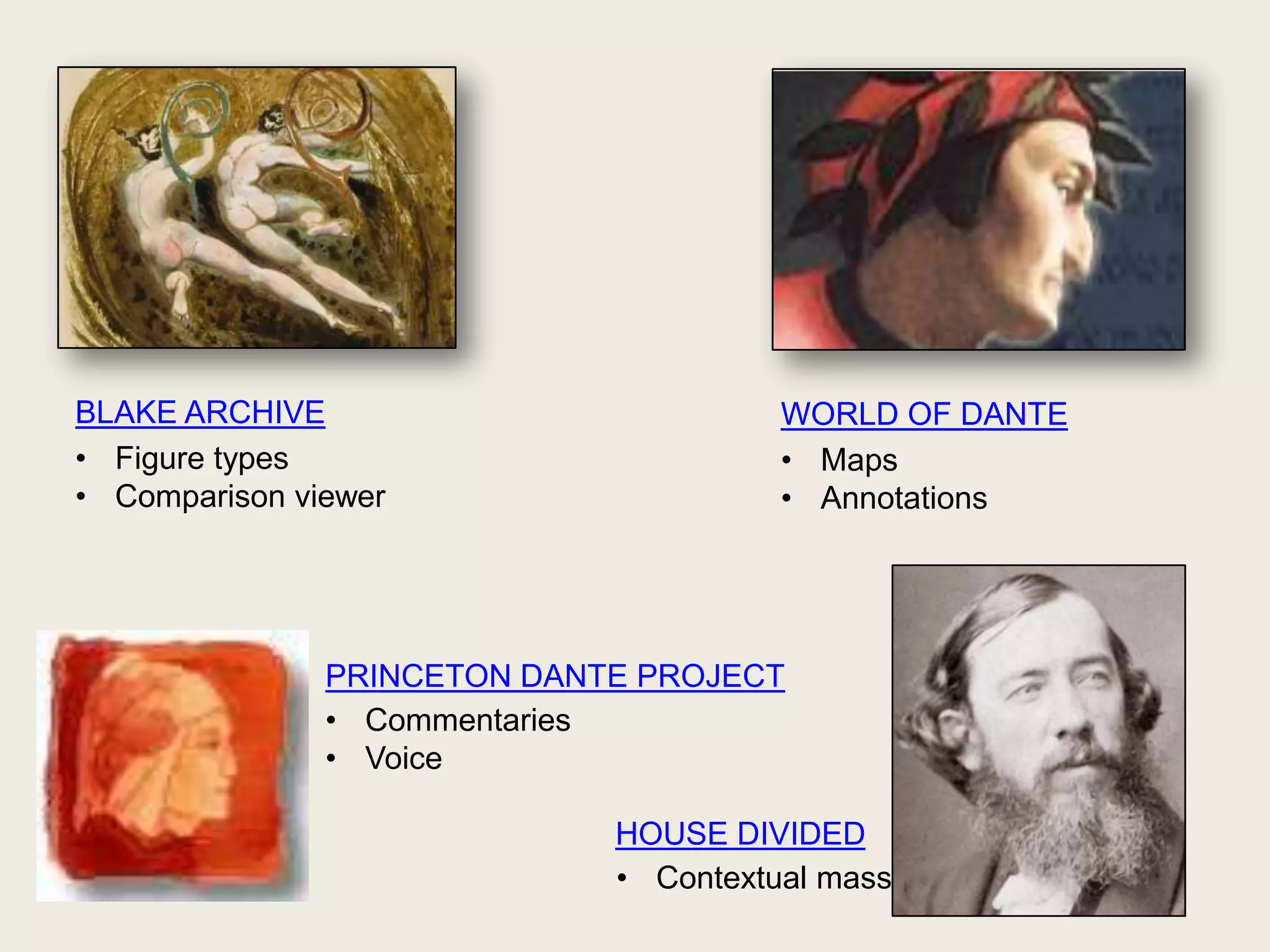
                             HOUSE DIVIDED
                             • Contextual mass
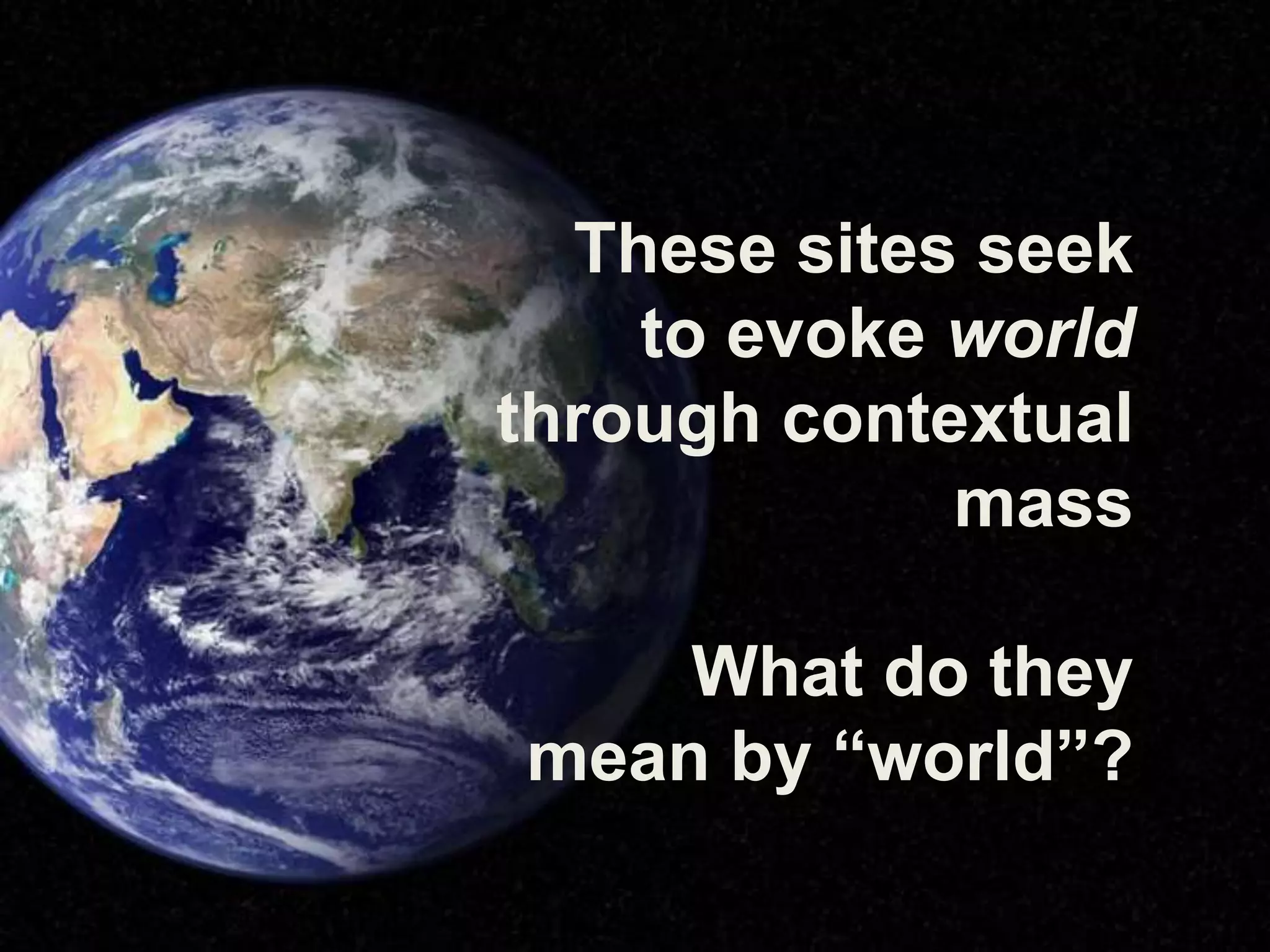
These sites seek
    to evoke world
through contextual
             mass

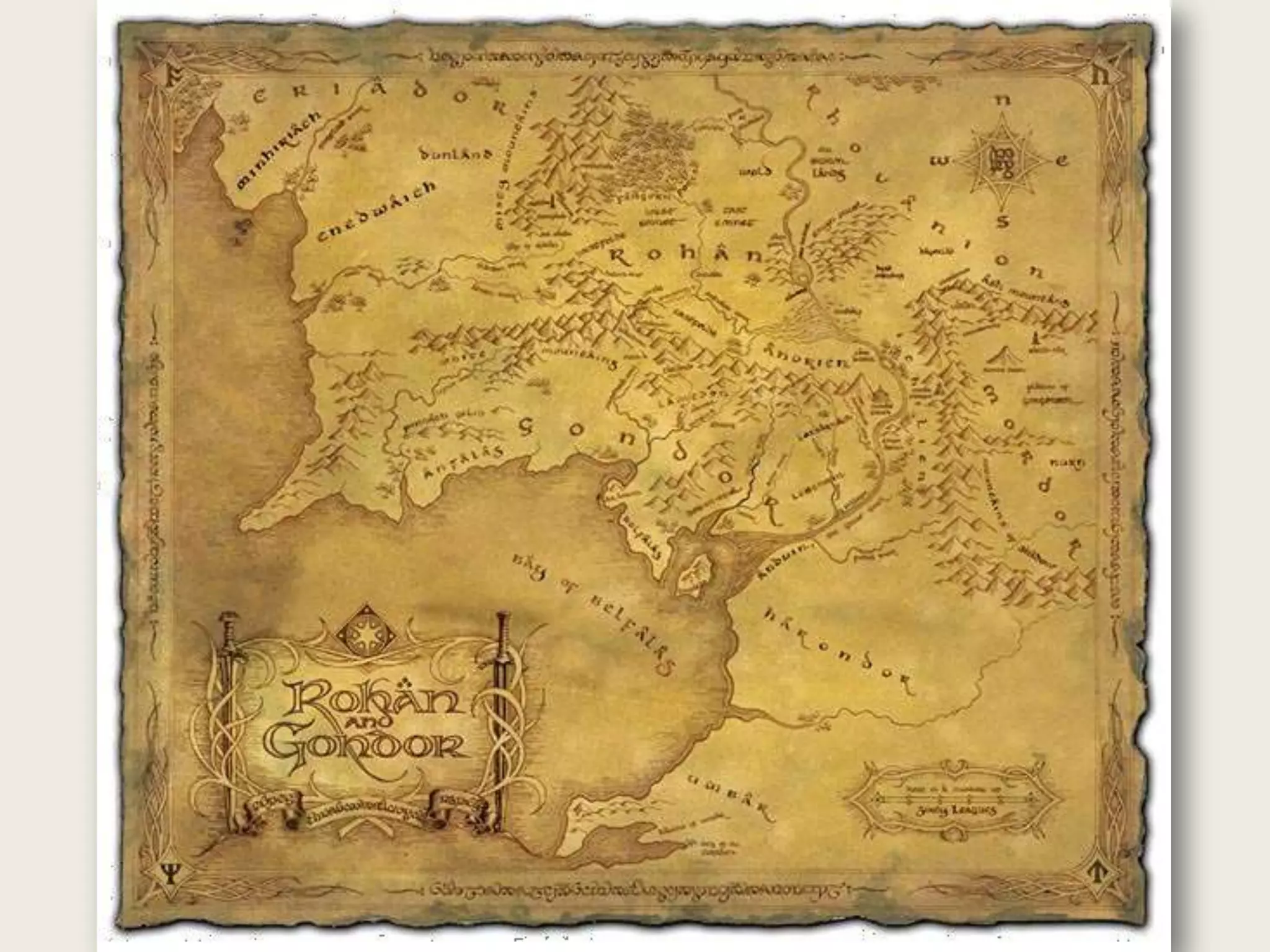
    What do they
mean by “world”?
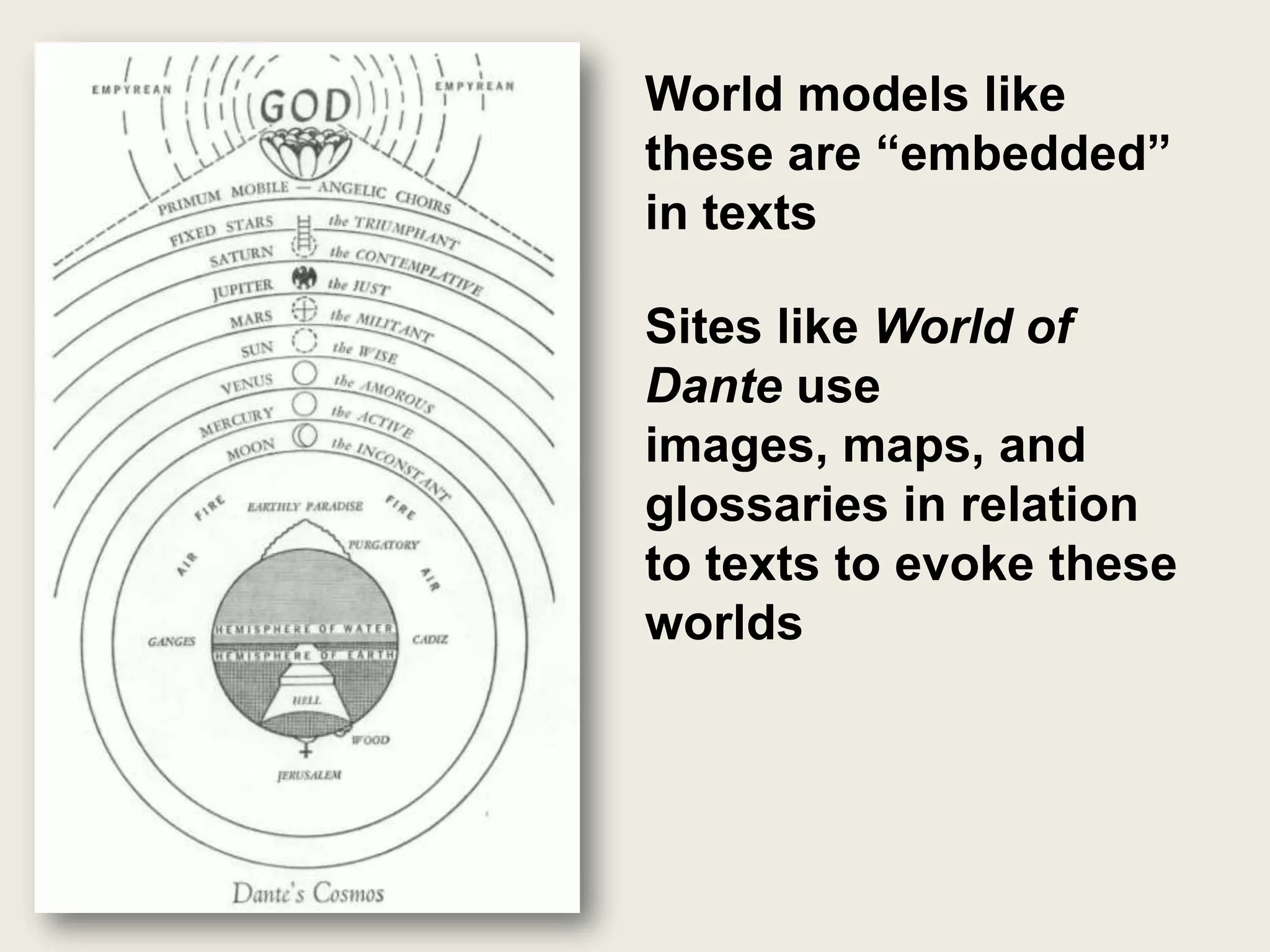
World models like
these are “embedded”
in texts

Sites like World of
Dante use
images, maps, and
glossaries in relation
to texts to evoke these
worlds
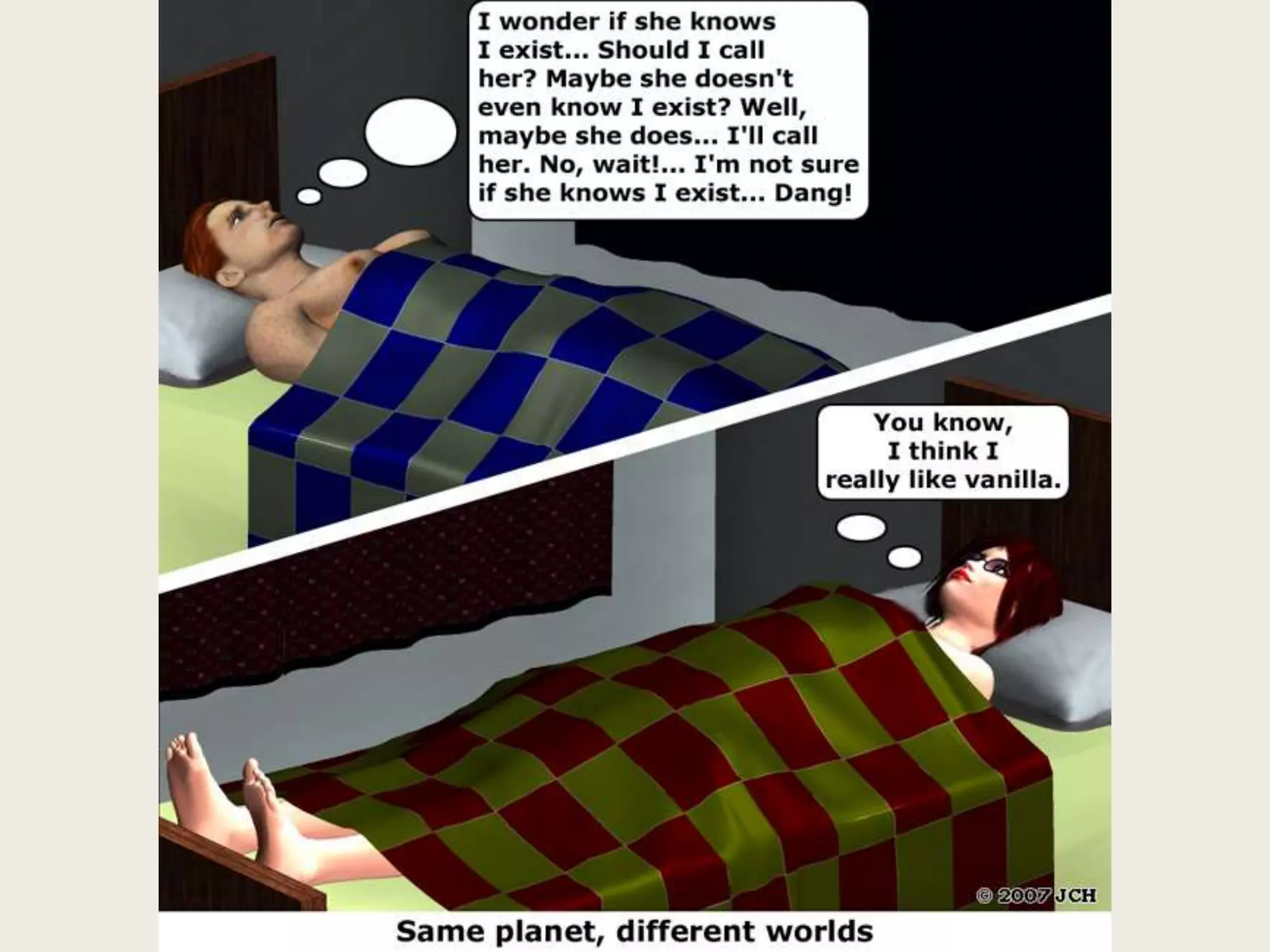
When we tell stories, we also
      create worlds

    Our worlds express
worldviews, theories of the
 world, that are culturally
constructed and historically
          specific
Historians tells stories too

   Histories are written from
various theoretical perspectives
       and motiviations
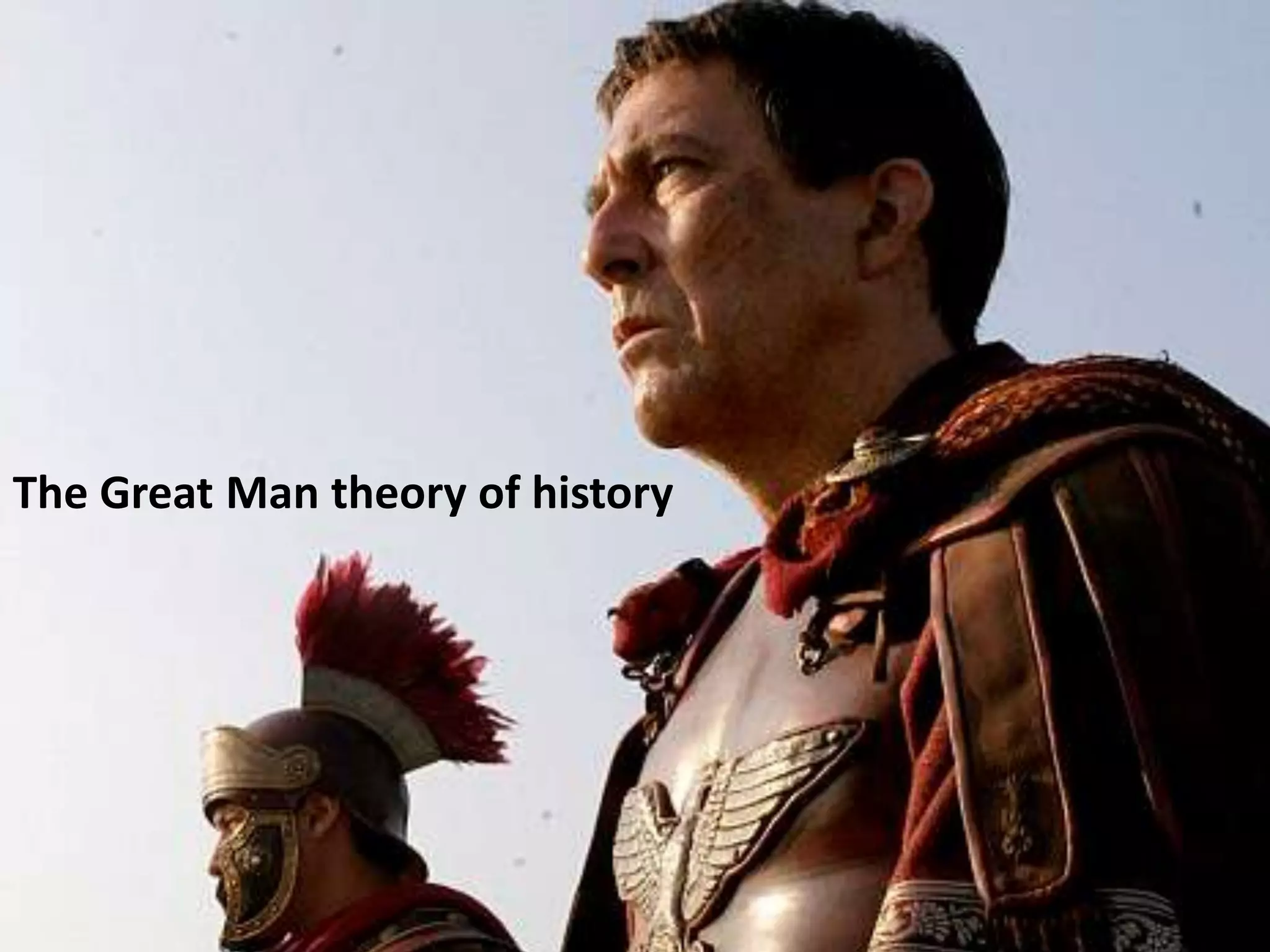
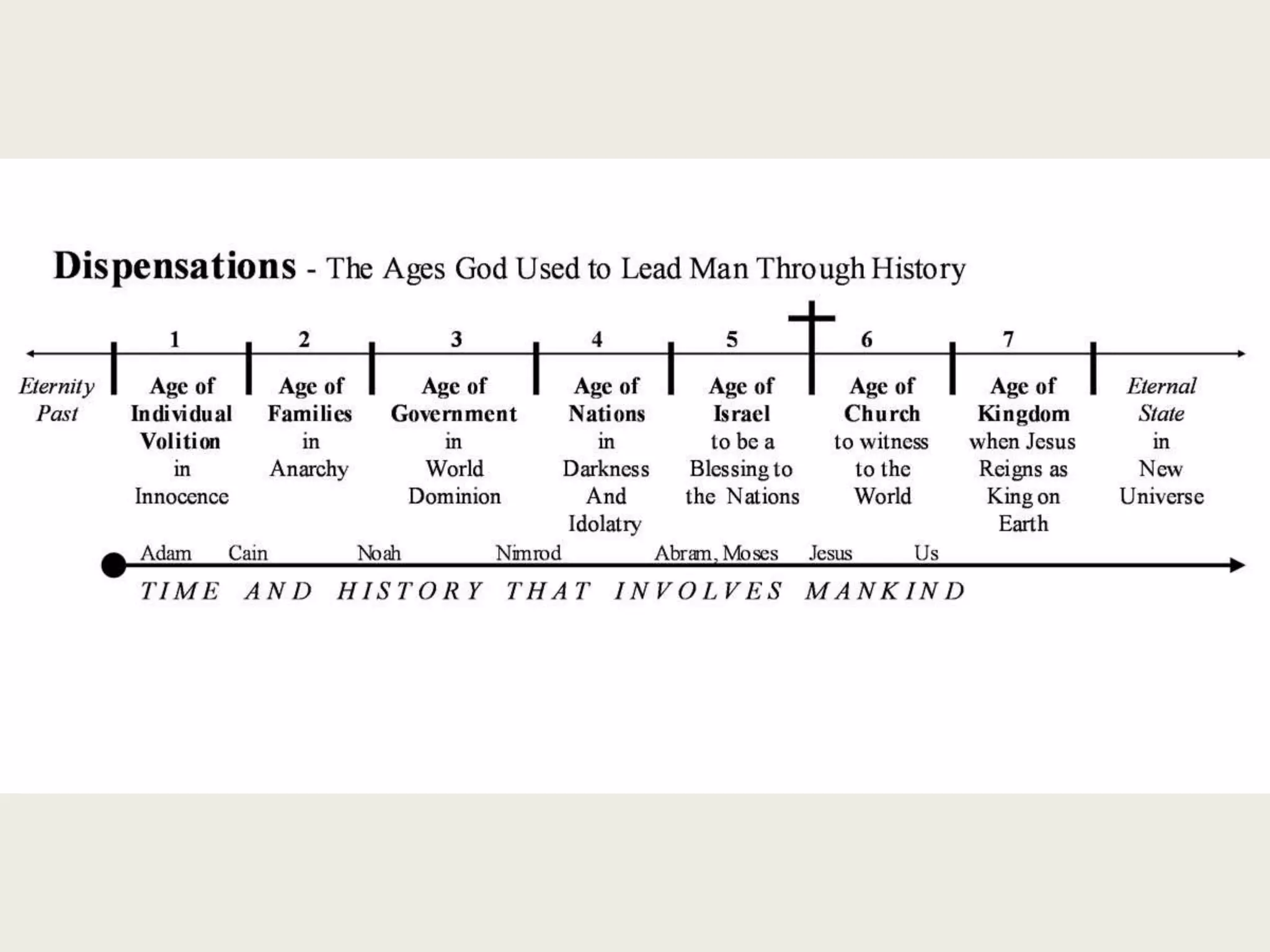
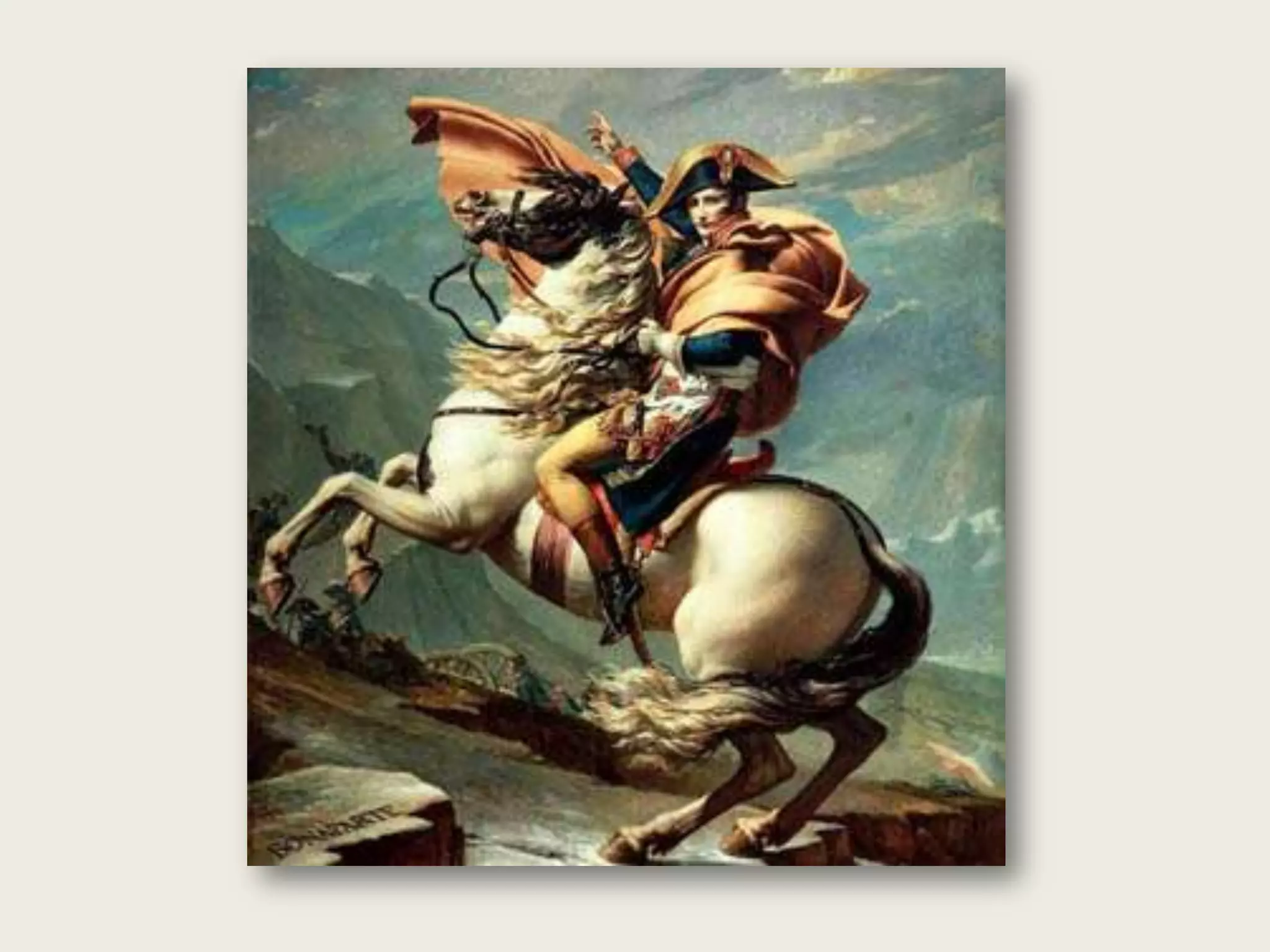
The Great Man theory of history
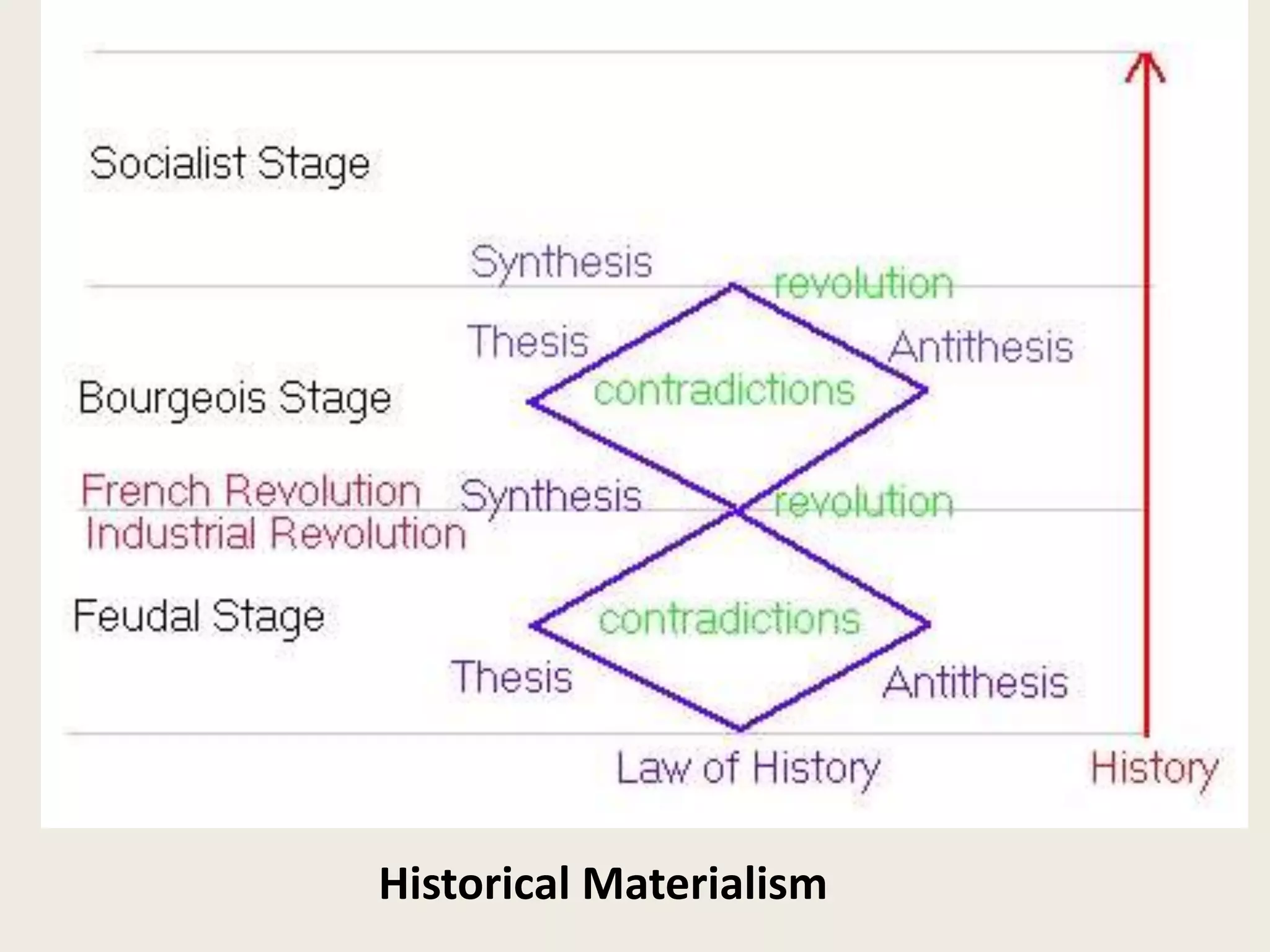
Historical Materialism
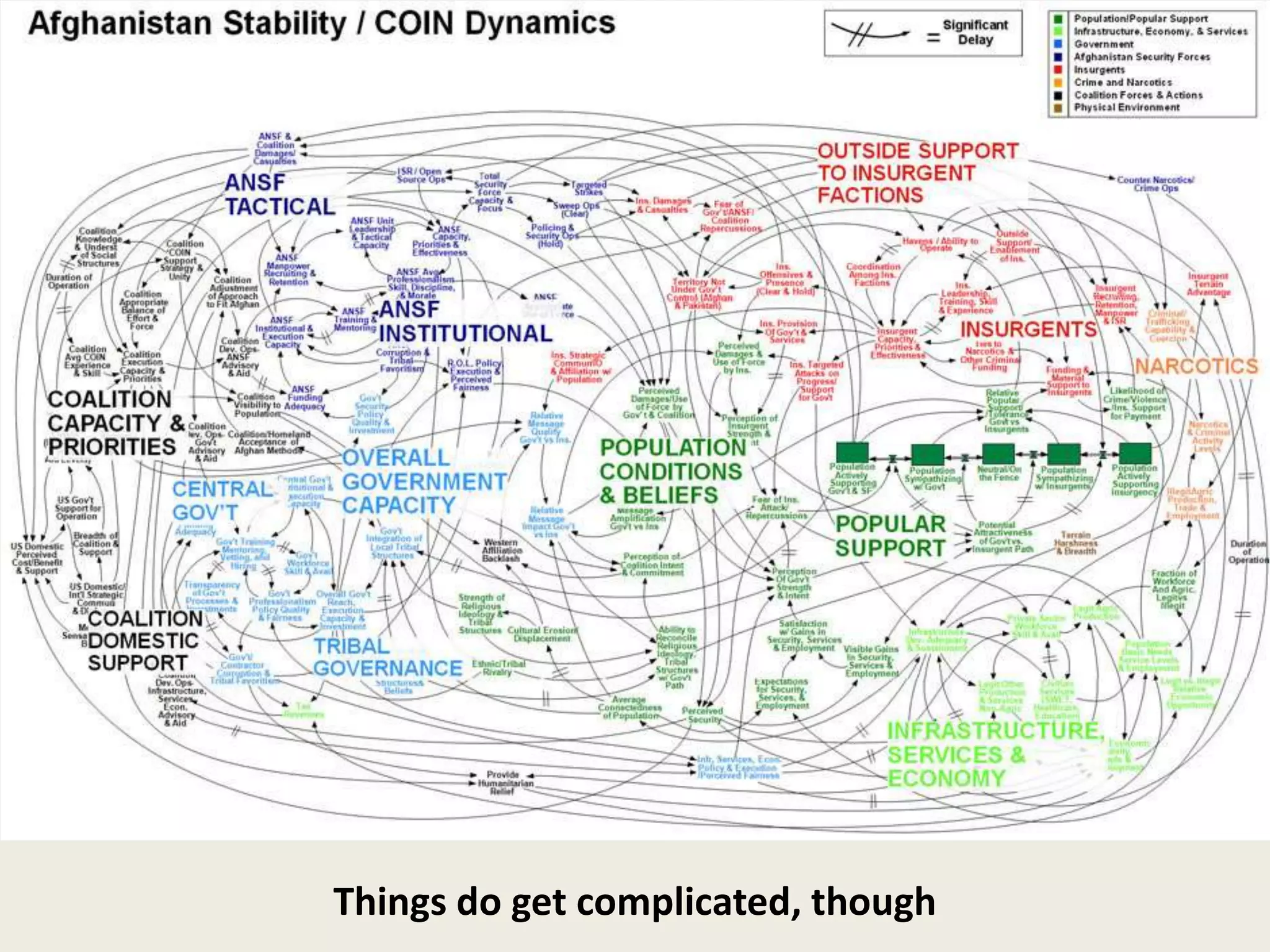
Things do get complicated, though
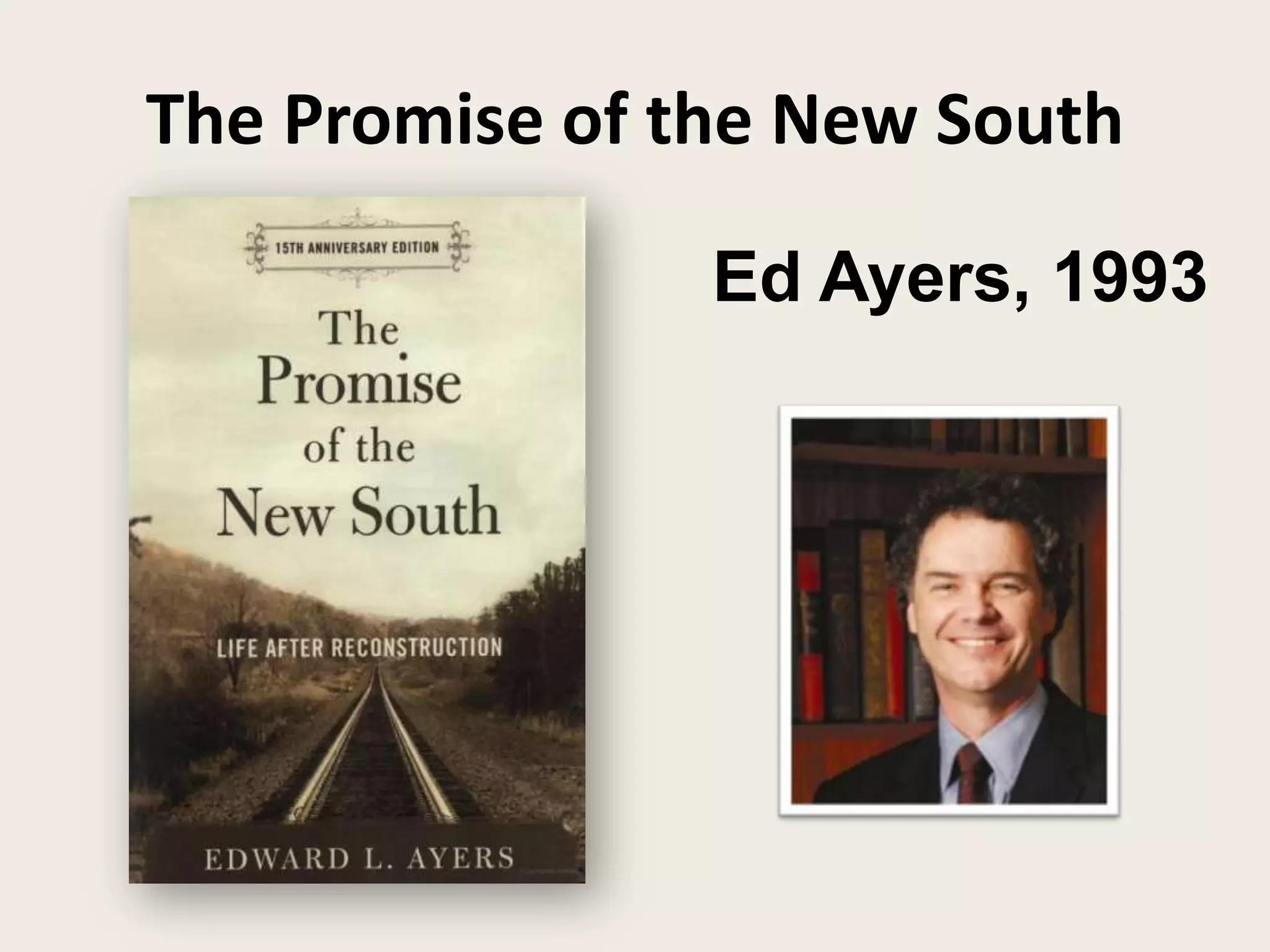
The Promise of the New South

                Ed Ayers, 1993
What is “open narrative”?
Open vs. Fixed Narrative
• What is open narrative?
• Why does Ayers propose it?
• What did critics say of Promise?
• How does Ayers defend himself?
• Does the book have a thesis?
• Is Ayers’ task similar to that of the historian
  of the web?
• Are the periods connected?
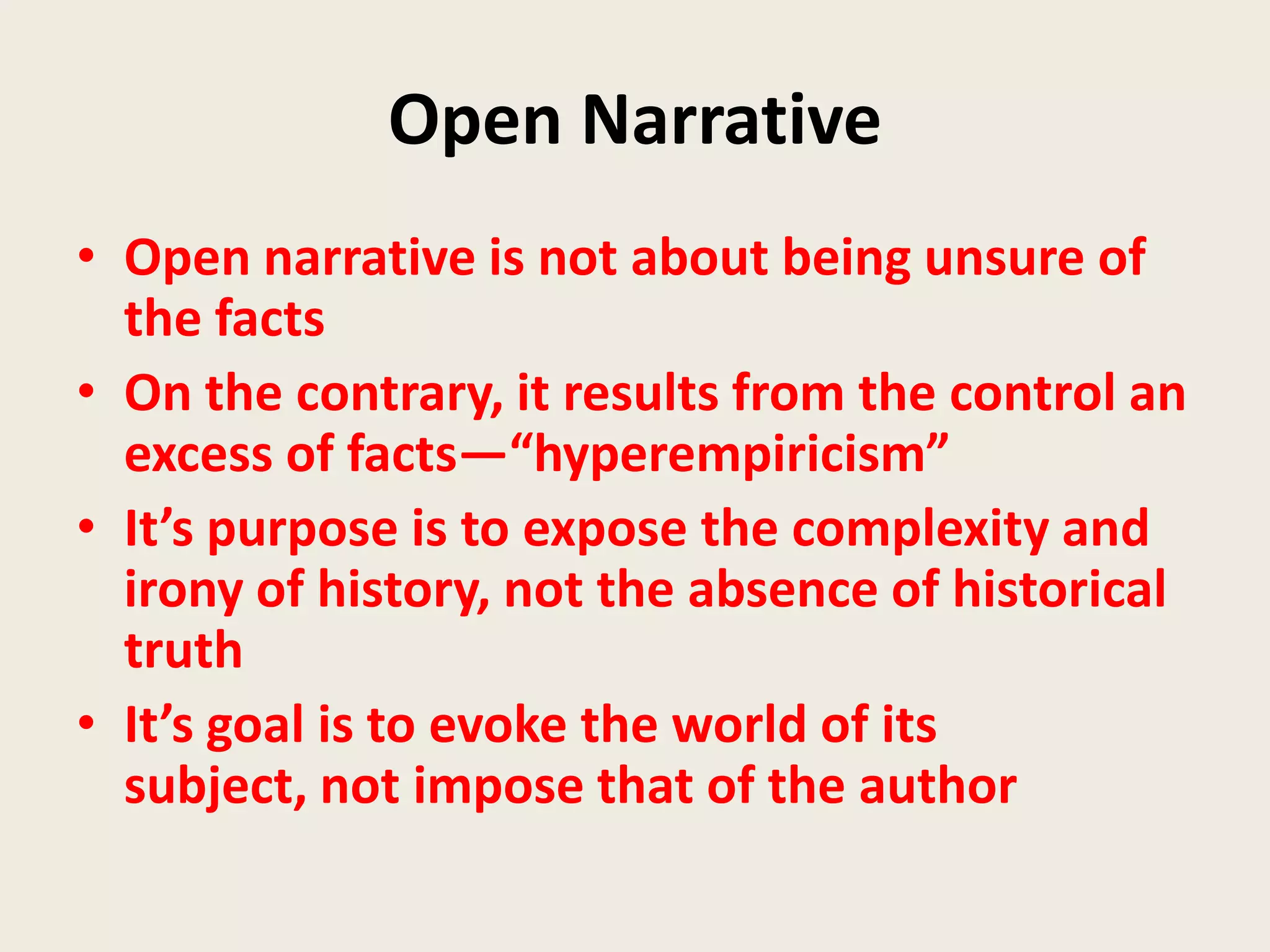
Open Narrative
• Open narrative is not about being unsure of
  the facts
• On the contrary, it results from the control an
  excess of facts—“hyperempiricism”
• It’s purpose is to expose the complexity and
  irony of history, not the absence of historical
  truth
• It’s goal is to evoke the world of its
  subject, not impose that of the author
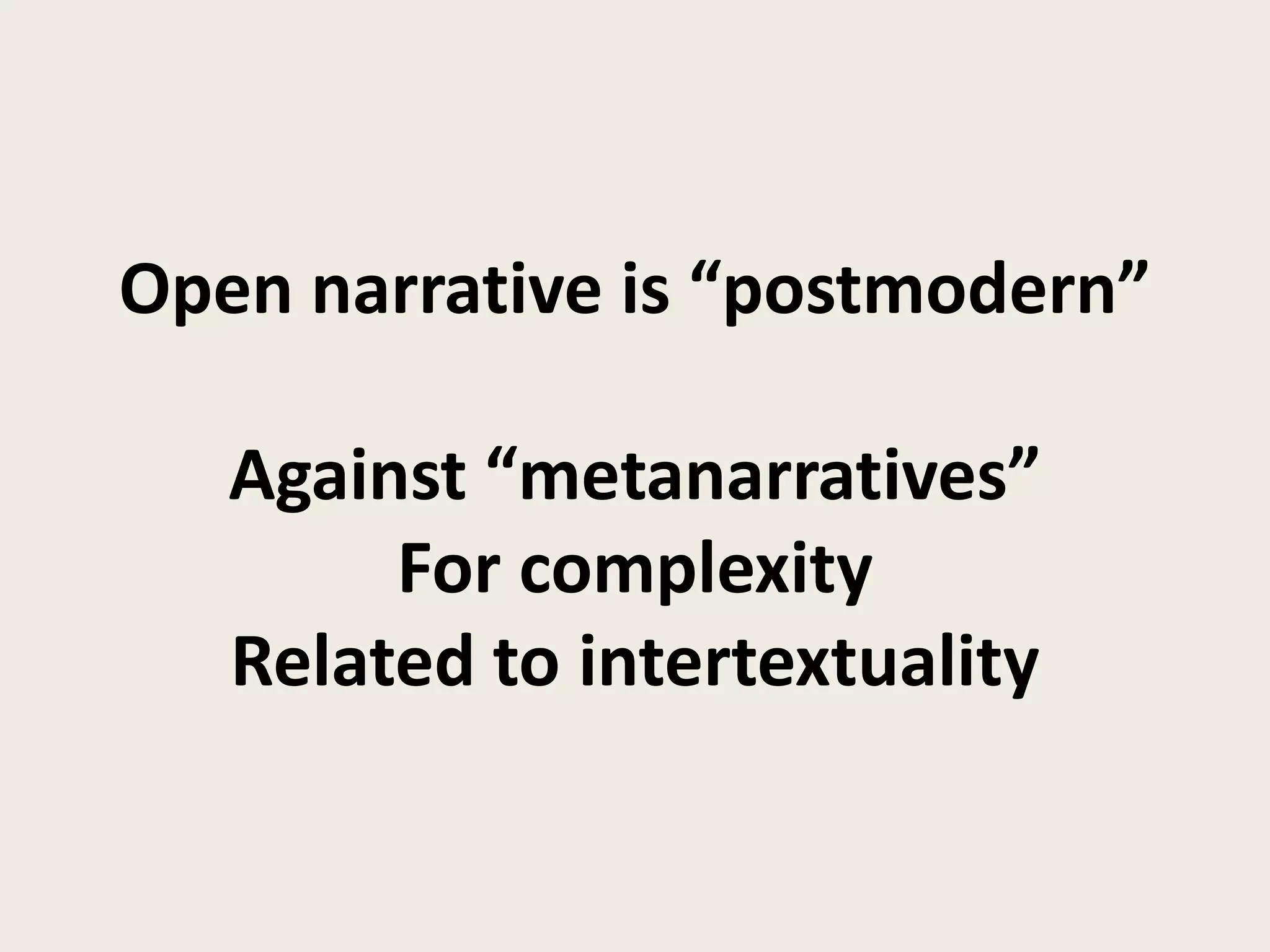
Open narrative is “postmodern”

   Against “metanarratives”
        For complexity
   Related to intertextuality
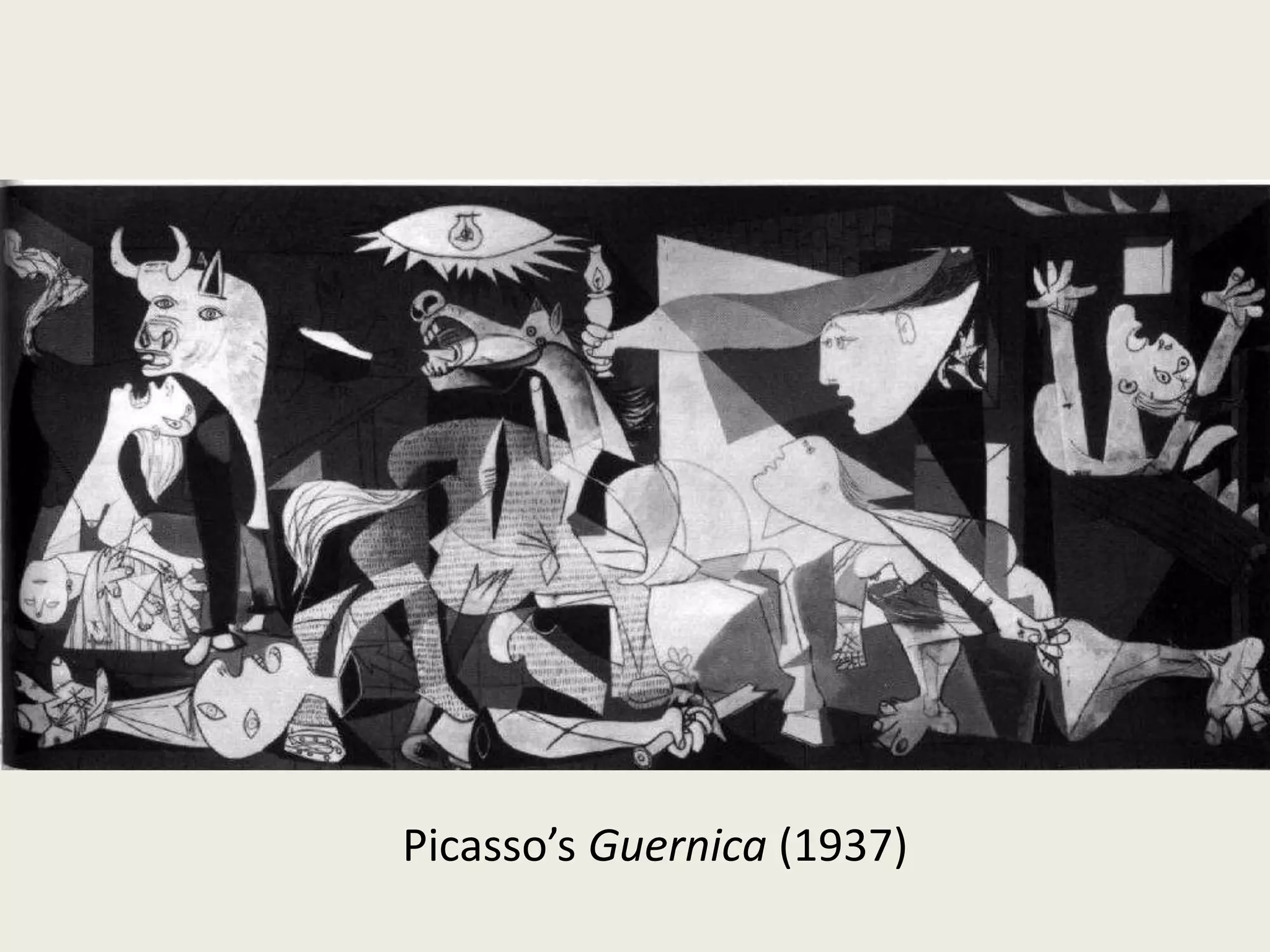
Picasso’s Guernica (1937)
Open narrative allows the
  historian to create …
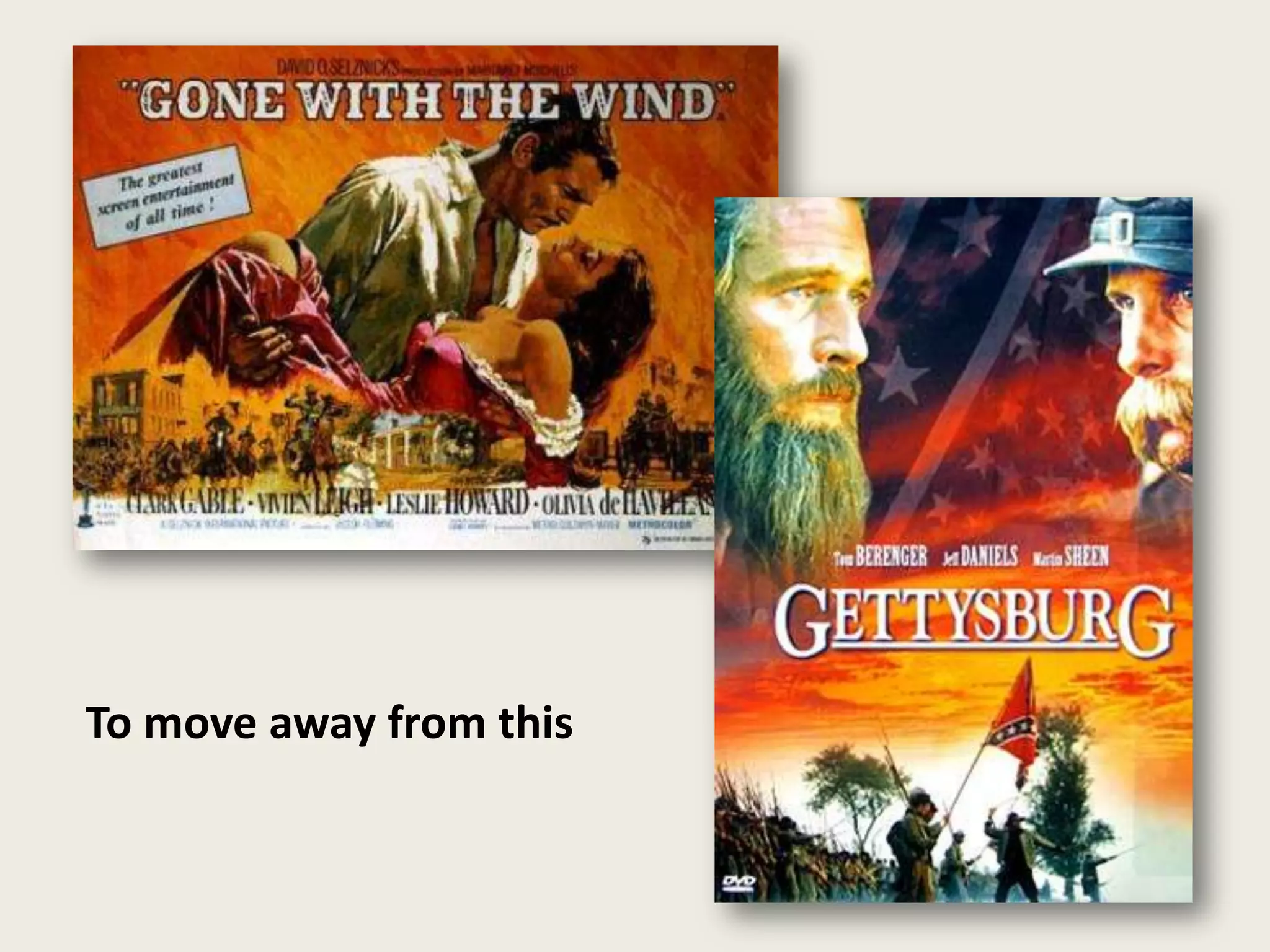
To move away from this
Did Valley of the Shadow
  achieve these goals?
No, Ayers put too much faith in
 the database to produce the
        desired effects
The Differences Slavery Made

Created in response to criticisms of
               VOTS

  But also an experiment in the
         academic essay
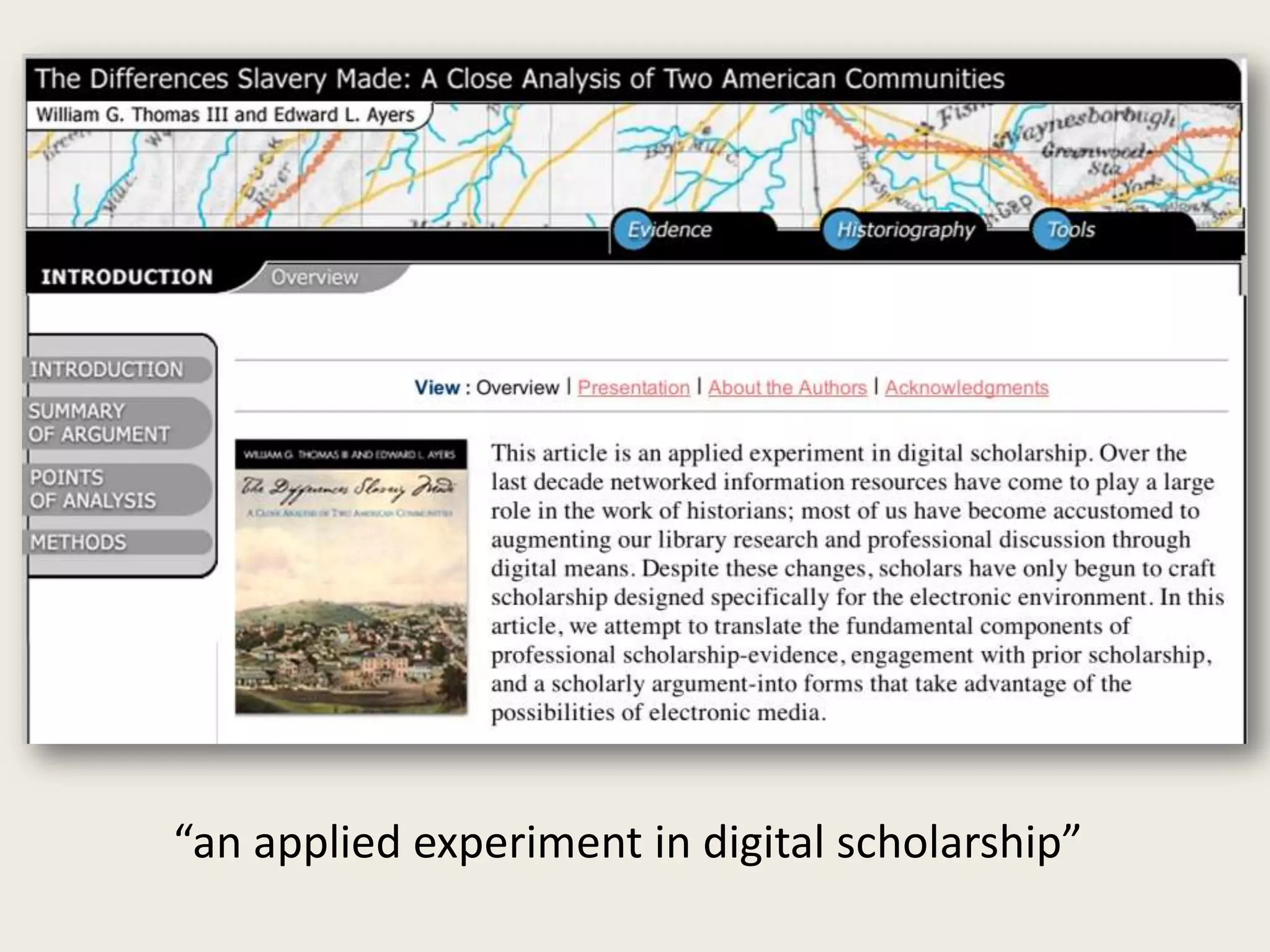
“an applied experiment in digital scholarship”
What is the specific problem that
     TDSM tries to solve?

What was the experiment about?
To give full access to the
     scholarly argument

But also to compensate for the
  lack of argument in VOTS
The task is to relate the
ARGUMENT with the DATA

   Why is this so hard?
Rationalization Effect:
    What is an (historical)
         argument?

   Why do databases and
hypertext complicate matters?
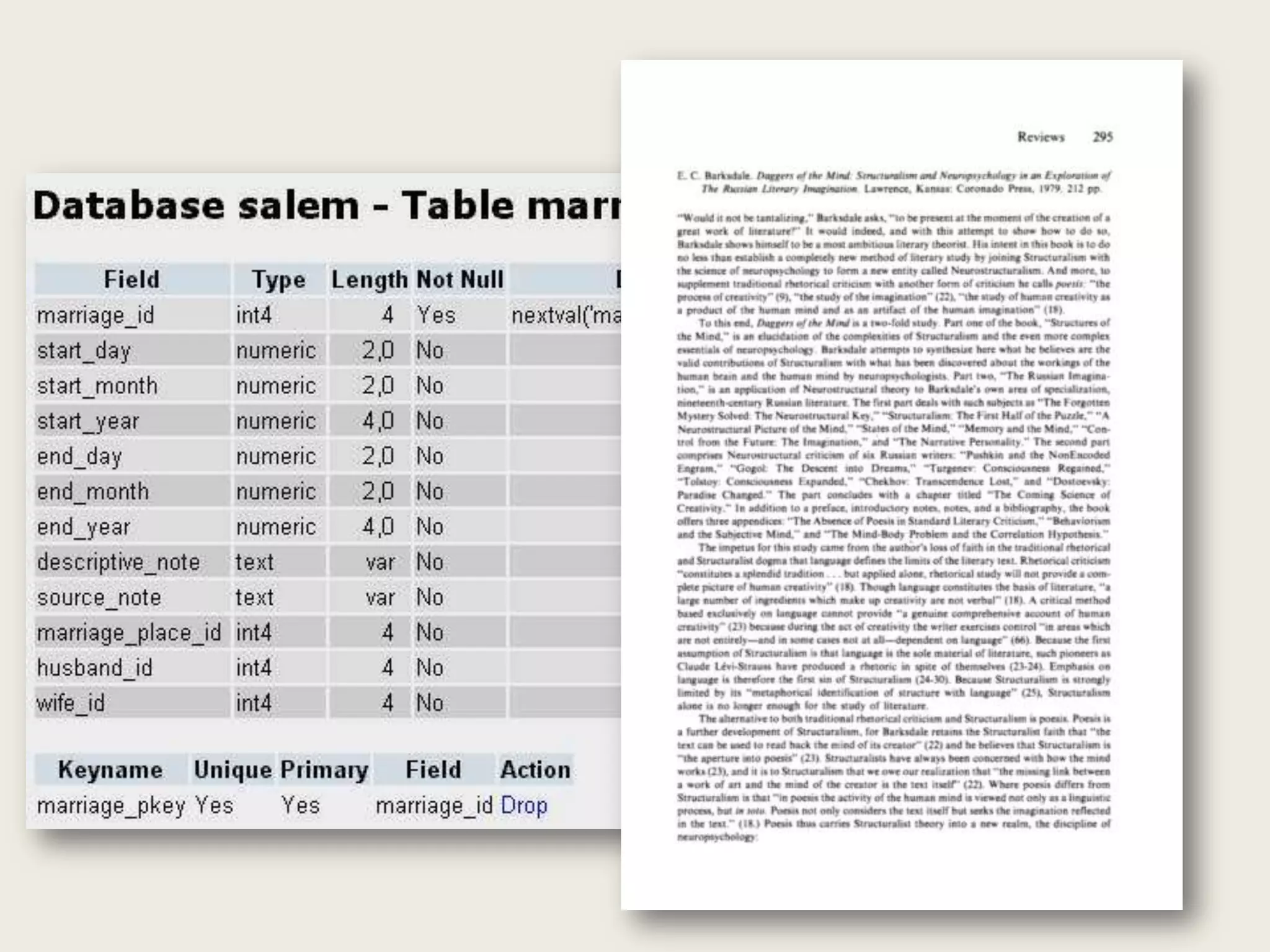
Arguments and narratives are linear
       and non-random

 Readers expect to follow a logical
   or causal sequence of ideas
Databases
           are random

  Databases are “random access”
It does not matter which order you
             read them

They are meant to be searched and
           “queried”
How does TDSM handle the
relationship between narrative and
               data?

How does it handle the relationship
 between the fixed linearity of the
 narrative and the non-linearity of
             the data?
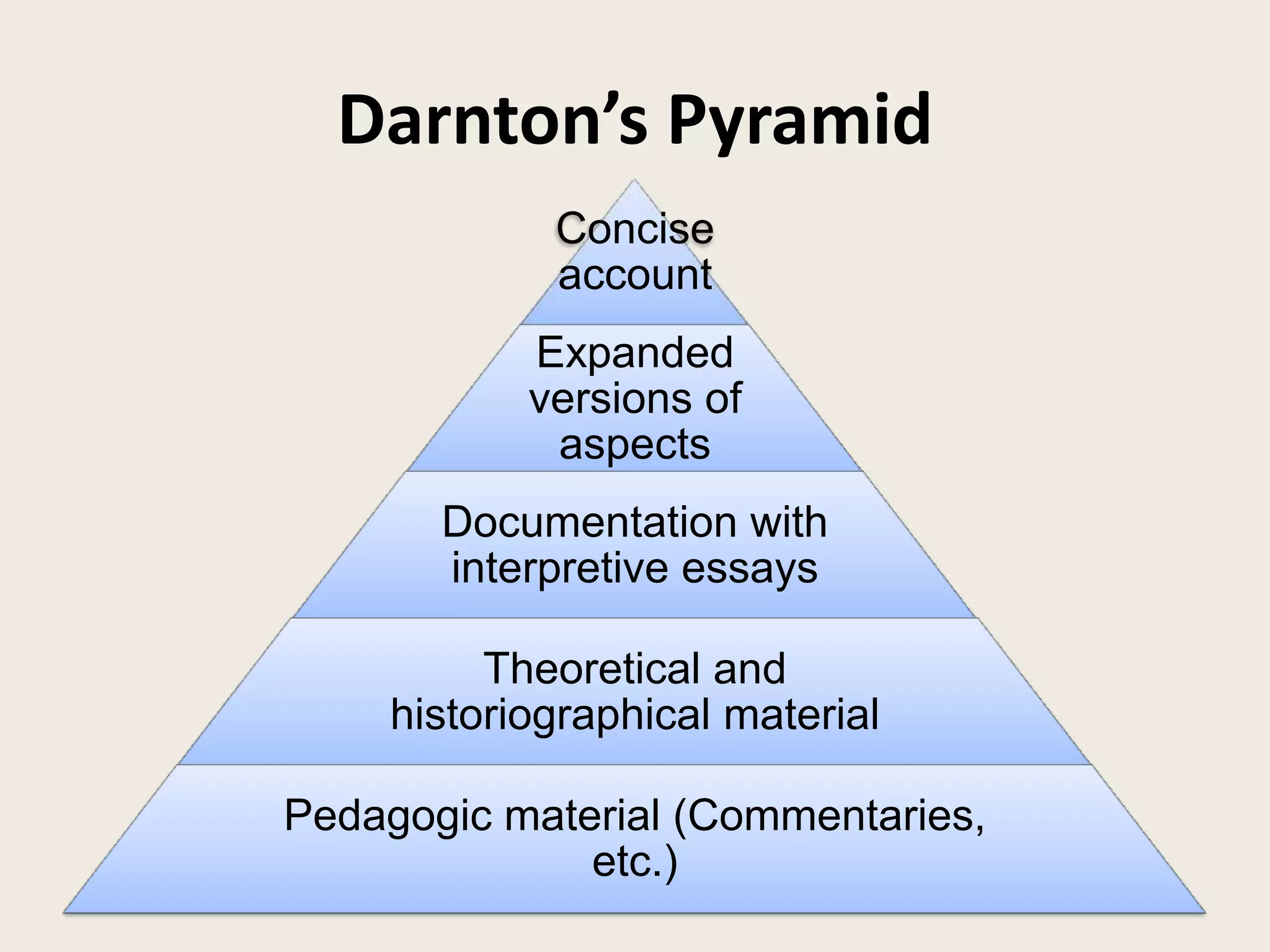
Darnton’s Pyramid
             Concise
             account
            Expanded
            versions of
             aspects
       Documentation with
       interpretive essays

          Theoretical and
     historiographical material

Pedagogic material (Commentaries,
              etc.)
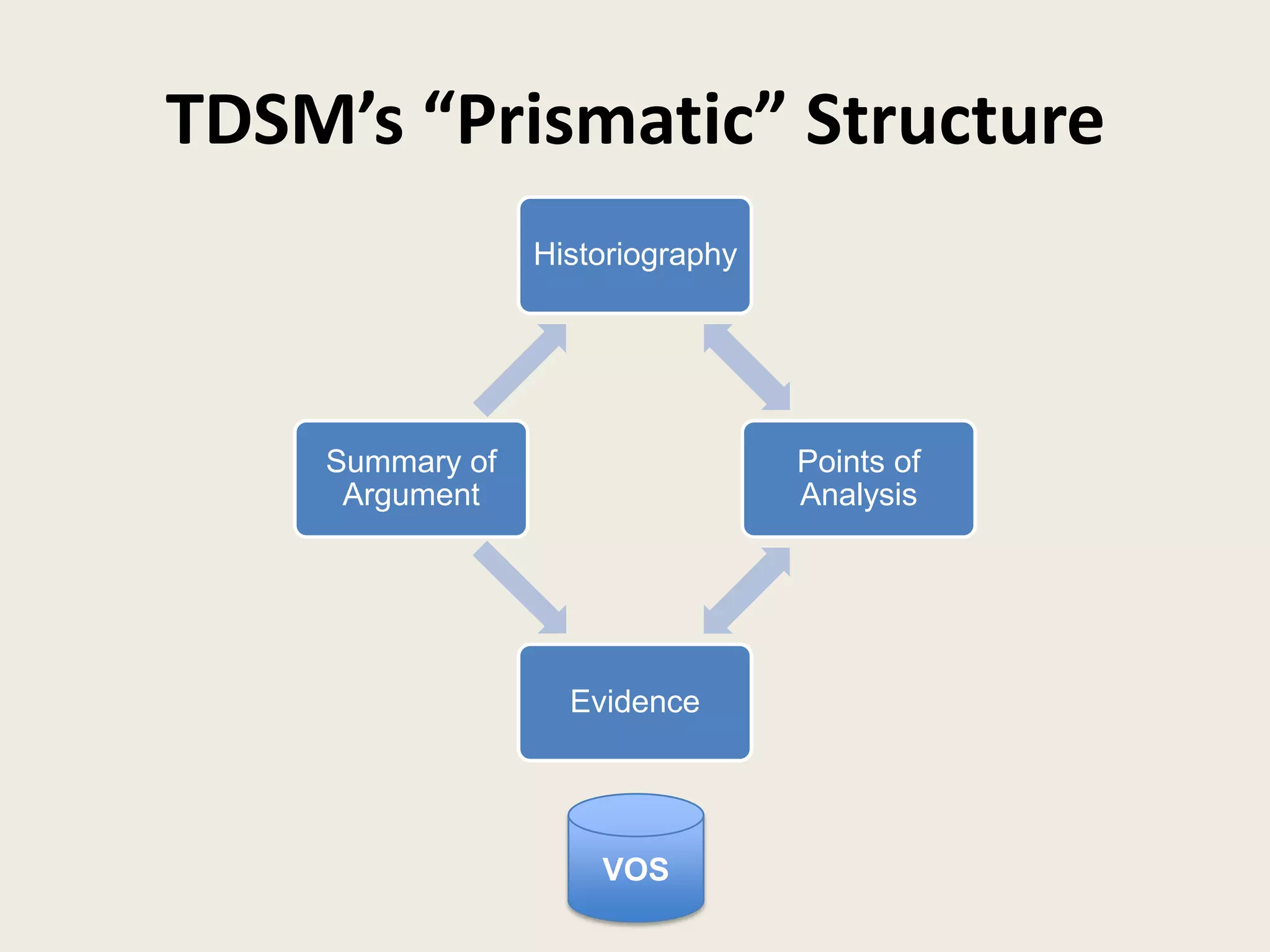
TDSM’s “Prismatic” Structure
                 Historiography


    Summary of                    Points of
     Argument                     Analysis


                   Evidence


                     VOS
Technology
• XML is used to organize content
  – The is is made from one big XML file, 24,000 lines long
  – XML used to markup sources and argument
• XSL is used to transform content
  – We are not learning XSL, but it is similar to CSS but
    more powerful
• GIS is used for map data
  – Geographic Information Systems
  – Allows maps to display statistical data
More “rationalization”
• Historians use three kinds of information
  – Narrative (T)
  – Historiography, or secondary sources (E)
  – Evidence, or primary sources (D)
• Historiography and Evidence organized in
  databases
  – Documents, tables, maps, etc.
  – Libraries, Bibliographies, Digital Collections
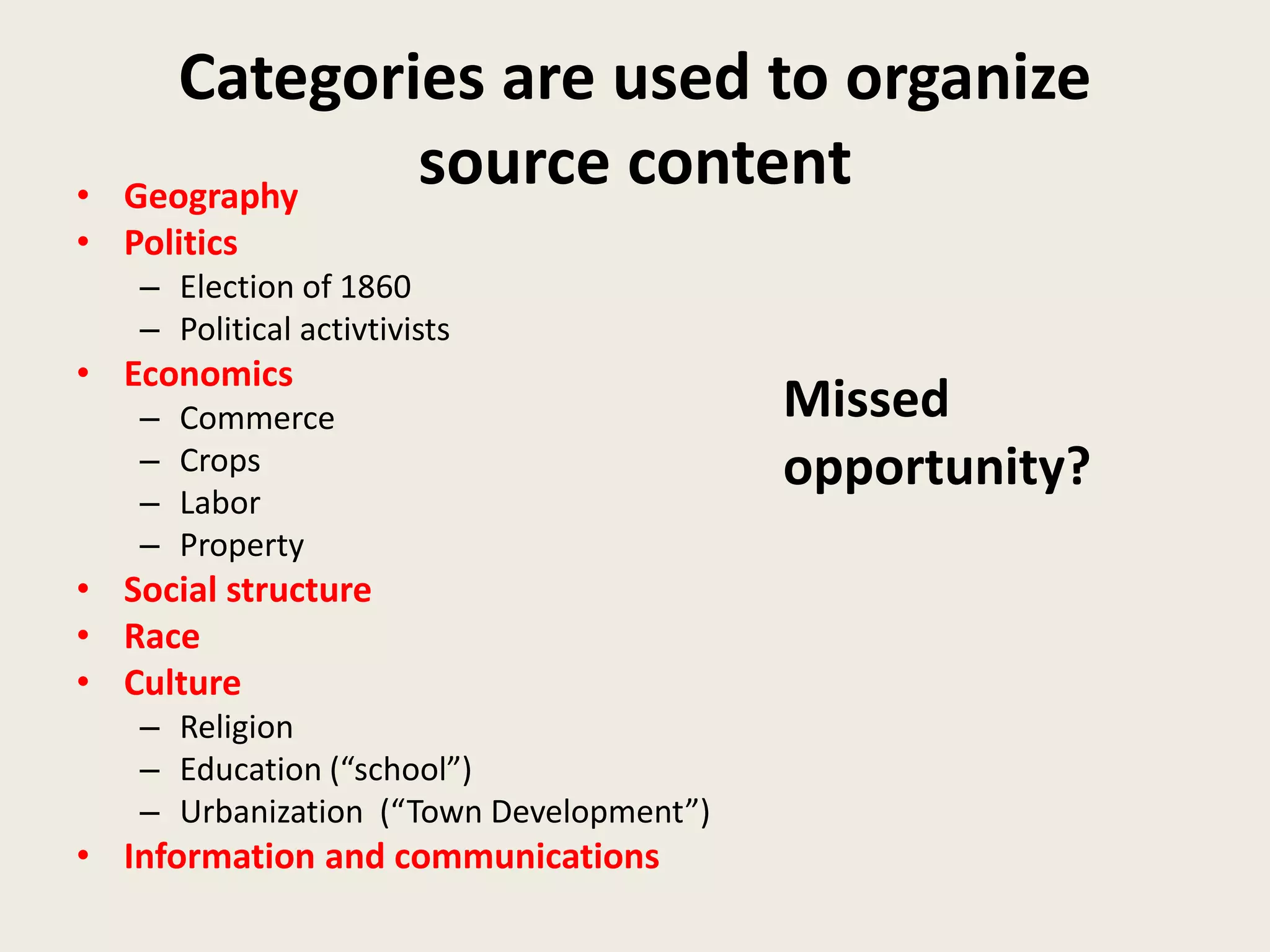
Categories are used to organize
• Geography
            source content
• Politics
   – Election of 1860
   – Political activtivists
• Economics
   –   Commerce                          Missed
   –   Crops                             opportunity?
   –   Labor
   –   Property
• Social structure
• Race
• Culture
   – Religion
   – Education (“school”)
   – Urbanization (“Town Development”)
• Information and communications
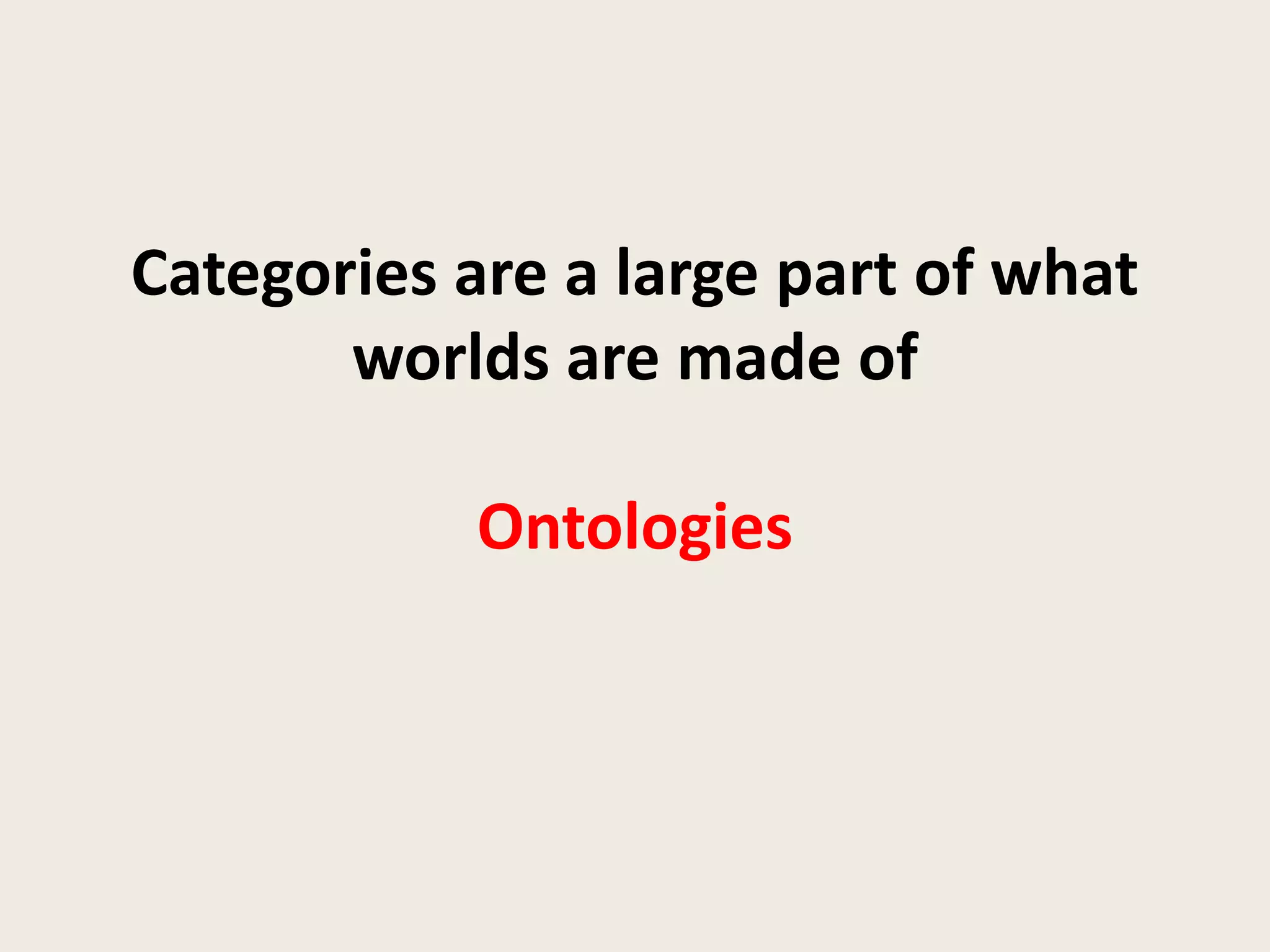
Categories are a large part of what
       worlds are made of

            Ontologies
Figure Types in Blake
Does the site fulfill the goals of
       open narrative?

Does the form match or help the
            content?
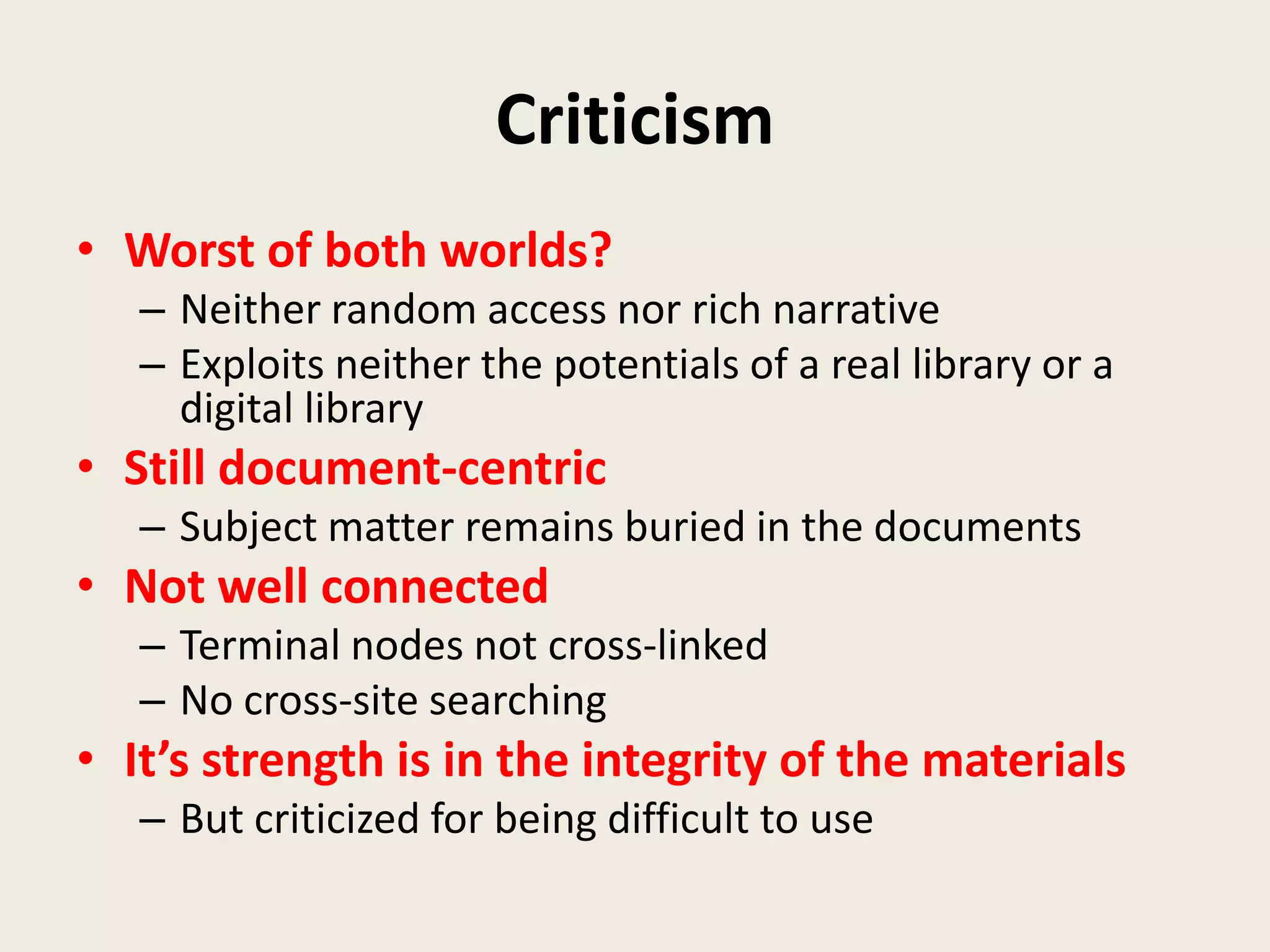
Criticism
• Worst of both worlds?
   – Neither random access nor rich narrative
   – Exploits neither the potentials of a real library or a
     digital library
• Still document-centric
   – Subject matter remains buried in the documents
• Not well connected
   – Terminal nodes not cross-linked
   – No cross-site searching
• It’s strength is in the integrity of the materials
   – But criticized for being difficult to use
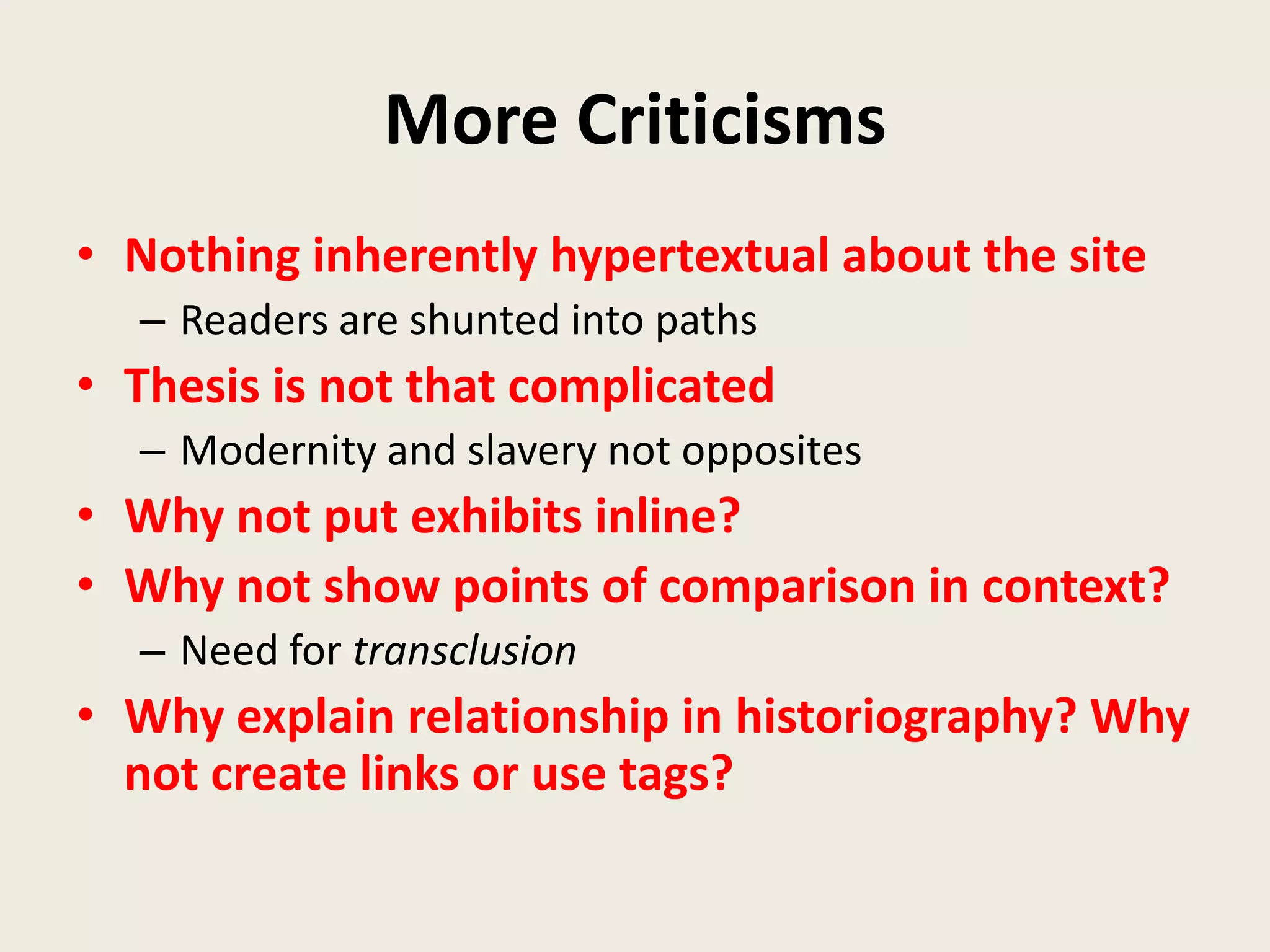
More Criticisms
• Nothing inherently hypertextual about the site
  – Readers are shunted into paths
• Thesis is not that complicated
  – Modernity and slavery not opposites
• Why not put exhibits inline?
• Why not show points of comparison in context?
  – Need for transclusion
• Why explain relationship in historiography? Why
  not create links or use tags?
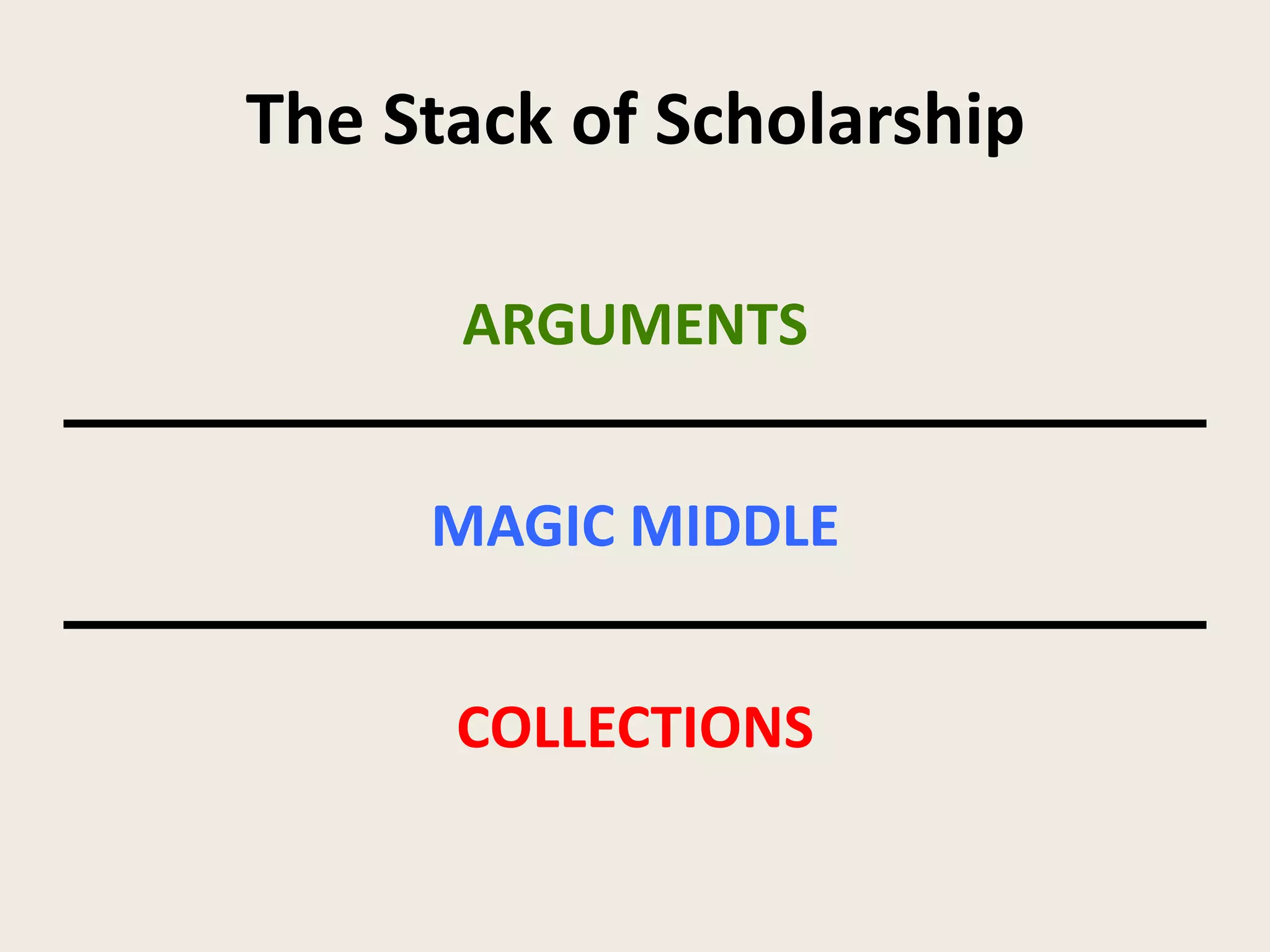
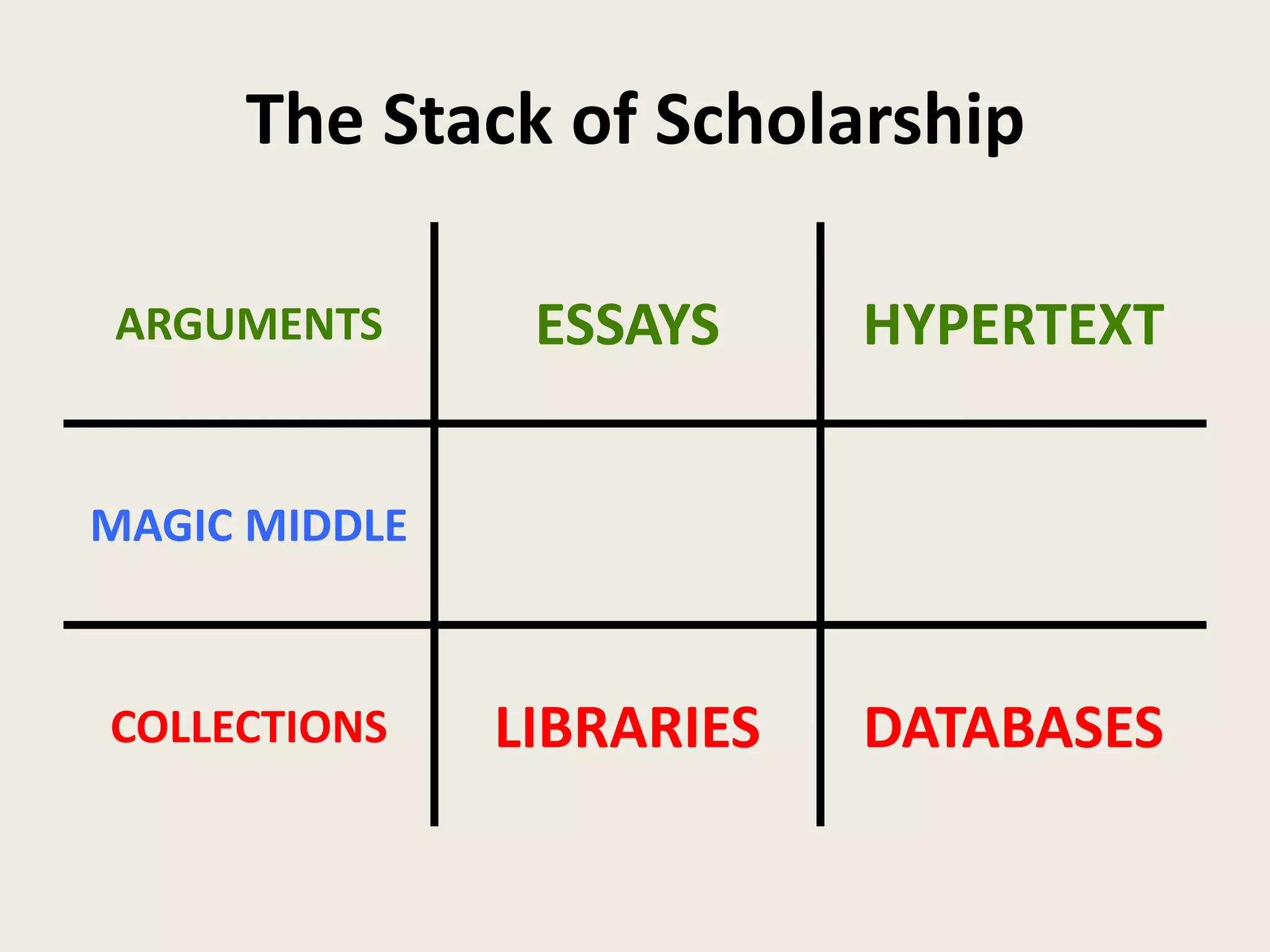
The Stack of Scholarship

      ARGUMENTS


     MAGIC MIDDLE


      COLLECTIONS
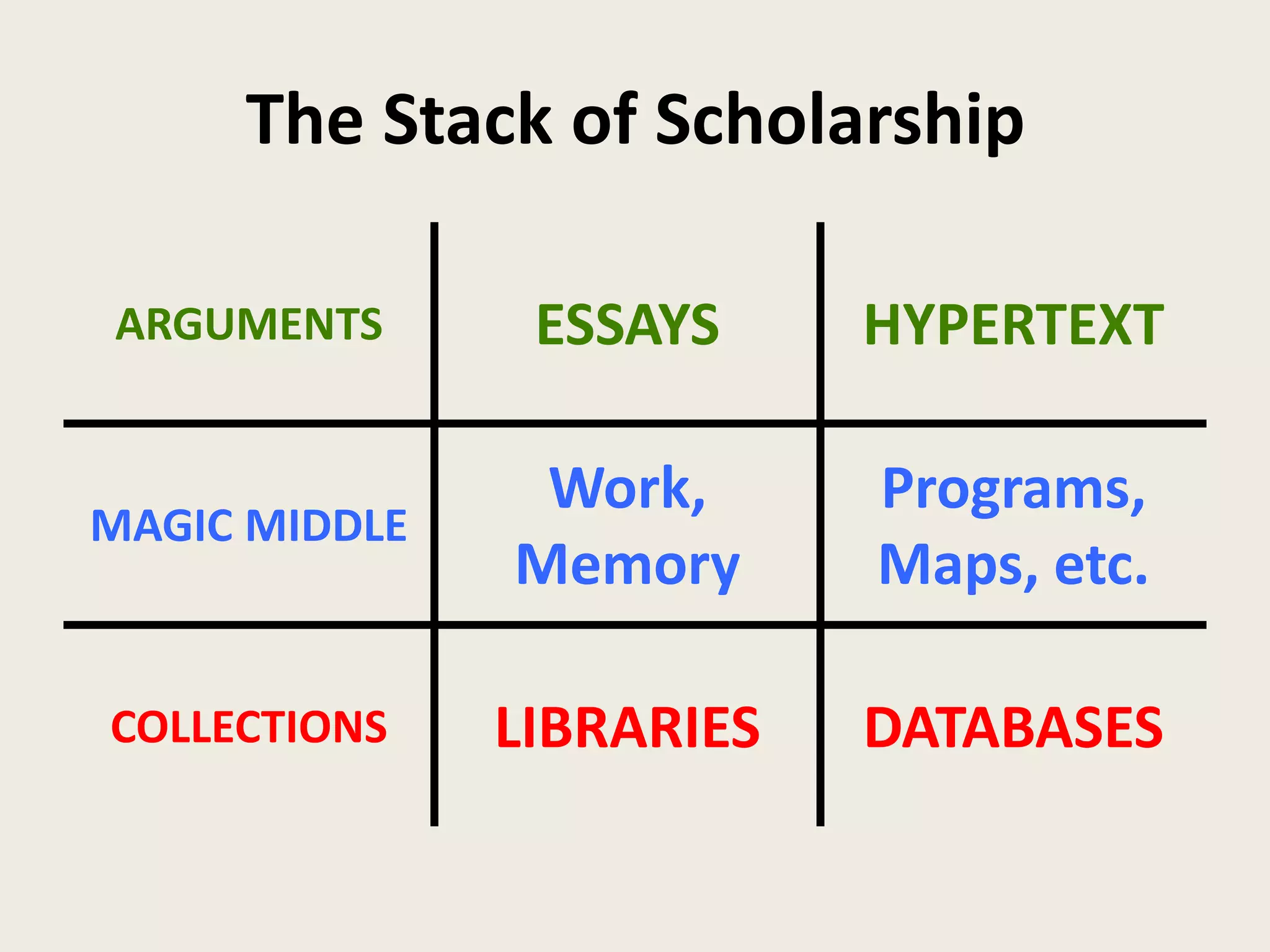
The Stack of Scholarship

ARGUMENTS       ESSAYS     HYPERTEXT


MAGIC MIDDLE


COLLECTIONS    LIBRARIES   DATABASES
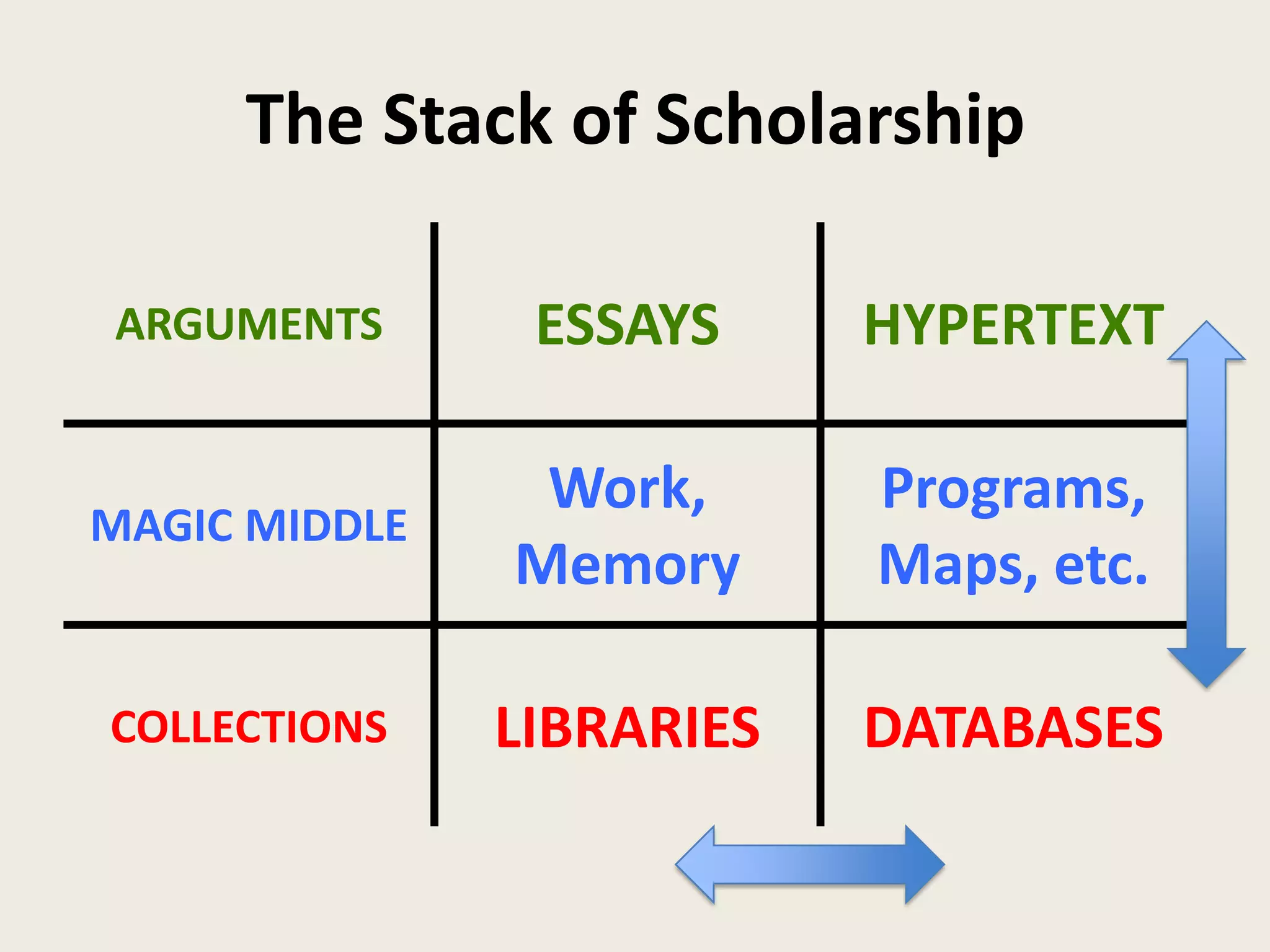
The Stack of Scholarship

ARGUMENTS       ESSAYS     HYPERTEXT

                Work,      Programs,
MAGIC MIDDLE
               Memory      Maps, etc.

COLLECTIONS    LIBRARIES   DATABASES
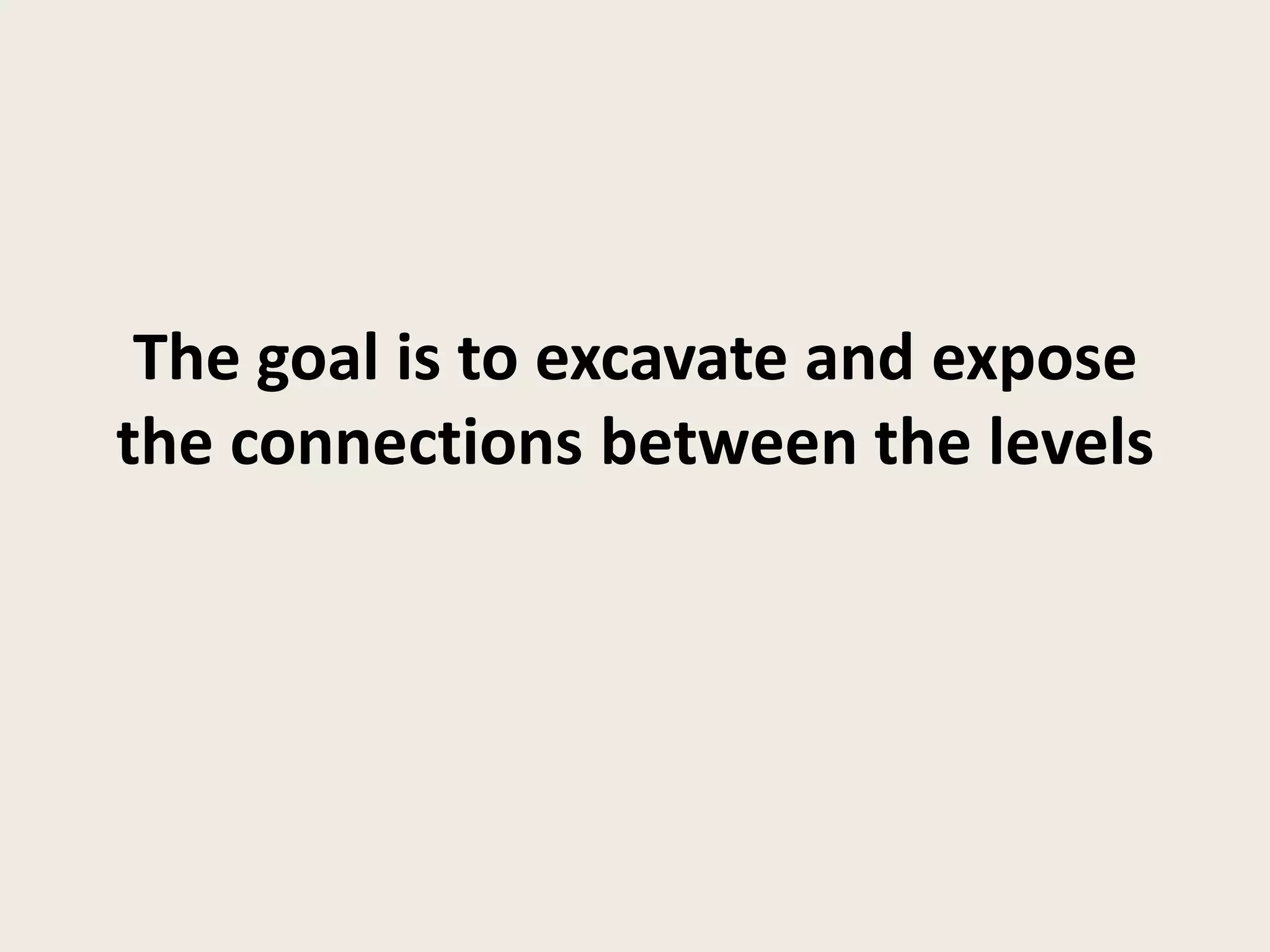
The Stack of Scholarship

ARGUMENTS       ESSAYS     HYPERTEXT

                Work,      Programs,
MAGIC MIDDLE
               Memory      Maps, etc.

COLLECTIONS    LIBRARIES   DATABASES
The goal is to excavate and expose
the connections between the levels

UVA MDST 3703 The Stack of Scholarship 2012-09-24

  • 1.
    The Stack ofScholarship: Ayers’ Experiment Prof. Alvarado MDST 3703/7703 25 September 2012
  • 2.
    Business • Quizzes graded – Questions, see me • Comments – By Monday evening – Please write comments, not posts, for the responses to the readings
  • 3.
    Review • Thematic ResearchCollections – Remain bound to the metaphor of the library and the book – Partly due to remediation • Other examples – Blake Project – World of Dante – House Divided – Princeton Dante Project
  • 4.
    BLAKE ARCHIVE WORLD OF DANTE • Figure types • Maps • Comparison viewer • Annotations PRINCETON DANTE PROJECT • Commentaries • Voice HOUSE DIVIDED • Contextual mass
  • 5.
    These sites seek to evoke world through contextual mass What do they mean by “world”?
  • 7.
    World models like theseare “embedded” in texts Sites like World of Dante use images, maps, and glossaries in relation to texts to evoke these worlds
  • 8.
    When we tellstories, we also create worlds Our worlds express worldviews, theories of the world, that are culturally constructed and historically specific
  • 10.
    Historians tells storiestoo Histories are written from various theoretical perspectives and motiviations
  • 11.
    The Great Mantheory of history
  • 12.
  • 14.
    Things do getcomplicated, though
  • 15.
    The Promise ofthe New South Ed Ayers, 1993
  • 16.
    What is “opennarrative”?
  • 17.
    Open vs. FixedNarrative • What is open narrative? • Why does Ayers propose it? • What did critics say of Promise? • How does Ayers defend himself? • Does the book have a thesis? • Is Ayers’ task similar to that of the historian of the web? • Are the periods connected?
  • 18.
    Open Narrative • Opennarrative is not about being unsure of the facts • On the contrary, it results from the control an excess of facts—“hyperempiricism” • It’s purpose is to expose the complexity and irony of history, not the absence of historical truth • It’s goal is to evoke the world of its subject, not impose that of the author
  • 19.
    Open narrative is“postmodern” Against “metanarratives” For complexity Related to intertextuality
  • 20.
  • 22.
    Open narrative allowsthe historian to create …
  • 23.
    To move awayfrom this
  • 24.
    Did Valley ofthe Shadow achieve these goals?
  • 25.
    No, Ayers puttoo much faith in the database to produce the desired effects
  • 26.
    The Differences SlaveryMade Created in response to criticisms of VOTS But also an experiment in the academic essay
  • 27.
    “an applied experimentin digital scholarship”
  • 28.
    What is thespecific problem that TDSM tries to solve? What was the experiment about?
  • 29.
    To give fullaccess to the scholarly argument But also to compensate for the lack of argument in VOTS
  • 30.
    The task isto relate the ARGUMENT with the DATA Why is this so hard?
  • 31.
    Rationalization Effect: What is an (historical) argument? Why do databases and hypertext complicate matters?
  • 32.
    Arguments and narrativesare linear and non-random Readers expect to follow a logical or causal sequence of ideas
  • 33.
    Databases are random Databases are “random access” It does not matter which order you read them They are meant to be searched and “queried”
  • 35.
    How does TDSMhandle the relationship between narrative and data? How does it handle the relationship between the fixed linearity of the narrative and the non-linearity of the data?
  • 36.
    Darnton’s Pyramid Concise account Expanded versions of aspects Documentation with interpretive essays Theoretical and historiographical material Pedagogic material (Commentaries, etc.)
  • 37.
    TDSM’s “Prismatic” Structure Historiography Summary of Points of Argument Analysis Evidence VOS
  • 38.
    Technology • XML isused to organize content – The is is made from one big XML file, 24,000 lines long – XML used to markup sources and argument • XSL is used to transform content – We are not learning XSL, but it is similar to CSS but more powerful • GIS is used for map data – Geographic Information Systems – Allows maps to display statistical data
  • 39.
    More “rationalization” • Historiansuse three kinds of information – Narrative (T) – Historiography, or secondary sources (E) – Evidence, or primary sources (D) • Historiography and Evidence organized in databases – Documents, tables, maps, etc. – Libraries, Bibliographies, Digital Collections
  • 40.
    Categories are usedto organize • Geography source content • Politics – Election of 1860 – Political activtivists • Economics – Commerce Missed – Crops opportunity? – Labor – Property • Social structure • Race • Culture – Religion – Education (“school”) – Urbanization (“Town Development”) • Information and communications
  • 41.
    Categories are alarge part of what worlds are made of Ontologies
  • 42.
  • 43.
    Does the sitefulfill the goals of open narrative? Does the form match or help the content?
  • 44.
    Criticism • Worst ofboth worlds? – Neither random access nor rich narrative – Exploits neither the potentials of a real library or a digital library • Still document-centric – Subject matter remains buried in the documents • Not well connected – Terminal nodes not cross-linked – No cross-site searching • It’s strength is in the integrity of the materials – But criticized for being difficult to use
  • 45.
    More Criticisms • Nothinginherently hypertextual about the site – Readers are shunted into paths • Thesis is not that complicated – Modernity and slavery not opposites • Why not put exhibits inline? • Why not show points of comparison in context? – Need for transclusion • Why explain relationship in historiography? Why not create links or use tags?
  • 46.
    The Stack ofScholarship ARGUMENTS MAGIC MIDDLE COLLECTIONS
  • 47.
    The Stack ofScholarship ARGUMENTS ESSAYS HYPERTEXT MAGIC MIDDLE COLLECTIONS LIBRARIES DATABASES
  • 48.
    The Stack ofScholarship ARGUMENTS ESSAYS HYPERTEXT Work, Programs, MAGIC MIDDLE Memory Maps, etc. COLLECTIONS LIBRARIES DATABASES
  • 49.
    The Stack ofScholarship ARGUMENTS ESSAYS HYPERTEXT Work, Programs, MAGIC MIDDLE Memory Maps, etc. COLLECTIONS LIBRARIES DATABASES
  • 50.
    The goal isto excavate and expose the connections between the levels

Editor's Notes

  • #12 Ceasar outside of Rome … Crossing the Rubicon
  • #15 http://www.guardian.co.uk/news/datablog/2010/apr/29/mcchrystal-afghanistan-powerpoint-slide#zoomed-picture
  • #20 So, Ayers is in agreement with Landow that hypertext is the ideal medium to represent intertextuality
  • #21 Here’s a way to think about post moderminsm
  • #22 Compare Guernica image to this …