Two tier and
three tier
Name : Kashaf Naz
Reg : SP18-BSI-025
Two-Tier
Architecture:
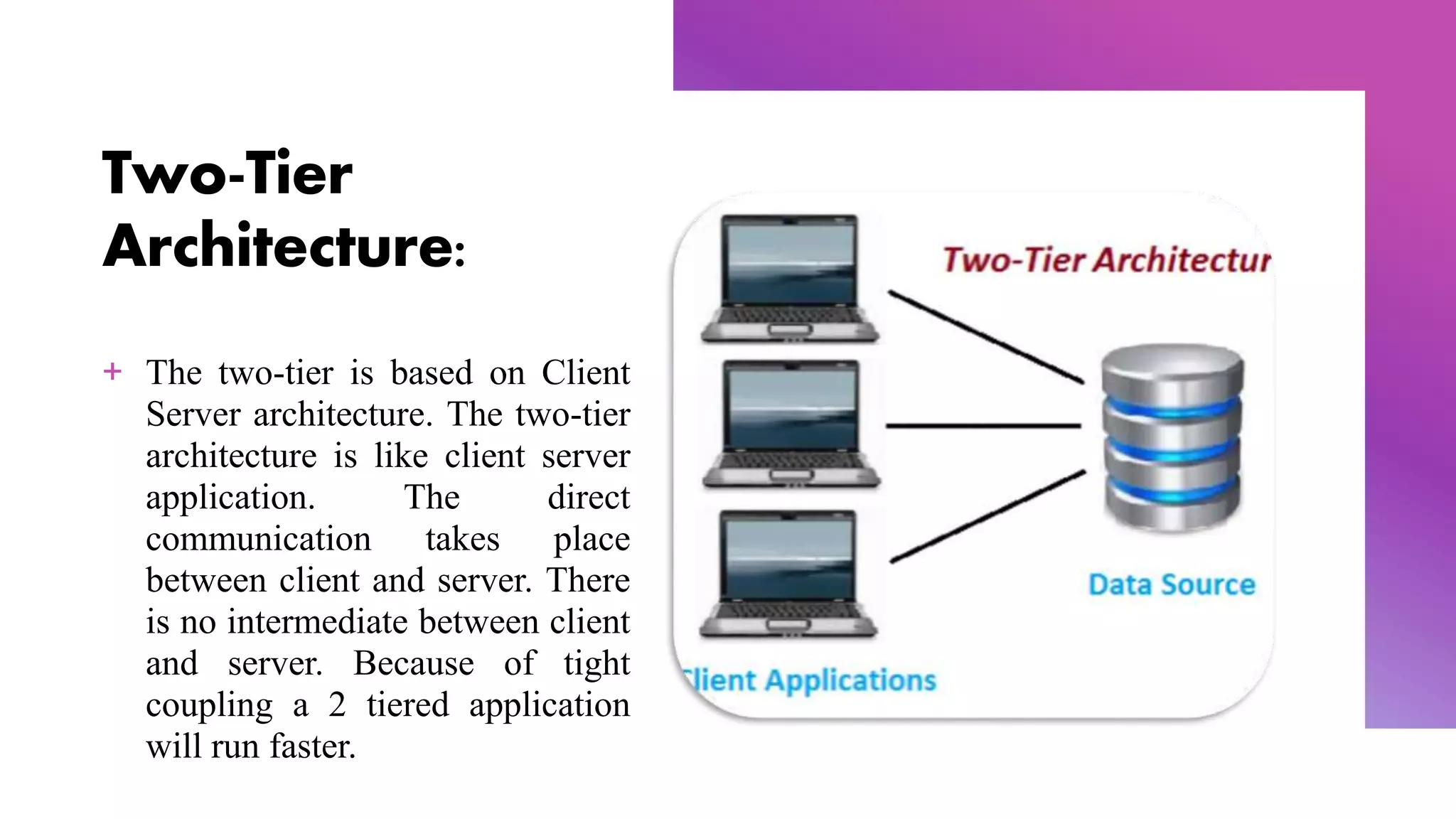
+ The two-tier is based on Client
Server architecture. The two-tier
architecture is like client server
application. The direct
communication takes place
between client and server. There
is no intermediate between client
and server. Because of tight
coupling a 2 tiered application
will run faster.
Two-Tier Architecture:
The Two-tier architecture is divided into
two parts:
+ Client Application (Client Tier)
+ Database (Data Tier)
Two-
Tier Architecture:
+ On client application side the
code is written for saving
the data in the SQL server
database. Client sends the
request to server and it process
the request & send back with
data. The main problem of two
tier architecture is the server
cannot respond multiple request
same time, as a result it cause a
data integrity issue.
Two-Tier Architecture:
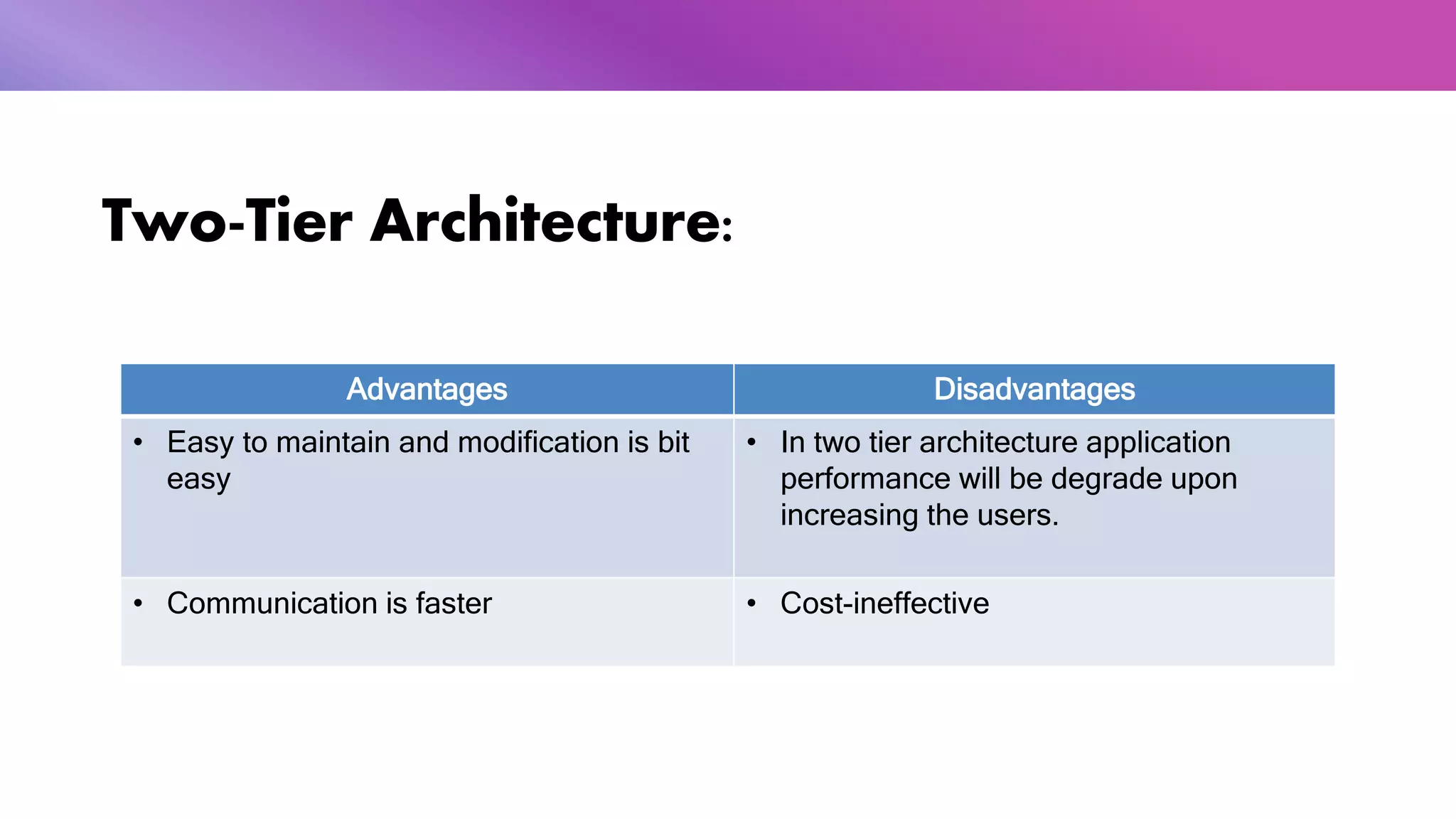
Advantages Disadvantages
• Easy to maintain and modification is bit
easy
• In two tier architecture application
performance will be degrade upon
increasing the users.
• Communication is faster • Cost-ineffective
Three-Tier
Architecture
+ Three-tier architecture typically
comprise a presentation tier,
a business or data access tier, and
a data tier. Three layers in the three tier
architecture are as follows:
• Client layer
• Business layer
• Data layer
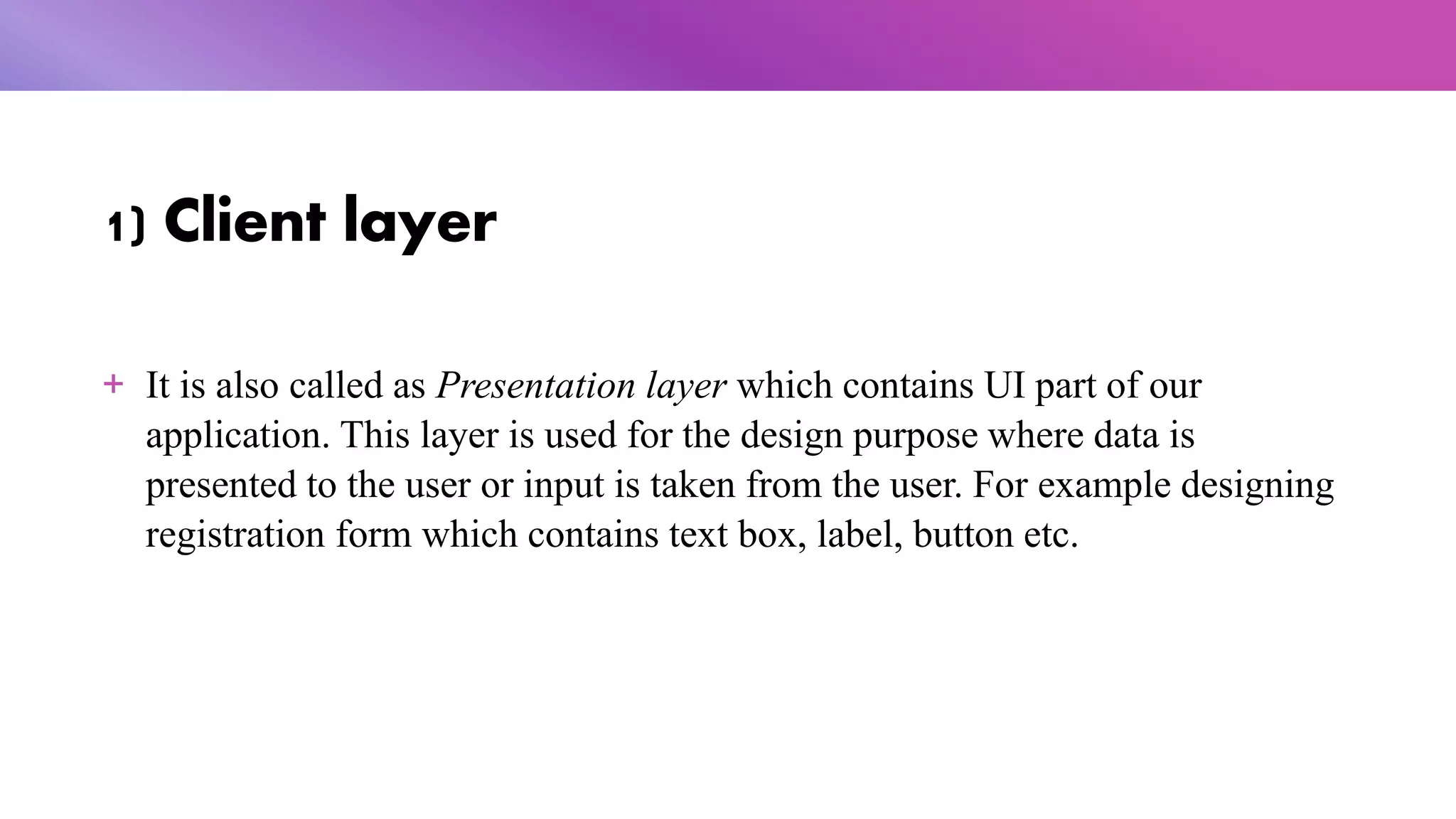
1) Client layer
+ It is also called as Presentation layer which contains UI part of our
application. This layer is used for the design purpose where data is
presented to the user or input is taken from the user. For example designing
registration form which contains text box, label, button etc.
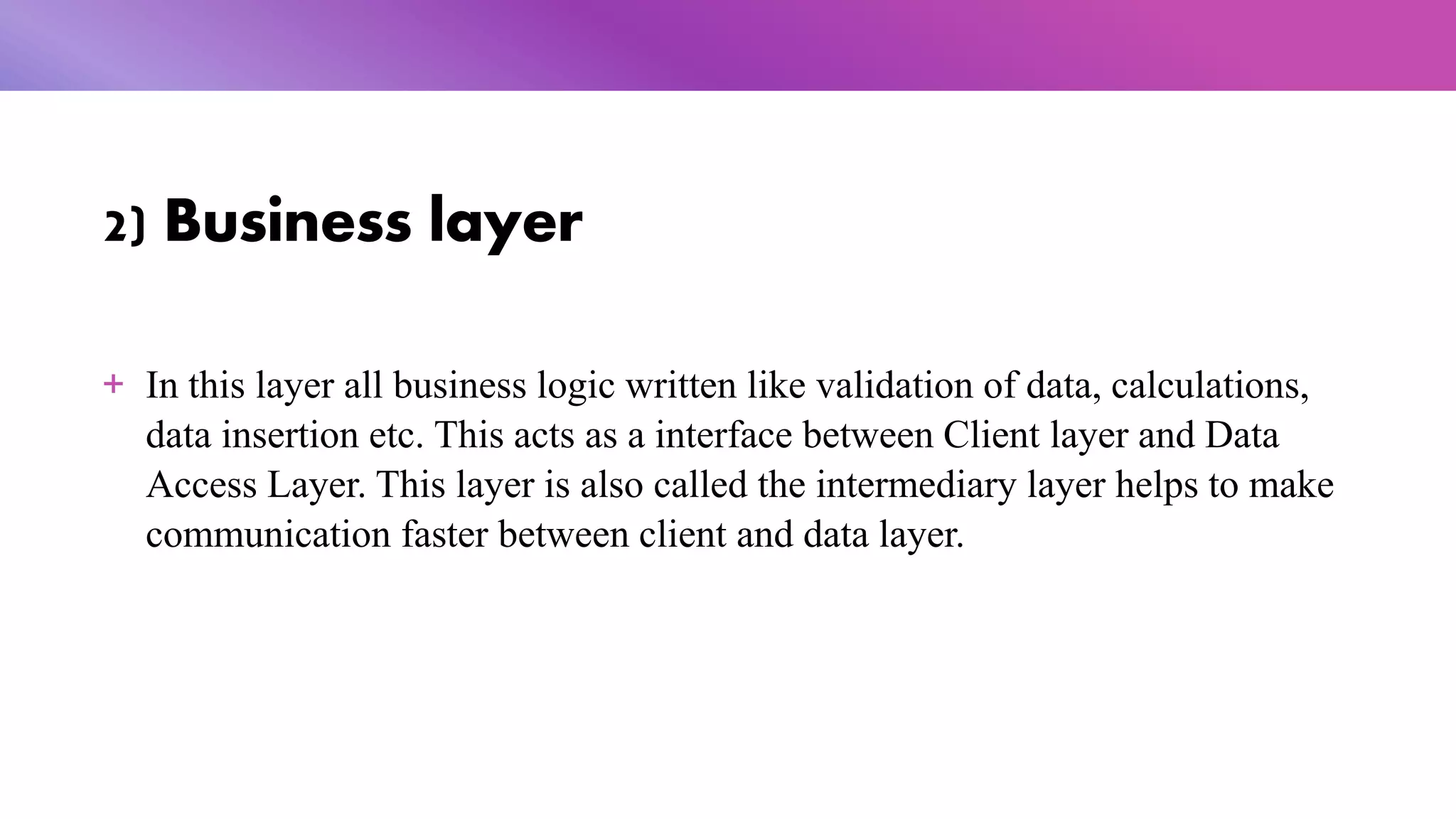
2) Business layer
+ In this layer all business logic written like validation of data, calculations,
data insertion etc. This acts as a interface between Client layer and Data
Access Layer. This layer is also called the intermediary layer helps to make
communication faster between client and data layer.
3) Data layer:
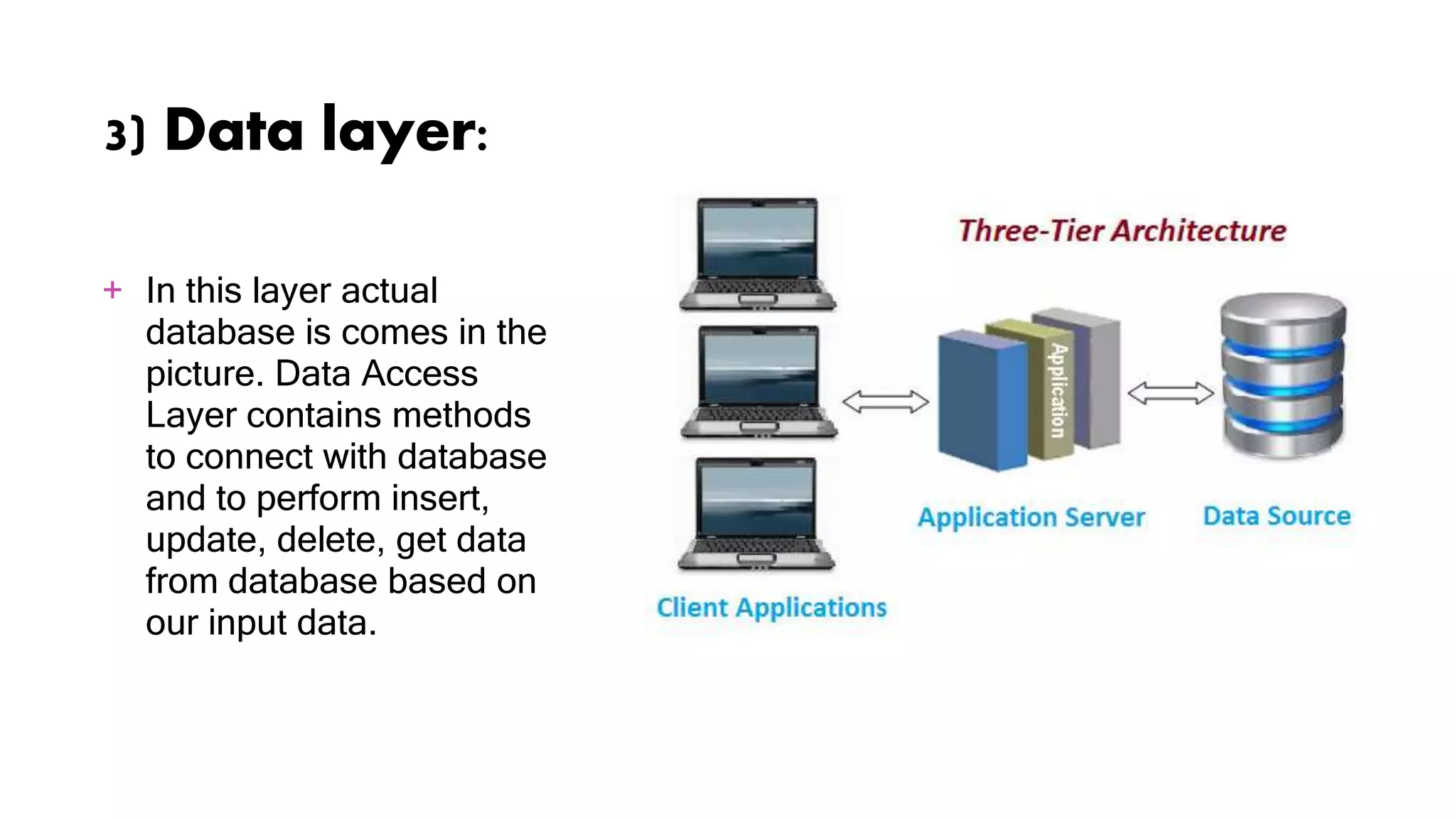
+ In this layer actual
database is comes in the
picture. Data Access
Layer contains methods
to connect with database
and to perform insert,
update, delete, get data
from database based on
our input data.
Advantages
High performance, lightweight persistent objects
Scalability – Each tier can scale horizontally
Performance – Because the Presentation tier can cache requests, network utilization
is minimized, and the load is reduced on the Application and Data tiers.
High degree of flexibility in deployment platform and configuration
Better Re-use
Improve Data Integrity
Improved Security – Client is not direct access to database.
Easy to maintain and modification is bit easy, won’t affect other modules
In three tier architecture application performance is good.
Disadvantages
+ Increase Complexity/Effort
Thank you

two tier and three tier

  • 1.
    Two tier and threetier Name : Kashaf Naz Reg : SP18-BSI-025
  • 2.
    Two-Tier Architecture: + The two-tieris based on Client Server architecture. The two-tier architecture is like client server application. The direct communication takes place between client and server. There is no intermediate between client and server. Because of tight coupling a 2 tiered application will run faster.
  • 3.
    Two-Tier Architecture: The Two-tierarchitecture is divided into two parts: + Client Application (Client Tier) + Database (Data Tier)
  • 4.
    Two- Tier Architecture: + Onclient application side the code is written for saving the data in the SQL server database. Client sends the request to server and it process the request & send back with data. The main problem of two tier architecture is the server cannot respond multiple request same time, as a result it cause a data integrity issue.
  • 5.
    Two-Tier Architecture: Advantages Disadvantages •Easy to maintain and modification is bit easy • In two tier architecture application performance will be degrade upon increasing the users. • Communication is faster • Cost-ineffective
  • 6.
    Three-Tier Architecture + Three-tier architecturetypically comprise a presentation tier, a business or data access tier, and a data tier. Three layers in the three tier architecture are as follows: • Client layer • Business layer • Data layer
  • 7.
    1) Client layer +It is also called as Presentation layer which contains UI part of our application. This layer is used for the design purpose where data is presented to the user or input is taken from the user. For example designing registration form which contains text box, label, button etc.
  • 8.
    2) Business layer +In this layer all business logic written like validation of data, calculations, data insertion etc. This acts as a interface between Client layer and Data Access Layer. This layer is also called the intermediary layer helps to make communication faster between client and data layer.
  • 9.
    3) Data layer: +In this layer actual database is comes in the picture. Data Access Layer contains methods to connect with database and to perform insert, update, delete, get data from database based on our input data.
  • 10.
    Advantages High performance, lightweightpersistent objects Scalability – Each tier can scale horizontally Performance – Because the Presentation tier can cache requests, network utilization is minimized, and the load is reduced on the Application and Data tiers. High degree of flexibility in deployment platform and configuration Better Re-use Improve Data Integrity Improved Security – Client is not direct access to database. Easy to maintain and modification is bit easy, won’t affect other modules In three tier architecture application performance is good.
  • 11.
  • 12.