MCP-1 AND IL-8EXPRESSION
BY MONOCYTES IN CLOTS
Paola A. Arias-Mendoza, MS1
University of Puerto Rico,
Medical Sciences Campus
Robert Campbell, Ph.D.
Andrew S. Weyrich, Ph.D.
Program in Molecular Medicine
University of Utah
2.
INTRODUCTION
• Cardiovascular Disease is the leading cause of death in US.
• Arterial thrombosis – Myocardial infarction and stroke
accounted for 37% of all deaths in 2007.
• Venous thrombosis – Effects more than a million a year
with 30% mortality within the first 30 days.
BACKGROUND
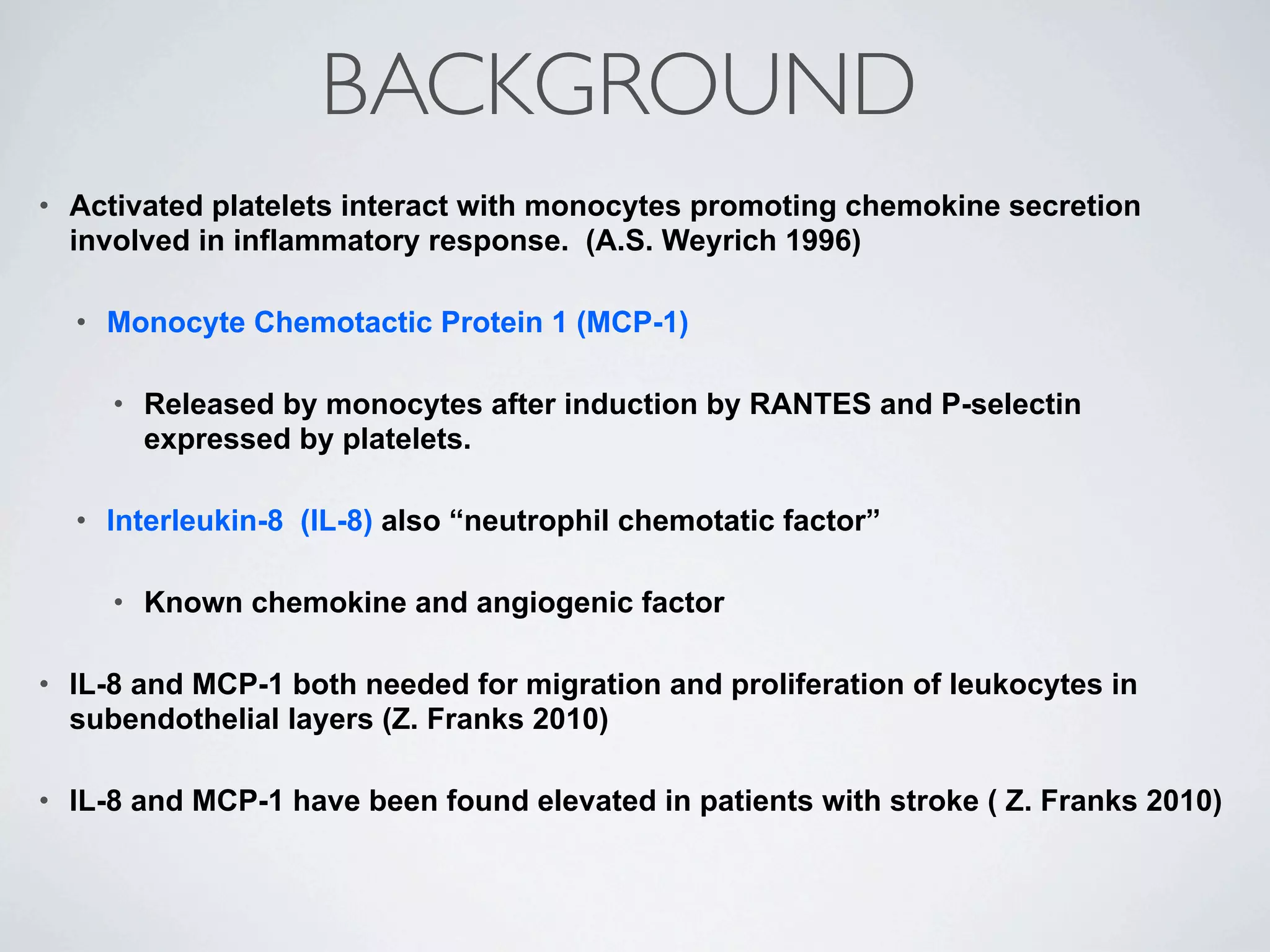
• Activated platelets interact with monocytes promoting chemokine secretion
involved in inflammatory response. (A.S. Weyrich 1996)
• Monocyte Chemotactic Protein 1 (MCP-1)
• Released by monocytes after induction by RANTES and P-selectin
expressed by platelets.
• Interleukin-8 (IL-8) also “neutrophil chemotatic factor”
• Known chemokine and angiogenic factor
• IL-8 and MCP-1 both needed for migration and proliferation of leukocytes in
subendothelial layers (Z. Franks 2010)
• IL-8 and MCP-1 have been found elevated in patients with stroke ( Z. Franks 2010)
31.
IN VITRO SYSTEM
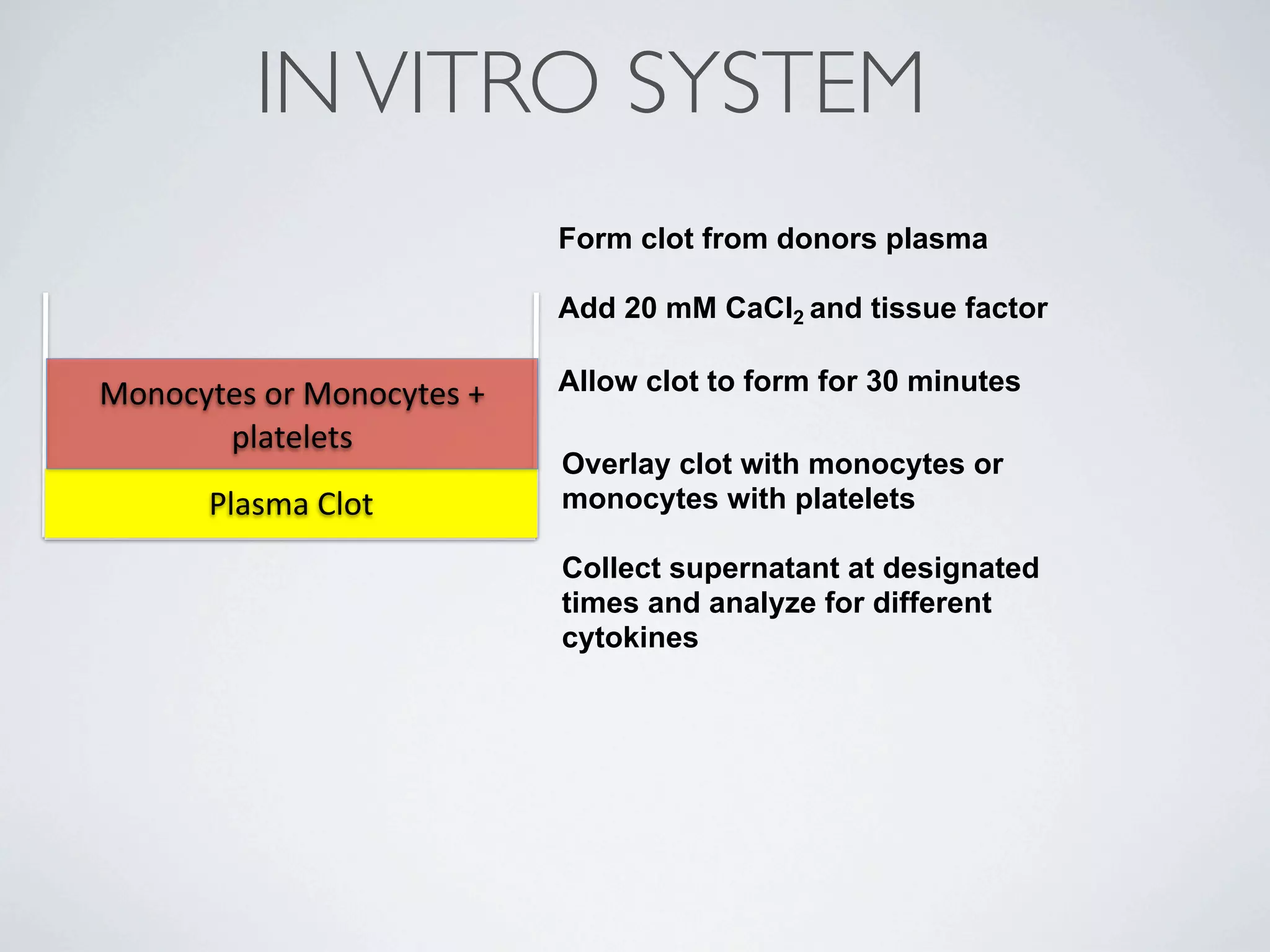
Form clot from donors plasma
Add 20 mM CaCl2 and tissue factor
Monocytes or Monocytes + Allow clot to form for 30 minutes
platelets
Overlay clot with monocytes or
Plasma Clot monocytes with platelets
Collect supernatant at designated
times and analyze for different
cytokines
32.
BACKGROUND
120000
100000
S Counts per Minutes
80000
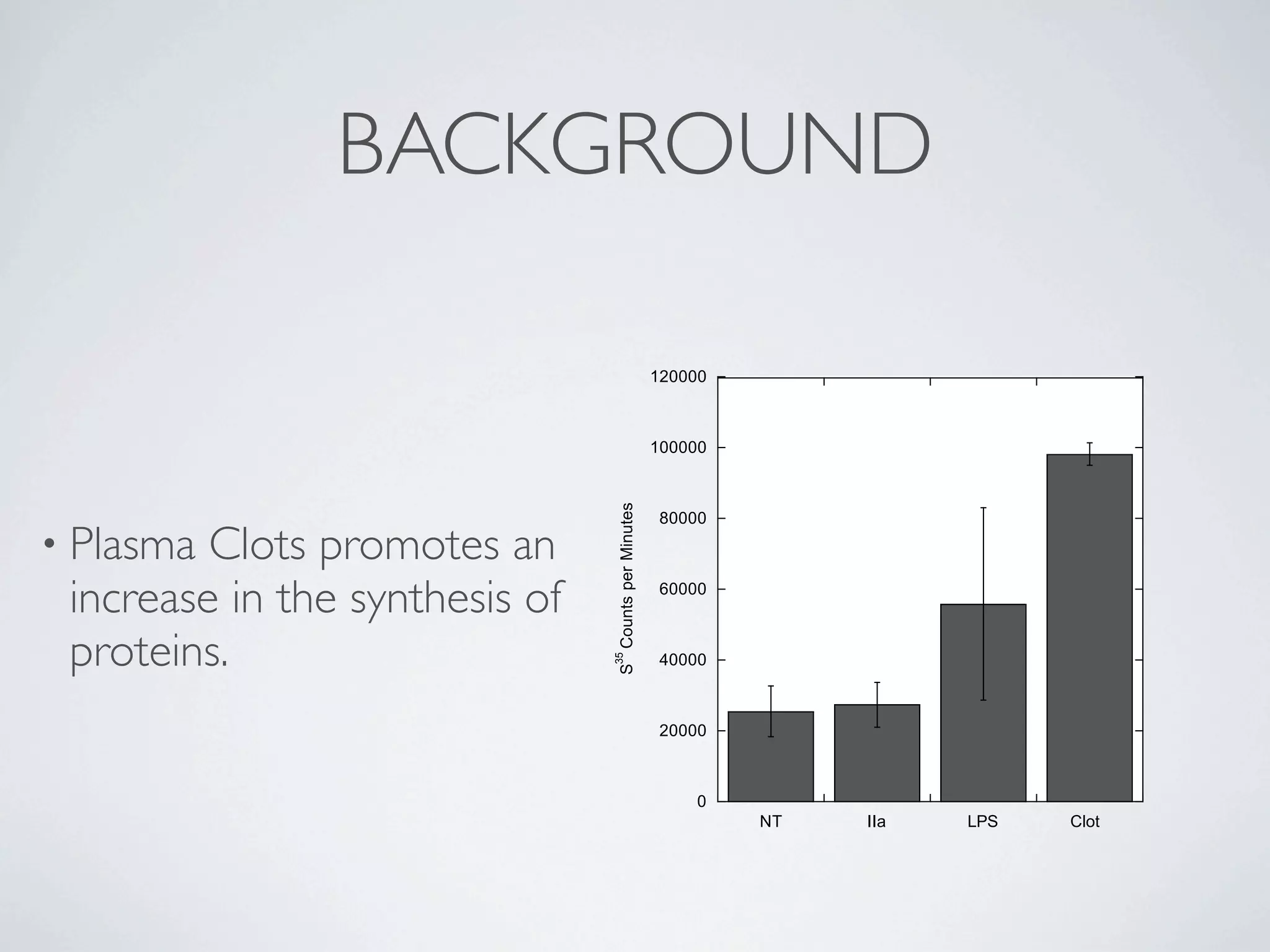
• Plasma Clots promotes an
increase in the synthesis of 60000
proteins. 40000
35
20000
0
NT IIa LPS Clot
33.
RESULTS
IL‐8 MCP‐1
DAPI = Blue, CD14 = Green, IL‐8 or MCP‐1 = RED
34.
OBJECTIVE
• Characterize MCP-1 and IL-8 mRNA expression in
monocytes associated with clots.
35.
MATERIALS AND METHODS
• Blood peripheral monocytes isolation
• In vitro Clot system experiments
• RNA Isolation
• cDNA Preparation
• Real Time PCR
SUMMARY
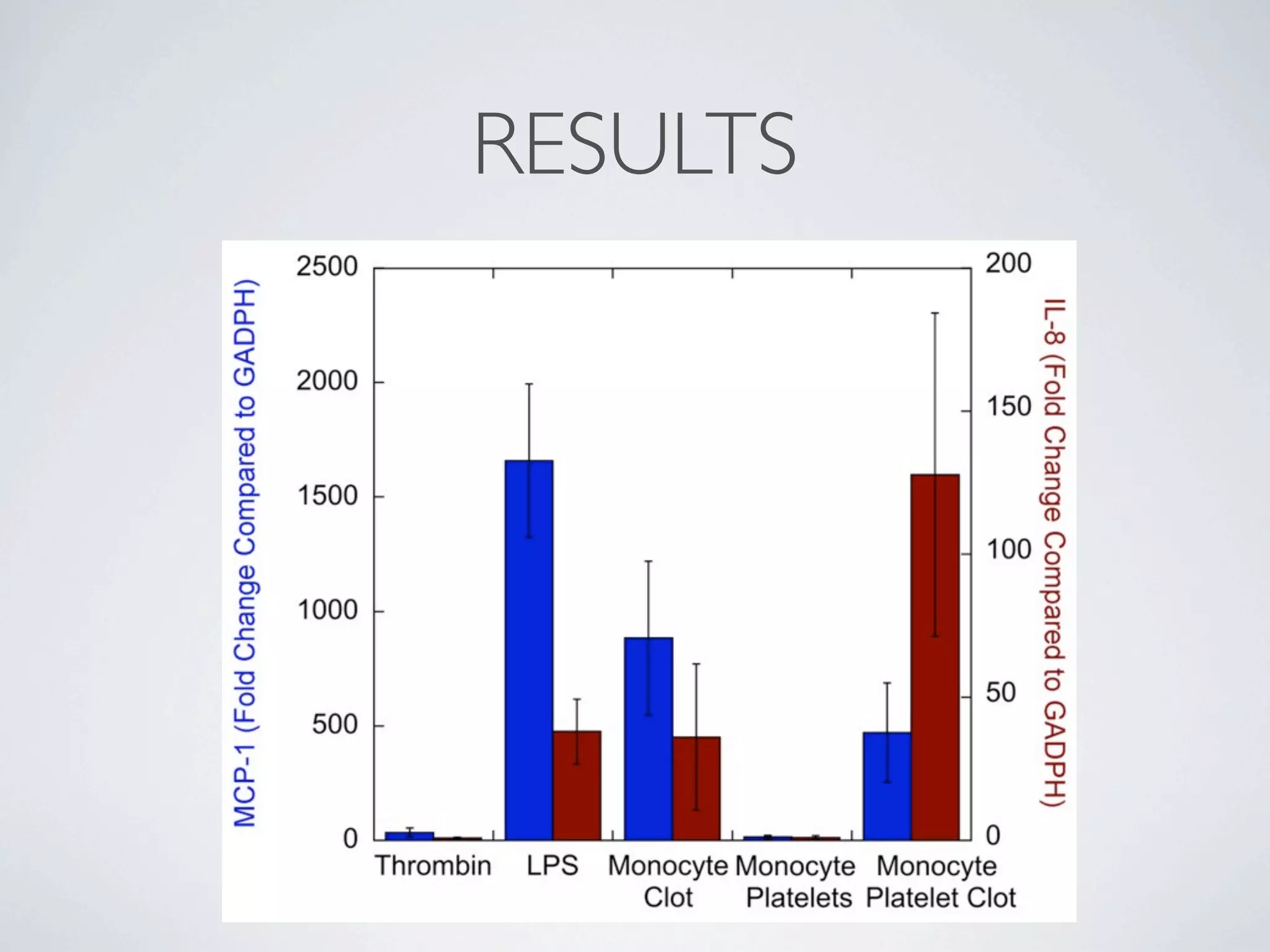
• MCP-1 and IL-8 mRNA and protein are increased in monocytes
associated with clots
• Our data suggest clinicians should consider the inflammatory
consequences of thrombi in patients. Treatments focused on the
inflammatory response may results in better outcomes.
• Future Direction:
• Identification of other chemokines and other inflammatory genes.
• Determine mechanism of how clots induce inflammatory
response.
38.
ACKNOWLEDGEMENTS
• PI: Andrew S. Weyrich, Ph.D.
• Mentor: Robert A. Campbell, Ph.D.
• Medical Research Program At University of Utah
• Janet Basset
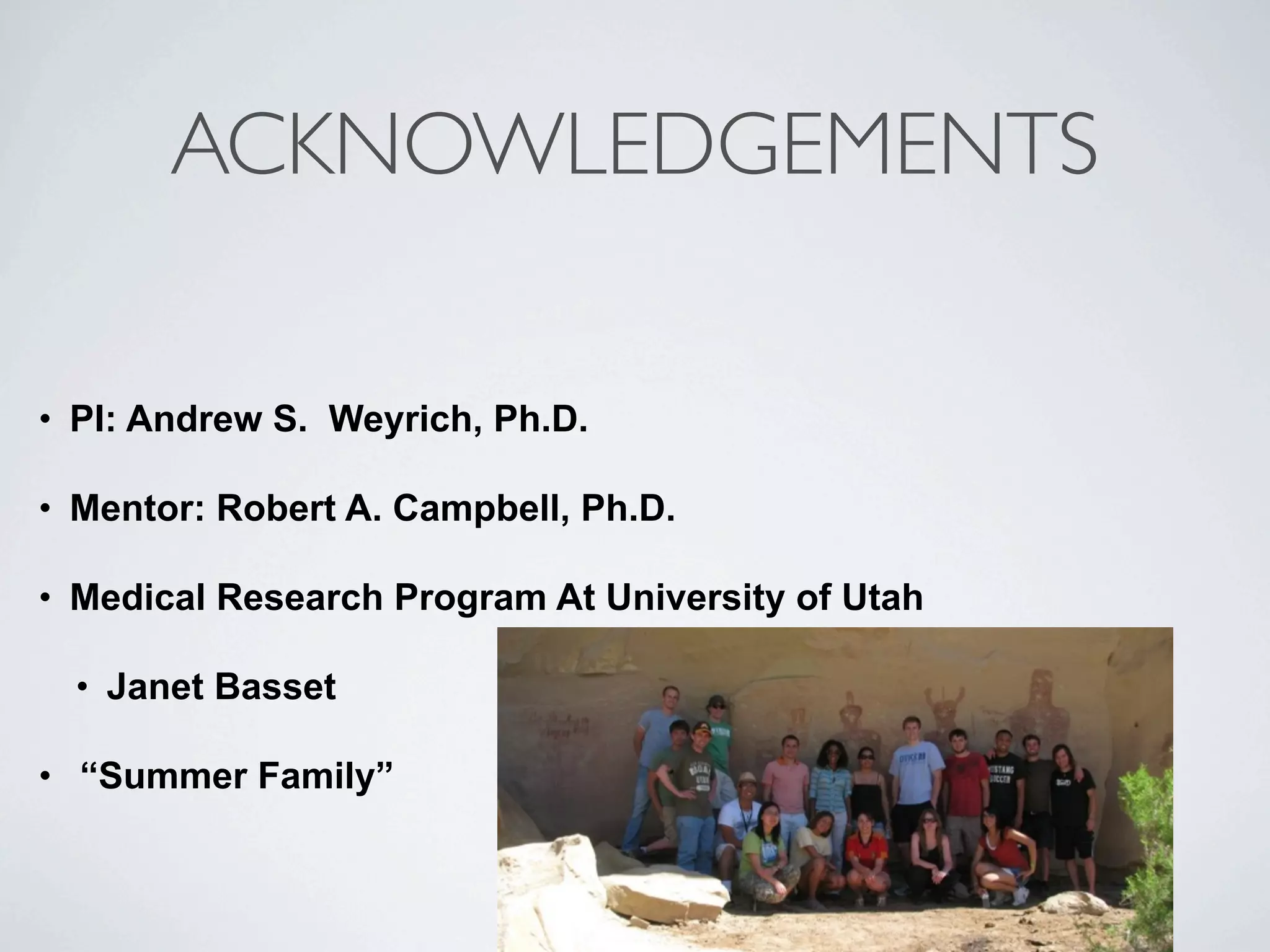
• “Summer Family”
39.
ACKNOWLEDGEMENTS
• PI: Andrew S. Weyrich, Ph.D.
• Mentor: Robert A. Campbell, Ph.D.
• Medical Research Program At University of Utah
• Janet Basset
• “Summer Family”
#3 Within those we found coagulation disorders like AT responsable for heart attacks and strokes wich...\nAlso VT . In Dr. Weyrich’s Lab we investigates the coagulation process and its associated inflammation responses in order to unsdestand such diseases.\n
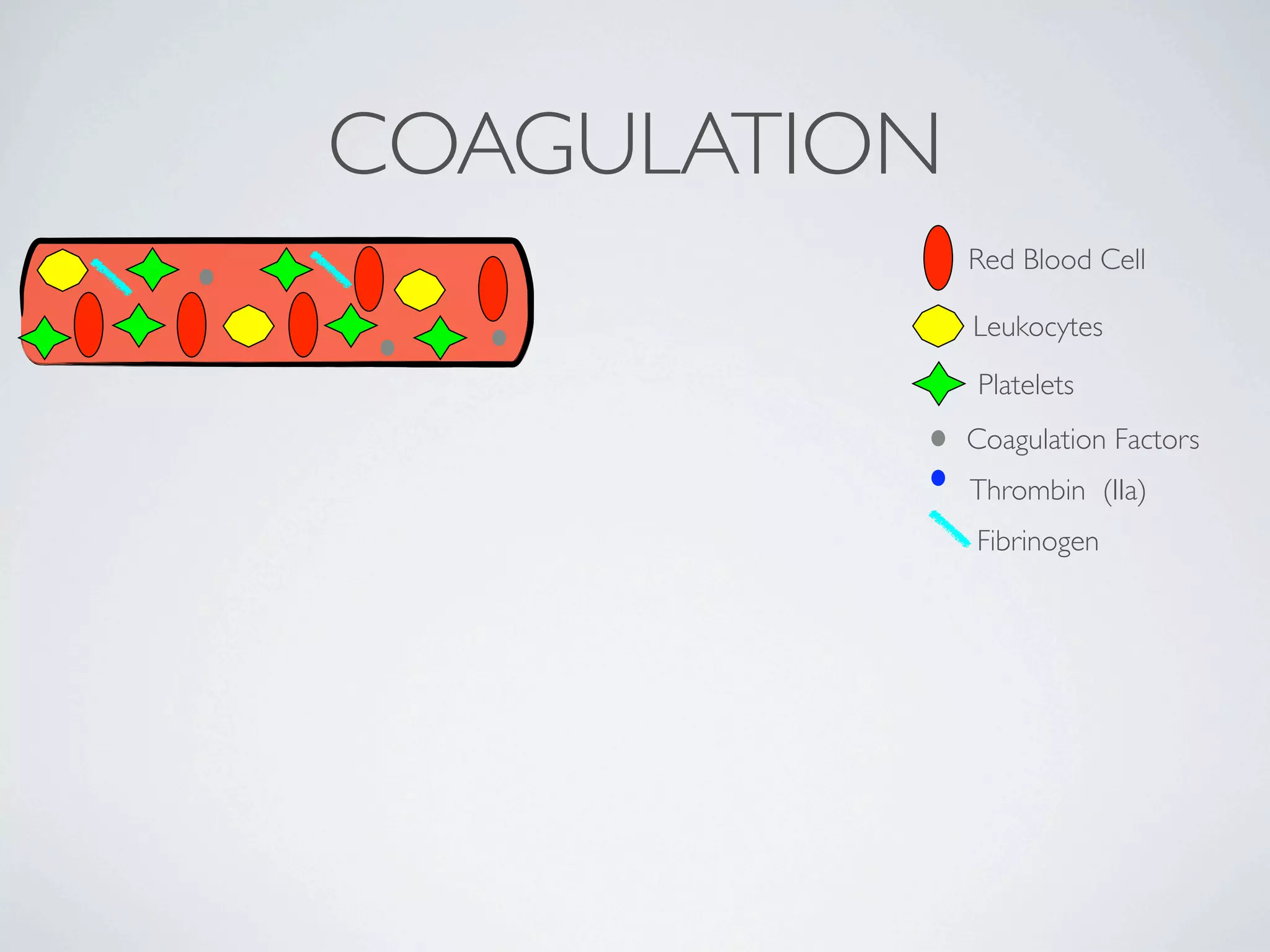
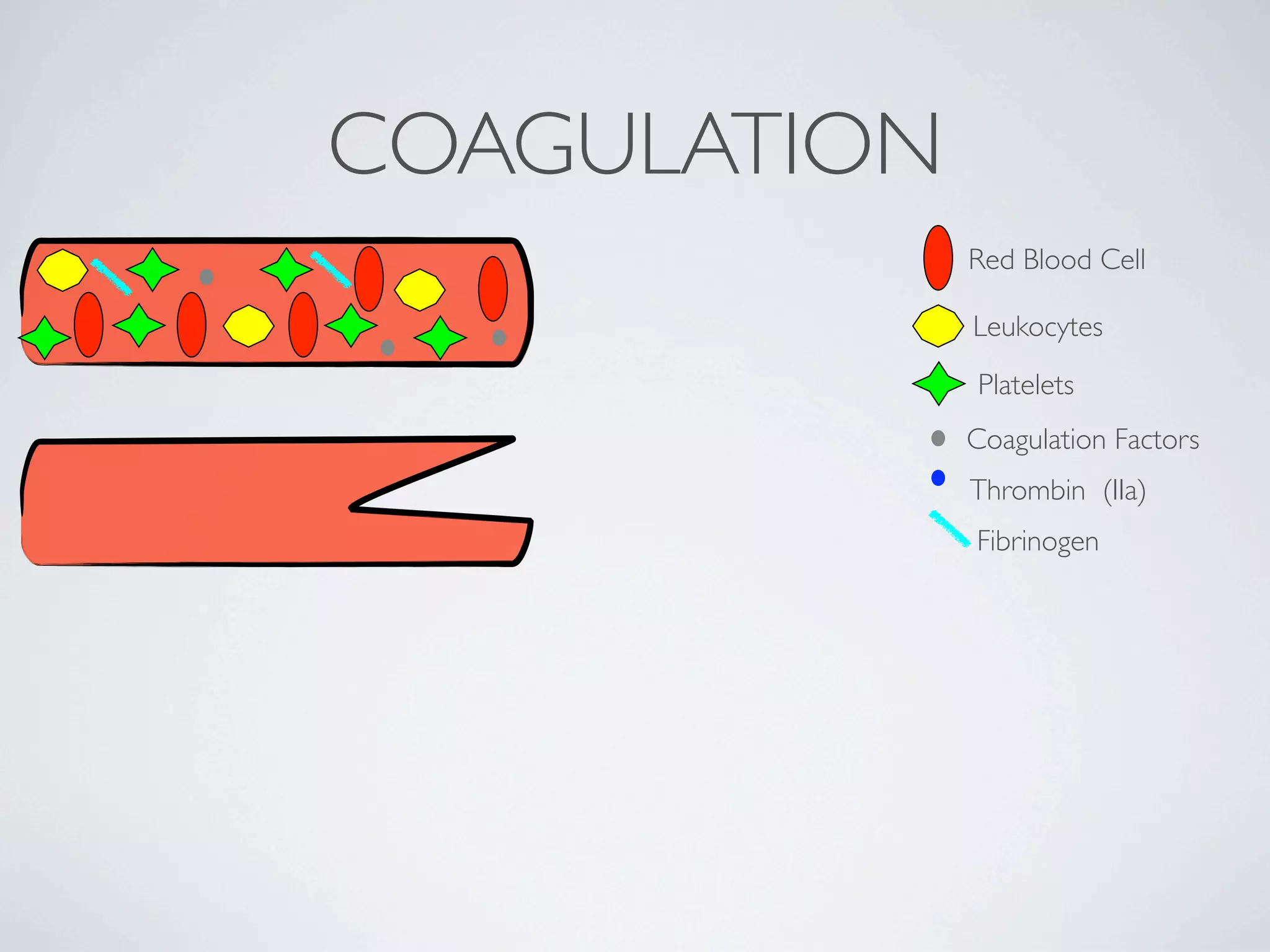
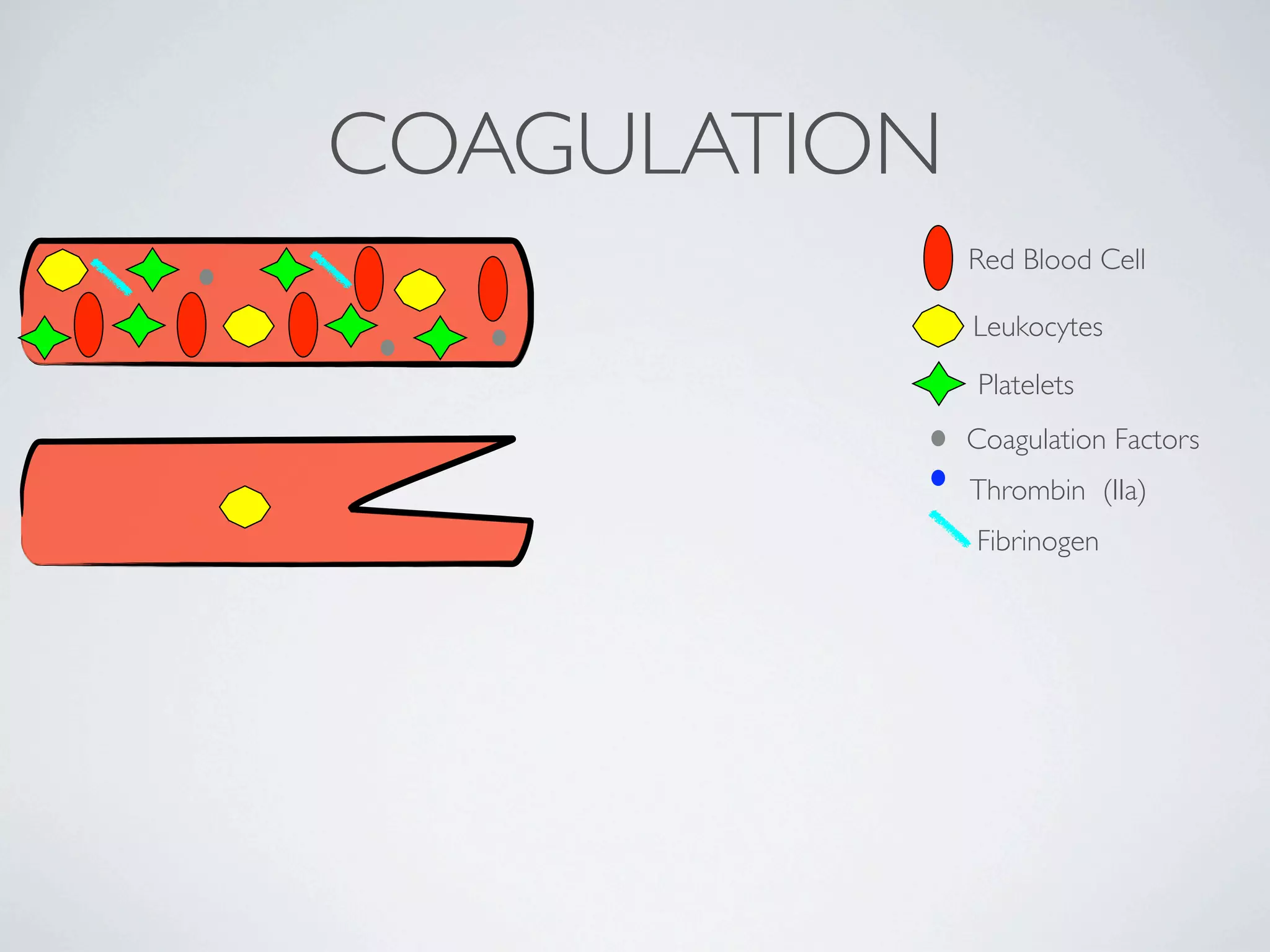
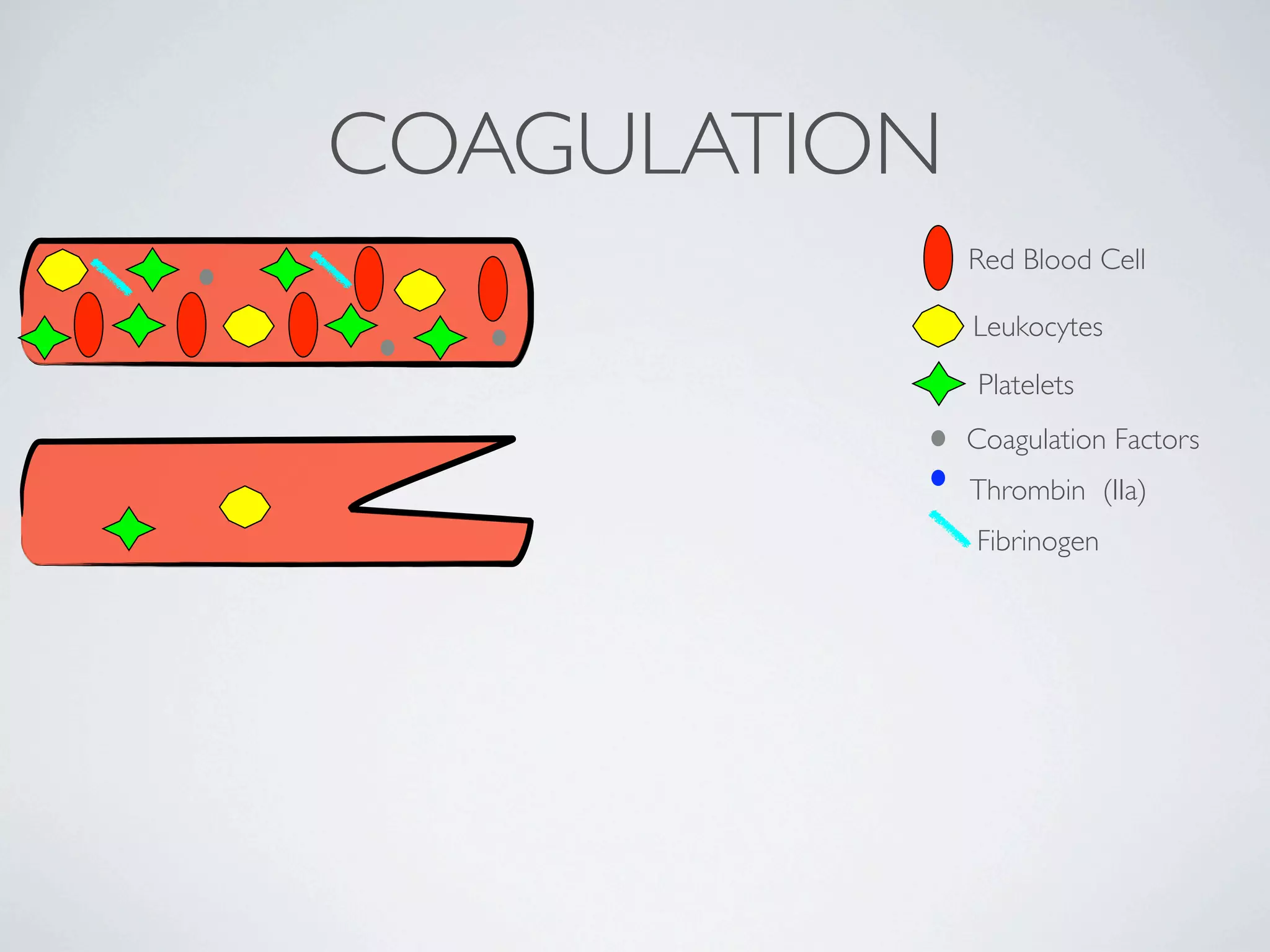
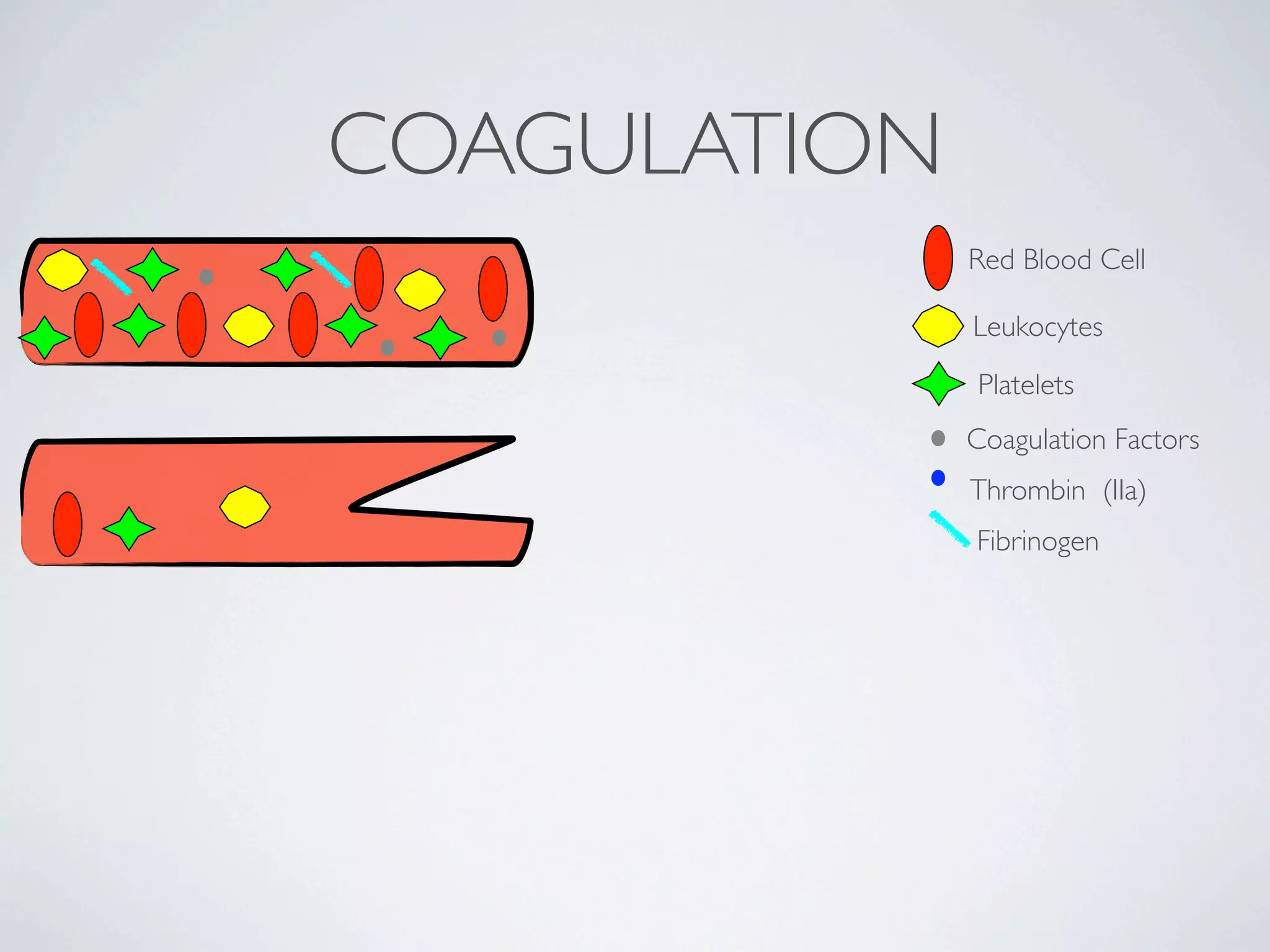
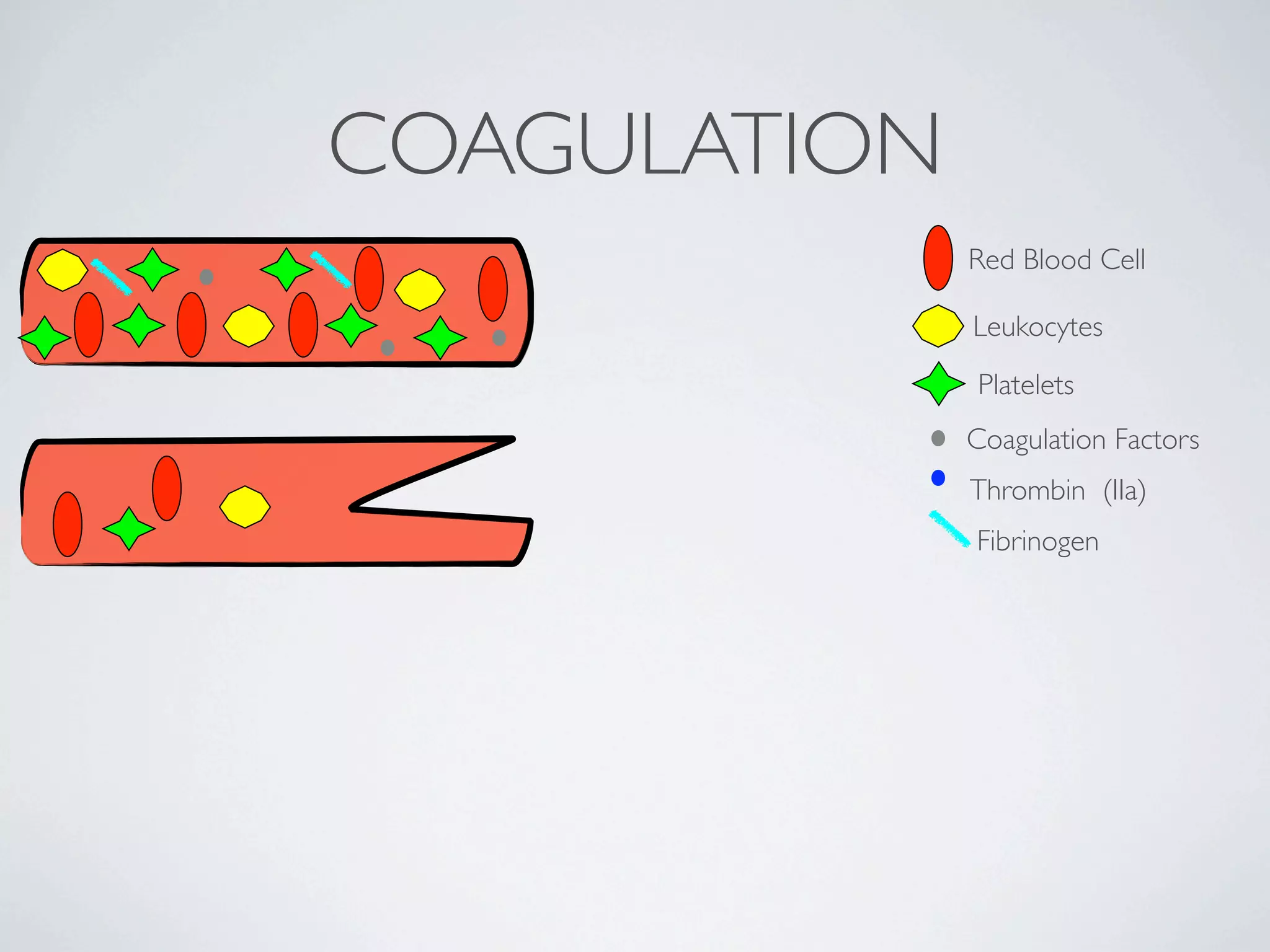
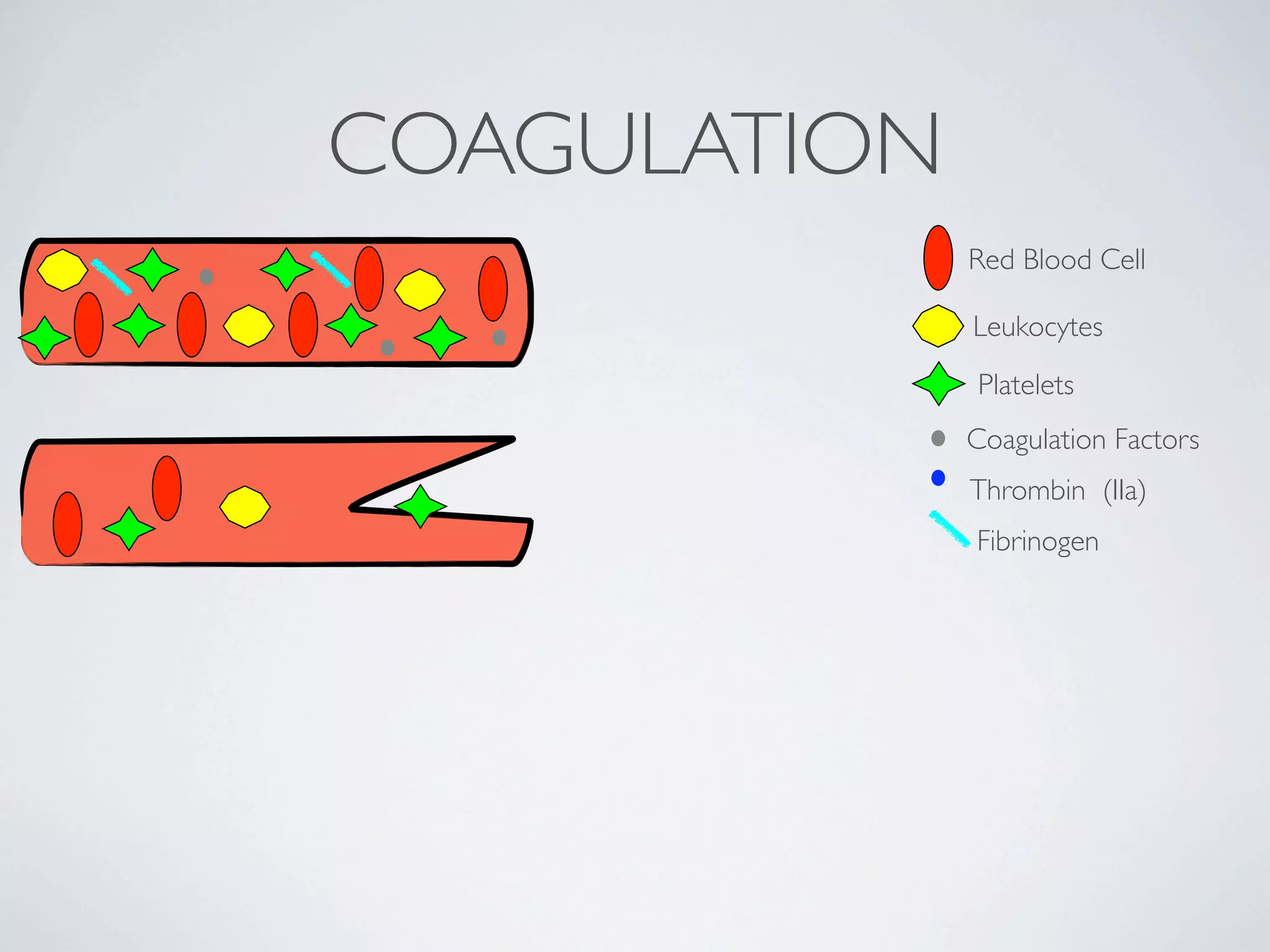
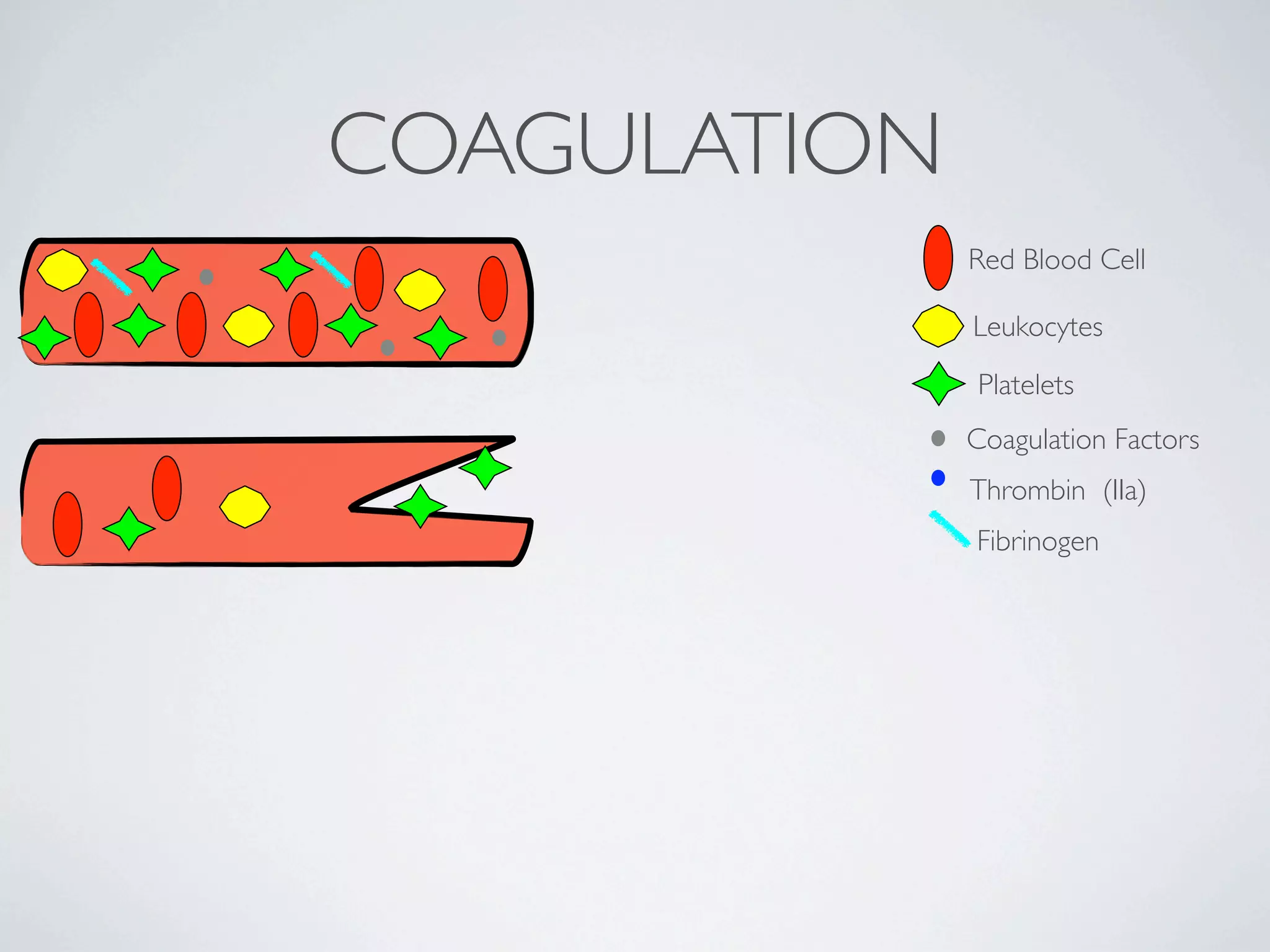
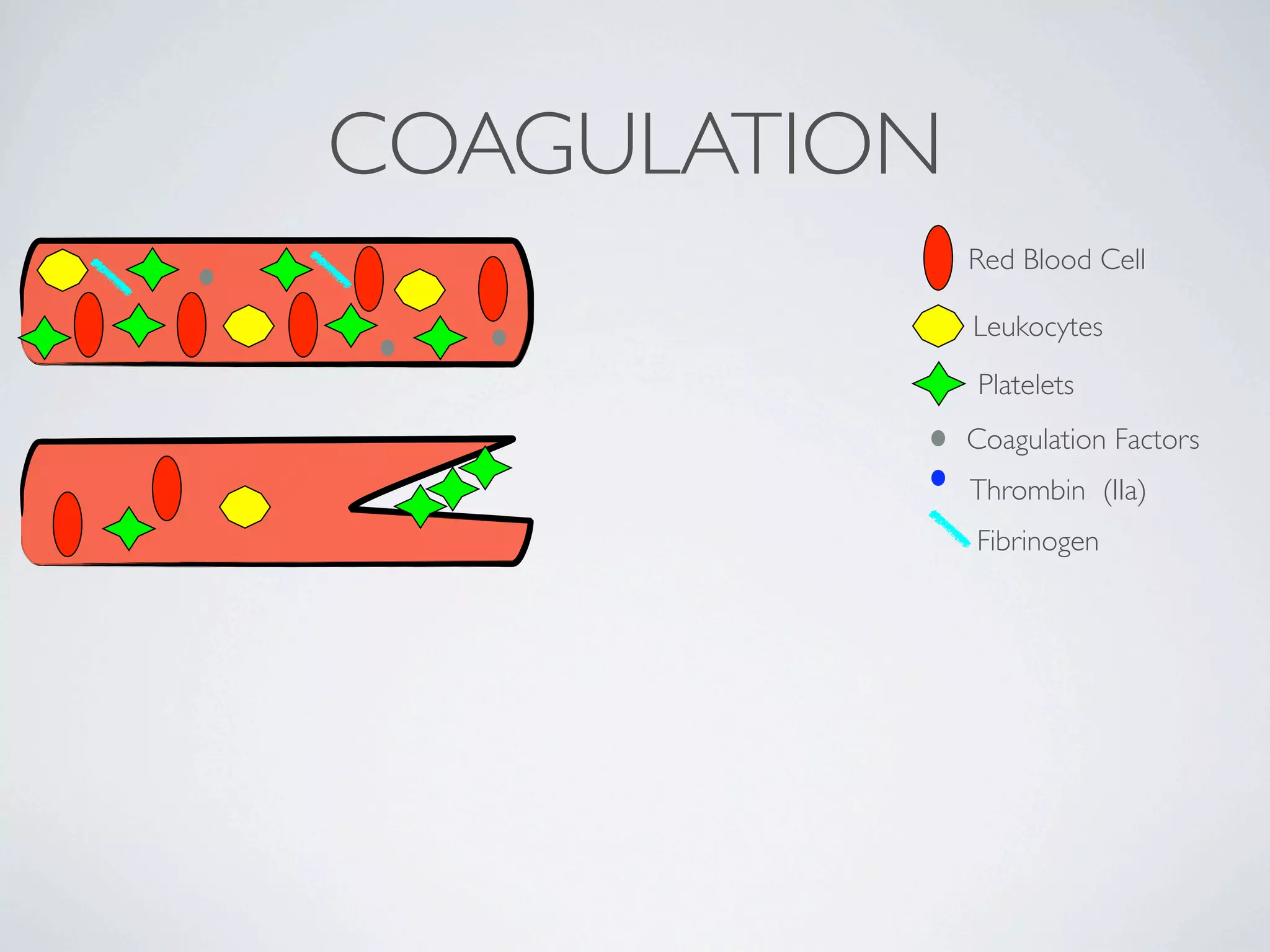
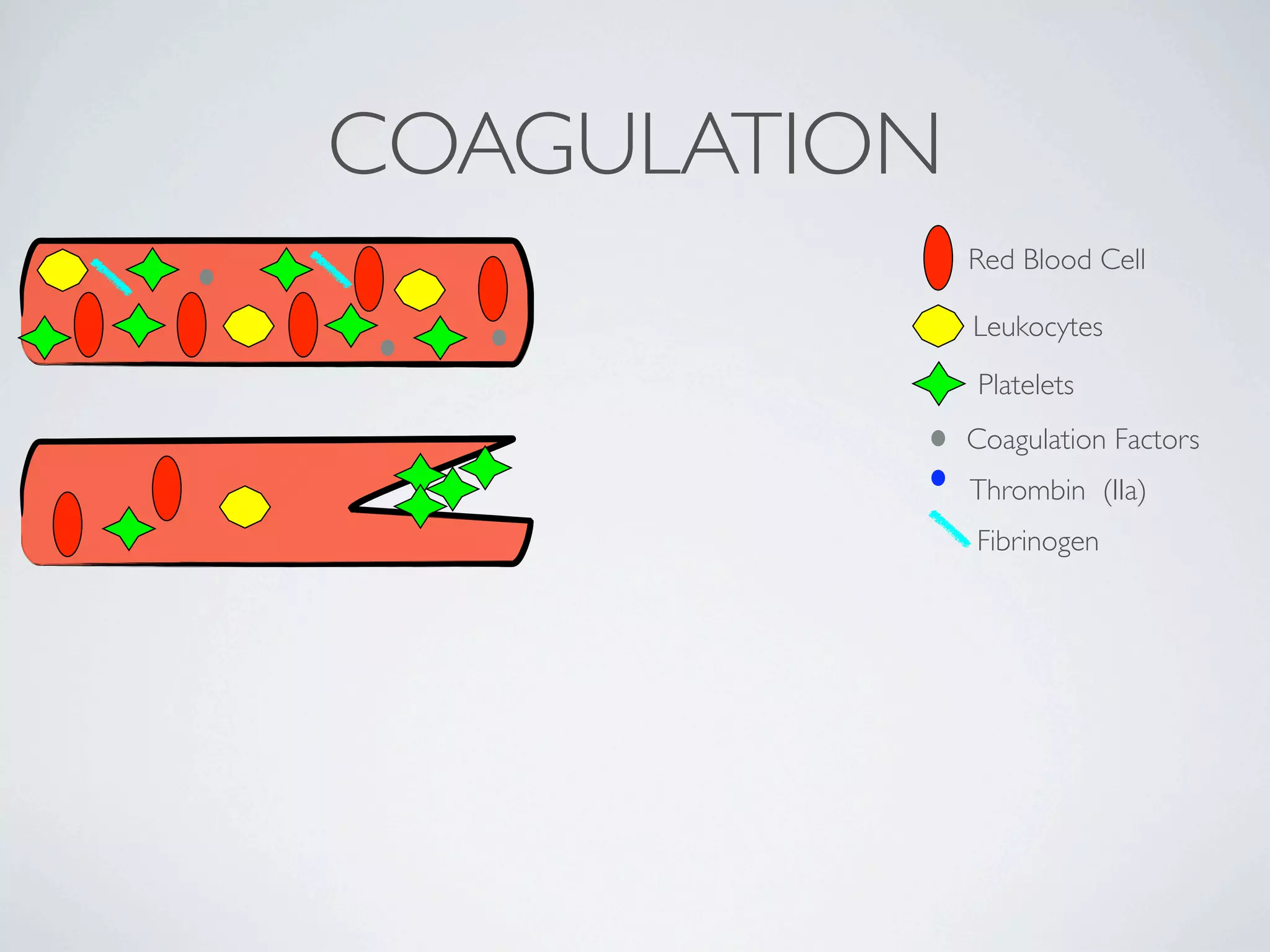
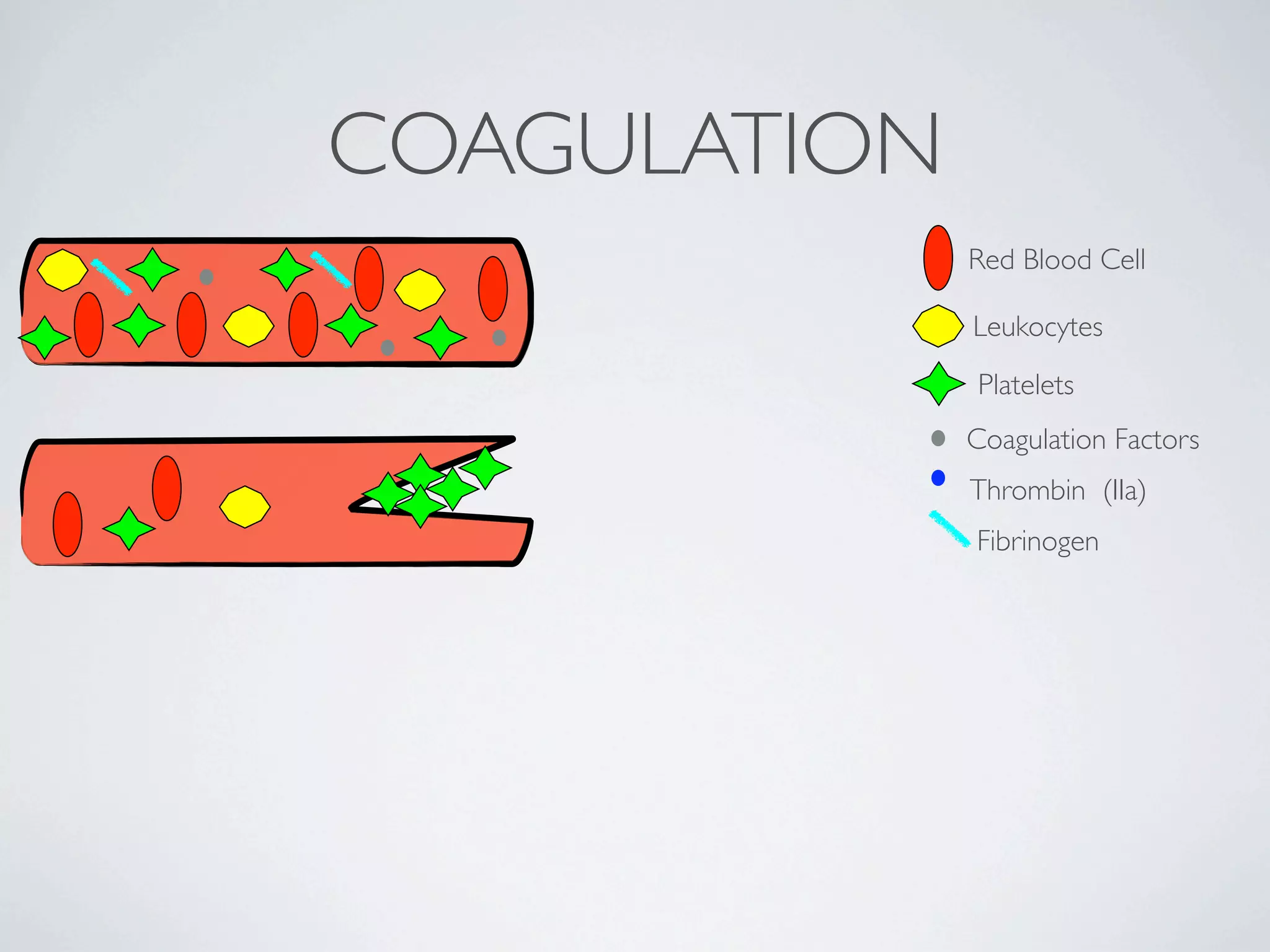
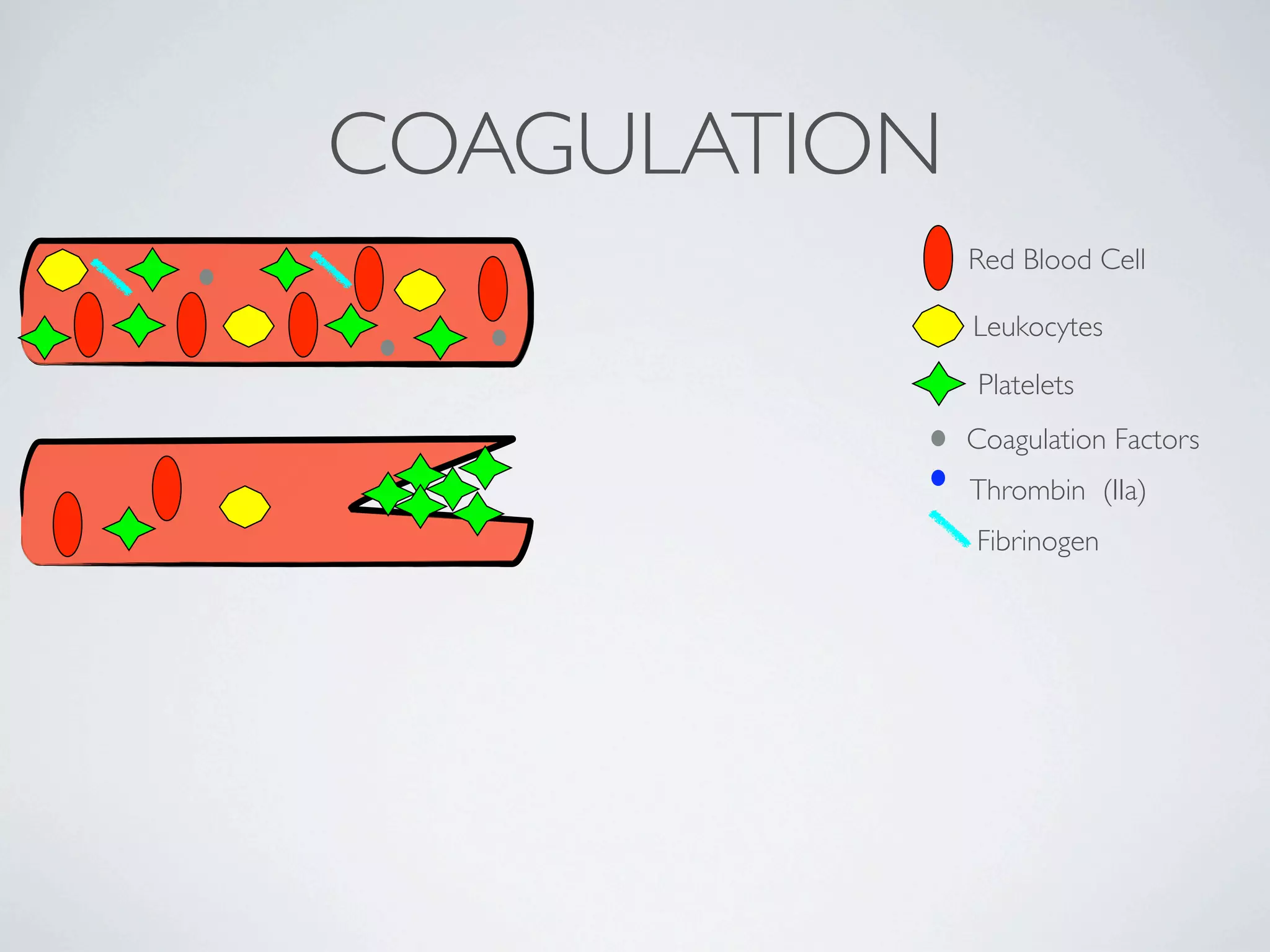
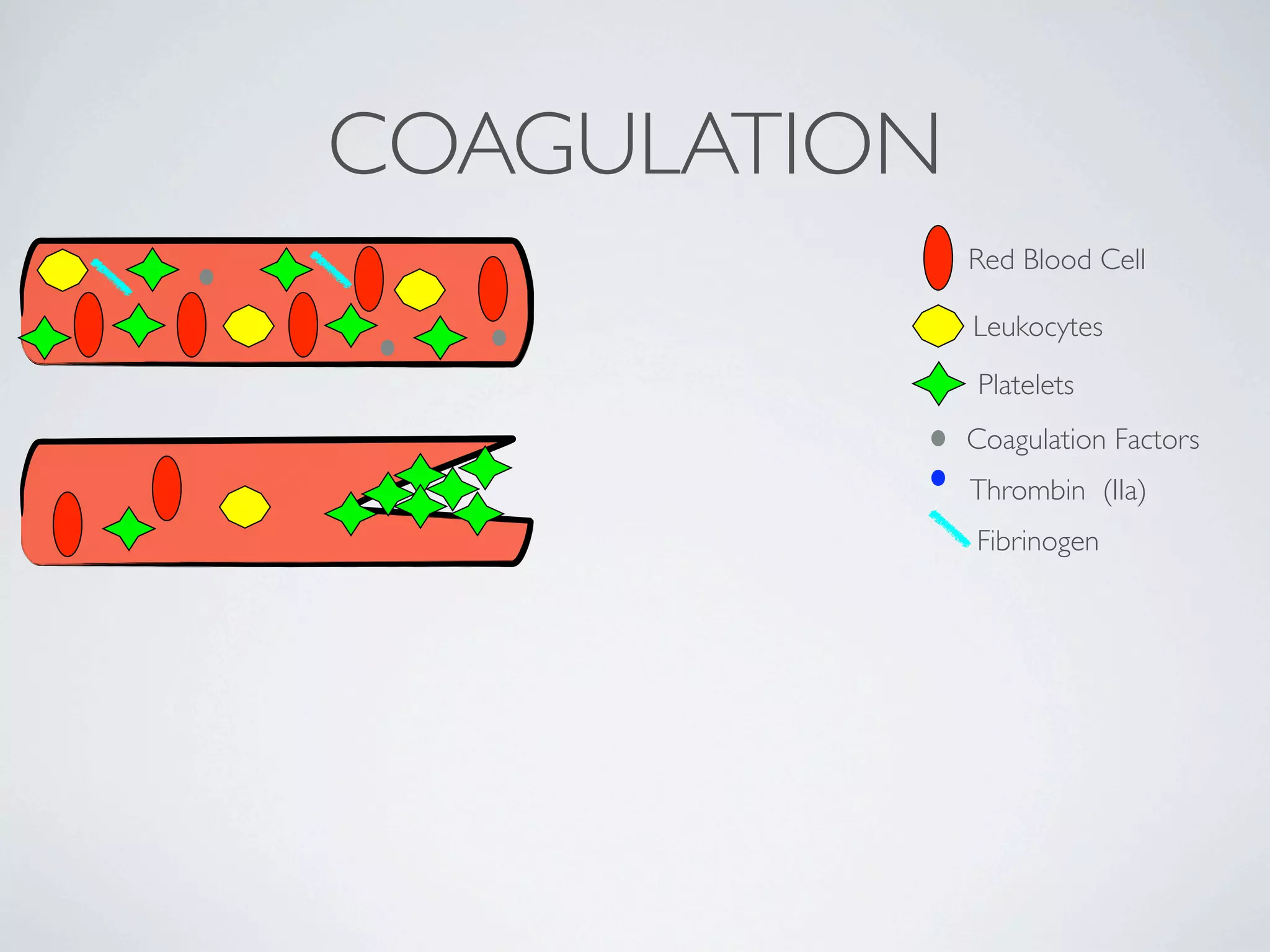
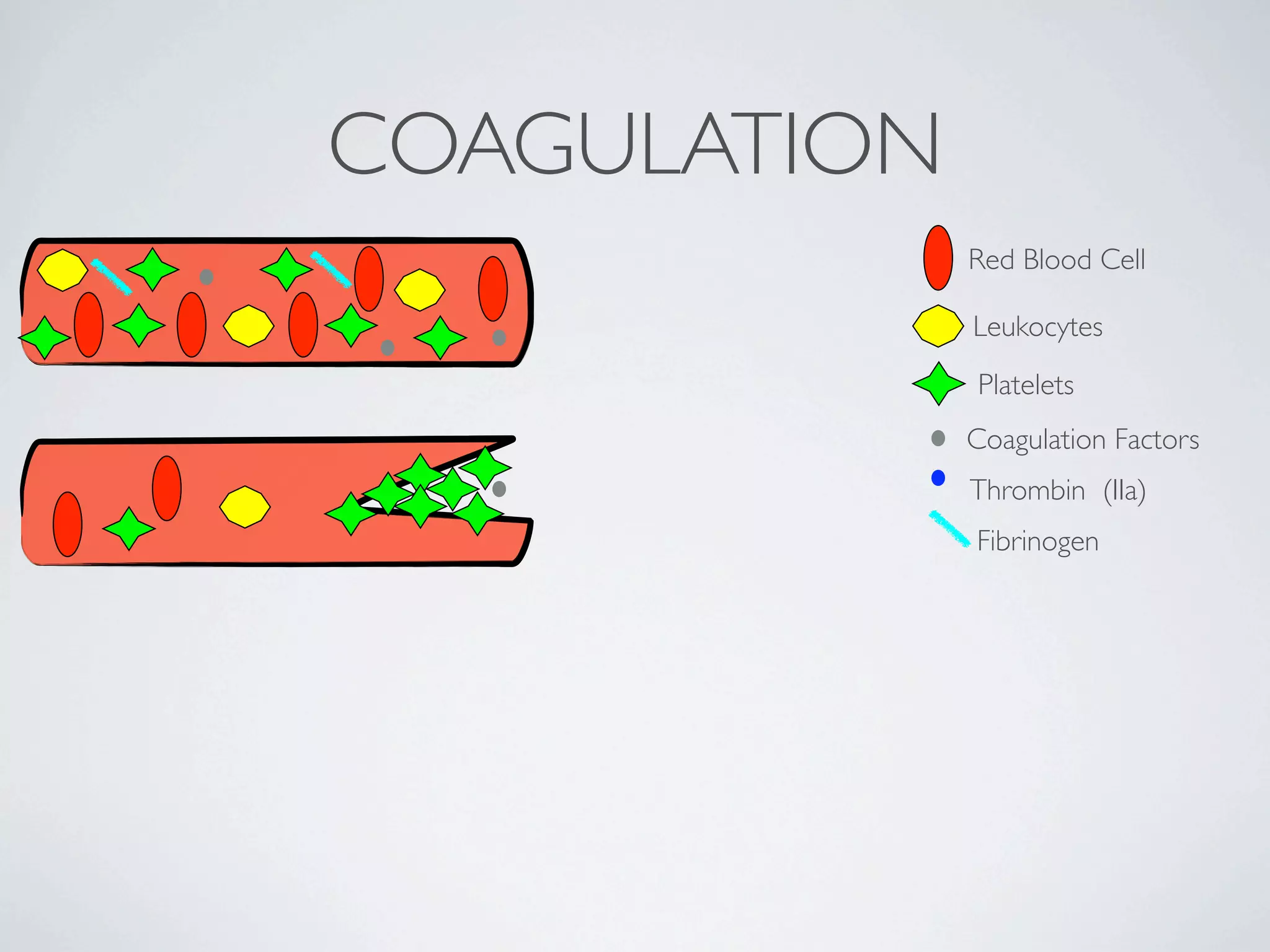
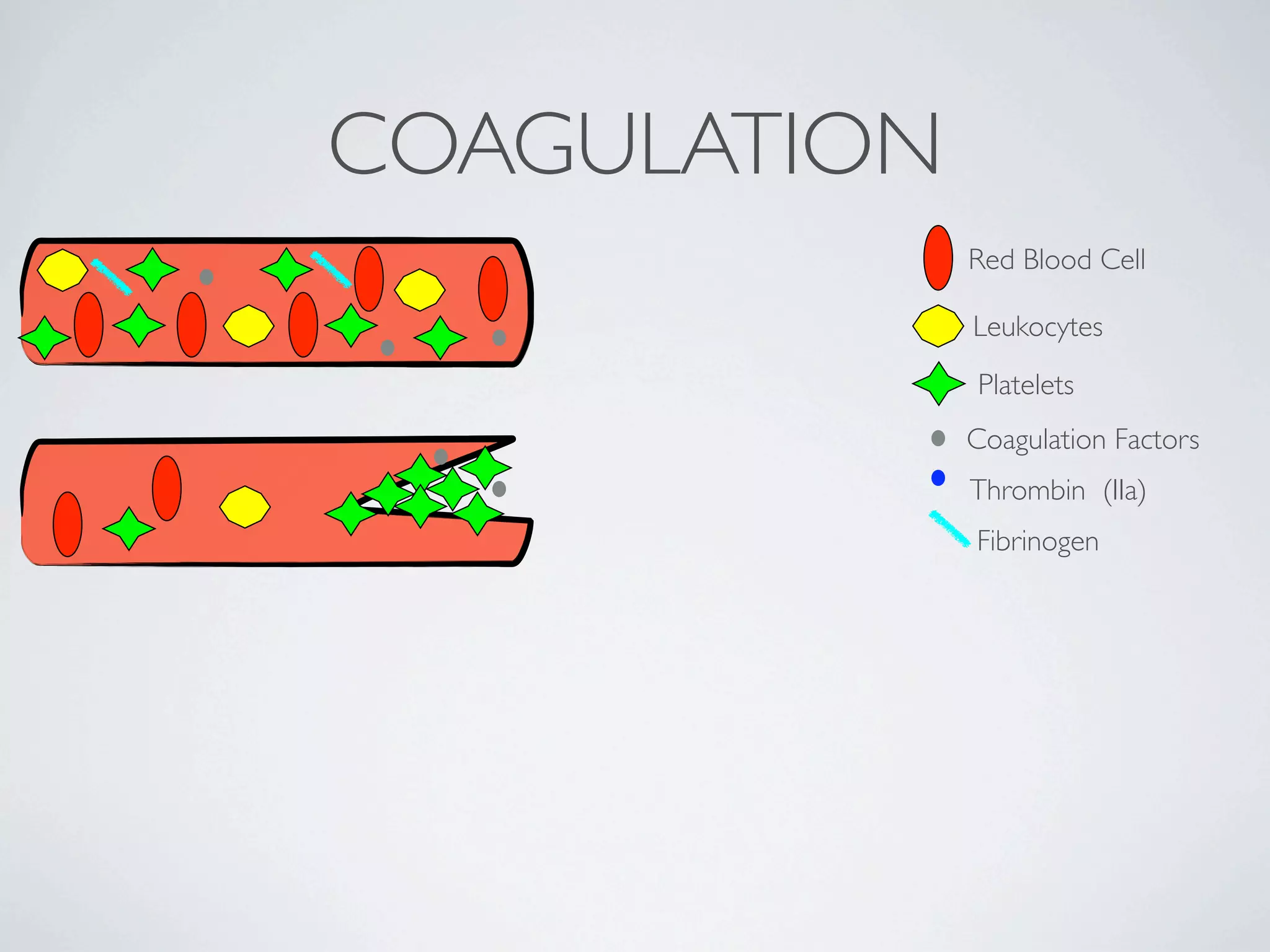
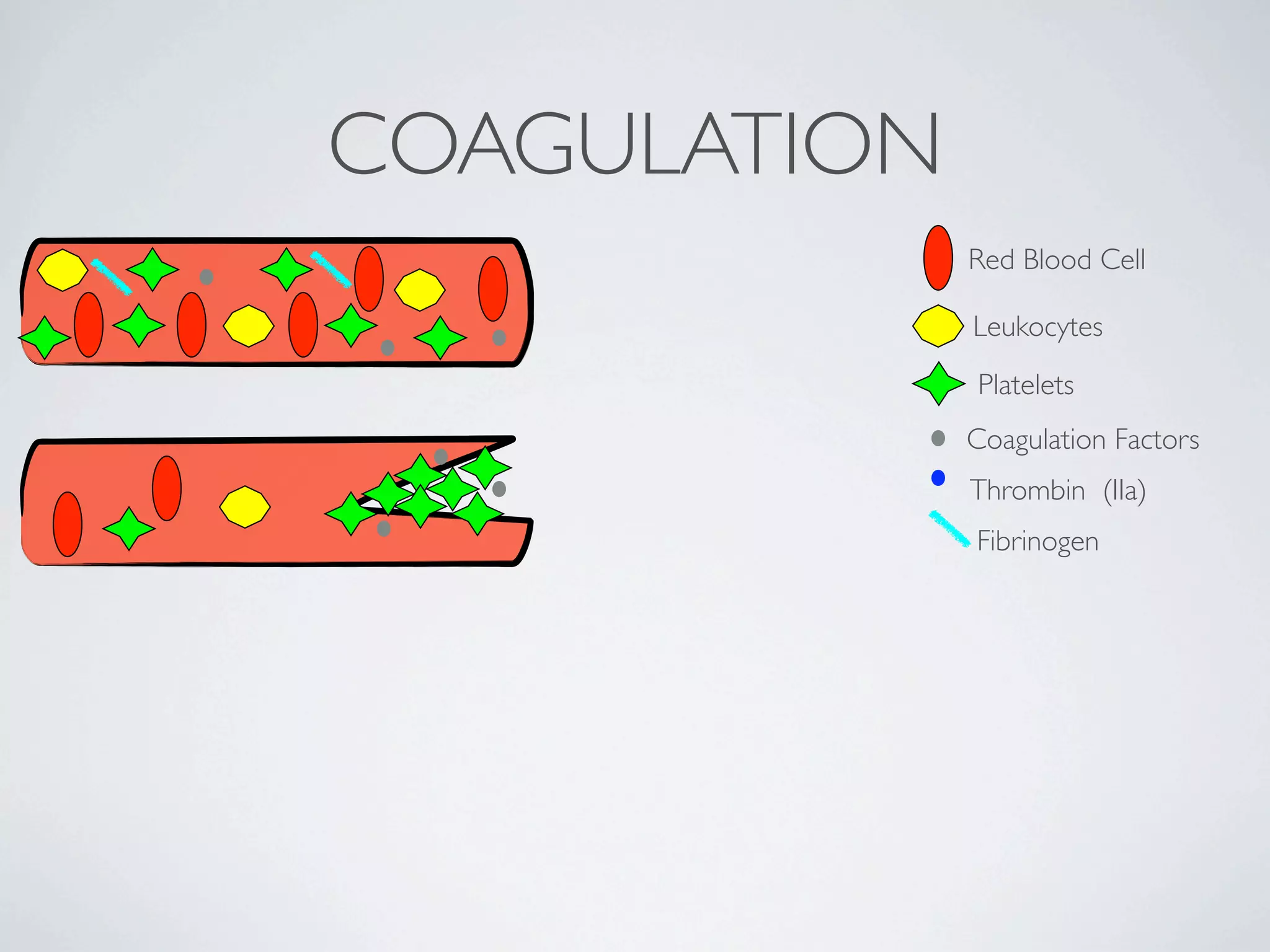
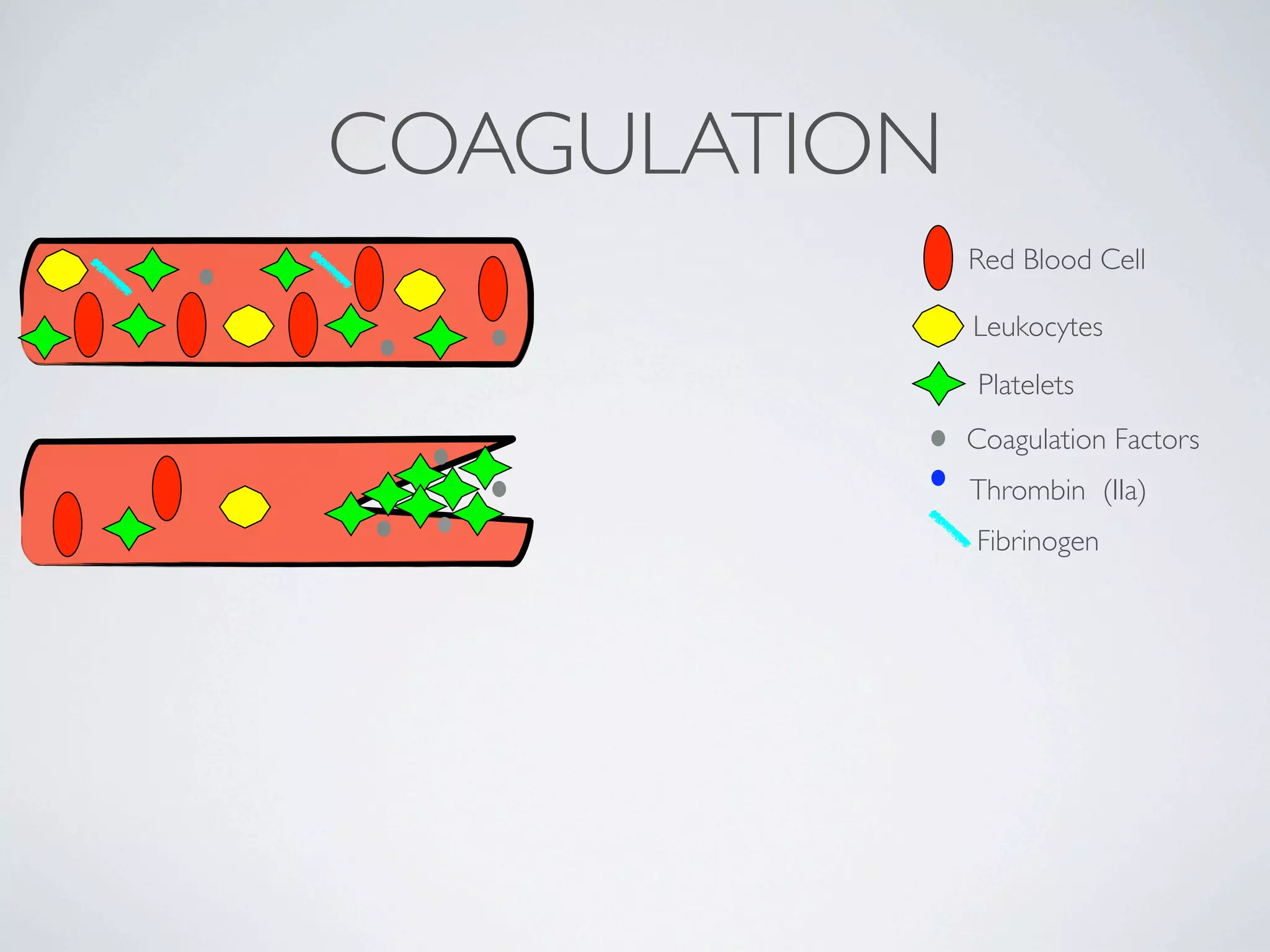
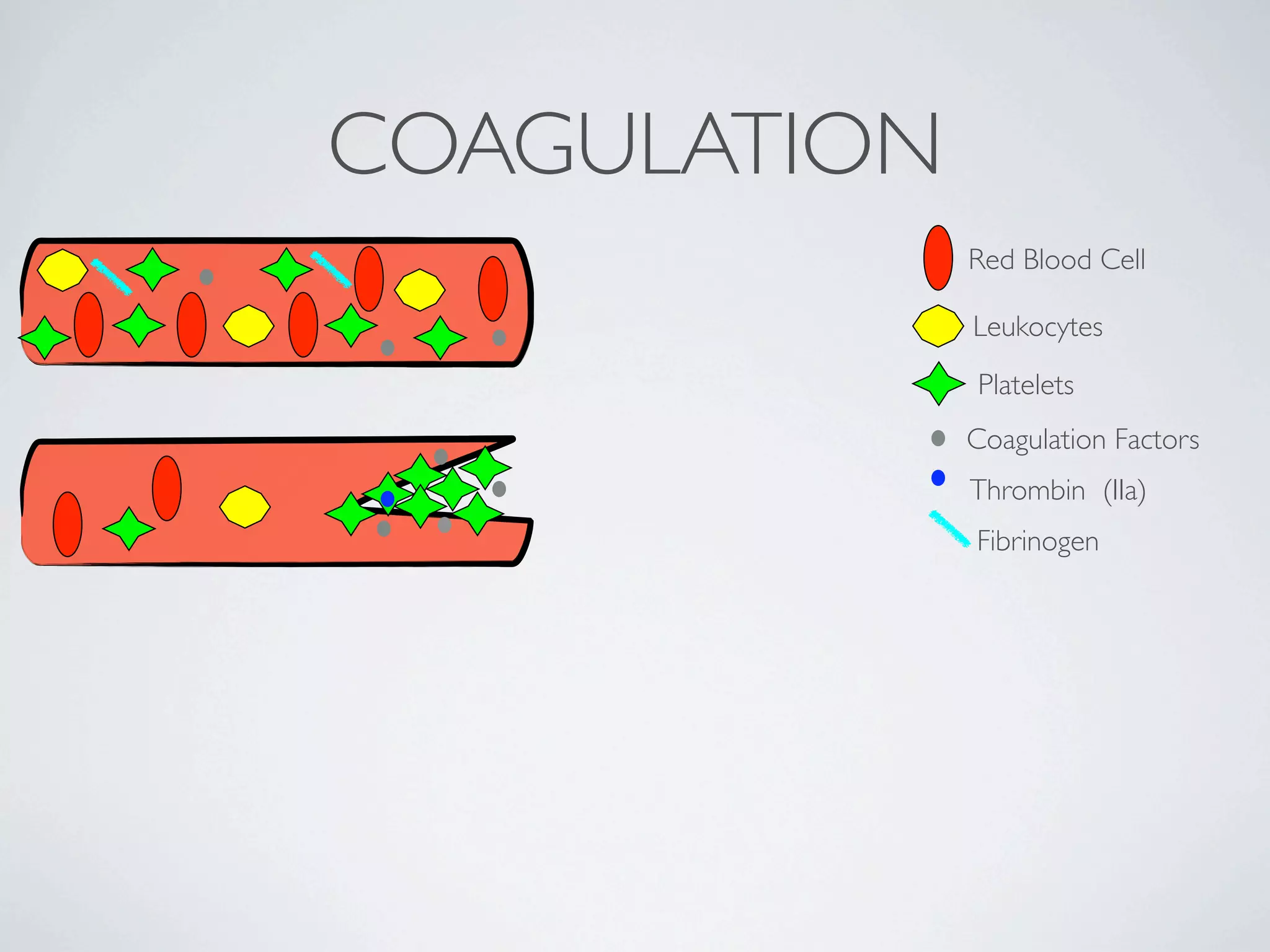
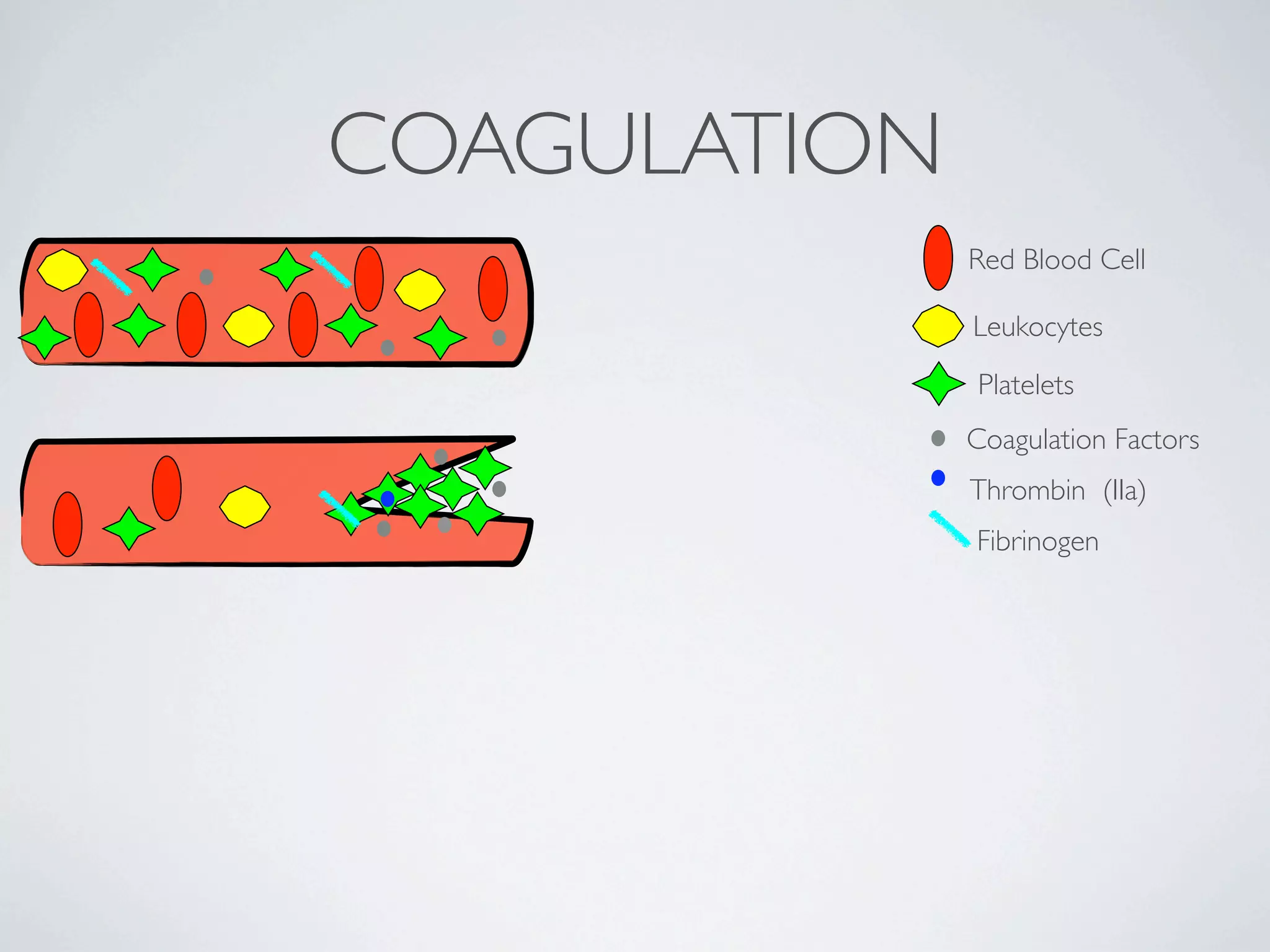
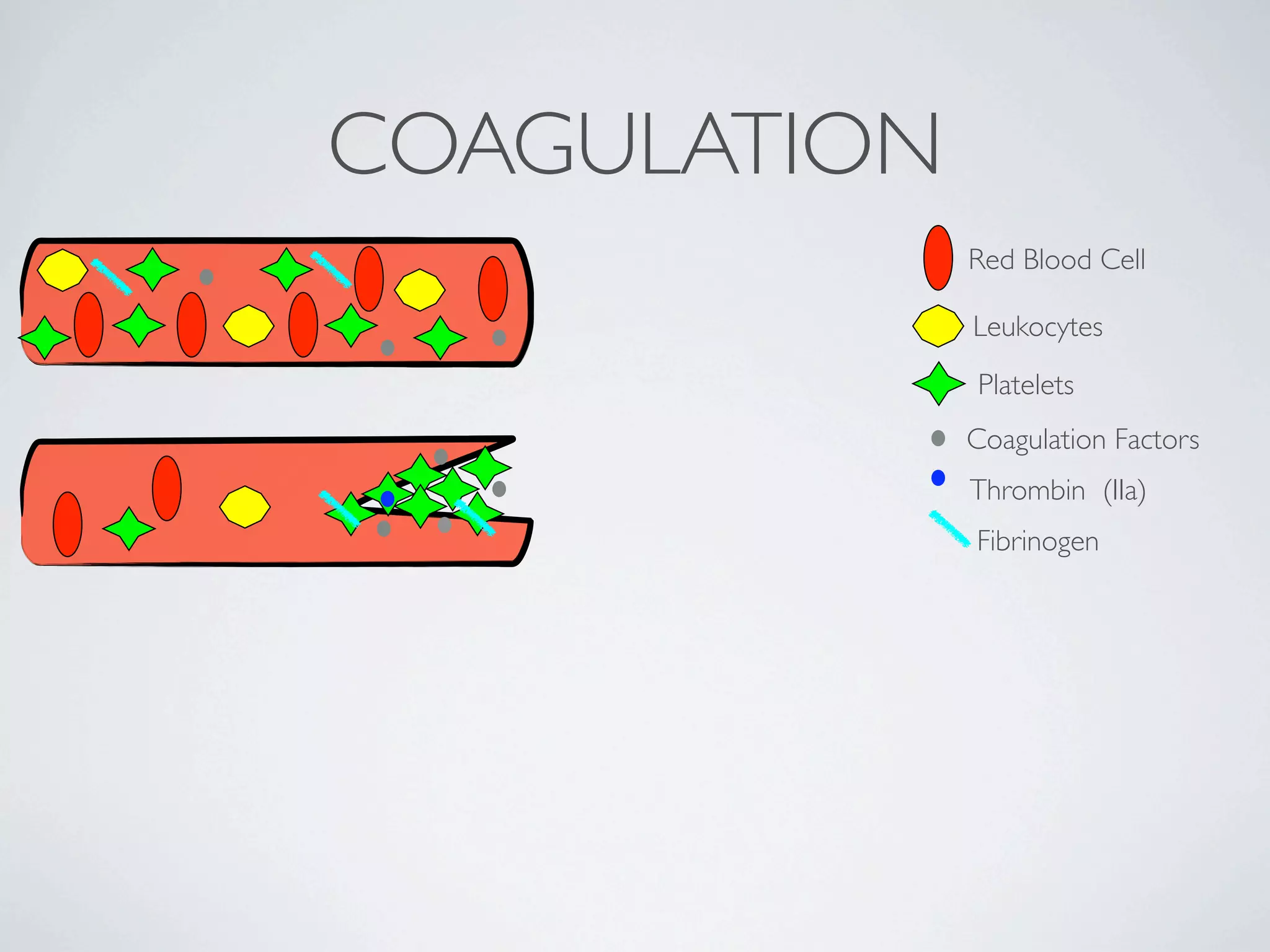
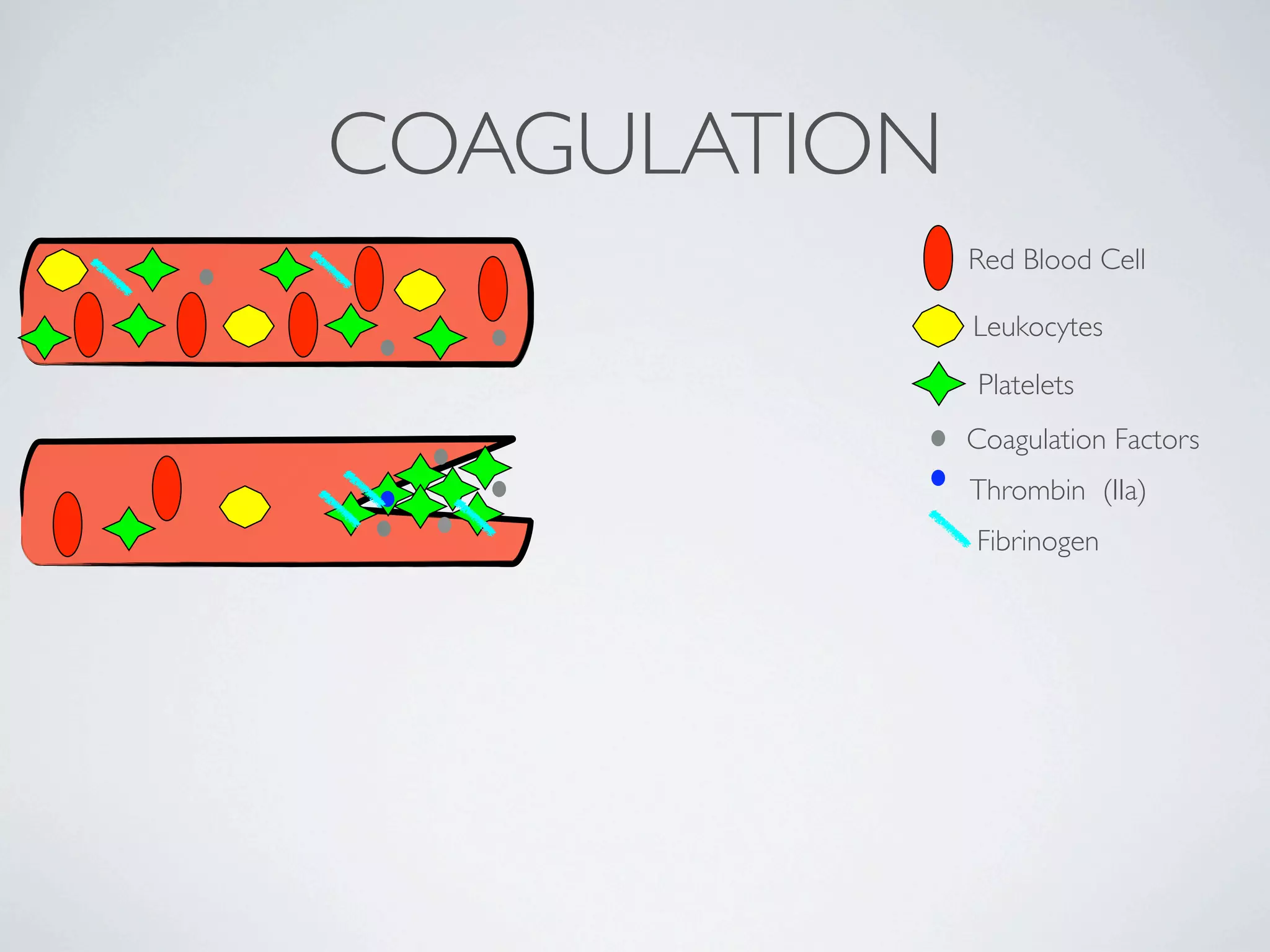
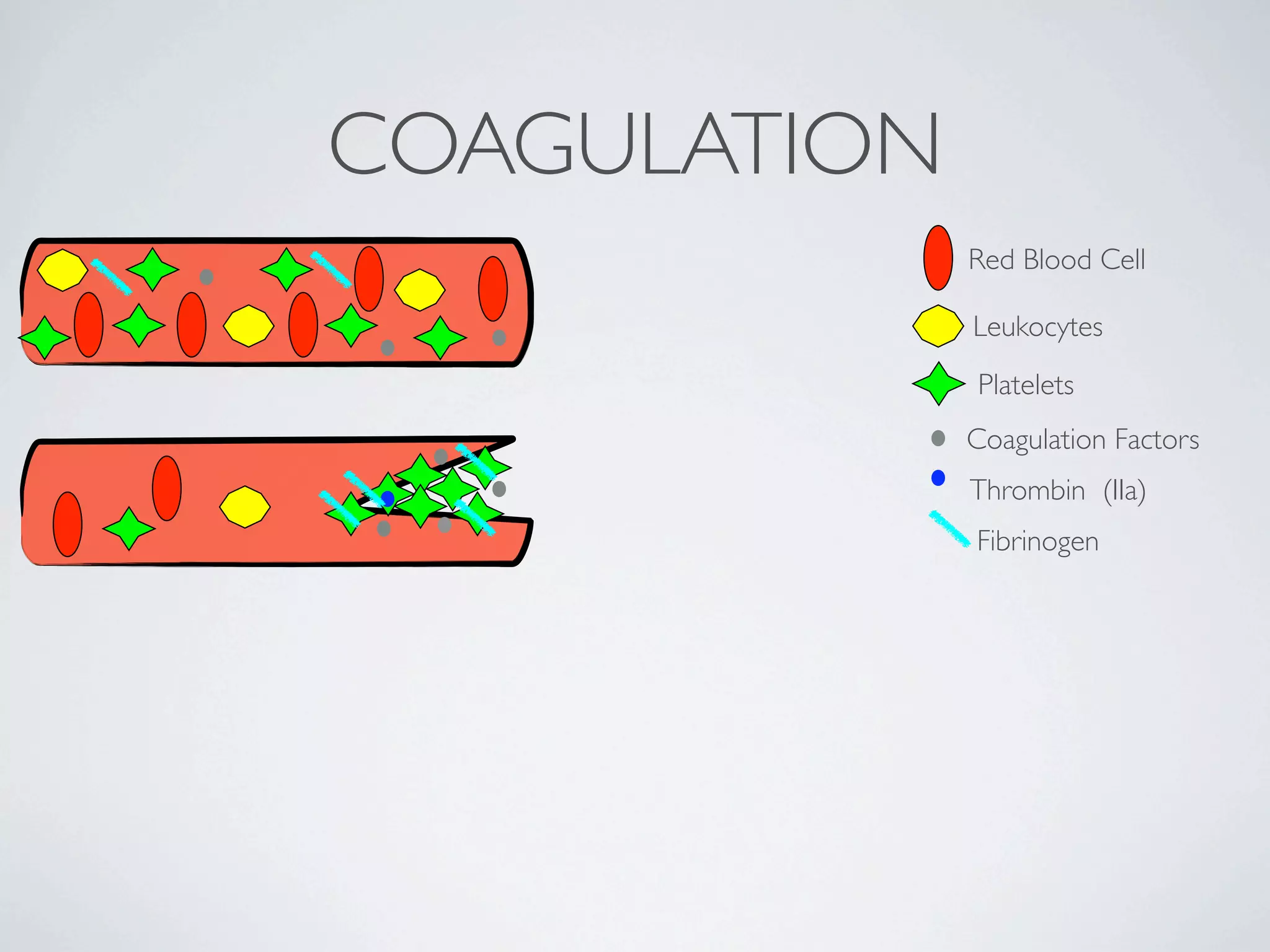
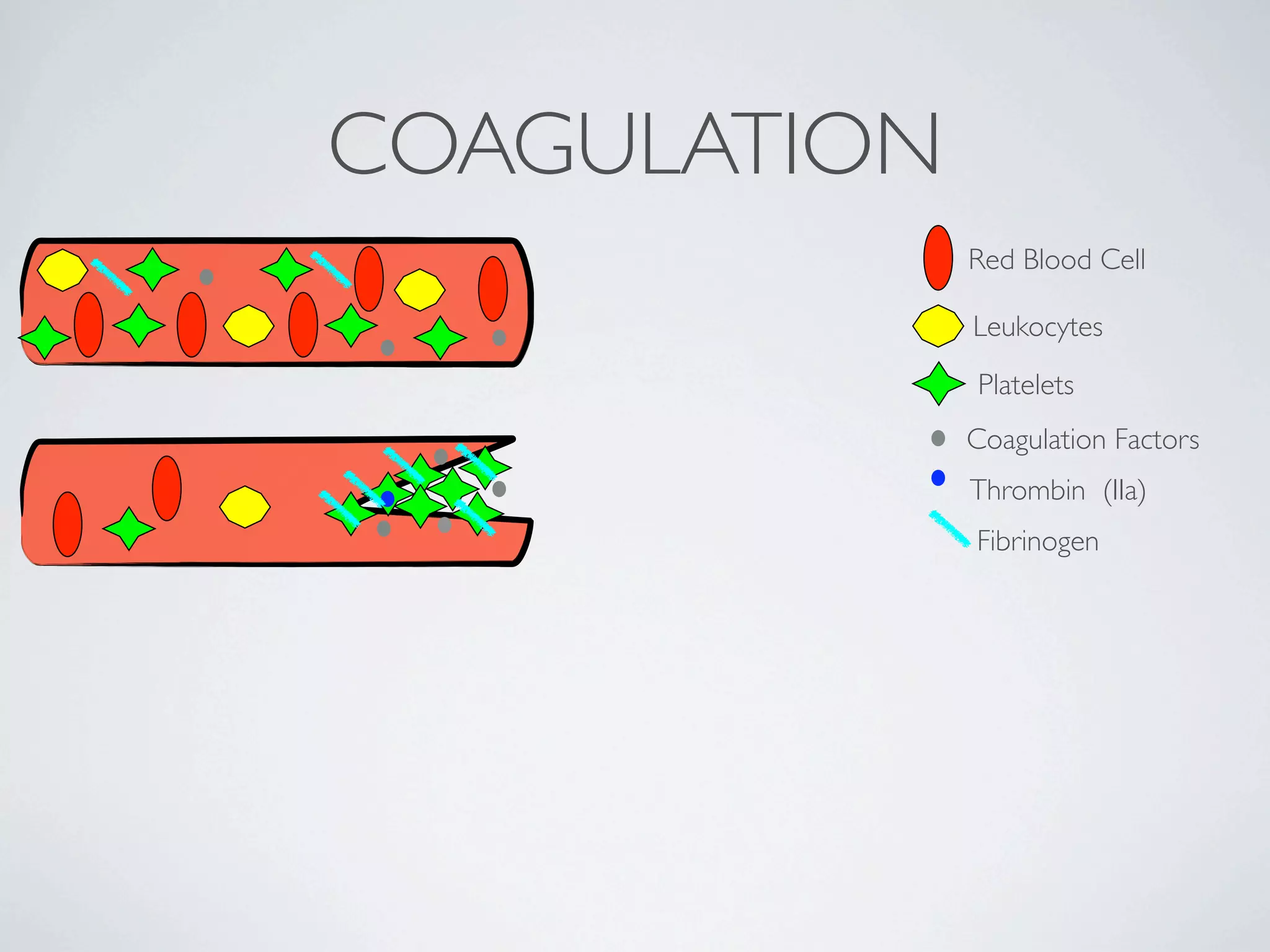
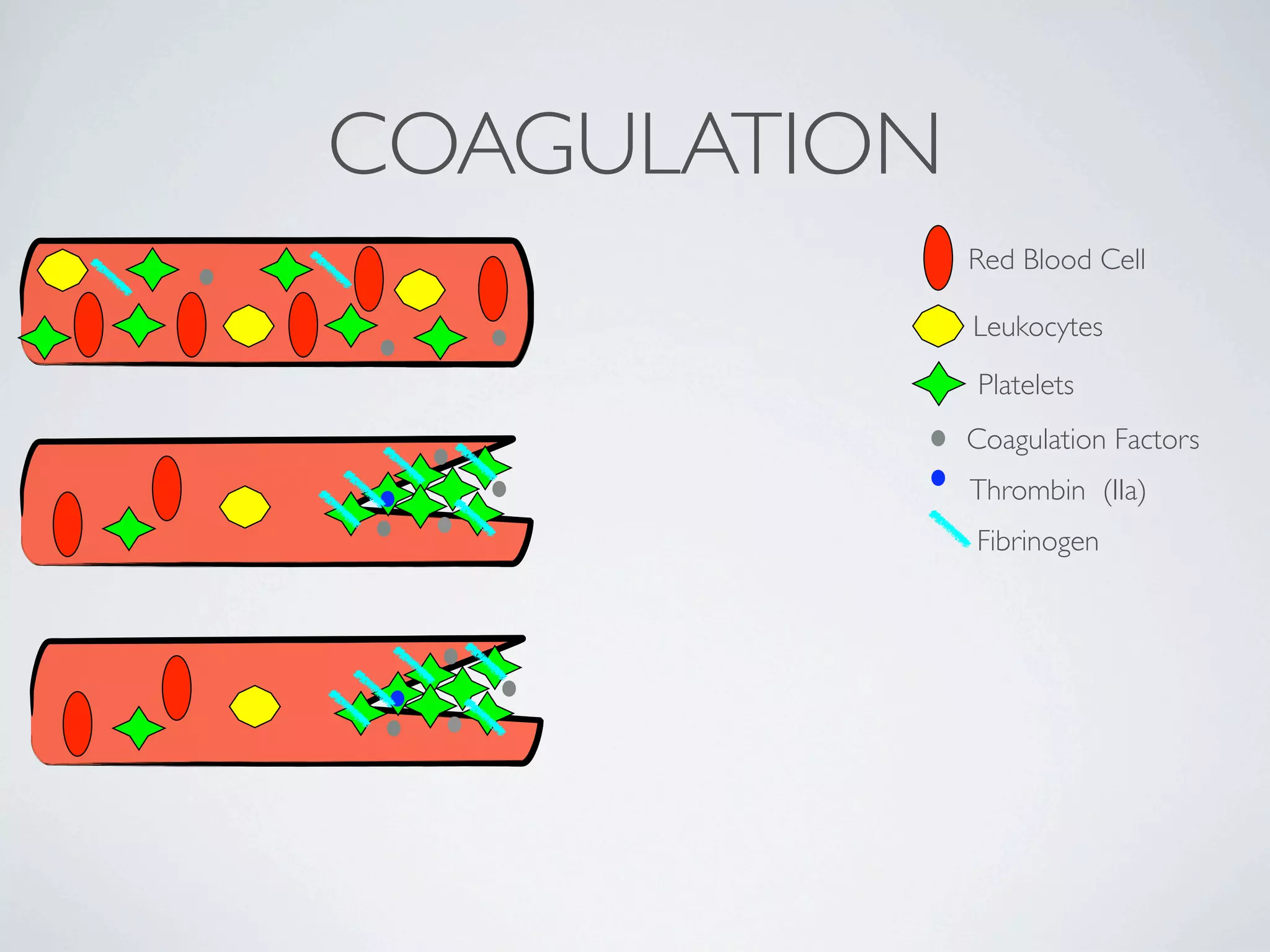
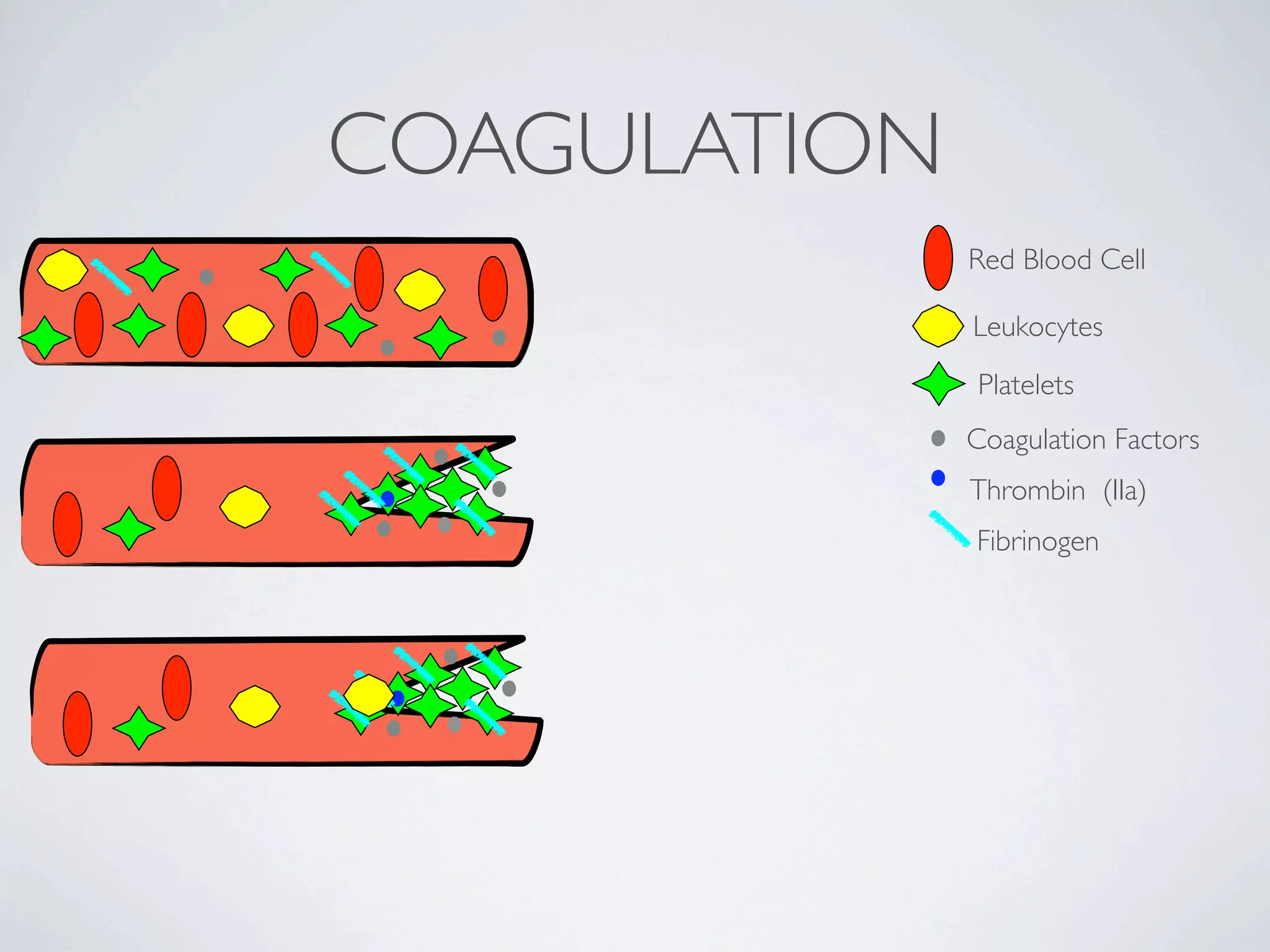
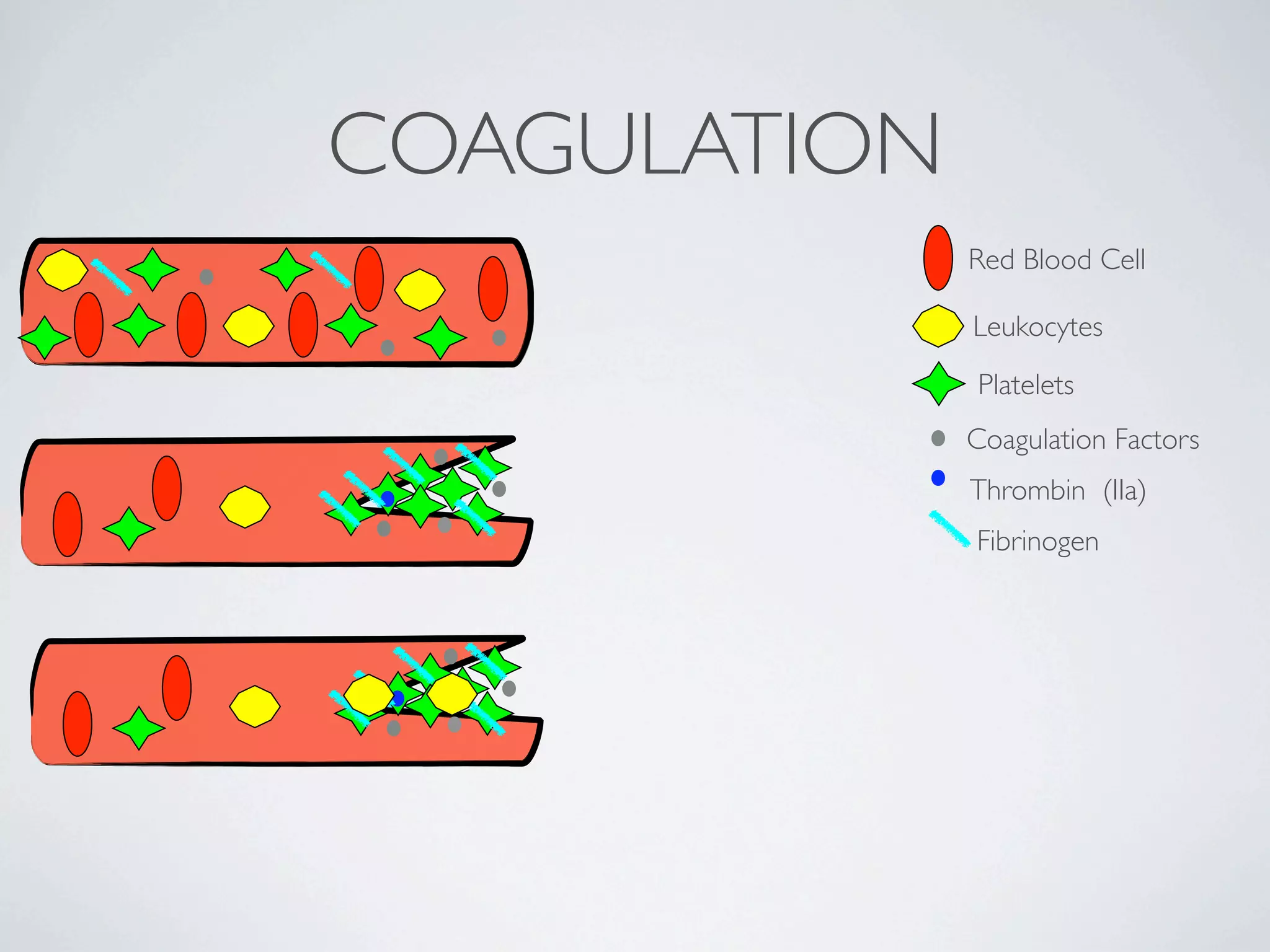
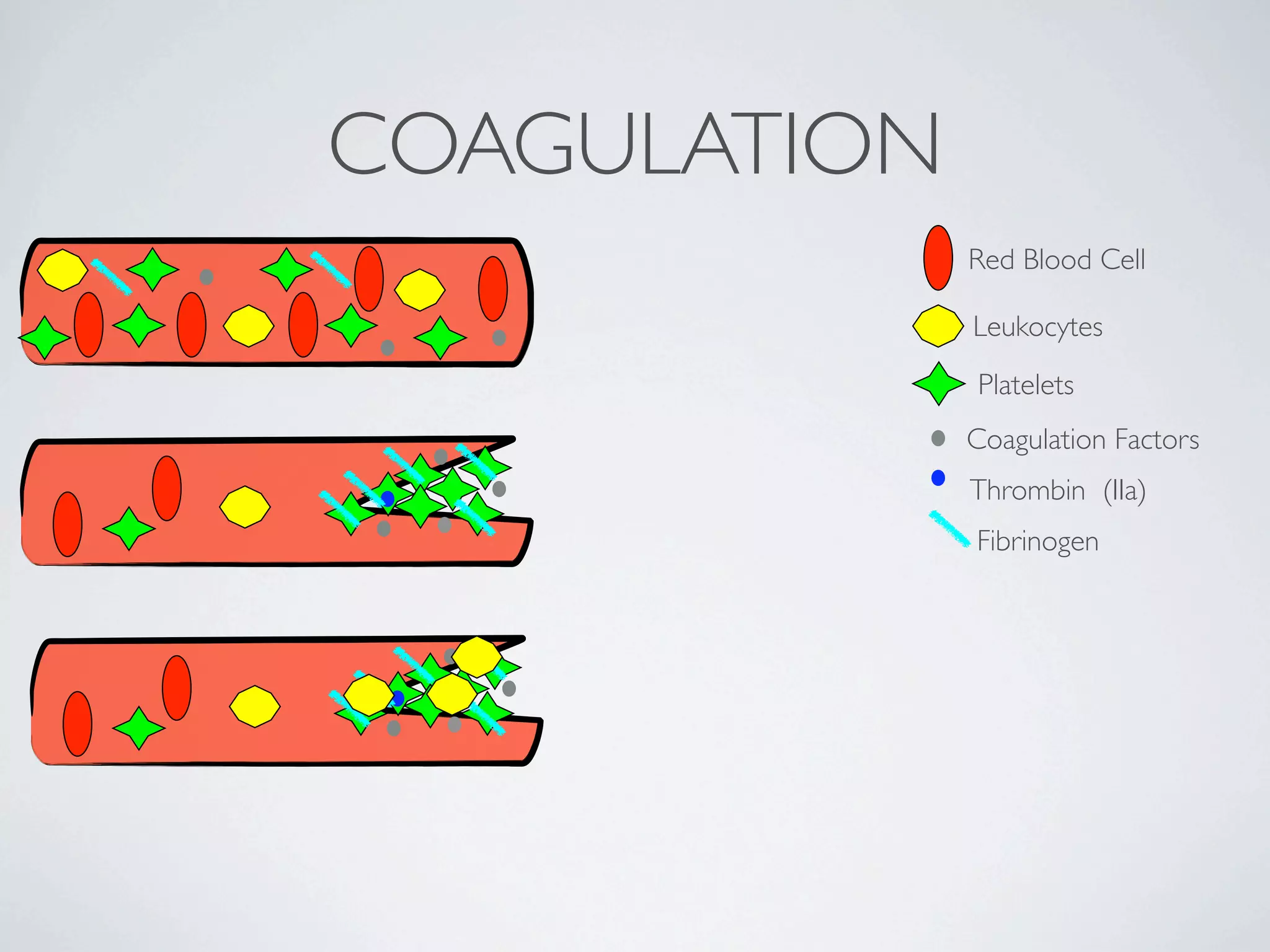
#4 For those unfamiliar with the coagulation process i will try to explained in a simple way. First you have your blood in vessels and all its components like RBC, WBC, Platelets, Coagulations Factors: importants ones: Thombin and Fibrinogen. > When you get and injury in one of your vessels which happens many times each day, platelets recognizes some of the component in the subendothelial exposed layer and they aggregated forming a platelet plug, then they start secreting coagulation factors that leds to the activation of Thombin. Thrombin causes polymerization of fibrinogen molecules into fibrin fibers forming a meshwork that entraps blood cells, platelets and plasma, that is a clot, sealing your vessels. Monocytes interact with the clot, this led an inflammatory response that in our lab we are interested in. Led to Associated inflammatory response with the clot.\n
#5 For those unfamiliar with the coagulation process i will try to explained in a simple way. First you have your blood in vessels and all its components like RBC, WBC, Platelets, Coagulations Factors: importants ones: Thombin and Fibrinogen. > When you get and injury in one of your vessels which happens many times each day, platelets recognizes some of the component in the subendothelial exposed layer and they aggregated forming a platelet plug, then they start secreting coagulation factors that leds to the activation of Thombin. Thrombin causes polymerization of fibrinogen molecules into fibrin fibers forming a meshwork that entraps blood cells, platelets and plasma, that is a clot, sealing your vessels. Monocytes interact with the clot, this led an inflammatory response that in our lab we are interested in. Led to Associated inflammatory response with the clot.\n
#6 For those unfamiliar with the coagulation process i will try to explained in a simple way. First you have your blood in vessels and all its components like RBC, WBC, Platelets, Coagulations Factors: importants ones: Thombin and Fibrinogen. > When you get and injury in one of your vessels which happens many times each day, platelets recognizes some of the component in the subendothelial exposed layer and they aggregated forming a platelet plug, then they start secreting coagulation factors that leds to the activation of Thombin. Thrombin causes polymerization of fibrinogen molecules into fibrin fibers forming a meshwork that entraps blood cells, platelets and plasma, that is a clot, sealing your vessels. Monocytes interact with the clot, this led an inflammatory response that in our lab we are interested in. Led to Associated inflammatory response with the clot.\n
#7 For those unfamiliar with the coagulation process i will try to explained in a simple way. First you have your blood in vessels and all its components like RBC, WBC, Platelets, Coagulations Factors: importants ones: Thombin and Fibrinogen. > When you get and injury in one of your vessels which happens many times each day, platelets recognizes some of the component in the subendothelial exposed layer and they aggregated forming a platelet plug, then they start secreting coagulation factors that leds to the activation of Thombin. Thrombin causes polymerization of fibrinogen molecules into fibrin fibers forming a meshwork that entraps blood cells, platelets and plasma, that is a clot, sealing your vessels. Monocytes interact with the clot, this led an inflammatory response that in our lab we are interested in. Led to Associated inflammatory response with the clot.\n
#8 For those unfamiliar with the coagulation process i will try to explained in a simple way. First you have your blood in vessels and all its components like RBC, WBC, Platelets, Coagulations Factors: importants ones: Thombin and Fibrinogen. > When you get and injury in one of your vessels which happens many times each day, platelets recognizes some of the component in the subendothelial exposed layer and they aggregated forming a platelet plug, then they start secreting coagulation factors that leds to the activation of Thombin. Thrombin causes polymerization of fibrinogen molecules into fibrin fibers forming a meshwork that entraps blood cells, platelets and plasma, that is a clot, sealing your vessels. Monocytes interact with the clot, this led an inflammatory response that in our lab we are interested in. Led to Associated inflammatory response with the clot.\n
#9 For those unfamiliar with the coagulation process i will try to explained in a simple way. First you have your blood in vessels and all its components like RBC, WBC, Platelets, Coagulations Factors: importants ones: Thombin and Fibrinogen. > When you get and injury in one of your vessels which happens many times each day, platelets recognizes some of the component in the subendothelial exposed layer and they aggregated forming a platelet plug, then they start secreting coagulation factors that leds to the activation of Thombin. Thrombin causes polymerization of fibrinogen molecules into fibrin fibers forming a meshwork that entraps blood cells, platelets and plasma, that is a clot, sealing your vessels. Monocytes interact with the clot, this led an inflammatory response that in our lab we are interested in. Led to Associated inflammatory response with the clot.\n
#10 For those unfamiliar with the coagulation process i will try to explained in a simple way. First you have your blood in vessels and all its components like RBC, WBC, Platelets, Coagulations Factors: importants ones: Thombin and Fibrinogen. > When you get and injury in one of your vessels which happens many times each day, platelets recognizes some of the component in the subendothelial exposed layer and they aggregated forming a platelet plug, then they start secreting coagulation factors that leds to the activation of Thombin. Thrombin causes polymerization of fibrinogen molecules into fibrin fibers forming a meshwork that entraps blood cells, platelets and plasma, that is a clot, sealing your vessels. Monocytes interact with the clot, this led an inflammatory response that in our lab we are interested in. Led to Associated inflammatory response with the clot.\n
#11 For those unfamiliar with the coagulation process i will try to explained in a simple way. First you have your blood in vessels and all its components like RBC, WBC, Platelets, Coagulations Factors: importants ones: Thombin and Fibrinogen. > When you get and injury in one of your vessels which happens many times each day, platelets recognizes some of the component in the subendothelial exposed layer and they aggregated forming a platelet plug, then they start secreting coagulation factors that leds to the activation of Thombin. Thrombin causes polymerization of fibrinogen molecules into fibrin fibers forming a meshwork that entraps blood cells, platelets and plasma, that is a clot, sealing your vessels. Monocytes interact with the clot, this led an inflammatory response that in our lab we are interested in. Led to Associated inflammatory response with the clot.\n
#12 For those unfamiliar with the coagulation process i will try to explained in a simple way. First you have your blood in vessels and all its components like RBC, WBC, Platelets, Coagulations Factors: importants ones: Thombin and Fibrinogen. > When you get and injury in one of your vessels which happens many times each day, platelets recognizes some of the component in the subendothelial exposed layer and they aggregated forming a platelet plug, then they start secreting coagulation factors that leds to the activation of Thombin. Thrombin causes polymerization of fibrinogen molecules into fibrin fibers forming a meshwork that entraps blood cells, platelets and plasma, that is a clot, sealing your vessels. Monocytes interact with the clot, this led an inflammatory response that in our lab we are interested in. Led to Associated inflammatory response with the clot.\n
#13 For those unfamiliar with the coagulation process i will try to explained in a simple way. First you have your blood in vessels and all its components like RBC, WBC, Platelets, Coagulations Factors: importants ones: Thombin and Fibrinogen. > When you get and injury in one of your vessels which happens many times each day, platelets recognizes some of the component in the subendothelial exposed layer and they aggregated forming a platelet plug, then they start secreting coagulation factors that leds to the activation of Thombin. Thrombin causes polymerization of fibrinogen molecules into fibrin fibers forming a meshwork that entraps blood cells, platelets and plasma, that is a clot, sealing your vessels. Monocytes interact with the clot, this led an inflammatory response that in our lab we are interested in. Led to Associated inflammatory response with the clot.\n
#14 For those unfamiliar with the coagulation process i will try to explained in a simple way. First you have your blood in vessels and all its components like RBC, WBC, Platelets, Coagulations Factors: importants ones: Thombin and Fibrinogen. > When you get and injury in one of your vessels which happens many times each day, platelets recognizes some of the component in the subendothelial exposed layer and they aggregated forming a platelet plug, then they start secreting coagulation factors that leds to the activation of Thombin. Thrombin causes polymerization of fibrinogen molecules into fibrin fibers forming a meshwork that entraps blood cells, platelets and plasma, that is a clot, sealing your vessels. Monocytes interact with the clot, this led an inflammatory response that in our lab we are interested in. Led to Associated inflammatory response with the clot.\n
#15 For those unfamiliar with the coagulation process i will try to explained in a simple way. First you have your blood in vessels and all its components like RBC, WBC, Platelets, Coagulations Factors: importants ones: Thombin and Fibrinogen. > When you get and injury in one of your vessels which happens many times each day, platelets recognizes some of the component in the subendothelial exposed layer and they aggregated forming a platelet plug, then they start secreting coagulation factors that leds to the activation of Thombin. Thrombin causes polymerization of fibrinogen molecules into fibrin fibers forming a meshwork that entraps blood cells, platelets and plasma, that is a clot, sealing your vessels. Monocytes interact with the clot, this led an inflammatory response that in our lab we are interested in. Led to Associated inflammatory response with the clot.\n
#16 For those unfamiliar with the coagulation process i will try to explained in a simple way. First you have your blood in vessels and all its components like RBC, WBC, Platelets, Coagulations Factors: importants ones: Thombin and Fibrinogen. > When you get and injury in one of your vessels which happens many times each day, platelets recognizes some of the component in the subendothelial exposed layer and they aggregated forming a platelet plug, then they start secreting coagulation factors that leds to the activation of Thombin. Thrombin causes polymerization of fibrinogen molecules into fibrin fibers forming a meshwork that entraps blood cells, platelets and plasma, that is a clot, sealing your vessels. Monocytes interact with the clot, this led an inflammatory response that in our lab we are interested in. Led to Associated inflammatory response with the clot.\n
#17 For those unfamiliar with the coagulation process i will try to explained in a simple way. First you have your blood in vessels and all its components like RBC, WBC, Platelets, Coagulations Factors: importants ones: Thombin and Fibrinogen. > When you get and injury in one of your vessels which happens many times each day, platelets recognizes some of the component in the subendothelial exposed layer and they aggregated forming a platelet plug, then they start secreting coagulation factors that leds to the activation of Thombin. Thrombin causes polymerization of fibrinogen molecules into fibrin fibers forming a meshwork that entraps blood cells, platelets and plasma, that is a clot, sealing your vessels. Monocytes interact with the clot, this led an inflammatory response that in our lab we are interested in. Led to Associated inflammatory response with the clot.\n
#18 For those unfamiliar with the coagulation process i will try to explained in a simple way. First you have your blood in vessels and all its components like RBC, WBC, Platelets, Coagulations Factors: importants ones: Thombin and Fibrinogen. > When you get and injury in one of your vessels which happens many times each day, platelets recognizes some of the component in the subendothelial exposed layer and they aggregated forming a platelet plug, then they start secreting coagulation factors that leds to the activation of Thombin. Thrombin causes polymerization of fibrinogen molecules into fibrin fibers forming a meshwork that entraps blood cells, platelets and plasma, that is a clot, sealing your vessels. Monocytes interact with the clot, this led an inflammatory response that in our lab we are interested in. Led to Associated inflammatory response with the clot.\n
#19 For those unfamiliar with the coagulation process i will try to explained in a simple way. First you have your blood in vessels and all its components like RBC, WBC, Platelets, Coagulations Factors: importants ones: Thombin and Fibrinogen. > When you get and injury in one of your vessels which happens many times each day, platelets recognizes some of the component in the subendothelial exposed layer and they aggregated forming a platelet plug, then they start secreting coagulation factors that leds to the activation of Thombin. Thrombin causes polymerization of fibrinogen molecules into fibrin fibers forming a meshwork that entraps blood cells, platelets and plasma, that is a clot, sealing your vessels. Monocytes interact with the clot, this led an inflammatory response that in our lab we are interested in. Led to Associated inflammatory response with the clot.\n
#20 For those unfamiliar with the coagulation process i will try to explained in a simple way. First you have your blood in vessels and all its components like RBC, WBC, Platelets, Coagulations Factors: importants ones: Thombin and Fibrinogen. > When you get and injury in one of your vessels which happens many times each day, platelets recognizes some of the component in the subendothelial exposed layer and they aggregated forming a platelet plug, then they start secreting coagulation factors that leds to the activation of Thombin. Thrombin causes polymerization of fibrinogen molecules into fibrin fibers forming a meshwork that entraps blood cells, platelets and plasma, that is a clot, sealing your vessels. Monocytes interact with the clot, this led an inflammatory response that in our lab we are interested in. Led to Associated inflammatory response with the clot.\n
#21 For those unfamiliar with the coagulation process i will try to explained in a simple way. First you have your blood in vessels and all its components like RBC, WBC, Platelets, Coagulations Factors: importants ones: Thombin and Fibrinogen. > When you get and injury in one of your vessels which happens many times each day, platelets recognizes some of the component in the subendothelial exposed layer and they aggregated forming a platelet plug, then they start secreting coagulation factors that leds to the activation of Thombin. Thrombin causes polymerization of fibrinogen molecules into fibrin fibers forming a meshwork that entraps blood cells, platelets and plasma, that is a clot, sealing your vessels. Monocytes interact with the clot, this led an inflammatory response that in our lab we are interested in. Led to Associated inflammatory response with the clot.\n
#22 For those unfamiliar with the coagulation process i will try to explained in a simple way. First you have your blood in vessels and all its components like RBC, WBC, Platelets, Coagulations Factors: importants ones: Thombin and Fibrinogen. > When you get and injury in one of your vessels which happens many times each day, platelets recognizes some of the component in the subendothelial exposed layer and they aggregated forming a platelet plug, then they start secreting coagulation factors that leds to the activation of Thombin. Thrombin causes polymerization of fibrinogen molecules into fibrin fibers forming a meshwork that entraps blood cells, platelets and plasma, that is a clot, sealing your vessels. Monocytes interact with the clot, this led an inflammatory response that in our lab we are interested in. Led to Associated inflammatory response with the clot.\n
#23 For those unfamiliar with the coagulation process i will try to explained in a simple way. First you have your blood in vessels and all its components like RBC, WBC, Platelets, Coagulations Factors: importants ones: Thombin and Fibrinogen. > When you get and injury in one of your vessels which happens many times each day, platelets recognizes some of the component in the subendothelial exposed layer and they aggregated forming a platelet plug, then they start secreting coagulation factors that leds to the activation of Thombin. Thrombin causes polymerization of fibrinogen molecules into fibrin fibers forming a meshwork that entraps blood cells, platelets and plasma, that is a clot, sealing your vessels. Monocytes interact with the clot, this led an inflammatory response that in our lab we are interested in. Led to Associated inflammatory response with the clot.\n
#24 For those unfamiliar with the coagulation process i will try to explained in a simple way. First you have your blood in vessels and all its components like RBC, WBC, Platelets, Coagulations Factors: importants ones: Thombin and Fibrinogen. > When you get and injury in one of your vessels which happens many times each day, platelets recognizes some of the component in the subendothelial exposed layer and they aggregated forming a platelet plug, then they start secreting coagulation factors that leds to the activation of Thombin. Thrombin causes polymerization of fibrinogen molecules into fibrin fibers forming a meshwork that entraps blood cells, platelets and plasma, that is a clot, sealing your vessels. Monocytes interact with the clot, this led an inflammatory response that in our lab we are interested in. Led to Associated inflammatory response with the clot.\n
#25 For those unfamiliar with the coagulation process i will try to explained in a simple way. First you have your blood in vessels and all its components like RBC, WBC, Platelets, Coagulations Factors: importants ones: Thombin and Fibrinogen. > When you get and injury in one of your vessels which happens many times each day, platelets recognizes some of the component in the subendothelial exposed layer and they aggregated forming a platelet plug, then they start secreting coagulation factors that leds to the activation of Thombin. Thrombin causes polymerization of fibrinogen molecules into fibrin fibers forming a meshwork that entraps blood cells, platelets and plasma, that is a clot, sealing your vessels. Monocytes interact with the clot, this led an inflammatory response that in our lab we are interested in. Led to Associated inflammatory response with the clot.\n
#26 For those unfamiliar with the coagulation process i will try to explained in a simple way. First you have your blood in vessels and all its components like RBC, WBC, Platelets, Coagulations Factors: importants ones: Thombin and Fibrinogen. > When you get and injury in one of your vessels which happens many times each day, platelets recognizes some of the component in the subendothelial exposed layer and they aggregated forming a platelet plug, then they start secreting coagulation factors that leds to the activation of Thombin. Thrombin causes polymerization of fibrinogen molecules into fibrin fibers forming a meshwork that entraps blood cells, platelets and plasma, that is a clot, sealing your vessels. Monocytes interact with the clot, this led an inflammatory response that in our lab we are interested in. Led to Associated inflammatory response with the clot.\n
#27 For those unfamiliar with the coagulation process i will try to explained in a simple way. First you have your blood in vessels and all its components like RBC, WBC, Platelets, Coagulations Factors: importants ones: Thombin and Fibrinogen. > When you get and injury in one of your vessels which happens many times each day, platelets recognizes some of the component in the subendothelial exposed layer and they aggregated forming a platelet plug, then they start secreting coagulation factors that leds to the activation of Thombin. Thrombin causes polymerization of fibrinogen molecules into fibrin fibers forming a meshwork that entraps blood cells, platelets and plasma, that is a clot, sealing your vessels. Monocytes interact with the clot, this led an inflammatory response that in our lab we are interested in. Led to Associated inflammatory response with the clot.\n
#28 For those unfamiliar with the coagulation process i will try to explained in a simple way. First you have your blood in vessels and all its components like RBC, WBC, Platelets, Coagulations Factors: importants ones: Thombin and Fibrinogen. > When you get and injury in one of your vessels which happens many times each day, platelets recognizes some of the component in the subendothelial exposed layer and they aggregated forming a platelet plug, then they start secreting coagulation factors that leds to the activation of Thombin. Thrombin causes polymerization of fibrinogen molecules into fibrin fibers forming a meshwork that entraps blood cells, platelets and plasma, that is a clot, sealing your vessels. Monocytes interact with the clot, this led an inflammatory response that in our lab we are interested in. Led to Associated inflammatory response with the clot.\n
#29 For those unfamiliar with the coagulation process i will try to explained in a simple way. First you have your blood in vessels and all its components like RBC, WBC, Platelets, Coagulations Factors: importants ones: Thombin and Fibrinogen. > When you get and injury in one of your vessels which happens many times each day, platelets recognizes some of the component in the subendothelial exposed layer and they aggregated forming a platelet plug, then they start secreting coagulation factors that leds to the activation of Thombin. Thrombin causes polymerization of fibrinogen molecules into fibrin fibers forming a meshwork that entraps blood cells, platelets and plasma, that is a clot, sealing your vessels. Monocytes interact with the clot, this led an inflammatory response that in our lab we are interested in. Led to Associated inflammatory response with the clot.\n
#32 Recently in our lab, using an in vitro clot system in which monocytes are exposed to clot removing the platelets, an increased in protein synthesis have been identified.\n