CHAPTER 9 THE
PROGRESSIVE ERA


 AMERICA SEEKS REFORMS IN THE
      EARLY 20TH CENTURY
ORIGINS OF PROGRESSIVISM
• As America entered into the
  20th century, middle class
  reformers addressed many
  social problems
• Work conditions, rights for
  women and children, economic
  reform, environmental issues
  and social welfare were a few
  of these issues
FOUR GOALS OF REFORMERS
            • 1) Protect Social Welfare
            • 2) Promote Moral
              Improvement
            • 3) Create Economic
              Reform
            • 4) Foster Efficiency
1.PROTECT SOCIAL WELFARE
• Industrialization in the late 19th
  century was largely unregulated
• Employers felt little
  responsibility toward their
  workers
• As a result Settlement homes
  and churches served the
  community
• Also the YMCA and Salvation
  Army took on service roles
2. PROMOTE MORAL DEVELOPMENT
              • Some reformers felt that the
                answer to societies problems
                was personal behavior
              • They proposed such reforms as
                prohibition
              • Groups wishing to ban alcohol
                included the Woman’s
                Christian Temperance Union
                (WCTU)
3. CREATE ECONOMIC REFORM
• The Panic of 1893 prompted
  some Americans to
  question the capitalist
  economic system
• As a result some workers
  embraced socialism
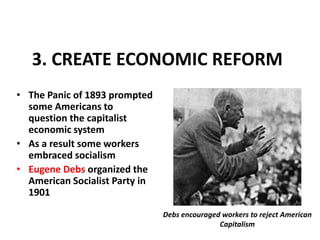
• Eugene Debs organized the
  American Socialist Party in
  1901

                                Debs encouraged workers to reject American
                                               Capitalism
MUCKRAKERS CRITICIZE BIG BUSINESS
             Ida Tarbell   • Though most progressives did
                             not embrace socialism, many
                             writers saw the truth in Debs’
                             criticism
                           • Journalists known as
                             “Muckrakers” exposed
Some view                    corruption in business
Michael                    • Ida Tarbell exposed Standard
Moore as a                   Oil Company’s cut-throat
modern
                             methods of eliminating
muckraker
                             competition
4. FOSTERING EFFICIENCY
• Many Progressive leaders
  put their faith in scientific
  principles to make society
  better
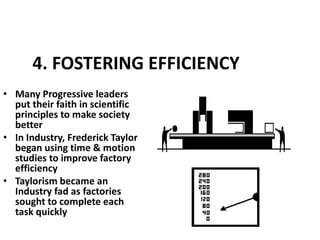
• In Industry, Frederick Taylor
  began using time & motion
  studies to improve factory
  efficiency
• Taylorism became an
  Industry fad as factories
  sought to complete each
  task quickly
CLEANING UP LOCAL GOVERNMENT
              • Efforts at reforming local
                government stemmed from
                the desire to make
                government more efficient
                and responsive to citizens
              • Some believe it also was
                meant to limit immigrants
                influence in local
                governments
REGULATING BIG BUSINESS
• Under the progressive
  Republican leadership
  of Robert La Follette,
  Wisconsin led the way
  in regulating big
  business


                           Robert La Follette
PROTECTING WORKING CHILDREN
             • As the number of child
               workers rose, reformers
               worked to end child labor
             • Children were more prone
               to accidents caused by
               fatigue
             • Nearly every state limited
               or banned child labor by
               1918
EFFORTS TO LIMIT HOURS
• The Supreme Court and the
  states enacted or
  strengthened laws reducing
  women’s hours of work
• Progressives also succeeded
  in winning worker’s
  compensation to aid
  families of injured workers
ELECTION REFORM
        • Citizens fought for, and won,
          such measures as secret
          ballots, referendum votes,
          and the recall
        • Citizens could petition and
          get initiatives on the ballot
        • In 1899, Minnesota passed
          the first statewide primary
          system
DIRECT ELECTION OF SENATORS
• Before 1913, each state’s
  legislature had chosen its
  own U.S. senators
• To force senators to be
  more responsive to the
  public, progressives pushed
  for the popular election of
  senators
• As a result, Congress passed
  the             17th
  Amendment (1913)

Chapter 9 the progressive era

  • 1.
    CHAPTER 9 THE PROGRESSIVEERA AMERICA SEEKS REFORMS IN THE EARLY 20TH CENTURY
  • 2.
    ORIGINS OF PROGRESSIVISM •As America entered into the 20th century, middle class reformers addressed many social problems • Work conditions, rights for women and children, economic reform, environmental issues and social welfare were a few of these issues
  • 3.
    FOUR GOALS OFREFORMERS • 1) Protect Social Welfare • 2) Promote Moral Improvement • 3) Create Economic Reform • 4) Foster Efficiency
  • 4.
    1.PROTECT SOCIAL WELFARE •Industrialization in the late 19th century was largely unregulated • Employers felt little responsibility toward their workers • As a result Settlement homes and churches served the community • Also the YMCA and Salvation Army took on service roles
  • 5.
    2. PROMOTE MORALDEVELOPMENT • Some reformers felt that the answer to societies problems was personal behavior • They proposed such reforms as prohibition • Groups wishing to ban alcohol included the Woman’s Christian Temperance Union (WCTU)
  • 6.
    3. CREATE ECONOMICREFORM • The Panic of 1893 prompted some Americans to question the capitalist economic system • As a result some workers embraced socialism • Eugene Debs organized the American Socialist Party in 1901 Debs encouraged workers to reject American Capitalism
  • 7.
    MUCKRAKERS CRITICIZE BIGBUSINESS Ida Tarbell • Though most progressives did not embrace socialism, many writers saw the truth in Debs’ criticism • Journalists known as “Muckrakers” exposed Some view corruption in business Michael • Ida Tarbell exposed Standard Moore as a Oil Company’s cut-throat modern methods of eliminating muckraker competition
  • 8.
    4. FOSTERING EFFICIENCY •Many Progressive leaders put their faith in scientific principles to make society better • In Industry, Frederick Taylor began using time & motion studies to improve factory efficiency • Taylorism became an Industry fad as factories sought to complete each task quickly
  • 9.
    CLEANING UP LOCALGOVERNMENT • Efforts at reforming local government stemmed from the desire to make government more efficient and responsive to citizens • Some believe it also was meant to limit immigrants influence in local governments
  • 10.
    REGULATING BIG BUSINESS •Under the progressive Republican leadership of Robert La Follette, Wisconsin led the way in regulating big business Robert La Follette
  • 11.
    PROTECTING WORKING CHILDREN • As the number of child workers rose, reformers worked to end child labor • Children were more prone to accidents caused by fatigue • Nearly every state limited or banned child labor by 1918
  • 12.
    EFFORTS TO LIMITHOURS • The Supreme Court and the states enacted or strengthened laws reducing women’s hours of work • Progressives also succeeded in winning worker’s compensation to aid families of injured workers
  • 13.
    ELECTION REFORM • Citizens fought for, and won, such measures as secret ballots, referendum votes, and the recall • Citizens could petition and get initiatives on the ballot • In 1899, Minnesota passed the first statewide primary system
  • 14.
    DIRECT ELECTION OFSENATORS • Before 1913, each state’s legislature had chosen its own U.S. senators • To force senators to be more responsive to the public, progressives pushed for the popular election of senators • As a result, Congress passed the 17th Amendment (1913)