Development of Biopharmaceutical based on the Cloning
Technology (Factor VIII Hemophilia)
What Is Antihemophilic Factor?
• Antihemophilic factor is a naturally occurring protein in the blood that
helps blood to clot. A lack of antihemophilic factor VIII is the cause of
hemophilia A. Human antihemophilic factor works by temporarily
raising levels of factor VIII in the blood to aid in clotting.
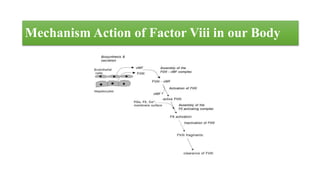
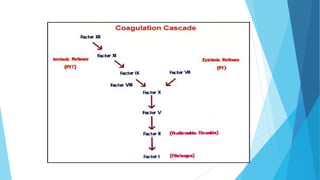
Mechanism Action of Factor Viii in our Body
Difference between normal & Hemophilic Patient
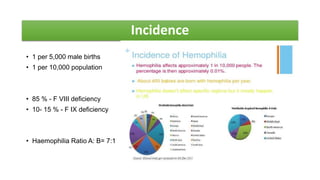
Incidence
• 1 per 5,000 male births
• 1 per 10,000 population
• 85 % - F VIII deficiency
• 10- 15 % - F IX deficiency
• Haemophilia Ratio A: B= 7:1
Market Size of Hemophilia in 2013-2024
1.Preventions
Control Bleeding Episodes
Local measures: apply direct pressure; elevate or ice compress
Epistaxsis sit up lean forward
Management Strategies
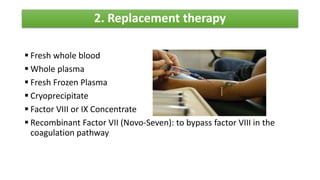
2. Replacement therapy
 Fresh whole blood
 Whole plasma
 Fresh Frozen Plasma
 Cryoprecipitate
 Factor VIII or IX Concentrate
 Recombinant Factor VII (Novo-Seven): to bypass factor VIII in the
coagulation pathway
 A biopharmaceutical is any pharmaceutical drug product manufactured
in, extracted from, or semi-synthesized from biological sources. They
include vaccines, blood components, gene therapies, recombinant
therapeutic protein etc.
 FVIII is a glycoprotein procofactor. In the blood, it mainly circulates in a
stable non-covalent complex with von Willebrand factor. It is activated
by thrombin (factor IIa)
 The availability of recombinant coagulation factors has been a major advance in
the area of hemophilia, providing the promise of improved safety, ease of use,
and reducing the risk of infections transmitted by transfusion.
 Hemophilia is caused by the failure to produce certain proteins required for
blood clotting: factor VIII (hemophilia A) or factor IX (hemophilia B).
 Because the genes encoding these factors are on the X chromosome, these
diseases (termed "X-linked") usually affect only men, who carry only one X
chromosome. Women carrying the disease gene are "carriers" and can transmit
the disease, mainly to their sons.
 Recombinant factor VIII is a glycoprotein which is produced by
recombinant DNA technology. It is used for people who have developed
antibodies against replacement coagulation factor.
 The gene for factor VIII is located on the X chromosome (Xq28)..
 This biomedicine is produced in baby hamster kidney cells (BHK) and
has similar characteristics and functions with the native blood factor
VIII.
Clotting Factor VIII Production
 Obtaining the molecular clone of a gene can lead to the development of
organisms that produce the protein product of the cloned genes, termed
a recombinant protein.
 BHK-21 cells are transfected by human adenovirus D, containing the
F8 gene. The cells are then cultured in fetal bovine serum 5% in large
steel tanks.
 Recombinant Clotting Factor VIII (Antihemophilic Factor) is then
obtained by purification of culture.
Our Product- LyoClot
 Description: LyoClot is a white lyophilized powder in single-use glass vials.
 LyoClot should be stored refrigerated at 2-8°C.
 LyoClot should be reconstituted with 5 mL sterile water for injection. The
reconstituted solution has a pH of 6.0.
 The reconstituted product must be administered intravenously by direct
syringe injection or drip infusion within 3 hours of reconstitution.
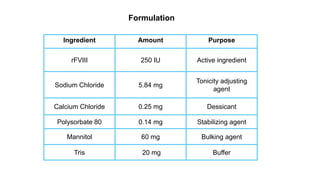
Formulation
Ingredient Amount Purpose
rFVIII 250 IU Active ingredient
Sodium Chloride 5.84 mg
Tonicity adjusting
agent
Calcium Chloride 0.25 mg Dessicant
Polysorbate 80 0.14 mg Stabilizing agent
Mannitol 60 mg Bulking agent
Tris 20 mg Buffer

Factor Viii Hemophilia

  • 1.
    Development of Biopharmaceuticalbased on the Cloning Technology (Factor VIII Hemophilia)
  • 2.
    What Is AntihemophilicFactor? • Antihemophilic factor is a naturally occurring protein in the blood that helps blood to clot. A lack of antihemophilic factor VIII is the cause of hemophilia A. Human antihemophilic factor works by temporarily raising levels of factor VIII in the blood to aid in clotting.
  • 3.
    Mechanism Action ofFactor Viii in our Body
  • 4.
    Difference between normal& Hemophilic Patient
  • 5.
    Incidence • 1 per5,000 male births • 1 per 10,000 population • 85 % - F VIII deficiency • 10- 15 % - F IX deficiency • Haemophilia Ratio A: B= 7:1
  • 6.
    Market Size ofHemophilia in 2013-2024
  • 7.
    1.Preventions Control Bleeding Episodes Localmeasures: apply direct pressure; elevate or ice compress Epistaxsis sit up lean forward Management Strategies
  • 8.
    2. Replacement therapy Fresh whole blood  Whole plasma  Fresh Frozen Plasma  Cryoprecipitate  Factor VIII or IX Concentrate  Recombinant Factor VII (Novo-Seven): to bypass factor VIII in the coagulation pathway
  • 10.
     A biopharmaceuticalis any pharmaceutical drug product manufactured in, extracted from, or semi-synthesized from biological sources. They include vaccines, blood components, gene therapies, recombinant therapeutic protein etc.  FVIII is a glycoprotein procofactor. In the blood, it mainly circulates in a stable non-covalent complex with von Willebrand factor. It is activated by thrombin (factor IIa)
  • 12.
     The availabilityof recombinant coagulation factors has been a major advance in the area of hemophilia, providing the promise of improved safety, ease of use, and reducing the risk of infections transmitted by transfusion.  Hemophilia is caused by the failure to produce certain proteins required for blood clotting: factor VIII (hemophilia A) or factor IX (hemophilia B).  Because the genes encoding these factors are on the X chromosome, these diseases (termed "X-linked") usually affect only men, who carry only one X chromosome. Women carrying the disease gene are "carriers" and can transmit the disease, mainly to their sons.
  • 13.
     Recombinant factorVIII is a glycoprotein which is produced by recombinant DNA technology. It is used for people who have developed antibodies against replacement coagulation factor.  The gene for factor VIII is located on the X chromosome (Xq28)..  This biomedicine is produced in baby hamster kidney cells (BHK) and has similar characteristics and functions with the native blood factor VIII.
  • 14.
    Clotting Factor VIIIProduction  Obtaining the molecular clone of a gene can lead to the development of organisms that produce the protein product of the cloned genes, termed a recombinant protein.  BHK-21 cells are transfected by human adenovirus D, containing the F8 gene. The cells are then cultured in fetal bovine serum 5% in large steel tanks.  Recombinant Clotting Factor VIII (Antihemophilic Factor) is then obtained by purification of culture.
  • 15.
    Our Product- LyoClot Description: LyoClot is a white lyophilized powder in single-use glass vials.  LyoClot should be stored refrigerated at 2-8°C.  LyoClot should be reconstituted with 5 mL sterile water for injection. The reconstituted solution has a pH of 6.0.  The reconstituted product must be administered intravenously by direct syringe injection or drip infusion within 3 hours of reconstitution.
  • 16.
    Formulation Ingredient Amount Purpose rFVIII250 IU Active ingredient Sodium Chloride 5.84 mg Tonicity adjusting agent Calcium Chloride 0.25 mg Dessicant Polysorbate 80 0.14 mg Stabilizing agent Mannitol 60 mg Bulking agent Tris 20 mg Buffer