Antibiotic Resistance
Antibiotic resistance
• Antibiotics are powerful medicines that fight bacterial
infection
• Literal translation
• Anti – against
• Biotic – living things
Antibiotic resistance
The Causes
• Overuse
• Antibiotics used to treat infections when they are not needed or
not effective i.e. for the flu
• Misuse
• Not completing a prescribed course
• Using antibiotics not prescribed for you
Prevention of Resistance
• Only take antibiotics prescribed by a doctor
• If prescribed antibiotics, finish the course
• Do not use other peoples or leftover antibiotics
• They be specific for some other infection
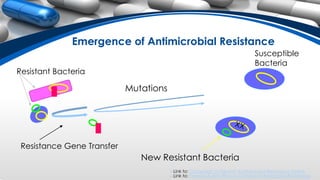
Emergence of Antimicrobial Resistance
Link to: Campaign to Prevent Antimicrobial Resistance Online
Link to: Federal Action Plan to Combat Antimicrobial Resistance
New Resistant Bacteria
Susceptible
Bacteria
Resistant Bacteria
Resistance Gene Transfer
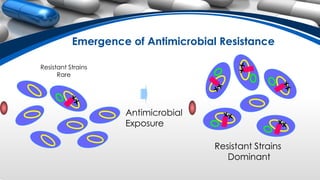
Resistant Strains
Rare
Resistant Strains
Dominant
Antimicrobial
Exposure
Emergence of Antimicrobial Resistance
7
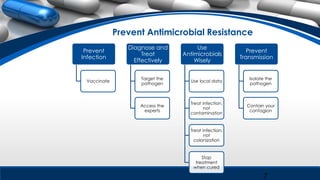
Prevent
Infection
Vaccinate
Diagnose and
Treat
Effectively
Target the
pathogen
Access the
experts
Use
Antimicrobials
Wisely
Use local data
Treat infection,
not
contamination
Treat infection,
not
colonization
Stop
treatment
when cured
Prevent
Transmission
Isolate the
pathogen
Contain your
contagion
Prevent Antimicrobial Resistance
 Link to: CDC facts about influenza and pneumococcal vaccine Link to: ACIP: Vaccine standing orders
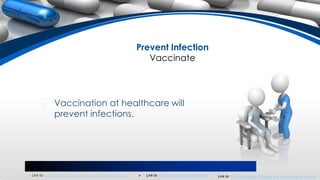
Prevent Infection
Vaccinate
 Link to: ACIP Influenza immunization recommendations
• Vaccination at healthcare will
prevent infections.
Fact: Appropriate antimicrobial therapy saves lives.
Actions:
• Culture the patient
• Target empiric therapy to likely pathogens and
local antibiogram
• Target definitive therapy to known pathogens and
antimicrobial susceptibility test results
 Link to: IDSA guidelines for evaluating fever in critically ill adults
Diagnose and Treat Infection Effectively
Target the pathogen
Diagnose and Treat Infection Effectively
Access the experts
Fact: Infectious diseases expert input improves the
outcome of serious infections.
Action:
• Consult infectious diseases experts about
patients with serious infections
Use Antimicrobials Wisely
Use local data
Fact: The prevalence of resistance can vary by locale,
patient population, hospital unit, and length of stay.
Actions:
• Know your local antibiogram
• Know your patient population
 Link to: NCCLS Proposed Guidance for Antibiogram Development
Use Antimicrobials Wisely
Treat infection, not contamination
Fact: A major cause of antimicrobial overuse is “treatment” of
contaminated cultures.
Actions:
• Use proper antisepsis for blood and other cultures
• Culture the blood, not the skin or catheter hub
• Use proper methods to obtain and process
all cultures
•
 Link to: CAP standards for specimen collection and management
Use Antimicrobials Wisely
Treat infection, not colonization
Fact: A major cause of antimicrobial overuse is treatment of
colonization.
Actions:
• Treat pneumonia, not the tracheal aspirate
• Treat bacteremia, not the catheter tip or hub
• Treat urinary tract infection, not the indwelling catheter
 Link to: IDSA guideline for evaluating fever in critically ill adults
Fact: Failure to stop unnecessary antimicrobial treatment
contributes to overuse and resistance.
Actions:
• When infection is cured
• When cultures are negative and infection is unlikely
• When infection is not diagnosed
Use Antimicrobials Wisely
Stop antimicrobial treatment
Prevent Transmission
Isolate the pathogen
Fact: Patient-to-patient spread of pathogens can be prevented.
Actions:
• Use standard infection control precautions
• Contain infectious body fluids (use approved
Airborne/droplet/contact isolation precautions)
• When in doubt, consult infection control experts
 Link to: A VRE prevention success story
 Link to: CDC isolation guidelines and recommendations
Fact:
Healthcare personnel can spread antimicrobial-resistant
pathogens from patient to patient.
Prevent Transmission
Contain your contagion
Thank You!

Antibiotic Resistance

  • 1.
  • 2.
    Antibiotic resistance • Antibioticsare powerful medicines that fight bacterial infection • Literal translation • Anti – against • Biotic – living things
  • 3.
    Antibiotic resistance The Causes •Overuse • Antibiotics used to treat infections when they are not needed or not effective i.e. for the flu • Misuse • Not completing a prescribed course • Using antibiotics not prescribed for you
  • 4.
    Prevention of Resistance •Only take antibiotics prescribed by a doctor • If prescribed antibiotics, finish the course • Do not use other peoples or leftover antibiotics • They be specific for some other infection
  • 5.
    Emergence of AntimicrobialResistance Link to: Campaign to Prevent Antimicrobial Resistance Online Link to: Federal Action Plan to Combat Antimicrobial Resistance New Resistant Bacteria Susceptible Bacteria Resistant Bacteria Resistance Gene Transfer
  • 6.
  • 7.
    7 Prevent Infection Vaccinate Diagnose and Treat Effectively Target the pathogen Accessthe experts Use Antimicrobials Wisely Use local data Treat infection, not contamination Treat infection, not colonization Stop treatment when cured Prevent Transmission Isolate the pathogen Contain your contagion Prevent Antimicrobial Resistance
  • 8.
     Link to:CDC facts about influenza and pneumococcal vaccine Link to: ACIP: Vaccine standing orders Prevent Infection Vaccinate  Link to: ACIP Influenza immunization recommendations • Vaccination at healthcare will prevent infections.
  • 9.
    Fact: Appropriate antimicrobialtherapy saves lives. Actions: • Culture the patient • Target empiric therapy to likely pathogens and local antibiogram • Target definitive therapy to known pathogens and antimicrobial susceptibility test results  Link to: IDSA guidelines for evaluating fever in critically ill adults Diagnose and Treat Infection Effectively Target the pathogen
  • 10.
    Diagnose and TreatInfection Effectively Access the experts Fact: Infectious diseases expert input improves the outcome of serious infections. Action: • Consult infectious diseases experts about patients with serious infections
  • 11.
    Use Antimicrobials Wisely Uselocal data Fact: The prevalence of resistance can vary by locale, patient population, hospital unit, and length of stay. Actions: • Know your local antibiogram • Know your patient population  Link to: NCCLS Proposed Guidance for Antibiogram Development
  • 12.
    Use Antimicrobials Wisely Treatinfection, not contamination Fact: A major cause of antimicrobial overuse is “treatment” of contaminated cultures. Actions: • Use proper antisepsis for blood and other cultures • Culture the blood, not the skin or catheter hub • Use proper methods to obtain and process all cultures •  Link to: CAP standards for specimen collection and management
  • 13.
    Use Antimicrobials Wisely Treatinfection, not colonization Fact: A major cause of antimicrobial overuse is treatment of colonization. Actions: • Treat pneumonia, not the tracheal aspirate • Treat bacteremia, not the catheter tip or hub • Treat urinary tract infection, not the indwelling catheter  Link to: IDSA guideline for evaluating fever in critically ill adults
  • 14.
    Fact: Failure tostop unnecessary antimicrobial treatment contributes to overuse and resistance. Actions: • When infection is cured • When cultures are negative and infection is unlikely • When infection is not diagnosed Use Antimicrobials Wisely Stop antimicrobial treatment
  • 15.
    Prevent Transmission Isolate thepathogen Fact: Patient-to-patient spread of pathogens can be prevented. Actions: • Use standard infection control precautions • Contain infectious body fluids (use approved Airborne/droplet/contact isolation precautions) • When in doubt, consult infection control experts  Link to: A VRE prevention success story  Link to: CDC isolation guidelines and recommendations
  • 16.
    Fact: Healthcare personnel canspread antimicrobial-resistant pathogens from patient to patient. Prevent Transmission Contain your contagion
  • 17.