Aveen Omer
Hawler College of Medicine/Kurdistan
What are antibiotics?

                  
The word antibiotic comes from the
 Greek anti meaning 'against'
 and bios meaning 'life‘
' Antibiotics are also known as
 antibacterials.

Drugs used to treat infections caused by
 bacteria.
An antibacterial is a compound or substance
 that kills or slows down the growth
 of bacteria
How Antibiotics work?
         
Many mechanism:
1. inhibiting cell wall growth and
 synthesis.
2.Alter ribosomal function by
 inhibiting protein synthesis.
 3. Interfere with replication of
 DNA or RNA.

4. Drugs block the metabolic
 pathway essential for the life of the
 micro-organism.

5. Disruption of the cell membrane
 permeability.
What’s antibiotic
          resistance?
                  
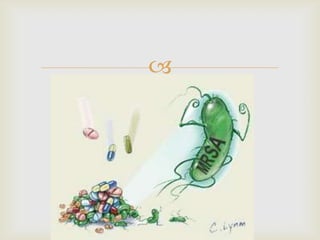
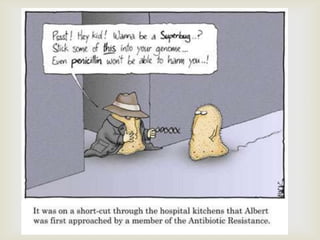
Occurs when an antibiotic has lost
 its ability to effectively control or
 kill bacterial growth.

The bacteria are "resistant" and
 continue to multiply in the presence
 of therapeutic levels of an antibiotic.


How bacteria get resistance
    to Antibiotics??
                 
Mechanisms:
1. Production of drug-inactivation
   enzymes.
2. Structural modification of
   antibiotic target site.
3. Anaerobic bacteria are resistant to
   the actions of Aminoglycosides

4.Altered uptake of antibiotics>>
 resulting in decreased
 permeability, increased efflux.

5. Development of alternative
 metabolic pathways.
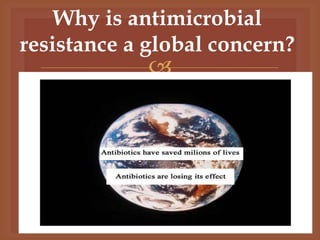
Why is antimicrobial
resistance a global concern?
             

1. Antibiotic resistance kills.

2. Antibiotic resistance impedes the control
of infectious agents.

3. with the problem of Antibiotic
resistance progressing.. Threats increase
to return to the pre-antibiotic era!

4. Resistance of infectious agents to
antibiotics, increases the costs of health
care.

5. Jeopardizes health-care gains to society.

6. Threatens health security, and damages
trade and economies.

Causes of Antibiotic resistance
            spreading;
                   
1. Doctors who have become slave of
habit.
2. prescribing>> without checking for the
antibiotic sensitivity tests and also using
broad spectrum antibiotics.
3. Cultural conceptions and patients
demands.
4.Antibiotics are on the-counter drugs.
5. poverty
6. Patient compliance
7.The enormous growth
                       of global trade and
travel
•“Trade and travel have increased the speed and
facility with which both infectious diseases and
resistant microorganisms can spread between
continents.”

8.Antibiotic use in food production
and animal care

     In several parts of the world, more
than 50% in tonnage of all antimicrobial
production is used in food-producing
animals.

Changing word to actions
            
Would you like to be a
 doctor in a world where
 there were no antibiotics???

For 1
 moment…STOP…and..THINK…


React- Action on Antibiotic Resistance

                    
•An international initiative with its base
in Sweden

•Goal to reduce the development on
antibiotic resistance

• www.reactgroup.org
START
                 
Student’s Targeting Antibiotic
 Resistance Today!


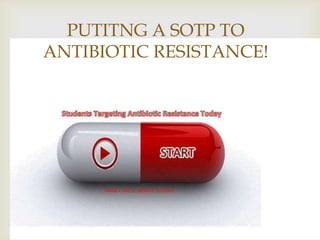
PUTITNG A SOTP TO ANTIBIOTIC
 RESISTANCE!
PUTITNG A SOTP TO
ANTIBIOTIC RESISTANCE!
          

An IFMSA group.
Established>> December 2011
Cecilia Kållberg >>>Sweden
Jannie Dressler >>>Denmark
About 50 members, from 29
 different countries!
START structure
          
Webpage group
Presentation/campaign group
Article group
 Connections to stakeholders
Policy Statement group
Short-term goals:
                
1. To educate and raise awareness.
To create awareness about the topic/ to
  educate people on the hazards of
  indiscriminate use of antibiotics.
To prevent the consicuances.

2. To create material
To create material that could be used
  by students when educating others
To produce material that could be
  used beside presentations (posters
  etc.)

To share standard treatment
 guidelines amongst students at our
 universities
To conduct a survey on physicians
 knowledge about antibiotics and
 antibiotic resistance (se point 3 on
 the agenda)
Long-term goals:
            
1.To engage other groups.
a. To ask med faculties to add
   classes on the subject
b. To ask hospitals to educate their
employees also
How to start locally…
            
1.START>> gathering a group of interested students
and members of IFMSA… also doctors

2.Activities>>Seminars, Workshops…etc.

3.Data collecting…surveys 
Thanx 
   


Antibiotic resistance -aveen omer

  • 1.
    Aveen Omer Hawler Collegeof Medicine/Kurdistan
  • 2.
    What are antibiotics?  The word antibiotic comes from the Greek anti meaning 'against' and bios meaning 'life‘ ' Antibiotics are also known as antibacterials.
  • 3.
     Drugs used totreat infections caused by bacteria. An antibacterial is a compound or substance that kills or slows down the growth of bacteria
  • 4.
    How Antibiotics work?  Many mechanism: 1. inhibiting cell wall growth and synthesis. 2.Alter ribosomal function by inhibiting protein synthesis.  3. Interfere with replication of DNA or RNA.
  • 5.
     4. Drugs blockthe metabolic pathway essential for the life of the micro-organism. 5. Disruption of the cell membrane permeability.
  • 6.
    What’s antibiotic resistance?  Occurs when an antibiotic has lost its ability to effectively control or kill bacterial growth. The bacteria are "resistant" and continue to multiply in the presence of therapeutic levels of an antibiotic.
  • 7.
  • 8.
  • 9.
    How bacteria getresistance to Antibiotics??  Mechanisms: 1. Production of drug-inactivation enzymes. 2. Structural modification of antibiotic target site. 3. Anaerobic bacteria are resistant to the actions of Aminoglycosides
  • 10.
     4.Altered uptake ofantibiotics>> resulting in decreased permeability, increased efflux. 5. Development of alternative metabolic pathways.
  • 11.
    Why is antimicrobial resistancea global concern? 
  • 12.
     1. Antibiotic resistancekills. 2. Antibiotic resistance impedes the control of infectious agents. 3. with the problem of Antibiotic resistance progressing.. Threats increase to return to the pre-antibiotic era!
  • 13.
     4. Resistance ofinfectious agents to antibiotics, increases the costs of health care. 5. Jeopardizes health-care gains to society. 6. Threatens health security, and damages trade and economies.
  • 14.
  • 15.
    Causes of Antibioticresistance spreading;  1. Doctors who have become slave of habit. 2. prescribing>> without checking for the antibiotic sensitivity tests and also using broad spectrum antibiotics. 3. Cultural conceptions and patients demands. 4.Antibiotics are on the-counter drugs.
  • 16.
    5. poverty 6. Patientcompliance 7.The enormous growth  of global trade and travel •“Trade and travel have increased the speed and facility with which both infectious diseases and resistant microorganisms can spread between continents.”
  • 17.
     8.Antibiotic use infood production and animal care In several parts of the world, more than 50% in tonnage of all antimicrobial production is used in food-producing animals.
  • 18.
  • 19.
    Changing word toactions  Would you like to be a doctor in a world where there were no antibiotics???
  • 20.
  • 21.
  • 22.
  • 23.
    React- Action onAntibiotic Resistance  •An international initiative with its base in Sweden •Goal to reduce the development on antibiotic resistance • www.reactgroup.org
  • 24.
    START  Student’s Targeting Antibiotic Resistance Today! PUTITNG A SOTP TO ANTIBIOTIC RESISTANCE!
  • 25.
    PUTITNG A SOTPTO ANTIBIOTIC RESISTANCE! 
  • 26.
     An IFMSA group. Established>>December 2011 Cecilia Kållberg >>>Sweden Jannie Dressler >>>Denmark About 50 members, from 29 different countries!
  • 27.
    START structure  Webpage group Presentation/campaign group Article group  Connections to stakeholders Policy Statement group
  • 28.
    Short-term goals:  1. To educate and raise awareness. To create awareness about the topic/ to educate people on the hazards of indiscriminate use of antibiotics. To prevent the consicuances.
  • 29.
     2. To creatematerial To create material that could be used by students when educating others To produce material that could be used beside presentations (posters etc.)
  • 30.
     To share standardtreatment guidelines amongst students at our universities To conduct a survey on physicians knowledge about antibiotics and antibiotic resistance (se point 3 on the agenda)
  • 31.
    Long-term goals:  1.To engage other groups. a. To ask med faculties to add classes on the subject b. To ask hospitals to educate their employees also
  • 32.
    How to startlocally…  1.START>> gathering a group of interested students and members of IFMSA… also doctors 2.Activities>>Seminars, Workshops…etc. 3.Data collecting…surveys 
  • 33.
  • 34.

Editor's Notes

  • #3 (a bacterium is a life form
  • #5 1.>>>B-lactams>>>2.>>>Aminoglycosides3.>>>Quinolone
  • #6 4.>>>trimethoprim5>>>polymyxins
  • #7 …simply
  • #10 1.>>> B-lactamase enzyme that destroysPencillins and Cephalosporins.2.>>>receptor protein on the 30s ribosomal subunit may be deleted or altered as some aminoglycosides can’t combine with the bacteria, as enterococci.3.>>> absence of o2 dependant membranes
  • #11 4.>>> gram –ve bacillus can induce some special proteins to block porin channels in cell wall, and prevnt the influx of tetracyclines.5.>>> bac. Produce folic acid, by another pathway to become resistant to sulfonamides.
  • #13 1.Somem.o. becoming resistance against antibiotics  resulting in prolonged illness and greater risk of death2. AMR reduces the effectiveness of treatment because patients remain infectious for longer, thus potentially spreading resistant microorganisms to others.3. Many infectious diseases risk becoming uncontrollable
  • #14 4.When infections become resistant to first-line medicines, more expensive therapies must be used. The longer duration of illness and treatment, often in hospitals, increases health-care costs and the financial burden to families and societies.5. The achievements of modern medicine are put at risk by AMR. Without effective antimicrobials for care and prevention of infections, the success of treatments such as organ transplantation, cancer chemotherapy and major surgery would be compromised.6. The growth of global trade and travel allows resistant microorganisms to be spread rapidly to distant countries and continents.
  • #16 q. Slave of habit: Doctors follow the old ways, it is easier to continue to treat the way you're used to than to absorb new information. Also, I think it's good to point out that a large proportion of medical school (especially during the AT and ST) is to learn from older colleagues. Therefore, there is some risk that we pick up bad habits of physicians who do not update their treatment if we are not on us andkeep us updated3. Culture and the patient's requirements: Many patients "know" that antibiotics cureinfections, and if a doctor denies them that they go to someone willing to give them antibiotics.3.Ppl not having the money to by the full dose of the drug or using low quality antibiotics
  • #17 4…Patient compliance: Finally, one should also mention that, although correct information was given and the drug is prescribed appropriately, there is a tendency in most countries not to do as you were told (people forget what you said, misunderstand references or just want orcan not eat medicine>>>easilyunderdose and develop resistance.
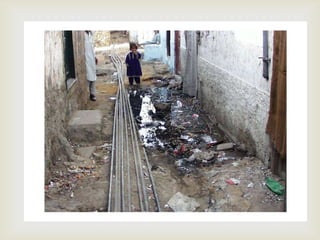
  • #19 Finally, a picture that addresses the need for better sanitary conditions and that in that way can go far to counteract development of resistance. It is important to remember that preventive measures often cost less and are just as effective when working with health problems.
  • #20 --pls be with me and think about you…you being a doctor…patient comes to you with a dangerous infectious diss….but you can’t find a single antibiotic to prescribe for the patient to be cure??Imagine the situation,,, feel the situation…would you, by any chance want that???Well, we would not be more late to start action on the subject and do actual plans about it…..