Shyamoli Textile Engineering College
WELCOME TO MY PRESENTATION
DYEING
What is Dyeing?
Dye:
The dye is a complex compound which is applied
in textile materials represent color and contains
chromophore and auxo-chrome groups in it’s
Chemical structure.
The process by which a textile materials is to be
changed physically or chemically, so that it looks
mono uniform colored, is called dyeing.
Dyeing:
Objectives:
 The textile goods are dyed uniformly with
single color.
 To increase the attractiveness of the textile
goods.
 To make the fabric suitable for various usage.
 To make the textile goods suitable for
decorative.
Classification of dyes:
1. Physical form
2. Application form
3. Chemical form
Introduction to Some dyes
Acid dyes:
An acid dye is a dye that is typically applied to a
Textile at low pH. They are mainly used to dye wool,
not cotton fabrics. Some acid dyes are used as food
colorants.
Vat dyes:
A water insoluble dye, usually containing keto groups,
which is normally applied to the fiber from an alkaline
aqueous solution of the reduced enol form, which is
Subsequently oxidized in the fiber to the insoluble
form.
Basic dyes:
A cationic dye characteristics by its substantivity for
standard acrylic, modacrylic and basic dyeable
polyester fibers.
Direct dyes:
An anionic dye having substantivity for cellulosic
fibers, normally applied from an aqueous dye bath
containing an electrolyte.
Reactive dye
Disperse dye
Sulphure dye
Azoic dye
Flow chart of Dyeing process:
Grey cloth Desizing &
Singeing
Scouring &
Bleaching
Mercerizing
StenteringWashingDryingWinding
Printing Finishing
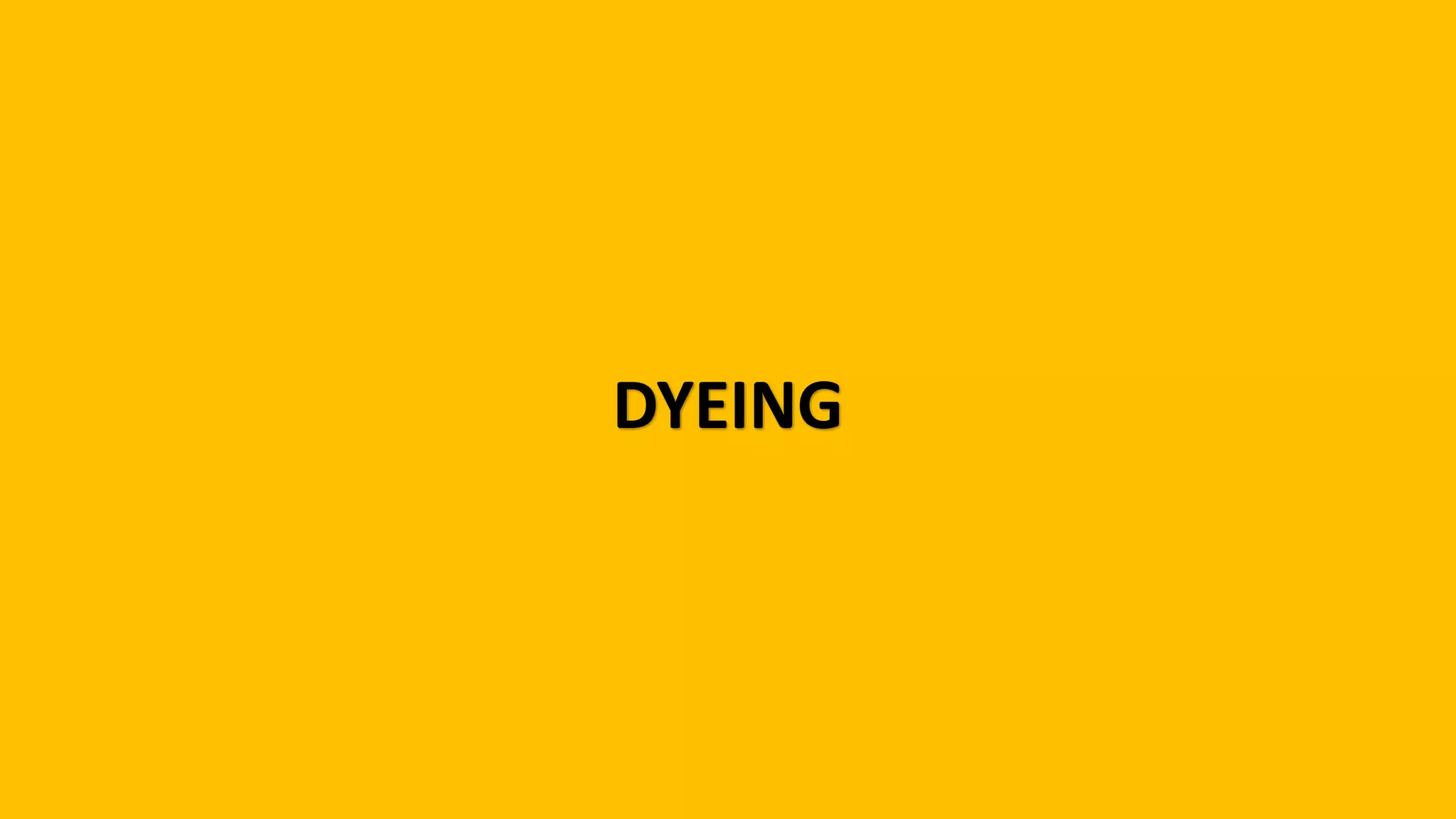
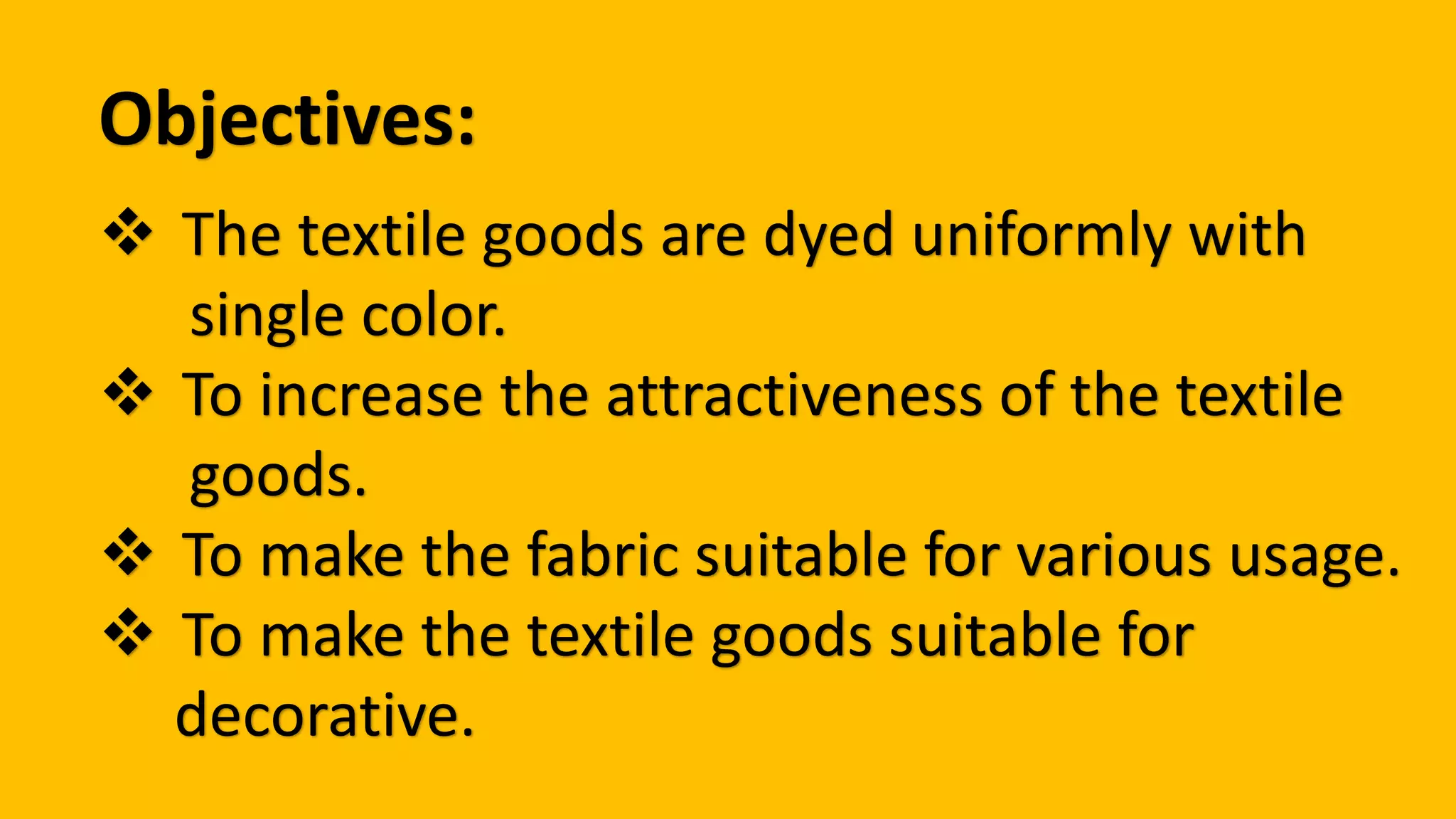
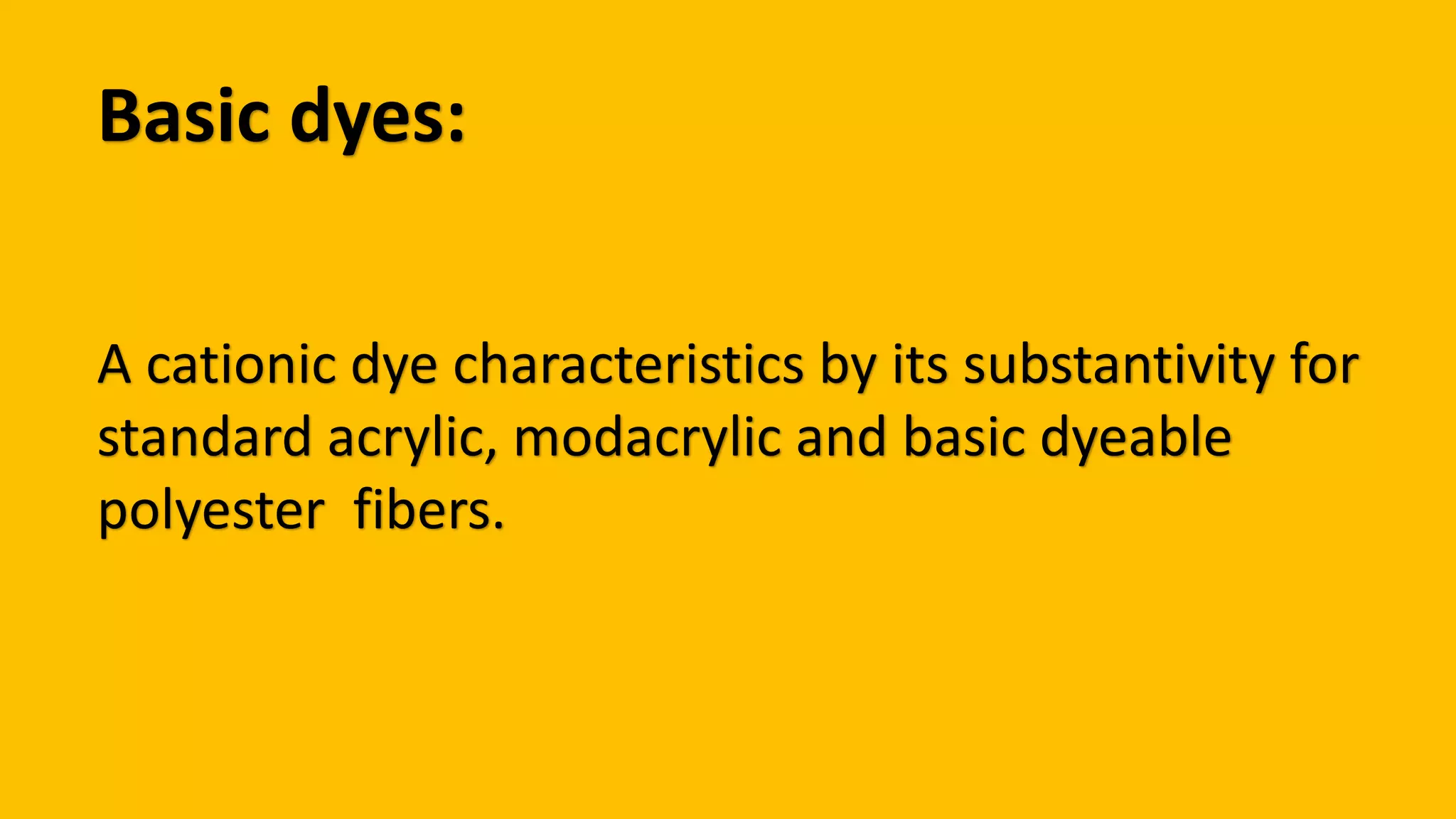
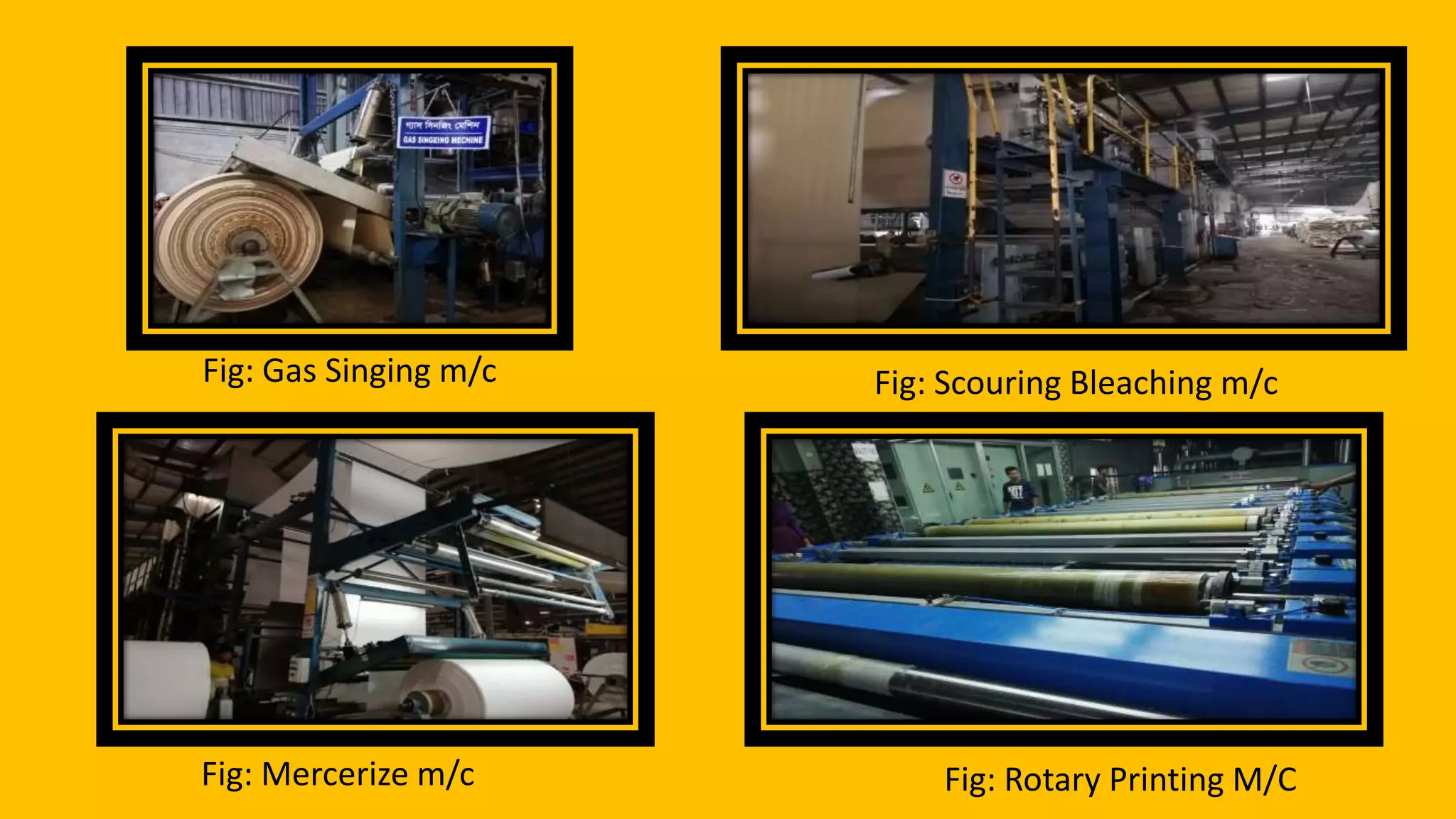
MACHINERIES
Fig: Gas Singing m/c Fig: Scouring Bleaching m/c
Fig: Mercerize m/c Fig: Rotary Printing M/C
Fig: Jigger M/C Fig: Pad Steam
Fig: Senter Machine Fig: Sanforizing M/C
THANK YOU

Presentation on Dyeing

  • 1.
  • 2.
    WELCOME TO MYPRESENTATION
  • 3.
  • 4.
  • 5.
    Dye: The dye isa complex compound which is applied in textile materials represent color and contains chromophore and auxo-chrome groups in it’s Chemical structure.
  • 6.
    The process bywhich a textile materials is to be changed physically or chemically, so that it looks mono uniform colored, is called dyeing. Dyeing:
  • 7.
    Objectives:  The textilegoods are dyed uniformly with single color.  To increase the attractiveness of the textile goods.  To make the fabric suitable for various usage.  To make the textile goods suitable for decorative.
  • 8.
    Classification of dyes: 1.Physical form 2. Application form 3. Chemical form
  • 9.
  • 10.
    Acid dyes: An aciddye is a dye that is typically applied to a Textile at low pH. They are mainly used to dye wool, not cotton fabrics. Some acid dyes are used as food colorants.
  • 11.
    Vat dyes: A waterinsoluble dye, usually containing keto groups, which is normally applied to the fiber from an alkaline aqueous solution of the reduced enol form, which is Subsequently oxidized in the fiber to the insoluble form.
  • 12.
    Basic dyes: A cationicdye characteristics by its substantivity for standard acrylic, modacrylic and basic dyeable polyester fibers.
  • 13.
    Direct dyes: An anionicdye having substantivity for cellulosic fibers, normally applied from an aqueous dye bath containing an electrolyte.
  • 14.
  • 15.
    Flow chart ofDyeing process: Grey cloth Desizing & Singeing Scouring & Bleaching Mercerizing StenteringWashingDryingWinding Printing Finishing
  • 16.
  • 17.
    Fig: Gas Singingm/c Fig: Scouring Bleaching m/c Fig: Mercerize m/c Fig: Rotary Printing M/C
  • 18.
    Fig: Jigger M/CFig: Pad Steam Fig: Senter Machine Fig: Sanforizing M/C
  • 19.