Submitted to Submitted by 
Dr. padmapriya.P.V Silpa.P.S 
Asst. Professor Roll No. 115 
NSSTC, Pandalam Natural Science
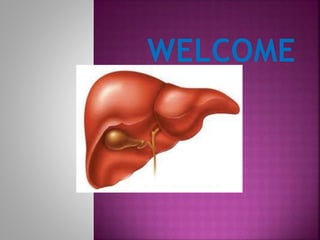
 Liver is a vital organ of the digestive system 
present in vertebrates and some other 
animals. 
 Liver is seen above the duodenum, on the 
right side of the stomach, just below the 
diaphragm. 
 It is the largest gland in the human body 
 It is the only organ in the human body that is 
capable of regeneration. 
 Liver secretes bile that helps in digestion.
 Detoxification 
 Protein synthesis 
 Production of Biochemicals
 Liver secretes the digestive enzymes bile, 
that help convert the acidic food that comes 
from the stomach in to basic nature. 
 Helps to break down lipids into smaller 
particles.
 The excess glucose in blood is converted to 
glycogen by the liver and is stored there. 
When the quantity of glucose in blood 
decreases, the glycogen is converted to 
glucose. 
 The ammonia produced during the break 
down of amino acid is converted to urea in 
the Liver. 
 The poisonous substances and alcohol that go 
in through food are broken up and rendered 
harmless in the liver.
 Hepatitis 
 Jaundice 
 Cirrhosis 
 Liver Cancer
Presentation 3

Presentation 3

  • 2.
    Submitted to Submittedby Dr. padmapriya.P.V Silpa.P.S Asst. Professor Roll No. 115 NSSTC, Pandalam Natural Science
  • 3.
     Liver isa vital organ of the digestive system present in vertebrates and some other animals.  Liver is seen above the duodenum, on the right side of the stomach, just below the diaphragm.  It is the largest gland in the human body  It is the only organ in the human body that is capable of regeneration.  Liver secretes bile that helps in digestion.
  • 4.
     Detoxification Protein synthesis  Production of Biochemicals
  • 5.
     Liver secretesthe digestive enzymes bile, that help convert the acidic food that comes from the stomach in to basic nature.  Helps to break down lipids into smaller particles.
  • 6.
     The excessglucose in blood is converted to glycogen by the liver and is stored there. When the quantity of glucose in blood decreases, the glycogen is converted to glucose.  The ammonia produced during the break down of amino acid is converted to urea in the Liver.  The poisonous substances and alcohol that go in through food are broken up and rendered harmless in the liver.
  • 7.
     Hepatitis Jaundice  Cirrhosis  Liver Cancer