Simple & Continuous
Present Perfect Simple Use no. 1:  Experiences or actions in the past    “ Ever  and  Never   are often used”  I  haven’t   been  to Greece. ( have / has  +  past participle ) I’ ve  never  been  to Greece.
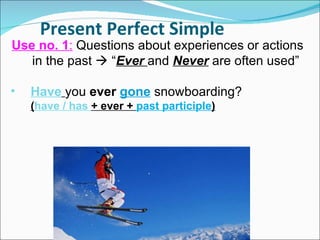
Present Perfect Simple Use no. 1 :  Questions about experiences or actions in the past    “ Ever  and  Never   are often used”  Have   you  ever   gone  snowboarding? ( have / has  + ever +  past participle )
Use no. 2:  Focused on a finished action: He  ‘s   studied  everything he can for the test tomorrow.  ( have / has  +  past participle )
Use no. 3:  It is focused on the number of times an action has been completed (use  FOR  &  SINCE ) I ’ve   seen  ‘The Bourne Supremacy’ many times  SINCE   it came out.  ( have / has  +  past participle ) I ’ve  seen  ‘The Bourne Supremacy’  FOR   7 times. period of time the beginning of an action
Use no. 4:  It is used with  verbs like   Be, love, have, like, know, believe. I ’ ve   always  loved  music! She  has   known  him since she was 5 years old. ( have / has  +  past participle )
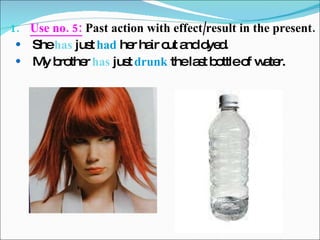
Use no. 5:  Past action with effect/result in the present. She  has  just  had  her hair cut and dyed. My brother  has  just  drunk  the last bottle of water.
Use no. 6:  With  SUPERLATIVE  forms.  My job interview was one of the  most difficult  things I ’ve  ever  done ! ( have / has  +  past participle )
Present Perfect Continuous Use no. 1  It’s used to talk about incompleted actions: I’ ve   been  read ing  this book all morning.   ( have / has  +  been  + verb  – ing )
Use no. 2  Emphasise for how long an action has been going on She ’s   been  hav ing  driving lessons for over a year. ( have / has  +  been  + verb  – ing )
Use no. 3  Recent activity when you still see the results. “ What’s all that mess?”  … “I ’ve   been  mak ing  a cake” ( have / has  +  been  + verb  – ing )
For/Since (in both) For  expresses a period of time. I’ve been working at JP for 5 years. Since  points out the beginning of an action I’ve worked here since 2004.

Present Perfect and Present Perfect Continuous

  • 1.
  • 2.
    Present Perfect SimpleUse no. 1: Experiences or actions in the past  “ Ever and Never are often used” I haven’t been to Greece. ( have / has + past participle ) I’ ve never been to Greece.
  • 3.
    Present Perfect SimpleUse no. 1 : Questions about experiences or actions in the past  “ Ever and Never are often used” Have you ever gone snowboarding? ( have / has + ever + past participle )
  • 4.
    Use no. 2: Focused on a finished action: He ‘s studied everything he can for the test tomorrow. ( have / has + past participle )
  • 5.
    Use no. 3: It is focused on the number of times an action has been completed (use FOR & SINCE ) I ’ve seen ‘The Bourne Supremacy’ many times SINCE it came out. ( have / has + past participle ) I ’ve seen ‘The Bourne Supremacy’ FOR 7 times. period of time the beginning of an action
  • 6.
    Use no. 4: It is used with verbs like  Be, love, have, like, know, believe. I ’ ve always loved music! She has known him since she was 5 years old. ( have / has + past participle )
  • 7.
    Use no. 5: Past action with effect/result in the present. She has just had her hair cut and dyed. My brother has just drunk the last bottle of water.
  • 8.
    Use no. 6: With SUPERLATIVE forms. My job interview was one of the most difficult things I ’ve ever done ! ( have / has + past participle )
  • 9.
    Present Perfect ContinuousUse no. 1 It’s used to talk about incompleted actions: I’ ve been read ing this book all morning. ( have / has + been + verb – ing )
  • 10.
    Use no. 2 Emphasise for how long an action has been going on She ’s been hav ing driving lessons for over a year. ( have / has + been + verb – ing )
  • 11.
    Use no. 3 Recent activity when you still see the results. “ What’s all that mess?” … “I ’ve been mak ing a cake” ( have / has + been + verb – ing )
  • 12.
    For/Since (in both)For expresses a period of time. I’ve been working at JP for 5 years. Since points out the beginning of an action I’ve worked here since 2004.