M odals -  A bility
M odals -  A bility T he following modal verbs can be used to express ability: You use ‘ can ’ to talk about ability in the present and in the future. You use ‘ could ’ to talk about ability in the past. You use ‘ be able to ’ to talk about ability in the present, future, and past.
M odals -  A bility Y ou use ‘ can ’ to say that someone has the ability to do something. You  can  all spell your name. Anybody  can  become a computer expert.
M odals -  A bility Y ou use ‘ cannot ’ or ‘ can’t ’ to say that they do not have the ability to do something. He  cannot  dance.
M odals -  A bility W hen you want to talk about someone’s ability in the past as a result of a skill they had or did not have, you use ‘ could ’,  could not ’, or ‘ couldn’t ’. He  could  run faster than everybody else. A lot of them  couldn’t  read or write.
M odals -  A bility Y ou use ‘ be able to ’, ‘ not be able to ’, and ‘ be unable to ’ to talk about someone’s ability to do something, but ‘ can ’ and ‘ could ’ are more common. She  was able to  tie her own shoelaces. The  are not able to  run very fast. Many people  were unable to  read or write.
M odals -  A bility Y ou use ‘ was able to ’ and ‘ were able to ’ to say that someone managed to do something in a particular situation in the past. After treatment he  was able to  return to work. The farmers  were able to  pay the wages. We  were able to  find time to discuss it.
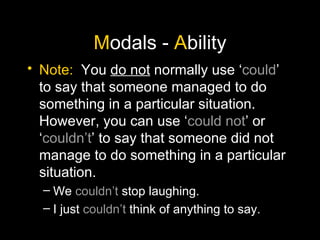
M odals -  A bility Note:   You  do not  normally use ‘ could ’ to say that someone managed to do something in a particular situation. However, you can use ‘ could not ’ or ‘ couldn’t ’ to say that someone did not manage to do something in a particular situation. We  couldn’t  stop laughing. I just  couldn’t  think of anything to say.
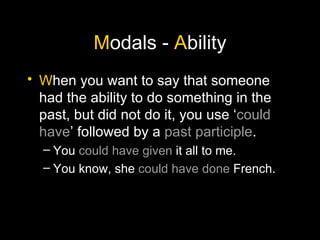
M odals -  A bility W hen you want to say that someone had the ability to do something in the past, but did not do it, you use ‘ could have ’ followed by a  past participle . You  could have   given  it all to me. You know, she  could have done  French.
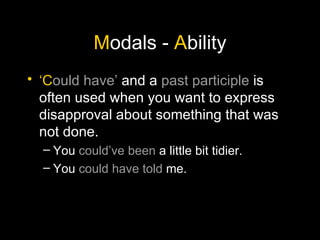
M odals -  A bility ‘ C ould have’  and a  past participle  is often used when you want to express disapproval about something that was not done. You  could’ve been  a little bit tidier. You  could have told  me.
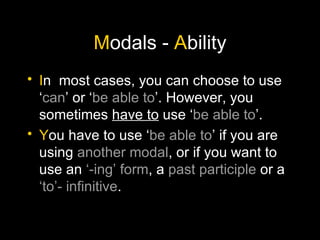
M odals -  A bility I n  most cases, you can choose to use ‘ can ’ or ‘ be able to ’. However, you sometimes  have to  use ‘ be able to ’. Y ou have to use ‘ be able to ’ if you are using  another modal , or if you want to use an  ‘-ing’ form , a  past participle  or a  ‘to’- infinitive .
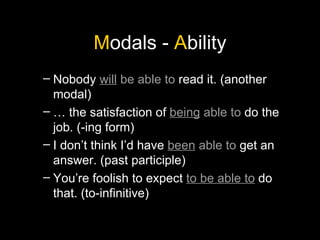
M odals -  A bility Nobody  will  be able to  read it. (another modal) …  the satisfaction of  being  able to  do the job. (-ing form) I don’t think I’d have  been  able to  get an answer. (past participle) You’re foolish to expect  to be able to  do that. (to-infinitive)
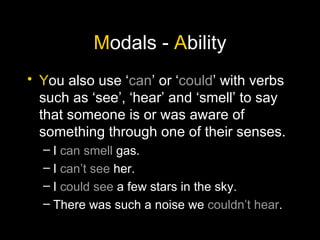
M odals -  A bility Y ou also use ‘ can ’ or ‘ could ’ with verbs such as ‘see’, ‘hear’ and ‘smell’ to say that someone is or was aware of something through one of their senses. I  can smell  gas. I  can’t see  her. I  could see  a few stars in the sky. There was such a noise we  couldn’t hear .
Q uestions? For more slide presentations visit:

Modals - Ability

  • 1.
    M odals - A bility
  • 2.
    M odals - A bility T he following modal verbs can be used to express ability: You use ‘ can ’ to talk about ability in the present and in the future. You use ‘ could ’ to talk about ability in the past. You use ‘ be able to ’ to talk about ability in the present, future, and past.
  • 3.
    M odals - A bility Y ou use ‘ can ’ to say that someone has the ability to do something. You can all spell your name. Anybody can become a computer expert.
  • 4.
    M odals - A bility Y ou use ‘ cannot ’ or ‘ can’t ’ to say that they do not have the ability to do something. He cannot dance.
  • 5.
    M odals - A bility W hen you want to talk about someone’s ability in the past as a result of a skill they had or did not have, you use ‘ could ’, could not ’, or ‘ couldn’t ’. He could run faster than everybody else. A lot of them couldn’t read or write.
  • 6.
    M odals - A bility Y ou use ‘ be able to ’, ‘ not be able to ’, and ‘ be unable to ’ to talk about someone’s ability to do something, but ‘ can ’ and ‘ could ’ are more common. She was able to tie her own shoelaces. The are not able to run very fast. Many people were unable to read or write.
  • 7.
    M odals - A bility Y ou use ‘ was able to ’ and ‘ were able to ’ to say that someone managed to do something in a particular situation in the past. After treatment he was able to return to work. The farmers were able to pay the wages. We were able to find time to discuss it.
  • 8.
    M odals - A bility Note: You do not normally use ‘ could ’ to say that someone managed to do something in a particular situation. However, you can use ‘ could not ’ or ‘ couldn’t ’ to say that someone did not manage to do something in a particular situation. We couldn’t stop laughing. I just couldn’t think of anything to say.
  • 9.
    M odals - A bility W hen you want to say that someone had the ability to do something in the past, but did not do it, you use ‘ could have ’ followed by a past participle . You could have given it all to me. You know, she could have done French.
  • 10.
    M odals - A bility ‘ C ould have’ and a past participle is often used when you want to express disapproval about something that was not done. You could’ve been a little bit tidier. You could have told me.
  • 11.
    M odals - A bility I n most cases, you can choose to use ‘ can ’ or ‘ be able to ’. However, you sometimes have to use ‘ be able to ’. Y ou have to use ‘ be able to ’ if you are using another modal , or if you want to use an ‘-ing’ form , a past participle or a ‘to’- infinitive .
  • 12.
    M odals - A bility Nobody will be able to read it. (another modal) … the satisfaction of being able to do the job. (-ing form) I don’t think I’d have been able to get an answer. (past participle) You’re foolish to expect to be able to do that. (to-infinitive)
  • 13.
    M odals - A bility Y ou also use ‘ can ’ or ‘ could ’ with verbs such as ‘see’, ‘hear’ and ‘smell’ to say that someone is or was aware of something through one of their senses. I can smell gas. I can’t see her. I could see a few stars in the sky. There was such a noise we couldn’t hear .
  • 14.
    Q uestions? Formore slide presentations visit: