Present Perfect Simple And Present Perfect Continuous
This document summarizes the present perfect simple and present perfect continuous tenses in English. It provides examples of how to form the positive, negative, and question forms of each tense. It also discusses the differences between the present perfect and past simple tenses, and between the present perfect simple and present perfect continuous tenses. Key uses of each tense are outlined, including time expressions that are commonly used with each form.
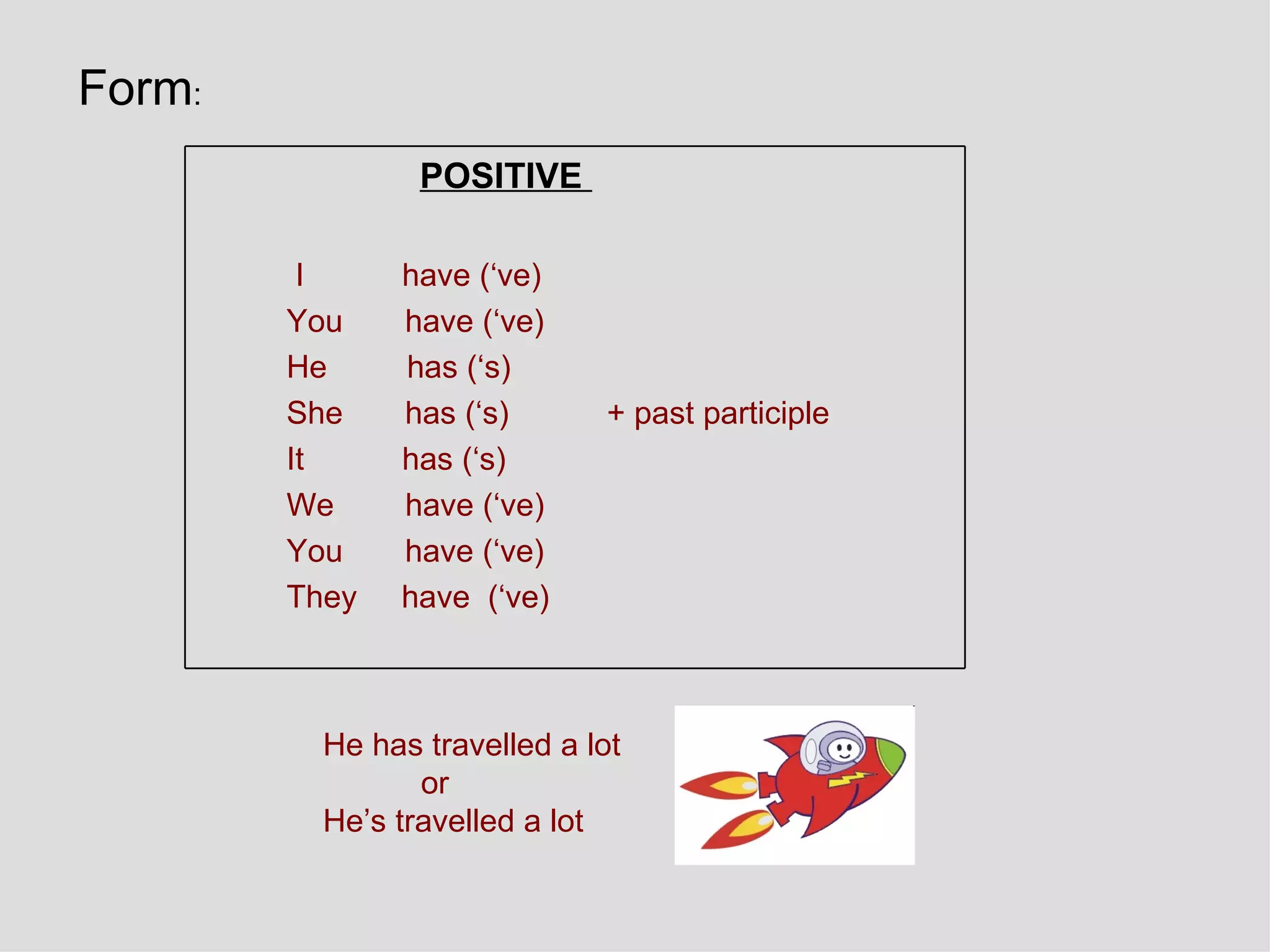
He has travelleda lot or He’s travelled a lot Form : POSITIVE I have (‘ve) You have (‘ve) He has (‘s) She has (‘s) + past participle It has (‘s) We have (‘ve) You have (‘ve) They have (‘ve)
3.
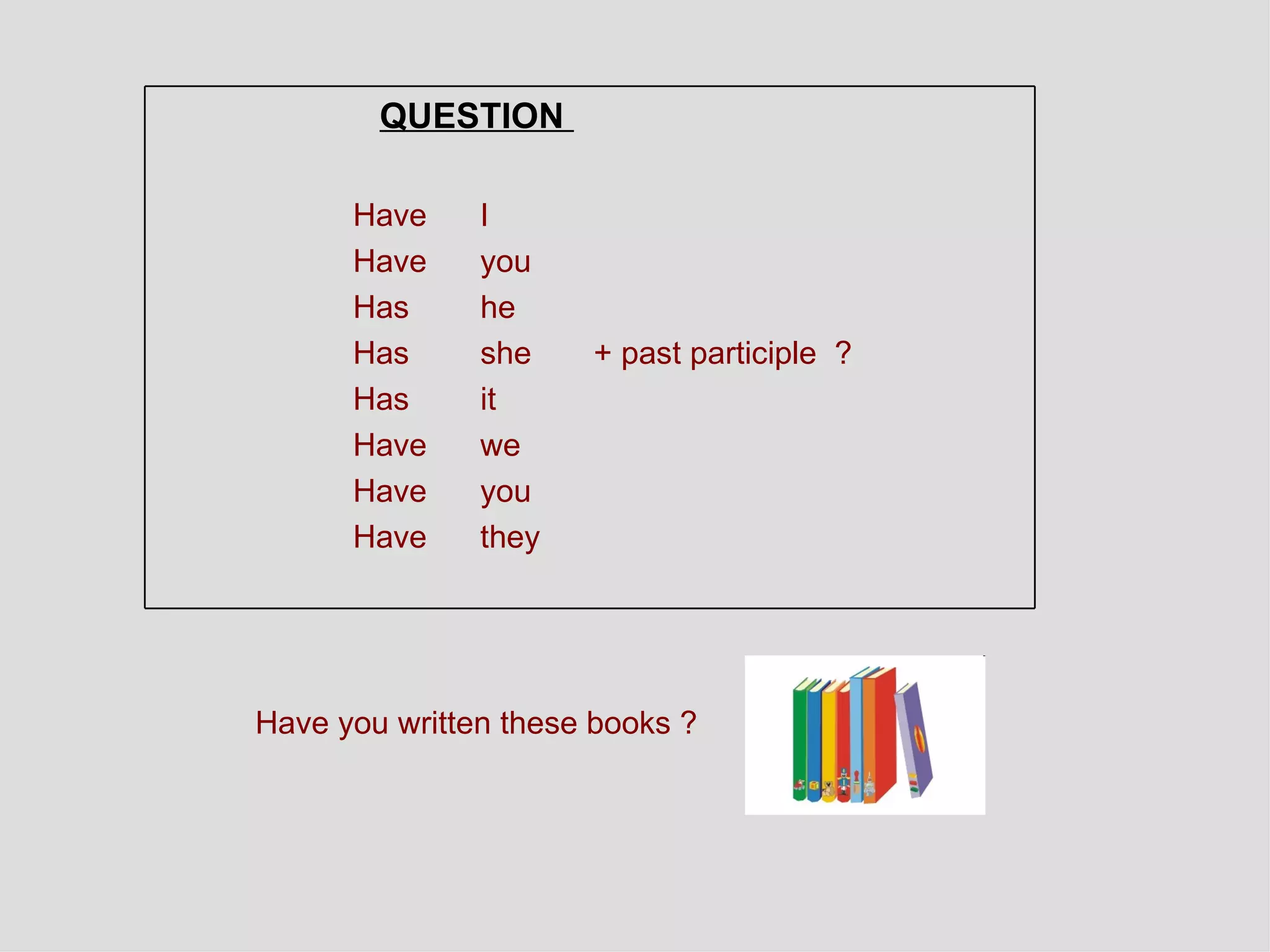
Have you writtenthese books ? QUESTION Have I Have you Has he Has she + past participle ? Has it Have we Have you Have they
4.
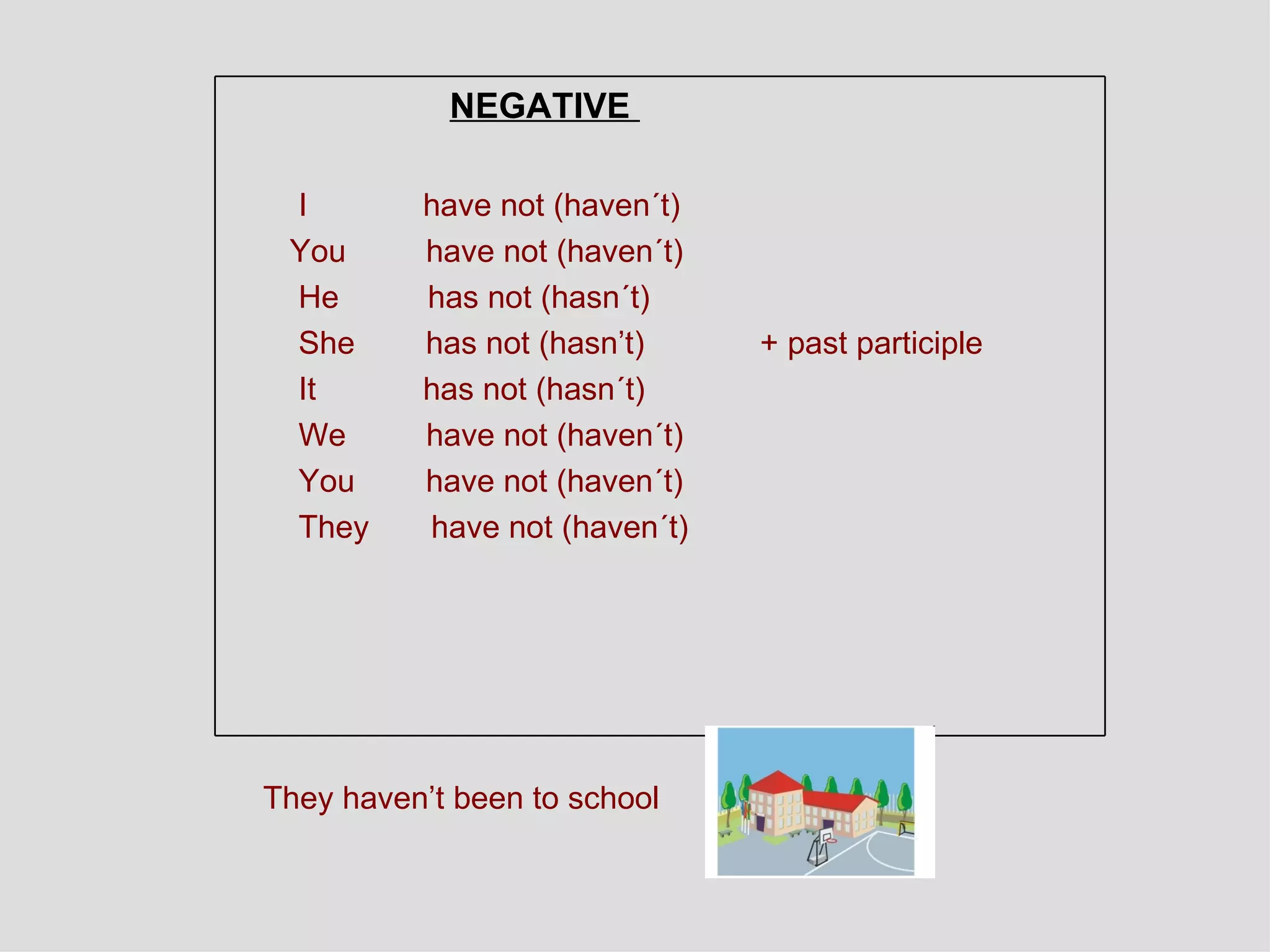
They haven’t beento school NEGATIVE I have not (haven´t) You have not (haven´t) He has not (hasn´t) She has not (hasn’t) + past participle It has not (hasn´t) We have not (haven´t) You have not (haven´t) They have not (haven´t)
5.
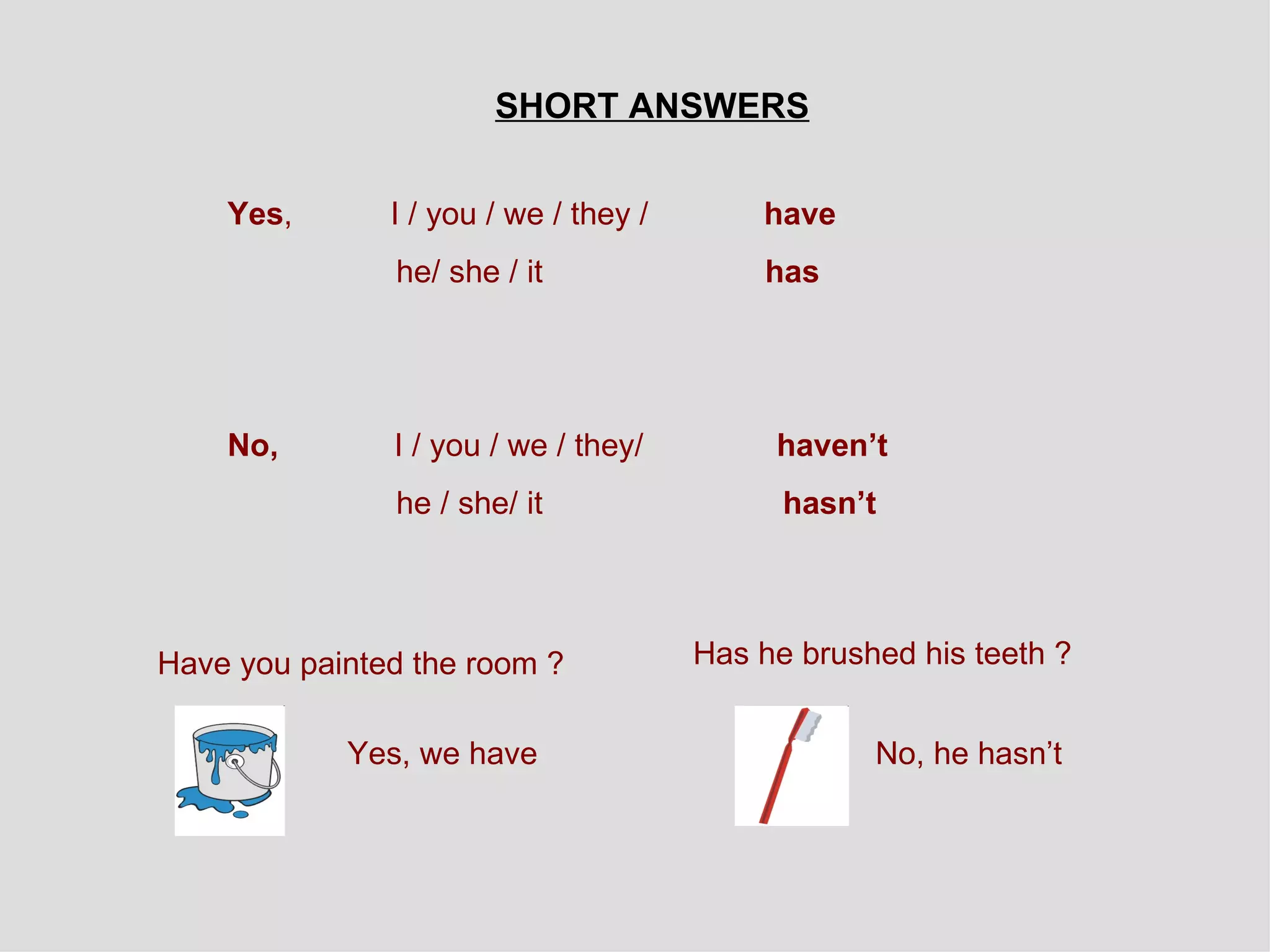
SHORT ANSWERS Yes, I / you / we / they / have he/ she / it has No, I / you / we / they/ haven’t he / she/ it hasn’t Have you painted the room ? Has he brushed his teeth ? Yes, we have No, he hasn’t
6.
Use: We usethe present perfect simple to talk about something that happened in the past and has a connection with the present He has had a problem with his computer (It means that he had a problem and it isn’t still fixed)
7.
When we talkabout actions or situations in the past without a definite time He has lost his key When we give information about a recent event Spanish scientists have made important discoveries about cancer
8.
When we talkabout things we have done until now I have painted ten pictures so far When we talk about experiences we have had in life: Have you been to China? No, I haven’t but I’d love to
9.
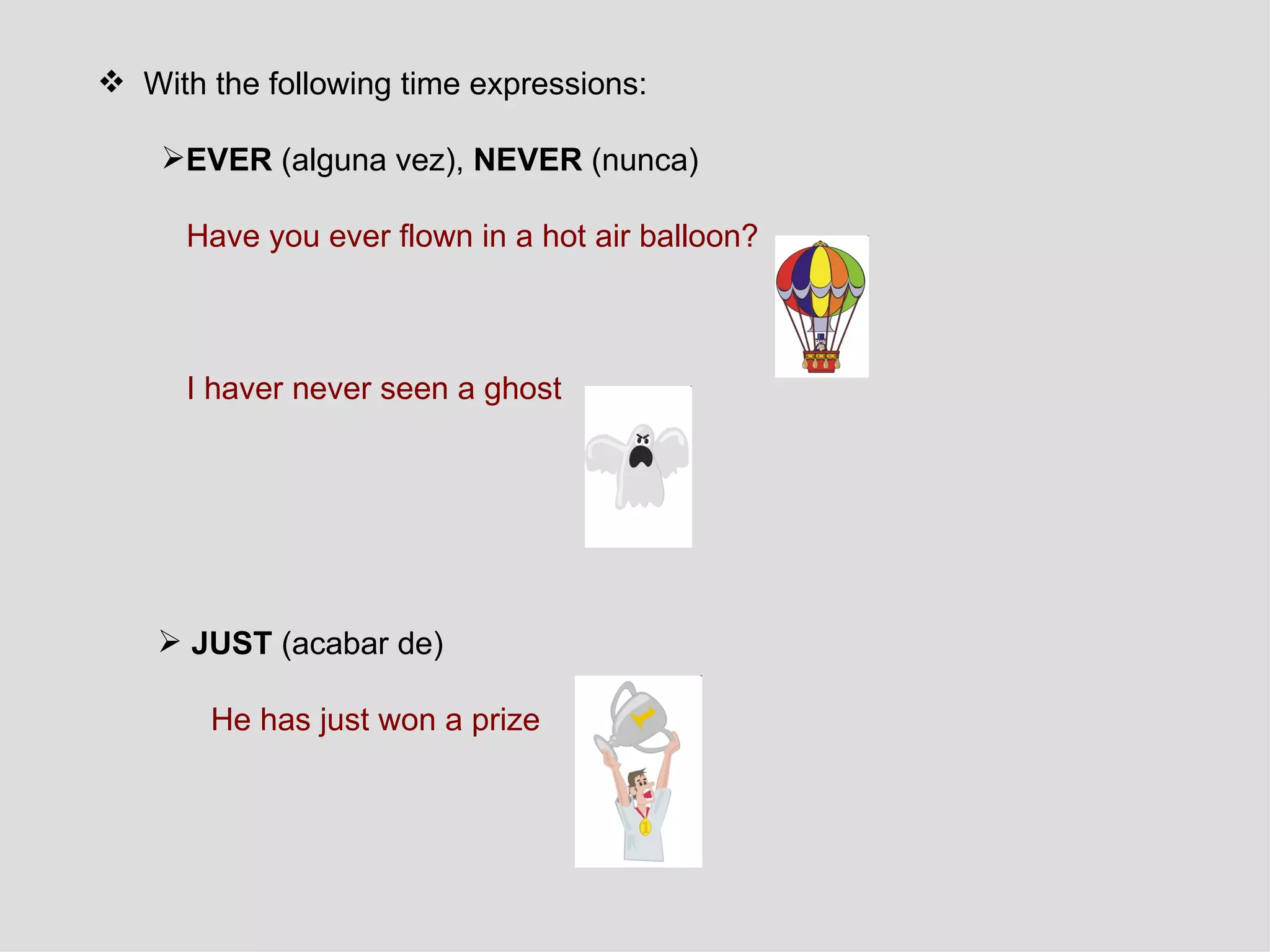
With the followingtime expressions: EVER (alguna vez), NEVER (nunca) Have you ever flown in a hot air balloon? I haver never seen a ghost JUST (acabar de) He has just won a prize
10.
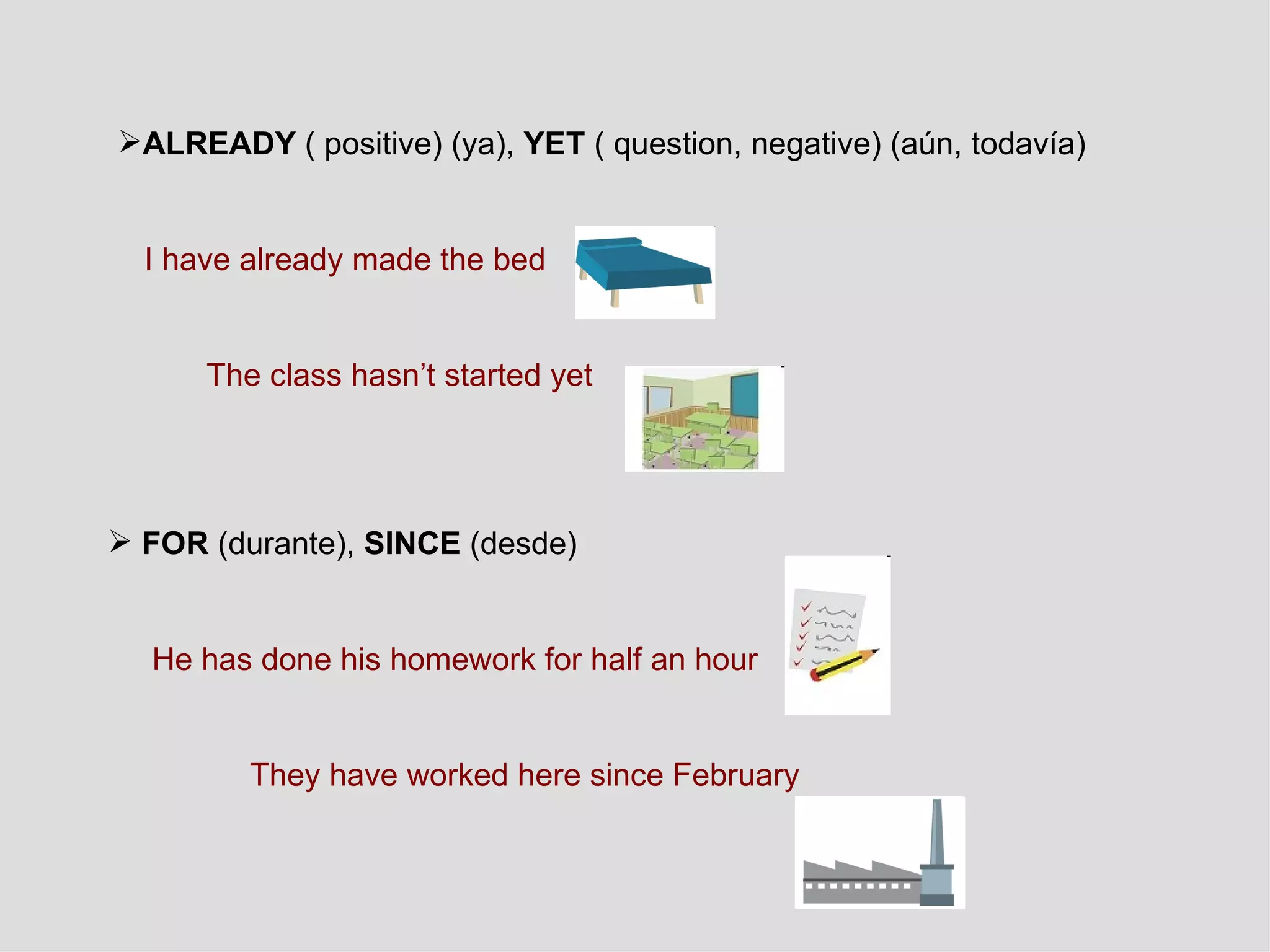
ALREADY (positive) (ya), YET ( question, negative) (aún, todavía) I have already made the bed The class hasn’t started yet FOR (durante), SINCE (desde) He has done his homework for half an hour They have worked here since February
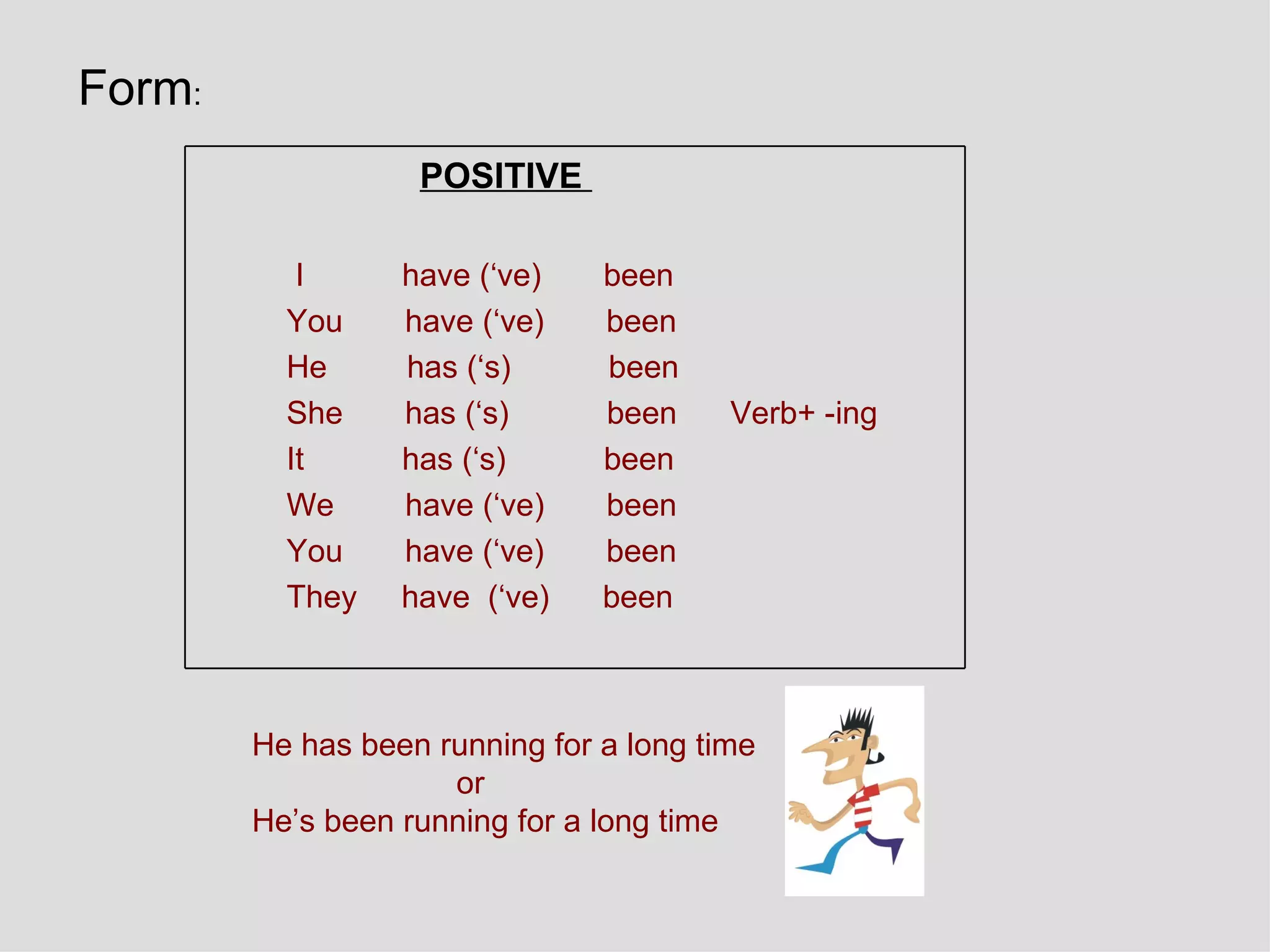
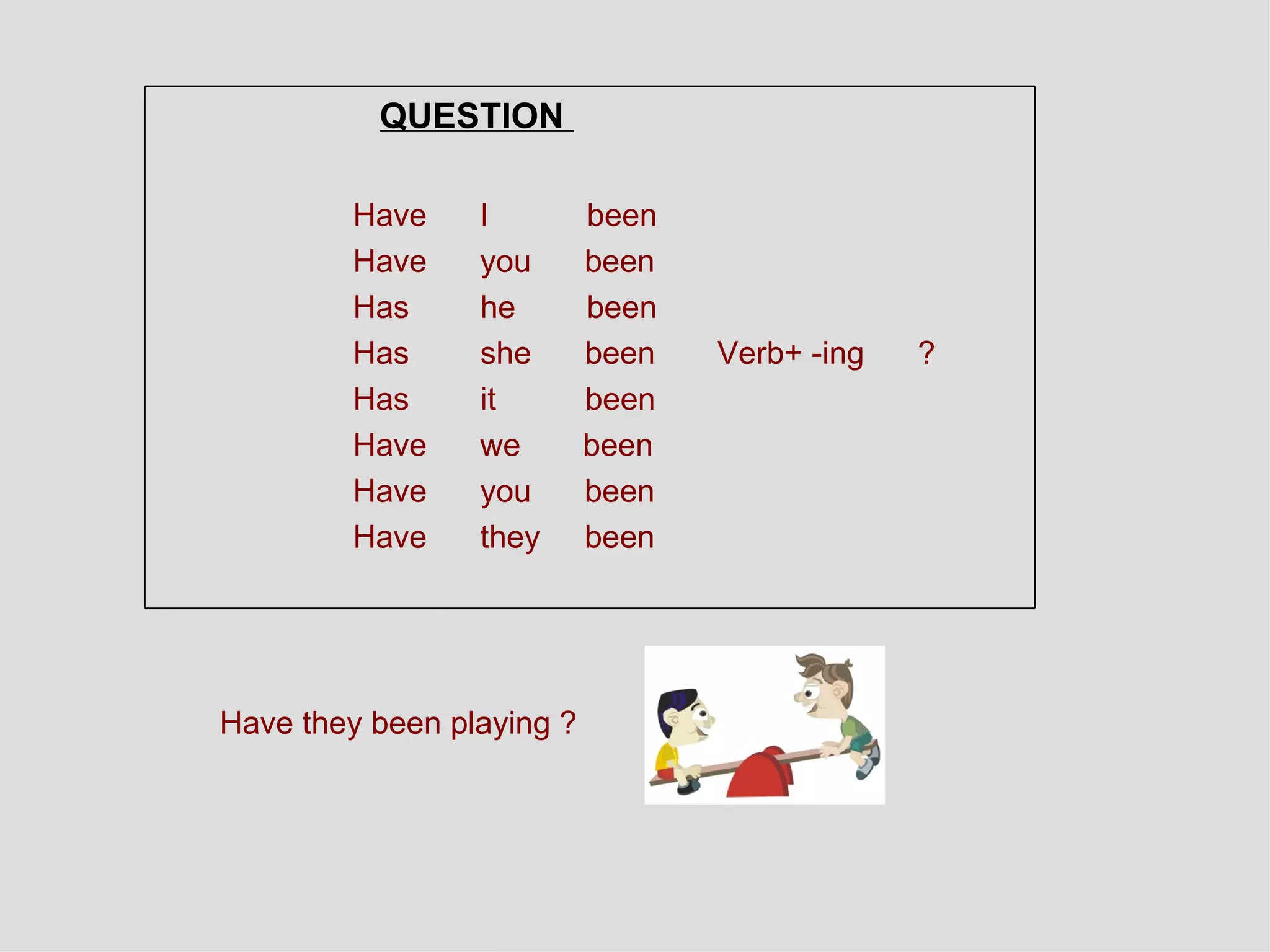
He has beenrunning for a long time or He’s been running for a long time Form : POSITIVE I have (‘ve) been You have (‘ve) been He has (‘s) been She has (‘s) been Verb+ -ing It has (‘s) been We have (‘ve) been You have (‘ve) been They have (‘ve) been
13.
Have they beenplaying ? QUESTION Have I been Have you been Has he been Has she been Verb+ -ing ? Has it been Have we been Have you been Have they been
14.
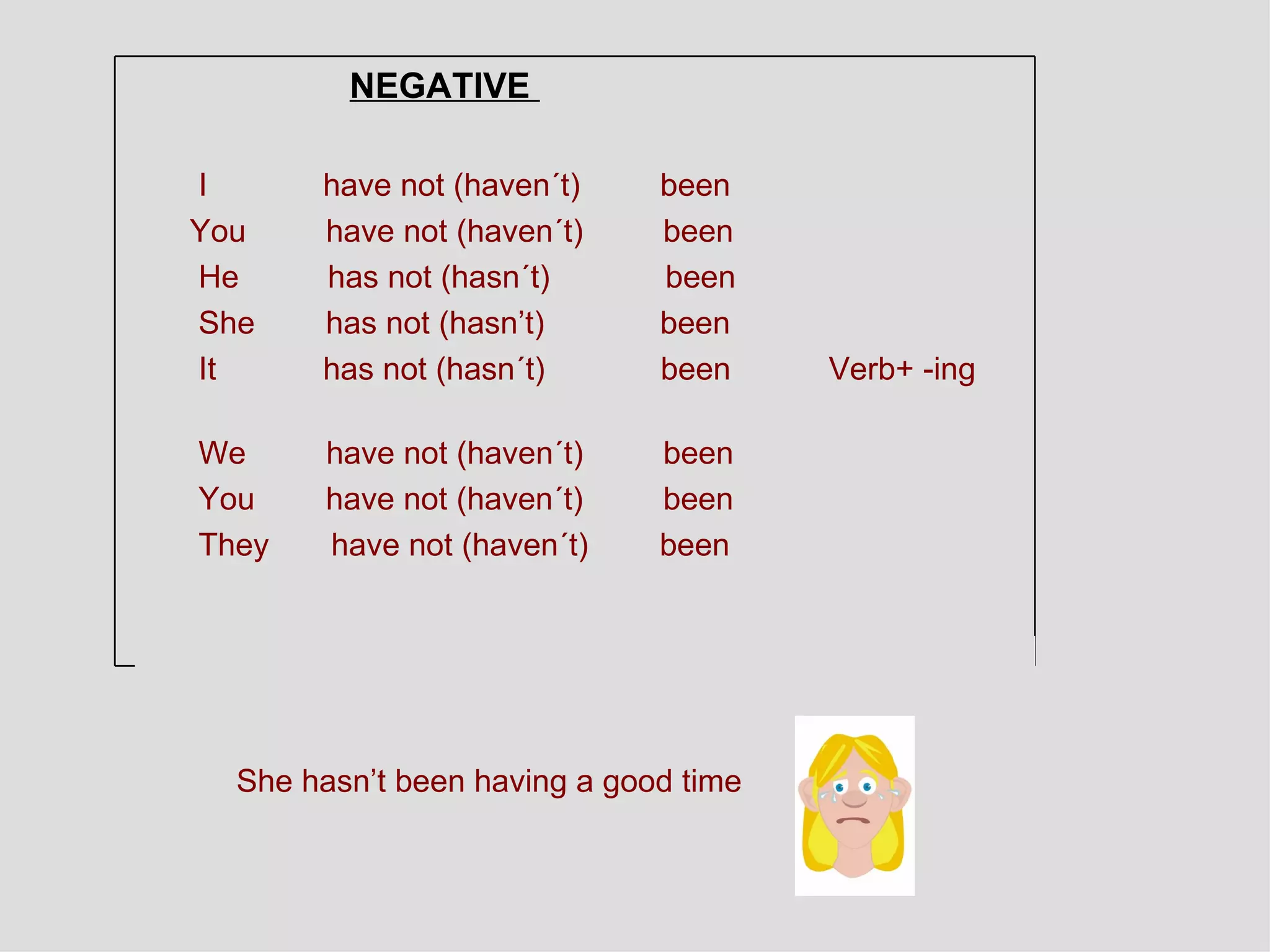
She hasn’t beenhaving a good time NEGATIVE I have not (haven´t) been You have not (haven´t) been He has not (hasn´t) been She has not (hasn’t) been It has not (hasn´t) been Verb+ -ing We have not (haven´t) been You have not (haven´t) been They have not (haven´t) been
15.
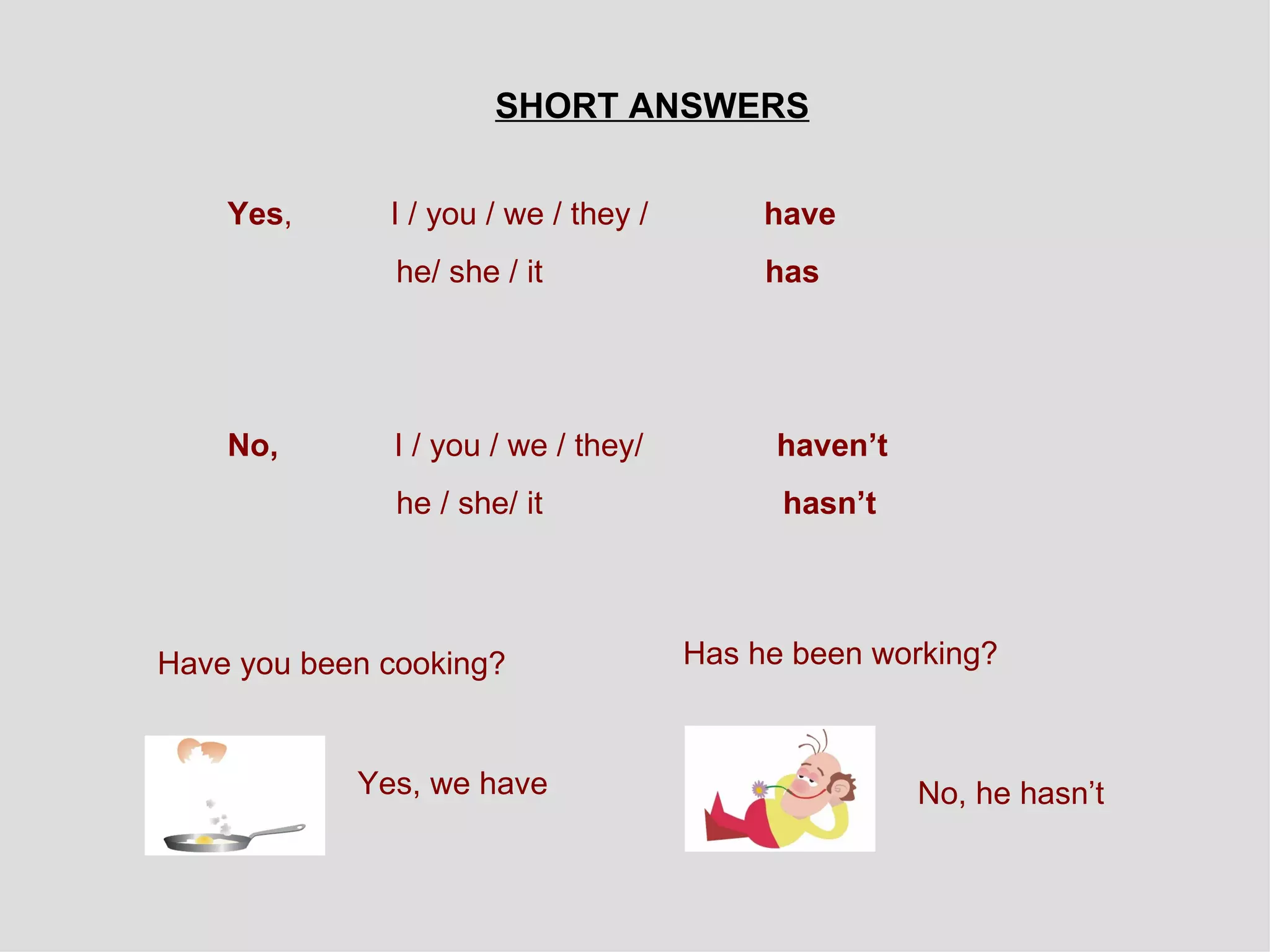
SHORT ANSWERS Yes, I / you / we / they / have he/ she / it has No, I / you / we / they/ haven’t he / she/ it hasn’t Have you been cooking? Has he been working? Yes, we have No, he hasn’t
16.
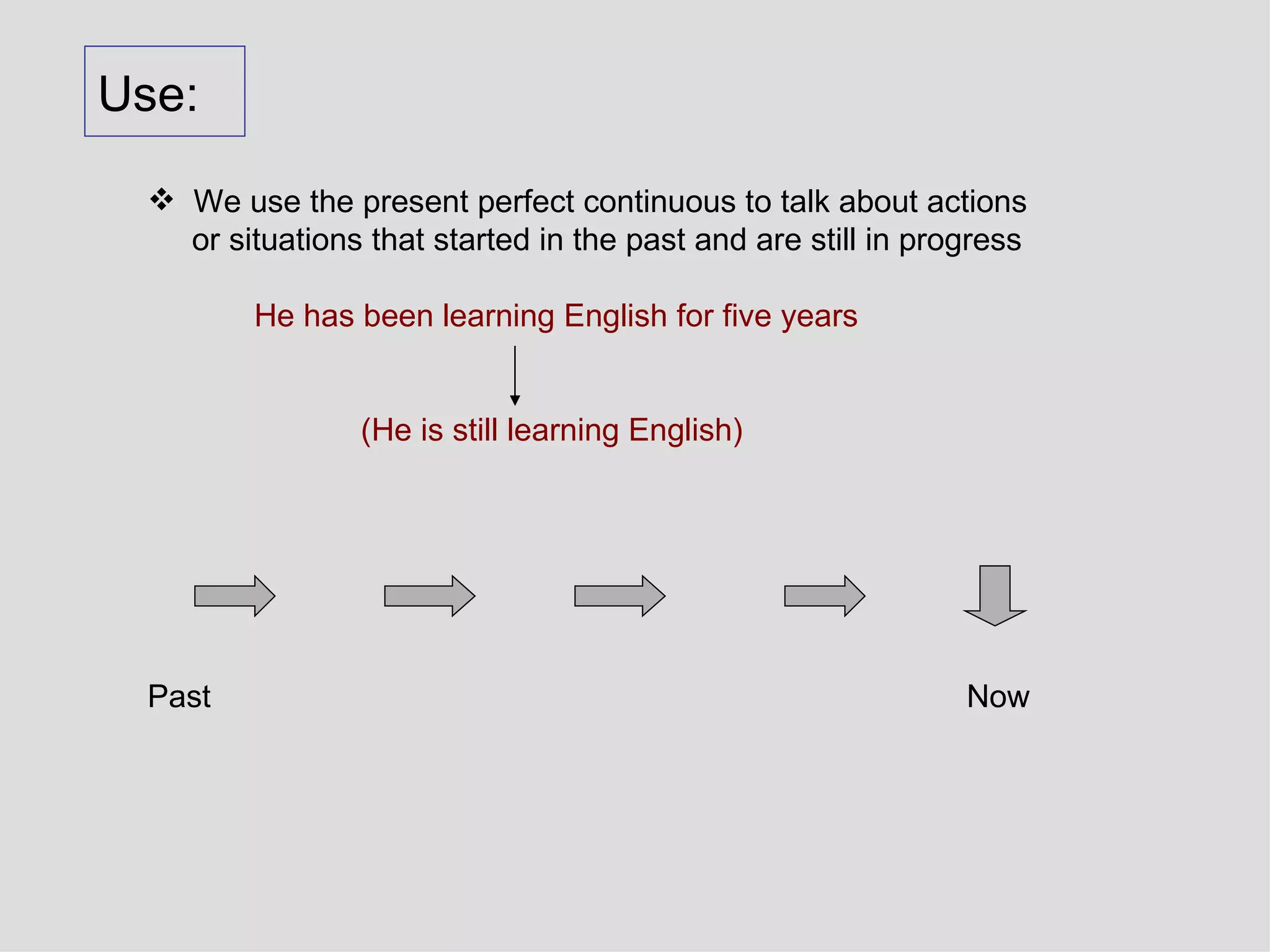
Use: We usethe present perfect continuous to talk about actions or situations that started in the past and are still in progress He has been learning English for five years (He is still learning English) Past Now
17.
When we talkabout actions or situations that have recently stopped but they still have present results You are wet . Yes, It has been raining a lot ! When we talk about repeated actions I have been sending him a lot of messages all day
18.
With “ Howlong ” questions How long has she been listening to music? With the following time expressions: -recently -lately -since -for -all day -all morning He has been driving lately I have been drawing since five o´clock What have you been doing recently?
19.
What is thedifference between The Present Perfect Continuous …
20.
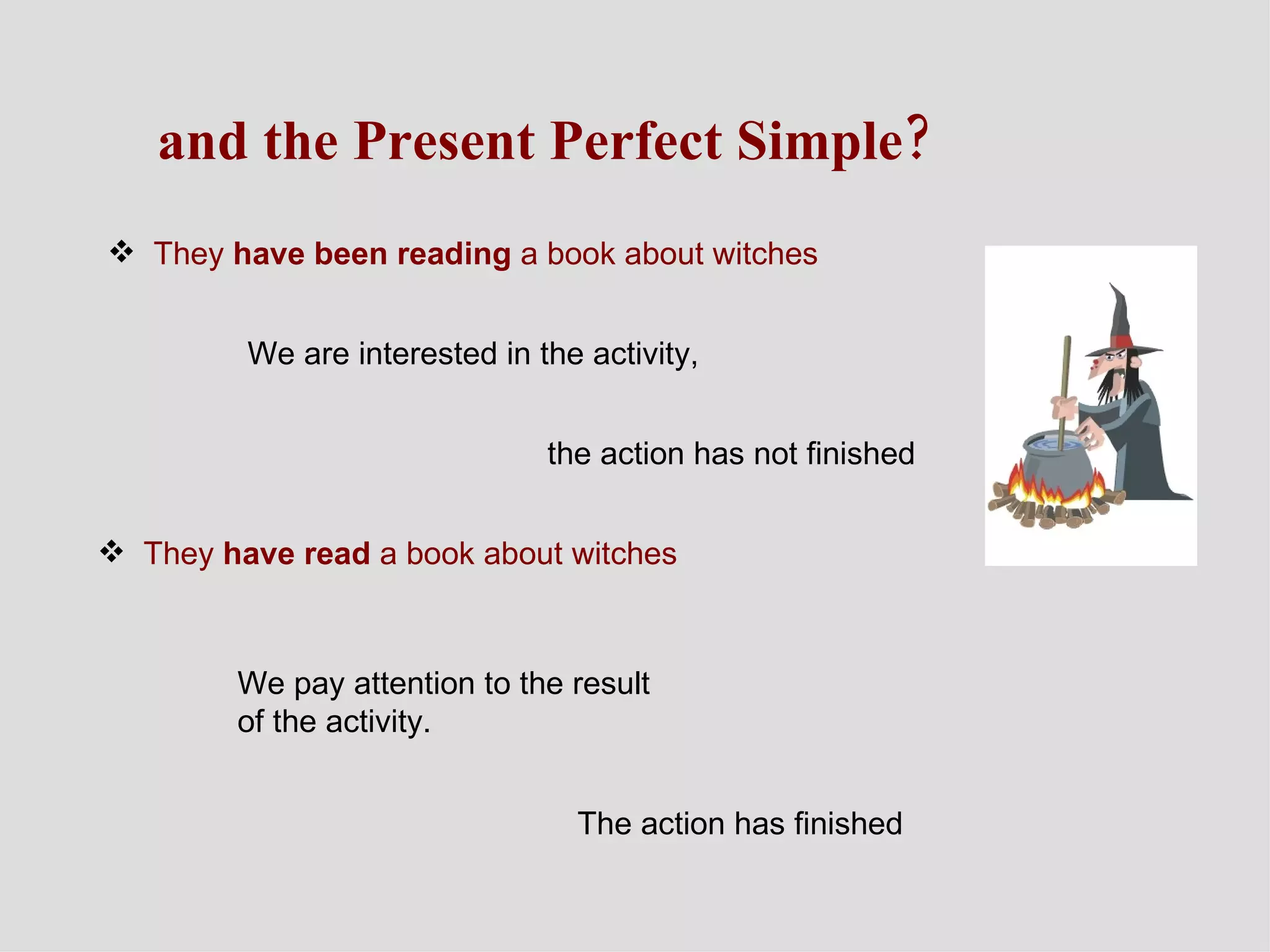
and the PresentPerfect Simple? They have been reading a book about witches We are interested in the activity, the action has not finished They have read a book about witches We pay attention to the result of the activity. The action has finished
21.
What is thedifference between the Present Perfect …
22.
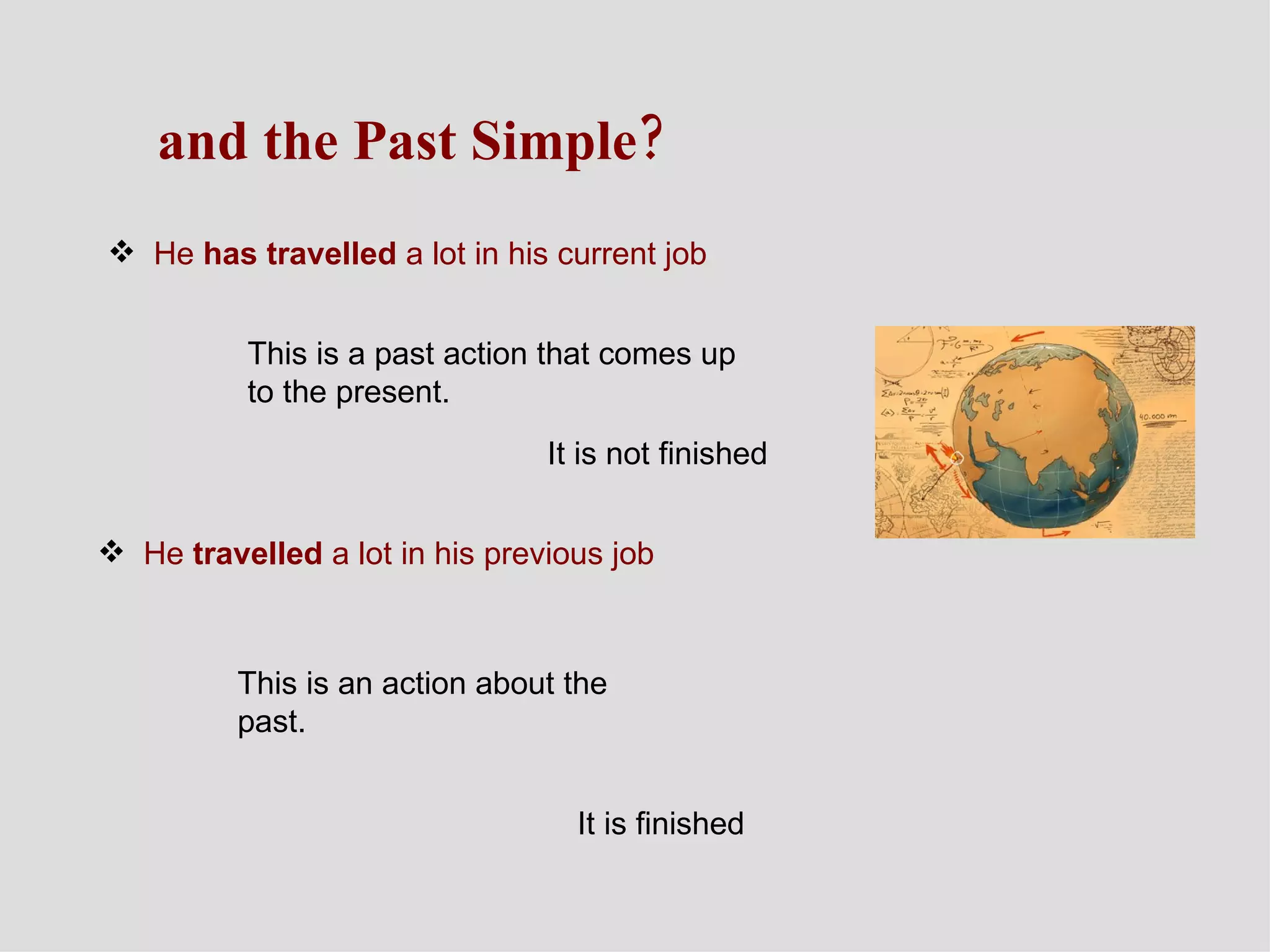
and the PastSimple? He has travelled a lot in his current job This is a past action that comes up to the present. It is not finished He travelled a lot in his previous job This is an action about the past. It is finished
23.
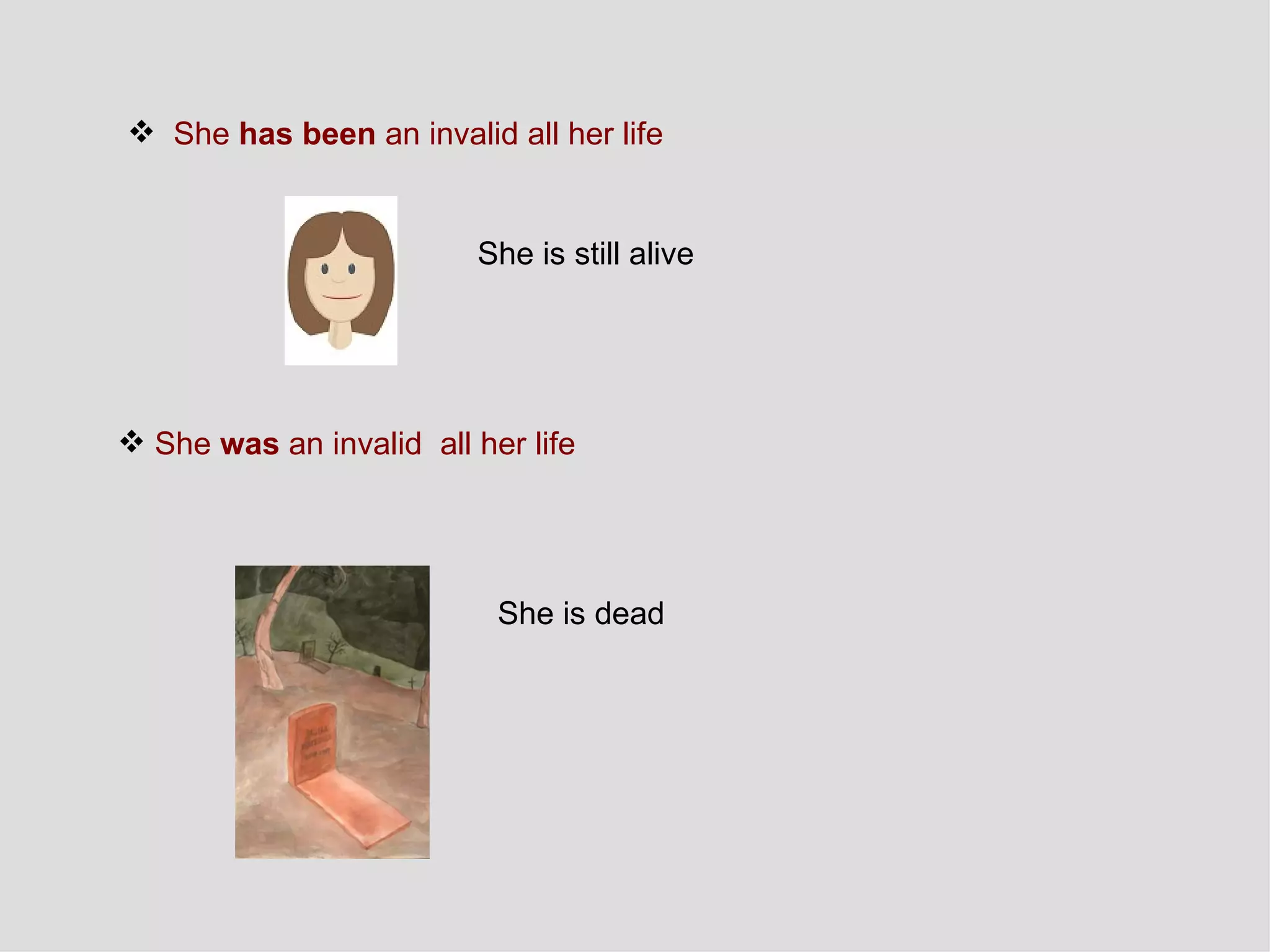
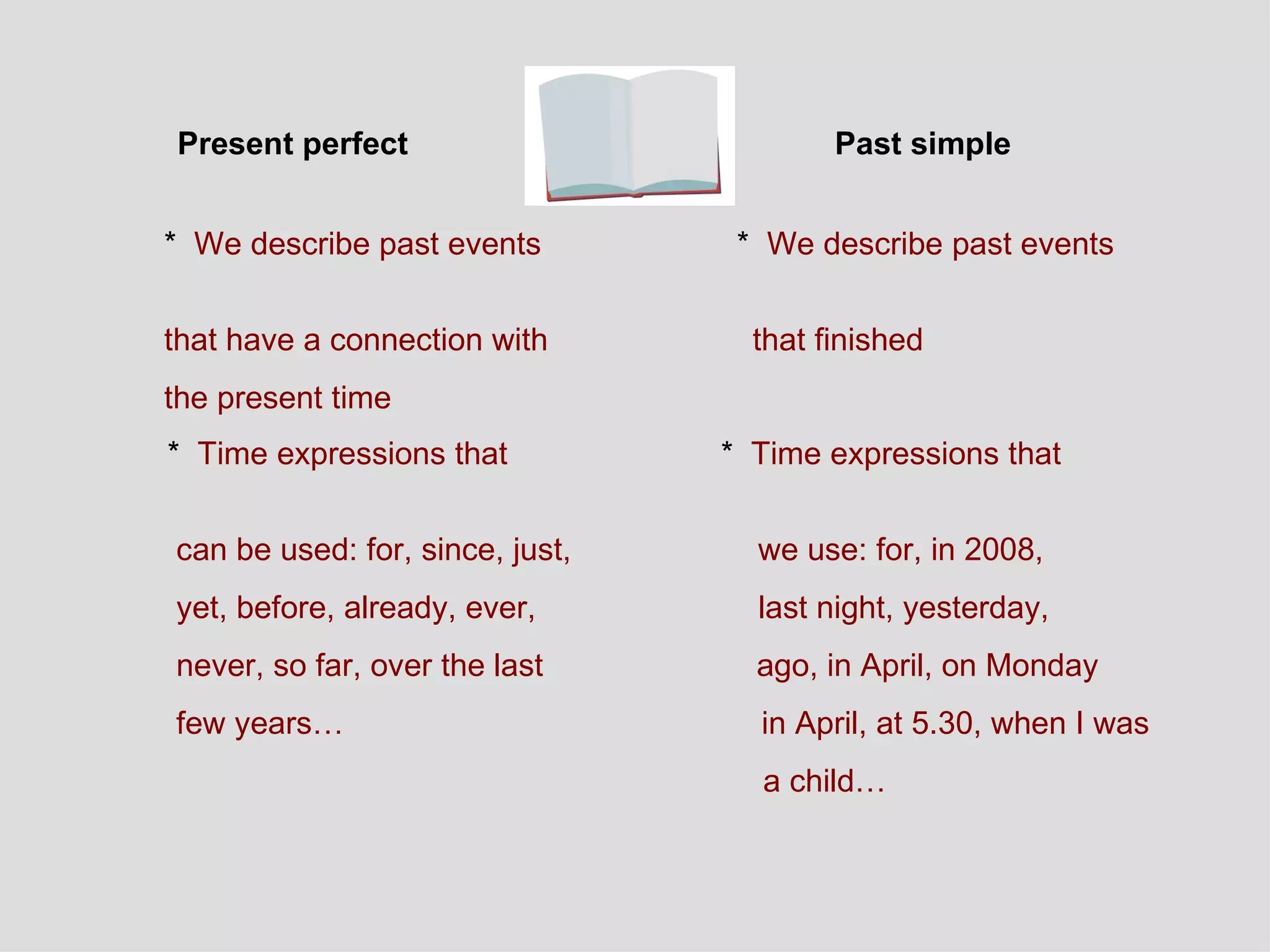
She hasbeen an invalid all her life She is still alive She was an invalid all her life She is dead
24.
Present perfect Past simple * We describe past events * We describe past events that have a connection with that finished the present time * Time expressions that * Time expressions that can be used: for, since, just, we use: for, in 2008, yet, before, already, ever, last night, yesterday, never, so far, over the last ago, in April, on Monday few years… in April, at 5.30, when I was a child…
25.
By Ana ConcejeroPictures taken from http://bancoimagenes.isftic.mepsyd.es/