PRESENT PERFECT
    SIMPLE
Form:
                 POSITIVE

         I     have (‘ve)
        You    have (‘ve)
        He     has (‘s)
        She    has (‘s)       + past participle
        It     has (‘s)
        We     have (‘ve)
        You    have (‘ve)
        They   have (‘ve)


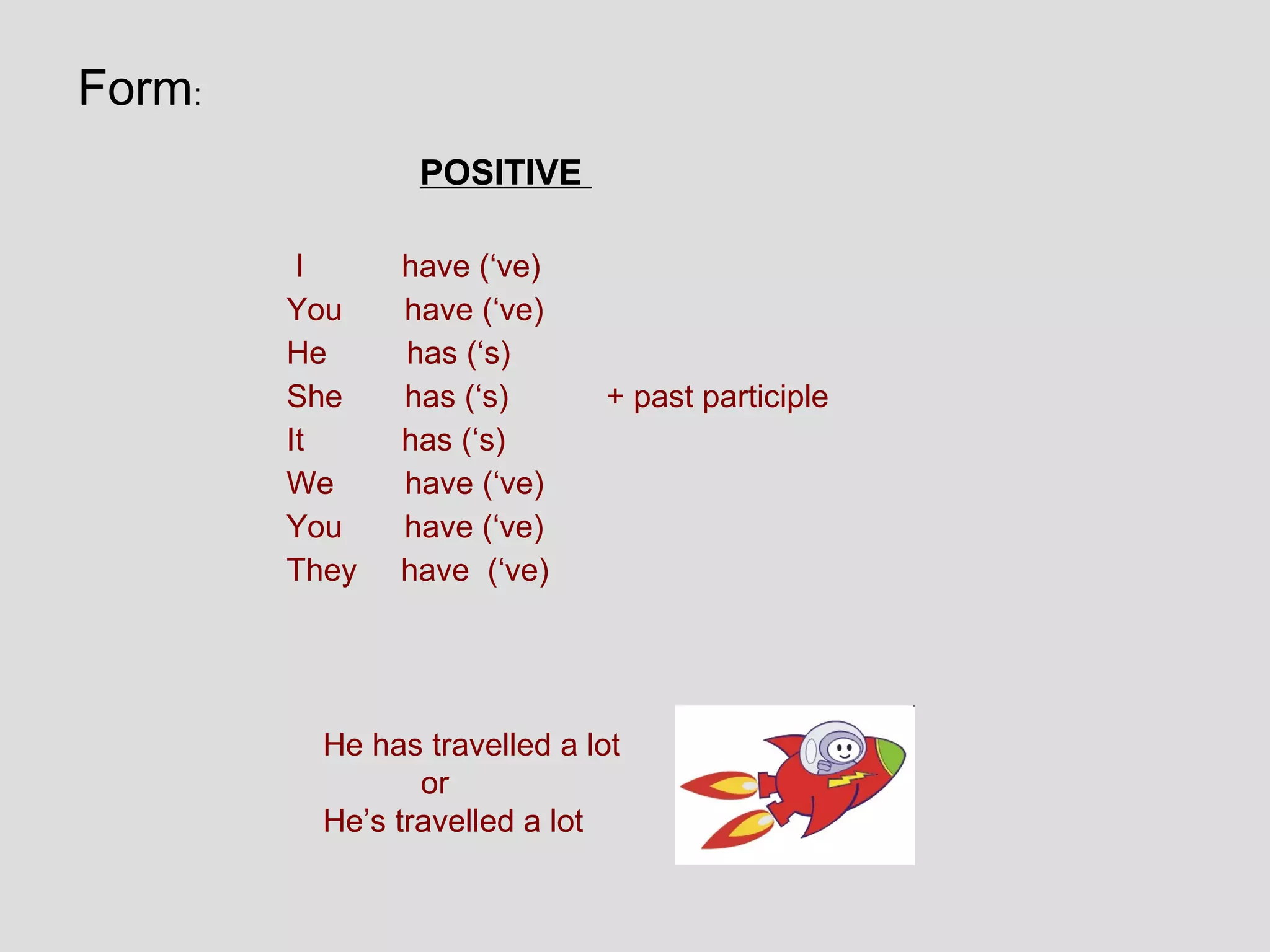
          He has travelled a lot
                 or
          He’s travelled a lot
QUESTION

      Have     I
      Have     you
      Has      he
      Has      she    + past participle ?
      Has      it
      Have     we
      Have     you
      Have     they


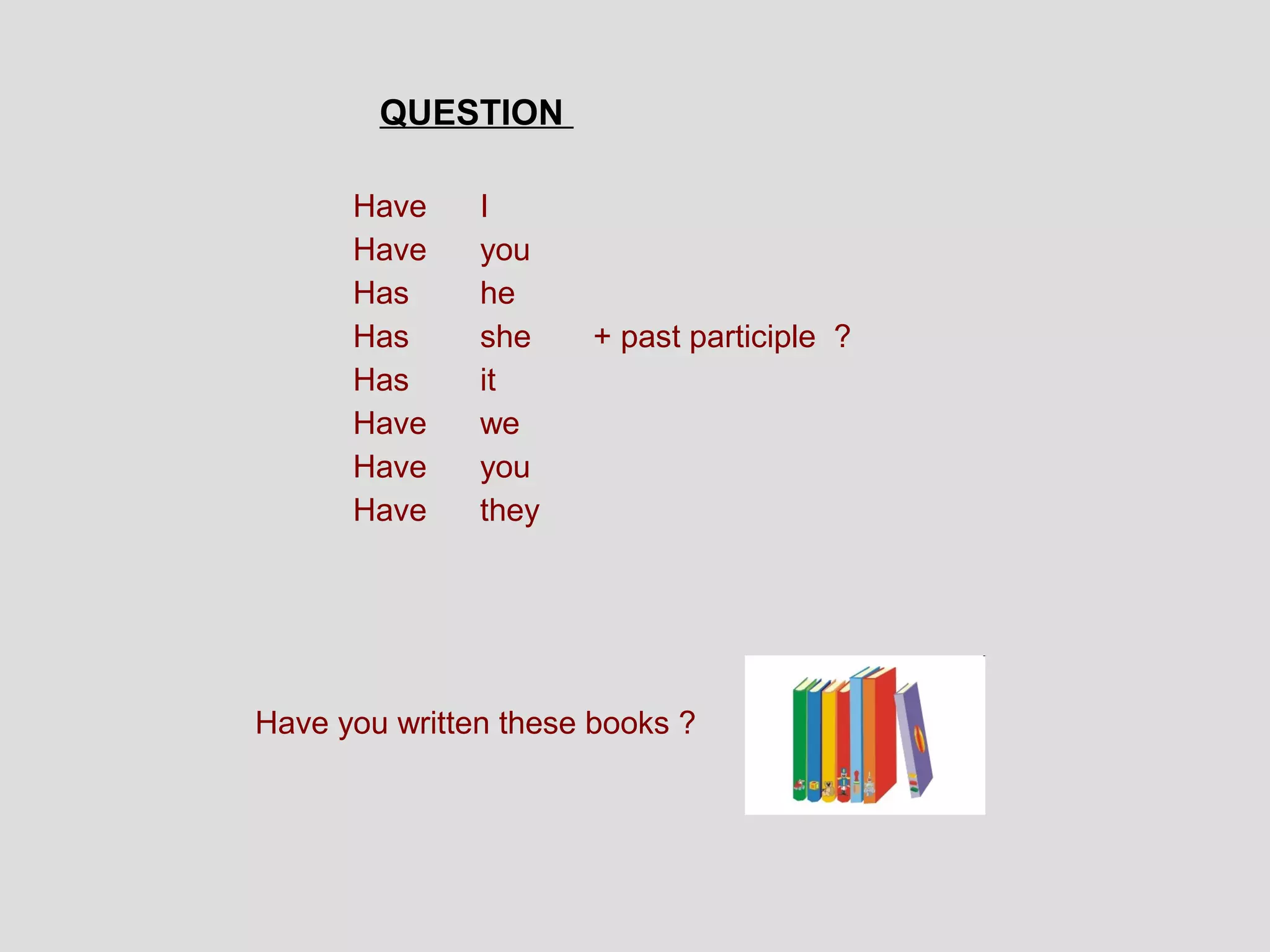
Have you written these books ?
NEGATIVE

 I        have not (haven´t)
 You      have not (haven´t)
 He       has not (hasn´t)
 She      has not (hasn’t)     + past participle
 It       has not (hasn´t)
 We       have not (haven´t)
 You      have not (haven´t)
 They     have not (haven´t)


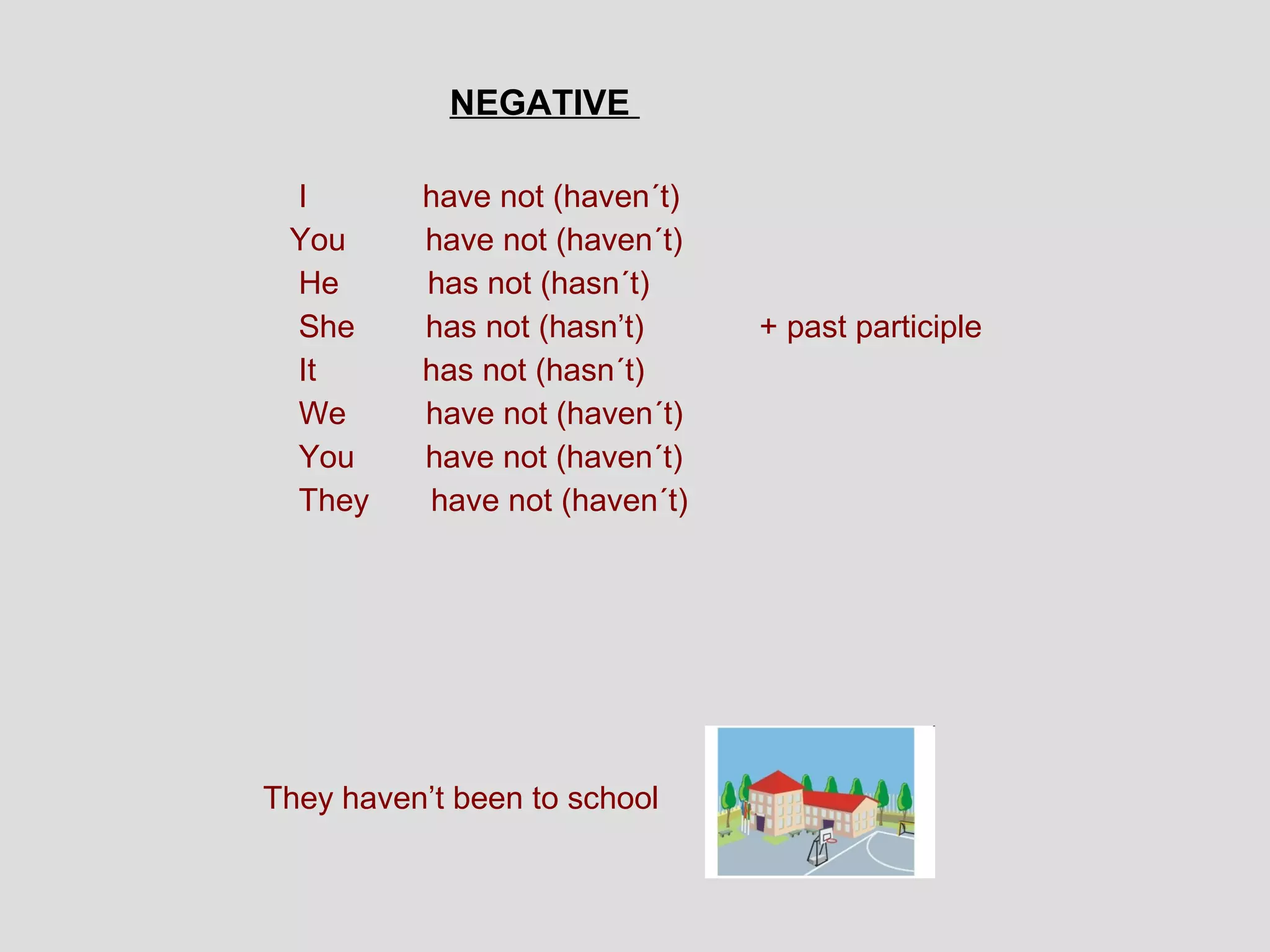
They haven’t been to school
SHORT ANSWERS


    Yes,       I / you / we / they /       have
               he/ she / it                has


    No,        I / you / we / they/         haven’t
               he / she/ it                  hasn’t


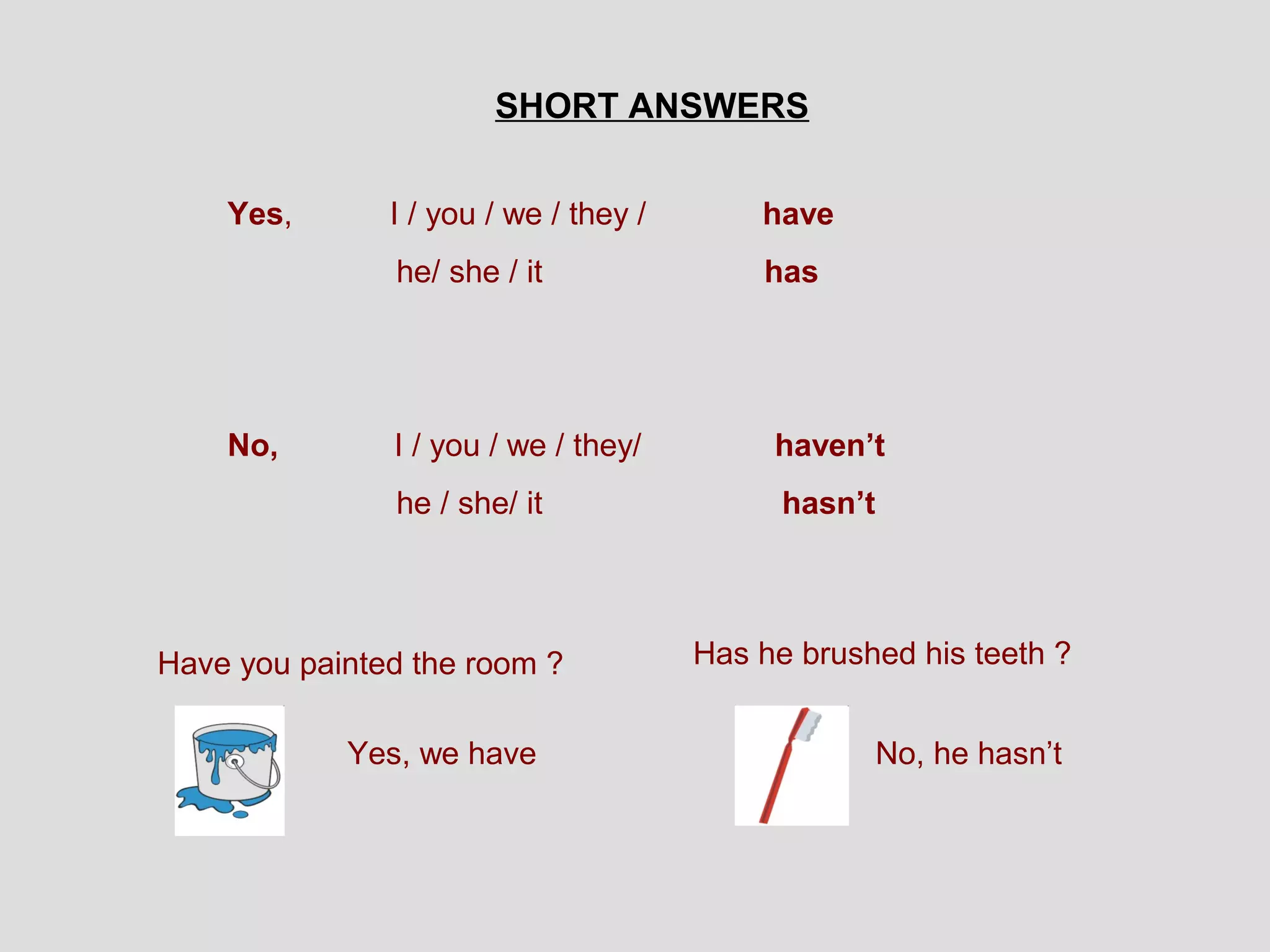
Have you painted the room ?            Has he brushed his teeth ?


            Yes, we have                              No, he hasn’t
Use:
  We use the present perfect simple to talk about something
   that happened in the past and has a connection with the present

            He has had a problem with his leg


       (It means that his leg is still broken)
 When we talk about actions or situations in the past without a
 definite time
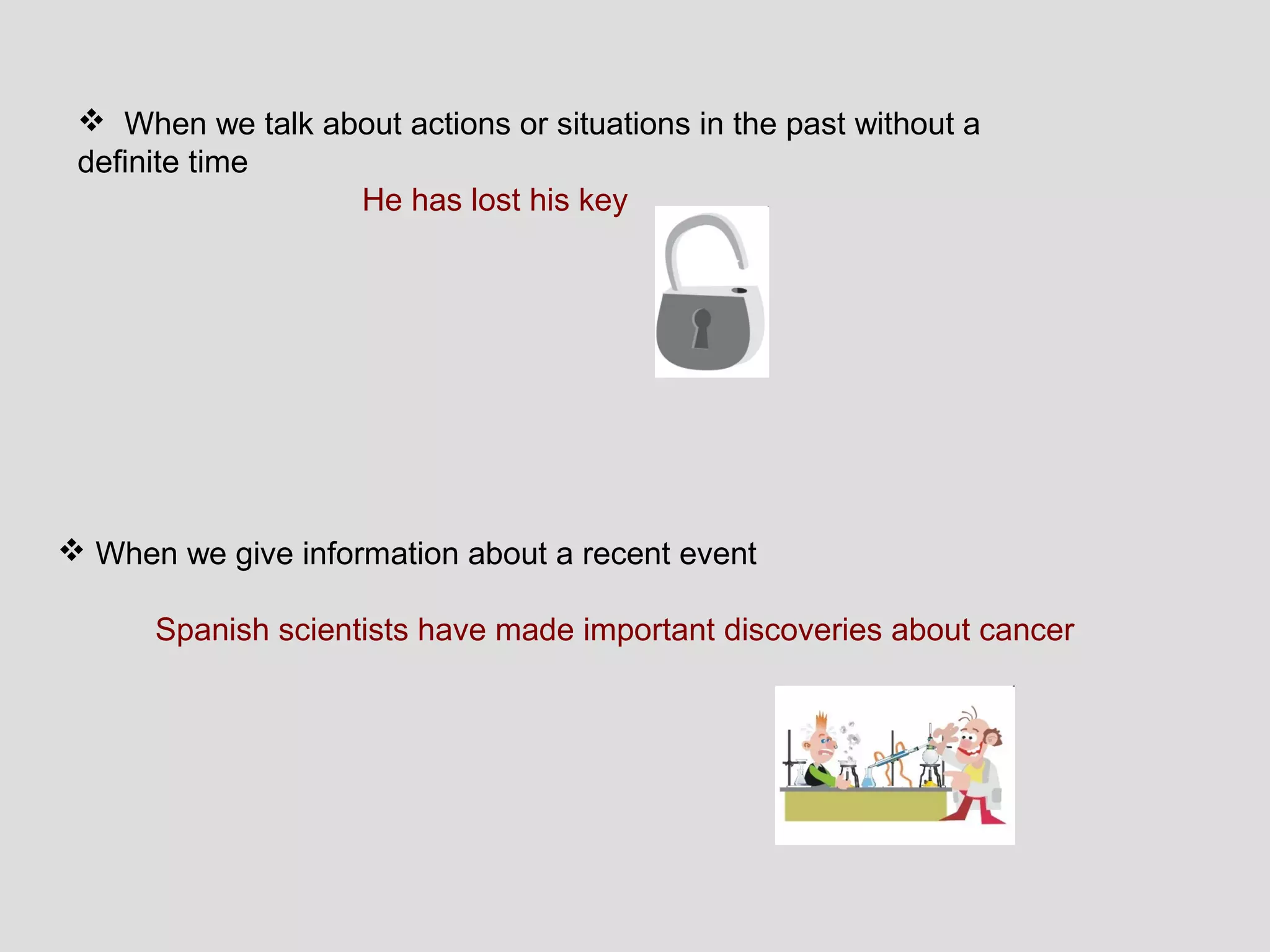
                  He has lost his key


 When we give information about a recent event

      Spanish scientists have made important discoveries about cancer
 When we talk about things we have done until now


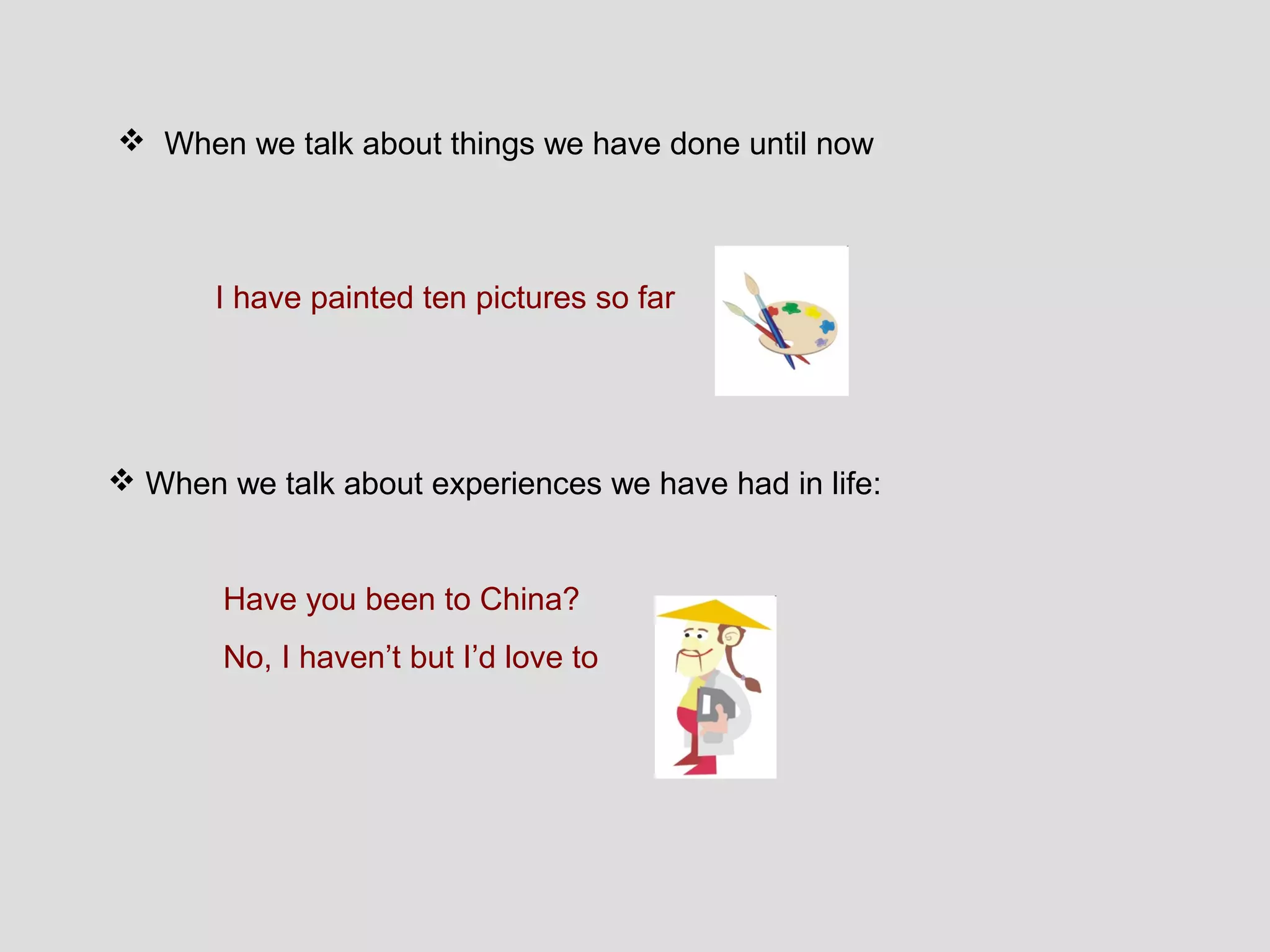
       I have painted ten pictures so far


 When we talk about experiences we have had in life:


       Have you been to China?
       No, I haven’t but I’d love to
 With the following time expressions:

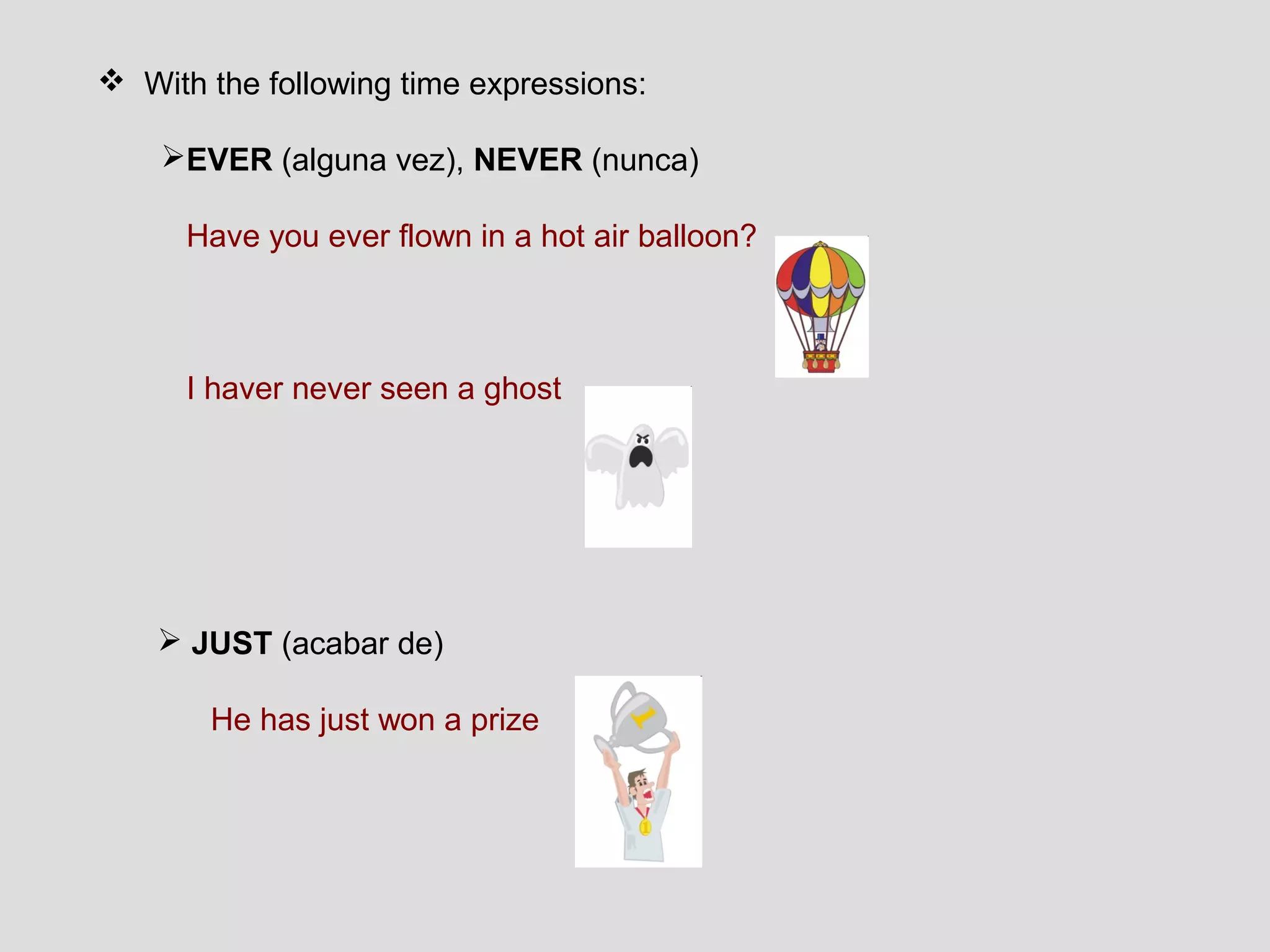
    EVER (alguna vez), NEVER (nunca)

      Have you ever flown in a hot air balloon?


      I haver never seen a ghost


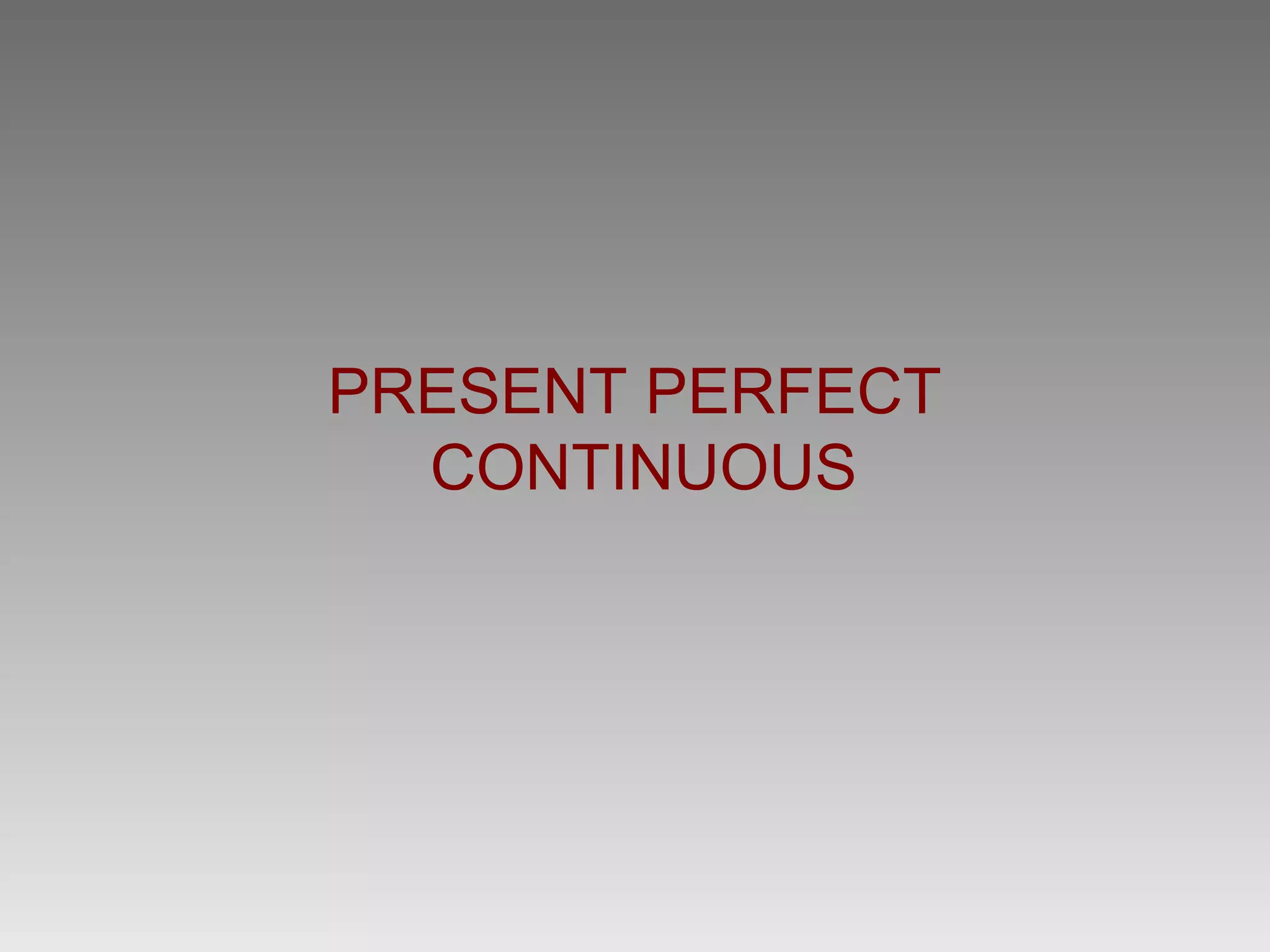
     JUST (acabar de)

       He has just won a prize
ALREADY ( positive) (ya), YET ( question, negative) (aún, todavía)


  I have already made the bed


      The class hasn’t started yet


 FOR (durante), SINCE (desde)


  He has done his homework for half an hour


         They have worked here since February
PRESENT PERFECT
  CONTINUOUS
Form:
                   POSITIVE

           I      have (‘ve)    been
          You     have (‘ve)    been
          He      has (‘s)      been
          She     has (‘s)      been     Verb+ -ing
          It      has (‘s)      been
          We      have (‘ve)    been
          You     have (‘ve)    been
          They    have (‘ve)    been


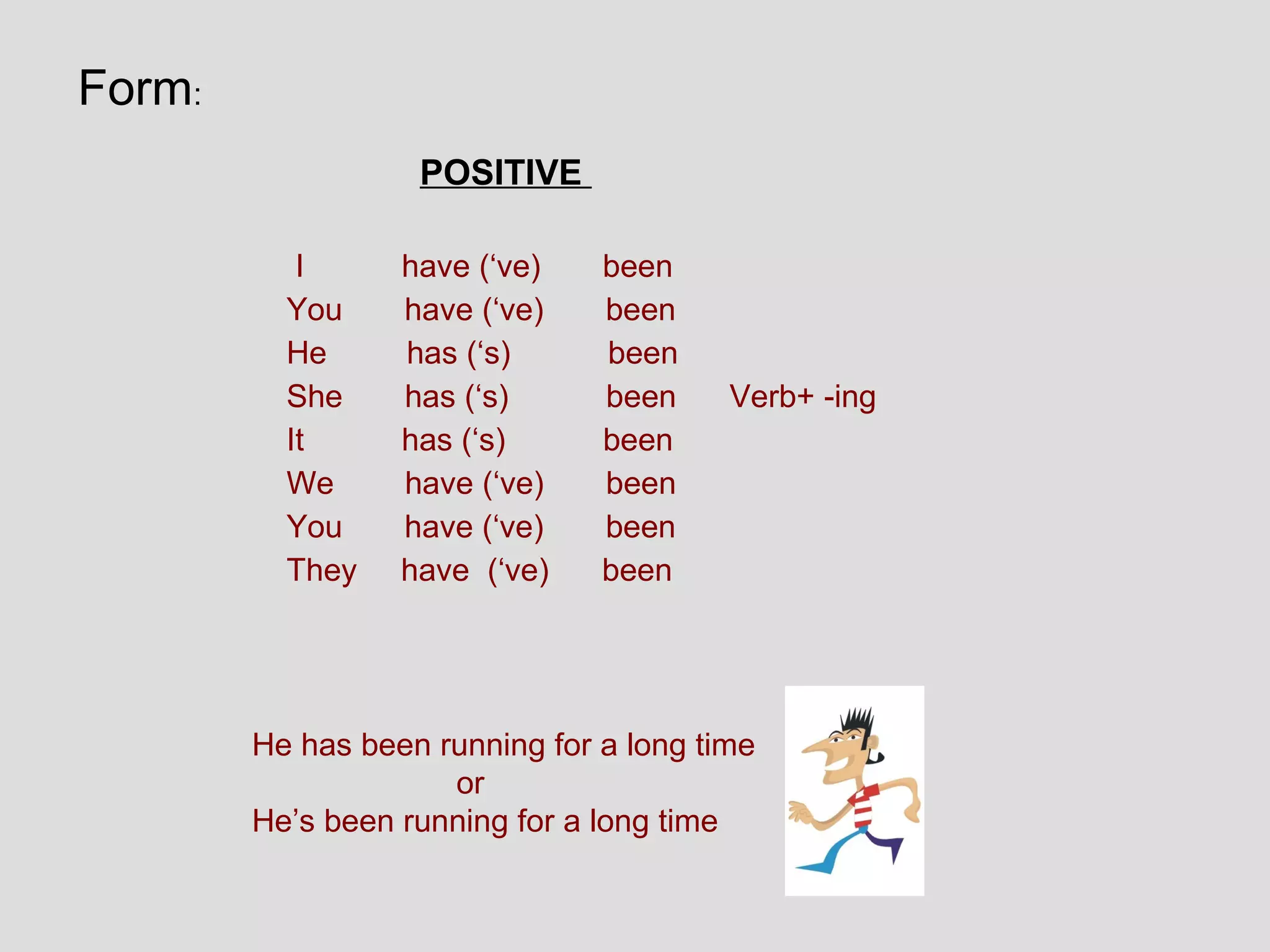
        He has been running for a long time
                     or
        He’s been running for a long time
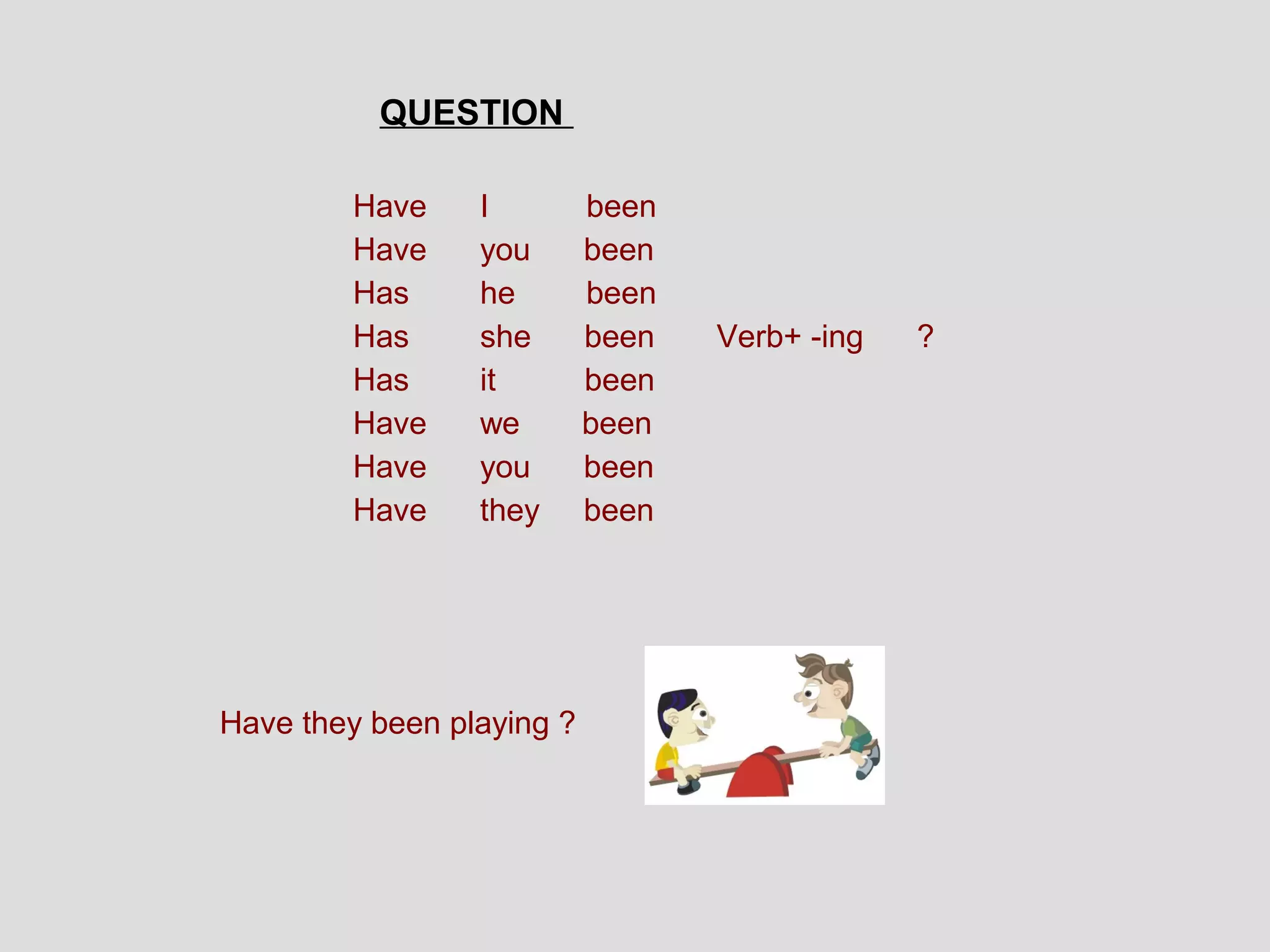
QUESTION

        Have     I         been
        Have     you       been
        Has      he        been
        Has      she       been   Verb+ -ing   ?
        Has      it        been
        Have     we        been
        Have     you       been
        Have     they      been


Have they been playing ?
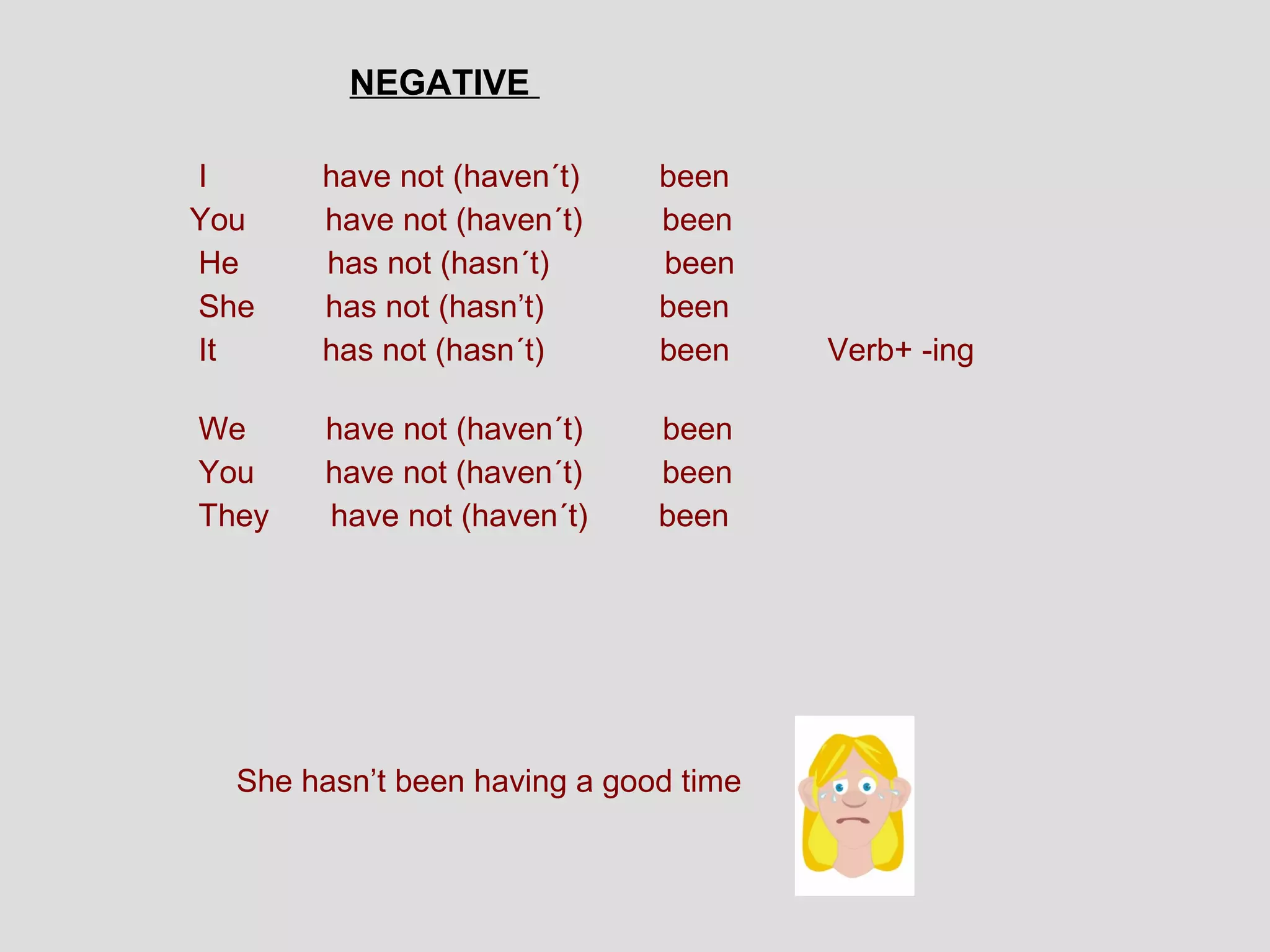
NEGATIVE

I      have not (haven´t)     been
You    have not (haven´t)     been
He     has not (hasn´t)       been
She    has not (hasn’t)       been
It     has not (hasn´t)       been     Verb+ -ing

We     have not (haven´t)     been
You    have not (haven´t)     been
They   have not (haven´t)     been


  She hasn’t been having a good time
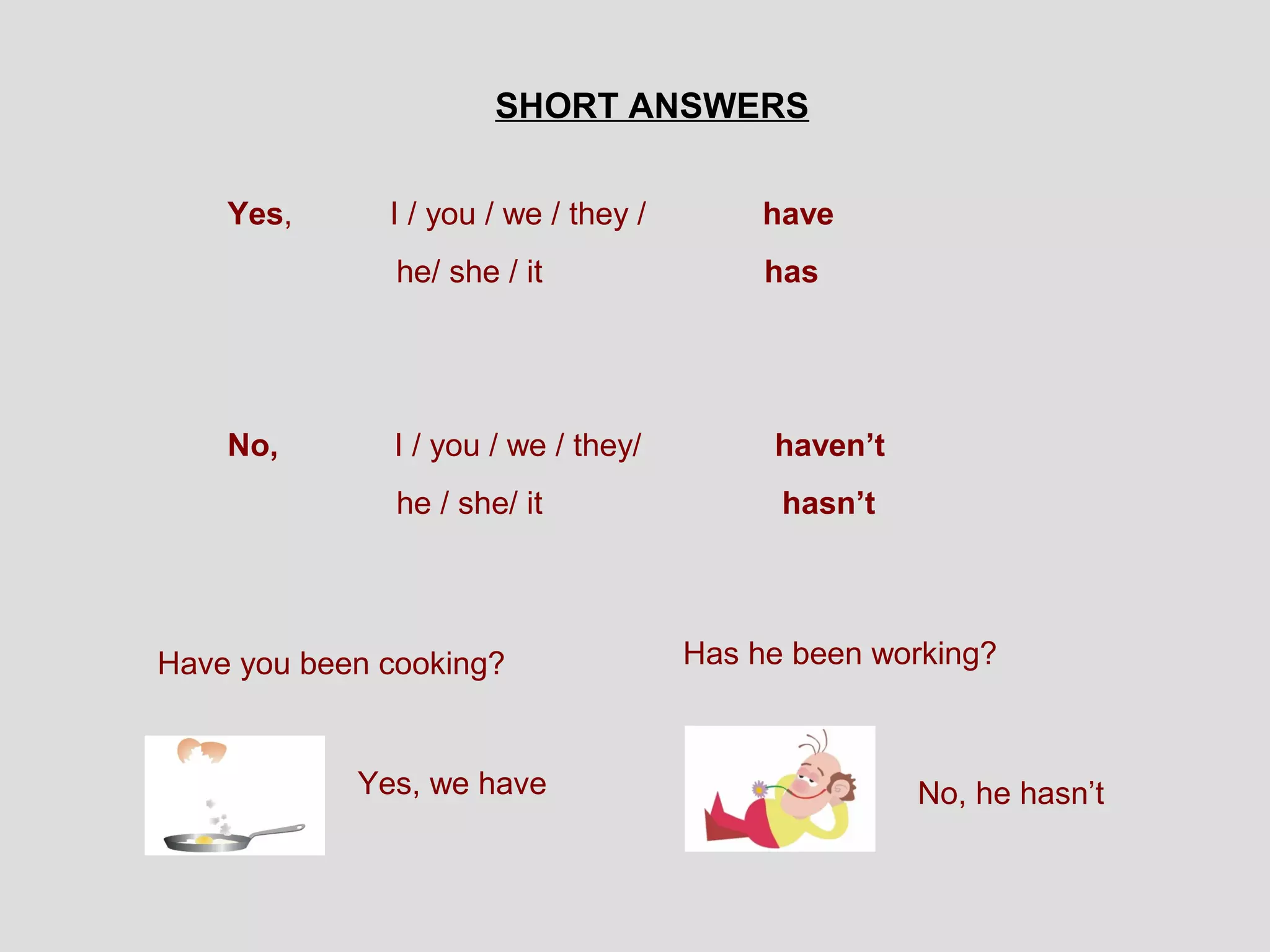
SHORT ANSWERS


    Yes,      I / you / we / they /        have
               he/ she / it                has


    No,       I / you / we / they/         haven’t
               he / she/ it                 hasn’t


Have you been cooking?                Has he been working?


            Yes, we have                             No, he hasn’t
Use:
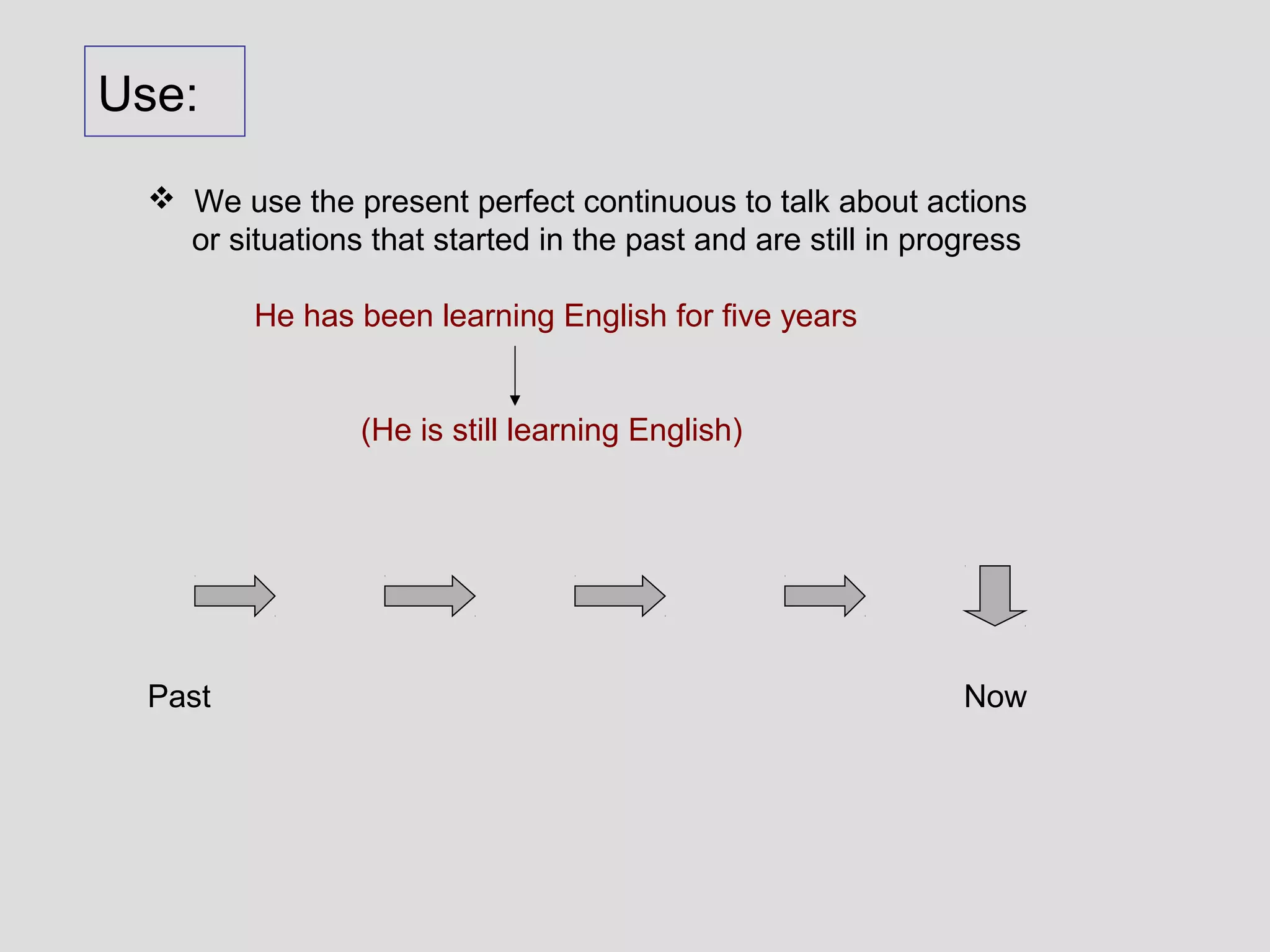
  We use the present perfect continuous to talk about actions
   or situations that started in the past and are still in progress

         He has been learning English for five years


                (He is still learning English)


 Past                                                         Now
 When we talk about actions or situations that have recently stopped
  but they still have present results

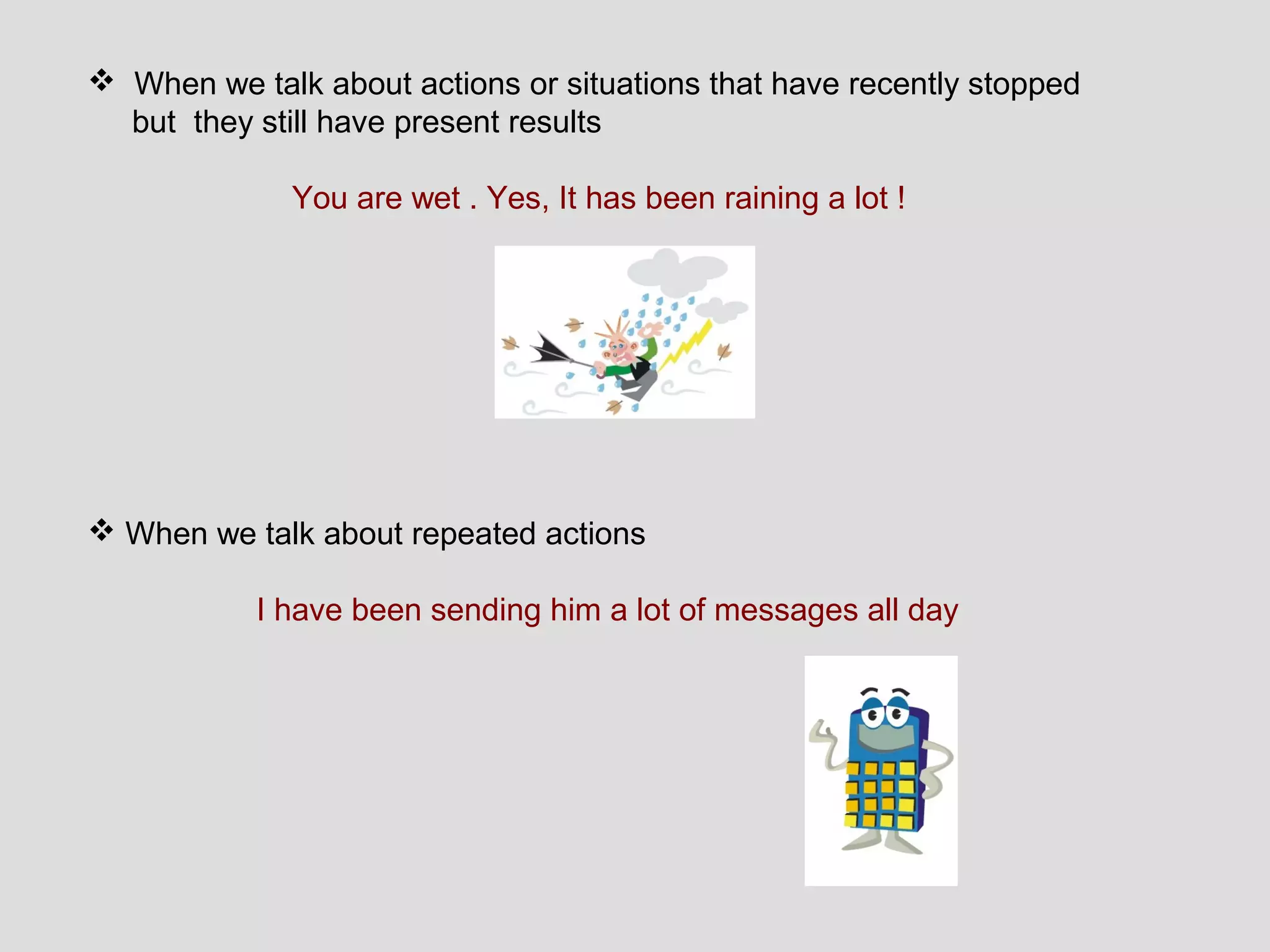
              You are wet . Yes, It has been raining a lot !


 When we talk about repeated actions

           I have been sending him a lot of messages all day
 With “ How long ” questions


                  How long has she been listening to music?


 With the following time expressions:
  -recently     -lately     -since       -for     -all day   -all morning


         He has been driving lately
         I have been drawing since five o´clock
         What have you been doing recently?
What is the difference

between The Present Perfect Continuous

                  …
and the Present Perfect Simple?
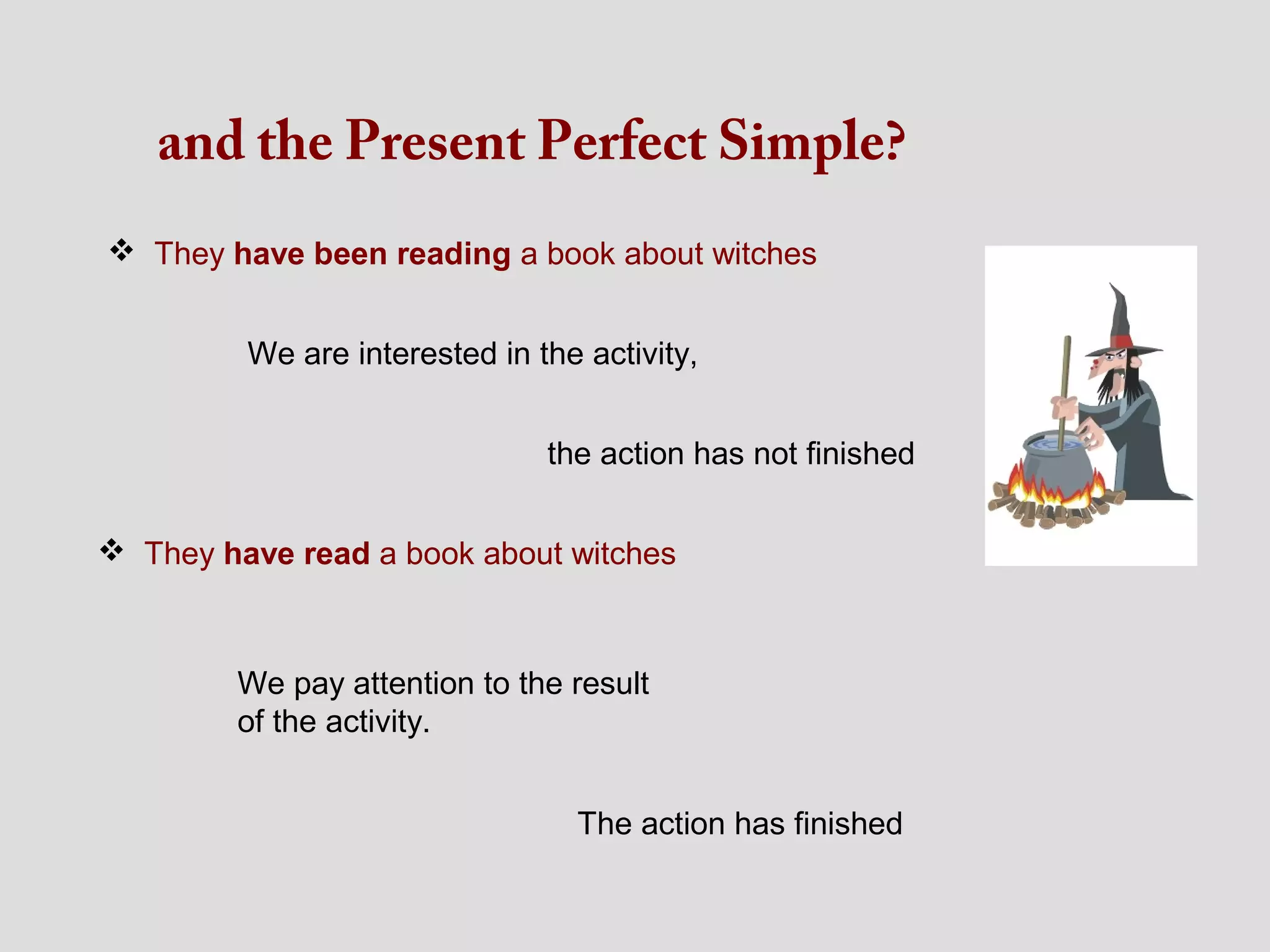
 They have been reading a book about witches


         We are interested in the activity,


                               the action has not finished


 They have read a book about witches


        We pay attention to the result
        of the activity.


                                 The action has finished
What is the difference

between the Present Perfect

             …
and the Past Simple?
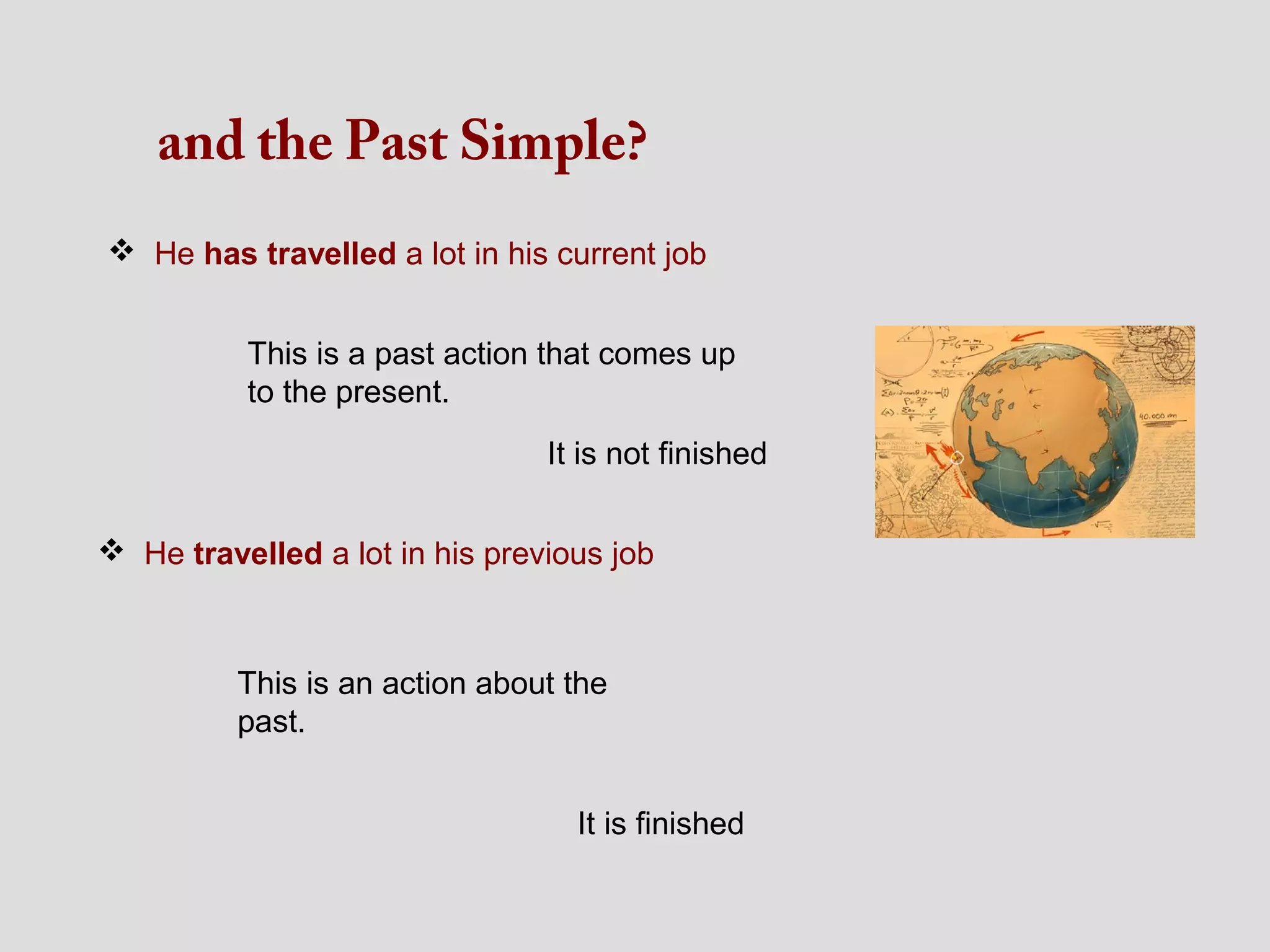
 He has travelled a lot in his current job


          This is a past action that comes up
          to the present.
                                It is not finished


 He travelled a lot in his previous job


          This is an action about the
          past.


                                  It is finished
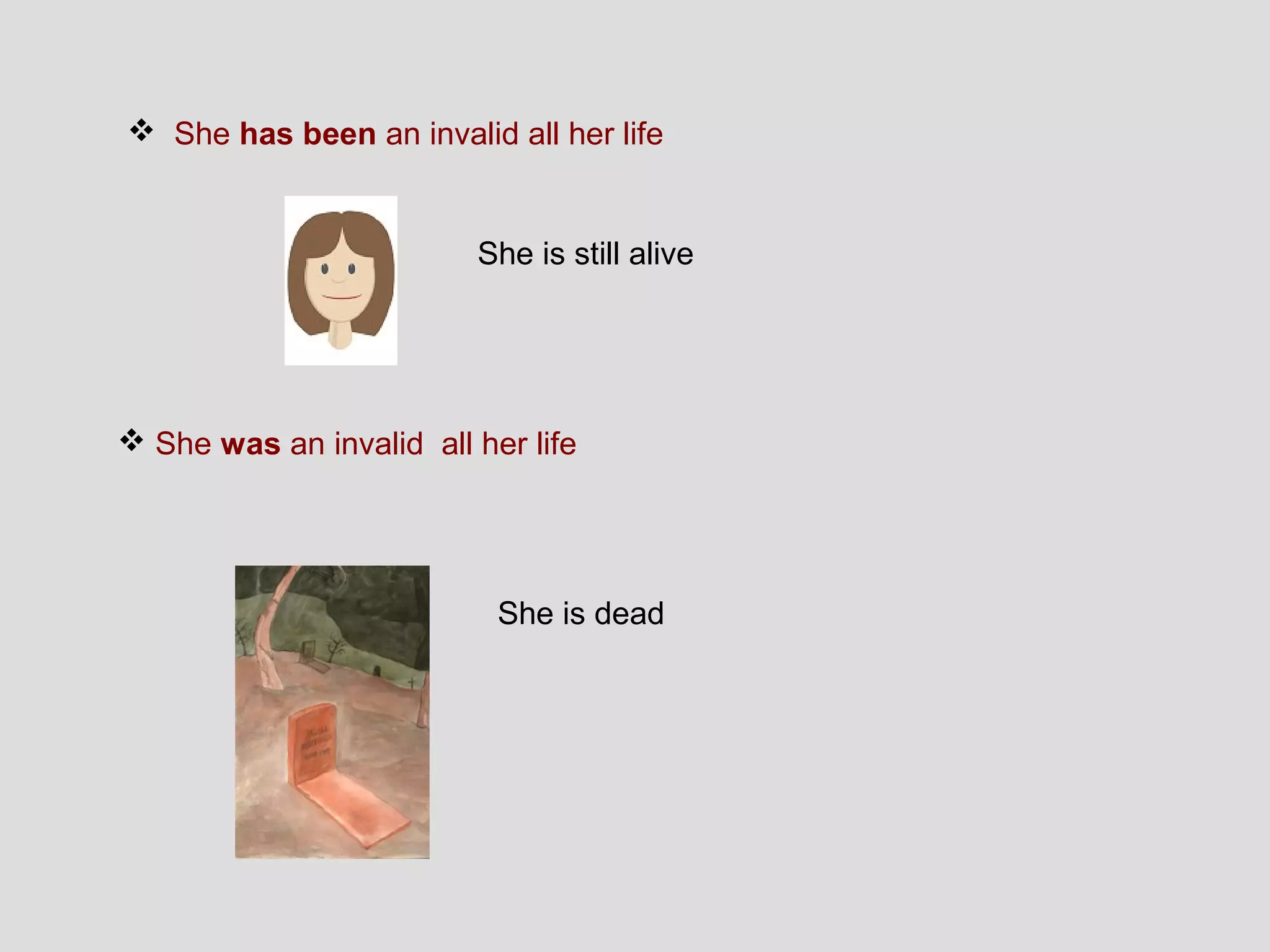
 She has been an invalid all her life


                         She is still alive


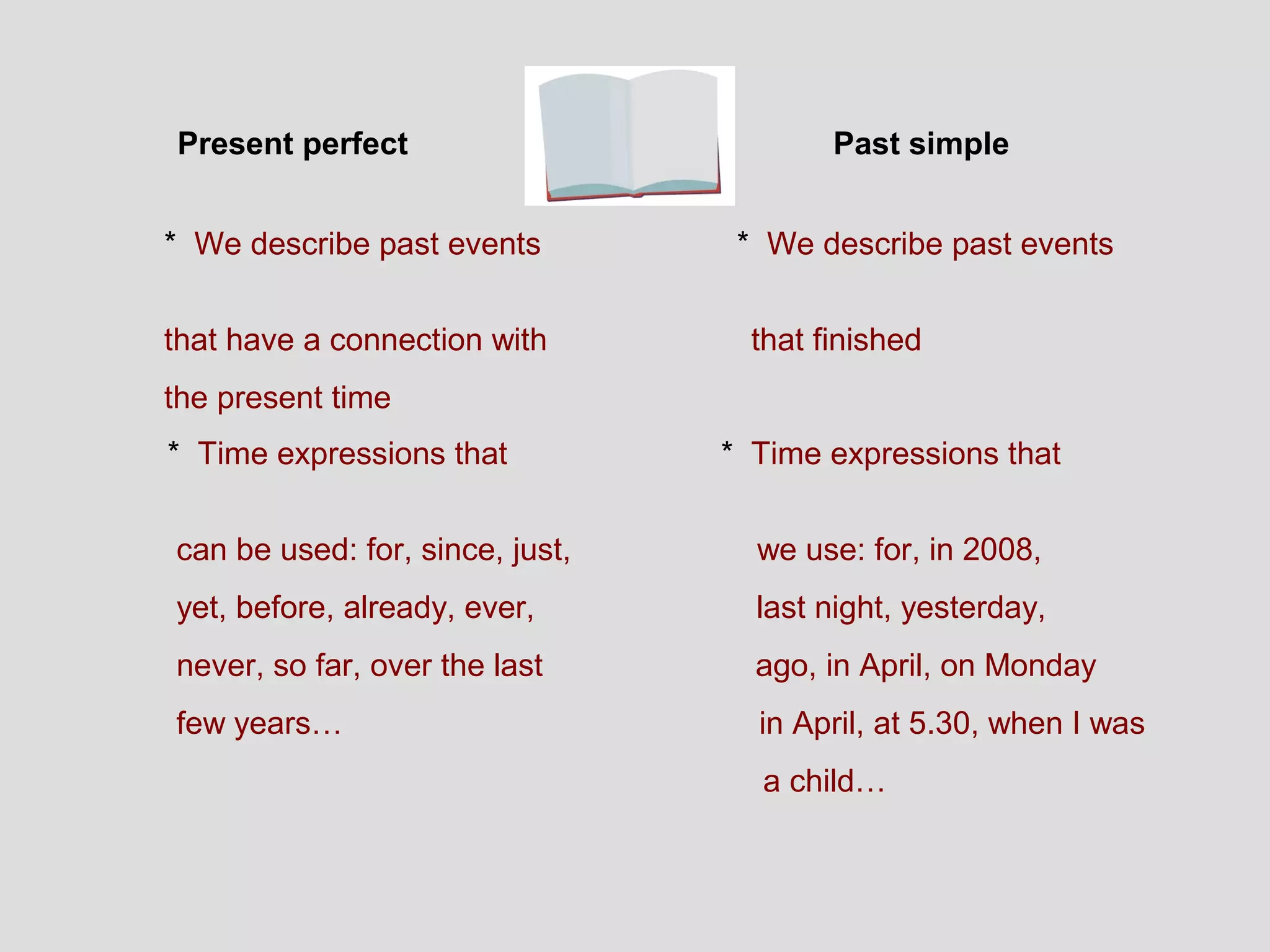
 She was an invalid all her life


                           She is dead
Present perfect                          Past simple


* We describe past events         * We describe past events


that have a connection with        that finished
the present time
* Time expressions that          * Time expressions that


can be used: for, since, just,     we use: for, in 2008,
yet, before, already, ever,        last night, yesterday,
never, so far, over the last       ago, in April, on Monday
few years…                         in April, at 5.30, when I was
                                   a child…
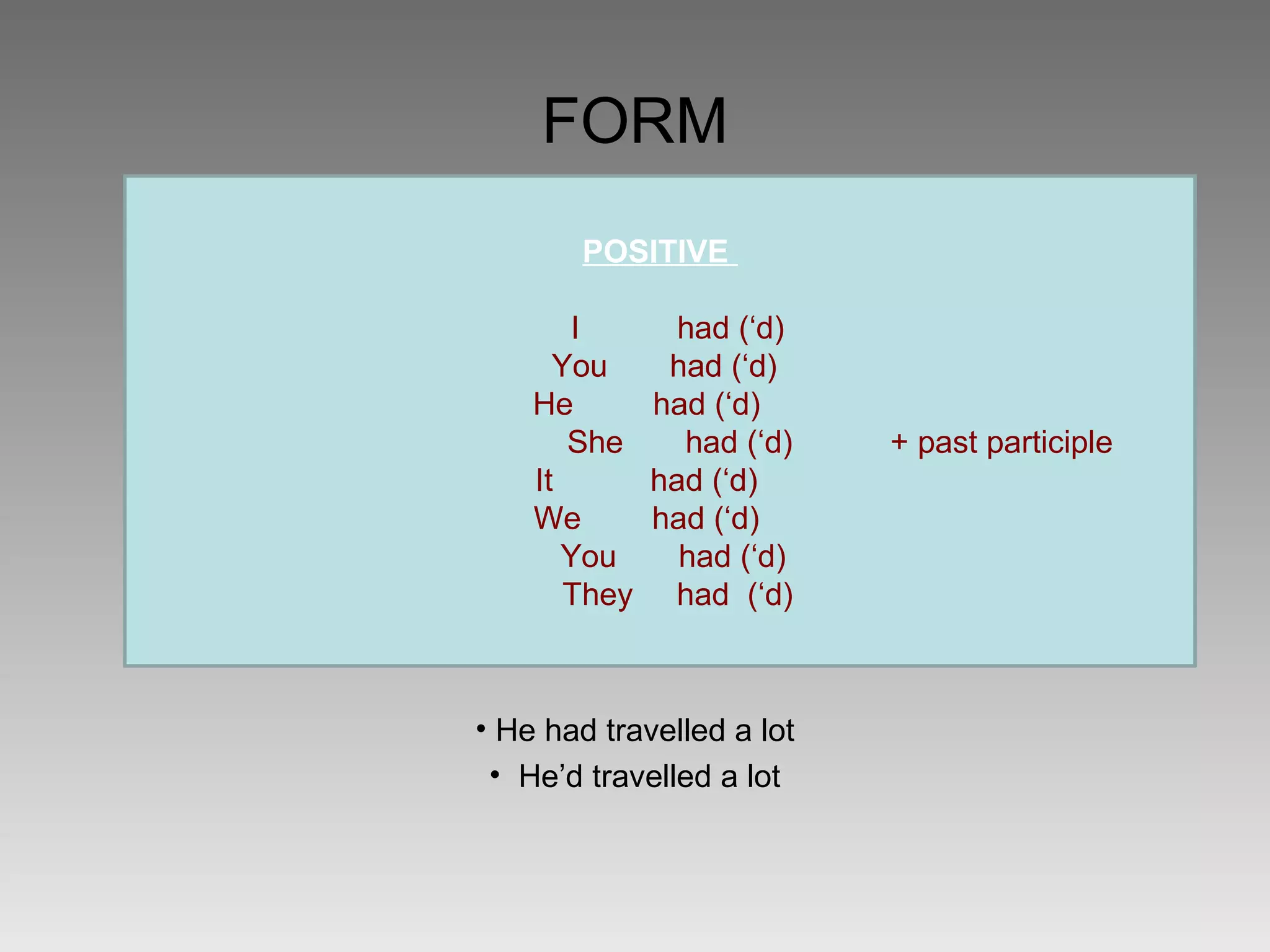
PAST PERFECT
   SIMPLE
FORM
      POSITIVE
       POSITIVE

    I I     had (‘d)
         have (‘ve)
     You have (‘ve)
   You      had (‘d)
   He
   He      had (‘d)
         has (‘s)
        She has (‘s)
      She       had (‘d)   + + past participle
                             past participle
     It       had (‘d)
  It        has (‘s)
     We       had (‘d)
 We Youhavehad (‘d)
                 (‘ve)
   You  They have (‘ve)
                had (‘d)
   They have (‘ve)

• He had travelled a lot
 • He’d travelled a lot
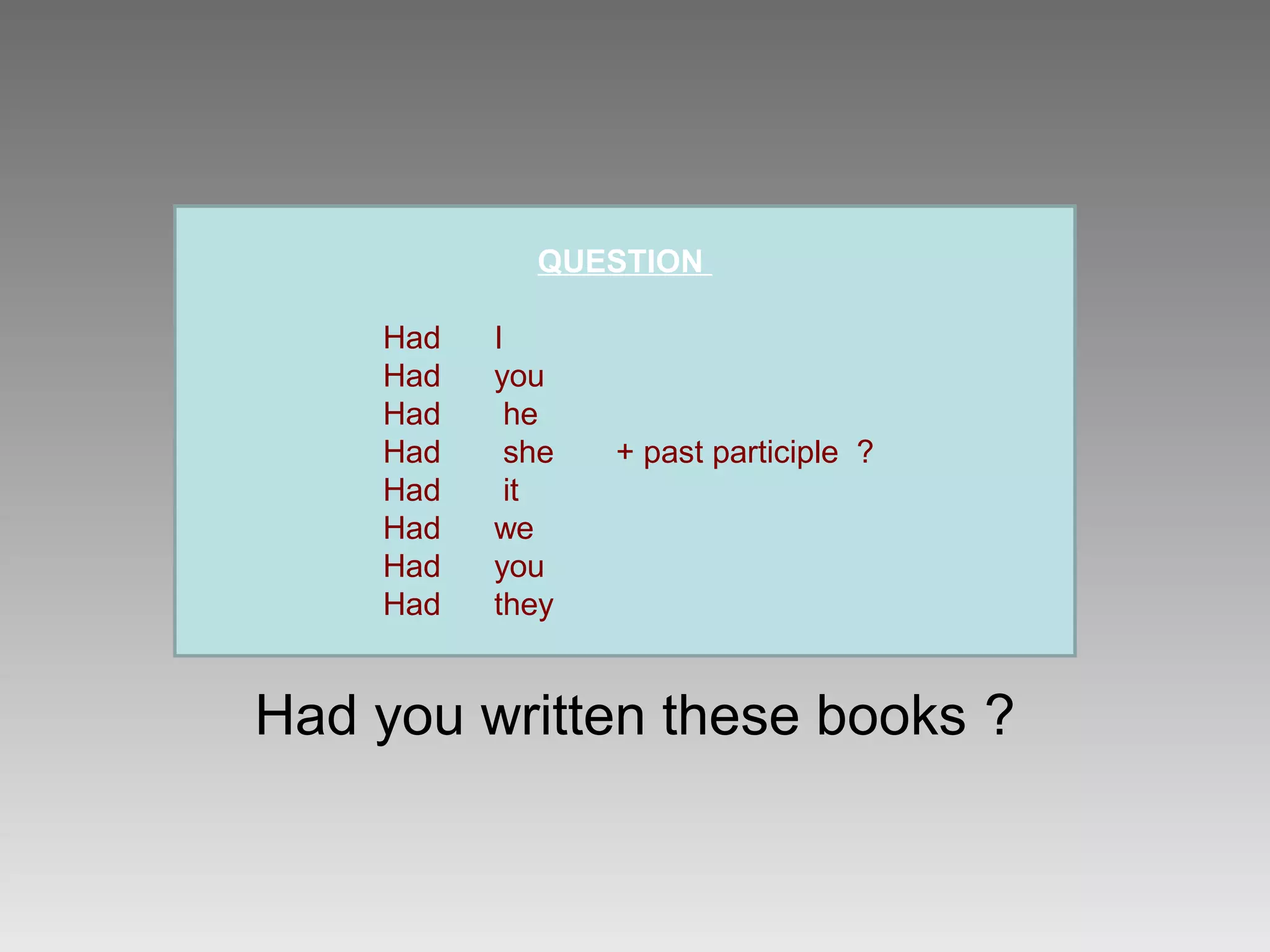
QUESTION

    Had   I
    Had   you
    Had     he
    Had     she   + past participle ?
    Had     it
    Had   we
    Had   you
    Had   they


Had you written these books ?
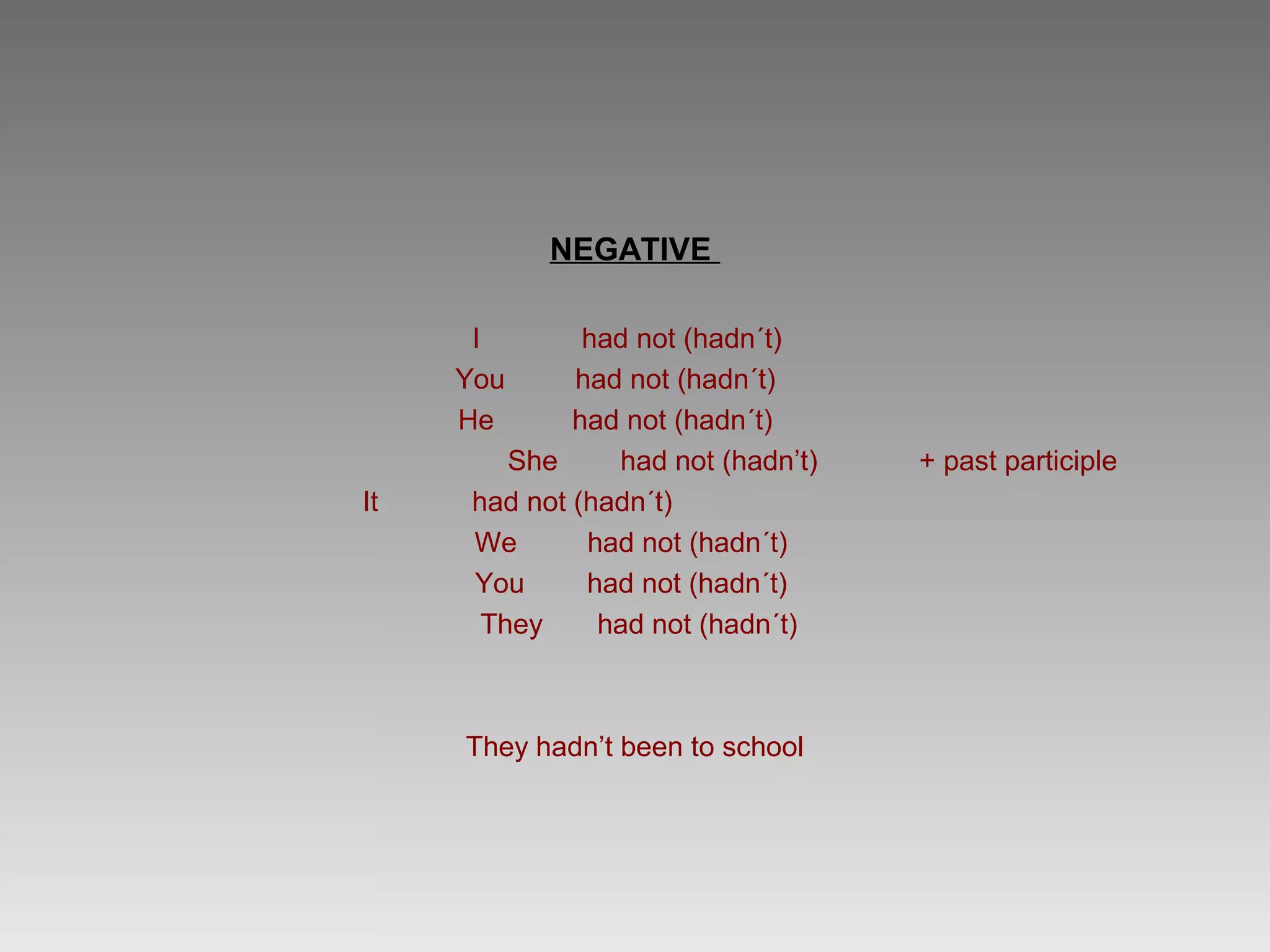
NEGATIVE

      I        had not (hadn´t)
     You      had not (hadn´t)
     He       had not (hadn´t)
         She     had not (hadn’t)   + past participle
It    had not (hadn´t)
      We       had not (hadn´t)
      You      had not (hadn´t)
       They     had not (hadn´t)


     They hadn’t been to school
USES
   A completed action before another activity in the past

    When we arrived, the concert had already finished

    It had got/gotten worse before it got better
.
    By the time I watched my favorite program, I had drunk a cup of bee

    By the time I got to the market, most of the stalls had already been closed
FUTURE PERFECT
FORM
 POSITIVE

   I will have
You will have
 He will have.
 She will have   + past participle
  It will have
 We will have
You will have
They will have
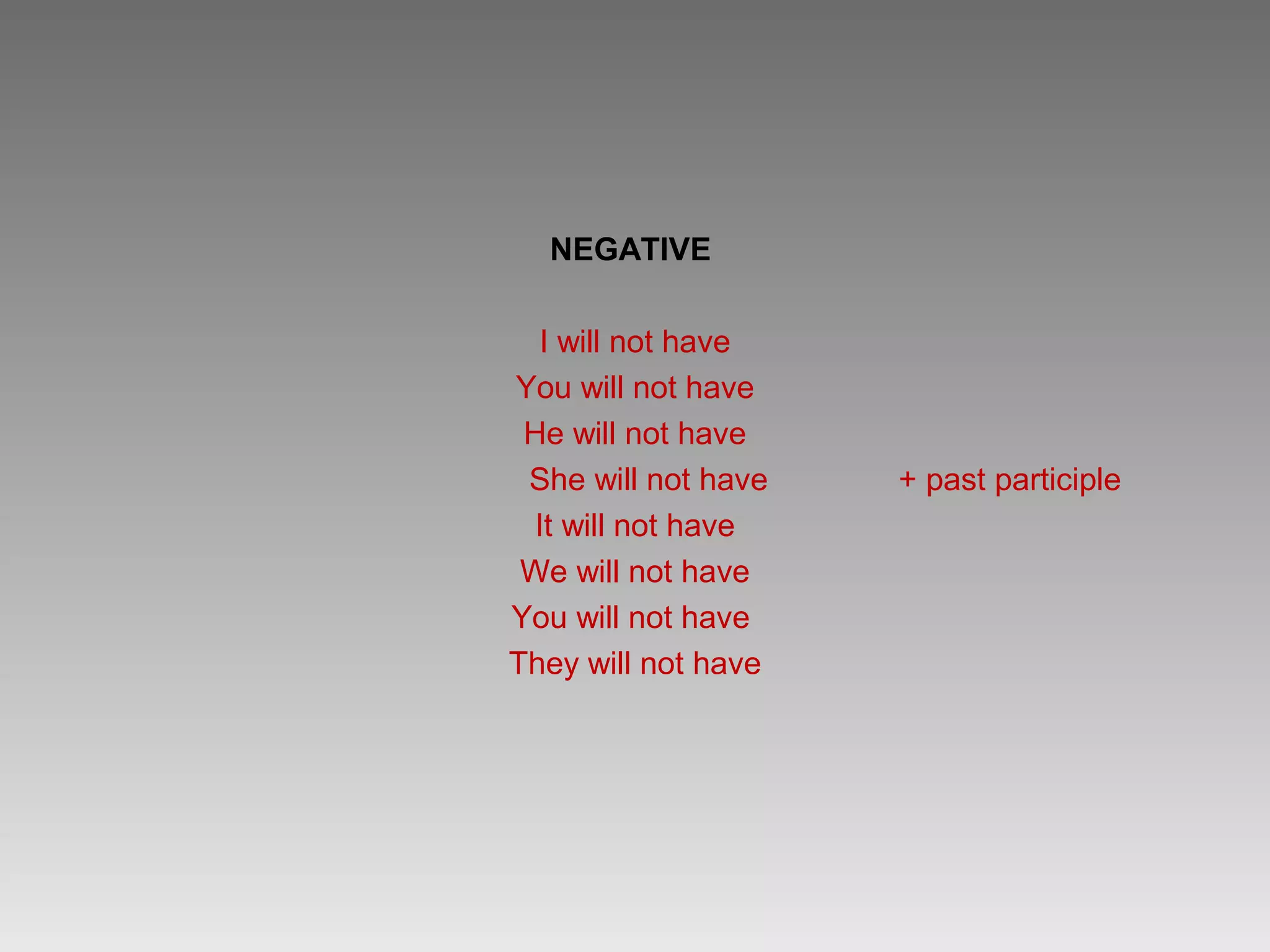
NEGATIVE

   I will not have
You will not have
 He will not have
 She will not have   + past participle
  It will not have
 We will not have
You will not have
They will not have
QUESTIONS

            Will I have
           Will you have
           Will he have
Will she have       + past participle?
            Will it have
           Will we have
           Will you have
           Will they have
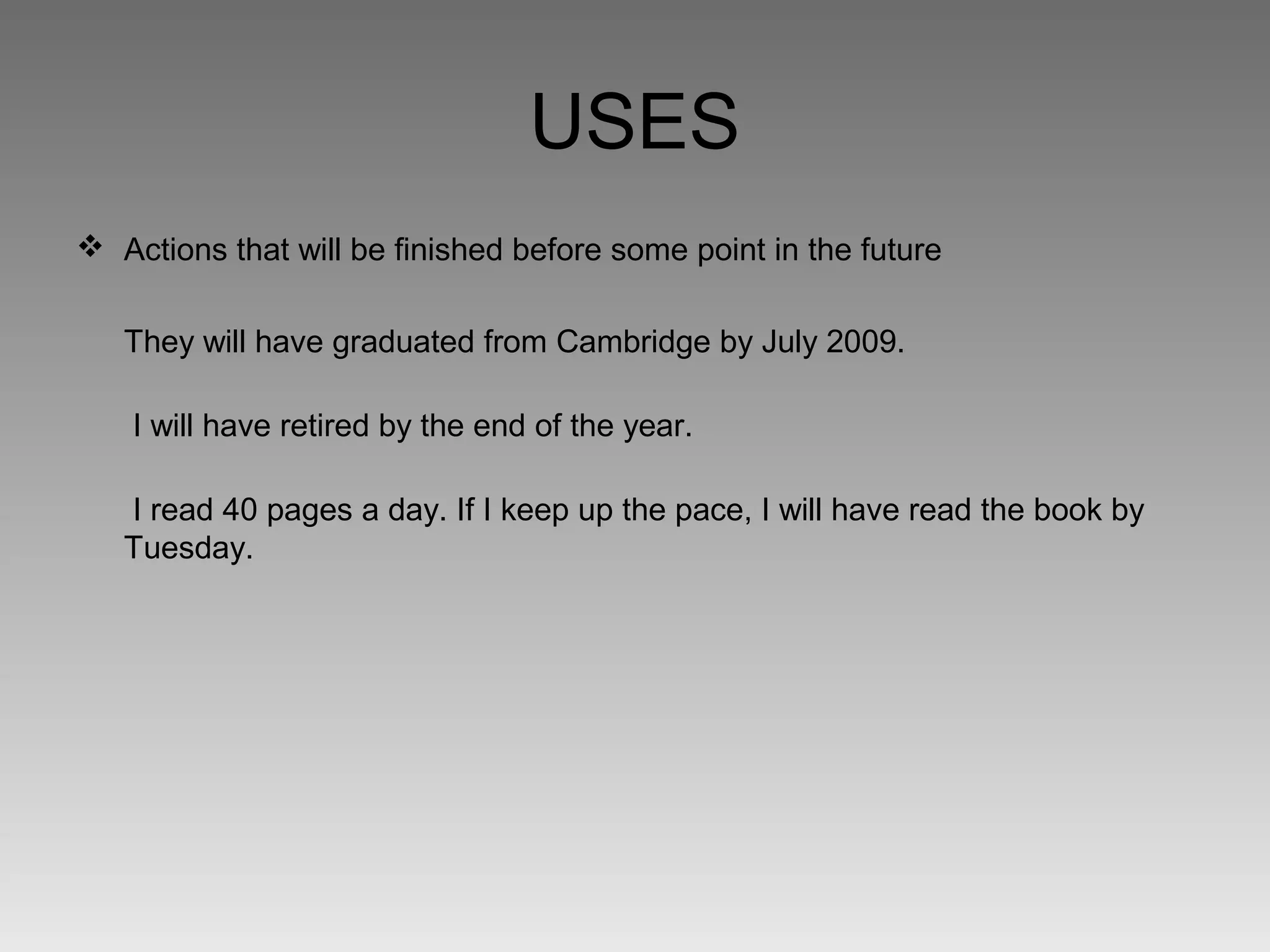
USES
 Actions that will be finished before some point in the future


   They will have graduated from Cambridge by July 2009.

    I will have retired by the end of the year.

   I read 40 pages a day. If I keep up the pace, I will have read the book by
   Tuesday.

Pp perfect tenses (mi version)

  • 1.
  • 2.
    Form: POSITIVE I have (‘ve) You have (‘ve) He has (‘s) She has (‘s) + past participle It has (‘s) We have (‘ve) You have (‘ve) They have (‘ve) He has travelled a lot or He’s travelled a lot
  • 3.
    QUESTION Have I Have you Has he Has she + past participle ? Has it Have we Have you Have they Have you written these books ?
  • 4.
    NEGATIVE I have not (haven´t) You have not (haven´t) He has not (hasn´t) She has not (hasn’t) + past participle It has not (hasn´t) We have not (haven´t) You have not (haven´t) They have not (haven´t) They haven’t been to school
  • 5.
    SHORT ANSWERS Yes, I / you / we / they / have he/ she / it has No, I / you / we / they/ haven’t he / she/ it hasn’t Have you painted the room ? Has he brushed his teeth ? Yes, we have No, he hasn’t
  • 6.
    Use:  Weuse the present perfect simple to talk about something that happened in the past and has a connection with the present He has had a problem with his leg (It means that his leg is still broken)
  • 7.
     When wetalk about actions or situations in the past without a definite time He has lost his key  When we give information about a recent event Spanish scientists have made important discoveries about cancer
  • 8.
     When wetalk about things we have done until now I have painted ten pictures so far  When we talk about experiences we have had in life: Have you been to China? No, I haven’t but I’d love to
  • 9.
     With thefollowing time expressions: EVER (alguna vez), NEVER (nunca) Have you ever flown in a hot air balloon? I haver never seen a ghost  JUST (acabar de) He has just won a prize
  • 10.
    ALREADY ( positive)(ya), YET ( question, negative) (aún, todavía) I have already made the bed The class hasn’t started yet  FOR (durante), SINCE (desde) He has done his homework for half an hour They have worked here since February
  • 11.
    PRESENT PERFECT CONTINUOUS
  • 12.
    Form: POSITIVE I have (‘ve) been You have (‘ve) been He has (‘s) been She has (‘s) been Verb+ -ing It has (‘s) been We have (‘ve) been You have (‘ve) been They have (‘ve) been He has been running for a long time or He’s been running for a long time
  • 13.
    QUESTION Have I been Have you been Has he been Has she been Verb+ -ing ? Has it been Have we been Have you been Have they been Have they been playing ?
  • 14.
    NEGATIVE I have not (haven´t) been You have not (haven´t) been He has not (hasn´t) been She has not (hasn’t) been It has not (hasn´t) been Verb+ -ing We have not (haven´t) been You have not (haven´t) been They have not (haven´t) been She hasn’t been having a good time
  • 15.
    SHORT ANSWERS Yes, I / you / we / they / have he/ she / it has No, I / you / we / they/ haven’t he / she/ it hasn’t Have you been cooking? Has he been working? Yes, we have No, he hasn’t
  • 16.
    Use:  Weuse the present perfect continuous to talk about actions or situations that started in the past and are still in progress He has been learning English for five years (He is still learning English) Past Now
  • 17.
     When wetalk about actions or situations that have recently stopped but they still have present results You are wet . Yes, It has been raining a lot !  When we talk about repeated actions I have been sending him a lot of messages all day
  • 18.
     With “How long ” questions How long has she been listening to music?  With the following time expressions: -recently -lately -since -for -all day -all morning He has been driving lately I have been drawing since five o´clock What have you been doing recently?
  • 19.
    What is thedifference between The Present Perfect Continuous …
  • 20.
    and the PresentPerfect Simple?  They have been reading a book about witches We are interested in the activity, the action has not finished  They have read a book about witches We pay attention to the result of the activity. The action has finished
  • 21.
    What is thedifference between the Present Perfect …
  • 22.
    and the PastSimple?  He has travelled a lot in his current job This is a past action that comes up to the present. It is not finished  He travelled a lot in his previous job This is an action about the past. It is finished
  • 23.
     She hasbeen an invalid all her life She is still alive  She was an invalid all her life She is dead
  • 24.
    Present perfect Past simple * We describe past events * We describe past events that have a connection with that finished the present time * Time expressions that * Time expressions that can be used: for, since, just, we use: for, in 2008, yet, before, already, ever, last night, yesterday, never, so far, over the last ago, in April, on Monday few years… in April, at 5.30, when I was a child…
  • 25.
  • 26.
    FORM POSITIVE POSITIVE I I had (‘d) have (‘ve) You have (‘ve) You had (‘d) He He had (‘d) has (‘s) She has (‘s) She had (‘d) + + past participle past participle It had (‘d) It has (‘s) We had (‘d) We Youhavehad (‘d) (‘ve) You They have (‘ve) had (‘d) They have (‘ve) • He had travelled a lot • He’d travelled a lot
  • 27.
    QUESTION Had I Had you Had he Had she + past participle ? Had it Had we Had you Had they Had you written these books ?
  • 28.
    NEGATIVE I had not (hadn´t) You had not (hadn´t) He had not (hadn´t) She had not (hadn’t) + past participle It had not (hadn´t) We had not (hadn´t) You had not (hadn´t) They had not (hadn´t) They hadn’t been to school
  • 29.
    USES  A completed action before another activity in the past When we arrived, the concert had already finished It had got/gotten worse before it got better . By the time I watched my favorite program, I had drunk a cup of bee By the time I got to the market, most of the stalls had already been closed
  • 30.
  • 31.
    FORM POSITIVE I will have You will have He will have. She will have + past participle It will have We will have You will have They will have
  • 32.
    NEGATIVE I will not have You will not have He will not have She will not have + past participle It will not have We will not have You will not have They will not have
  • 33.
    QUESTIONS Will I have Will you have Will he have Will she have + past participle? Will it have Will we have Will you have Will they have
  • 34.
    USES  Actions thatwill be finished before some point in the future They will have graduated from Cambridge by July 2009. I will have retired by the end of the year. I read 40 pages a day. If I keep up the pace, I will have read the book by Tuesday.