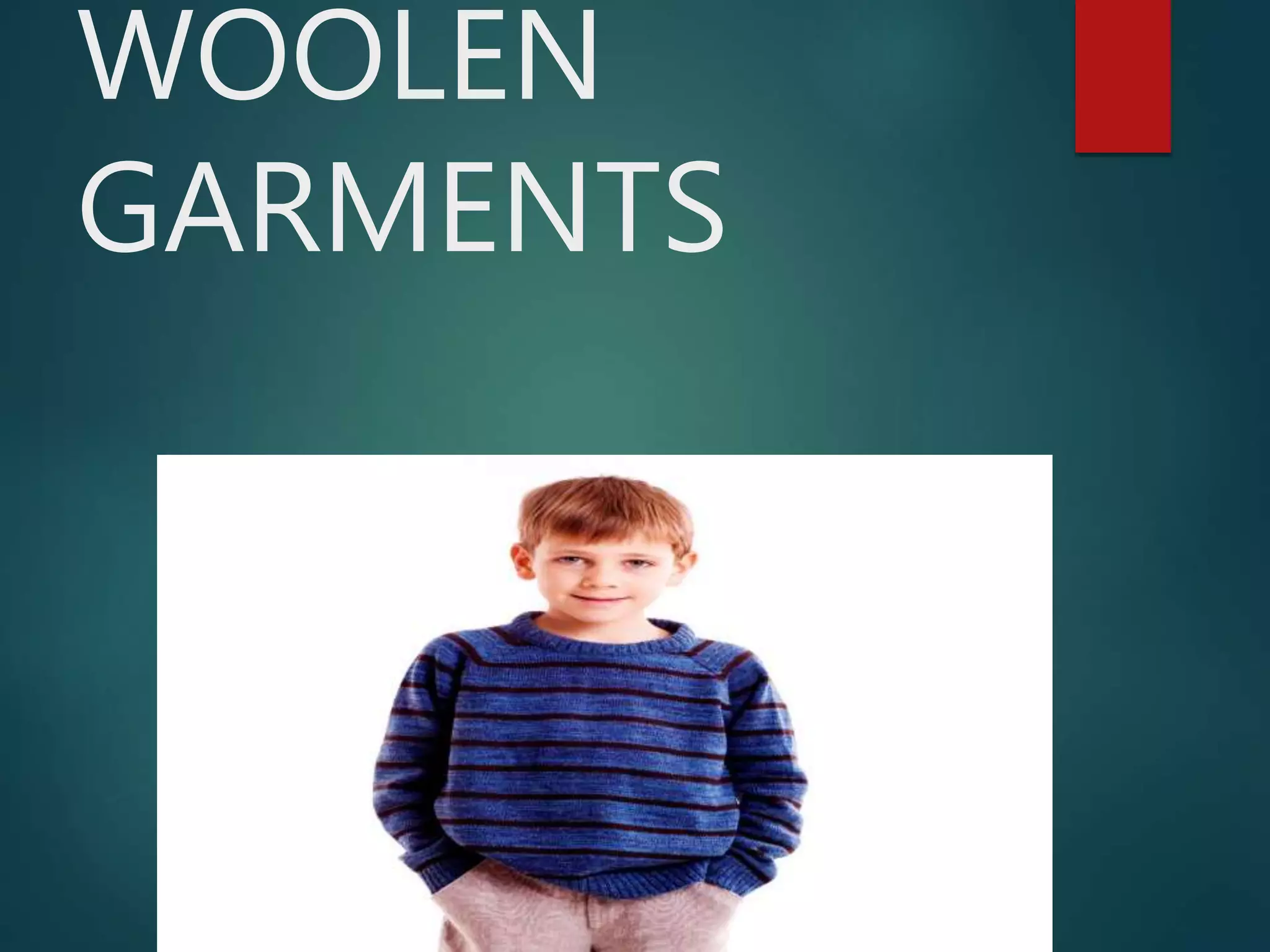


WOOLEN
GARMENTS
What is wool
Its sources
Its types
Rearing
processing
Weaving and End Product
Wool is the textile fiber obtained
from sheep and certain other animals,
including cashmere from goats, mohair f
rom goats angora from rabbits
Sources of WOOL
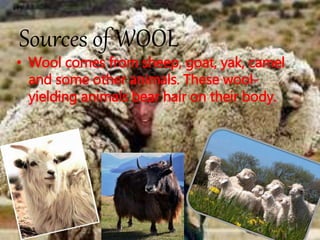
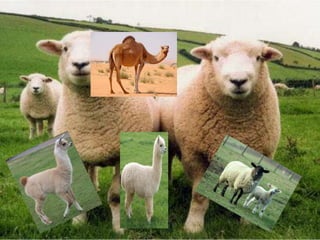
• Wool comes from sheep, goat, yak, camel
and some other animals. These wool-
yielding animals bear hair on their body.
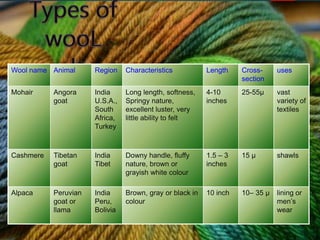
Wool name Animal Region Characteristics Length Cross-
section
uses
Mohair Angora
goat
India
U.S.A.,
South
Africa,
Turkey
Long length, softness,
Springy nature,
excellent luster, very
little ability to felt
4-10
inches
25-55µ vast
variety of
textiles
Cashmere Tibetan
goat
India
Tibet
Downy handle, fluffy
nature, brown or
grayish white colour
1.5 – 3
inches
15 µ shawls
Alpaca Peruvian
goat or
llama
India
Peru,
Bolivia
Brown, gray or black in
colour
10 inch 10– 35 µ lining or
men’s
wear
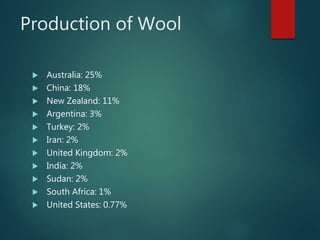
Production of Wool
 Australia: 25%
 China: 18%
 New Zealand: 11%
 Argentina: 3%
 Turkey: 2%
 Iran: 2%
 United Kingdom: 2%
 India: 2%
 Sudan: 2%
 South Africa: 1%
 United States: 0.77%
REARING
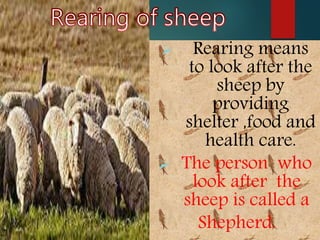
 Rearing means
to look after the
sheep by
providing
shelter ,food and
health care.
 The person who
look after the
sheep is called a
Shepherd.
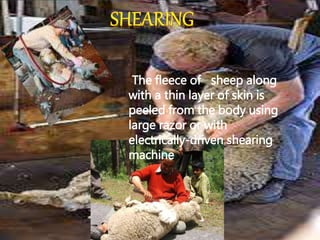
The fleece of sheep along
with a thin layer of skin is
peeled from the body using
large razor or with
electrically-driven shearing
machine
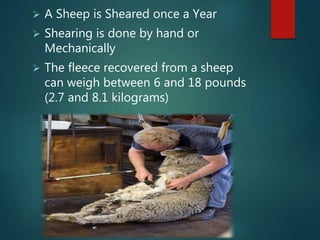
 A Sheep is Sheared once a Year
 Shearing is done by hand or
Mechanically
 The fleece recovered from a sheep
can weigh between 6 and 18 pounds
(2.7 and 8.1 kilograms)
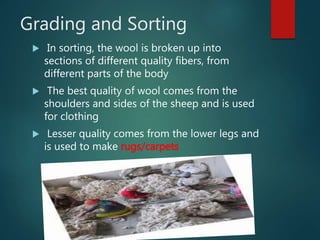
Grading and Sorting
 In sorting, the wool is broken up into
sections of different quality fibers, from
different parts of the body
 The best quality of wool comes from the
shoulders and sides of the sheep and is used
for clothing
 Lesser quality comes from the lower legs and
is used to make rugs/carpets
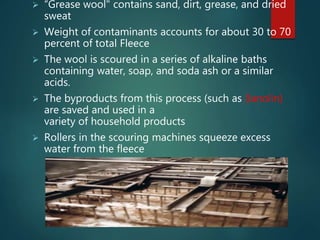
Wool scouring is the
process of washing wool
in hot water and
detergent to remove the
non-wool contaminants
 “Grease wool" contains sand, dirt, grease, and dried
sweat
 Weight of contaminants accounts for about 30 to 70
percent of total Fleece
 The wool is scoured in a series of alkaline baths
containing water, soap, and soda ash or a similar
acids.
 The byproducts from this process (such as (lanolin)
are saved and used in a
variety of household products
 Rollers in the scouring machines squeeze excess
water from the fleece
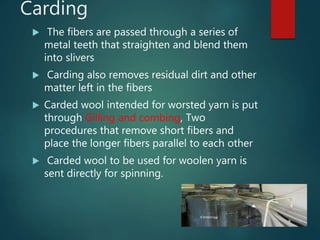
Carding
 The fibers are passed through a series of
metal teeth that straighten and blend them
into slivers
 Carding also removes residual dirt and other
matter left in the fibers
 Carded wool intended for worsted yarn is put
through Gilling and combing, Two
procedures that remove short fibers and
place the longer fibers parallel to each other
 Carded wool to be used for woolen yarn is
sent directly for spinning.
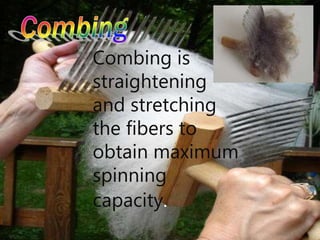
Combing is
straightening
and stretching
the fibers to
obtain maximum
spinning
capacity.
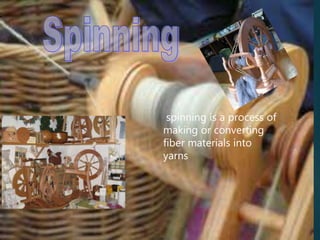
spinning is a process of
making or converting
fiber materials into
yarns
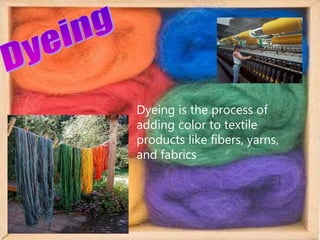
Dyeing is the process of
adding color to textile
products like fibers, yarns,
and fabrics
Woolen and Worsted Yarn
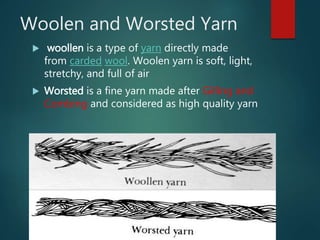
 woollen is a type of yarn directly made
from carded wool. Woolen yarn is soft, light,
stretchy, and full of air
 Worsted is a fine yarn made after Gilling and
Combing and considered as high quality yarn
Differences
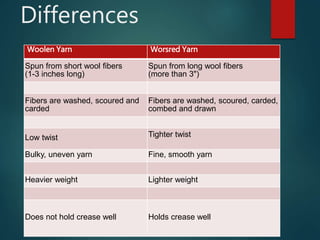
Woolen Yarn Worsred Yarn
Spun from short wool fibers
(1-3 inches long)
Spun from long wool fibers
(more than 3")
Fibers are washed, scoured and
carded
Fibers are washed, scoured, carded,
combed and drawn
Low twist Tighter twist
Bulky, uneven yarn Fine, smooth yarn
Heavier weight Lighter weight
Does not hold crease well Holds crease well
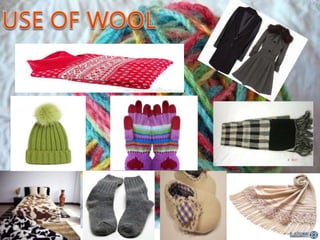
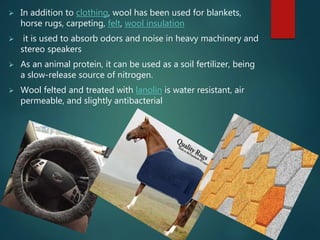
 In addition to clothing, wool has been used for blankets,
horse rugs, carpeting, felt, wool insulation
 it is used to absorb odors and noise in heavy machinery and
stereo speakers
 As an animal protein, it can be used as a soil fertilizer, being
a slow-release source of nitrogen.
 Wool felted and treated with lanolin is water resistant, air
permeable, and slightly antibacterial
•Wool is comparatively stronger than steel.
•Wool is fire resistant
•Wool can absorb up to 30% of its weight in
moisture
Efforts by
Rana Ali Haider
Saqib Aftab

Woolen Garments

  • 1.
  • 3.
    What is wool Itssources Its types Rearing processing Weaving and End Product
  • 4.
    Wool is thetextile fiber obtained from sheep and certain other animals, including cashmere from goats, mohair f rom goats angora from rabbits
  • 5.
    Sources of WOOL •Wool comes from sheep, goat, yak, camel and some other animals. These wool- yielding animals bear hair on their body.
  • 7.
    Wool name AnimalRegion Characteristics Length Cross- section uses Mohair Angora goat India U.S.A., South Africa, Turkey Long length, softness, Springy nature, excellent luster, very little ability to felt 4-10 inches 25-55µ vast variety of textiles Cashmere Tibetan goat India Tibet Downy handle, fluffy nature, brown or grayish white colour 1.5 – 3 inches 15 µ shawls Alpaca Peruvian goat or llama India Peru, Bolivia Brown, gray or black in colour 10 inch 10– 35 µ lining or men’s wear
  • 8.
    Production of Wool Australia: 25%  China: 18%  New Zealand: 11%  Argentina: 3%  Turkey: 2%  Iran: 2%  United Kingdom: 2%  India: 2%  Sudan: 2%  South Africa: 1%  United States: 0.77%
  • 9.
    REARING  Rearing means tolook after the sheep by providing shelter ,food and health care.  The person who look after the sheep is called a Shepherd.
  • 11.
    The fleece ofsheep along with a thin layer of skin is peeled from the body using large razor or with electrically-driven shearing machine
  • 12.
     A Sheepis Sheared once a Year  Shearing is done by hand or Mechanically  The fleece recovered from a sheep can weigh between 6 and 18 pounds (2.7 and 8.1 kilograms)
  • 13.
    Grading and Sorting In sorting, the wool is broken up into sections of different quality fibers, from different parts of the body  The best quality of wool comes from the shoulders and sides of the sheep and is used for clothing  Lesser quality comes from the lower legs and is used to make rugs/carpets
  • 14.
    Wool scouring isthe process of washing wool in hot water and detergent to remove the non-wool contaminants
  • 15.
     “Grease wool"contains sand, dirt, grease, and dried sweat  Weight of contaminants accounts for about 30 to 70 percent of total Fleece  The wool is scoured in a series of alkaline baths containing water, soap, and soda ash or a similar acids.  The byproducts from this process (such as (lanolin) are saved and used in a variety of household products  Rollers in the scouring machines squeeze excess water from the fleece
  • 16.
    Carding  The fibersare passed through a series of metal teeth that straighten and blend them into slivers  Carding also removes residual dirt and other matter left in the fibers  Carded wool intended for worsted yarn is put through Gilling and combing, Two procedures that remove short fibers and place the longer fibers parallel to each other  Carded wool to be used for woolen yarn is sent directly for spinning.
  • 17.
    Combing is straightening and stretching thefibers to obtain maximum spinning capacity.
  • 18.
    spinning is aprocess of making or converting fiber materials into yarns
  • 19.
    Dyeing is theprocess of adding color to textile products like fibers, yarns, and fabrics
  • 20.
    Woolen and WorstedYarn  woollen is a type of yarn directly made from carded wool. Woolen yarn is soft, light, stretchy, and full of air  Worsted is a fine yarn made after Gilling and Combing and considered as high quality yarn
  • 21.
    Differences Woolen Yarn WorsredYarn Spun from short wool fibers (1-3 inches long) Spun from long wool fibers (more than 3") Fibers are washed, scoured and carded Fibers are washed, scoured, carded, combed and drawn Low twist Tighter twist Bulky, uneven yarn Fine, smooth yarn Heavier weight Lighter weight Does not hold crease well Holds crease well
  • 23.
     In additionto clothing, wool has been used for blankets, horse rugs, carpeting, felt, wool insulation  it is used to absorb odors and noise in heavy machinery and stereo speakers  As an animal protein, it can be used as a soil fertilizer, being a slow-release source of nitrogen.  Wool felted and treated with lanolin is water resistant, air permeable, and slightly antibacterial
  • 24.
    •Wool is comparativelystronger than steel. •Wool is fire resistant •Wool can absorb up to 30% of its weight in moisture
  • 26.
    Efforts by Rana AliHaider Saqib Aftab