DYEING
The application and fixing of a 
dye to a substrate, normally with 
the intention of obtaining an 
even distribution through out the 
substrate.
There are three types of dyeing : 
1. Fibre dyeing. 
2. Yarn dyeing. 
3. Fabric dyeing: 
a) Woven dyeing. 
b) Knit dyeing.
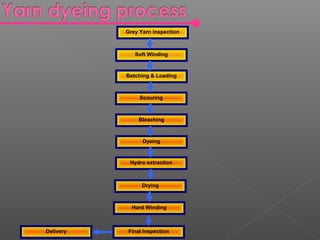
Grey Yarn inspection 
Soft Winding 
Batching & Loading 
Scouring 
Bleaching 
Dyeing 
Hydro extraction 
Drying 
Hard Winding 
Delivery Final Inspection
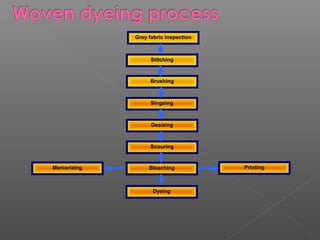
Grey fabric inspection 
Stitching 
Brushing 
Desizing 
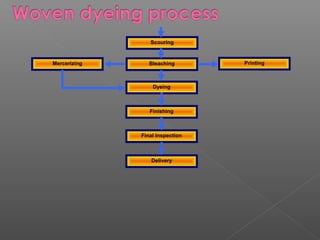
Scouring 
Bleaching Printing 
Mercerizing 
Singeing 
Dyeing
Scouring 
Mercerizing Bleaching Printing 
Dyeing 
Finishing 
Final inspection 
Delivery
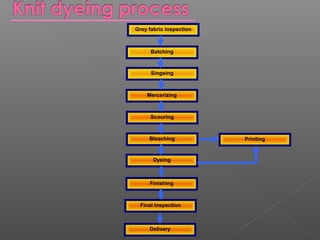
Batching 
Mercerizing 
Scouring 
Bleaching 
Dyeing 
Printing 
Grey fabric inspection 
Singeing 
Finishing 
Final Inspection 
Delivery
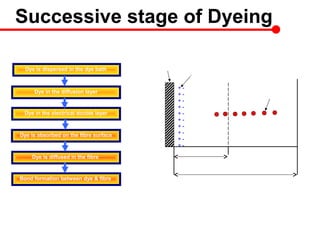
Successive stage of Dyeing 
Dye is dispersed in the dye bath 
Dye in the diffusion layer 
Dye in the electrical double layer 
Dye is absorbed on the fibre surface 
Dye is diffused in the fibre 
Bond formation between dye & fibre 
+ - 
+ - 
+ - 
+ - 
+ - 
+ - 
+ - 
+ - 
+ - 
+ - 
A 
B 
Diffusion layer 
Electrical 
double 
layer 
Diffusion layer thickne 
ss 
Distance of fibre surface from AB 
Fibre 
Dye molecule
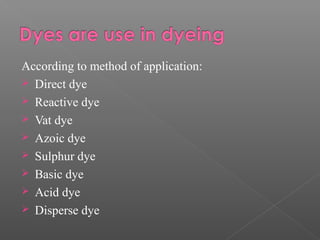
According to method of application: 
 Direct dye 
 Reactive dye 
 Vat dye 
 Azoic dye 
 Sulphur dye 
 Basic dye 
 Acid dye 
 Disperse dye
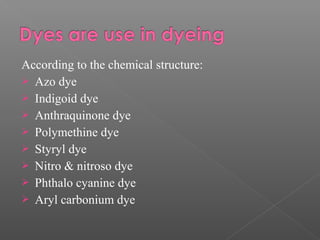
According to the chemical structure: 
 Azo dye 
 Indigoid dye 
 Anthraquinone dye 
 Polymethine dye 
 Styryl dye 
 Nitro & nitroso dye 
 Phthalo cyanine dye 
 Aryl carbonium dye
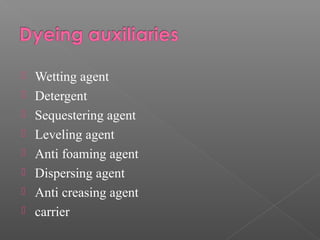
 Wetting agent 
 Detergent 
 Sequestering agent 
 Leveling agent 
 Anti foaming agent 
 Dispersing agent 
 Anti creasing agent 
 carrier
Two types of dye application techniques exist: 
1) Direct application of dye liquor by spraying, 
foam application, or printing. 
2) Continuous immersion of the fabric in a dye 
bath and removal of the excess of liquor by 
squeezing or suction (padding).
1.Continuous dyeing processes 
 Pad dry process 
 Pad steam process 
2.Semi continuous processes 
 Pad-batch process 
 Pad jig process 
3.Discontinous process: 
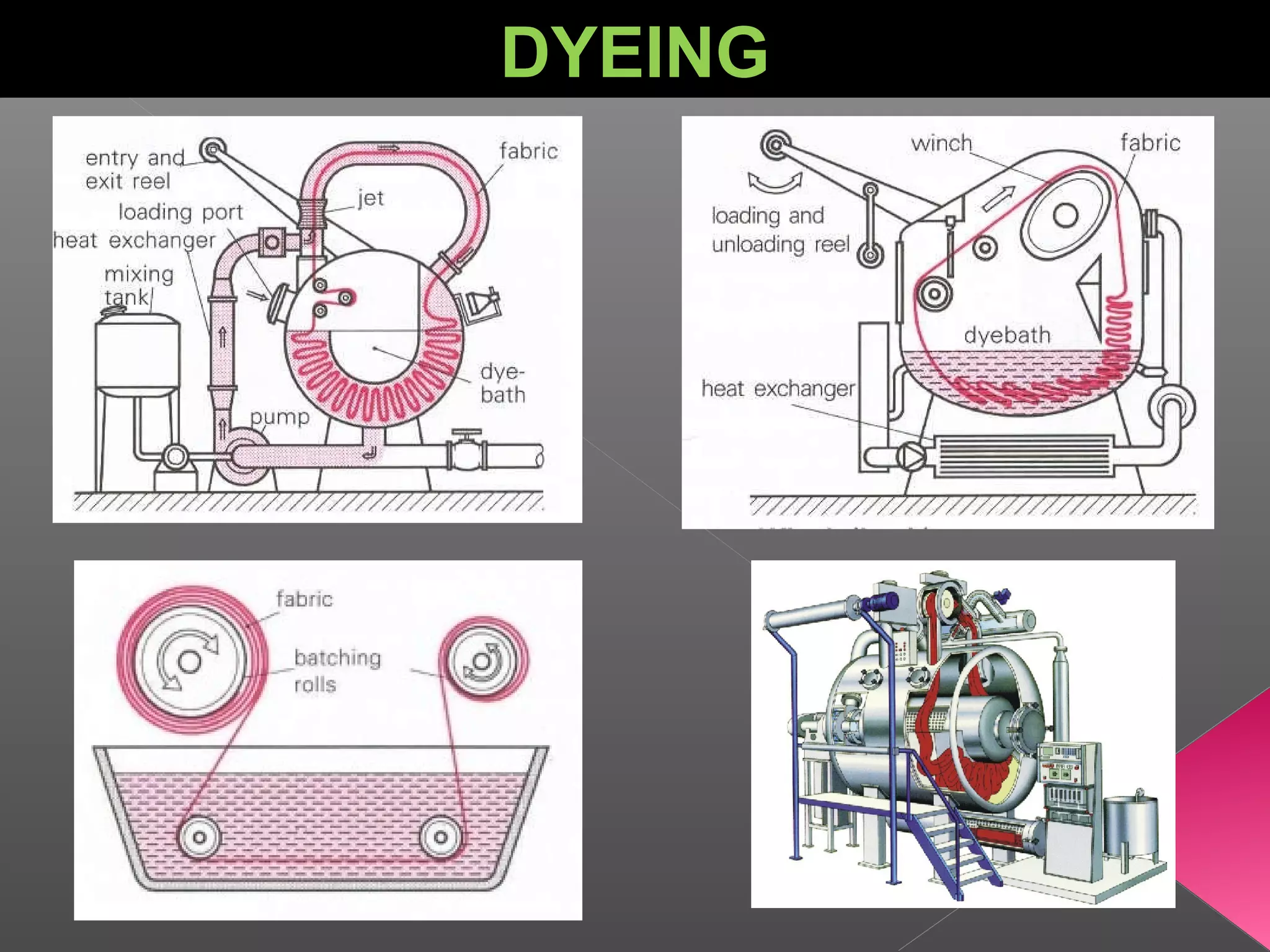
 Winch 
 Jet 
 Jigger 
4.Pad Dyeing Processes: 
 Pad roll process
The goal of every dyeing is a colored textile in the 
desired shade, homogeneous in hue and depth of 
shade, produced by an economic process and 
which exhibits satisfactory fastness properties in 
the finished state.
Basically there are three methods of dyeing 
textiles: 
1) Mass dyeing: dyeing of a synthetic polymer 
before fiber formation. 
2) Pigment dyeing: affixing an insoluble colorant 
on the fiber surface with a binder. 
3) Exhaustion dyeing from an aqueous bath with 
dyes that have an affinity for the fiber.
 The liquor ratio influences the dye solubility and 
the strength of the electrolyte effect. Lower liquor 
ratios are employed whenever possible, for 
ecological, economic, and technical reasons. 
 The electrolyte (i.e., sodium chloride or sodium 
sulfate), its concentration, and the speed of 
addition control the adsorptive behavior of the 
dyes and the degree of exhaustion. A high 
electrolyte content of the dye bath shifts the 
dyeing equilibrium toward the fiber.
 The pH value influences solubility, 
substantively of the dyes, and their stability 
in the dye bath. Lower pH values improve 
exhaustion; however, leveling proceeds 
preferably at higher pH values. 
 Temperature generally determines the 
position of the dyeing equilibrium, which at 
room temperature is shifted strongly 
toward adsorption on the fiber.
Colored textiles are produced today on a 
large industrial scale. Although modern 
automation techniques have been 
introduced for color measurement, 
metering of dyes and auxiliaries, and 
automatic control of the dyeing process.
We would like to express many thanks to our 
honorable teacher Prof. Dr. Zulhash Uddin 
giving us a very good opportunity for 
presenting ourselves. We also thanks our 
parents who encouraged us every step of our 
life. Lastly thanks all of you who are give 
kind attention for this presentation 
ceremony .
basics of dyeing

basics of dyeing

  • 1.
  • 2.
    The application andfixing of a dye to a substrate, normally with the intention of obtaining an even distribution through out the substrate.
  • 3.
    There are threetypes of dyeing : 1. Fibre dyeing. 2. Yarn dyeing. 3. Fabric dyeing: a) Woven dyeing. b) Knit dyeing.
  • 4.
    Grey Yarn inspection Soft Winding Batching & Loading Scouring Bleaching Dyeing Hydro extraction Drying Hard Winding Delivery Final Inspection
  • 5.
    Grey fabric inspection Stitching Brushing Desizing Scouring Bleaching Printing Mercerizing Singeing Dyeing
  • 6.
    Scouring Mercerizing BleachingPrinting Dyeing Finishing Final inspection Delivery
  • 7.
    Batching Mercerizing Scouring Bleaching Dyeing Printing Grey fabric inspection Singeing Finishing Final Inspection Delivery
  • 8.
    Successive stage ofDyeing Dye is dispersed in the dye bath Dye in the diffusion layer Dye in the electrical double layer Dye is absorbed on the fibre surface Dye is diffused in the fibre Bond formation between dye & fibre + - + - + - + - + - + - + - + - + - + - A B Diffusion layer Electrical double layer Diffusion layer thickne ss Distance of fibre surface from AB Fibre Dye molecule
  • 9.
    According to methodof application:  Direct dye  Reactive dye  Vat dye  Azoic dye  Sulphur dye  Basic dye  Acid dye  Disperse dye
  • 10.
    According to thechemical structure:  Azo dye  Indigoid dye  Anthraquinone dye  Polymethine dye  Styryl dye  Nitro & nitroso dye  Phthalo cyanine dye  Aryl carbonium dye
  • 11.
     Wetting agent  Detergent  Sequestering agent  Leveling agent  Anti foaming agent  Dispersing agent  Anti creasing agent  carrier
  • 12.
    Two types ofdye application techniques exist: 1) Direct application of dye liquor by spraying, foam application, or printing. 2) Continuous immersion of the fabric in a dye bath and removal of the excess of liquor by squeezing or suction (padding).
  • 13.
    1.Continuous dyeing processes  Pad dry process  Pad steam process 2.Semi continuous processes  Pad-batch process  Pad jig process 3.Discontinous process:  Winch  Jet  Jigger 4.Pad Dyeing Processes:  Pad roll process
  • 14.
    The goal ofevery dyeing is a colored textile in the desired shade, homogeneous in hue and depth of shade, produced by an economic process and which exhibits satisfactory fastness properties in the finished state.
  • 15.
    Basically there arethree methods of dyeing textiles: 1) Mass dyeing: dyeing of a synthetic polymer before fiber formation. 2) Pigment dyeing: affixing an insoluble colorant on the fiber surface with a binder. 3) Exhaustion dyeing from an aqueous bath with dyes that have an affinity for the fiber.
  • 16.
     The liquorratio influences the dye solubility and the strength of the electrolyte effect. Lower liquor ratios are employed whenever possible, for ecological, economic, and technical reasons.  The electrolyte (i.e., sodium chloride or sodium sulfate), its concentration, and the speed of addition control the adsorptive behavior of the dyes and the degree of exhaustion. A high electrolyte content of the dye bath shifts the dyeing equilibrium toward the fiber.
  • 17.
     The pHvalue influences solubility, substantively of the dyes, and their stability in the dye bath. Lower pH values improve exhaustion; however, leveling proceeds preferably at higher pH values.  Temperature generally determines the position of the dyeing equilibrium, which at room temperature is shifted strongly toward adsorption on the fiber.
  • 18.
    Colored textiles areproduced today on a large industrial scale. Although modern automation techniques have been introduced for color measurement, metering of dyes and auxiliaries, and automatic control of the dyeing process.
  • 19.
    We would liketo express many thanks to our honorable teacher Prof. Dr. Zulhash Uddin giving us a very good opportunity for presenting ourselves. We also thanks our parents who encouraged us every step of our life. Lastly thanks all of you who are give kind attention for this presentation ceremony .