PRE OPERATION PREPARATION
Facilitator- Dr Mahipendra Tiwari
Prepared By- Dr Lalit K Shah
Resident General Surgery
INTRODUCTION
• Pre operative preparation is the preparation of a patient
requiring surgery to optimise postopeartive outcomes
• The preparation begins from the time of contact of the
patient with the surgeon and ends on the day of surgery in
the preoperative room
PREOPEARTIVE PLAN
• Gather and record all relevant information
• Optimise patient condition
• Choose surgery that offers minimal risk and maximum
benefit
• Anticipate and plan for adverse events
• Inform everyone concerned
PATIENT ASSESSMENT
• History Taking
• Examination
• Investigations
• Preoperative management of systemic diseases
• Preoperative assessment in emergency surgery
• Risk assessment and consent
Principles of history taking
• Listen: What is the problem?(open questions)
• Clarify: What does the patient expect?(closed questions)
• Narrow: Differential diagnosis(Focused questions)
• Fitness: Co-morbidities(Fixed questions)
History Taking
• A standard history should be taken firstly open questions
then on specific questions aimed at clarifying the
diagnosis and severity of symptoms(closed question)
• A set of fixed questions are needed to determine fitness
for surgery
• Surgery specific symptoms (including features not
present), onset, duration and exacerbating and relieving
factors should also be documented
• Cardiovascular history: chest pains, palpitations, syncope,
dyspnoea and poor exercise tolerance
• Respiratory history: History of smoking, productive cough,
wheeze, dyspnoea, hoarseness of voice or stridor.
Increasing severity of symptoms generally indicates
worsening of symptoms
• Neurological History: Epilepsy, cerebrovascular accidents
and TIA, psychiatric disorder
• Past History:
Past medical history(e.g MI, HTN, Heart failure, COPD,
DM, Thyroid disoredr, UTI, etc)
Previous surgery and problem encountered can reveal
problems that may present during current hospitalisation
Problem with anasthesia
• Drug and Allergy History:
The use of recreational drugs and alcohol consumption
should be noted as they are known to be associated with
adverse outcomes
Patient under drug for any medical condition, any known
drug allergies
• Family History:
History of similiar illness in family
History of any significant medical history in family
• Socio-economic history:
EXAMINATION
• General: Positive findings even if not related to the
proposed procedure should be explored further
• Surgery related: Type and site of surgery, complications
occurred due to underlying pathology
• Systemic: Comorbidities and extent of limitation of each
organ function
EXAMINATION
• General: Anaemia, jaundice, cyanosis, nutritional
status, sources of infection (teeth, feet, leg ulcers)
• Cardiovascular Pulse, blood pressure, heart sounds,
bruits, peripheral oedema
• Respiratory Respiratory rate and effort, chest expansion
and percussion note, breath sounds, oxygen saturation
EXAMINATION
• Gastrointestinal Abdominal masses, ascites, bowel
sounds, hernia, genitalia
• Neurological Consciousness level, cognitive function,
sensation, muscle power, tone and reflexes
• Airway assessment
EXAMINATION
• Examination specific to surgery:
The clinical findings, site, side, specific imaging or
investigation findings related to the pathology for which
the surgery is proposed should be noted
Sources of potential bacteraemia can compromise
surgical results especially if artificial material is implanted
Check and treat infections in the preoperative period
Surgery puts the patient’s life ‘at risk’ and so the benefit of
the procedure should outweigh the risk of surgery
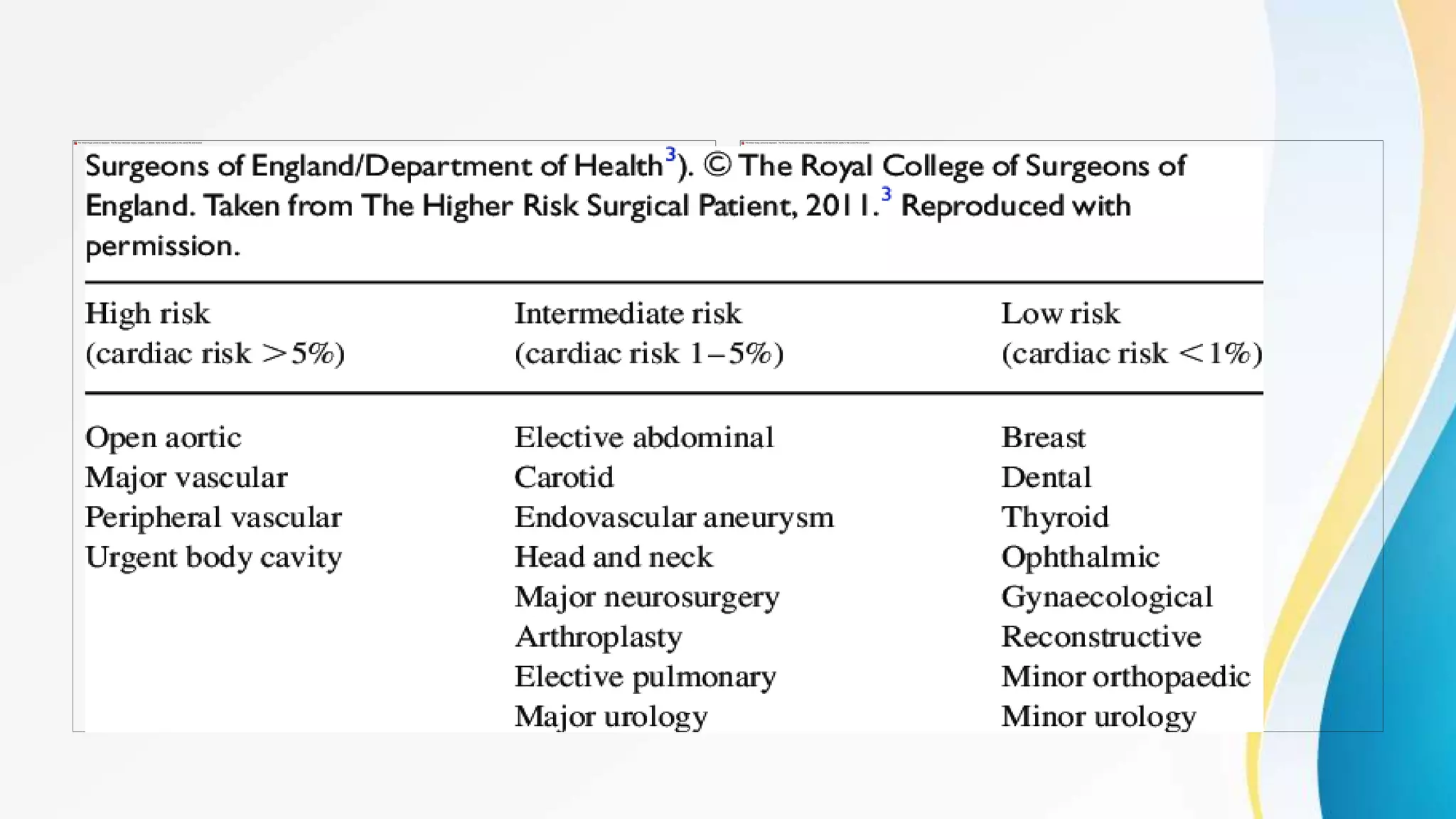
Type of surgery along with patient comorbidities
determine perioperative risks(for e.g perioperative
mortality in major surgery such that of aortic aneurysm
repair is 4-5% in UK)
INVESTIGATIONS
• Full blood count
• RFT
• ECG
• Chest radiography
• Clotting screen
• Urinalysis
• Blood Glucose/HbA1c
• Others
LFT
B-HCG
Relevant investigations to assess capacity of specific
organ system and risk associated
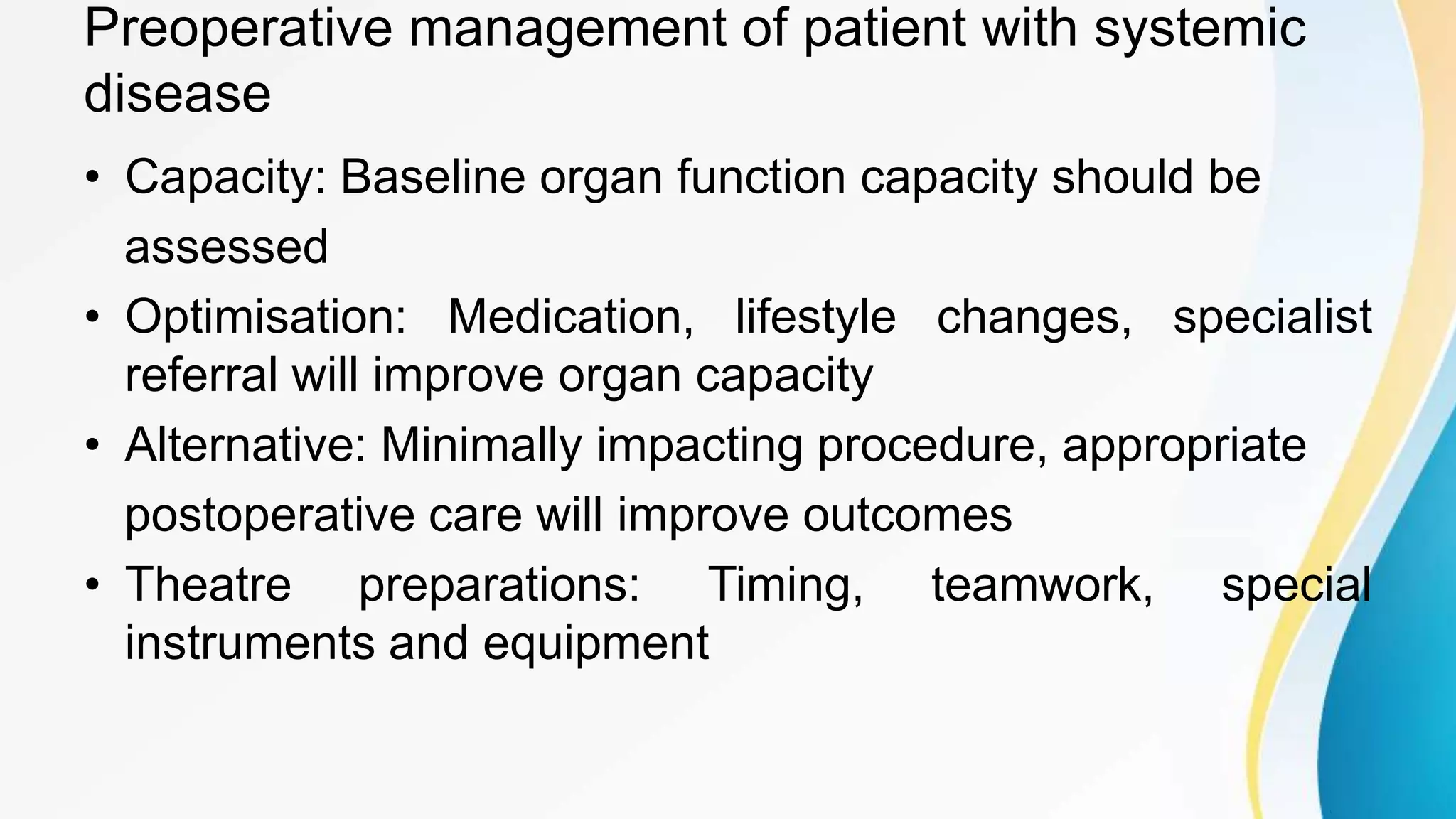
Preoperative management of patient with systemic
disease
• Capacity: Baseline organ function capacity should be
assessed
• Optimisation: Medication, lifestyle changes, specialist
referral will improve organ capacity
• Alternative: Minimally impacting procedure, appropriate
postoperative care will improve outcomes
• Theatre preparations: Timing, teamwork, special
instruments and equipment
Cardiovascular Disease
• At preoperative assessment it is important to identify the
patients who have a high perioperative risk of major
adverse cardiovascular events (MACE) including
myocardial infarction (MI), and make appropriate
arrangements to reduce this risk.
• Patients at high risk are those with ischaemic heart
disease (IHD), congestive cardiac failure (CCF),
arrhythmias, severe peripheral vascular disease,
cerebrovascular disease or significant renal impairment,
especially if they are undergoing major intra-abdominal or
intra-thoracic
• The patient should be referred to a cardiologist if:
A murmur is heard and the patient is symptomatic
The patient is known to have poor left ventricular function
or cardiomegaly.
Ischaemic changes can be seen on ECG even if the
patient is not symptomatic (silent ischaemia, silent MIs
are frequent).
There is an abnormal rhythm on the ECG, for example
tachy-/bradycardia or heart block
Respiratory Disease
• Postoperative respiratory complications, such as
pneumonia, are a major cause of morbidity and mortality
especially after major abdominal and thoracic surgery
• A patient’s current respiratory status should be compared
with their ‘normal state’
• A preoperative chest radiograph or scan is useful
• Make a note of the severity of the asthma and COPD,
such as past hospital admissions for treatment of the
condition, records of pulmonary function tests, use of oral
steroids,home oxygen, non-invasive ventilation support
and evidence of right heart failure
• The patient should be referred to a respiratory physician
if:
There is a severe disease or significant deterioration.
Major surgery is planned in a patient with significant
respiratory comorbidities.
Right heart failure is present – dyspnoea, fatigue,
tricuspid regurgitation, hepatomegaly and oedematous
feet.
The patient is young and has severe respiratory problems
(indicates a rare condition)
Gastrointestinal Disease
• Patients are advised not to take solids within 6 hours and
clear fluids within 2 hours before anaesthesia to avoid the
risk of acid aspiration syndrome
• In patients with liver disease, the cause of the disease
needs to be known, as well as any evidence of clotting
problems, renal involvement and encephalopathy.
• Elective surgery should be postponed until any acute
episode has settled (e.g. cholangitis)
• Patients with hiatus hernia, obesity, pregnancy and
diabetes are at high risk of pulmonary aspiration, even if
they have been NBM before elective surgery. Clear
antacids, H2-receptor blockers, e.g. ranitidine, or proton
pump inhibitors, e.g. omeprazole, may be given at an
appropriate time in the preoperative period.
Genitourinary Disease
• Underlying conditions leading to chronic renal failure,
such as DM, HTN and ischaemic heart disease, should be
stabilised before elective surgery
• UTI should be treated before embarking on elective
surgery
• For emegency procedures, antibiotics should be started
and care taken to ensure that pt maintains good urine
output before, during and after surgery
Endocrine Disorders
• Diabetes and associated cardiovascular and renal
complications should be controlled to as near normal level
as possible before elective surgery
• HbA1c should be checked
• Patients with DM should be first on the operating list and if
they are operated on in the morning advised to omit the
morning dose of medication and breakfast
Coagulation Disorders
• Patients with a strong family history or previous history of
thrombosis should be identified
• Pateints with a low risk of thromboembolism can be given
thromboembolism-deterrent stockings
• High risk patients with a history of recurrent DVT,
pulmonary embolism and arterial thrombosis will be on
warfarin
• Warfarin should be stopped before surgery and replaced
by low molecular weight heparin or factor Xa inhibitors
Pre anesthetic evaluation
• Airway evaluation
1. Appearance(beard,size of neck,fat on face)
2. Atlanto-occipital joint movement
3. Neck joint movement
4. Mouth opening
5. Mentohyoid/mentothyroid distance
6. Mallahampati Grading
• Pre anesthetic order
1. written informed consent
2. Pre-op medication
3. NPO
4. orders regarding previous medication
• Orders regarding previous medication
1. oral anti-hypertensive drugs- continue till the day of
surgery
2. oral hypoglycemic drugs
-minor/intermediate surgery: stop 24 hours prior
-major surgery: stop 24 hours prior and put patient on
insulin
3. Anti-psychotic/depressant/epileptic
-cotinue till day of surgery except TCA stop 21 days prior
and lithium stop 24-28 days prior
4. Throid medication cotinue till day of surgery
5. Anti coagulants
-Aspirin: continue till day of surgery
-clopidegrol: stop 7 days prior
-ticlopidine: stop 14 days prior
-warfarin: stop 3-4 days prior
-LMWH: stop 12-24 hour prior
-unfractioned heparin: stop 6 hour prior
Preoperative assessment in emergency surgery
• Assessment should be the same as in elective surgery,
except that the opportunity to optimise the condition is
limited by time constraints.
• Medical assessment and treatments should be started
(e.g. as per Advanced Trauma Life Support guidelines)
even if there is no time to complete them before the start
of the surgical procedure.
• Some risks may be reduced but some may persist and,
whenever possible, these need to be explained to the
patient.
Start: Similar principles to that for elective surgery
Constraints: Time, facilities available
Consent: May not be possible in life-saving emergencies
Organisational efforts: For example, local/national
algorithms for treatment of the patient with multiple
injuries
Risk assessment and consent
• Risks: related to comorbidities, anesthesia and surgery
• Explain: advantages, side effects, prognosis
• Language: simple, use daily life comparisons to explain
risks
• Consents: valid consent is necessary except in life-saving
circumstances
A practical approach to the care for the high-risk
patient
Identify the high-risk patient
Assess the level of risk
Detailed preoperative assessment
Adequate resusciatation
Optimise medical management
Investigation to define the underlying surgical problem
Immediate and definitive treatment of underlying problems
Consider admission to a critical care facility
postoperatively
Arranging Theatre List
• The date, place and time of operation should be matched
with availability of personnel
• Appropriate equipment and instruments should be made
available
• The operating list should be distributed as early as
possible to all staff who are involved in making the list run
smoothly
American society of Anaesthesiologists system
Consent
• Consent should be both voluntary and informed
• The guidance outlines the key principles of consent and
how the discussion should:
give the patient the information required to make a
decision;
be tailored to the individual patient;
explain all reasonable treatment options;
discuss all material risks.
• Furthermore, the guide explains that consent:
should be written and recorded on a form;
the key points of the discussion should be recorded in the
case notes
• Consent should be voluntary and informed
• Supported decision-making is considered good practice
• Explain all treatment options and material risks
• Capacity is needed for a patient to give their consent
Skin preparation
• Preopeartive skin preparation reduces the number of
transient and commensal microorganisms
• Common solutions include povidone-iodine scrub
(betadine), chlorhexidine alcohol scrub, isoprpyl alcohol
• A multi-institutional randomized comparison of
chlorhexidine alcohol versus povidone-iodine scrub and
paint for clean-contam_x0002_inated surgeries found a
lower rate of SSI in the chlorhexidine-alcohol group (9.5%
versus 16.1%).
• Hair removal prior to incision can improve exposure and
allow skin marking
• Hair should not be removed at the operative site unless
the presence of hair will interfere with the operation.
• Do not use razors. If hair removal is necessary, remove
hair outside the operating room using clippers
Elimination
• Ezivac enema
• Peglec (before major G.I
suregry)
• Urinary voiding before
surgery
• Preparing the person on the day of surgery
Tell the patient to remove jewelry, makeup, hairpins,
nailpolish
perform mouth care
ask the patient void
put on surgicl gown and cap
Antibiotic prophylaxis
• Timing:
Historic data from early 1990, lowest rate of surgical
wound infection was associated with antibiotic
administration within 2 hours prior to incision, compared
to earlier or postoperative administration.
Recent trial shows the lowest infection risk when antibiotic
were administered within 30 minutes of incision or
between 31 and 60 minutes before incision
References
• Sabiston Textbook Of Surgery 21st edition
• Bailey & Love 26th edition
• Pubmed
PRE OPERATION PREPARATION

PRE OPERATION PREPARATION

  • 1.
    PRE OPERATION PREPARATION Facilitator-Dr Mahipendra Tiwari Prepared By- Dr Lalit K Shah Resident General Surgery
  • 2.
    INTRODUCTION • Pre operativepreparation is the preparation of a patient requiring surgery to optimise postopeartive outcomes • The preparation begins from the time of contact of the patient with the surgeon and ends on the day of surgery in the preoperative room
  • 3.
    PREOPEARTIVE PLAN • Gatherand record all relevant information • Optimise patient condition • Choose surgery that offers minimal risk and maximum benefit • Anticipate and plan for adverse events • Inform everyone concerned
  • 4.
    PATIENT ASSESSMENT • HistoryTaking • Examination • Investigations • Preoperative management of systemic diseases • Preoperative assessment in emergency surgery • Risk assessment and consent
  • 5.
    Principles of historytaking • Listen: What is the problem?(open questions) • Clarify: What does the patient expect?(closed questions) • Narrow: Differential diagnosis(Focused questions) • Fitness: Co-morbidities(Fixed questions)
  • 6.
    History Taking • Astandard history should be taken firstly open questions then on specific questions aimed at clarifying the diagnosis and severity of symptoms(closed question) • A set of fixed questions are needed to determine fitness for surgery • Surgery specific symptoms (including features not present), onset, duration and exacerbating and relieving factors should also be documented
  • 7.
    • Cardiovascular history:chest pains, palpitations, syncope, dyspnoea and poor exercise tolerance • Respiratory history: History of smoking, productive cough, wheeze, dyspnoea, hoarseness of voice or stridor. Increasing severity of symptoms generally indicates worsening of symptoms
  • 8.
    • Neurological History:Epilepsy, cerebrovascular accidents and TIA, psychiatric disorder • Past History: Past medical history(e.g MI, HTN, Heart failure, COPD, DM, Thyroid disoredr, UTI, etc) Previous surgery and problem encountered can reveal problems that may present during current hospitalisation Problem with anasthesia
  • 9.
    • Drug andAllergy History: The use of recreational drugs and alcohol consumption should be noted as they are known to be associated with adverse outcomes Patient under drug for any medical condition, any known drug allergies
  • 10.
    • Family History: Historyof similiar illness in family History of any significant medical history in family • Socio-economic history:
  • 11.
    EXAMINATION • General: Positivefindings even if not related to the proposed procedure should be explored further • Surgery related: Type and site of surgery, complications occurred due to underlying pathology • Systemic: Comorbidities and extent of limitation of each organ function
  • 12.
    EXAMINATION • General: Anaemia,jaundice, cyanosis, nutritional status, sources of infection (teeth, feet, leg ulcers) • Cardiovascular Pulse, blood pressure, heart sounds, bruits, peripheral oedema • Respiratory Respiratory rate and effort, chest expansion and percussion note, breath sounds, oxygen saturation
  • 13.
    EXAMINATION • Gastrointestinal Abdominalmasses, ascites, bowel sounds, hernia, genitalia • Neurological Consciousness level, cognitive function, sensation, muscle power, tone and reflexes • Airway assessment
  • 14.
    EXAMINATION • Examination specificto surgery: The clinical findings, site, side, specific imaging or investigation findings related to the pathology for which the surgery is proposed should be noted Sources of potential bacteraemia can compromise surgical results especially if artificial material is implanted
  • 15.
    Check and treatinfections in the preoperative period Surgery puts the patient’s life ‘at risk’ and so the benefit of the procedure should outweigh the risk of surgery Type of surgery along with patient comorbidities determine perioperative risks(for e.g perioperative mortality in major surgery such that of aortic aneurysm repair is 4-5% in UK)
  • 16.
    INVESTIGATIONS • Full bloodcount • RFT • ECG • Chest radiography • Clotting screen • Urinalysis
  • 17.
    • Blood Glucose/HbA1c •Others LFT B-HCG Relevant investigations to assess capacity of specific organ system and risk associated
  • 18.
    Preoperative management ofpatient with systemic disease • Capacity: Baseline organ function capacity should be assessed • Optimisation: Medication, lifestyle changes, specialist referral will improve organ capacity • Alternative: Minimally impacting procedure, appropriate postoperative care will improve outcomes • Theatre preparations: Timing, teamwork, special instruments and equipment
  • 19.
    Cardiovascular Disease • Atpreoperative assessment it is important to identify the patients who have a high perioperative risk of major adverse cardiovascular events (MACE) including myocardial infarction (MI), and make appropriate arrangements to reduce this risk.
  • 20.
    • Patients athigh risk are those with ischaemic heart disease (IHD), congestive cardiac failure (CCF), arrhythmias, severe peripheral vascular disease, cerebrovascular disease or significant renal impairment, especially if they are undergoing major intra-abdominal or intra-thoracic
  • 21.
    • The patientshould be referred to a cardiologist if: A murmur is heard and the patient is symptomatic The patient is known to have poor left ventricular function or cardiomegaly. Ischaemic changes can be seen on ECG even if the patient is not symptomatic (silent ischaemia, silent MIs are frequent). There is an abnormal rhythm on the ECG, for example tachy-/bradycardia or heart block
  • 22.
    Respiratory Disease • Postoperativerespiratory complications, such as pneumonia, are a major cause of morbidity and mortality especially after major abdominal and thoracic surgery • A patient’s current respiratory status should be compared with their ‘normal state’ • A preoperative chest radiograph or scan is useful
  • 23.
    • Make anote of the severity of the asthma and COPD, such as past hospital admissions for treatment of the condition, records of pulmonary function tests, use of oral steroids,home oxygen, non-invasive ventilation support and evidence of right heart failure
  • 24.
    • The patientshould be referred to a respiratory physician if: There is a severe disease or significant deterioration. Major surgery is planned in a patient with significant respiratory comorbidities. Right heart failure is present – dyspnoea, fatigue, tricuspid regurgitation, hepatomegaly and oedematous feet. The patient is young and has severe respiratory problems (indicates a rare condition)
  • 25.
    Gastrointestinal Disease • Patientsare advised not to take solids within 6 hours and clear fluids within 2 hours before anaesthesia to avoid the risk of acid aspiration syndrome • In patients with liver disease, the cause of the disease needs to be known, as well as any evidence of clotting problems, renal involvement and encephalopathy. • Elective surgery should be postponed until any acute episode has settled (e.g. cholangitis)
  • 26.
    • Patients withhiatus hernia, obesity, pregnancy and diabetes are at high risk of pulmonary aspiration, even if they have been NBM before elective surgery. Clear antacids, H2-receptor blockers, e.g. ranitidine, or proton pump inhibitors, e.g. omeprazole, may be given at an appropriate time in the preoperative period.
  • 27.
    Genitourinary Disease • Underlyingconditions leading to chronic renal failure, such as DM, HTN and ischaemic heart disease, should be stabilised before elective surgery • UTI should be treated before embarking on elective surgery • For emegency procedures, antibiotics should be started and care taken to ensure that pt maintains good urine output before, during and after surgery
  • 28.
    Endocrine Disorders • Diabetesand associated cardiovascular and renal complications should be controlled to as near normal level as possible before elective surgery • HbA1c should be checked • Patients with DM should be first on the operating list and if they are operated on in the morning advised to omit the morning dose of medication and breakfast
  • 29.
    Coagulation Disorders • Patientswith a strong family history or previous history of thrombosis should be identified • Pateints with a low risk of thromboembolism can be given thromboembolism-deterrent stockings • High risk patients with a history of recurrent DVT, pulmonary embolism and arterial thrombosis will be on warfarin
  • 30.
    • Warfarin shouldbe stopped before surgery and replaced by low molecular weight heparin or factor Xa inhibitors
  • 31.
    Pre anesthetic evaluation •Airway evaluation 1. Appearance(beard,size of neck,fat on face) 2. Atlanto-occipital joint movement 3. Neck joint movement 4. Mouth opening 5. Mentohyoid/mentothyroid distance 6. Mallahampati Grading
  • 33.
    • Pre anestheticorder 1. written informed consent 2. Pre-op medication 3. NPO 4. orders regarding previous medication
  • 35.
    • Orders regardingprevious medication 1. oral anti-hypertensive drugs- continue till the day of surgery 2. oral hypoglycemic drugs -minor/intermediate surgery: stop 24 hours prior -major surgery: stop 24 hours prior and put patient on insulin
  • 36.
    3. Anti-psychotic/depressant/epileptic -cotinue tillday of surgery except TCA stop 21 days prior and lithium stop 24-28 days prior 4. Throid medication cotinue till day of surgery
  • 37.
    5. Anti coagulants -Aspirin:continue till day of surgery -clopidegrol: stop 7 days prior -ticlopidine: stop 14 days prior -warfarin: stop 3-4 days prior -LMWH: stop 12-24 hour prior -unfractioned heparin: stop 6 hour prior
  • 38.
    Preoperative assessment inemergency surgery • Assessment should be the same as in elective surgery, except that the opportunity to optimise the condition is limited by time constraints. • Medical assessment and treatments should be started (e.g. as per Advanced Trauma Life Support guidelines) even if there is no time to complete them before the start of the surgical procedure. • Some risks may be reduced but some may persist and, whenever possible, these need to be explained to the patient.
  • 39.
    Start: Similar principlesto that for elective surgery Constraints: Time, facilities available Consent: May not be possible in life-saving emergencies Organisational efforts: For example, local/national algorithms for treatment of the patient with multiple injuries
  • 40.
    Risk assessment andconsent • Risks: related to comorbidities, anesthesia and surgery • Explain: advantages, side effects, prognosis • Language: simple, use daily life comparisons to explain risks • Consents: valid consent is necessary except in life-saving circumstances
  • 42.
    A practical approachto the care for the high-risk patient Identify the high-risk patient Assess the level of risk Detailed preoperative assessment Adequate resusciatation
  • 43.
    Optimise medical management Investigationto define the underlying surgical problem Immediate and definitive treatment of underlying problems Consider admission to a critical care facility postoperatively
  • 44.
    Arranging Theatre List •The date, place and time of operation should be matched with availability of personnel • Appropriate equipment and instruments should be made available • The operating list should be distributed as early as possible to all staff who are involved in making the list run smoothly
  • 45.
    American society ofAnaesthesiologists system
  • 46.
    Consent • Consent shouldbe both voluntary and informed • The guidance outlines the key principles of consent and how the discussion should: give the patient the information required to make a decision; be tailored to the individual patient; explain all reasonable treatment options; discuss all material risks.
  • 47.
    • Furthermore, theguide explains that consent: should be written and recorded on a form; the key points of the discussion should be recorded in the case notes
  • 48.
    • Consent shouldbe voluntary and informed • Supported decision-making is considered good practice • Explain all treatment options and material risks • Capacity is needed for a patient to give their consent
  • 49.
    Skin preparation • Preopeartiveskin preparation reduces the number of transient and commensal microorganisms • Common solutions include povidone-iodine scrub (betadine), chlorhexidine alcohol scrub, isoprpyl alcohol • A multi-institutional randomized comparison of chlorhexidine alcohol versus povidone-iodine scrub and paint for clean-contam_x0002_inated surgeries found a lower rate of SSI in the chlorhexidine-alcohol group (9.5% versus 16.1%).
  • 50.
    • Hair removalprior to incision can improve exposure and allow skin marking • Hair should not be removed at the operative site unless the presence of hair will interfere with the operation. • Do not use razors. If hair removal is necessary, remove hair outside the operating room using clippers
  • 53.
    Elimination • Ezivac enema •Peglec (before major G.I suregry) • Urinary voiding before surgery
  • 54.
    • Preparing theperson on the day of surgery Tell the patient to remove jewelry, makeup, hairpins, nailpolish perform mouth care ask the patient void put on surgicl gown and cap
  • 55.
    Antibiotic prophylaxis • Timing: Historicdata from early 1990, lowest rate of surgical wound infection was associated with antibiotic administration within 2 hours prior to incision, compared to earlier or postoperative administration.
  • 56.
    Recent trial showsthe lowest infection risk when antibiotic were administered within 30 minutes of incision or between 31 and 60 minutes before incision
  • 59.
    References • Sabiston TextbookOf Surgery 21st edition • Bailey & Love 26th edition • Pubmed

Editor's Notes

  • #47 *Material risk: “whether, in the circumstances of the par_x0002_ticular case, a reasonable person in the patient’s position would be likely to attach significance to the risk, or the doctor is or should reasonably be aware that the particular patient would likely attach significance to it” (Source RCS 2016)