Anaesthetic Fitness Criteria
& Pre Surgery Checklist
Mr Harshad Khade
M.Sc. Medical Technology
PRN :- 20040143003
Cardiac Risk Index
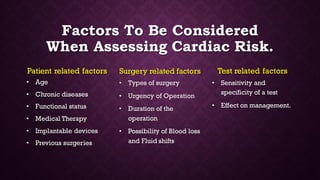
Factors To Be Considered
When Assessing Cardiac Risk.
Patient related factors
• Age
• Chronic diseases
• Functional status
• Medical Therapy
• Implantable devices
• Previous surgeries
Surgery related factors
• Types of surgery
• Urgency of Operation
• Duration of the
operation
• Possibility of Blood loss
and Fluid shifts
Test related factors
• Sensitivity and
specificity of a test
• Effect on management.
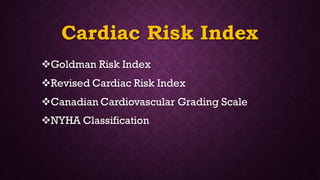
Cardiac Risk Index
❖Goldman Risk Index
❖Revised Cardiac Risk Index
❖Canadian Cardiovascular Grading Scale
❖NYHA Classification
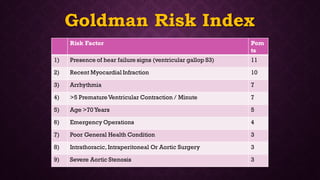
Goldman Risk Index
Risk Factor Pom
ts
1) Presence of hear failure signs (ventricular gallop S3) 11
2) Recent Myocardial Infraction 10
3) Arrhythmia 7
4) >5 PrematureVentricular Contraction / Minute 7
5) Age >70 Years 5
6) Emergency Operations 4
7) Poor General Health Condition 3
8) Intrathoracic, Intraperitoneal Or Aortic Surgery 3
9) Severe Aortic Stenosis 3
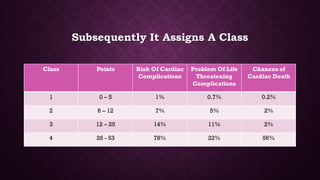
Subsequently It Assigns A Class
Class Points Risk Of Cardiac
Complications
Problem Of Life
Threatening
Complications
Chances of
Cardiac Death
1 0 – 5 1% 0.7% 0.2%
2 6 – 12 7% 5% 2%
3 12 – 25 14% 11% 2%
4 26 - 53 78% 22% 56%
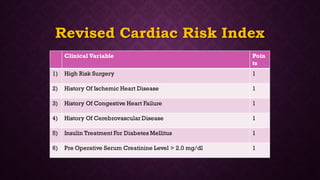
Revised Cardiac Risk Index
Clinical Variable Poin
ts
1) High Risk Surgery 1
2) History Of Ischemic Heart Disease 1
3) History Of Congestive Heart Failure 1
4) History Of Cerebrovascular Disease 1
5) Insulin Treatment For Diabetes Mellitus 1
6) Pre Operative Serum Creatinine Level > 2.0 mg/dl 1
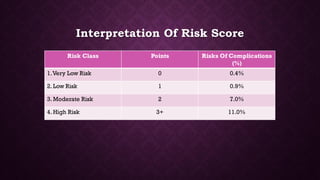
Interpretation Of Risk Score
Risk Class Points Risks Of Complications
(%)
1.Very Low Risk 0 0.4%
2. Low Risk 1 0.9%
3. Moderate Risk 2 7.0%
4. High Risk 3+ 11.0%
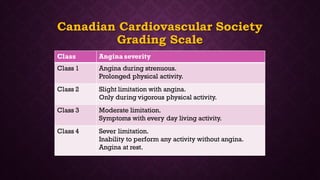
Canadian Cardiovascular Society
Grading Scale
Class Angina severity
Class 1 Angina during strenuous.
Prolonged physical activity.
Class 2 Slight limitation with angina.
Only during vigorous physical activity.
Class 3 Moderate limitation.
Symptoms with every day living activity.
Class 4 Sever limitation.
Inability to perform any activity without angina.
Angina at rest.
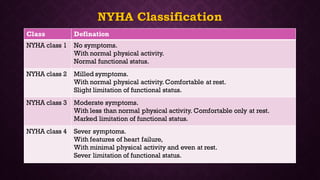
NYHA Classification
Class Defination
NYHA class 1 No symptoms.
With normal physical activity.
Normal functional status.
NYHA class 2 Milled symptoms.
With normal physical activity. Comfortable at rest.
Slight limitation of functional status.
NYHA class 3 Moderate symptoms.
With less than normal physical activity. Comfortable only at rest.
Marked limitation of functional status.
NYHA class 4 Sever symptoms.
With features of heart failure,
With minimal physical activity and even at rest.
Sever limitation of functional status.
Thank You

Cardiac risk index

  • 1.
    Anaesthetic Fitness Criteria &Pre Surgery Checklist Mr Harshad Khade M.Sc. Medical Technology PRN :- 20040143003
  • 2.
  • 3.
    Factors To BeConsidered When Assessing Cardiac Risk. Patient related factors • Age • Chronic diseases • Functional status • Medical Therapy • Implantable devices • Previous surgeries Surgery related factors • Types of surgery • Urgency of Operation • Duration of the operation • Possibility of Blood loss and Fluid shifts Test related factors • Sensitivity and specificity of a test • Effect on management.
  • 4.
    Cardiac Risk Index ❖GoldmanRisk Index ❖Revised Cardiac Risk Index ❖Canadian Cardiovascular Grading Scale ❖NYHA Classification
  • 5.
    Goldman Risk Index RiskFactor Pom ts 1) Presence of hear failure signs (ventricular gallop S3) 11 2) Recent Myocardial Infraction 10 3) Arrhythmia 7 4) >5 PrematureVentricular Contraction / Minute 7 5) Age >70 Years 5 6) Emergency Operations 4 7) Poor General Health Condition 3 8) Intrathoracic, Intraperitoneal Or Aortic Surgery 3 9) Severe Aortic Stenosis 3
  • 6.
    Subsequently It AssignsA Class Class Points Risk Of Cardiac Complications Problem Of Life Threatening Complications Chances of Cardiac Death 1 0 – 5 1% 0.7% 0.2% 2 6 – 12 7% 5% 2% 3 12 – 25 14% 11% 2% 4 26 - 53 78% 22% 56%
  • 7.
    Revised Cardiac RiskIndex Clinical Variable Poin ts 1) High Risk Surgery 1 2) History Of Ischemic Heart Disease 1 3) History Of Congestive Heart Failure 1 4) History Of Cerebrovascular Disease 1 5) Insulin Treatment For Diabetes Mellitus 1 6) Pre Operative Serum Creatinine Level > 2.0 mg/dl 1
  • 8.
    Interpretation Of RiskScore Risk Class Points Risks Of Complications (%) 1.Very Low Risk 0 0.4% 2. Low Risk 1 0.9% 3. Moderate Risk 2 7.0% 4. High Risk 3+ 11.0%
  • 9.
    Canadian Cardiovascular Society GradingScale Class Angina severity Class 1 Angina during strenuous. Prolonged physical activity. Class 2 Slight limitation with angina. Only during vigorous physical activity. Class 3 Moderate limitation. Symptoms with every day living activity. Class 4 Sever limitation. Inability to perform any activity without angina. Angina at rest.
  • 10.
    NYHA Classification Class Defination NYHAclass 1 No symptoms. With normal physical activity. Normal functional status. NYHA class 2 Milled symptoms. With normal physical activity. Comfortable at rest. Slight limitation of functional status. NYHA class 3 Moderate symptoms. With less than normal physical activity. Comfortable only at rest. Marked limitation of functional status. NYHA class 4 Sever symptoms. With features of heart failure, With minimal physical activity and even at rest. Sever limitation of functional status.
  • 11.