Preliminary Task
Evaluation
Cinematography:
 Within our preliminary task documentary,
our use of cinematography was one of the
highlights as when setting up our
interview, our interviewee was to the side
of the screen using the rule of thirds also
making sure a slight amount of head space
was left and the shot used for the
interview was a medium shot. However
this could have been improved by ensuring
that the interviewee always looked at eye
level as at certain points he looked
upwards. Also we could have zoomed in
for a close-up to emphasise particular
facial expressions.
Mise-en-scene:
 The costume for our interviewee was very simplistic as he is a
student and it would be difficult to find something that relates
to the topic of the task (mobile phones) on such short notice,
for the actual documentary, the mise-en-scene will be pre-
planned to ensure it links to the person or the documentary
topic. The lighting was kept pretty bright to make sure the
interview was clear and also a darker lighting wasn’t necessary
or linked to the topic of mobile phones. Within the task the
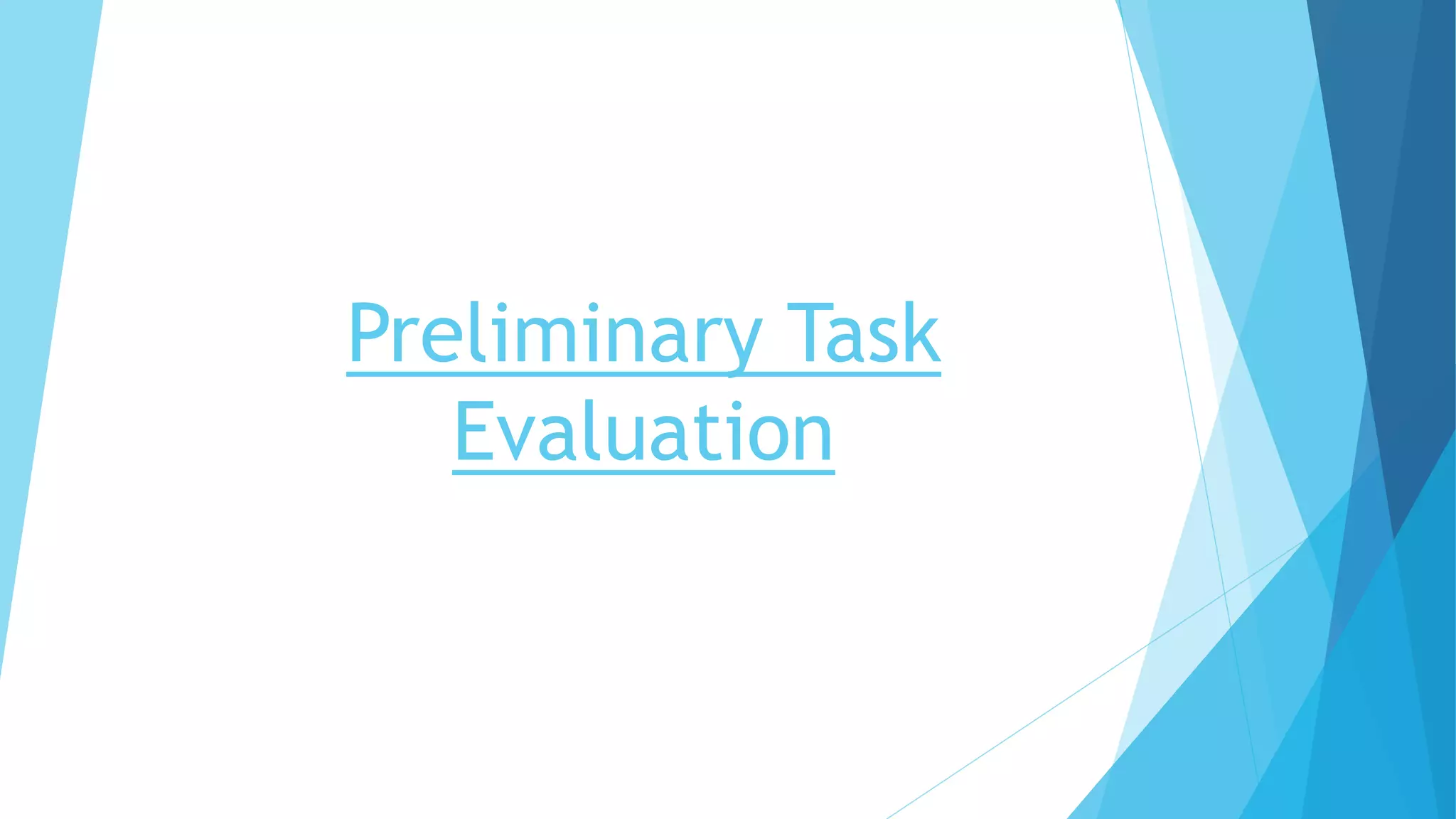
props we used were the chair for our interviewee to sit in, a
mobile phone and sheets from a homework task. The use of the
phone is self-explanatory as the topic is about them, the
inclusion of a homework task was for a cutaway of him using
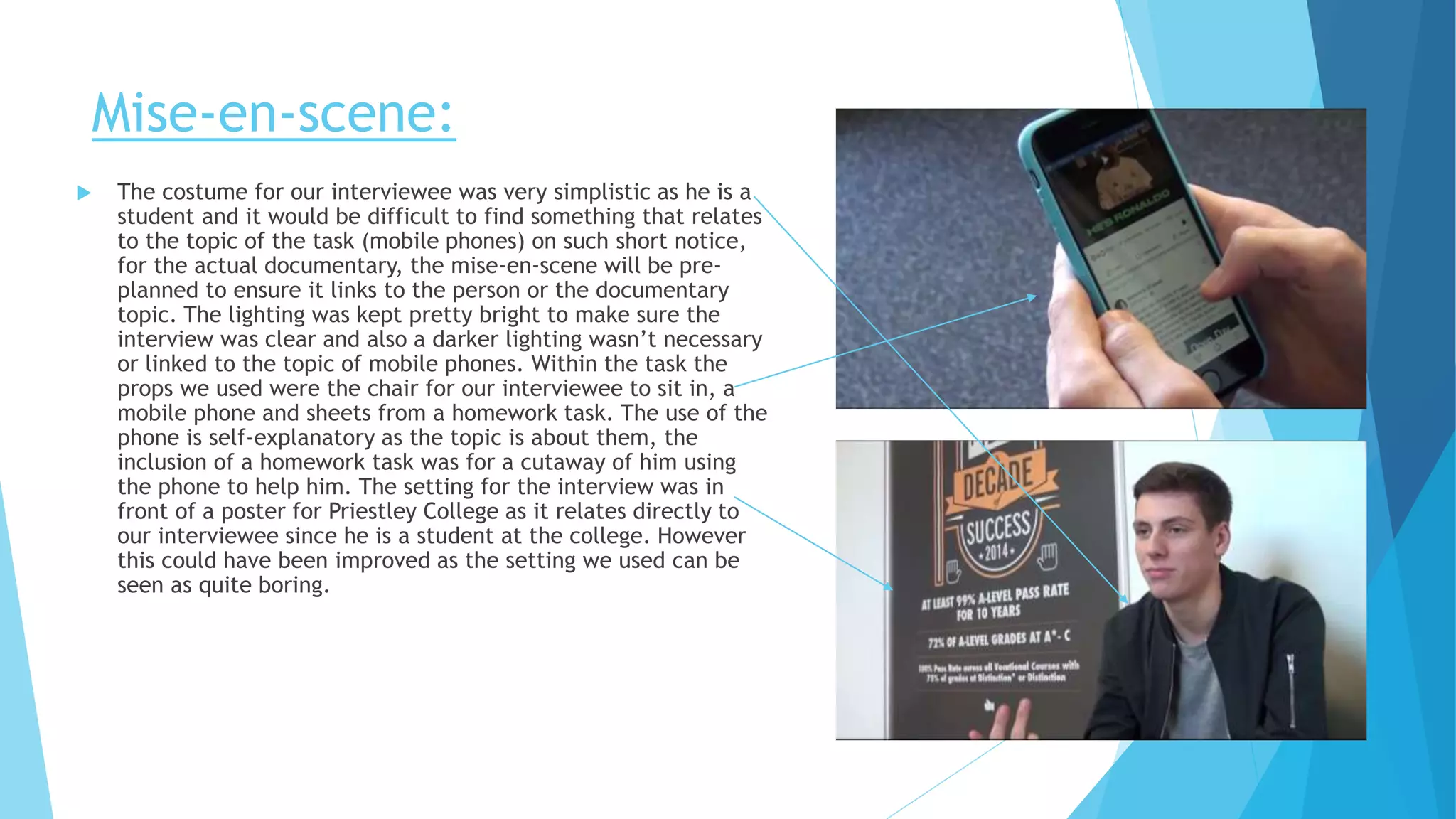
the phone to help him. The setting for the interview was in
front of a poster for Priestley College as it relates directly to
our interviewee since he is a student at the college. However
this could have been improved as the setting we used can be
seen as quite boring.
Graphics:
 The graphics used in the task was
something that could have been vastly
improved. We ran out of time before
being able to add a title sequence at the
start of the interview. We did manage to
superimpose text over the start stating
our interviewees name and relevance,
however we should have taken more
consideration of what font and colour
text we used as they had no relevance
to the person or the task topic. For the
actual documentary, more care must be
placed onto this as they are an integral
part of a mixed documentary otherwise
the audience doesn’t know who is
speaking and why they are relevant.
Editing:
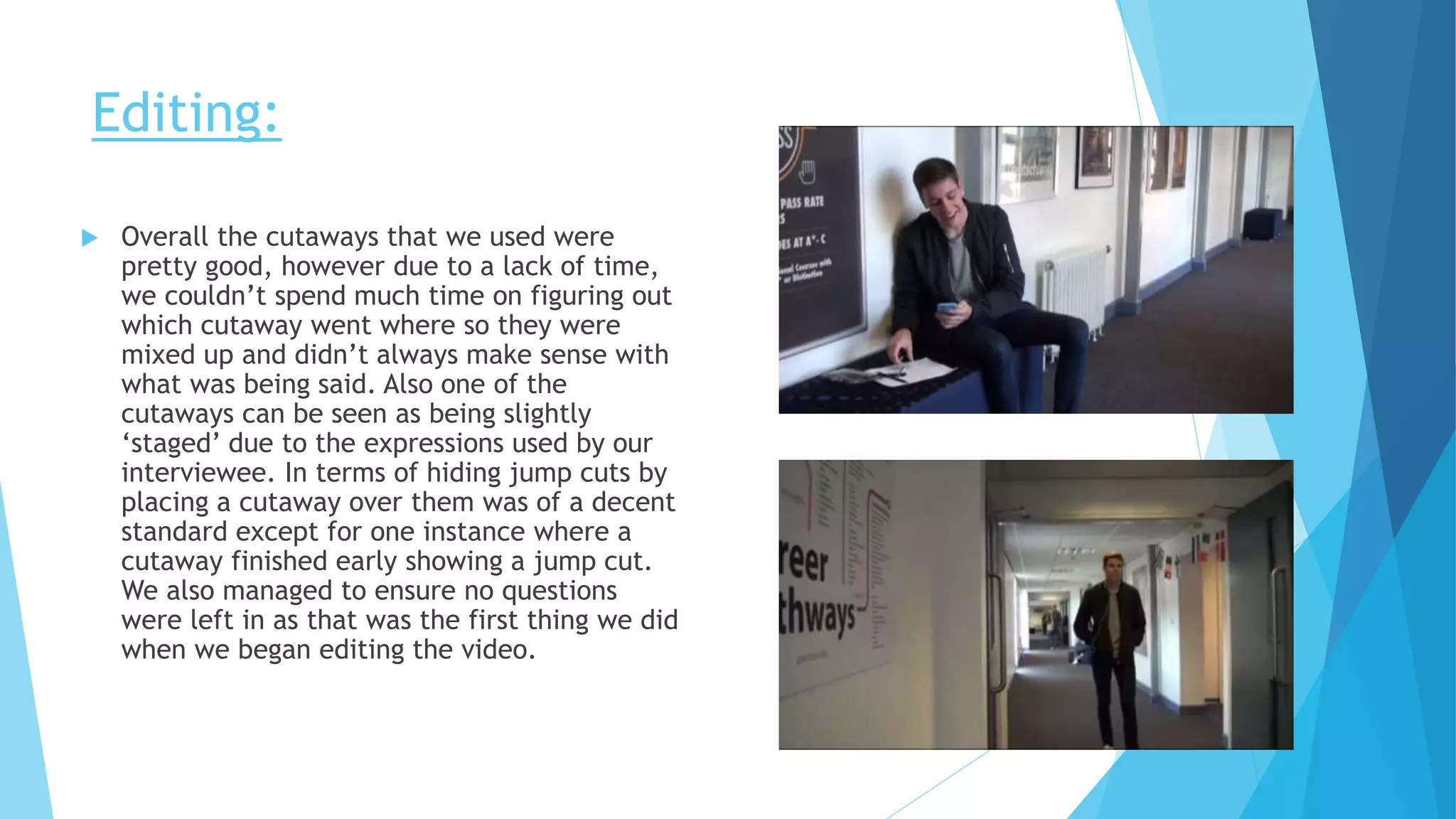
 Overall the cutaways that we used were
pretty good, however due to a lack of time,
we couldn’t spend much time on figuring out
which cutaway went where so they were
mixed up and didn’t always make sense with
what was being said. Also one of the
cutaways can be seen as being slightly
‘staged’ due to the expressions used by our
interviewee. In terms of hiding jump cuts by
placing a cutaway over them was of a decent
standard except for one instance where a
cutaway finished early showing a jump cut.
We also managed to ensure no questions
were left in as that was the first thing we did
when we began editing the video.

Preliminary task evaluation

  • 1.
  • 2.
    Cinematography:  Within ourpreliminary task documentary, our use of cinematography was one of the highlights as when setting up our interview, our interviewee was to the side of the screen using the rule of thirds also making sure a slight amount of head space was left and the shot used for the interview was a medium shot. However this could have been improved by ensuring that the interviewee always looked at eye level as at certain points he looked upwards. Also we could have zoomed in for a close-up to emphasise particular facial expressions.
  • 3.
    Mise-en-scene:  The costumefor our interviewee was very simplistic as he is a student and it would be difficult to find something that relates to the topic of the task (mobile phones) on such short notice, for the actual documentary, the mise-en-scene will be pre- planned to ensure it links to the person or the documentary topic. The lighting was kept pretty bright to make sure the interview was clear and also a darker lighting wasn’t necessary or linked to the topic of mobile phones. Within the task the props we used were the chair for our interviewee to sit in, a mobile phone and sheets from a homework task. The use of the phone is self-explanatory as the topic is about them, the inclusion of a homework task was for a cutaway of him using the phone to help him. The setting for the interview was in front of a poster for Priestley College as it relates directly to our interviewee since he is a student at the college. However this could have been improved as the setting we used can be seen as quite boring.
  • 4.
    Graphics:  The graphicsused in the task was something that could have been vastly improved. We ran out of time before being able to add a title sequence at the start of the interview. We did manage to superimpose text over the start stating our interviewees name and relevance, however we should have taken more consideration of what font and colour text we used as they had no relevance to the person or the task topic. For the actual documentary, more care must be placed onto this as they are an integral part of a mixed documentary otherwise the audience doesn’t know who is speaking and why they are relevant.
  • 5.
    Editing:  Overall thecutaways that we used were pretty good, however due to a lack of time, we couldn’t spend much time on figuring out which cutaway went where so they were mixed up and didn’t always make sense with what was being said. Also one of the cutaways can be seen as being slightly ‘staged’ due to the expressions used by our interviewee. In terms of hiding jump cuts by placing a cutaway over them was of a decent standard except for one instance where a cutaway finished early showing a jump cut. We also managed to ensure no questions were left in as that was the first thing we did when we began editing the video.