Group Member :
1. Munasifah
2. Dwi Erna Susanti
3. Dzulfikar Syauqi Sidqi
4. Syafei Al Hakim
5. Dwi setyawan
6. Danang tino
7. M Eko Prasetyo
8. Lailatis Syarifah
9. Latifatul Auliana
English Department of
Educational Faculty
STAIN SALATIGA
PREDICATOR
 It is the word (sometimes a group of word)
which does not belong to any of reffering
expression.
 The remainder of predicator makes the most
speech contribution to the meaning of the
sentence.
Example of predicator
Asleep is the predicator in Mummy is asleep
Love is the predicator in The white man
loved the Indian maiden
Wait for is the predicator in Jimmy was
waiting for the downtown bus
What is focused in a sentence is
considered as predicator.
 Mama always protects me.
‘Protect’ is the predicator
 I am looking for my watch.
‘look for’ is the predicator.
NOTE :
To be is not included in predicator
The predicator in sentences can be of
various parts of speech : adjective (red,
asleep, hungry, whimsical), verbs (write,
read), proposition (in, between, behind) and
nouns (crook, genius).
Conjunctions (and, but, or) and Article (the,
a) cannot serve as predicator in sentences.
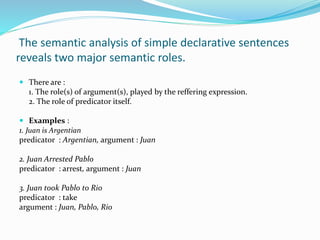
The semantic analysis of simple declarative sentences
reveals two major semantic roles.
 There are :
1. The role(s) of argument(s), played by the reffering expression.
2. The role of predicator itself.
 Examples :
1. Juan is Argentian
predicator : Argentian, argument : Juan
2. Juan Arrested Pablo
predicator : arrest, argument : Juan
3. Juan took Pablo to Rio
predicator : take
argument : Juan, Pablo, Rio
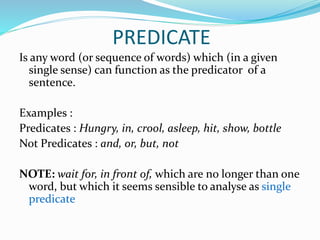
PREDICATE
Is any word (or sequence of words) which (in a given
single sense) can function as the predicator of a
sentence.
Examples :
Predicates : Hungry, in, crool, asleep, hit, show, bottle
Not Predicates : and, or, but, not
NOTE: wait for, in front of, which are no longer than one
word, but which it seems sensible to analyse as single
predicate
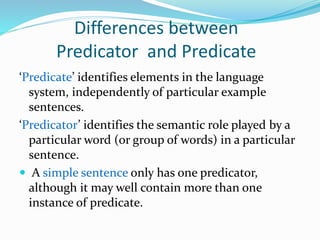
Differences between
Predicator and Predicate
‘Predicate’ identifies elements in the language
system, independently of particular example
sentences.
‘Predicator’ identifies the semantic role played by a
particular word (or group of words) in a particular
sentence.
 A simple sentence only has one predicator,
although it may well contain more than one
instance of predicate.
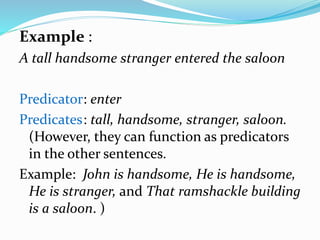
Example :
A tall handsome stranger entered the saloon
Predicator: enter
Predicates: tall, handsome, stranger, saloon.
(However, they can function as predicators
in the other sentences.
Example: John is handsome, He is handsome,
He is stranger, and That ramshackle building
is a saloon. )
DEGREE of Predicate
 Is a number indicating the number of arguments
it is normally understood to have in simple
sentences.
Example :
1. Mummy is asleep
Asleep is predicate of degree one (often called a one-place
predicate)
2. The white man loved the Indian maiden
Love (verb) is a predicate of degree two ( a two-place
predicate)
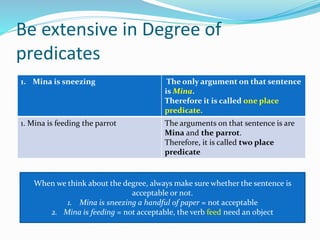
Be extensive in Degree of
predicates
1. Mina is sneezing The only argument on that sentence
is Mina.
Therefore it is called one place
predicate.
1. Mina is feeding the parrot The arguments on that sentence is are
Mina and the parrot.
Therefore, it is called two place
predicate
When we think about the degree, always make sure whether the sentence is
acceptable or not.
1. Mina is sneezing a handful of paper = not acceptable
2. Mina is feeding = not acceptable, the verb feed need an object
Another degree of the predicates
 Is it possible to have three place predicates???
 Yes it is. However, there are few of three places
predicates.
 Check out this example:
 Henry gave Salsa a nice present.
 The number of the arguments on the example above
are three. They are Henry, Salsa and a nice present
 Learning about the degree of predicate is not only for
the predicate of verb, but also other part of speech,
such as noun, adjectives, and preposition.
Examples:
 Jakarta is dirty. (adjective) = one place predicate
 Jakarta is a prosperous city (noun) = one place predicate
 Jakarta is in Indonesia (preposition) = two place predicate
More over , about three place predicates
Central Java is between West Java and East Java
Summary
 The predicates of a language have completely different
function from the referring expression.
 The roles of these two kinds of meaning bearing elements
cannot be exchanged.
Nana is a students = it has good sense
Student is a Nana = no sense
 Remember that predicate has a single sense and it can be a
predicator in a sentence.
 Predicates include words various part of speech such as
common nouns, adjectives, prepositions and verbs.
 Predicates are distinguised by their degree (one place, two
place, or even three place)
Predicates in Semantic

Predicates in Semantic

  • 1.
    Group Member : 1.Munasifah 2. Dwi Erna Susanti 3. Dzulfikar Syauqi Sidqi 4. Syafei Al Hakim 5. Dwi setyawan 6. Danang tino 7. M Eko Prasetyo 8. Lailatis Syarifah 9. Latifatul Auliana English Department of Educational Faculty STAIN SALATIGA
  • 2.
    PREDICATOR  It isthe word (sometimes a group of word) which does not belong to any of reffering expression.  The remainder of predicator makes the most speech contribution to the meaning of the sentence.
  • 3.
    Example of predicator Asleepis the predicator in Mummy is asleep Love is the predicator in The white man loved the Indian maiden Wait for is the predicator in Jimmy was waiting for the downtown bus
  • 4.
    What is focusedin a sentence is considered as predicator.  Mama always protects me. ‘Protect’ is the predicator  I am looking for my watch. ‘look for’ is the predicator.
  • 5.
    NOTE : To beis not included in predicator The predicator in sentences can be of various parts of speech : adjective (red, asleep, hungry, whimsical), verbs (write, read), proposition (in, between, behind) and nouns (crook, genius). Conjunctions (and, but, or) and Article (the, a) cannot serve as predicator in sentences.
  • 6.
    The semantic analysisof simple declarative sentences reveals two major semantic roles.  There are : 1. The role(s) of argument(s), played by the reffering expression. 2. The role of predicator itself.  Examples : 1. Juan is Argentian predicator : Argentian, argument : Juan 2. Juan Arrested Pablo predicator : arrest, argument : Juan 3. Juan took Pablo to Rio predicator : take argument : Juan, Pablo, Rio
  • 7.
    PREDICATE Is any word(or sequence of words) which (in a given single sense) can function as the predicator of a sentence. Examples : Predicates : Hungry, in, crool, asleep, hit, show, bottle Not Predicates : and, or, but, not NOTE: wait for, in front of, which are no longer than one word, but which it seems sensible to analyse as single predicate
  • 8.
    Differences between Predicator andPredicate ‘Predicate’ identifies elements in the language system, independently of particular example sentences. ‘Predicator’ identifies the semantic role played by a particular word (or group of words) in a particular sentence.  A simple sentence only has one predicator, although it may well contain more than one instance of predicate.
  • 9.
    Example : A tallhandsome stranger entered the saloon Predicator: enter Predicates: tall, handsome, stranger, saloon. (However, they can function as predicators in the other sentences. Example: John is handsome, He is handsome, He is stranger, and That ramshackle building is a saloon. )
  • 10.
    DEGREE of Predicate Is a number indicating the number of arguments it is normally understood to have in simple sentences. Example : 1. Mummy is asleep Asleep is predicate of degree one (often called a one-place predicate) 2. The white man loved the Indian maiden Love (verb) is a predicate of degree two ( a two-place predicate)
  • 11.
    Be extensive inDegree of predicates 1. Mina is sneezing The only argument on that sentence is Mina. Therefore it is called one place predicate. 1. Mina is feeding the parrot The arguments on that sentence is are Mina and the parrot. Therefore, it is called two place predicate When we think about the degree, always make sure whether the sentence is acceptable or not. 1. Mina is sneezing a handful of paper = not acceptable 2. Mina is feeding = not acceptable, the verb feed need an object
  • 12.
    Another degree ofthe predicates  Is it possible to have three place predicates???  Yes it is. However, there are few of three places predicates.  Check out this example:  Henry gave Salsa a nice present.  The number of the arguments on the example above are three. They are Henry, Salsa and a nice present
  • 13.
     Learning aboutthe degree of predicate is not only for the predicate of verb, but also other part of speech, such as noun, adjectives, and preposition. Examples:  Jakarta is dirty. (adjective) = one place predicate  Jakarta is a prosperous city (noun) = one place predicate  Jakarta is in Indonesia (preposition) = two place predicate More over , about three place predicates Central Java is between West Java and East Java
  • 14.
    Summary  The predicatesof a language have completely different function from the referring expression.  The roles of these two kinds of meaning bearing elements cannot be exchanged. Nana is a students = it has good sense Student is a Nana = no sense  Remember that predicate has a single sense and it can be a predicator in a sentence.  Predicates include words various part of speech such as common nouns, adjectives, prepositions and verbs.  Predicates are distinguised by their degree (one place, two place, or even three place)