PREPARED BY:
Najarana Patel
F.Y m.sc nursing
JGCON
PHYSIOLOGY OF LACTATION
BREAST FEEDING, LACTATION
MANAGEMENT, EXCLUSIVE BREAST
FEEDING, BABY FRIENDLY
HOSPITAL INTITATIVE(BFHI)
ANATOMY OF
BREAST
LACTATION
INTRODUCTION
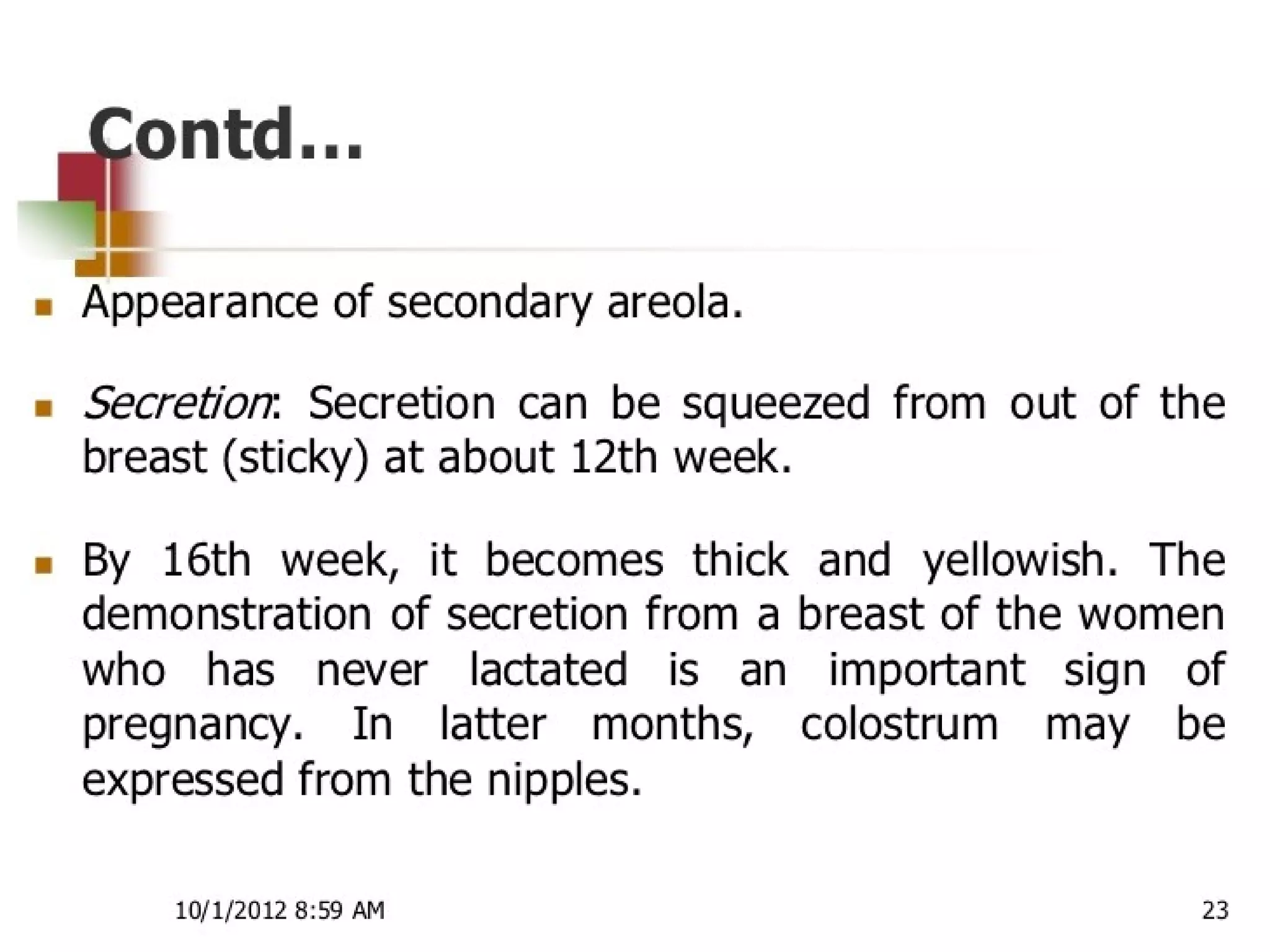
 Lactation-The milk secretion from the female breasts.
 First two days, following delivery, no further anatomic
changes in the breast occur. The secretion from the
breast called colostrums which starts during
pregnancy becomes more abundant during this period.
PHYSIOLOGY OF
LACTATION
CHART
EXCLUSIVE BREAST
FEEDING
 Breast feeding is the best natural feeding and basic
food for infants. The two vital considerations for the
infants in tropical countries are breast feeding and
avoidance of infection.
COLOSTRUM
 It is the thin fluid present in the breast from early
pregnancy into the early postnatal period. It is deep
yellow serous fluid, alkaline in reaction.
 It has a higher specific gravity; high protein, vitamin-
A, sodium & chloride content but has lower
carbohydrate. It contains antibodies & humoral
factors.
EXCLUSIVE BREASTFEEDING:
 Exclusive breastfeeding means that the infant receives
only breast milk. No other liquids or solids are given – not
even water – with the exception of oral rehydration
solution, or drops/syrups of vitamins, minerals or
medicines
 Exclusive breastfeeding is defined as "an infant's
consumption of human milk with no supplementation of
any type (no water, no juice, no nonhuman milk and no
foods) except for vitamins, minerals and medications.
  Exclusive breastfeeding has reduced infant deaths in
developing countries by reducing diarrhea and 
infectious diseases. It also reduced HIV transmission from
mother to child, compared to mixed feeding
CONT…
 Breast milk is readily available, usually sterile and is given
to the baby directly at body temperature.
 -It is more convenient requiring no preparation and costs
nothing.
 -Breast feeding acts as natural contraception and is of
major demographic importance in the developing countries
ADDITIONAL ADVANTAGES
 Has a laxative action.
 No danger of allergy
 Psychological benefit by establishing healthy mother-child
relationship.
 Chance of conception is less during lactation period.
 Helps involution of the uterus.
 Lessens the incidence of sore buttocks, gastro intestinal
infection and atopic eczema.
PREPARATIONS FOR BREAST FEEDING
 Actually it should be started from the middle of pregnancy.
 Any abnormality should be adequately treated. Massaging
the breasts, expression of the colostrum and maintenance of
cleanliness should be carried out during the last four weeks
of pregnancy.
 Counselling about the advantages of breast feeding and
encourage to breast feed.
MANAGEMENT OF BREAST FEEDING
 A clean supporting brassiere
should be worn.
 The mother should wash
her hands prior to feeding.
 Mother and the baby
should be in comfort
positions during feeding.
CONT…
 A healthy baby is put to the breast ½ -1 hour following
normal delivery
 Following caesarean delivery a period of 4-6 hours
may be sufficient for the mother to feed her baby.
FREQUENCY OF FEEDING
 Time schedule:during the first 24 hours- interval of 2-
3 hours.
 Gradually, the regularity established at 3-4 hours
pattern by the end of first week.
 Demand feeding- the baby is put to the breast as soon
as the baby becomes hungry.
 
DURATION OF FEED
 The initial feeding should lasts for 5-10 minutes at
each breast. This helps to condition the let down
reflex.
 Hind milk is richer in fat and supplies more calories to
the infant. The next feed should start with the second
breast.
 Night feed-in the initial period, a night feed is
required to avoid long interval between feeds of over 5
hours. as the day progress; the baby becomes satisfied
by the rhythmic 3-4 hourly feeding.
AMOUNT OF FEED
 The average requirement of milk is about
100ml/kg/24 hours on the third stage and is increased
to 150ml/kg/24 hours 10th
day.
 However, the baby can take as much as he wants.
TECHNIQUE
 Comfortable position-Mother & baby.
 Correct position:
-Baby`s body is well supported
-the head, neck & body is kept in the same plane
-Entire body of the baby faces her mother
-baby`s abdomen touches mother`s abdomen
CONT…
 Good attachments-
-Infant’s mouth is wide open
-Chin touches the breast.
-Lower lip turned out
-Larger area of the areola is visible
above than below
 The milk transfer to the infant
begins with good latch-on and by
a peristaltic action from the tip of
the tongue to the base.
CONT…
 The infant’s ear, shoulder
and the hip are in one line.
 Baby sucks the areola and
the nipple holding between
the tongue and the palate.
Feeding in lateral position
following caesarean delivery
or with painful perineum is
carried out by placing the
baby along her side between
the trunk and the arm.
CONT...
Burping:
 All babies swallow varied
amount of air during
suckling.
 To break up the wind, the
baby should be held
upright against the chest
and the back is gently
patted till the baby belches
out the air
ANY
QUERR
Y?
Ppt on physiology of lactation

Ppt on physiology of lactation

  • 1.
    PREPARED BY: Najarana Patel F.Ym.sc nursing JGCON PHYSIOLOGY OF LACTATION BREAST FEEDING, LACTATION MANAGEMENT, EXCLUSIVE BREAST FEEDING, BABY FRIENDLY HOSPITAL INTITATIVE(BFHI)
  • 2.
  • 25.
  • 26.
    INTRODUCTION  Lactation-The milksecretion from the female breasts.  First two days, following delivery, no further anatomic changes in the breast occur. The secretion from the breast called colostrums which starts during pregnancy becomes more abundant during this period.
  • 31.
  • 32.
  • 49.
  • 51.
     Breast feedingis the best natural feeding and basic food for infants. The two vital considerations for the infants in tropical countries are breast feeding and avoidance of infection.
  • 52.
    COLOSTRUM  It isthe thin fluid present in the breast from early pregnancy into the early postnatal period. It is deep yellow serous fluid, alkaline in reaction.  It has a higher specific gravity; high protein, vitamin- A, sodium & chloride content but has lower carbohydrate. It contains antibodies & humoral factors.
  • 53.
    EXCLUSIVE BREASTFEEDING:  Exclusivebreastfeeding means that the infant receives only breast milk. No other liquids or solids are given – not even water – with the exception of oral rehydration solution, or drops/syrups of vitamins, minerals or medicines  Exclusive breastfeeding is defined as "an infant's consumption of human milk with no supplementation of any type (no water, no juice, no nonhuman milk and no foods) except for vitamins, minerals and medications.   Exclusive breastfeeding has reduced infant deaths in developing countries by reducing diarrhea and  infectious diseases. It also reduced HIV transmission from mother to child, compared to mixed feeding
  • 55.
    CONT…  Breast milkis readily available, usually sterile and is given to the baby directly at body temperature.  -It is more convenient requiring no preparation and costs nothing.  -Breast feeding acts as natural contraception and is of major demographic importance in the developing countries
  • 56.
    ADDITIONAL ADVANTAGES  Hasa laxative action.  No danger of allergy  Psychological benefit by establishing healthy mother-child relationship.  Chance of conception is less during lactation period.  Helps involution of the uterus.  Lessens the incidence of sore buttocks, gastro intestinal infection and atopic eczema.
  • 57.
    PREPARATIONS FOR BREASTFEEDING  Actually it should be started from the middle of pregnancy.  Any abnormality should be adequately treated. Massaging the breasts, expression of the colostrum and maintenance of cleanliness should be carried out during the last four weeks of pregnancy.  Counselling about the advantages of breast feeding and encourage to breast feed.
  • 58.
    MANAGEMENT OF BREASTFEEDING  A clean supporting brassiere should be worn.  The mother should wash her hands prior to feeding.  Mother and the baby should be in comfort positions during feeding.
  • 59.
    CONT…  A healthybaby is put to the breast ½ -1 hour following normal delivery  Following caesarean delivery a period of 4-6 hours may be sufficient for the mother to feed her baby.
  • 60.
    FREQUENCY OF FEEDING Time schedule:during the first 24 hours- interval of 2- 3 hours.  Gradually, the regularity established at 3-4 hours pattern by the end of first week.  Demand feeding- the baby is put to the breast as soon as the baby becomes hungry.
  • 61.
      DURATION OF FEED The initial feeding should lasts for 5-10 minutes at each breast. This helps to condition the let down reflex.  Hind milk is richer in fat and supplies more calories to the infant. The next feed should start with the second breast.  Night feed-in the initial period, a night feed is required to avoid long interval between feeds of over 5 hours. as the day progress; the baby becomes satisfied by the rhythmic 3-4 hourly feeding.
  • 62.
    AMOUNT OF FEED The average requirement of milk is about 100ml/kg/24 hours on the third stage and is increased to 150ml/kg/24 hours 10th day.  However, the baby can take as much as he wants.
  • 63.
    TECHNIQUE  Comfortable position-Mother& baby.  Correct position: -Baby`s body is well supported -the head, neck & body is kept in the same plane -Entire body of the baby faces her mother -baby`s abdomen touches mother`s abdomen
  • 64.
    CONT…  Good attachments- -Infant’smouth is wide open -Chin touches the breast. -Lower lip turned out -Larger area of the areola is visible above than below  The milk transfer to the infant begins with good latch-on and by a peristaltic action from the tip of the tongue to the base.
  • 65.
    CONT…  The infant’sear, shoulder and the hip are in one line.  Baby sucks the areola and the nipple holding between the tongue and the palate. Feeding in lateral position following caesarean delivery or with painful perineum is carried out by placing the baby along her side between the trunk and the arm.
  • 69.
    CONT... Burping:  All babiesswallow varied amount of air during suckling.  To break up the wind, the baby should be held upright against the chest and the back is gently patted till the baby belches out the air
  • 96.