PHYSIOLOGYAND
MANAGEMENT OF
NORMAL PUERPERIUM
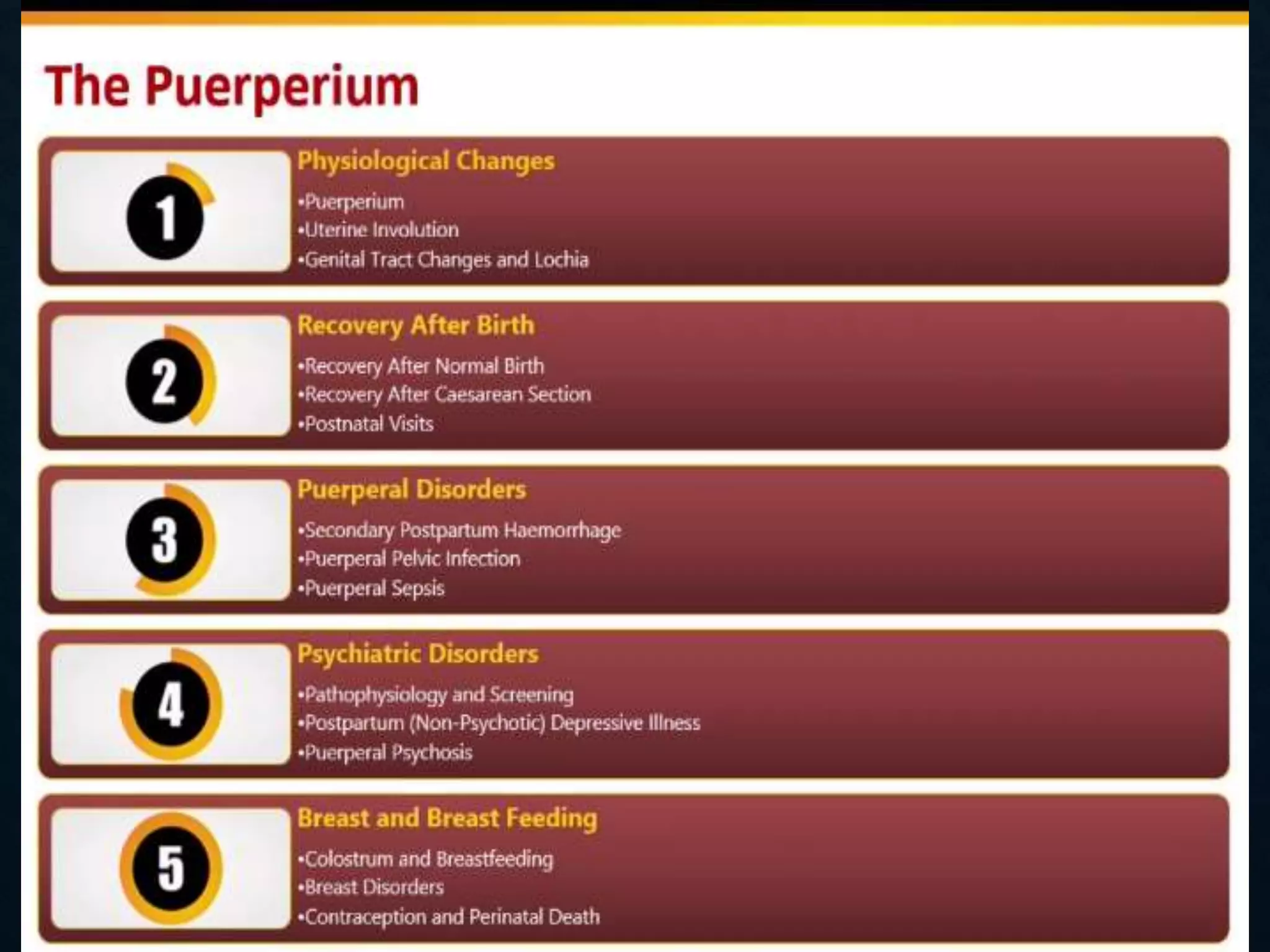
Puerperium
INTRODUCTION
The puerperium is a period of approximately
6 weeks which commences following completion
of third stage of labour.
During this time the women recovers from
stresses of pregnancy & delivery & the
physiological adaptations which occur during
pregnancy subside, facilitating the restoration of
the non pregnant state.
DEFINITION
The puerperium is defined as the period
following childbirth during which the
body tissue, specially the pelvic organs
revert back approximately to the pre-
pregnant state both anatomically and
physiologically
• -----DC DUTTA
DURATION
Puerperium begins as soon as the
placenta is expelled and lasts for
approximately 6 weeks when uterus
regressed almost to non- pregnant
size.
STAGES OF PUERPERIUM
The post partum period has been divided into:
The immediate puerperium, the first 24 hours after
parturition; when acute post anesthetic or post delivery
complications may occur.
The early puerperium, which extends until the first
week of post partum.
The remote puerperium, which includes the period of
time required for involution of the genital organs
through the sixth weeks postpartum.
REPRODUCTIVE SYSTEM
UTERUS
Involution:-is the return of the uterus to a non-pregnant
state after childbirth
Involution process begins immediately after expulsion
of the placenta with contraction of uterine smooth
muscles
At the end of third stage of labor, the uterus is in the
midline, about 2cm below the level of the umbilicus
and weighs 1000g and measures about
20*12*7.5(length , breadth and thickness)in cms
CONT
…
By 24 hours postpartum the uterus is about the
same size it was at 20 gestational weeks
The fundus descends about 1 to 2cm every 24
hours, and by the sixth postpartum day it is
located halfway between the symphysis pubis and
the umbilicus.
-The uterus lies in the true pelvis within 2 weeks
after childbirth.
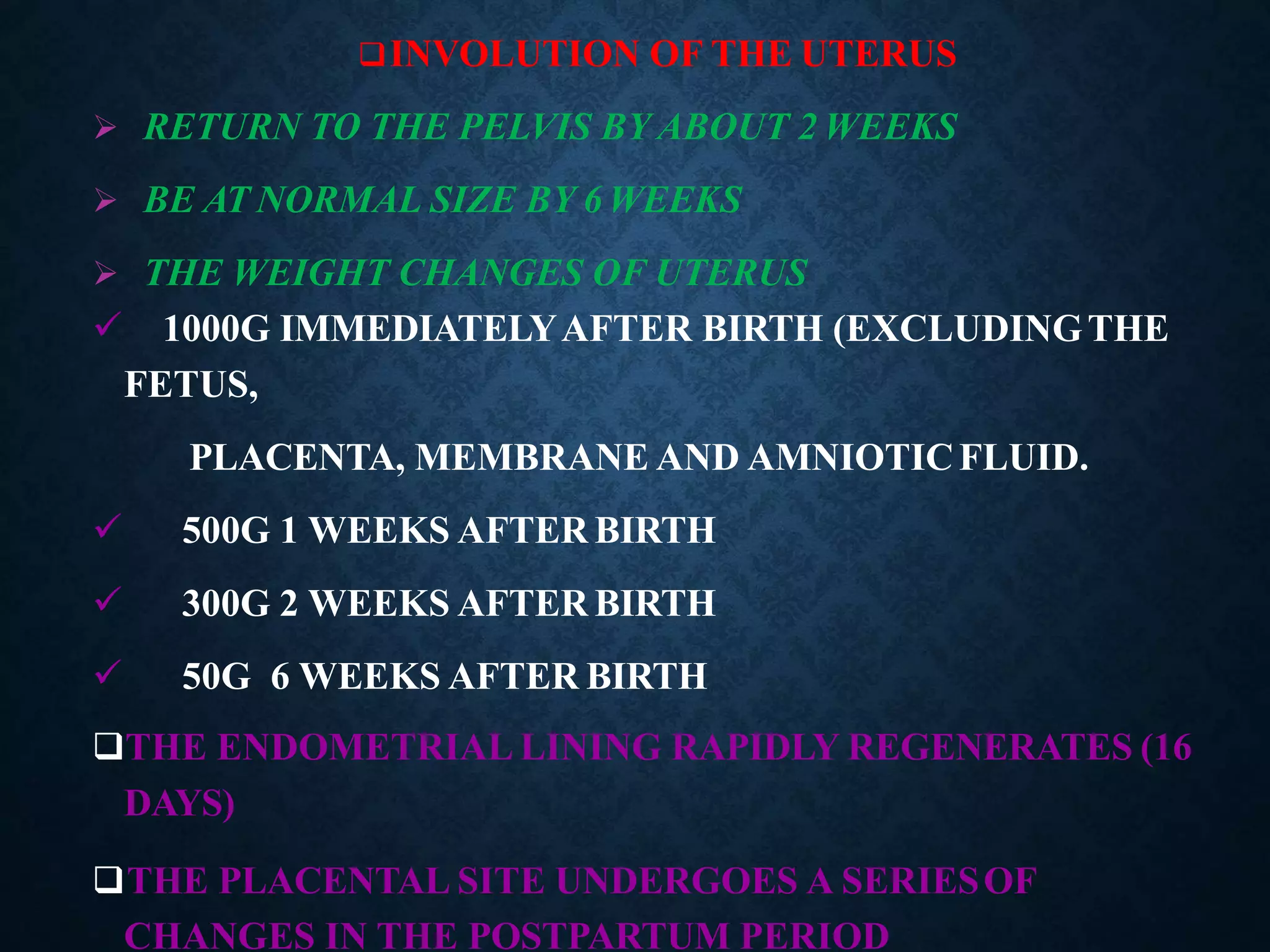
INVOLUTION OF THE UTERUS
 RETURN TO THE PELVIS BY ABOUT 2 WEEKS
 BE AT NORMAL SIZE BY 6WEEKS
 THE WEIGHT CHANGES OF UTERUS
 1000G IMMEDIATELYAFTER BIRTH (EXCLUDINGTHE
FETUS,
PLACENTA, MEMBRANE AND AMNIOTICFLUID.
 500G 1 WEEKS AFTER BIRTH
 300G 2 WEEKS AFTER BIRTH
 50G 6 WEEKS AFTER BIRTH
THE ENDOMETRIAL LINING RAPIDLY REGENERATES (16
DAYS)
THE PLACENTAL SITE UNDERGOES A SERIESOF
CHANGES IN THE POSTPARTUM PERIOD
-Subinvolution:-is the failure of the uterus to
return to a nonpregnant state.
-The most common causes of sub involution are
retained placenta fragments and infection
LOWER UTERINE
SEGMENT
• Immediately following delivery the lower
segment becomes thin flabby ,collapsed
structure
• It takes a few weeks to revert back to normal
shape and size of the isthmus
AFTER PAIN
After expulsion of fetus and placenta the uterus
contracts to regain its normal size, weight and site,
this called involution of uterus. Oxytocin is
released from posterior lobe of the pituitary gland
in response to the sucking, which facilitate uterine
contraction.
 Characteristic of after pain:
 Occur during the 1st 2-3 days of puerperium
 Abdominal pains (like cramps) and back pain.
 Strong, regular
, andcoordinated.
 The intensity, frequency and regularity of contraction
decrease
• after the 1st postpartum day
.
Primigravida--uterus tonically contracted unless clots or
tissue remain in uterus.
Multipara--uterus contracts and relaxes atintervals causing
• “afterpains”.
• More severe when breasfeeding in both primiparas and
multiparas.
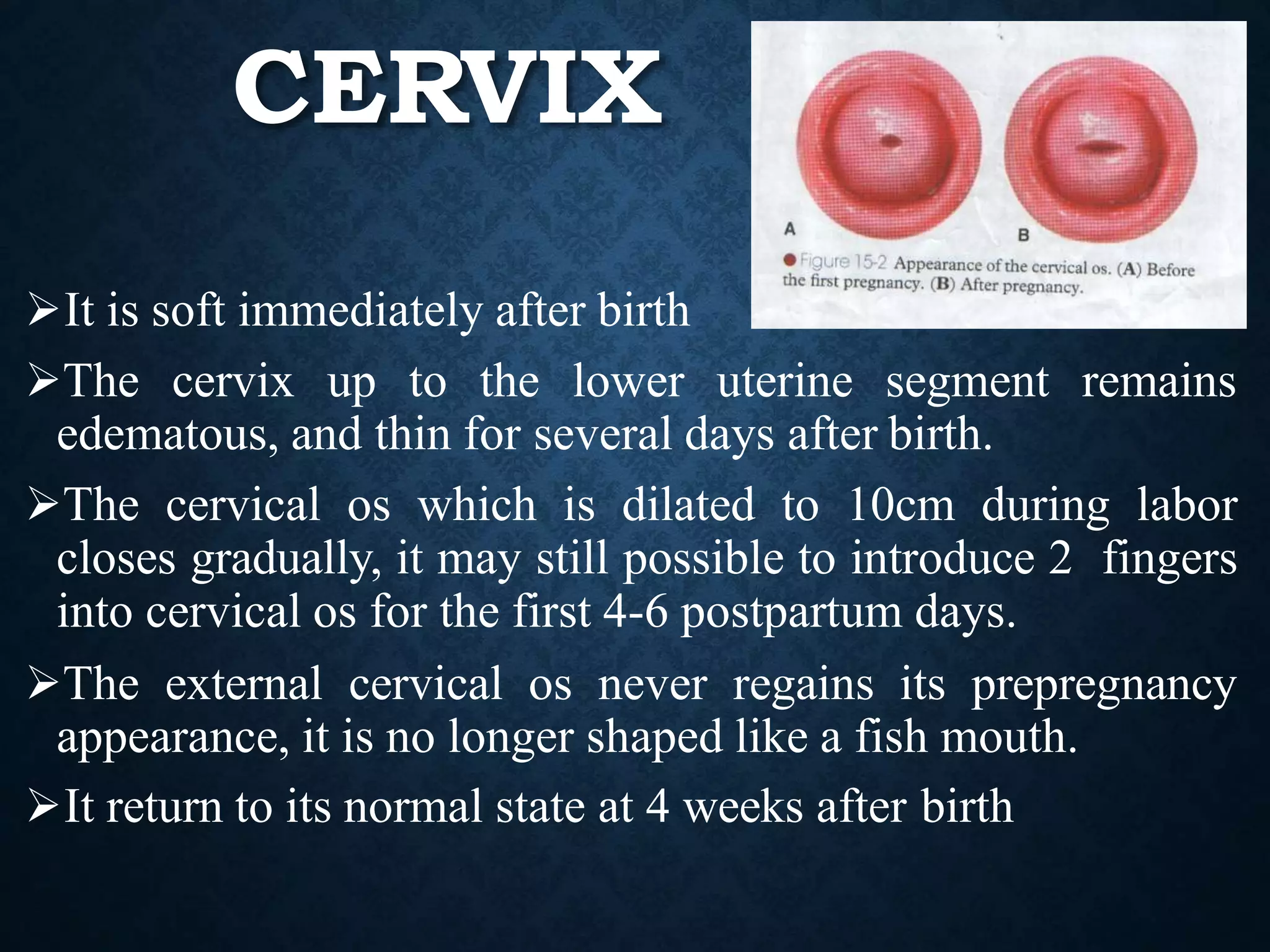
CERVIX
It is soft immediately after birth
The cervix up to the lower uterine segment remains
edematous, and thin for several days after birth.
The cervical os which is dilated to 10cm during labor
closes gradually, it may still possible to introduce 2 fingers
into cervical os for the first 4-6 postpartum days.
The external cervical os never regains its prepregnancy
appearance, it is no longer shaped like a fish mouth.
It return to its normal state at 4 weeks after birth
PHYSIOLOGICAL CONSIDERATION
The physiological process of involution is most
marked in the body of the uterus changes occur in
the following components
A. Muscles
B. Blood vessels
C. Endometrium
MUSCLES
• There is marked hypertrophy and hyperplasia of muscle
fibers during pregnancy and the individual muscle fiber
enlarges to the extent of 10times and 5 times of breadth
• During puerperium the number of muscle fibers is not
decreased but there is substantial reduction of the
myometrial cell size
• Withdrawal of the steroid hormones estrogen and
progesterone may lead to increase in the activity of the
uterine collganese and release of proteolytic enzyme
BLOOD VESSELS
• The arteries are constricted by contraction of its wall
and thickening of the intima followed by thrombosis
• During the first week the arteries undergo thrombosis
hyalinsation and fibrinsed end arteries
• The veins are obliterated by thrombosis hyalinsation
and endophelebitis
• New blood vessels grow inside the thrombi.
ENDOMETRIUM
Following delivery the major part of the decidua is
cast off with expulsion of the placenta and the
membranes more at the placenta site
The endometrium left behind varies in thickness from
2-5mm
The superficial part containing the degenerated
decidua, blood cells and bits of fetal membranes
becomes necrotic and is cast off in the lochia.
CONT…
Regeneration starts by 7th completed by 10th day
and restored by 16th day except placental site it
takes 6weeks
It occur from the epithelium of the uterine
gland mouths and interglandular stromal cells
INVOLUTION OF OTHER PELVIC
STRUCTURES
VAGINA
• The distensible vagina notices soon after birth takes a long
time-4-
8weeks
• It regains its tone but never to the virginal state
• The mucosa remains delicate for the first few weeks and
sub- mucous venous congestion persist even longer, it is
the reason to withhold surgery on puerperal vagina
CONT…
• Rugae partially reappear at 3rd week but nerve to
the same degree as in pre-pregnant state
• The introits remains permanently larger than the
virginal state
• The hymen is lacerated and represented by
nodular tags the carunculae myritiformes
BROAD LIGAMENT ANDROUND
LIGAMENT
•Requires considerable time to recover
from the stretching and laxation
PELVIC FLOOR AND PELVIC FASCIA
• Takes a long time to involute from
the stretching effect during
parturition.
LOCHIA
It is the vaginal discharge that occurs after birth.
Lochia is discharge originates from the uterine body,
cervix and vagina
For the first 2 hours after birth the amount of lochia
should be about that of a heavy menstrual period,
after that time the lochial flow should steadily
decrease.
LOCHIA-ODOURAND
REACTIONS
 It has got a peculiar smell
It reactions is alkaline leading to
become acid towards the end
COLOUR
1 LOCHIA RUBRA-RED COLOR (1-4DAYS) It consists of
blood, shreds of fetal membranes and decidual,vernix
caseosa,lanugo and meconium.
2 LOCHIA SEROSA-YELLOWISH OR PINK OR PALE
BROWNISH COLOUR(5-9 DAYS) It consists of old
blood, less of rbc, but more ofleukocytes, and wound
exudates mucus from cervix and micro organism
(anaerobic streptococci and staphylococci
3 LOCHIA SEROSA-PALE WHITE(10-15DAYS)
Contains plenty of decidual
cells,leucocytes,mucus,cholestrin crystals,fatty and
granular epithelial cells and micro organism.
AMOUNT
The average amount of
discharge for the first 5-6 days
is estimated to be 250ml
NORMAL DURATION
• The normal duration may extend upto 3 weeks
• The lochia rubra may persist for longer
specially in woman with twins and scanty in
premature labour
• Can be more when women get up from bed in
the later period
CLINICAL IMPORTANCE OF
LOCHIA
•Odor:
If offensive indicates retained
placental lobes or cotton pieces
inside the vagina should be kept
in mind
CONT
..
•Amount:
Scanty or absent signifies infection
or lochiametra If excessive also
indicates infection
CONT
..
•Color:
Persistence of lochia rubra beyond
normal limit signifies Subinvolution
or retained bits of conceptus
CONT
..
•Duration:
Duration of the lochia
alba beyond 3 weeks suggest local
genital lesions
CHANGES
PULSE
After the initial tachycardia associated with labour and delivery, a
bradycardia often develops in the early puerperium.
A woman’s pulse rate during the postpartal period is usually
slightly slower than normal.
This increased stroke volume reduces the pulse rate to between 60
and 70 beats per minute.
As diuresis diminishes the blood volume and causes blood
pressure to fall, the pulse rate increases accordingly.
By the end of the first week, the pulse rate will have returned to
normal.
TEMPERATURE
A woman may show a slight increase in temperature
during the first 24 hours after birth.
Occasionally, when a woman’s breasts fill with milk on the
3rd or 4th postpartum day, her temperature rises for a period
of hours because of the increased vascular activity involved.
Genito-urinary tract infection should be excluded if
there is rise of temperature
URINARY TRACT
The bladder wall becomes oedematous and hyperaemic
and often shows evidences of sub mucous extravasations
of blood.
Because of relative insensitivity to the raised
intravesical pressure due to trauma sustained to the
nerve plexus during delivery, the bladder may be over
distended without any desire to pass urine.
Dilated ureters and renal pelvis return to normal size
within 8 weeks
GASTROINTESTINAL
SYSTEM
Digestion and absorption begin to be active again soon after
birth.
Bowel sounds are active, but passage of stool through the bowel
may be slow because of the still present effect of relaxin on the
bowel.
Bowel evacuation may be difficult because of the pain of
episiotomy sutures or haemorrhoids.
 Increased thirst in early puerperium
 Slight intestinal paresis leads to constipation
WEIGHT
oRapid diuresis and diaphoresis during 2nd to
5th days after birth result in weight loss of 5 lb
(2 to 4kg), in addition to approx. 12 lb (5.8 kg)
lost at birth.
o Lochia flow- 2-3 lb(1kg) loss
oTotal weight loss- 19 lb
oAdditional weight loss depend on amount of
weight gain in pregnancy and active measures to
reduce weight.
FLUID LOSS
• Net fluid loss of at least 2 liters during 1st
week
• Additional 1.5 liters during the next 5th
weeks
• The amount depends on amount retained
during pregnancy ,dehydration during
labour and blood loss during delivery.
BLOOD VALUES
• Diuresis evident between 2nd to 5th day after birth, as
well as blood loss at birth, acts to reduce the added
volume accumulated during pregnancy.
• Rapid reduction occurs, so that blood volume
returns to its normal prepregnancy level by 2nd week
after birth.
• Cardiac output rises soon after delivery to about
60% above the pre labour value but gradually
returns to normal within one week.
RBC VOLUME AND
HEMA
TOCRIT
• It returns to normal by the end of 1st week after the hydaemia
disappears
• Leukocytosis to the extent of 30000 per cu mm occurs following
delivery probably in response to stress of labour
• Platelet count decreases soon after the separation of the placenta but
secondary elevation occurs with increase in platelet adhesiveness
between 4-10dyas
• Fibrinogen level remains high upto the 2nd week of puerperium
resulting in persistent high level of esr in puerperium as during
pregnancy
• A hypercoagulable state persist for 48hrs postpartumand
fibrolytic activity is enhanced in first 4 days.
MENSTRUATIONAND OVULATION
If the woman does not breast feeds her baby,the
menstruation returns by 6th week following delivery in
about 40% and by 12th week in
80% of cases.
• In non-lactating mothers, ovulation may occur as early as 4
weeks
and in lactating mothers about 10 weeks after delivery.
• A women who is exclusively breastfeeding, the
contraceptive protection is about 98% upto 6 months
postpartum. Thus, lactation provides a natural method of
contraception.
• However ovulation may precede the first menstrual period
in about one-third and it is possible for the patient to
become pregnant before she menstruates following her
confinement.
• Non-lactating mother should use contraceptive
measures after 3 weeks and the lactating mothers after
3 months of delivery.
ENDOCRINE SYSTEM
Placental hormones
Expulsion of theplacentaresults indramaticdecreases of
hormones produced by placenta.
The placentalenzymeinsulinazecausesthediabetogenic effects
of pregnancyto bereversed,resultingin significantlylower
blood sugar levelsintheimmediate postpartum period
- Estrogen andprogesterone levelsdecrease markedlyafter
expulsion of theplacenta,reachingtheir lowest levels1 week
into thepostpartum period.
- 2- Decreased estrogen levelassociatedwith;breast
engorgement,anddiuresis of excess extracellular fluid that
has accumulatedduring pregnancy.
The estrogen levels in nonlactating women begin to increase by 2
weeks afterbirth,andhigherbypostpartum day17.
Pituitaryhormones andovarian function:-
-Lactating and nonlactating women differ in the time of the first
ovulation.
-The persistence of elevated serum prolactin levels in breast feeding
women appearsto theresponsible for suppressing ovulation
In women who breastfeed,prolactinlevelsremainelevated into the
sixth week after birth.
• Serum prolactinlevelsareinfluencedbythefrequencyof
breastfeeding,theduration of eachfeeding,andthedegree to
which supplementaryfeedingsare used.
• Prolactin levelsdeclineinnonlactatingwomen,reaching
the prepregnant rangebythird week
• About 70% of nonlactatingwomen resume menstruation
by 3 months after birth.
ABDOMEN
-Abdominal muscles protrude during thefirstdaysafter birth.
-During thefirst2 weeks afterbirth theabdominalwall is
relaxedandittakesapproximately6 weeks to return almost to
its nonpregnant state
-The skin regainsmost of its previous elasticity,but some
striaemay present
-The return of muscletone depends on previous tone, proper
exercise,andtheamount of adipose tissue.
URINARY SYSTEM
The diminishing steroids levelsafterbirth mayexplain thereduced renal
function thatoccurs during the pueriperium.
Urine components
BUN levelincreases during puerperium asautolysisof theinvoluting
uterus occurs.This breakdown of excess protein intheuterine muscle
cellsresults ina mild(+1)proteinurea for 1-2 daysafter childbirth
• The bladder wall may become edematous,
hyperemic, and the bladder might be
overdistended without the urge to pass
urine.
• The retention of urine in the first few days
after labor may be due to the laxity of the
abdominal musculature, tone of pelvic floor
muscles, atony of bladder, compression of
urethra by edema or hematoma, reflex
inhibition of micturition due to
genitourinary trauma.
• Conversely, urinary incontinence, especially
urge incontinence, affects 30% of
postpartum females and is attributed most
commonly to psychological stress associated
with childbirth.
• The mother may complain of painful
micturition or dysuria that could be due to
tears, laceration of the cervix or vagina, or
episiotomy.
• During pregnancy, the compressive forces of the
gravid uterus and the progesterone-induced
decrease in ureteral tone, peristalsis, and
contraction pressure lead to the dilation of the
calyceal system, increasing the volume of kidneys
by 30% from the pre-pregnant state.
• The dilated ureters and renal pelvis usually return
to the pre-pregnant state within four-eight weeks.
There is an increased risk of developing urinary
tract infections. It is important to counsel the
mother to void every 3 to 4 hours
URETHRA AND BLADDER
Iftraumato theurethraandbladderoccur during thebirth
process,thebladderwallbecomes hyperemic and
edematous,oftenwithsmallareasof hemorrhage.
Birth-induced traumaincreasedbladdercapacityand the
effectsof conduction anesthesiacombine to cause a
decreaseintheurge to void.In additionto pelvic soreness
from the forces of labor, vaginal laceration, or an episiotomy
whichtheyreducethevoiding reflex.
Decreased voiding, along with postpartal diuresis may result in
bladder distention.
-Distended bladderpushes theuterus upandto theside and
this prevents the uterus from firmly contracting which may
causeexcessive bleeding.
-Bladdertone is usuallyrestored 5-7daysafterchildbirth .
GASTROINTESTINAL
SYSTEM
Appetite
The mother is usuallyhungry shortly aftergiving birth.
Bowel evacuation
A spontaneous bowel evacuationmaybedelayeduntil 2-3
daysafterchildbirth.This canbeexplainedby decreased
muscletone of theintestines during labor andtheimmediate
puerperium, prelabor diarrhea, lackof food,or dehydration
• The mother may develop flatulence or
constipation due to intestinal ileus
(induced by pain or presence of
placental hormone relaxin in the
circulation), loss of body fluids, laxity
of abdominal wall, and hemorrhoids.
• The postpartum constipation is due to
the progesterone-induced decrease in
gastrointestinal transit time.
• The compressive effects of the gravid
uterus on the stomach, a decrease in lower
esophageal sphincter tone due to high
progesterone levels, and hypersecretion of
acid due to high gastrin levels cause an
increase in the incidence of acid reflux
during pregnancy.
• After delivery, the levels of progesterone
and gastrin drop within 24 hours, and the
acid reflux and associated symptoms
resolve in the next three to four days.
GI/HEPATIC FUNCTION
GI tone andmotility decreases intheearlypostpartum period,
commonly causingconstipation.
-Normal bowel function returns approximately2 to 3 days
postpartum.
-Liver function returns to normal approximately10 to 14 days
postpartum.
-Gall bladdercontractility increases to normal,allowing for
expulsion of small gallstones
VITAL SIGNS
Temperature:
 The temperature is slightly elevated: 0.5 degrees for the first
24 hours and up to 38 degrees is known.This rise in
temperature is due to the absorption of waste products of
muscular contractions of labor.
 Transient rise in temperature later on isdue to:
• Milk engorgement (by the 4thday postpartum).
• Constipation.
• Nervous excitation.
• Infection.
THE PULSE:
 The pulse is full and slow (about 60-70 B/mm) and
is known as physiological bradycardia (for 24-48 hrs
after labor). It is dueto:
• The rest period after labor .
• The increase in the circulating blood volume on
account of the elimination of the placental pool.
• The pulse should remain below 100 B/mm if all is
going well.A rapid pulse may be brought on by
pain, visitors, excitement, exhaustion, the nursing
infant, hemorrhage or infection.
RESPIRATION:
This is in the usual relation with pulse and
temperature. Because of a reduction in the size
of the uterus and relaxation of the abdominal
wall respiration is more abdominal in character.
Deviation from the normal may suggest
pneumonia or embolism.
BLOOD PRESSURE:
No change is counted, but if hypotension is present,
postpartum hemorrhage may be suspected. If
hypertension is present (over 140/90 mm Hg)
postpartum toxemia may be suspected.
BLOOD AND FLUID CHANGES
Marked leukocytosis andthrombocytosis occur during andafter labor
The leukocytecount sometimes reaches 30,000L, with the increase.
There is also arelativelymphopenia andanabsolute eosinopenia.
Normally, during thefirst fewpostpartum days, hemoglobin
concentration andhematocrit fluctuate moderately.
Iftheyfallmuch below thelevelspresent justprior to labor,a
considerable amount ofblood hasbeenlost
By 1 week afterdelivery,theblood volume hasreturned nearlyto its
nonpregnant level.
RESPIRATORY FUNCTION
• -Returns to normal byapproximately6 to 8
weeks postpartum.
• -Basalmetabolicrate increases for 7 to 14 days
postpartum,secondary to mildanemia,lactation,
and psychological changes-
NEUROLOGICAL SYSTEM
Discomfort andfatigueare common.
Afterpains anddiscomfort from thedelivery,lacerations, episiotomy,
andmuscle achesare common.
Frontalandbilateralheadachesarecommon andare causedbyfluid
shiftsinthefirst week postpartum.
The eliminationofphysiologic edemathrough the diuresis that
occurs afterchildbirthrelievescarpal tunnelsyndrome byeasing
thecompression ofthe median nerve.
MUSCULOSKELETAL
FUNCTION
-Generalizedfatigueandweaknessis common.
-Decreased abdominaltone is common.
-Diastasis rectihealsandresolves bythe4th to 6th
week postpartum.
-Until healingis complete,abdominalexercises are
contraindicated
INTEGUMENTARY SYSTEM
- Chloasma ofpregnancy usuallydisappears attheend of pregnancy.
- Hyperpigmentation of the areolae and linea nigra may not regress
completely afterchildbirth,anditmaybe permanent insome women.
- Stretchmarks on breasts,abdomen,hips,andthighs mayfadebutusually
do not disappear
- Hair growth slows during postpartum period, and some women may
actuallyexperience hair loss.
Immune system
No significantchangesoccur during postpartum period
POSTPARTUM BLUES
(DEPRESSION)
Definition
Rubin defined postpartum depression as the gap
between the ideal and reality: the new mother’s
self-expectation may exceed her capabilities,
resulting in cyclic feelings of depression.
During Postpartum, and for no apparent reason that
the mother can think of, she may experience a let-
down feeling accompanied by irritability and tears.
Occasionally her appetite and sleep patterns are
disturbed.These are the usual manifestations of the
postpartum or “infant” blues .
This depression is usually temporary and may
occur in the hospital. It is thought to be
related, in part, to hormonal changes, and in
part, to the ego adjustment that accompanies
role transition. Discomfort, fatigue and
exhaustion certainly contribute to this
condition. Crying often relieves the tension,
but if the parents are not knowledgeable about
the condition the mother may feel rather
guilty for being depressed.
Understanding and anticipatory guidance will
help the parent be aware that these feelings
are a normal accompaniment to this role
transition.
PREDISPOSING
FACTORS
The first pregnancy.
A pregnancy in late child bearing years.
Ambivalence toward the woman’s own
mother.
Social isolation.
Long or hard labor.
Anxiety regarding finances.
Marital disharmony.
Crisis in the extended family
THE EMOTIONAL
NEEDS OF THE
WOMAN DURING
POSTPARTUM
Recognition of the effort made during labor:
approval of behavior during labor as well as in
the immediate postpartum period.
Support and encouragement in her care for
the infant.
Attention from family members particularly
from the husband: this is very significant as
most of the attention in the immediate
postpartum period is directed suddenly
toward the newborn.
SOMEONE TO LISTEN AND HELP
THEM SOLVE THEIR DEPENDENCY-
INDEPENDENCY CONFLICT.
Physical needs of comfort, nourishment and
hygiene should be properly fulfilled.
LACTATION
• 1st two days following delivery no further
anatomical changes in the breast occur
• The secretion from the breast called colostrum
which starts during pregnancy becomes more
abundant during this period
COMPOSITION OF THE
COLOSTRUM
• It is deep yellow serous fluid alkaline in
reaction
• It has got a higher specific gravity ,high
protein, vitamin A, sodium and chloride
content but has got lower carbohydrate ,fat
and potassium than the breast milk
• It contains antibody (IgA)
COMPOSITION OF
COLOSTRUM AND BREAST
MILK
MILK PROTEIN FAT
CARBOHYDRA
TE
WATER
COLOSTRUM 8.6 2.3 3.2 86
BREAST MILK 1.2 3.2 7.5 87
ADVANTAGE
S
• The antibodies (IgA,IgG,IgM) and
hormonal factor (lactoferrin)provides
immunological defense to the newborn
• It has laxative action on the because of
large fat globules
PHYSIOLOGY
OF
LACTA
TION
The physiological basis of
lactation is divided into four phases
1. Preparation of breast (mammogenesis)
2. Synthesis and secretion from the breast
alveoli (lactogenesis)
3. Ejection of milk (galactokinesis)
4. Maintenance of lactation (galactopoiesis)
MAMMOGENES
IS
• Pregnancy is associated with a
remarkable growth of both the ductal and
lobuloalveolar systems.
• An intact nerve supply is not essential for
growth of the mammary glands during
pregnancy.
LACTOGENES
IS
• Milk secretion actually starts on 3rd or 4th
postpartum day.
• Around this time, the breasts become engorged,
tense, tender and feel warmth.
• When the progesterone and oestrogen are
withdrawn following delivery, prolactin begins
its milk secretary activity in previously fully
developed mammary gland.
GALACTOKINES
IS
• Discharge of milk from the mammary
glands depends not only on the suction
exerted by the baby during suckling but
also on the contractile mechanism which
expresses the milk from the alveoli into
the ducts.
• oxytocin is a the major galactokinesis.
CONT…
.
CONT
…
GALACTOPOIES
IS
• Prolactin appears to be the single most
important galactopoietics hormone.
• Continuous suckling is essential for removal of
milk from glands, also release prolactin.
• Secretion is the continuous process unless
suppressed by congestion or emotional
disturbances
MILK
PRODUCTIO
N
• A healthy mother will produce about 500-800 ml
of milk/day with about 500 kcal /day.
• This requires 600 kcal/day for the mother which
must be made up from the mothers diet or from
her body store.
• For this purpose a store of about 5 kg of fat
during pregnancy is essential to make up any
nutritional deficit during lactation.
STIMULATION OF
LACTA
TION
• Mother is motivated about the benefits of breastfeeding
• No prelacteal feed like honey ,water
• Following delivery important steps are…..
I. To put baby to the breast at 2-3 hours interval from the first day.
II. Plenty of fluids to drink
III. To avoid breast engorgement.
IV.Early and exclusive breast feeding in correct positionare
encouraged as soon as 30minutes to 1hour
INADEQUATE MILK
PRODUCTION/ LACTATION
FAILURE
• It may be due to infrequent suckling or due to
endogenous suppression of prolactin (ergot
preparation, pyridoxine, diuretics or retained
placental bits).
• Unrestricted feeding at short interval (2-3hrs.)
Is helpful
DRUGS TO IMPROVE
MILK PRODUCTION
Metoclopramide (10 mg thrice daily) increases
milk volume (60-100%) by increasing prolactin
levels.
Sulpuride (dopamine antagonist) has also been
found effective.
Intranasal oxytocin contracts myoepithelial
cells and causes milk let down reflex.
LACTATION SUPPRESSION
• Suppression of lactation is necessary if the baby is born
dead or dies in the neonatal period or if breast feeding is
contradicted
Mechanical methods :
1. To stop breast feeding
2. To avoid pumping or milk expression
3. To wear brassieres
4. Ice pack to relive pain and breast engorgement
5. A tight compression bandage is applied for 2-3 days
CONT
…
• Bromocriptine (dopamine agonist that
inhibits prolactin) 2.5 mg, 1 tab daily for
10-14 days.
• Side effects are: hypotension, rebound
breast engorgement, secretion, myocardial
infarction and puerperal stroke
THANK
YOU
Postnatal Care ppt

Postnatal Care ppt

  • 1.
  • 2.
    INTRODUCTION The puerperium isa period of approximately 6 weeks which commences following completion of third stage of labour. During this time the women recovers from stresses of pregnancy & delivery & the physiological adaptations which occur during pregnancy subside, facilitating the restoration of the non pregnant state.
  • 5.
    DEFINITION The puerperium isdefined as the period following childbirth during which the body tissue, specially the pelvic organs revert back approximately to the pre- pregnant state both anatomically and physiologically • -----DC DUTTA
  • 6.
    DURATION Puerperium begins assoon as the placenta is expelled and lasts for approximately 6 weeks when uterus regressed almost to non- pregnant size.
  • 7.
    STAGES OF PUERPERIUM Thepost partum period has been divided into: The immediate puerperium, the first 24 hours after parturition; when acute post anesthetic or post delivery complications may occur. The early puerperium, which extends until the first week of post partum. The remote puerperium, which includes the period of time required for involution of the genital organs through the sixth weeks postpartum.
  • 8.
    REPRODUCTIVE SYSTEM UTERUS Involution:-is thereturn of the uterus to a non-pregnant state after childbirth Involution process begins immediately after expulsion of the placenta with contraction of uterine smooth muscles At the end of third stage of labor, the uterus is in the midline, about 2cm below the level of the umbilicus and weighs 1000g and measures about 20*12*7.5(length , breadth and thickness)in cms
  • 9.
    CONT … By 24 hourspostpartum the uterus is about the same size it was at 20 gestational weeks The fundus descends about 1 to 2cm every 24 hours, and by the sixth postpartum day it is located halfway between the symphysis pubis and the umbilicus. -The uterus lies in the true pelvis within 2 weeks after childbirth.
  • 10.
    INVOLUTION OF THEUTERUS  RETURN TO THE PELVIS BY ABOUT 2 WEEKS  BE AT NORMAL SIZE BY 6WEEKS  THE WEIGHT CHANGES OF UTERUS  1000G IMMEDIATELYAFTER BIRTH (EXCLUDINGTHE FETUS, PLACENTA, MEMBRANE AND AMNIOTICFLUID.  500G 1 WEEKS AFTER BIRTH  300G 2 WEEKS AFTER BIRTH  50G 6 WEEKS AFTER BIRTH THE ENDOMETRIAL LINING RAPIDLY REGENERATES (16 DAYS) THE PLACENTAL SITE UNDERGOES A SERIESOF CHANGES IN THE POSTPARTUM PERIOD
  • 12.
    -Subinvolution:-is the failureof the uterus to return to a nonpregnant state. -The most common causes of sub involution are retained placenta fragments and infection
  • 13.
    LOWER UTERINE SEGMENT • Immediatelyfollowing delivery the lower segment becomes thin flabby ,collapsed structure • It takes a few weeks to revert back to normal shape and size of the isthmus
  • 14.
    AFTER PAIN After expulsionof fetus and placenta the uterus contracts to regain its normal size, weight and site, this called involution of uterus. Oxytocin is released from posterior lobe of the pituitary gland in response to the sucking, which facilitate uterine contraction.
  • 15.
     Characteristic ofafter pain:  Occur during the 1st 2-3 days of puerperium  Abdominal pains (like cramps) and back pain.  Strong, regular , andcoordinated.  The intensity, frequency and regularity of contraction decrease • after the 1st postpartum day . Primigravida--uterus tonically contracted unless clots or tissue remain in uterus. Multipara--uterus contracts and relaxes atintervals causing • “afterpains”. • More severe when breasfeeding in both primiparas and multiparas.
  • 16.
    CERVIX It is softimmediately after birth The cervix up to the lower uterine segment remains edematous, and thin for several days after birth. The cervical os which is dilated to 10cm during labor closes gradually, it may still possible to introduce 2 fingers into cervical os for the first 4-6 postpartum days. The external cervical os never regains its prepregnancy appearance, it is no longer shaped like a fish mouth. It return to its normal state at 4 weeks after birth
  • 17.
    PHYSIOLOGICAL CONSIDERATION The physiologicalprocess of involution is most marked in the body of the uterus changes occur in the following components A. Muscles B. Blood vessels C. Endometrium
  • 18.
    MUSCLES • There ismarked hypertrophy and hyperplasia of muscle fibers during pregnancy and the individual muscle fiber enlarges to the extent of 10times and 5 times of breadth • During puerperium the number of muscle fibers is not decreased but there is substantial reduction of the myometrial cell size • Withdrawal of the steroid hormones estrogen and progesterone may lead to increase in the activity of the uterine collganese and release of proteolytic enzyme
  • 19.
    BLOOD VESSELS • Thearteries are constricted by contraction of its wall and thickening of the intima followed by thrombosis • During the first week the arteries undergo thrombosis hyalinsation and fibrinsed end arteries • The veins are obliterated by thrombosis hyalinsation and endophelebitis • New blood vessels grow inside the thrombi.
  • 20.
    ENDOMETRIUM Following delivery themajor part of the decidua is cast off with expulsion of the placenta and the membranes more at the placenta site The endometrium left behind varies in thickness from 2-5mm The superficial part containing the degenerated decidua, blood cells and bits of fetal membranes becomes necrotic and is cast off in the lochia.
  • 21.
    CONT… Regeneration starts by7th completed by 10th day and restored by 16th day except placental site it takes 6weeks It occur from the epithelium of the uterine gland mouths and interglandular stromal cells
  • 22.
    INVOLUTION OF OTHERPELVIC STRUCTURES VAGINA • The distensible vagina notices soon after birth takes a long time-4- 8weeks • It regains its tone but never to the virginal state • The mucosa remains delicate for the first few weeks and sub- mucous venous congestion persist even longer, it is the reason to withhold surgery on puerperal vagina
  • 23.
    CONT… • Rugae partiallyreappear at 3rd week but nerve to the same degree as in pre-pregnant state • The introits remains permanently larger than the virginal state • The hymen is lacerated and represented by nodular tags the carunculae myritiformes
  • 24.
    BROAD LIGAMENT ANDROUND LIGAMENT •Requiresconsiderable time to recover from the stretching and laxation PELVIC FLOOR AND PELVIC FASCIA • Takes a long time to involute from the stretching effect during parturition.
  • 25.
    LOCHIA It is thevaginal discharge that occurs after birth. Lochia is discharge originates from the uterine body, cervix and vagina For the first 2 hours after birth the amount of lochia should be about that of a heavy menstrual period, after that time the lochial flow should steadily decrease.
  • 26.
    LOCHIA-ODOURAND REACTIONS  It hasgot a peculiar smell It reactions is alkaline leading to become acid towards the end
  • 27.
    COLOUR 1 LOCHIA RUBRA-REDCOLOR (1-4DAYS) It consists of blood, shreds of fetal membranes and decidual,vernix caseosa,lanugo and meconium. 2 LOCHIA SEROSA-YELLOWISH OR PINK OR PALE BROWNISH COLOUR(5-9 DAYS) It consists of old blood, less of rbc, but more ofleukocytes, and wound exudates mucus from cervix and micro organism (anaerobic streptococci and staphylococci 3 LOCHIA SEROSA-PALE WHITE(10-15DAYS) Contains plenty of decidual cells,leucocytes,mucus,cholestrin crystals,fatty and granular epithelial cells and micro organism.
  • 28.
    AMOUNT The average amountof discharge for the first 5-6 days is estimated to be 250ml
  • 29.
    NORMAL DURATION • Thenormal duration may extend upto 3 weeks • The lochia rubra may persist for longer specially in woman with twins and scanty in premature labour • Can be more when women get up from bed in the later period
  • 30.
    CLINICAL IMPORTANCE OF LOCHIA •Odor: Ifoffensive indicates retained placental lobes or cotton pieces inside the vagina should be kept in mind
  • 31.
    CONT .. •Amount: Scanty or absentsignifies infection or lochiametra If excessive also indicates infection
  • 32.
    CONT .. •Color: Persistence of lochiarubra beyond normal limit signifies Subinvolution or retained bits of conceptus
  • 33.
    CONT .. •Duration: Duration of thelochia alba beyond 3 weeks suggest local genital lesions
  • 34.
    CHANGES PULSE After the initialtachycardia associated with labour and delivery, a bradycardia often develops in the early puerperium. A woman’s pulse rate during the postpartal period is usually slightly slower than normal. This increased stroke volume reduces the pulse rate to between 60 and 70 beats per minute. As diuresis diminishes the blood volume and causes blood pressure to fall, the pulse rate increases accordingly. By the end of the first week, the pulse rate will have returned to normal.
  • 35.
    TEMPERATURE A woman mayshow a slight increase in temperature during the first 24 hours after birth. Occasionally, when a woman’s breasts fill with milk on the 3rd or 4th postpartum day, her temperature rises for a period of hours because of the increased vascular activity involved. Genito-urinary tract infection should be excluded if there is rise of temperature
  • 36.
    URINARY TRACT The bladderwall becomes oedematous and hyperaemic and often shows evidences of sub mucous extravasations of blood. Because of relative insensitivity to the raised intravesical pressure due to trauma sustained to the nerve plexus during delivery, the bladder may be over distended without any desire to pass urine. Dilated ureters and renal pelvis return to normal size within 8 weeks
  • 37.
    GASTROINTESTINAL SYSTEM Digestion and absorptionbegin to be active again soon after birth. Bowel sounds are active, but passage of stool through the bowel may be slow because of the still present effect of relaxin on the bowel. Bowel evacuation may be difficult because of the pain of episiotomy sutures or haemorrhoids.  Increased thirst in early puerperium  Slight intestinal paresis leads to constipation
  • 38.
    WEIGHT oRapid diuresis anddiaphoresis during 2nd to 5th days after birth result in weight loss of 5 lb (2 to 4kg), in addition to approx. 12 lb (5.8 kg) lost at birth. o Lochia flow- 2-3 lb(1kg) loss oTotal weight loss- 19 lb oAdditional weight loss depend on amount of weight gain in pregnancy and active measures to reduce weight.
  • 39.
    FLUID LOSS • Netfluid loss of at least 2 liters during 1st week • Additional 1.5 liters during the next 5th weeks • The amount depends on amount retained during pregnancy ,dehydration during labour and blood loss during delivery.
  • 40.
    BLOOD VALUES • Diuresisevident between 2nd to 5th day after birth, as well as blood loss at birth, acts to reduce the added volume accumulated during pregnancy. • Rapid reduction occurs, so that blood volume returns to its normal prepregnancy level by 2nd week after birth. • Cardiac output rises soon after delivery to about 60% above the pre labour value but gradually returns to normal within one week.
  • 41.
    RBC VOLUME AND HEMA TOCRIT •It returns to normal by the end of 1st week after the hydaemia disappears • Leukocytosis to the extent of 30000 per cu mm occurs following delivery probably in response to stress of labour • Platelet count decreases soon after the separation of the placenta but secondary elevation occurs with increase in platelet adhesiveness between 4-10dyas • Fibrinogen level remains high upto the 2nd week of puerperium resulting in persistent high level of esr in puerperium as during pregnancy • A hypercoagulable state persist for 48hrs postpartumand fibrolytic activity is enhanced in first 4 days.
  • 42.
    MENSTRUATIONAND OVULATION If thewoman does not breast feeds her baby,the menstruation returns by 6th week following delivery in about 40% and by 12th week in 80% of cases. • In non-lactating mothers, ovulation may occur as early as 4 weeks and in lactating mothers about 10 weeks after delivery. • A women who is exclusively breastfeeding, the contraceptive protection is about 98% upto 6 months postpartum. Thus, lactation provides a natural method of contraception.
  • 43.
    • However ovulationmay precede the first menstrual period in about one-third and it is possible for the patient to become pregnant before she menstruates following her confinement. • Non-lactating mother should use contraceptive measures after 3 weeks and the lactating mothers after 3 months of delivery.
  • 44.
    ENDOCRINE SYSTEM Placental hormones Expulsionof theplacentaresults indramaticdecreases of hormones produced by placenta. The placentalenzymeinsulinazecausesthediabetogenic effects of pregnancyto bereversed,resultingin significantlylower blood sugar levelsintheimmediate postpartum period - Estrogen andprogesterone levelsdecrease markedlyafter expulsion of theplacenta,reachingtheir lowest levels1 week into thepostpartum period. - 2- Decreased estrogen levelassociatedwith;breast engorgement,anddiuresis of excess extracellular fluid that has accumulatedduring pregnancy.
  • 45.
    The estrogen levelsin nonlactating women begin to increase by 2 weeks afterbirth,andhigherbypostpartum day17. Pituitaryhormones andovarian function:- -Lactating and nonlactating women differ in the time of the first ovulation. -The persistence of elevated serum prolactin levels in breast feeding women appearsto theresponsible for suppressing ovulation In women who breastfeed,prolactinlevelsremainelevated into the sixth week after birth.
  • 46.
    • Serum prolactinlevelsareinfluencedbythefrequencyof breastfeeding,thedurationof eachfeeding,andthedegree to which supplementaryfeedingsare used. • Prolactin levelsdeclineinnonlactatingwomen,reaching the prepregnant rangebythird week • About 70% of nonlactatingwomen resume menstruation by 3 months after birth.
  • 47.
    ABDOMEN -Abdominal muscles protrudeduring thefirstdaysafter birth. -During thefirst2 weeks afterbirth theabdominalwall is relaxedandittakesapproximately6 weeks to return almost to its nonpregnant state -The skin regainsmost of its previous elasticity,but some striaemay present -The return of muscletone depends on previous tone, proper exercise,andtheamount of adipose tissue.
  • 48.
    URINARY SYSTEM The diminishingsteroids levelsafterbirth mayexplain thereduced renal function thatoccurs during the pueriperium. Urine components BUN levelincreases during puerperium asautolysisof theinvoluting uterus occurs.This breakdown of excess protein intheuterine muscle cellsresults ina mild(+1)proteinurea for 1-2 daysafter childbirth
  • 49.
    • The bladderwall may become edematous, hyperemic, and the bladder might be overdistended without the urge to pass urine. • The retention of urine in the first few days after labor may be due to the laxity of the abdominal musculature, tone of pelvic floor muscles, atony of bladder, compression of urethra by edema or hematoma, reflex inhibition of micturition due to genitourinary trauma.
  • 50.
    • Conversely, urinaryincontinence, especially urge incontinence, affects 30% of postpartum females and is attributed most commonly to psychological stress associated with childbirth. • The mother may complain of painful micturition or dysuria that could be due to tears, laceration of the cervix or vagina, or episiotomy.
  • 51.
    • During pregnancy,the compressive forces of the gravid uterus and the progesterone-induced decrease in ureteral tone, peristalsis, and contraction pressure lead to the dilation of the calyceal system, increasing the volume of kidneys by 30% from the pre-pregnant state. • The dilated ureters and renal pelvis usually return to the pre-pregnant state within four-eight weeks. There is an increased risk of developing urinary tract infections. It is important to counsel the mother to void every 3 to 4 hours
  • 52.
    URETHRA AND BLADDER Iftraumatotheurethraandbladderoccur during thebirth process,thebladderwallbecomes hyperemic and edematous,oftenwithsmallareasof hemorrhage. Birth-induced traumaincreasedbladdercapacityand the effectsof conduction anesthesiacombine to cause a decreaseintheurge to void.In additionto pelvic soreness from the forces of labor, vaginal laceration, or an episiotomy whichtheyreducethevoiding reflex. Decreased voiding, along with postpartal diuresis may result in bladder distention. -Distended bladderpushes theuterus upandto theside and this prevents the uterus from firmly contracting which may causeexcessive bleeding. -Bladdertone is usuallyrestored 5-7daysafterchildbirth .
  • 53.
    GASTROINTESTINAL SYSTEM Appetite The mother isusuallyhungry shortly aftergiving birth. Bowel evacuation A spontaneous bowel evacuationmaybedelayeduntil 2-3 daysafterchildbirth.This canbeexplainedby decreased muscletone of theintestines during labor andtheimmediate puerperium, prelabor diarrhea, lackof food,or dehydration
  • 54.
    • The mothermay develop flatulence or constipation due to intestinal ileus (induced by pain or presence of placental hormone relaxin in the circulation), loss of body fluids, laxity of abdominal wall, and hemorrhoids. • The postpartum constipation is due to the progesterone-induced decrease in gastrointestinal transit time.
  • 55.
    • The compressiveeffects of the gravid uterus on the stomach, a decrease in lower esophageal sphincter tone due to high progesterone levels, and hypersecretion of acid due to high gastrin levels cause an increase in the incidence of acid reflux during pregnancy. • After delivery, the levels of progesterone and gastrin drop within 24 hours, and the acid reflux and associated symptoms resolve in the next three to four days.
  • 56.
    GI/HEPATIC FUNCTION GI toneandmotility decreases intheearlypostpartum period, commonly causingconstipation. -Normal bowel function returns approximately2 to 3 days postpartum. -Liver function returns to normal approximately10 to 14 days postpartum. -Gall bladdercontractility increases to normal,allowing for expulsion of small gallstones
  • 57.
    VITAL SIGNS Temperature:  Thetemperature is slightly elevated: 0.5 degrees for the first 24 hours and up to 38 degrees is known.This rise in temperature is due to the absorption of waste products of muscular contractions of labor.  Transient rise in temperature later on isdue to: • Milk engorgement (by the 4thday postpartum). • Constipation. • Nervous excitation. • Infection.
  • 58.
    THE PULSE:  Thepulse is full and slow (about 60-70 B/mm) and is known as physiological bradycardia (for 24-48 hrs after labor). It is dueto: • The rest period after labor . • The increase in the circulating blood volume on account of the elimination of the placental pool. • The pulse should remain below 100 B/mm if all is going well.A rapid pulse may be brought on by pain, visitors, excitement, exhaustion, the nursing infant, hemorrhage or infection.
  • 59.
    RESPIRATION: This is inthe usual relation with pulse and temperature. Because of a reduction in the size of the uterus and relaxation of the abdominal wall respiration is more abdominal in character. Deviation from the normal may suggest pneumonia or embolism.
  • 60.
    BLOOD PRESSURE: No changeis counted, but if hypotension is present, postpartum hemorrhage may be suspected. If hypertension is present (over 140/90 mm Hg) postpartum toxemia may be suspected.
  • 61.
    BLOOD AND FLUIDCHANGES Marked leukocytosis andthrombocytosis occur during andafter labor The leukocytecount sometimes reaches 30,000L, with the increase. There is also arelativelymphopenia andanabsolute eosinopenia. Normally, during thefirst fewpostpartum days, hemoglobin concentration andhematocrit fluctuate moderately. Iftheyfallmuch below thelevelspresent justprior to labor,a considerable amount ofblood hasbeenlost By 1 week afterdelivery,theblood volume hasreturned nearlyto its nonpregnant level.
  • 62.
    RESPIRATORY FUNCTION • -Returnsto normal byapproximately6 to 8 weeks postpartum. • -Basalmetabolicrate increases for 7 to 14 days postpartum,secondary to mildanemia,lactation, and psychological changes-
  • 63.
    NEUROLOGICAL SYSTEM Discomfort andfatiguearecommon. Afterpains anddiscomfort from thedelivery,lacerations, episiotomy, andmuscle achesare common. Frontalandbilateralheadachesarecommon andare causedbyfluid shiftsinthefirst week postpartum. The eliminationofphysiologic edemathrough the diuresis that occurs afterchildbirthrelievescarpal tunnelsyndrome byeasing thecompression ofthe median nerve.
  • 64.
    MUSCULOSKELETAL FUNCTION -Generalizedfatigueandweaknessis common. -Decreased abdominaltoneis common. -Diastasis rectihealsandresolves bythe4th to 6th week postpartum. -Until healingis complete,abdominalexercises are contraindicated
  • 65.
    INTEGUMENTARY SYSTEM - Chloasmaofpregnancy usuallydisappears attheend of pregnancy. - Hyperpigmentation of the areolae and linea nigra may not regress completely afterchildbirth,anditmaybe permanent insome women. - Stretchmarks on breasts,abdomen,hips,andthighs mayfadebutusually do not disappear - Hair growth slows during postpartum period, and some women may actuallyexperience hair loss. Immune system No significantchangesoccur during postpartum period
  • 66.
    POSTPARTUM BLUES (DEPRESSION) Definition Rubin definedpostpartum depression as the gap between the ideal and reality: the new mother’s self-expectation may exceed her capabilities, resulting in cyclic feelings of depression. During Postpartum, and for no apparent reason that the mother can think of, she may experience a let- down feeling accompanied by irritability and tears. Occasionally her appetite and sleep patterns are disturbed.These are the usual manifestations of the postpartum or “infant” blues .
  • 67.
    This depression isusually temporary and may occur in the hospital. It is thought to be related, in part, to hormonal changes, and in part, to the ego adjustment that accompanies role transition. Discomfort, fatigue and exhaustion certainly contribute to this condition. Crying often relieves the tension, but if the parents are not knowledgeable about the condition the mother may feel rather guilty for being depressed. Understanding and anticipatory guidance will help the parent be aware that these feelings are a normal accompaniment to this role transition.
  • 68.
    PREDISPOSING FACTORS The first pregnancy. Apregnancy in late child bearing years. Ambivalence toward the woman’s own mother. Social isolation. Long or hard labor. Anxiety regarding finances. Marital disharmony. Crisis in the extended family
  • 69.
    THE EMOTIONAL NEEDS OFTHE WOMAN DURING POSTPARTUM Recognition of the effort made during labor: approval of behavior during labor as well as in the immediate postpartum period. Support and encouragement in her care for the infant. Attention from family members particularly from the husband: this is very significant as most of the attention in the immediate postpartum period is directed suddenly toward the newborn.
  • 70.
    SOMEONE TO LISTENAND HELP THEM SOLVE THEIR DEPENDENCY- INDEPENDENCY CONFLICT. Physical needs of comfort, nourishment and hygiene should be properly fulfilled.
  • 71.
    LACTATION • 1st twodays following delivery no further anatomical changes in the breast occur • The secretion from the breast called colostrum which starts during pregnancy becomes more abundant during this period
  • 72.
    COMPOSITION OF THE COLOSTRUM •It is deep yellow serous fluid alkaline in reaction • It has got a higher specific gravity ,high protein, vitamin A, sodium and chloride content but has got lower carbohydrate ,fat and potassium than the breast milk • It contains antibody (IgA)
  • 73.
    COMPOSITION OF COLOSTRUM ANDBREAST MILK MILK PROTEIN FAT CARBOHYDRA TE WATER COLOSTRUM 8.6 2.3 3.2 86 BREAST MILK 1.2 3.2 7.5 87
  • 74.
    ADVANTAGE S • The antibodies(IgA,IgG,IgM) and hormonal factor (lactoferrin)provides immunological defense to the newborn • It has laxative action on the because of large fat globules
  • 75.
    PHYSIOLOGY OF LACTA TION The physiological basisof lactation is divided into four phases 1. Preparation of breast (mammogenesis) 2. Synthesis and secretion from the breast alveoli (lactogenesis) 3. Ejection of milk (galactokinesis) 4. Maintenance of lactation (galactopoiesis)
  • 76.
    MAMMOGENES IS • Pregnancy isassociated with a remarkable growth of both the ductal and lobuloalveolar systems. • An intact nerve supply is not essential for growth of the mammary glands during pregnancy.
  • 77.
    LACTOGENES IS • Milk secretionactually starts on 3rd or 4th postpartum day. • Around this time, the breasts become engorged, tense, tender and feel warmth. • When the progesterone and oestrogen are withdrawn following delivery, prolactin begins its milk secretary activity in previously fully developed mammary gland.
  • 78.
    GALACTOKINES IS • Discharge ofmilk from the mammary glands depends not only on the suction exerted by the baby during suckling but also on the contractile mechanism which expresses the milk from the alveoli into the ducts. • oxytocin is a the major galactokinesis.
  • 79.
  • 80.
  • 81.
    GALACTOPOIES IS • Prolactin appearsto be the single most important galactopoietics hormone. • Continuous suckling is essential for removal of milk from glands, also release prolactin. • Secretion is the continuous process unless suppressed by congestion or emotional disturbances
  • 82.
    MILK PRODUCTIO N • A healthymother will produce about 500-800 ml of milk/day with about 500 kcal /day. • This requires 600 kcal/day for the mother which must be made up from the mothers diet or from her body store. • For this purpose a store of about 5 kg of fat during pregnancy is essential to make up any nutritional deficit during lactation.
  • 83.
    STIMULATION OF LACTA TION • Motheris motivated about the benefits of breastfeeding • No prelacteal feed like honey ,water • Following delivery important steps are….. I. To put baby to the breast at 2-3 hours interval from the first day. II. Plenty of fluids to drink III. To avoid breast engorgement. IV.Early and exclusive breast feeding in correct positionare encouraged as soon as 30minutes to 1hour
  • 84.
    INADEQUATE MILK PRODUCTION/ LACTATION FAILURE •It may be due to infrequent suckling or due to endogenous suppression of prolactin (ergot preparation, pyridoxine, diuretics or retained placental bits). • Unrestricted feeding at short interval (2-3hrs.) Is helpful
  • 85.
    DRUGS TO IMPROVE MILKPRODUCTION Metoclopramide (10 mg thrice daily) increases milk volume (60-100%) by increasing prolactin levels. Sulpuride (dopamine antagonist) has also been found effective. Intranasal oxytocin contracts myoepithelial cells and causes milk let down reflex.
  • 86.
    LACTATION SUPPRESSION • Suppressionof lactation is necessary if the baby is born dead or dies in the neonatal period or if breast feeding is contradicted Mechanical methods : 1. To stop breast feeding 2. To avoid pumping or milk expression 3. To wear brassieres 4. Ice pack to relive pain and breast engorgement 5. A tight compression bandage is applied for 2-3 days
  • 87.
    CONT … • Bromocriptine (dopamineagonist that inhibits prolactin) 2.5 mg, 1 tab daily for 10-14 days. • Side effects are: hypotension, rebound breast engorgement, secretion, myocardial infarction and puerperal stroke
  • 88.