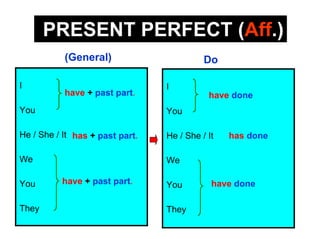
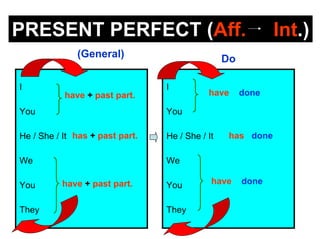
PRESENT PERFECT (Aff.)
           (General)                       Do

I                                I
           have + past part.                have done
You                              You

He / She / It has + past part.   He / She / It   has done

We                               We

You       have + past part.      You         have done

They                             They
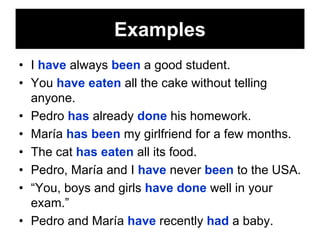
Examples
• I have always been a good student.
• You have eaten all the cake without telling
  anyone.
• Pedro has already done his homework.
• María has been my girlfriend for a few months.
• The cat has eaten all its food.
• Pedro, María and I have never been to the USA.
• “You, boys and girls have done well in your
  exam.”
• Pedro and María have recently had a baby.
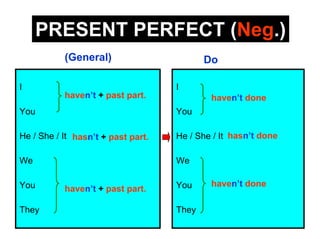
PRESENT PERFECT (Neg.)
           (General)                       Do

I                                   I
           haven’t + past part.             haven’t done
You                                 You

He / She / It hasn’t + past part.   He / She / It hasn’t done

We                                  We

You                                 You     haven’t done
           haven’t + past part.

They                                They
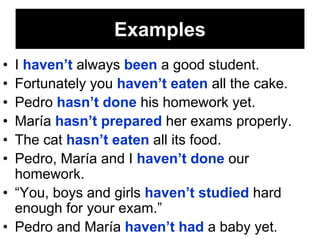
Examples
• I haven’t always been a good student.
• Fortunately you haven’t eaten all the cake.
• Pedro hasn’t done his homework yet.
• María hasn’t prepared her exams properly.
• The cat hasn’t eaten all its food.
• Pedro, María and I haven’t done our
  homework.
• “You, boys and girls haven’t studied hard
  enough for your exam.”
• Pedro and María haven’t had a baby yet.
PRESENT PERFECT (Aff.                                        Int.)
              (General)                          Do

I                                I
           have + past part.                have      done

You                              You

He / She / It has + past part.   He / She / It    has done

We                               We

You       have + past part.      You         have     done


They                             They
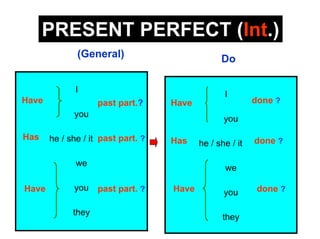
PRESENT PERFECT (Int.)
              (General)                          Do

              I
                                                  I
Have                past part.?     Have                   done ?
             you
                                                  you

Has    he / she / it past part. ?   Has                    done ?
                                           he / she / it

              we
                                                  we

Have         you past part. ?       Have                    done ?
                                                  you

             they
                                                  they
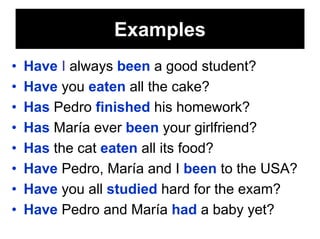
Examples
•   Have I always been a good student?
•   Have you eaten all the cake?
•   Has Pedro finished his homework?
•   Has María ever been your girlfriend?
•   Has the cat eaten all its food?
•   Have Pedro, María and I been to the USA?
•   Have you all studied hard for the exam?
•   Have Pedro and María had a baby yet?
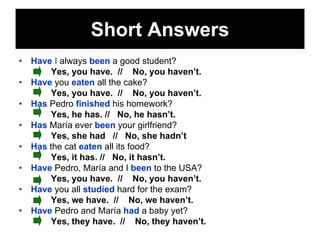
Short Answers
•   Have I always been a good student?
        Yes, you have. // No, you haven’t.
•   Have you eaten all the cake?
        Yes, you have. // No, you haven’t.
•   Has Pedro finished his homework?
        Yes, he has. // No, he hasn’t.
•   Has María ever been your girlfriend?
        Yes, she had // No, she hadn’t
•   Has the cat eaten all its food?
        Yes, it has. // No, it hasn’t.
•   Have Pedro, María and I been to the USA?
        Yes, you have. // No, you haven’t.
•   Have you all studied hard for the exam?
        Yes, we have. // No, we haven’t.
•   Have Pedro and María had a baby yet?
        Yes, they have. // No, they haven’t.

Present Perfect Simple Forms

  • 1.
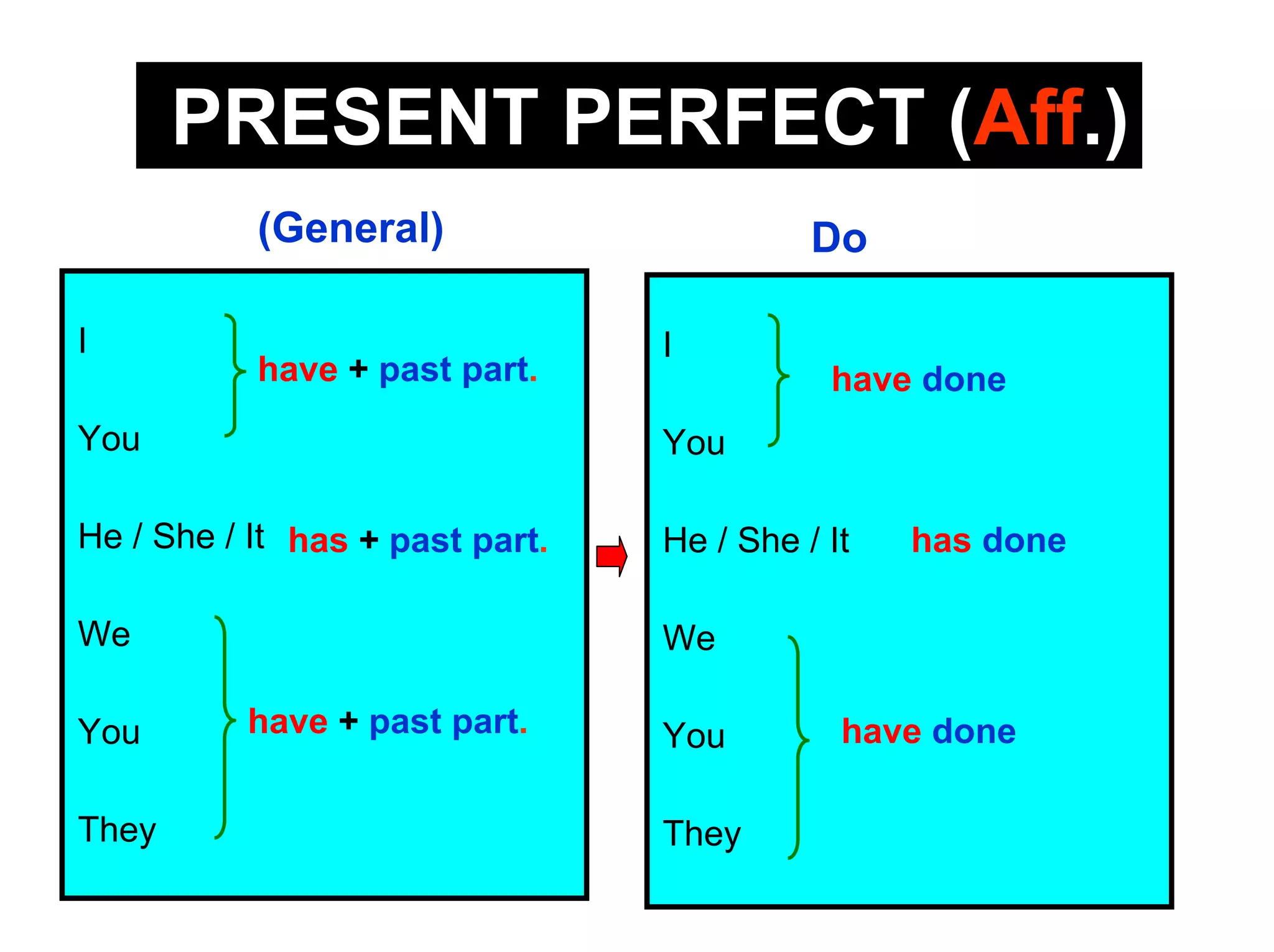
    PRESENT PERFECT (Aff.) (General) Do I I have + past part. have done You You He / She / It has + past part. He / She / It has done We We You have + past part. You have done They They
  • 2.
    Examples • I havealways been a good student. • You have eaten all the cake without telling anyone. • Pedro has already done his homework. • María has been my girlfriend for a few months. • The cat has eaten all its food. • Pedro, María and I have never been to the USA. • “You, boys and girls have done well in your exam.” • Pedro and María have recently had a baby.
  • 3.
    PRESENT PERFECT (Neg.) (General) Do I I haven’t + past part. haven’t done You You He / She / It hasn’t + past part. He / She / It hasn’t done We We You You haven’t done haven’t + past part. They They
  • 4.
    Examples • I haven’talways been a good student. • Fortunately you haven’t eaten all the cake. • Pedro hasn’t done his homework yet. • María hasn’t prepared her exams properly. • The cat hasn’t eaten all its food. • Pedro, María and I haven’t done our homework. • “You, boys and girls haven’t studied hard enough for your exam.” • Pedro and María haven’t had a baby yet.
  • 5.
    PRESENT PERFECT (Aff. Int.) (General) Do I I have + past part. have done You You He / She / It has + past part. He / She / It has done We We You have + past part. You have done They They
  • 6.
    PRESENT PERFECT (Int.) (General) Do I I Have past part.? Have done ? you you Has he / she / it past part. ? Has done ? he / she / it we we Have you past part. ? Have done ? you they they
  • 7.
    Examples • Have I always been a good student? • Have you eaten all the cake? • Has Pedro finished his homework? • Has María ever been your girlfriend? • Has the cat eaten all its food? • Have Pedro, María and I been to the USA? • Have you all studied hard for the exam? • Have Pedro and María had a baby yet?
  • 8.
    Short Answers • Have I always been a good student? Yes, you have. // No, you haven’t. • Have you eaten all the cake? Yes, you have. // No, you haven’t. • Has Pedro finished his homework? Yes, he has. // No, he hasn’t. • Has María ever been your girlfriend? Yes, she had // No, she hadn’t • Has the cat eaten all its food? Yes, it has. // No, it hasn’t. • Have Pedro, María and I been to the USA? Yes, you have. // No, you haven’t. • Have you all studied hard for the exam? Yes, we have. // No, we haven’t. • Have Pedro and María had a baby yet? Yes, they have. // No, they haven’t.