PRESENT PERFECT SIMPLE
Form:
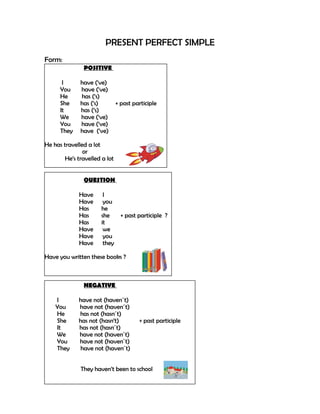
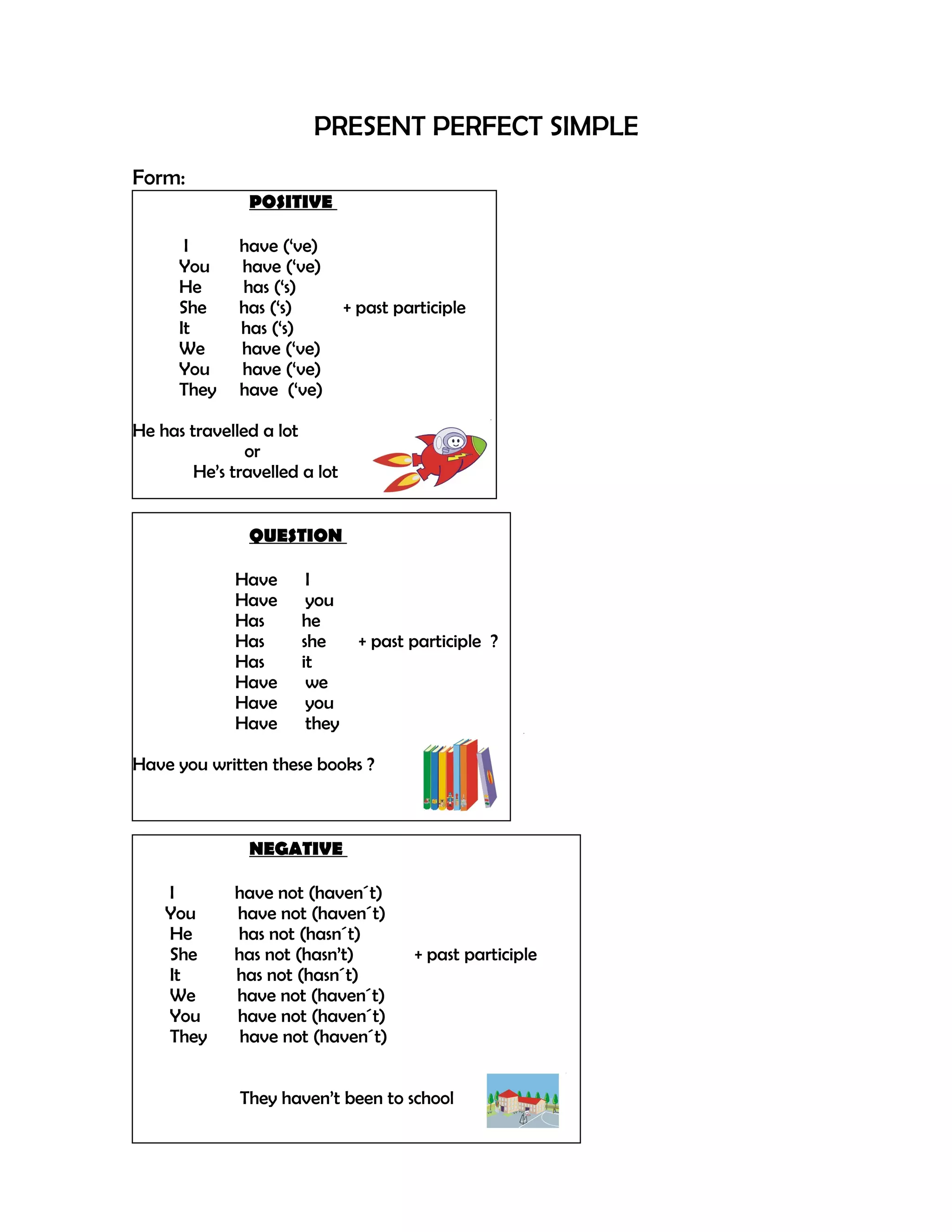
               POSITIVE

       I      have (‘ve)
      You     have (‘ve)
      He      has (‘s)
      She     has (‘s)         + past participle
      It      has (‘s)
      We      have (‘ve)
      You     have (‘ve)
      They    have (‘ve)

He has travelled a lot
               or
        He’s travelled a lot


               QUESTION

             Have       I
             Have       you
             Has       he
             Has       she       + past participle ?
             Has       it
             Have       we
             Have       you
             Have       they

Have you written these books ?


               NEGATIVE

    I        have not (haven´t)
    You      have not (haven´t)
    He       has not (hasn´t)
    She      has not (hasn’t)           + past participle
    It       has not (hasn´t)
    We       have not (haven´t)
    You      have not (haven´t)
    They      have not (haven´t)


              They haven’t been to school
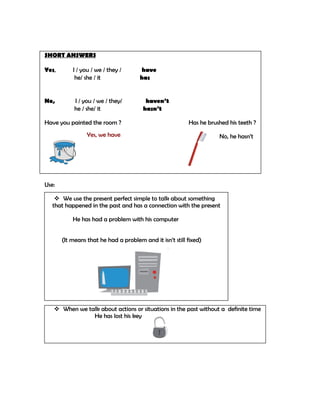
SHORT ANSWERS

Yes,       I / you / we / they /      have
            he/ she / it              has


No,         I / you / we / they/         haven’t
            he / she/ it                hasn’t

Have you painted the room ?                               Has he brushed his teeth ?
                 Yes, we have                                        No, he hasn’t


Use:

     We use the present perfect simple to talk about something
   that happened in the past and has a connection with the present

           He has had a problem with his computer


       (It means that he had a problem and it isn’t still fixed)


    When we talk about actions or situations in the past without a definite time
               He has lost his key
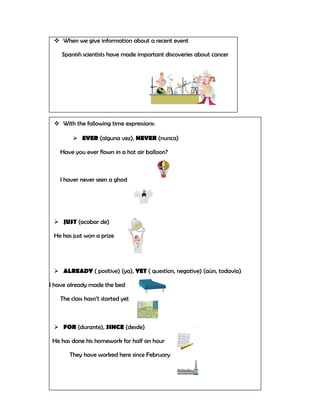
 When we give information about a recent event

    Spanish scientists have made important discoveries about cancer


  With the following time expressions:

         EVER (alguna vez), NEVER (nunca)

   Have you ever flown in a hot air balloon?


   I haver never seen a ghost


  JUST (acabar de)

 He has just won a prize


  ALREADY ( positive) (ya), YET ( question, negative) (aún, todavía)

I have already made the bed

   The class hasn’t started yet


  FOR (durante), SINCE (desde)

 He has done his homework for half an hour

       They have worked here since February

Present perfect simple

  • 1.
    PRESENT PERFECT SIMPLE Form: POSITIVE I have (‘ve) You have (‘ve) He has (‘s) She has (‘s) + past participle It has (‘s) We have (‘ve) You have (‘ve) They have (‘ve) He has travelled a lot or He’s travelled a lot QUESTION Have I Have you Has he Has she + past participle ? Has it Have we Have you Have they Have you written these books ? NEGATIVE I have not (haven´t) You have not (haven´t) He has not (hasn´t) She has not (hasn’t) + past participle It has not (hasn´t) We have not (haven´t) You have not (haven´t) They have not (haven´t) They haven’t been to school
  • 2.
    SHORT ANSWERS Yes, I / you / we / they / have he/ she / it has No, I / you / we / they/ haven’t he / she/ it hasn’t Have you painted the room ? Has he brushed his teeth ? Yes, we have No, he hasn’t Use:  We use the present perfect simple to talk about something that happened in the past and has a connection with the present He has had a problem with his computer (It means that he had a problem and it isn’t still fixed)  When we talk about actions or situations in the past without a definite time He has lost his key
  • 3.
     When wegive information about a recent event Spanish scientists have made important discoveries about cancer  With the following time expressions:  EVER (alguna vez), NEVER (nunca) Have you ever flown in a hot air balloon? I haver never seen a ghost  JUST (acabar de) He has just won a prize  ALREADY ( positive) (ya), YET ( question, negative) (aún, todavía) I have already made the bed The class hasn’t started yet  FOR (durante), SINCE (desde) He has done his homework for half an hour They have worked here since February