Polyethylene [ CH2 – CH2 ]
Polyethylene is commonly used polymer first produced by the Imperial
Chemical Industries (ICI) in 1933 by polymerising ethylene monomer.
𝑛 𝐶𝐻2 = 𝐶𝐻2 𝐶𝐻2 − 𝐶𝐻2
Preparation : Ethylene is prepared by the
1. Hydrogenation of acetylene
𝐶𝐻 ≡ 𝐶𝐻 𝐶𝐻2 = 𝐶𝐻2
2. By dehydration of ethanol
𝐶𝐻3 𝐶𝐻2 𝑂𝐻 𝐶𝐻2 = 𝐶𝐻2 + 𝐻2 𝑂
n
H2/Pd
Dehydration catalyst
n
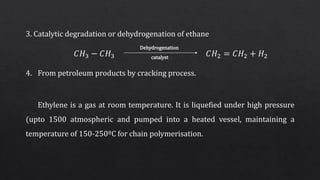
3. Catalytic degradation or dehydrogenation of ethane
𝐶𝐻3 − 𝐶𝐻3 𝐶𝐻2 = 𝐶𝐻2 + 𝐻2
4. From petroleum products by cracking process.
Ethylene is a gas at room temperature. It is liquefied under high pressure
(upto 1500 atmospheric and pumped into a heated vessel, maintaining a
temperature of 150-250ºC for chain polymerisation.
Dehydrogenation
catalyst
By using free radical initiator, low density poly ethylene (LDPE) is produced
having 0.92 gm/cc.
𝑛𝐶𝐻2 = 𝐶𝐻2 𝐶𝐻2 − 𝐶𝐻2
By using coordination chain polymerisation mechanism high density poly
ethylene (HDPE) is produced having density 0.965 gm/cc
𝑛𝐶𝐻2 = 𝐶𝐻2 [𝐶𝐻2 − 𝐶𝐻2]
n
Benzoyl peroxide
80 - 250ºC
1500 atmospheric pressure LDPE
n
Triethyl aluminium
120ºC
HDPE
Properties:
1. Polyethylene is a rigid, waxy white translucent, non-polar material, with high
symmetrical structure.
2. Polyethylene is a good electrical insulator.
3. Resistant to strong acids, alkalis and salt solutions at room temperature.
4. It is attacked by oils, organic solvents particularly kerosene.
5. Polyethylene is soft flexible polymer.
6. It is resistant to atmospheric conditions like O2, CO2, moisture and UV light.
• Low density poly ethylene (LDPE):
This possess branched chain structure and its melting point is 87°C.
• High density poly ethylene (HDPE):
This has melting point 144 - 150°C, linear polymer with 80% crystallinity
hence stiffer than LDPE, HDPE has a higher tensile strength and hardness with
less gas permeability.
THANK YOU

Polyethene

  • 2.
    Polyethylene [ CH2– CH2 ] Polyethylene is commonly used polymer first produced by the Imperial Chemical Industries (ICI) in 1933 by polymerising ethylene monomer. 𝑛 𝐶𝐻2 = 𝐶𝐻2 𝐶𝐻2 − 𝐶𝐻2 Preparation : Ethylene is prepared by the 1. Hydrogenation of acetylene 𝐶𝐻 ≡ 𝐶𝐻 𝐶𝐻2 = 𝐶𝐻2 2. By dehydration of ethanol 𝐶𝐻3 𝐶𝐻2 𝑂𝐻 𝐶𝐻2 = 𝐶𝐻2 + 𝐻2 𝑂 n H2/Pd Dehydration catalyst n
  • 3.
    3. Catalytic degradationor dehydrogenation of ethane 𝐶𝐻3 − 𝐶𝐻3 𝐶𝐻2 = 𝐶𝐻2 + 𝐻2 4. From petroleum products by cracking process. Ethylene is a gas at room temperature. It is liquefied under high pressure (upto 1500 atmospheric and pumped into a heated vessel, maintaining a temperature of 150-250ºC for chain polymerisation. Dehydrogenation catalyst
  • 4.
    By using freeradical initiator, low density poly ethylene (LDPE) is produced having 0.92 gm/cc. 𝑛𝐶𝐻2 = 𝐶𝐻2 𝐶𝐻2 − 𝐶𝐻2 By using coordination chain polymerisation mechanism high density poly ethylene (HDPE) is produced having density 0.965 gm/cc 𝑛𝐶𝐻2 = 𝐶𝐻2 [𝐶𝐻2 − 𝐶𝐻2] n Benzoyl peroxide 80 - 250ºC 1500 atmospheric pressure LDPE n Triethyl aluminium 120ºC HDPE
  • 5.
    Properties: 1. Polyethylene isa rigid, waxy white translucent, non-polar material, with high symmetrical structure. 2. Polyethylene is a good electrical insulator. 3. Resistant to strong acids, alkalis and salt solutions at room temperature. 4. It is attacked by oils, organic solvents particularly kerosene. 5. Polyethylene is soft flexible polymer. 6. It is resistant to atmospheric conditions like O2, CO2, moisture and UV light.
  • 6.
    • Low densitypoly ethylene (LDPE): This possess branched chain structure and its melting point is 87°C. • High density poly ethylene (HDPE): This has melting point 144 - 150°C, linear polymer with 80% crystallinity hence stiffer than LDPE, HDPE has a higher tensile strength and hardness with less gas permeability.
  • 7.