Policies in
Planning and Development
Rajendra Sharma
Vision
Policy
Strategies
Acts/Laws/Directives
Policies in Planning and Development
Acts/Laws/Directives
Focus
Investment
Plan/Implementation/Monitoring/Evaluation
National Urban Policy – 2007
Underway in Implementation
Government
Non-Government
Local
National
Organizations involved in urban development
National
International
Bi-lateral
Multi-lateral
UN Agencies
Information
Awareness
Need Assessment
Resource mobilization
Civil Society and their roles and responsibilities
Resource mobilization
Transparency
Accountability/Ownership
Monitoring and Evaluation
Community mobilization, participation, social capital formation,
Here is a formula to follow:
CAPACITY BUILDING + PARTNERSHIP BUILDING = POWER
Desired Results
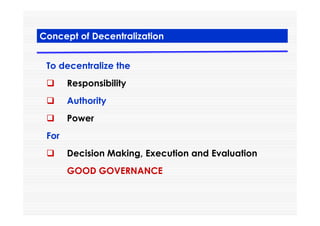
To achieve the
To decentralize the
Responsibility
Authority
Power
Concept of Decentralization
Power
For
Decision Making, Execution and Evaluation
GOOD GOVERNANCE
Decentralization Chronology
YEAR INITIATIVE REMARKS
1962 Constitution of Nepal Emphasis on decentralization of Panchayats
Creation of post of Chief District Officer (CDO)
1965 Local Administration Act Decentralization plan of three phases
Panchayat Development Land Tax (PDLT), Pilot scheme
1972 Local Development Department Creation of post of Panchayat Development Officer (PDO)
1974 District Administration Plan Provision for District Development Plan
1978 Integrated Panchayat Development
Design
Idea of "Service Centre" as focal point for local planning 1979, PDLT withdrawn
27 June 2007
Design
1980
Establishment of Ministry of Local
Development (MLD)
Conversion of PDO to LDO (Local Development Officer)
1981
Merger of Panchayat and Local
Development Ministries as MPLD
Integrated Rural Development Central Co-ordination Board
1982 Decentralization Act Districts to prepare periodic plans
1984 Decentralization Rules District, Village, Town Panchayats to prepare annual/periodic plans
1989 Supporting Decentralized Planning Project (SLDP)
1992 DDC, VDC and Municipality Act Increased responsibility for local development 1992
1992 DDC, VDC and Municipality Rules Decentralization Support Project (DSP)
1995, Participatory District Development Project (PDDP)
1996 Decentralization Co-ordination
Committee
1996, Local Governance Programme (LGP)
1999 Local Self-governance Act More on delegation than devolution
Interconnection of the market zones – surrounding
communities and urban centers; depends upon the :
Rural Urban Partnership, Public Private Partnership
Existence of direct flow including intensity of human,
money and materials
Existence of socio-economic linkages
Linked with road network and transportation facilities
Identification of localities or areas where people become
indifferent on choosing either market to undertake
trading and/or marketing functions.
The market zone encompasses diverse social and
environmental conditions.
RUP, PPP
Poverty reduction in rural and urban areas requires an
integrated approach which, provides rural population
with access to urban opportunities such as markets for
rural products, urban services, and employmentrural products, urban services, and employment
opportunities.
It is necessary to modify urban structures such as jobs
and good markets, and service provision and delivery to
accommodate the specific needs of the rural
population.
Rural Urban Partnership, Public Private Partnership
In other words, there is a need for strengthening rural-
urban linkages in a number of areas, particularly
economic linkages (markets, employment) and physical
linkages (infrastructure, transport, communication).linkages (infrastructure, transport, communication).
It should also be noted that linkages will be increasingly
important in open and globalizing economies.
The starting point of this strengthening will be a planning
approach that covers small towns and surrounding rural
areas.
Rural Urban Partnership, Public Private Partnership
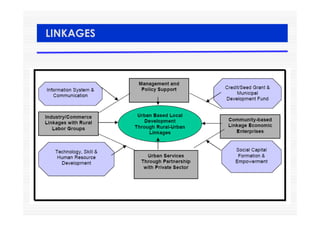
Rural-urban linkages take many different forms. In
general, “rural-urban linkages” refers to the flow of
people (migration), capital and goods (trade and in-kind
family support) between rural and urban areas.
It is important to add to these three economic flows, the
flow of ideas, innovation and information and the
environmental impact with urban areas have on rural
areas and (to a lesser degree) vice versa.
This exchange between urban and rural areas can be
beneficial or detrimental to either or both areas.
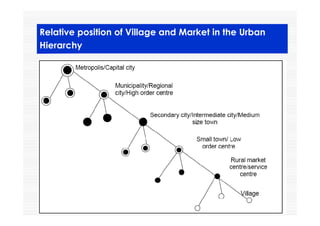
Relative position of Village and Market in the Urban
Hierarchy
LINKAGES
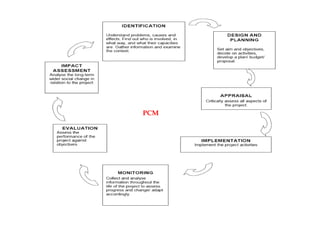
PCMPCM

Policy in planning and development [compatibility mode]

  • 1.
    Policies in Planning andDevelopment Rajendra Sharma
  • 2.
    Vision Policy Strategies Acts/Laws/Directives Policies in Planningand Development Acts/Laws/Directives Focus Investment Plan/Implementation/Monitoring/Evaluation National Urban Policy – 2007 Underway in Implementation
  • 3.
    Government Non-Government Local National Organizations involved inurban development National International Bi-lateral Multi-lateral UN Agencies
  • 4.
    Information Awareness Need Assessment Resource mobilization CivilSociety and their roles and responsibilities Resource mobilization Transparency Accountability/Ownership Monitoring and Evaluation
  • 5.
    Community mobilization, participation,social capital formation, Here is a formula to follow: CAPACITY BUILDING + PARTNERSHIP BUILDING = POWER Desired Results To achieve the
  • 6.
    To decentralize the Responsibility Authority Power Conceptof Decentralization Power For Decision Making, Execution and Evaluation GOOD GOVERNANCE
  • 7.
    Decentralization Chronology YEAR INITIATIVEREMARKS 1962 Constitution of Nepal Emphasis on decentralization of Panchayats Creation of post of Chief District Officer (CDO) 1965 Local Administration Act Decentralization plan of three phases Panchayat Development Land Tax (PDLT), Pilot scheme 1972 Local Development Department Creation of post of Panchayat Development Officer (PDO) 1974 District Administration Plan Provision for District Development Plan 1978 Integrated Panchayat Development Design Idea of "Service Centre" as focal point for local planning 1979, PDLT withdrawn 27 June 2007 Design 1980 Establishment of Ministry of Local Development (MLD) Conversion of PDO to LDO (Local Development Officer) 1981 Merger of Panchayat and Local Development Ministries as MPLD Integrated Rural Development Central Co-ordination Board 1982 Decentralization Act Districts to prepare periodic plans 1984 Decentralization Rules District, Village, Town Panchayats to prepare annual/periodic plans 1989 Supporting Decentralized Planning Project (SLDP) 1992 DDC, VDC and Municipality Act Increased responsibility for local development 1992 1992 DDC, VDC and Municipality Rules Decentralization Support Project (DSP) 1995, Participatory District Development Project (PDDP) 1996 Decentralization Co-ordination Committee 1996, Local Governance Programme (LGP) 1999 Local Self-governance Act More on delegation than devolution
  • 8.
    Interconnection of themarket zones – surrounding communities and urban centers; depends upon the : Rural Urban Partnership, Public Private Partnership Existence of direct flow including intensity of human, money and materials Existence of socio-economic linkages Linked with road network and transportation facilities Identification of localities or areas where people become indifferent on choosing either market to undertake trading and/or marketing functions. The market zone encompasses diverse social and environmental conditions.
  • 9.
    RUP, PPP Poverty reductionin rural and urban areas requires an integrated approach which, provides rural population with access to urban opportunities such as markets for rural products, urban services, and employmentrural products, urban services, and employment opportunities. It is necessary to modify urban structures such as jobs and good markets, and service provision and delivery to accommodate the specific needs of the rural population.
  • 10.
    Rural Urban Partnership,Public Private Partnership In other words, there is a need for strengthening rural- urban linkages in a number of areas, particularly economic linkages (markets, employment) and physical linkages (infrastructure, transport, communication).linkages (infrastructure, transport, communication). It should also be noted that linkages will be increasingly important in open and globalizing economies. The starting point of this strengthening will be a planning approach that covers small towns and surrounding rural areas.
  • 11.
    Rural Urban Partnership,Public Private Partnership Rural-urban linkages take many different forms. In general, “rural-urban linkages” refers to the flow of people (migration), capital and goods (trade and in-kind family support) between rural and urban areas. It is important to add to these three economic flows, the flow of ideas, innovation and information and the environmental impact with urban areas have on rural areas and (to a lesser degree) vice versa. This exchange between urban and rural areas can be beneficial or detrimental to either or both areas.
  • 12.
    Relative position ofVillage and Market in the Urban Hierarchy
  • 13.
  • 14.