POLAR REGION
1
PREPARED BY- SMIT PANCHAL
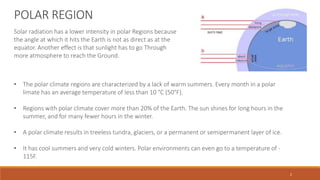
Solar radiation has a lower intensity in polar Regions because
the angle at which it hits the Earth is not as direct as at the
equator. Another effect is that sunlight has to go Through
more atmosphere to reach the Ground.
• The polar climate regions are characterized by a lack of warm summers. Every month in a polar
limate has an average temperature of less than 10 °C (50°F).
• Regions with polar climate cover more than 20% of the Earth. The sun shines for long hours in the
summer, and for many fewer hours in the winter.
• A polar climate results in treeless tundra, glaciers, or a permanent or semipermanent layer of ice.
• It has cool summers and very cold winters. Polar environments can even go to a temperature of -
115F.
POLAR REGION
2
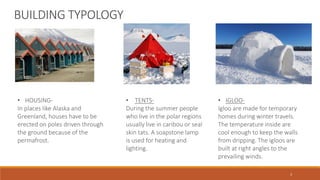
• HOUSING-
In places like Alaska and
Greenland, houses have to be
erected on poles driven through
the ground because of the
permafrost.
BUILDING TYPOLOGY
• IGLOO-
Igloo are made for temporary
homes during winter travels.
The temperature inside are
cool enough to keep the walls
from dripping. The igloos are
built at right angles to the
prevailing winds.
• TENTS-
During the summer people
who live in the polar regions
usually live in caribou or seal
skin tats. A soapstone lamp
is used for heating and
lighting.
3
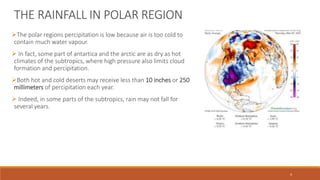
The polar regions percipitation is low because air is too cold to
contain much water vapour.
 In fact, some part of antartica and the arctic are as dry as hot
climates of the subtropics, where high pressure also limits cloud
formation and percipitation.
Both hot and cold deserts may receive less than 10 inches or 250
millimeters of percipitation each year.
 Indeed, in some parts of the subtropics, rain may not fall for
several years.
THE RAINFALL IN POLAR REGION
4
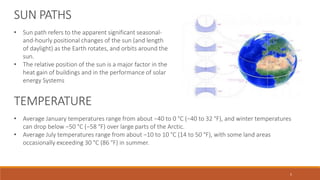
SUN PATHS
• Sun path refers to the apparent significant seasonal-
and-hourly positional changes of the sun (and length
of daylight) as the Earth rotates, and orbits around the
sun.
• The relative position of the sun is a major factor in the
heat gain of buildings and in the performance of solar
energy Systems
TEMPERATURE
• Average January temperatures range from about −40 to 0 °C (−40 to 32 °F), and winter temperatures
can drop below −50 °C (−58 °F) over large parts of the Arctic.
• Average July temperatures range from about −10 to 10 °C (14 to 50 °F), with some land areas
occasionally exceeding 30 °C (86 °F) in summer.
5
6
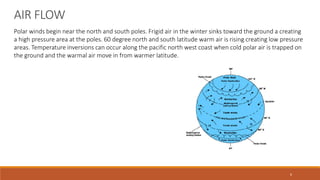
AIR FLOW
Polar winds begin near the north and south poles. Frigid air in the winter sinks toward the ground a creating
a high pressure area at the poles. 60 degree north and south latitude warm air is rising creating low pressure
areas. Temperature inversions can occur along the pacific north west coast when cold polar air is trapped on
the ground and the warmal air move in from warmer latitude.

POLAR REGION

  • 1.
  • 2.
    Solar radiation hasa lower intensity in polar Regions because the angle at which it hits the Earth is not as direct as at the equator. Another effect is that sunlight has to go Through more atmosphere to reach the Ground. • The polar climate regions are characterized by a lack of warm summers. Every month in a polar limate has an average temperature of less than 10 °C (50°F). • Regions with polar climate cover more than 20% of the Earth. The sun shines for long hours in the summer, and for many fewer hours in the winter. • A polar climate results in treeless tundra, glaciers, or a permanent or semipermanent layer of ice. • It has cool summers and very cold winters. Polar environments can even go to a temperature of - 115F. POLAR REGION 2
  • 3.
    • HOUSING- In placeslike Alaska and Greenland, houses have to be erected on poles driven through the ground because of the permafrost. BUILDING TYPOLOGY • IGLOO- Igloo are made for temporary homes during winter travels. The temperature inside are cool enough to keep the walls from dripping. The igloos are built at right angles to the prevailing winds. • TENTS- During the summer people who live in the polar regions usually live in caribou or seal skin tats. A soapstone lamp is used for heating and lighting. 3
  • 4.
    The polar regionspercipitation is low because air is too cold to contain much water vapour.  In fact, some part of antartica and the arctic are as dry as hot climates of the subtropics, where high pressure also limits cloud formation and percipitation. Both hot and cold deserts may receive less than 10 inches or 250 millimeters of percipitation each year.  Indeed, in some parts of the subtropics, rain may not fall for several years. THE RAINFALL IN POLAR REGION 4
  • 5.
    SUN PATHS • Sunpath refers to the apparent significant seasonal- and-hourly positional changes of the sun (and length of daylight) as the Earth rotates, and orbits around the sun. • The relative position of the sun is a major factor in the heat gain of buildings and in the performance of solar energy Systems TEMPERATURE • Average January temperatures range from about −40 to 0 °C (−40 to 32 °F), and winter temperatures can drop below −50 °C (−58 °F) over large parts of the Arctic. • Average July temperatures range from about −10 to 10 °C (14 to 50 °F), with some land areas occasionally exceeding 30 °C (86 °F) in summer. 5
  • 6.
    6 AIR FLOW Polar windsbegin near the north and south poles. Frigid air in the winter sinks toward the ground a creating a high pressure area at the poles. 60 degree north and south latitude warm air is rising creating low pressure areas. Temperature inversions can occur along the pacific north west coast when cold polar air is trapped on the ground and the warmal air move in from warmer latitude.