:
“EQUATORIAL REGION”
By:
J.Jenson Samr
“EQUATORIAL REGION”
We opted this topic to get more
information about Equatorial
region,its climate, its natural
vegetation, its animal life, its
economic importance etc…
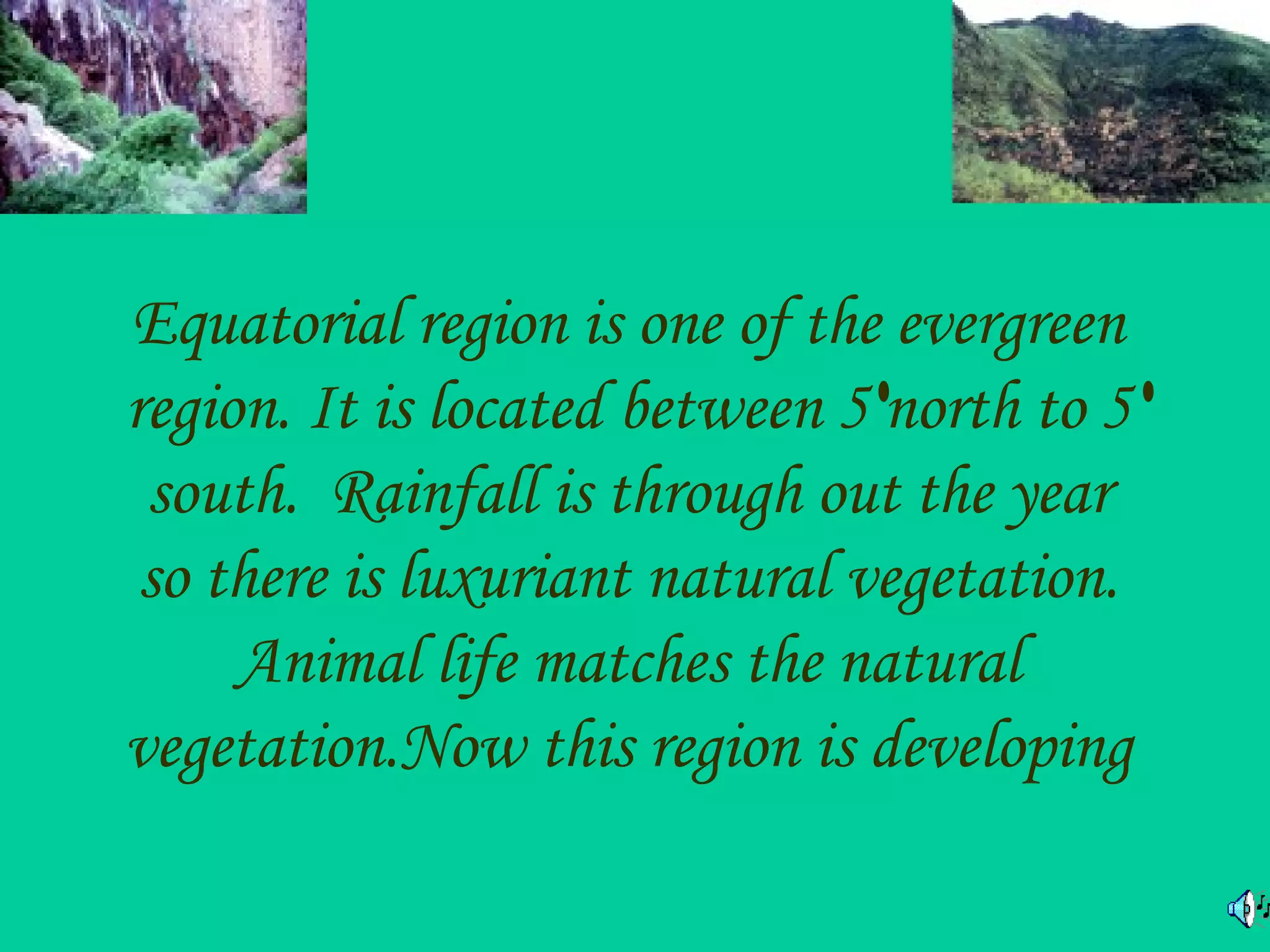
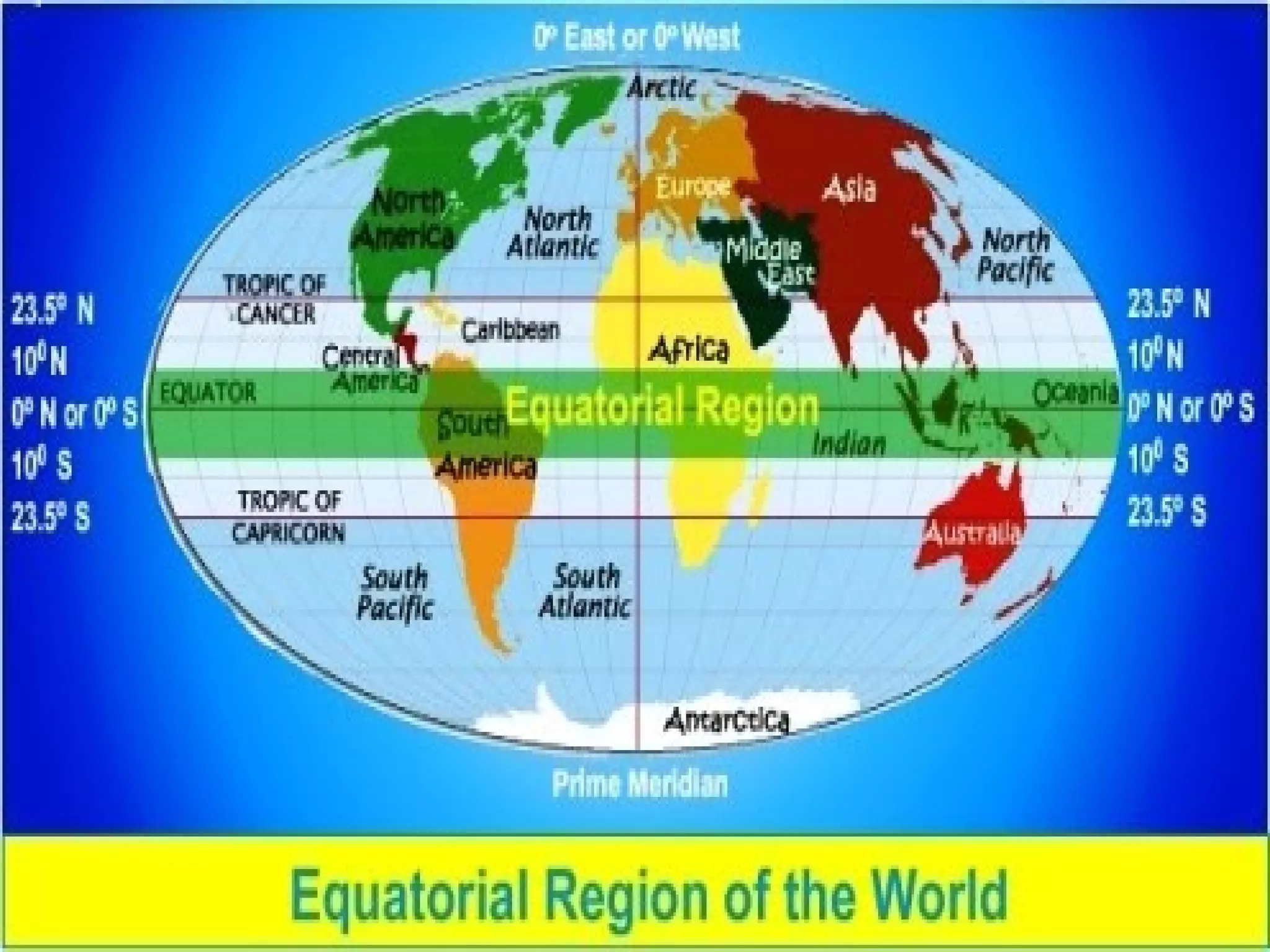
Equatorial region is one of the evergreen
region. It is located between 5 north to 5
south. Rainfall is through out the year
so there is luxuriant natural vegetation.
Animal life matches the natural
vegetation.Now this region is developing
OBJECTIVES:
To know more about equatorial region.
To acquire knowledge of its natural
vegetation and animal life.
To have a complete analysis about the
climate of equatorial region and its
importance.
CONTENTS:
 Meaning of Natural region.
Types of Major Natural Region.
Introduction to the topic.
Location.
Climate.
Natural vegetation.
 Animal Life..
 Economic Life & development.
MEANING OF NATURAL
REGION:
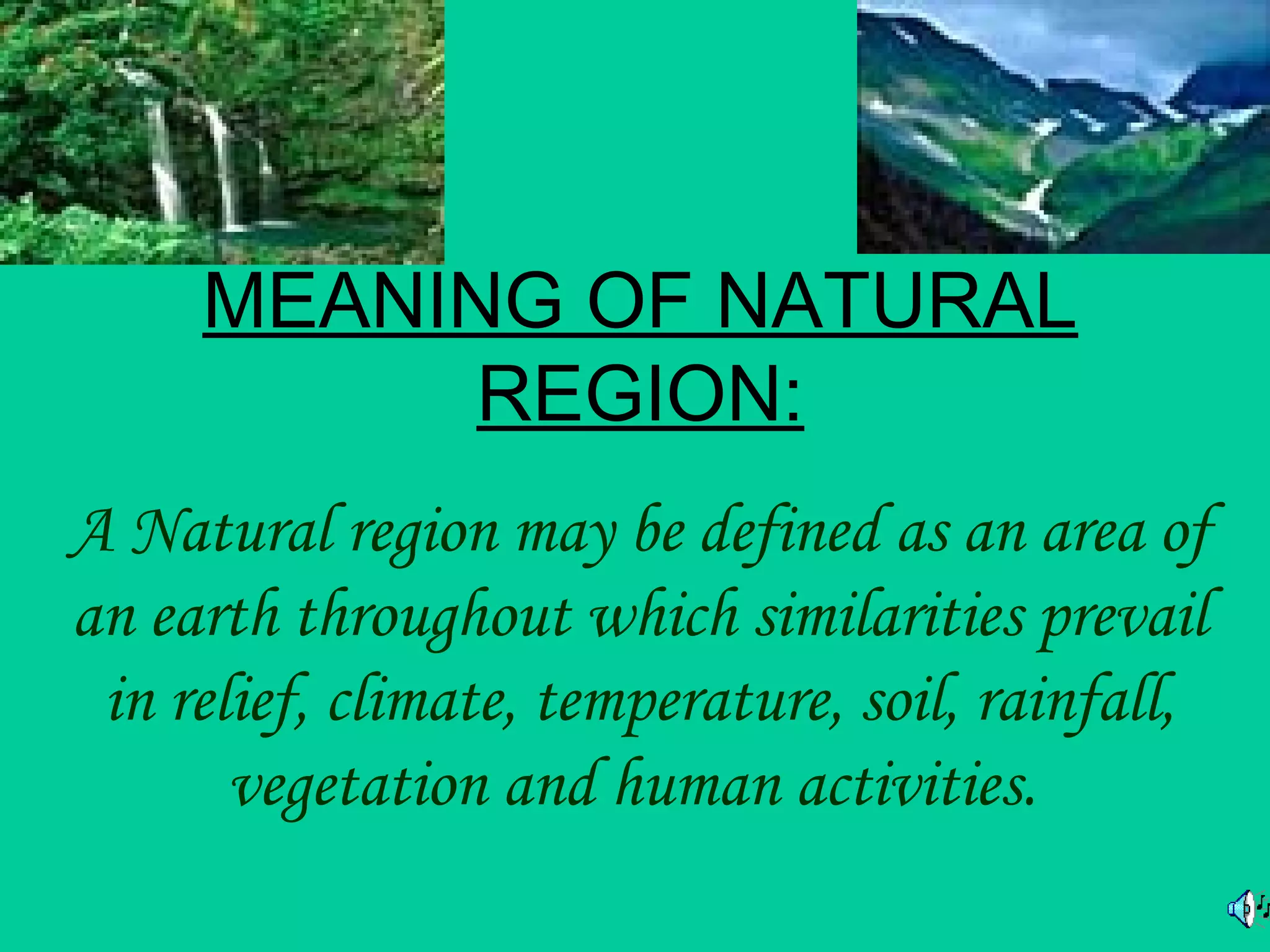
A Natural region may be defined as an area of
an earth throughout which similarities prevail
in relief, climate, temperature, soil, rainfall,
vegetation and human activities.
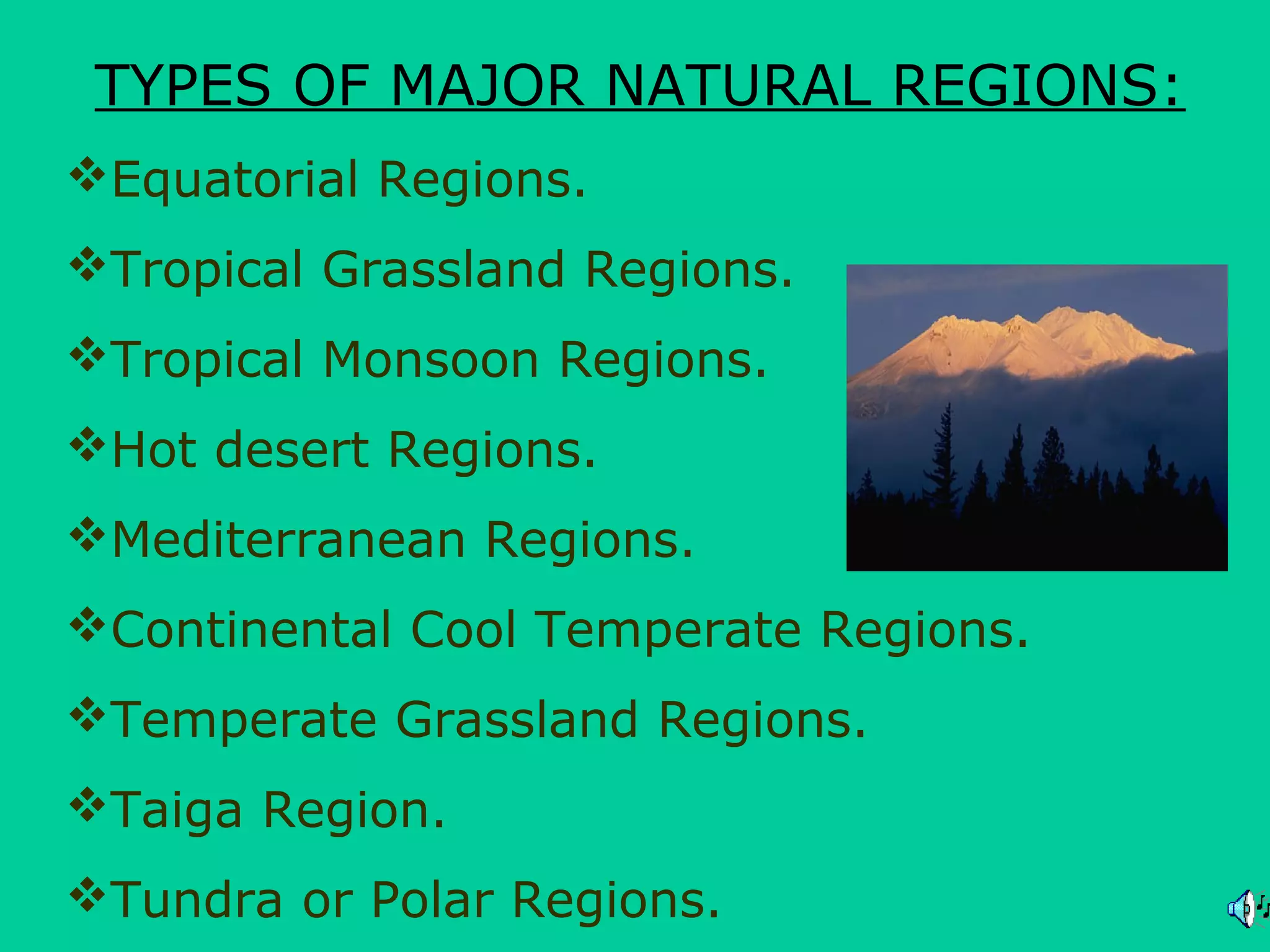
TYPES OF MAJOR NATURAL REGIONS:
Equatorial Regions.
Tropical Grassland Regions.
Tropical Monsoon Regions.
Hot desert Regions.
Mediterranean Regions.
Continental Cool Temperate Regions.
Temperate Grassland Regions.
Taiga Region.
Tundra or Polar Regions.
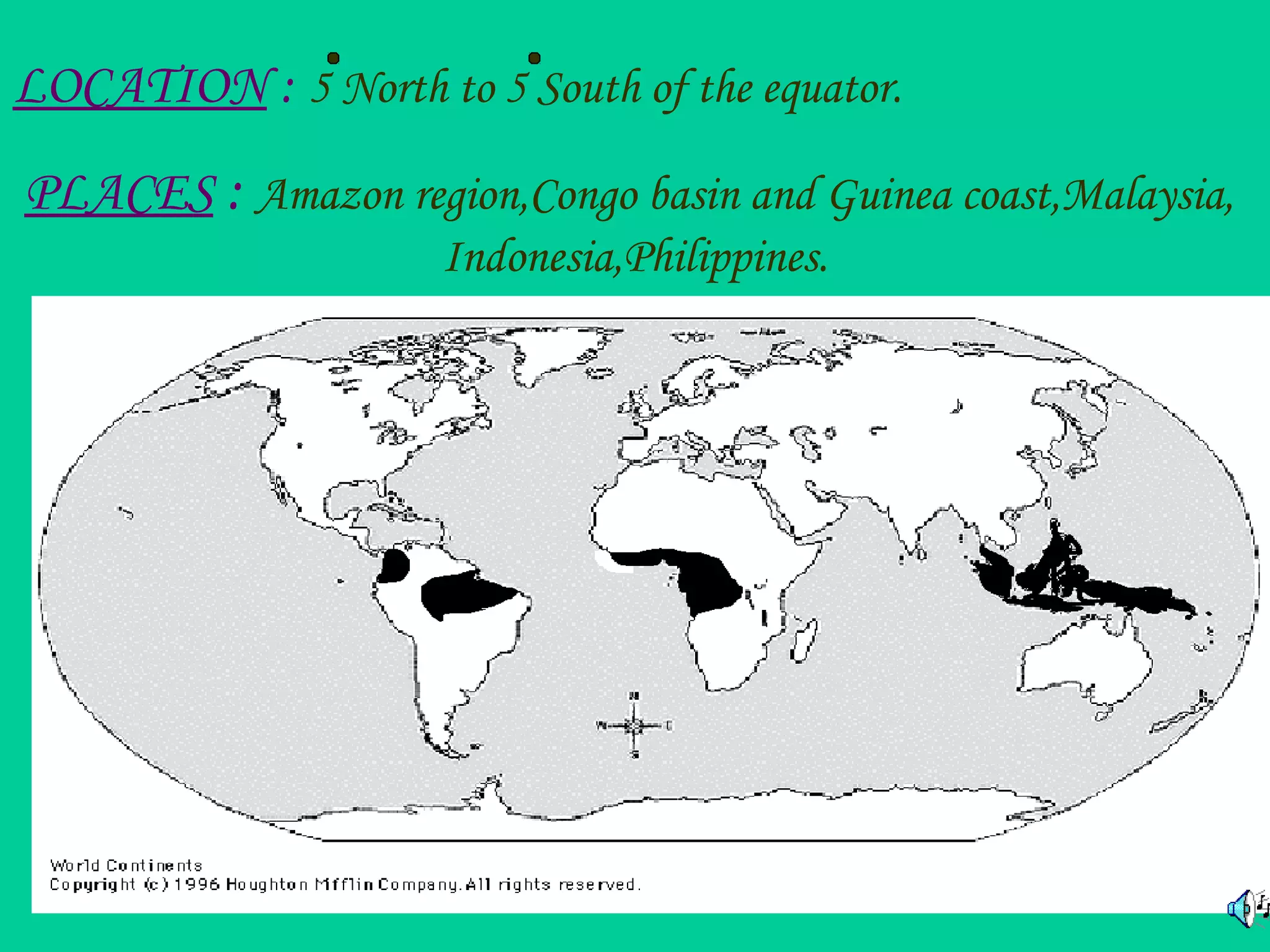
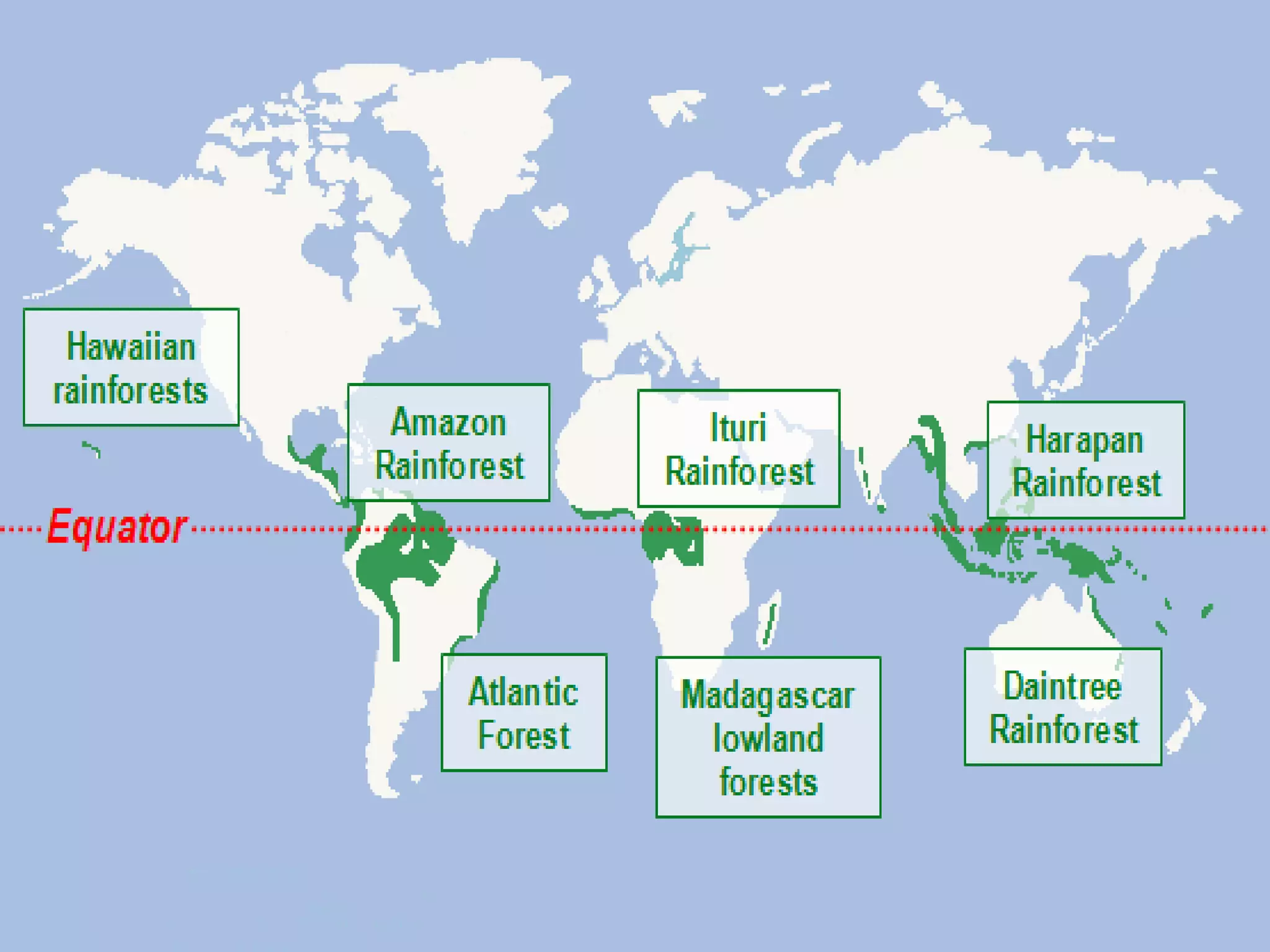
LOCATION : 5 North to 5 South of the equator.
PLACES : Amazon region,Congo basin and Guinea coast,Malaysia,
Indonesia,Philippines.
CLIMATE:
The region has hot and wet climate because of
its nearness to the equator and the sunrays are
always vertical .
Average temperature is 25 C to 30 C.
There is no winter.
There is rainfall throughout the year.
Climate is unfavourable for human life and
activity.
NATURAL VEGETATION:
High temperature and heavy
rainfall helps luxuriant growth.
The trees are evergreen throughout
the year. The vegetation includes
Mahogany, Ebony, Rosewood,
Cinchona and Rubber.
mahogany ebony
cinchona Rubber
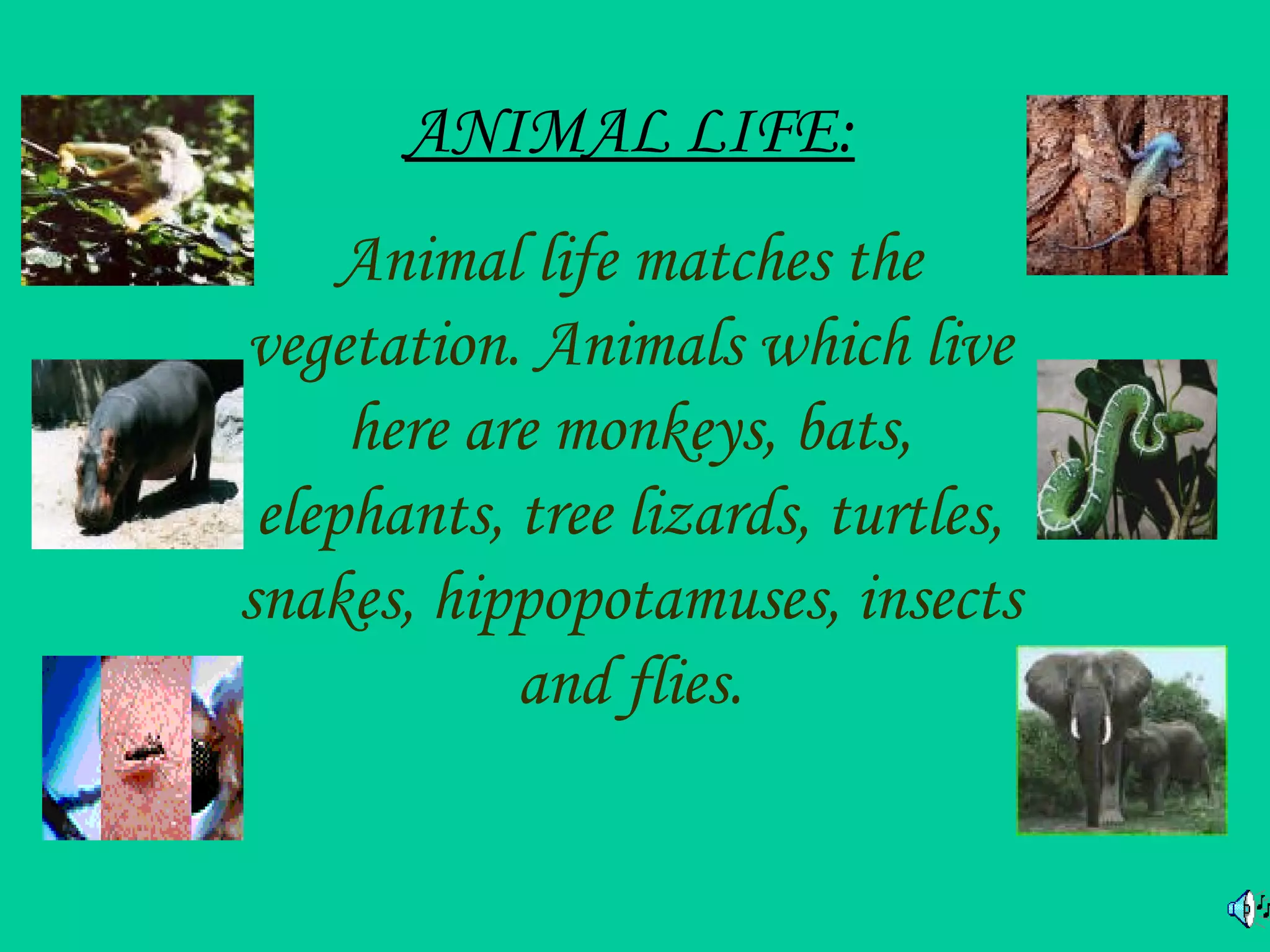
ANIMAL LIFE:
Animal life matches the
vegetation. Animals which live
here are monkeys, bats,
elephants, tree lizards, turtles,
snakes, hippopotamuses, insects
and flies.
ECONOMIC DEVELOPMENT:
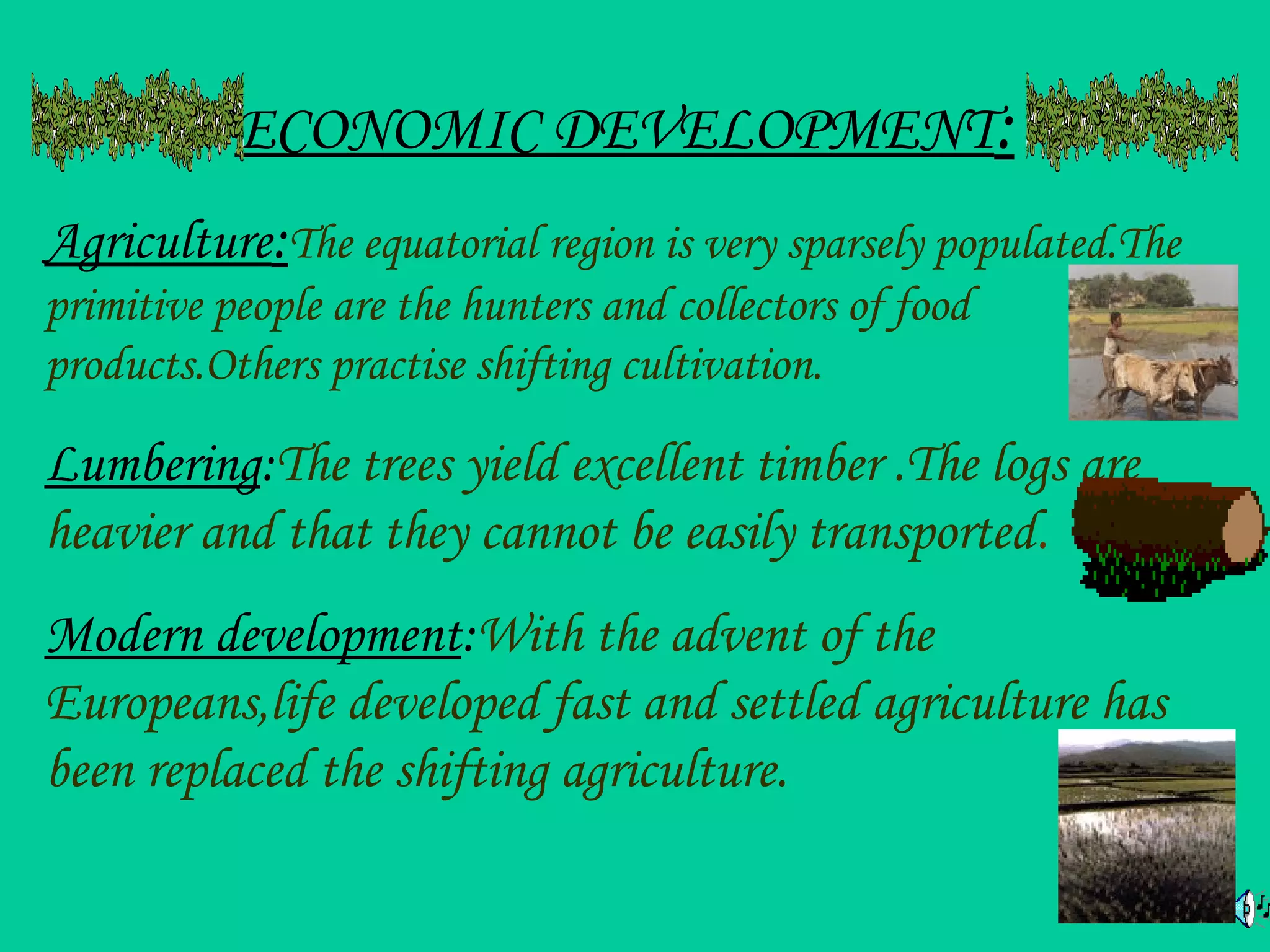
Agriculture:The equatorial region is very sparsely populated.The
primitive people are the hunters and collectors of food
products.Others practise shifting cultivation.
Lumbering:The trees yield excellent timber .The logs are
heavier and that they cannot be easily transported.
Modern development:With the advent of the
Europeans,life developed fast and settled agriculture has
been replaced the shifting agriculture.
Characters of Equatorial Region
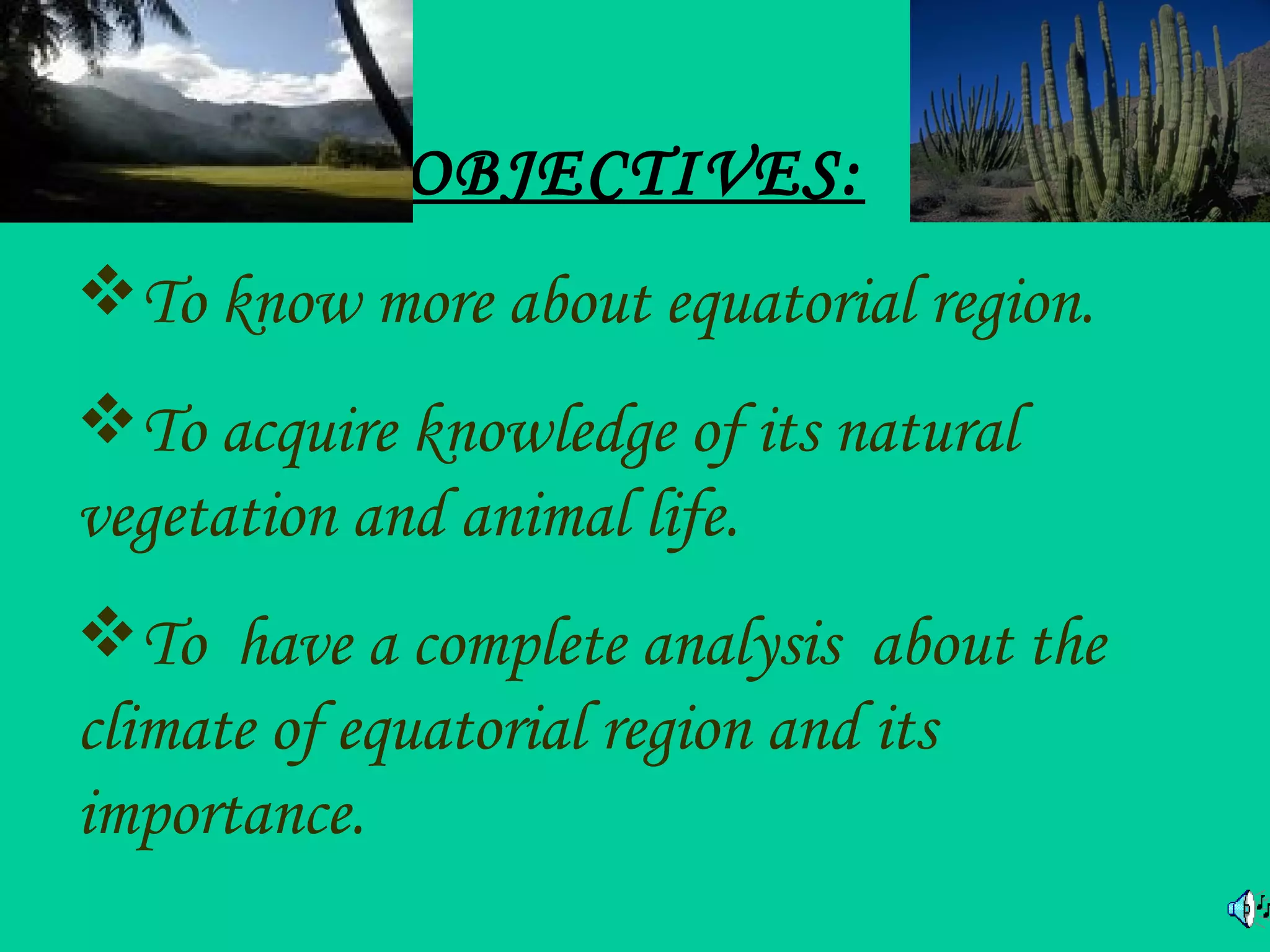
• The rivers in the equatorial climate flow
very well.
• The biggest river in the river in this region
is Amazon, South America.
• Vegetation is abundant in this region with
lots of plant species, So these forested areas
are known as Jungle.
BIBLIOGRAPHY:
www.moorea.com/moorea_photogr
aphies/moorea_.htm/
www.irna .com/occasion.htm
www.google.com

Equitorial regions

  • 1.
  • 2.
    “EQUATORIAL REGION” We optedthis topic to get more information about Equatorial region,its climate, its natural vegetation, its animal life, its economic importance etc…
  • 3.
    Equatorial region isone of the evergreen region. It is located between 5 north to 5 south. Rainfall is through out the year so there is luxuriant natural vegetation. Animal life matches the natural vegetation.Now this region is developing
  • 4.
    OBJECTIVES: To know moreabout equatorial region. To acquire knowledge of its natural vegetation and animal life. To have a complete analysis about the climate of equatorial region and its importance.
  • 5.
    CONTENTS:  Meaning ofNatural region. Types of Major Natural Region. Introduction to the topic. Location. Climate. Natural vegetation.  Animal Life..  Economic Life & development.
  • 7.
    MEANING OF NATURAL REGION: ANatural region may be defined as an area of an earth throughout which similarities prevail in relief, climate, temperature, soil, rainfall, vegetation and human activities.
  • 8.
    TYPES OF MAJORNATURAL REGIONS: Equatorial Regions. Tropical Grassland Regions. Tropical Monsoon Regions. Hot desert Regions. Mediterranean Regions. Continental Cool Temperate Regions. Temperate Grassland Regions. Taiga Region. Tundra or Polar Regions.
  • 9.
    LOCATION : 5North to 5 South of the equator. PLACES : Amazon region,Congo basin and Guinea coast,Malaysia, Indonesia,Philippines.
  • 12.
    CLIMATE: The region hashot and wet climate because of its nearness to the equator and the sunrays are always vertical . Average temperature is 25 C to 30 C. There is no winter. There is rainfall throughout the year. Climate is unfavourable for human life and activity.
  • 14.
    NATURAL VEGETATION: High temperatureand heavy rainfall helps luxuriant growth. The trees are evergreen throughout the year. The vegetation includes Mahogany, Ebony, Rosewood, Cinchona and Rubber. mahogany ebony cinchona Rubber
  • 16.
    ANIMAL LIFE: Animal lifematches the vegetation. Animals which live here are monkeys, bats, elephants, tree lizards, turtles, snakes, hippopotamuses, insects and flies.
  • 17.
    ECONOMIC DEVELOPMENT: Agriculture:The equatorialregion is very sparsely populated.The primitive people are the hunters and collectors of food products.Others practise shifting cultivation. Lumbering:The trees yield excellent timber .The logs are heavier and that they cannot be easily transported. Modern development:With the advent of the Europeans,life developed fast and settled agriculture has been replaced the shifting agriculture.
  • 18.
    Characters of EquatorialRegion • The rivers in the equatorial climate flow very well. • The biggest river in the river in this region is Amazon, South America. • Vegetation is abundant in this region with lots of plant species, So these forested areas are known as Jungle.
  • 20.