Points to be considered in
Semisolid | Topical
formulation design
Guru Balaji.S
s.gurubalaji@gmail.com
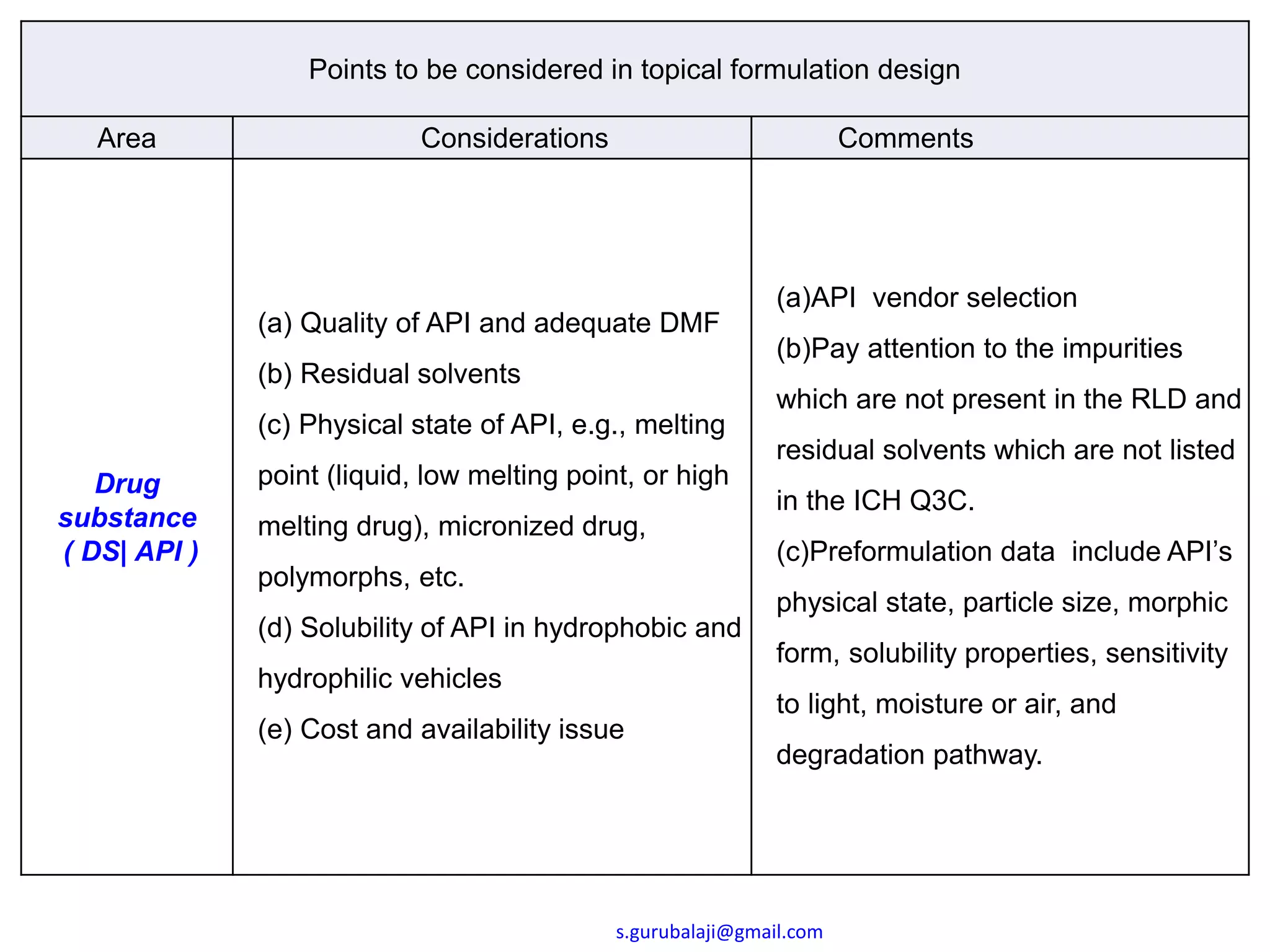
Points to be considered in topical formulation design
Area Considerations Comments
Drug
substance
( DS| API )
(a) Quality of API and adequate DMF
(b) Residual solvents
(c) Physical state of API, e.g., melting
point (liquid, low melting point, or high
melting drug), micronized drug,
polymorphs, etc.
(d) Solubility of API in hydrophobic and
hydrophilic vehicles
(e) Cost and availability issue
(a)API vendor selection
(b)Pay attention to the impurities
which are not present in the RLD and
residual solvents which are not listed
in the ICH Q3C.
(c)Preformulation data include API’s
physical state, particle size, morphic
form, solubility properties, sensitivity
to light, moisture or air, and
degradation pathway.
s.gurubalaji@gmail.com
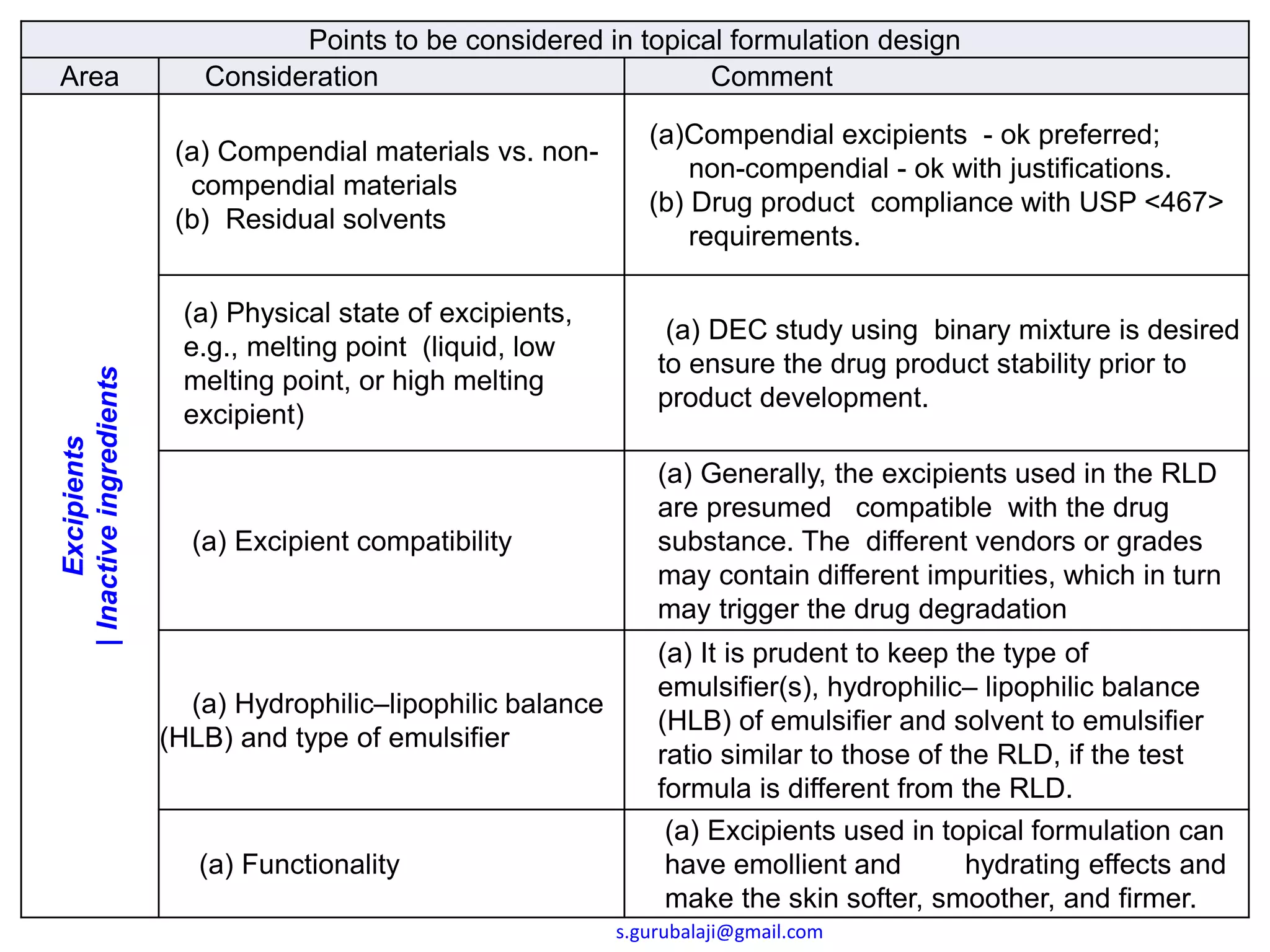
Points to be considered in topical formulation design
Area Consideration CommentExcipients
|Inactiveingredients
(a) Compendial materials vs. non-
compendial materials
(b) Residual solvents
(a)Compendial excipients - ok preferred;
non-compendial - ok with justifications.
(b) Drug product compliance with USP <467>
requirements.
(a) Physical state of excipients,
e.g., melting point (liquid, low
melting point, or high melting
excipient)
(a) DEC study using binary mixture is desired
to ensure the drug product stability prior to
product development.
(a) Excipient compatibility
(a) Generally, the excipients used in the RLD
are presumed compatible with the drug
substance. The different vendors or grades
may contain different impurities, which in turn
may trigger the drug degradation
(a) Hydrophilic–lipophilic balance
(HLB) and type of emulsifier
(a) It is prudent to keep the type of
emulsifier(s), hydrophilic– lipophilic balance
(HLB) of emulsifier and solvent to emulsifier
ratio similar to those of the RLD, if the test
formula is different from the RLD.
(a) Functionality
(a) Excipients used in topical formulation can
have emollient and hydrating effects and
make the skin softer, smoother, and firmer.
s.gurubalaji@gmail.com
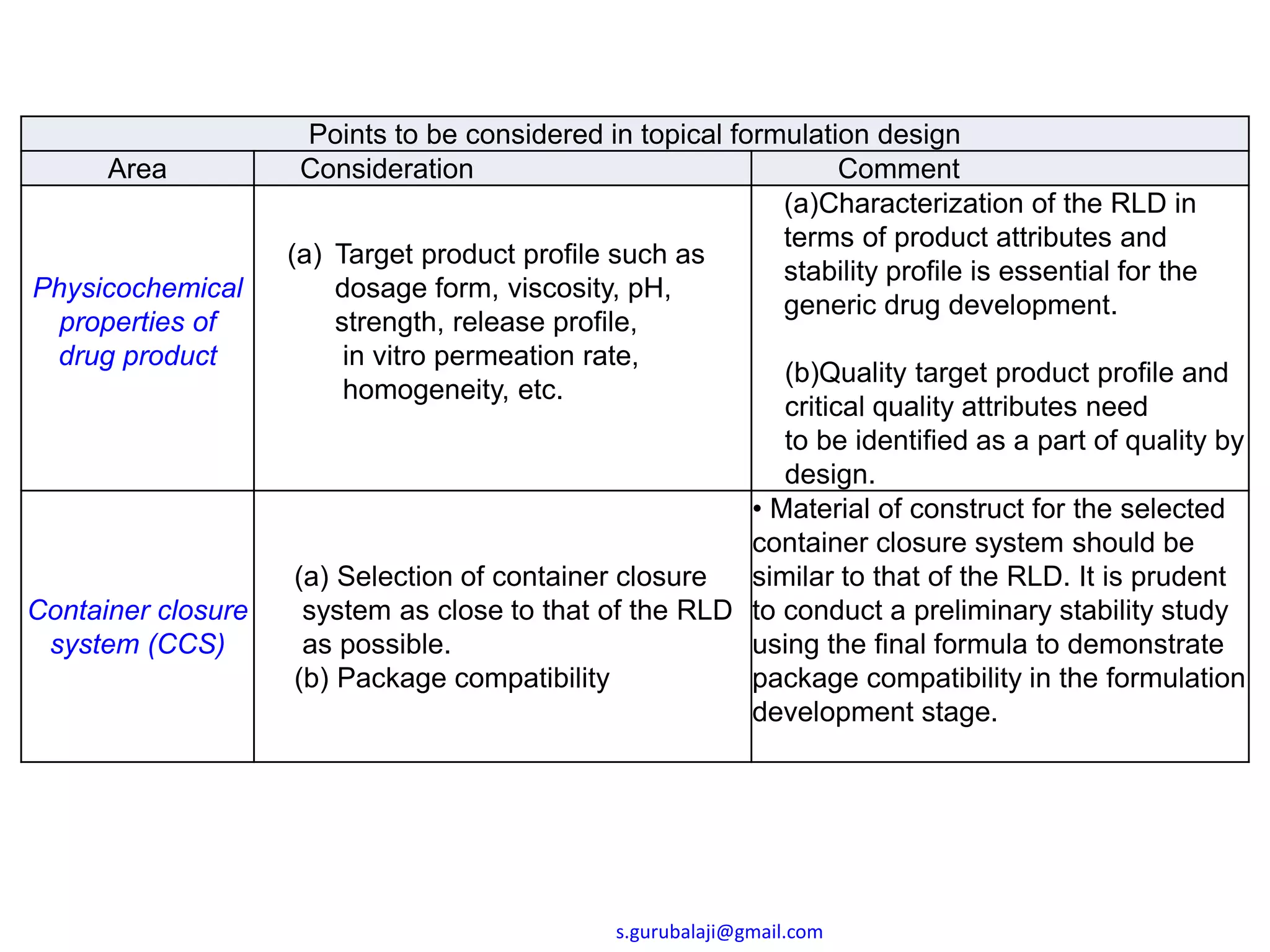
Points to be considered in topical formulation design
Area Consideration Comment
Physicochemical
properties of
drug product
(a) Target product profile such as
dosage form, viscosity, pH,
strength, release profile,
in vitro permeation rate,
homogeneity, etc.
(a)Characterization of the RLD in
terms of product attributes and
stability profile is essential for the
generic drug development.
(b)Quality target product profile and
critical quality attributes need
to be identified as a part of quality by
design.
Container closure
system (CCS)
(a) Selection of container closure
system as close to that of the RLD
as possible.
(b) Package compatibility
• Material of construct for the selected
container closure system should be
similar to that of the RLD. It is prudent
to conduct a preliminary stability study
using the final formula to demonstrate
package compatibility in the formulation
development stage.
s.gurubalaji@gmail.com
Points to be considered in topical formulation design
Area Consideration Comment
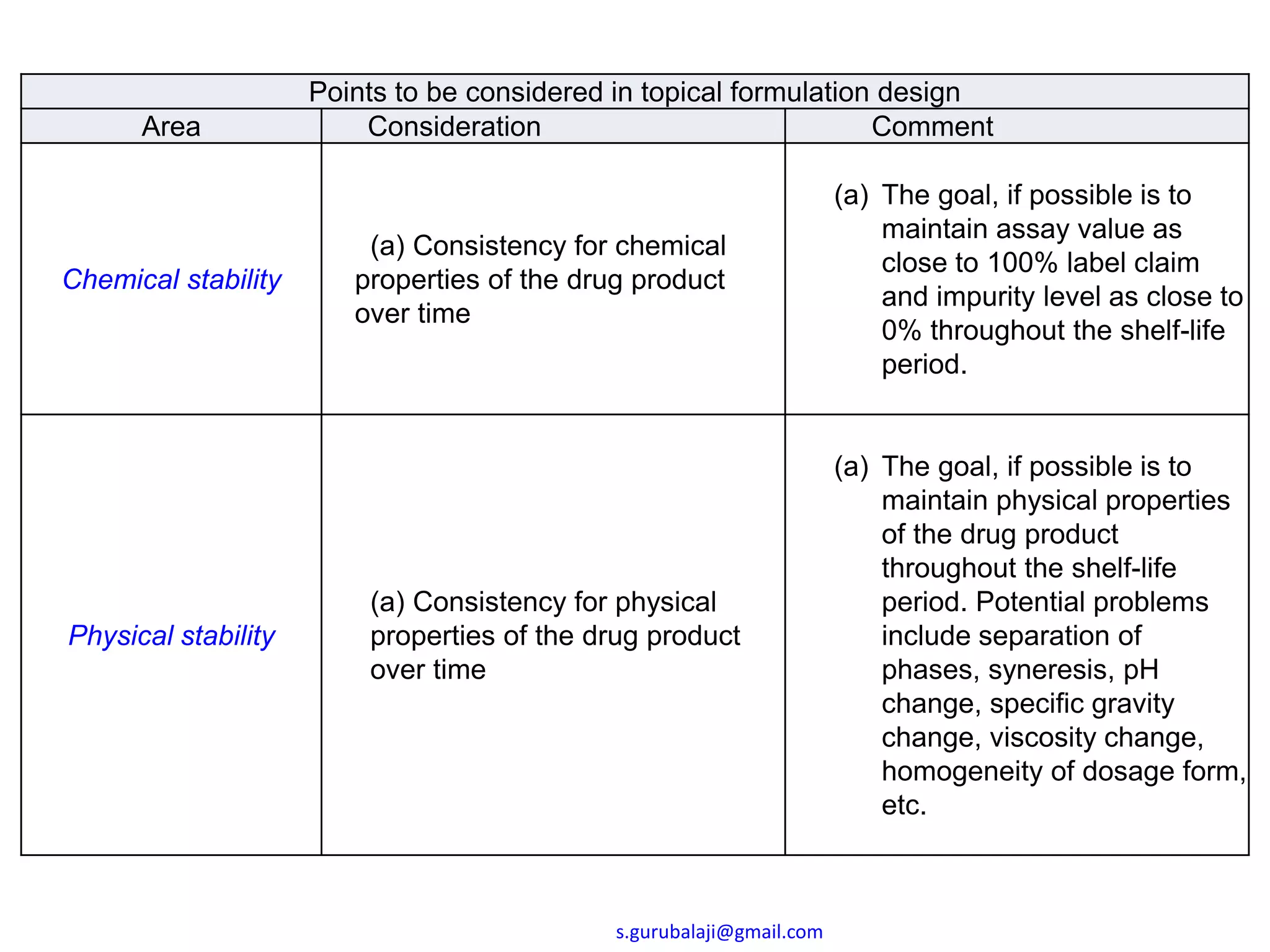
Chemical stability
(a) Consistency for chemical
properties of the drug product
over time
(a) The goal, if possible is to
maintain assay value as
close to 100% label claim
and impurity level as close to
0% throughout the shelf-life
period.
Physical stability
(a) Consistency for physical
properties of the drug product
over time
(a) The goal, if possible is to
maintain physical properties
of the drug product
throughout the shelf-life
period. Potential problems
include separation of
phases, syneresis, pH
change, specific gravity
change, viscosity change,
homogeneity of dosage form,
etc.
s.gurubalaji@gmail.com
Points to be considered in topical formulation design
Area Considerations Comments
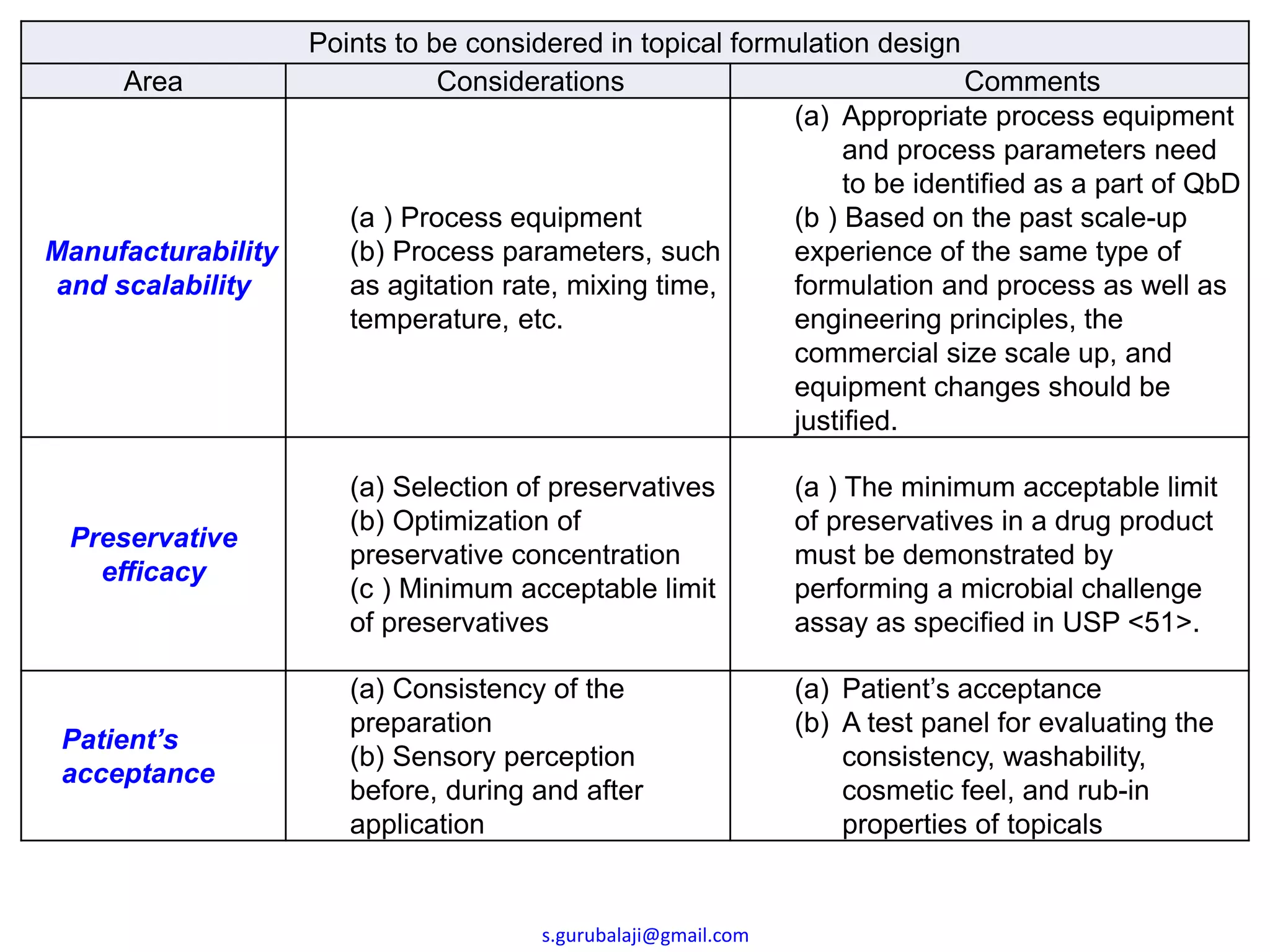
Manufacturability
and scalability
(a ) Process equipment
(b) Process parameters, such
as agitation rate, mixing time,
temperature, etc.
(a) Appropriate process equipment
and process parameters need
to be identified as a part of QbD
(b ) Based on the past scale-up
experience of the same type of
formulation and process as well as
engineering principles, the
commercial size scale up, and
equipment changes should be
justified.
Preservative
efficacy
(a) Selection of preservatives
(b) Optimization of
preservative concentration
(c ) Minimum acceptable limit
of preservatives
(a ) The minimum acceptable limit
of preservatives in a drug product
must be demonstrated by
performing a microbial challenge
assay as specified in USP <51>.
Patient’s
acceptance
(a) Consistency of the
preparation
(b) Sensory perception
before, during and after
application
(a) Patient’s acceptance
(b) A test panel for evaluating the
consistency, washability,
cosmetic feel, and rub-in
properties of topicals
s.gurubalaji@gmail.com

Points to be considered in topical formulation design

  • 1.
    Points to beconsidered in Semisolid | Topical formulation design Guru Balaji.S s.gurubalaji@gmail.com
  • 2.
    Points to beconsidered in topical formulation design Area Considerations Comments Drug substance ( DS| API ) (a) Quality of API and adequate DMF (b) Residual solvents (c) Physical state of API, e.g., melting point (liquid, low melting point, or high melting drug), micronized drug, polymorphs, etc. (d) Solubility of API in hydrophobic and hydrophilic vehicles (e) Cost and availability issue (a)API vendor selection (b)Pay attention to the impurities which are not present in the RLD and residual solvents which are not listed in the ICH Q3C. (c)Preformulation data include API’s physical state, particle size, morphic form, solubility properties, sensitivity to light, moisture or air, and degradation pathway. s.gurubalaji@gmail.com
  • 3.
    Points to beconsidered in topical formulation design Area Consideration CommentExcipients |Inactiveingredients (a) Compendial materials vs. non- compendial materials (b) Residual solvents (a)Compendial excipients - ok preferred; non-compendial - ok with justifications. (b) Drug product compliance with USP <467> requirements. (a) Physical state of excipients, e.g., melting point (liquid, low melting point, or high melting excipient) (a) DEC study using binary mixture is desired to ensure the drug product stability prior to product development. (a) Excipient compatibility (a) Generally, the excipients used in the RLD are presumed compatible with the drug substance. The different vendors or grades may contain different impurities, which in turn may trigger the drug degradation (a) Hydrophilic–lipophilic balance (HLB) and type of emulsifier (a) It is prudent to keep the type of emulsifier(s), hydrophilic– lipophilic balance (HLB) of emulsifier and solvent to emulsifier ratio similar to those of the RLD, if the test formula is different from the RLD. (a) Functionality (a) Excipients used in topical formulation can have emollient and hydrating effects and make the skin softer, smoother, and firmer. s.gurubalaji@gmail.com
  • 4.
    Points to beconsidered in topical formulation design Area Consideration Comment Physicochemical properties of drug product (a) Target product profile such as dosage form, viscosity, pH, strength, release profile, in vitro permeation rate, homogeneity, etc. (a)Characterization of the RLD in terms of product attributes and stability profile is essential for the generic drug development. (b)Quality target product profile and critical quality attributes need to be identified as a part of quality by design. Container closure system (CCS) (a) Selection of container closure system as close to that of the RLD as possible. (b) Package compatibility • Material of construct for the selected container closure system should be similar to that of the RLD. It is prudent to conduct a preliminary stability study using the final formula to demonstrate package compatibility in the formulation development stage. s.gurubalaji@gmail.com
  • 5.
    Points to beconsidered in topical formulation design Area Consideration Comment Chemical stability (a) Consistency for chemical properties of the drug product over time (a) The goal, if possible is to maintain assay value as close to 100% label claim and impurity level as close to 0% throughout the shelf-life period. Physical stability (a) Consistency for physical properties of the drug product over time (a) The goal, if possible is to maintain physical properties of the drug product throughout the shelf-life period. Potential problems include separation of phases, syneresis, pH change, specific gravity change, viscosity change, homogeneity of dosage form, etc. s.gurubalaji@gmail.com
  • 6.
    Points to beconsidered in topical formulation design Area Considerations Comments Manufacturability and scalability (a ) Process equipment (b) Process parameters, such as agitation rate, mixing time, temperature, etc. (a) Appropriate process equipment and process parameters need to be identified as a part of QbD (b ) Based on the past scale-up experience of the same type of formulation and process as well as engineering principles, the commercial size scale up, and equipment changes should be justified. Preservative efficacy (a) Selection of preservatives (b) Optimization of preservative concentration (c ) Minimum acceptable limit of preservatives (a ) The minimum acceptable limit of preservatives in a drug product must be demonstrated by performing a microbial challenge assay as specified in USP <51>. Patient’s acceptance (a) Consistency of the preparation (b) Sensory perception before, during and after application (a) Patient’s acceptance (b) A test panel for evaluating the consistency, washability, cosmetic feel, and rub-in properties of topicals s.gurubalaji@gmail.com