Downloaded 10 times









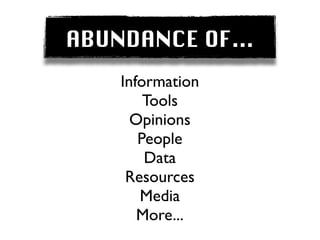
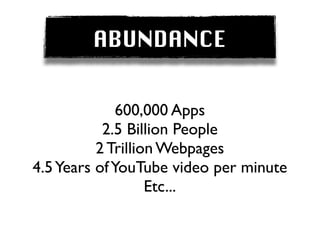








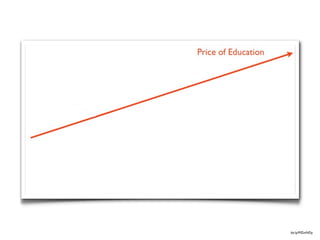
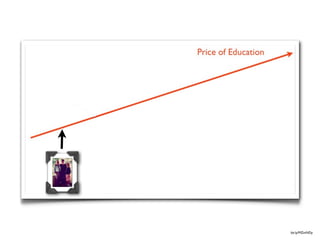
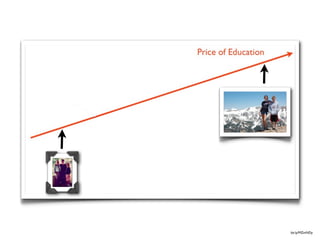


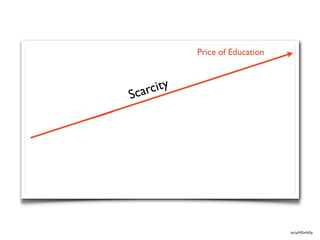
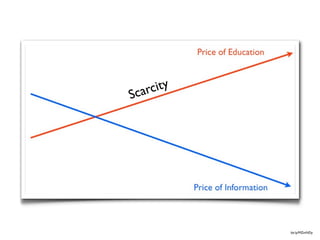
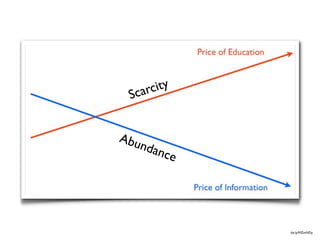
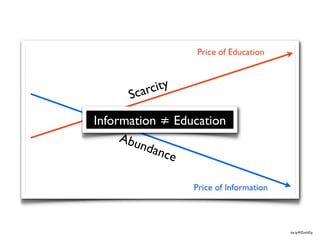
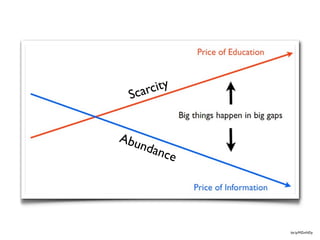


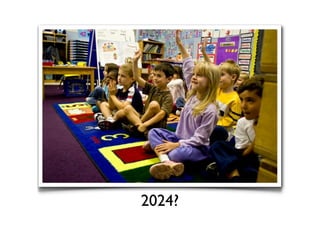

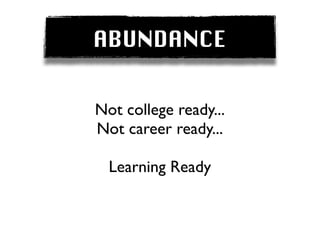
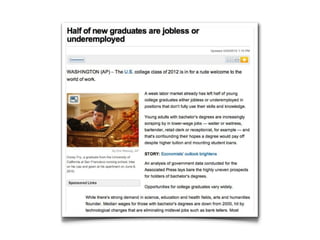
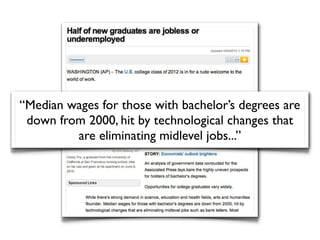





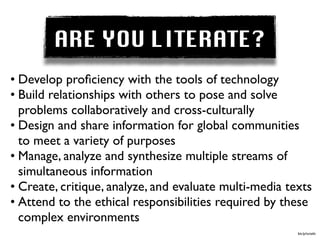


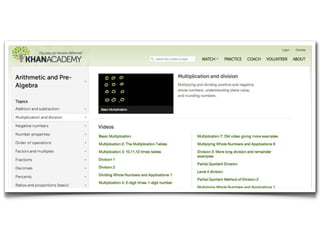











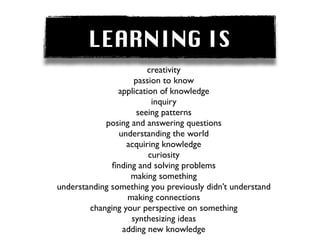
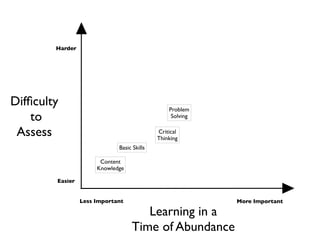
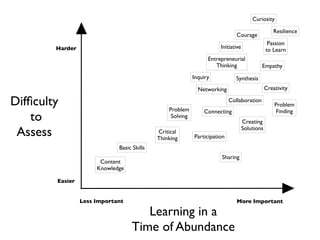




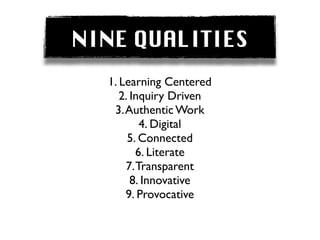
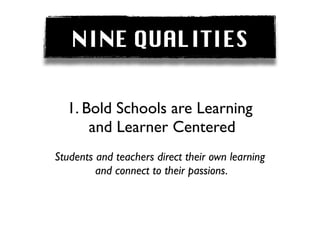
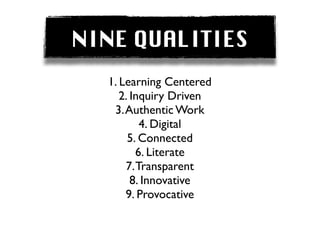




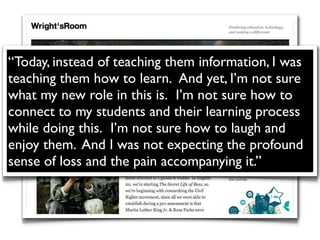
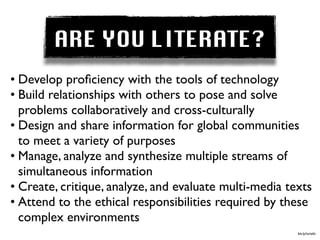
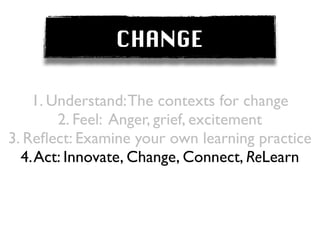


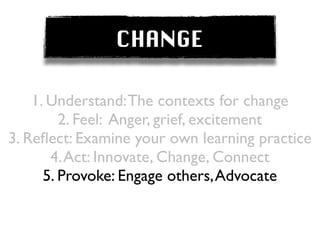





This document discusses how technological abundance is changing education. It argues that traditional schools focus on assessing basic skills and content knowledge, which are now widely available, rather than more important skills like problem solving, critical thinking, collaboration and creativity. It presents nine qualities of "bold schools" that are centered around learning, use inquiry-driven approaches, support authentic work, integrate technology, foster connections, teach 21st century literacies, share best practices, encourage innovation and provoke discussion about educational change. The document advocates understanding contexts, having an emotional response, reflecting on one's practice, taking action to innovate and connect, and engaging others in order to effectively manage educational change in a world of abundance.


