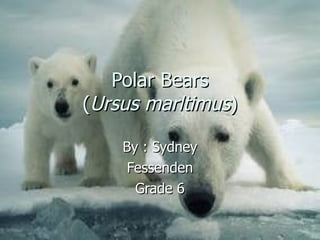
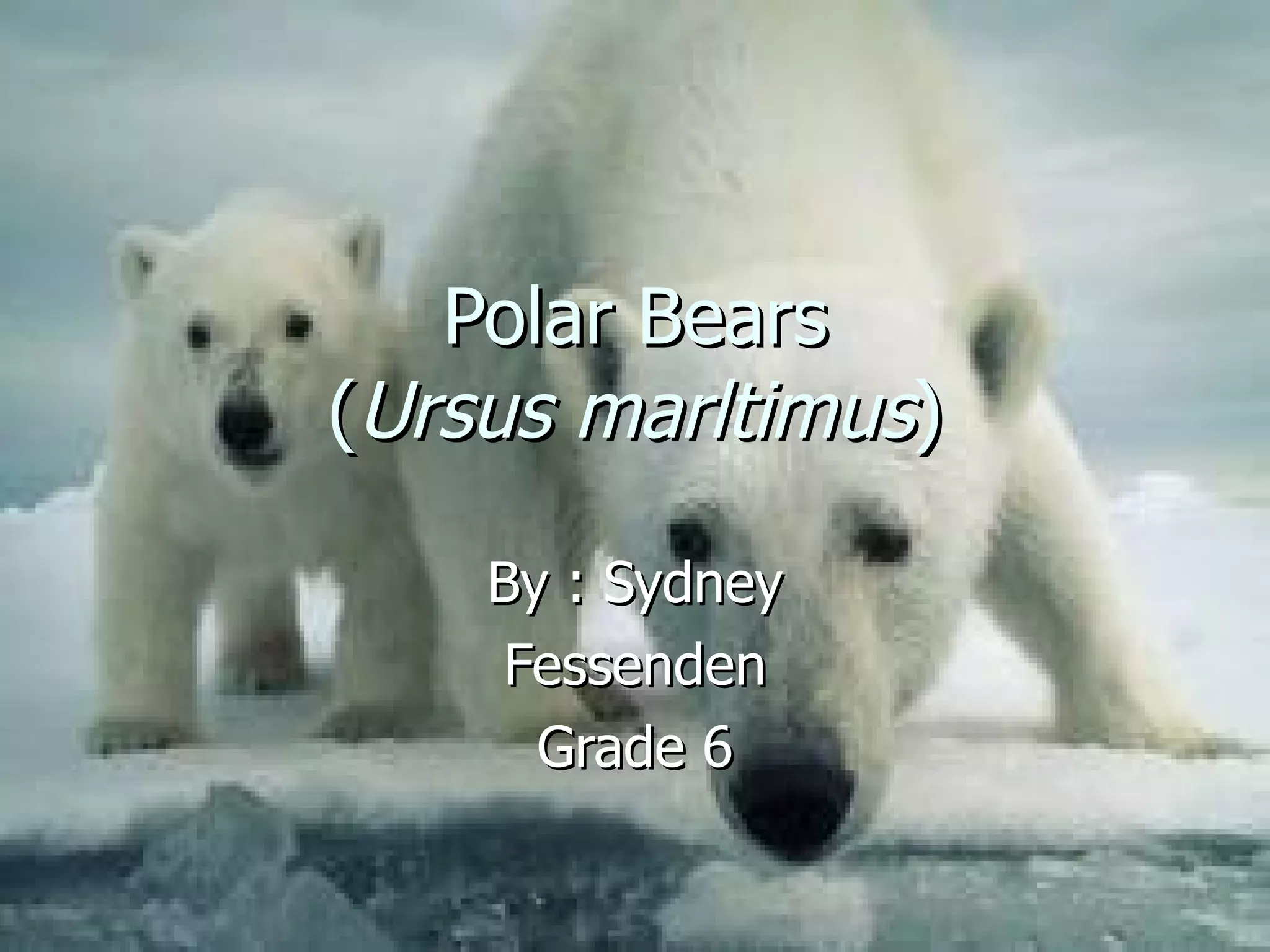
Polar Bears ( Ursus marltimus ) By : Sydney Fessenden Grade 6
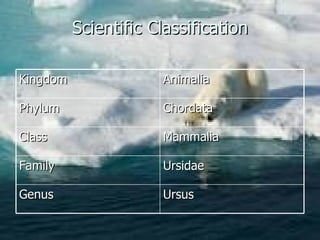
Scientific Classification Kingdom  Animalia Phylum  Chordata Class Mammalia Family Ursidae Genus  Ursus
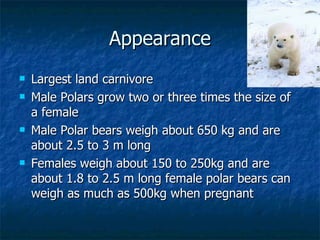
Appearance Largest land carnivore Male Polars grow two or three times the size of a female  Male Polar bears weigh about 650 kg and are about 2.5 to 3 m long Females weigh about 150 to 250kg and are about 1.8 to 2.5 m long female polar bears can weigh as much as 500kg when pregnant
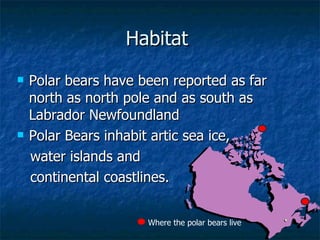
Habitat  Polar bears have been reported as far  north as north pole and as south as Labrador Newfoundland Polar Bears inhabit artic sea ice,  water islands and  continental coastlines. Where the polar bears live
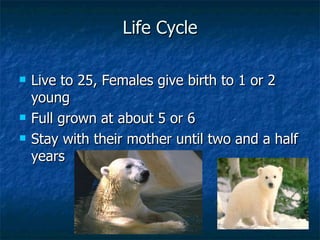
Life Cycle Live to 25, Females give birth to 1 or 2 young  Full grown at about 5 or 6  Stay with their mother until two and a half years
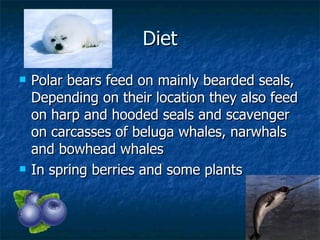
Diet Polar bears feed on mainly bearded seals, Depending on their location they also feed on harp and hooded seals and scavenger on carcasses of beluga whales, narwhals and bowhead whales  In spring berries and some plants
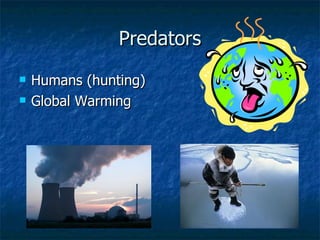
Predators Humans (hunting) Global Warming
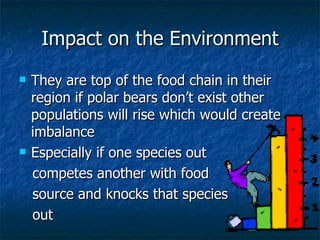
Impact on the Environment They are top of the food chain in their region if polar bears don’t exist other populations will rise which would create imbalance  Especially if one species out  competes another with food  source and knocks that species  out
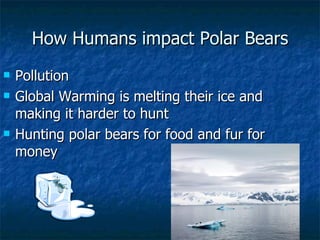
How Humans impact Polar Bears Pollution  Global Warming is melting their ice and making it harder to hunt Hunting polar bears for food and fur for money
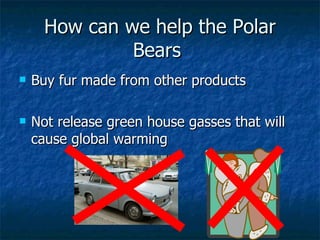
How can we help the Polar Bears  Buy fur made from other products Not release green house gasses that will cause global warming
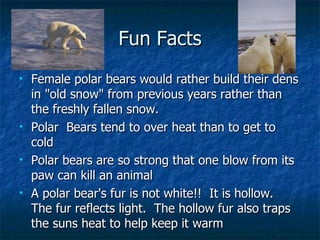
Fun Facts Female polar bears would rather build their dens in "old snow" from previous years rather than the freshly fallen snow.  Polar  Bears tend to over heat than to get to cold Polar bears are so strong that one blow from its paw can kill an animal A polar bear's fur is not white!!  It is hollow.  The fur reflects light.  The hollow fur also traps the suns heat to help keep it warm
References  www.seaworld.com www.ask.com www.yahoo.ca
Thanks For Watching

Sydney thomasen polar bears

  • 1.
    Polar Bears (Ursus marltimus ) By : Sydney Fessenden Grade 6
  • 2.
    Scientific Classification Kingdom Animalia Phylum Chordata Class Mammalia Family Ursidae Genus Ursus
  • 3.
    Appearance Largest landcarnivore Male Polars grow two or three times the size of a female Male Polar bears weigh about 650 kg and are about 2.5 to 3 m long Females weigh about 150 to 250kg and are about 1.8 to 2.5 m long female polar bears can weigh as much as 500kg when pregnant
  • 4.
    Habitat Polarbears have been reported as far north as north pole and as south as Labrador Newfoundland Polar Bears inhabit artic sea ice, water islands and continental coastlines. Where the polar bears live
  • 5.
    Life Cycle Liveto 25, Females give birth to 1 or 2 young Full grown at about 5 or 6 Stay with their mother until two and a half years
  • 6.
    Diet Polar bearsfeed on mainly bearded seals, Depending on their location they also feed on harp and hooded seals and scavenger on carcasses of beluga whales, narwhals and bowhead whales In spring berries and some plants
  • 7.
  • 8.
    Impact on theEnvironment They are top of the food chain in their region if polar bears don’t exist other populations will rise which would create imbalance Especially if one species out competes another with food source and knocks that species out
  • 9.
    How Humans impactPolar Bears Pollution Global Warming is melting their ice and making it harder to hunt Hunting polar bears for food and fur for money
  • 10.
    How can wehelp the Polar Bears Buy fur made from other products Not release green house gasses that will cause global warming
  • 11.
    Fun Facts Femalepolar bears would rather build their dens in "old snow" from previous years rather than the freshly fallen snow. Polar Bears tend to over heat than to get to cold Polar bears are so strong that one blow from its paw can kill an animal A polar bear's fur is not white!!  It is hollow.  The fur reflects light.  The hollow fur also traps the suns heat to help keep it warm
  • 12.
    References www.seaworld.comwww.ask.com www.yahoo.ca
  • 13.