PLASMID AND ANTIBIOTIC RESISTANCE
BY
Yakubu, YUNUSA
MAY, 2016
6/15/2017 1
Presentation outline
 Introduction
 Properties of plasmid
 Antibiotic plasmid
 Mechanisms of resistance specified by
plasmid
 Conclusion
 References
6/15/2017 2
Introduction
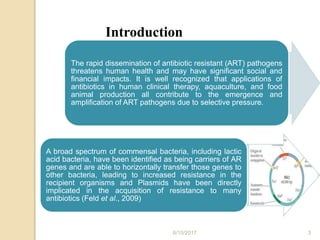
The rapid dissemination of antibiotic resistant (ART) pathogens
threatens human health and may have significant social and
financial impacts. It is well recognized that applications of
antibiotics in human clinical therapy, aquaculture, and food
animal production all contribute to the emergence and
amplification of ART pathogens due to selective pressure.
A broad spectrum of commensal bacteria, including lactic
acid bacteria, have been identified as being carriers of AR
genes and are able to horizontally transfer those genes to
other bacteria, leading to increased resistance in the
recipient organisms and Plasmids have been directly
implicated in the acquisition of resistance to many
antibiotics (Feld et al., 2009)
6/15/2017 3
Introduction cont’d
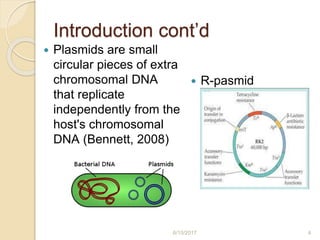
 Plasmids are small
circular pieces of extra
chromosomal DNA
that replicate
independently from the
host's chromosomal
DNA (Bennett, 2008)
 R-pasmid
6/15/2017 4
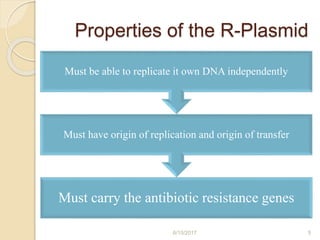
Properties of the R-Plasmid
Must carry the antibiotic resistance genes
Must have origin of replication and origin of transfer
Must be able to replicate it own DNA independently
6/15/2017 5
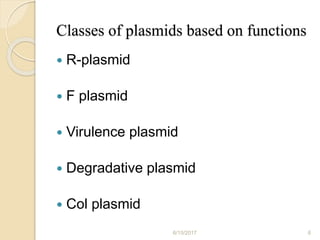
Classes of plasmids based on functions
 R-plasmid
 F plasmid
 Virulence plasmid
 Degradative plasmid
 Col plasmid
6/15/2017 6
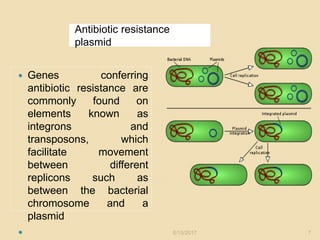
Antibiotic resistance
plasmid
6/15/2017 7
 Genes conferring
antibiotic resistance are
commonly found on
elements known as
integrons and
transposons, which
facilitate movement
between different
replicons such as
between the bacterial
chromosome and a
plasmid

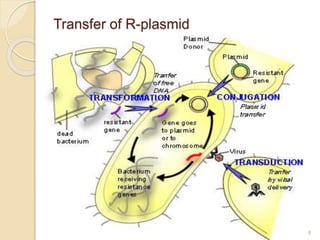
Transfer of R-plasmid
6/15/2017 8
Mechanisms of antibiotic resistance
specified by plasmid
 by carrying resistance genes which produces enzymes
that inactivate the antibiotic e.g β-Lactams where β-
lactamases are produced and chloramphenicol where
acetyl transferase inactivate the drug to 3ꞌ-acetoxy
chloramphenicol.
 carrying a mutated gene which lead to impaired
transport across the membrane i.e causes decrease in
permeability of antibiotic e.g mutation on UNC gene
which impair transport of gentamicin.
 Alteration of target site e.g MecA gene in
Staphylococcus aureus which produces penicillin
binding protein 2ꞌ that confer resistance to methicillin.
 by pass mechanism is another way plasmid cause
antibiotic resistance
6/15/2017 9
Conclusions
 Plasmid encoded resistance to antibiotic
by microbial cells is due to R-plasmid
carrying antibiotic resistance gene. A copy
of this plasmid is transferred to a recipient
through conjugation with all the resistance
gene and character which expresses the
resistance in the donor.
6/15/2017 10
References
Avison MB, Bennett PM (2005). Bacterial genetics. In: Borriello SP, Murray PR, Funke
G (eds), Topley & Wilson’s Microbiology & Microbial Infections 10th edn: Vol. 1,
Bacteriology. Hodder Arnold: London, pp 80–135.
Bennett P. M. (2008) Plasmid encoded antibiotic resistance: acquisition and transfer of
antibiotic resistance genes in bacteria. British Journal of Pharmacology 153, S347–
S357
Bergstrom CT, Feldgarden M (2008) The ecology and evolution of antibiotic resistant
bacteria. In Evolution in Health and Disease, 2 edition. Edited by: Stearns S, Koella
J. Oxford: Oxford University Press.
Duran, G. M., D. L. Marshall (2005) Ready-to-eat shrimp as an international vehicle of
antibiotic-resistant bacteria. J. Food Prot. 68:2395–2401.
Davies J and Davies D (2010) Origins and evolution of antibiotic resistance.
Microbiology and Molecular Biology Review 74: 417–433.
Fabian Svara and Daniel J Rankin (2011) The evolution of plasmid-carried antibiotic
 resistance BMC Evolutionary Biology 11:130
Feld, L., E. Bielak, K. Hammer, A. Wilcks (2009) Characterization of a small
erythromycin resistance plasmid pLFE1 from the food-isolate Lactobacillus
plantarum M345. Plasmid 61:159–170.
Institute of food Technologist (2006). Antimicrobial resistance: implications for the food
system. Institute of food technologists, Chicago, IL. http://www.ift.org/knowledge-
center/read-ift-publications/science-reports/expert-reports/antimicrobial-
resistance.aspx. 6/15/2017 11
Thank
you
for
listening
6/15/2017 12

Plasmid and antibiotic resistance

  • 1.
    PLASMID AND ANTIBIOTICRESISTANCE BY Yakubu, YUNUSA MAY, 2016 6/15/2017 1
  • 2.
    Presentation outline  Introduction Properties of plasmid  Antibiotic plasmid  Mechanisms of resistance specified by plasmid  Conclusion  References 6/15/2017 2
  • 3.
    Introduction The rapid disseminationof antibiotic resistant (ART) pathogens threatens human health and may have significant social and financial impacts. It is well recognized that applications of antibiotics in human clinical therapy, aquaculture, and food animal production all contribute to the emergence and amplification of ART pathogens due to selective pressure. A broad spectrum of commensal bacteria, including lactic acid bacteria, have been identified as being carriers of AR genes and are able to horizontally transfer those genes to other bacteria, leading to increased resistance in the recipient organisms and Plasmids have been directly implicated in the acquisition of resistance to many antibiotics (Feld et al., 2009) 6/15/2017 3
  • 4.
    Introduction cont’d  Plasmidsare small circular pieces of extra chromosomal DNA that replicate independently from the host's chromosomal DNA (Bennett, 2008)  R-pasmid 6/15/2017 4
  • 5.
    Properties of theR-Plasmid Must carry the antibiotic resistance genes Must have origin of replication and origin of transfer Must be able to replicate it own DNA independently 6/15/2017 5
  • 6.
    Classes of plasmidsbased on functions  R-plasmid  F plasmid  Virulence plasmid  Degradative plasmid  Col plasmid 6/15/2017 6
  • 7.
    Antibiotic resistance plasmid 6/15/2017 7 Genes conferring antibiotic resistance are commonly found on elements known as integrons and transposons, which facilitate movement between different replicons such as between the bacterial chromosome and a plasmid 
  • 8.
  • 9.
    Mechanisms of antibioticresistance specified by plasmid  by carrying resistance genes which produces enzymes that inactivate the antibiotic e.g β-Lactams where β- lactamases are produced and chloramphenicol where acetyl transferase inactivate the drug to 3ꞌ-acetoxy chloramphenicol.  carrying a mutated gene which lead to impaired transport across the membrane i.e causes decrease in permeability of antibiotic e.g mutation on UNC gene which impair transport of gentamicin.  Alteration of target site e.g MecA gene in Staphylococcus aureus which produces penicillin binding protein 2ꞌ that confer resistance to methicillin.  by pass mechanism is another way plasmid cause antibiotic resistance 6/15/2017 9
  • 10.
    Conclusions  Plasmid encodedresistance to antibiotic by microbial cells is due to R-plasmid carrying antibiotic resistance gene. A copy of this plasmid is transferred to a recipient through conjugation with all the resistance gene and character which expresses the resistance in the donor. 6/15/2017 10
  • 11.
    References Avison MB, BennettPM (2005). Bacterial genetics. In: Borriello SP, Murray PR, Funke G (eds), Topley & Wilson’s Microbiology & Microbial Infections 10th edn: Vol. 1, Bacteriology. Hodder Arnold: London, pp 80–135. Bennett P. M. (2008) Plasmid encoded antibiotic resistance: acquisition and transfer of antibiotic resistance genes in bacteria. British Journal of Pharmacology 153, S347– S357 Bergstrom CT, Feldgarden M (2008) The ecology and evolution of antibiotic resistant bacteria. In Evolution in Health and Disease, 2 edition. Edited by: Stearns S, Koella J. Oxford: Oxford University Press. Duran, G. M., D. L. Marshall (2005) Ready-to-eat shrimp as an international vehicle of antibiotic-resistant bacteria. J. Food Prot. 68:2395–2401. Davies J and Davies D (2010) Origins and evolution of antibiotic resistance. Microbiology and Molecular Biology Review 74: 417–433. Fabian Svara and Daniel J Rankin (2011) The evolution of plasmid-carried antibiotic  resistance BMC Evolutionary Biology 11:130 Feld, L., E. Bielak, K. Hammer, A. Wilcks (2009) Characterization of a small erythromycin resistance plasmid pLFE1 from the food-isolate Lactobacillus plantarum M345. Plasmid 61:159–170. Institute of food Technologist (2006). Antimicrobial resistance: implications for the food system. Institute of food technologists, Chicago, IL. http://www.ift.org/knowledge- center/read-ift-publications/science-reports/expert-reports/antimicrobial- resistance.aspx. 6/15/2017 11
  • 12.