Problem of Antibiotic Resistance
& Rational use of antibiotics
Dr. Ahmed Yosry
Dr. Ahmed Samir
Objectives
• What is antimicrobial resistance
• Why antibacterial resistance is a concern
• How antibacterials work
• Mechanisms of resistance to antibacterials
• Indian scenario
• NDM-1
• Strategies to contain resistance
• Treatment of some resistant bacterial infections
• Summary
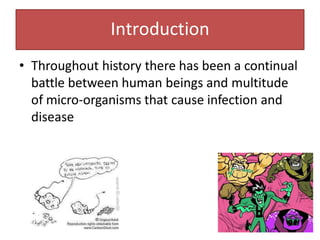
Introduction
• Throughout history there has been a continual
battle between human beings and multitude
of micro-organisms that cause infection and
disease
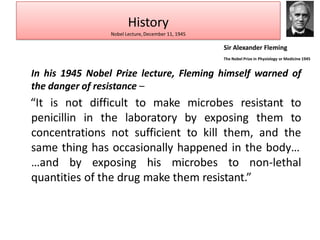
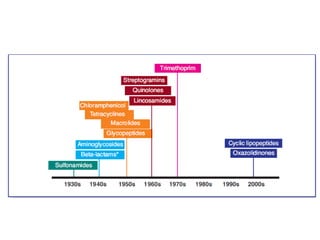
In his 1945 Nobel Prize lecture, Fleming himself warned of
the danger of resistance –
“It is not difficult to make microbes resistant to
penicillin in the laboratory by exposing them to
concentrations not sufficient to kill them, and the
same thing has occasionally happened in the body…
…and by exposing his microbes to non-lethal
quantities of the drug make them resistant.”
History
Nobel Lecture, December 11, 1945
Sir Alexander Fleming
The Nobel Prize in Physiology or Medicine 1945
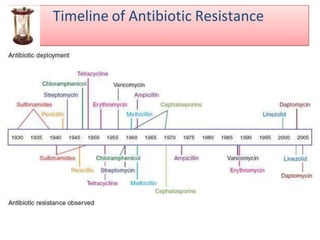
Timeline of Antibiotic Resistance
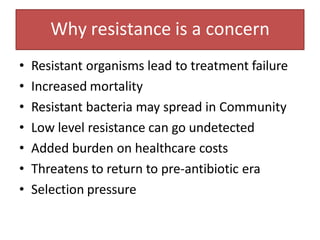
Why resistance is a concern
• Resistant organisms lead to treatment failure
• Increased mortality
• Resistant bacteria may spread in Community
• Low level resistance can go undetected
• Added burden on healthcare costs
• Threatens to return to pre-antibiotic era
• Selection pressure
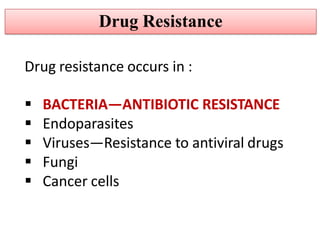
Drug resistance occurs in :
 BACTERIA—ANTIBIOTIC RESISTANCE
 Endoparasites
 Viruses—Resistance to antiviral drugs
 Fungi
 Cancer cells
Drug Resistance
•The concentration of drug at the site of
infection must inhibit the organism and also
remain below the level that is toxic to human
cells.
GOODMAN& GILMAN'S THE PHARMACOLOGICAL BASIS OF THERAPEUTICS - 11th Ed. (2006)
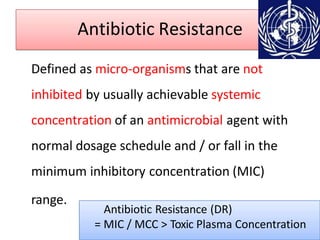
Antibiotic Resistance
Defined as micro-organisms that are not
inhibited by usually achievable systemic
concentration of an antimicrobial agent with
normal dosage schedule and / or fall in the
minimum inhibitory concentration (MIC)
range.
Antibiotic Resistance (DR)
= MIC / MCC > Toxic Plasma Concentration
Myths of Antibiotic Resistance
1. Drugs (antibiotics) cause organisms
antibiotic resistant.
2. Antibiotic resistant organisms are
more virulent
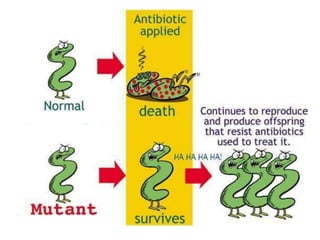
Truth
• Antibiotics select out the resistant strain
• Faulty use of antibiotics or widespread use of
antibiotics increases the probability of such
selection.
• Antibiotic resistant strains appear to be more
virulent because we cannot kill them or stop
their growth.
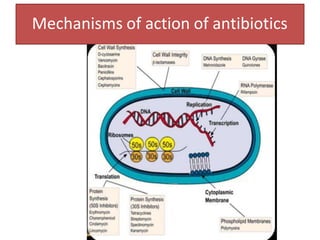
Mechanisms of action of antibiotics
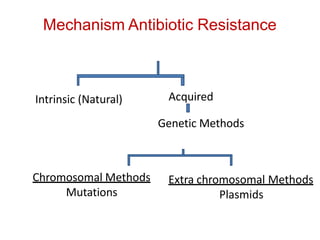
Mechanism Antibiotic Resistance
Intrinsic (Natural) Acquired
Genetic Methods
Chromosomal Methods
Mutations
Extra chromosomal Methods
Plasmids
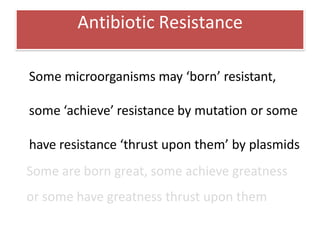
Antibiotic Resistance
Some microorganisms may ‘born’ resistant,
some ‘achieve’ resistance by mutation or some
have resistance ‘thrust upon them’ by plasmids
Some are born great, some achieve greatness
or some have greatness thrust upon them
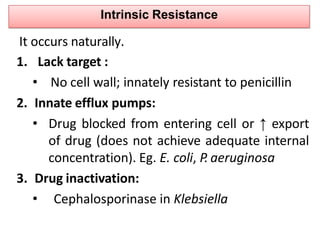
Intrinsic Resistance
1. Lack target :
• No cell wall; innately resistant to penicillin
2. Innate efflux pumps:
• Drug blocked from entering cell or ↑ export
of drug (does not achieve adequate internal
concentration). Eg. E. coli, P. aeruginosa
3. Drug inactivation:
• Cephalosporinase in Klebsiella
It occurs naturally.
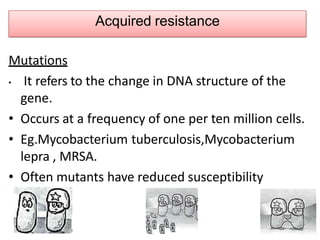
Acquired resistance
Mutations
• It refers to the change in DNA structure of the
gene.
• Occurs at a frequency of one per ten million cells.
• Eg.Mycobacterium tuberculosis,Mycobacterium
lepra , MRSA.
• Often mutants have reduced susceptibility
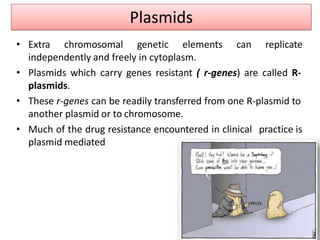
Plasmids
• Extra chromosomal genetic elements can replicate
independently and freely in cytoplasm.
• Plasmids which carry genes resistant ( r-genes) are called R-
plasmids.
• These r-genes can be readily transferred from one R-plasmid to
another plasmid or to chromosome.
• Much of the drug resistance encountered in clinical practice is
plasmid mediated
Mechanisms of Resistance Gene Transfer
• Transfer of r-genes from one bacterium to
another
 Conjugation
 Transduction
 Transformation
• Transfer of r-genes between plasmids within
the bacterium
 By transposons
 By Integrons
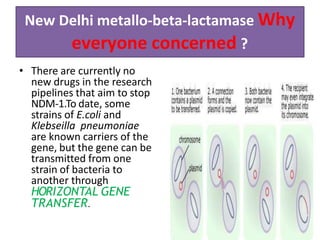
Transfer of r-genes from one bacterium to another
 Conjugation : Main mechanism for spread of resistance
The conjugative plasmids make a connecting tube
between the 2 bacteria through which plasmid itself
can pass.
 Transduction : Less common method
The plasmid DNA enclosed in a bacteriophage is
transferred to another bacterium of same species.
Seen in Staphylococci , Streptococci
 Transformation : least clinical problem.
Free DNA is picked up from the environment (i.e..
From a cell belonging to closely related or same strain.
Mechanisms of Resistance Gene Transfer
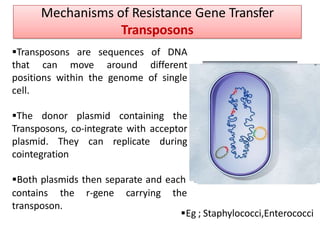
Transposons
Transposons are sequences of DNA
that can move around different
positions within the genome of single
cell.
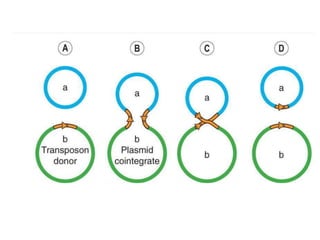
The donor plasmid containing the
Transposons, co-integrate with acceptor
plasmid. They can replicate during
cointegration
Both plasmids then separate and each
contains the r-gene carrying
transposon.
the
Eg ; Staphylococci,Enterococci
Mechanisms of Resistance Gene Transfer
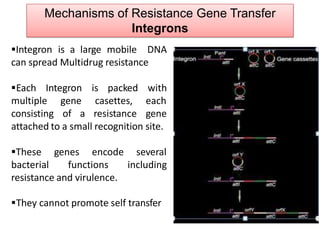
Integrons
Integron is a large mobile DNA
can spread Multidrug resistance
Each Integron is packed
multiple gene
consisting of a
casettes,
resistance
with
each
gene
attached to a small recognition site.
These genes encode
bacterial functions
several
including
resistance and virulence.
They cannot promote self transfer
Biochemical mechanisms of antibiotic
resistance
• Prevention of drug accumulation in the bacterium
• Modification/protection of the target site
•Use of alternative pathways for metabolic / growth
requirements
•By producing an enzyme that inactivates the
antibiotic
• Quorum sensing
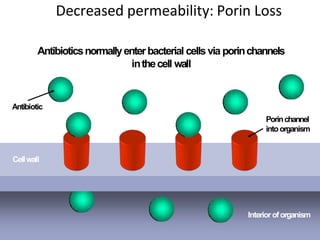
Decreased permeability: Porin Loss
Interioroforganism
Cellwall
Porinchannel
intoorganism
Antibiotic
Antibioticsnormallyenterbacterial cells via porinchannels
inthecell wall
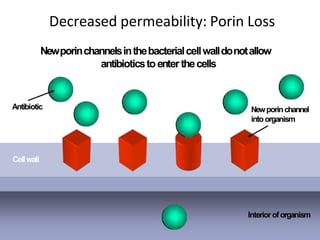
Decreased permeability: Porin Loss
Interioroforganism
Cellwall
Newporinchannel
intoorganism
Antibiotic
Newporinchannelsinthebacterialcellwalldonotallow
antibioticstoenter thecells
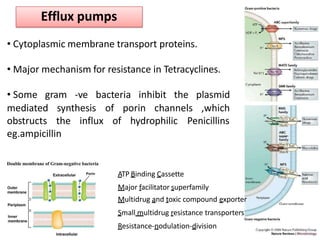
ATP Binding Cassette
Major facilitator superfamily
Multidrug and toxic compound exporter
Small multidrug resistance transporters
Resistance-nodulation-division
Efflux pumps
• Cytoplasmic membrane transport proteins.
• Major mechanism for resistance in Tetracyclines.
• Some gram -ve bacteria inhibit the plasmid
mediated synthesis
obstructs the influx
of porin channels ,which
of hydrophilic Penicillins
eg.ampicillin
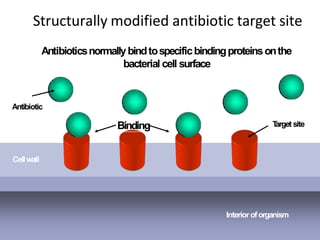
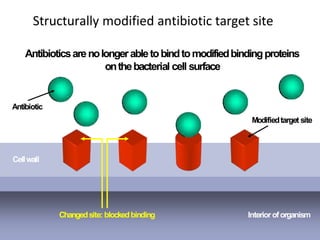
Structurally modified antibiotic target site
Interioroforganism
Cellwall
T
arget site
Binding
Antibiotic
Antibioticsnormallybindtospecificbindingproteinsonthe
bacterial cell surface
Structurally modified antibiotic target site
Interioroforganism
Cellwall
Modifiedtarget site
Antibiotic
Changedsite: blockedbinding
Antibioticsarenolongerabletobindtomodifiedbindingproteins
onthebacterial cell surface
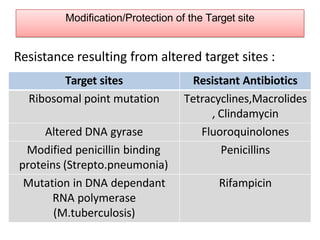
Modification/Protection of the Target site
Resistance resulting from altered target sites :
Target sites Resistant Antibiotics
Ribosomal point mutation Tetracyclines,Macrolides
, Clindamycin
Altered DNA gyrase Fluoroquinolones
Modified penicillin binding
proteins (Strepto.pneumonia)
Penicillins
Mutation in DNA dependant
RNA polymerase
(M.tuberculosis)
Rifampicin
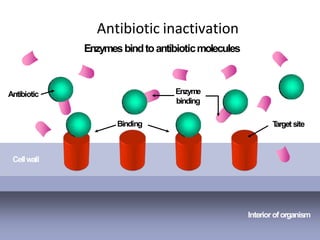
Antibiotic inactivation
Inactivatingenzymes targetantibiotics
Interioroforganism
Cellwall
Antibiotic
T
arget site
Binding
Interioroforganism
Cellwall
Antibiotic
T
arget site
Binding
Enzyme
binding
Antibiotic inactivation
Enzymesbindtoantibioticmolecules
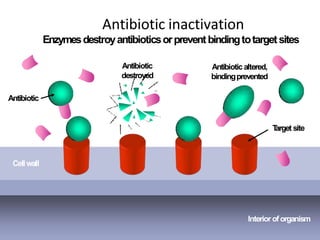
Antibiotic inactivation
Enzymesdestroyantibioticsorpreventbindingtotargetsites
Interioroforganism
Cellwall
Antibiotic
T
arget site
Antibiotic
destroyed
Antibioticaltered,
bindingprevented
By producing enzymes that inactivates antibiotic
a)Inactivation of b-lactam antibiotics
•S. aureus, N. gonorrohoea, H.influenza, Produce b-
lactamase which cleaves -lactam ring
b)Inactivation of Chloramphenicol
• Inactivated by chloramphenicol acetyltransferase .
•Gram-ve (enzyme present constitutively hence higher
resistance) gram +ve bacteria (enzyme is inducible )
c)Inactivation of Aminoglycosides
•Inactivated by acetyl, phospho & adenylyl transferases
Present in gram +ve and gram –ve .
Use of alternative pathways for metabolic / growth
requirements
• Resistance can also occur by alternate
pathway that bypasses the reaction inhibited
by the antibiotic.
• Sulfonamide resistance can occur from
overproduction of PABA
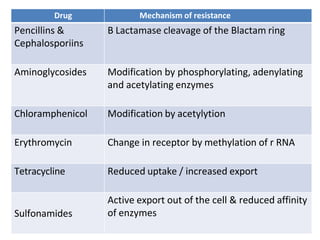
Drug Mechanism of resistance
Pencillins &
Cephalosporiins
B Lactamase cleavage of the Blactam ring
Aminoglycosides Modification by phosphorylating, adenylating
and acetylating enzymes
Chloramphenicol Modification by acetylytion
Erythromycin Change in receptor by methylation of r RNA
Tetracycline Reduced uptake / increased export
Sulfonamides
Active export out of the cell & reduced affinity
of enzymes
Quorum sensing
• Microbes communicate with each other and
exchange signaling chemicals (Autoinducers)
• These autoinducers allow bacterial population
to coordinate gene expression for virulence,
conjugation, apoptosis, mobility and
resistance
Why named quorum sensing
• Single autoinducer from single microbe is
incapable of inducing any such change
• But when its colony reaches a critical density
(quorum), threshold of autoinduction is
reached and gene expression starts
• QS signal molecules AHL, AIP, AI-2 & AI-3 have
been identified in Gm-ve bacteria
• AI-2 QS –system is shared by GM+ve bacteria
also
WHY INHIBIT QUORUM SENSING
 Proved to be very potent method for bacterial virulence
inhibition.
 Several QS inhibitors molecules has been synthesized which
include AHL, AIP, and AI-2 analogues
 QS inhibitors have been synthesized and have been isolated
from several natural extracts such as garlic extract.
 QS inhibitors have shown to be potent virulence inhibitor
both in in-vitro and in-vivo,using infection animal models.
Indian scenario
• Lack of community awareness
• Availability over the counter
• Absence of central monitoring agency
• In infants LRTI has taken over IMR due to
diarrhoeal diseases due to use of ORT
• S. Pneumoniae fully resistant to cotrimoxazole
• Still sensitive to penicillins, macrolides and
fluoroquinolones
Enteric pathogens
• Vibrio cholerae :
– resistance to furazolidine, cotrimoxazole, nalidixic
acid
– Tetracycline remains effective
• Coliforms
– ESBLs , extensive resistance to Beta lactum
antibiotics
• Enteric fever
STD
• Penicillin and fluoroquinolone resistance is
widespread to gonorhhoea
• Alternate drugs like Azithromycin and
cephalosporins should be used
• Syphilis still susceptible to Penicillins
Gram positive Cocci
• Streptococci other than S. Pneumoniae
– Resistant to tetracycline and macrolides (40%)
– Still sensitive to penicillins
• Staph Aureus
– Methicillin resistance 50%-100%
– Vancomycin resistance also increasing
Mycobacteria
• Multidrug resistance
– Combined resistance to rifampicin and isoniazid
• Extensively drug resistant TB
– Additional acquisition of resistance to a
fluroquinolone and one of the three injectable
second line drugs (capreomycin, kanamycin and
amikacin)
• Steady rise in these patients
What is NDM-1?
• NDM-1 stands for New Delhi metallo-beta-
lactamase, an enzyme produced by certain
strains of bacteria that have recently acquired
the genetic ability to make this compound.
• The enzyme is active against other compounds
that beta-lactam ring like penicillins,
cephalosporins, and the carbapenems.
• bacteria that produce NDM-1 are resistant to
all commonly used beta-lactam antibiotics,
including carbapenems.
New Delhi metallo-beta-lactamase Why
everyone concerned ?
• There are currently no
new drugs in the research
pipelines that aim to stop
NDM-1.To date, some
strains of E.coli and
Klebseilla pneumoniae
are known carriers of the
gene, but the gene can be
transmitted from one
strain of bacteria to
another through
HORIZONTAL GENE
TRANSFER.
Naming the strain as New Delhi creates
controversy
• The gene was named after New Delhi, the capital city
of India, as it was first described by Yong et al. in 2009
in a Swedish national who fell ill with an antibiotic-
resistant bacterial infection that he acquired in India .
The infection was unsuccessfully treated in a New Delhi
hospital and after the patient's repatriation to Sweden,
a carbapenem-resistant Klebsiella pneumoniae strain
bearing the novel gene was identified. The authors
concluded that the new resistance mechanism "clearly
arose in India, but there are few data arising from India
to suggest how widespread it is."
Treatment
• Many NDM-1 strains are resistant to all antibiotics
except for colistin.
• Colistin is an older antibiotic that has not been
used much in recent decades, because it is
somewhat more toxic than other antibiotics.
• A few NDM-1 strains have been sensitive to
tigecycline (Tygacil), but this agent should be used
cautiously in serious infections because it does not
achieve high levels in the bloodstream.
• A few strains have also been sensitive to
aztreonam
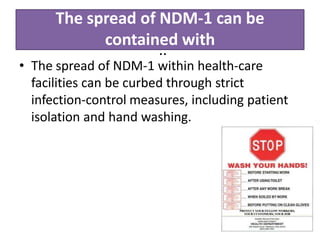
The spread of NDM-1 can be
contained with
facilities can be curbed through strict
infection-control measures, including patient
isolation and hand washing.
..
• The spread of NDM-1 within health-care
Strategy to Contain Resistance
• Develop new antibiotics
–Bypass the drug resistance
• Judicious use of the existing
antibiotics:
–Containment of drug resistance
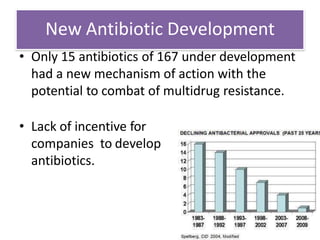
New Antibiotic Development
• Only 15 antibiotics of 167 under development
had a new mechanism of action with the
potential to combat of multidrug resistance.
• Lack of incentive for
companies to develop
antibiotics.
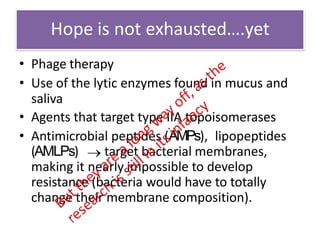
Hope is not exhausted….yet
• Phage therapy
• Use of the lytic enzymes found in mucus and
saliva
• Agents that target type IIA topoisomerases
• Antimicrobial peptides (AMPs), lipopeptides
(AMLPs) target bacterial membranes,
making it nearly impossible to develop
resistance (bacteria would have to totally
change their membrane composition).
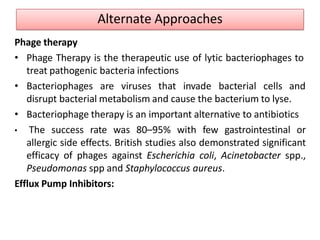
Phage therapy
• Phage Therapy is the therapeutic use of lytic bacteriophages to
treat pathogenic bacteria infections
• Bacteriophages are viruses that invade bacterial cells and
disrupt bacterial metabolism and cause the bacterium to lyse.
• Bacteriophage therapy is an important alternative to antibiotics
• The success rate was 80–95% with few gastrointestinal or
allergic side effects. British studies also demonstrated significant
efficacy of phages against Escherichia coli, Acinetobacter spp.,
Pseudomonas spp and Staphylococcus aureus.
Efflux Pump Inhibitors:
Alternate Approaches
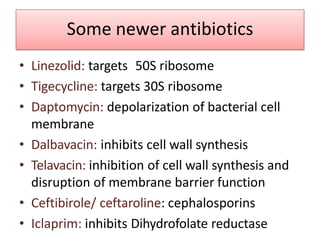
Some newer antibiotics
• Linezolid: targets 50S ribosome
• Tigecycline: targets 30S ribosome
• Daptomycin: depolarization of bacterial cell
membrane
• Dalbavacin: inhibits cell wall synthesis
• Telavacin: inhibition of cell wall synthesis and
disruption of membrane barrier function
• Ceftibirole/ ceftaroline: cephalosporins
• Iclaprim: inhibits Dihydrofolate reductase
Judicious Use of Antibiotics
• Can only contain antibiotic resistance
• Cannot eliminate the possibility of
antibiotic development as resistance is
an evolutionary process
Containment of Resistance
• Containment of antibiotic resistance is a
multi-pronged program
• Involves all stake holders
– Physicans
– Patients
– Pharmaceuticals
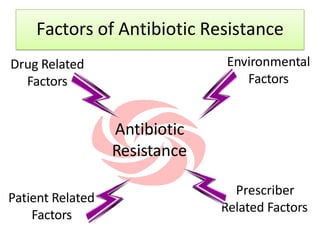
Factors of Antibiotic Resistance
Environmental
Factors
Drug Related
Factors
Patient Related
Factors
Prescriber
Related Factors
Antibiotic
Resistance
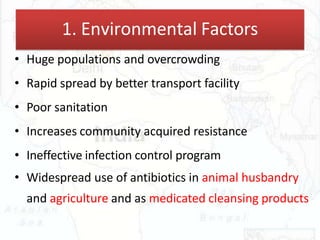
• Huge populations and overcrowding
• Rapid spread by better transport facility
• Poor sanitation
• Increases community acquired resistance
• Ineffective infection control program
• Widespread use of antibiotics in animal husbandry
and agriculture and as medicated cleansing products
1. Environmental Factors
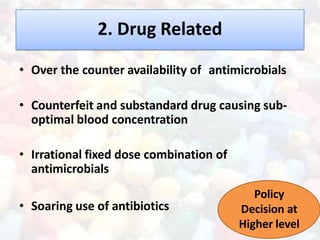
• Over the counter availability of antimicrobials
• Counterfeit and substandard drug causing sub-
optimal blood concentration
• Irrational fixed dose combination of
antimicrobials
• Soaring use of antibiotics
2. Drug Related
Policy
Decision at
Higher level
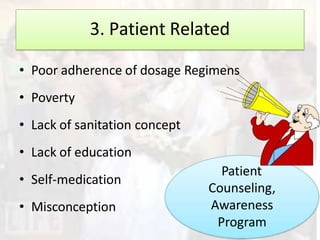
• Self-medication
• Misconception
3. Patient Related
• Poor adherence of dosage Regimens
• Poverty
• Lack of sanitation concept
• Lack of education
Patient
Counseling,
Awareness
Program
Prescriber Related
• Inappropriate use of available drugs
• Increased empiric poly-antimicrobial use
• Overuse of antimicrobials
• Inadequate dosing
• Lack of current knowledge and training
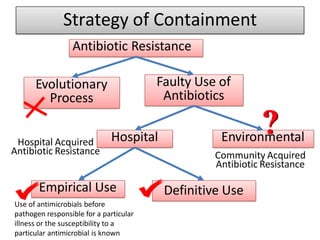
Strategy of Containment
Antibiotic Resistance
Evolutionary
Process
Faulty Use of
Antibiotics
Hospital Environmental
Empirical Use Definitive Use
Community Acquired
Antibiotic Resistance
Hospital Acquired
Antibiotic Resistance
Use of antimicrobials before
pathogen responsible for a particular
illness or the susceptibility to a
particular antimicrobial is known
Poor Clinical Practice
• Poor clinical practice that fail to incorporate
the pharmacological properties of
antimicrobials amplify the speed of
development of drug resistance.
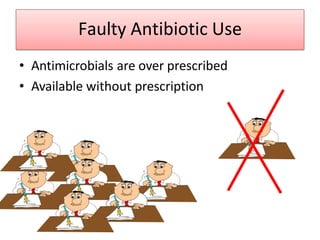
Faulty Antibiotic Use
• Antimicrobials are over prescribed
• Available without prescription
Over Prescribed Antibiotics
• Clinician should first determine whether
antimicrobial therapy is warranted for a given
patient
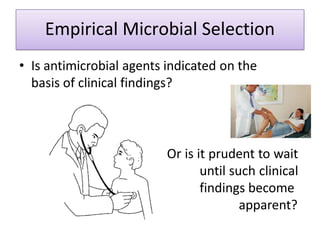
Empirical Microbial Selection
• Is antimicrobial agents indicated on the
basis of clinical findings?
Or is it prudent to wait
until such clinical
findings become
apparent?
Empirical Microbial Selection
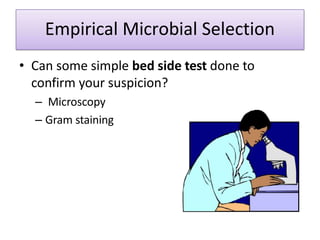
• Can some simple bed side test done to
confirm your suspicion?
– Microscopy
– Gram staining
Empirical Microbial Selection
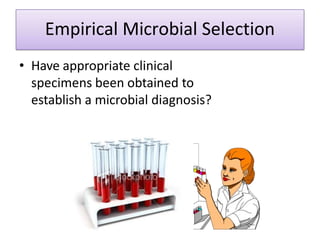
• Have appropriate clinical
specimens been obtained to
establish a microbial diagnosis?
Empirical Microbial Selection
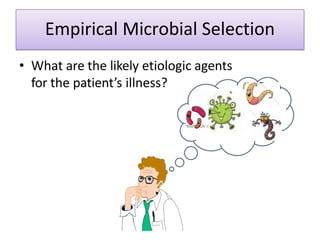
• What are the likely etiologic agents
for the patient’s illness?
Empirical Microbial Selection
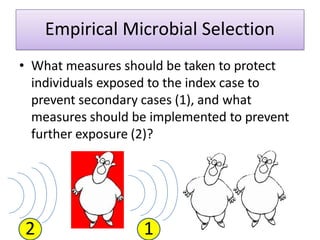
• What measures should be taken to protect
individuals exposed to the index case to
prevent secondary cases (1), and what
measures should be implemented to prevent
further exposure (2)?
1
2
Empirical Microbial Selection
• Is there clinical evidence (e.g. from clinical
trials) that antimicrobial therapy will confer
clinical benefit for the patient?
(Evidence-based medicine)
Definitive Treatment
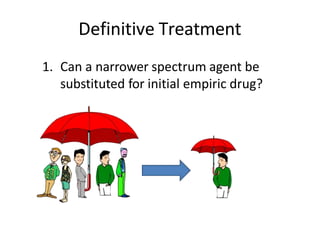
1. Can a narrower spectrum agent be
substituted for initial empiric drug?
Definitive Treatment (2)
1. Is one agent or combination of agents
necessary?
Examples
• -lactam + Aminoglycosides
-lactamase
• Extended spectum Penicillins +
Inhibitors
• Anti-tubercular regimen
• Anti-leprotic regimen
• Co-trimoxazole
• Sulphadoxin + pyrimethamine
• Artemisinin based Combination Therapy (ACT) in
Malaria
Definitive Treatment
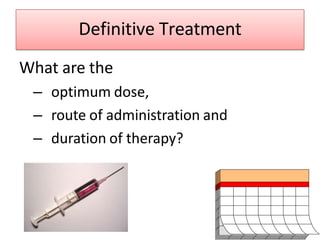
What are the
– optimum dose,
– route of administration and
– duration of therapy?
Definitive treatment
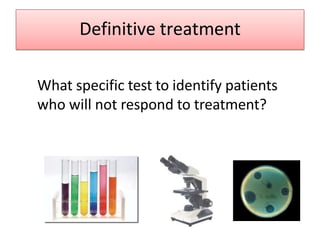
What specific test to identify patients
who will not respond to treatment?
Definitive Treatment
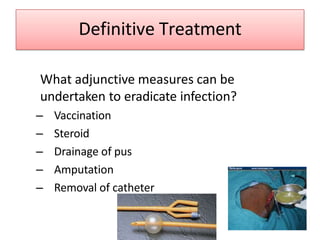
What adjunctive measures can be
undertaken to eradicate infection?
– Vaccination
– Steroid
– Drainage of pus
– Amputation
– Removal of catheter
Who’s Work?
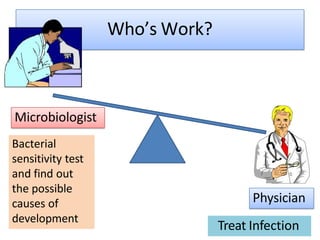
Microbiologist
Physician
Bacterial
sensitivity test
and find out
the possible
causes of
development
Treat Infection
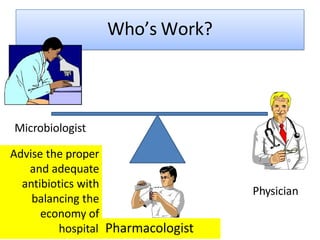
Who’s Work?
Microbiologist
Physician
Advise the proper
and adequate
antibiotics with
balancing the
economy of
hospital Pharmacologist
Hospital Acquired Drug Resistance
• Hospital Antibacterial Policy
• Hospital Antibiogram
Hospital specific antibacterial Resistance
Pattern
• Identification of potential pathogen most
likely to cause infection
• Previous antibacterial therapy
• Prescription auditing
Hospital Antibiotic Policy
• To curb the common misuse and overuse of
antibiotics
• Restricts the occurrence of antibacterial
resistance among the hospital strains
• Controls the spread of such infections to
susceptible and critically ill patients in the
hospital and the subsequent infection into the
community.
• Saves money for the patient and increases
patient satisfaction with decreased side effect.
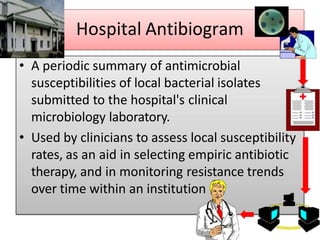
Hospital Antibiogram
• A periodic summary of antimicrobial
susceptibilities of local bacterial isolates
submitted to the hospital's clinical
microbiology laboratory.
• Used by clinicians to assess local susceptibility
rates, as an aid in selecting empiric antibiotic
therapy, and in monitoring resistance trends
over time within an institution
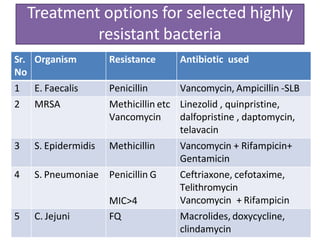
Treatment options for selected highly
resistant bacteria
Sr.
No
Organism Resistance Antibiotic used
1 E. Faecalis Penicillin Vancomycin, Ampicillin -SLB
2 MRSA Methicillin etc
Vancomycin
Linezolid , quinpristine,
dalfopristine , daptomycin,
telavacin
3 S. Epidermidis Methicillin Vancomycin + Rifampicin+
Gentamicin
4 S. Pneumoniae Penicillin G
MIC>4
Ceftriaxone, cefotaxime,
Telithromycin
Vancomycin + Rifampicin
5 C. Jejuni FQ Macrolides, doxycycline,
clindamycin
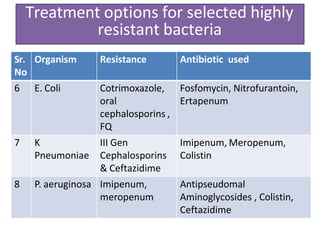
Treatment options for selected highly
resistant bacteria
Sr.
No
Organism Resistance Antibiotic used
6 E. Coli Cotrimoxazole,
oral
cephalosporins ,
FQ
Fosfomycin, Nitrofurantoin,
Ertapenum
7 K
Pneumoniae
III Gen
Cephalosporins
& Ceftazidime
Imipenum, Meropenum,
Colistin
8 P. aeruginosa Imipenum,
meropenum
Antipseudomal
Aminoglycosides , Colistin,
Ceftazidime
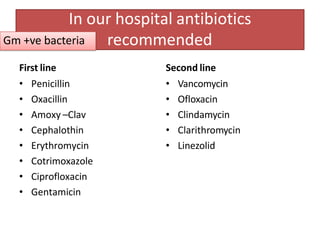
In our hospital antibiotics
recommended
First line
• Penicillin
• Oxacillin
• Amoxy –Clav
• Cephalothin
• Erythromycin
• Cotrimoxazole
• Ciprofloxacin
• Gentamicin
Second line
• Vancomycin
• Ofloxacin
• Clindamycin
• Clarithromycin
• Linezolid
Gm +ve bacteria
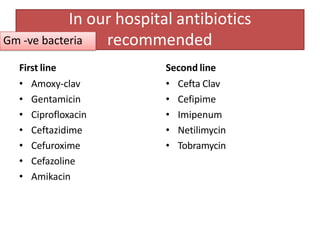
First line
• Amoxy-clav
• Gentamicin
• Ciprofloxacin
• Ceftazidime
• Cefuroxime
• Cefazoline
• Amikacin
Second line
• Cefta Clav
• Cefipime
• Imipenum
• Netilimycin
• Tobramycin
In our hospital antibiotics
recommended
Gm -ve bacteria
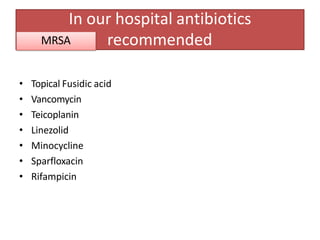
• Topical Fusidic acid
• Vancomycin
• Teicoplanin
• Linezolid
• Minocycline
• Sparfloxacin
• Rifampicin
In our hospital antibiotics
recommended
MRSA
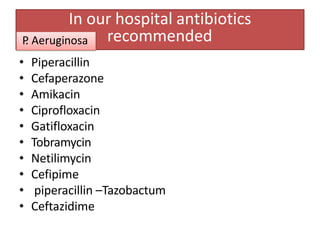
• Piperacillin
• Cefaperazone
• Amikacin
• Ciprofloxacin
• Gatifloxacin
• Tobramycin
• Netilimycin
• Cefipime
• piperacillin –Tazobactum
• Ceftazidime
In our hospital antibiotics
recommended
P
. Aeruginosa
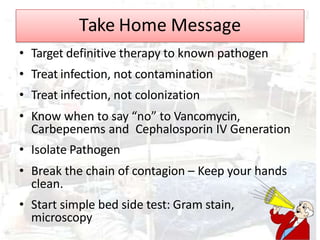
Take Home Message
• Target definitive therapy to known pathogen
• Treat infection, not contamination
• Treat infection, not colonization
• Know when to say “no” to Vancomycin,
Carbepenems and Cephalosporin IV Generation
• Isolate Pathogen
• Break the chain of contagion – Keep your hands
clean.
• Start simple bed side test: Gram stain,
microscopy
antibiotic resistance- Copy (1).pptx

antibiotic resistance- Copy (1).pptx

  • 1.
    Problem of AntibioticResistance & Rational use of antibiotics Dr. Ahmed Yosry Dr. Ahmed Samir
  • 2.
    Objectives • What isantimicrobial resistance • Why antibacterial resistance is a concern • How antibacterials work • Mechanisms of resistance to antibacterials • Indian scenario • NDM-1 • Strategies to contain resistance • Treatment of some resistant bacterial infections • Summary
  • 3.
    Introduction • Throughout historythere has been a continual battle between human beings and multitude of micro-organisms that cause infection and disease
  • 4.
    In his 1945Nobel Prize lecture, Fleming himself warned of the danger of resistance – “It is not difficult to make microbes resistant to penicillin in the laboratory by exposing them to concentrations not sufficient to kill them, and the same thing has occasionally happened in the body… …and by exposing his microbes to non-lethal quantities of the drug make them resistant.” History Nobel Lecture, December 11, 1945 Sir Alexander Fleming The Nobel Prize in Physiology or Medicine 1945
  • 5.
  • 6.
    Why resistance isa concern • Resistant organisms lead to treatment failure • Increased mortality • Resistant bacteria may spread in Community • Low level resistance can go undetected • Added burden on healthcare costs • Threatens to return to pre-antibiotic era • Selection pressure
  • 7.
    Drug resistance occursin :  BACTERIA—ANTIBIOTIC RESISTANCE  Endoparasites  Viruses—Resistance to antiviral drugs  Fungi  Cancer cells Drug Resistance
  • 8.
    •The concentration ofdrug at the site of infection must inhibit the organism and also remain below the level that is toxic to human cells. GOODMAN& GILMAN'S THE PHARMACOLOGICAL BASIS OF THERAPEUTICS - 11th Ed. (2006) Antibiotic Resistance
  • 9.
    Antibiotic Resistance Defined asmicro-organisms that are not inhibited by usually achievable systemic concentration of an antimicrobial agent with normal dosage schedule and / or fall in the minimum inhibitory concentration (MIC) range. Antibiotic Resistance (DR) = MIC / MCC > Toxic Plasma Concentration
  • 11.
    Myths of AntibioticResistance 1. Drugs (antibiotics) cause organisms antibiotic resistant. 2. Antibiotic resistant organisms are more virulent
  • 12.
    Truth • Antibiotics selectout the resistant strain • Faulty use of antibiotics or widespread use of antibiotics increases the probability of such selection. • Antibiotic resistant strains appear to be more virulent because we cannot kill them or stop their growth.
  • 13.
    Mechanisms of actionof antibiotics
  • 14.
    Mechanism Antibiotic Resistance Intrinsic(Natural) Acquired Genetic Methods Chromosomal Methods Mutations Extra chromosomal Methods Plasmids
  • 15.
    Antibiotic Resistance Some microorganismsmay ‘born’ resistant, some ‘achieve’ resistance by mutation or some have resistance ‘thrust upon them’ by plasmids Some are born great, some achieve greatness or some have greatness thrust upon them
  • 16.
    Intrinsic Resistance 1. Lacktarget : • No cell wall; innately resistant to penicillin 2. Innate efflux pumps: • Drug blocked from entering cell or ↑ export of drug (does not achieve adequate internal concentration). Eg. E. coli, P. aeruginosa 3. Drug inactivation: • Cephalosporinase in Klebsiella It occurs naturally.
  • 17.
    Acquired resistance Mutations • Itrefers to the change in DNA structure of the gene. • Occurs at a frequency of one per ten million cells. • Eg.Mycobacterium tuberculosis,Mycobacterium lepra , MRSA. • Often mutants have reduced susceptibility
  • 18.
    Plasmids • Extra chromosomalgenetic elements can replicate independently and freely in cytoplasm. • Plasmids which carry genes resistant ( r-genes) are called R- plasmids. • These r-genes can be readily transferred from one R-plasmid to another plasmid or to chromosome. • Much of the drug resistance encountered in clinical practice is plasmid mediated
  • 19.
    Mechanisms of ResistanceGene Transfer • Transfer of r-genes from one bacterium to another  Conjugation  Transduction  Transformation • Transfer of r-genes between plasmids within the bacterium  By transposons  By Integrons
  • 20.
    Transfer of r-genesfrom one bacterium to another  Conjugation : Main mechanism for spread of resistance The conjugative plasmids make a connecting tube between the 2 bacteria through which plasmid itself can pass.  Transduction : Less common method The plasmid DNA enclosed in a bacteriophage is transferred to another bacterium of same species. Seen in Staphylococci , Streptococci  Transformation : least clinical problem. Free DNA is picked up from the environment (i.e.. From a cell belonging to closely related or same strain.
  • 21.
    Mechanisms of ResistanceGene Transfer Transposons Transposons are sequences of DNA that can move around different positions within the genome of single cell. The donor plasmid containing the Transposons, co-integrate with acceptor plasmid. They can replicate during cointegration Both plasmids then separate and each contains the r-gene carrying transposon. the Eg ; Staphylococci,Enterococci
  • 23.
    Mechanisms of ResistanceGene Transfer Integrons Integron is a large mobile DNA can spread Multidrug resistance Each Integron is packed multiple gene consisting of a casettes, resistance with each gene attached to a small recognition site. These genes encode bacterial functions several including resistance and virulence. They cannot promote self transfer
  • 24.
    Biochemical mechanisms ofantibiotic resistance • Prevention of drug accumulation in the bacterium • Modification/protection of the target site •Use of alternative pathways for metabolic / growth requirements •By producing an enzyme that inactivates the antibiotic • Quorum sensing
  • 25.
    Decreased permeability: PorinLoss Interioroforganism Cellwall Porinchannel intoorganism Antibiotic Antibioticsnormallyenterbacterial cells via porinchannels inthecell wall
  • 26.
    Decreased permeability: PorinLoss Interioroforganism Cellwall Newporinchannel intoorganism Antibiotic Newporinchannelsinthebacterialcellwalldonotallow antibioticstoenter thecells
  • 27.
    ATP Binding Cassette Majorfacilitator superfamily Multidrug and toxic compound exporter Small multidrug resistance transporters Resistance-nodulation-division Efflux pumps • Cytoplasmic membrane transport proteins. • Major mechanism for resistance in Tetracyclines. • Some gram -ve bacteria inhibit the plasmid mediated synthesis obstructs the influx of porin channels ,which of hydrophilic Penicillins eg.ampicillin
  • 28.
    Structurally modified antibiotictarget site Interioroforganism Cellwall T arget site Binding Antibiotic Antibioticsnormallybindtospecificbindingproteinsonthe bacterial cell surface
  • 29.
    Structurally modified antibiotictarget site Interioroforganism Cellwall Modifiedtarget site Antibiotic Changedsite: blockedbinding Antibioticsarenolongerabletobindtomodifiedbindingproteins onthebacterial cell surface
  • 30.
    Modification/Protection of theTarget site Resistance resulting from altered target sites : Target sites Resistant Antibiotics Ribosomal point mutation Tetracyclines,Macrolides , Clindamycin Altered DNA gyrase Fluoroquinolones Modified penicillin binding proteins (Strepto.pneumonia) Penicillins Mutation in DNA dependant RNA polymerase (M.tuberculosis) Rifampicin
  • 31.
  • 32.
  • 33.
  • 34.
    By producing enzymesthat inactivates antibiotic a)Inactivation of b-lactam antibiotics •S. aureus, N. gonorrohoea, H.influenza, Produce b- lactamase which cleaves -lactam ring b)Inactivation of Chloramphenicol • Inactivated by chloramphenicol acetyltransferase . •Gram-ve (enzyme present constitutively hence higher resistance) gram +ve bacteria (enzyme is inducible ) c)Inactivation of Aminoglycosides •Inactivated by acetyl, phospho & adenylyl transferases Present in gram +ve and gram –ve .
  • 35.
    Use of alternativepathways for metabolic / growth requirements • Resistance can also occur by alternate pathway that bypasses the reaction inhibited by the antibiotic. • Sulfonamide resistance can occur from overproduction of PABA
  • 36.
    Drug Mechanism ofresistance Pencillins & Cephalosporiins B Lactamase cleavage of the Blactam ring Aminoglycosides Modification by phosphorylating, adenylating and acetylating enzymes Chloramphenicol Modification by acetylytion Erythromycin Change in receptor by methylation of r RNA Tetracycline Reduced uptake / increased export Sulfonamides Active export out of the cell & reduced affinity of enzymes
  • 37.
    Quorum sensing • Microbescommunicate with each other and exchange signaling chemicals (Autoinducers) • These autoinducers allow bacterial population to coordinate gene expression for virulence, conjugation, apoptosis, mobility and resistance
  • 38.
    Why named quorumsensing • Single autoinducer from single microbe is incapable of inducing any such change • But when its colony reaches a critical density (quorum), threshold of autoinduction is reached and gene expression starts • QS signal molecules AHL, AIP, AI-2 & AI-3 have been identified in Gm-ve bacteria • AI-2 QS –system is shared by GM+ve bacteria also
  • 39.
    WHY INHIBIT QUORUMSENSING  Proved to be very potent method for bacterial virulence inhibition.  Several QS inhibitors molecules has been synthesized which include AHL, AIP, and AI-2 analogues  QS inhibitors have been synthesized and have been isolated from several natural extracts such as garlic extract.  QS inhibitors have shown to be potent virulence inhibitor both in in-vitro and in-vivo,using infection animal models.
  • 40.
    Indian scenario • Lackof community awareness • Availability over the counter • Absence of central monitoring agency • In infants LRTI has taken over IMR due to diarrhoeal diseases due to use of ORT • S. Pneumoniae fully resistant to cotrimoxazole • Still sensitive to penicillins, macrolides and fluoroquinolones
  • 41.
    Enteric pathogens • Vibriocholerae : – resistance to furazolidine, cotrimoxazole, nalidixic acid – Tetracycline remains effective • Coliforms – ESBLs , extensive resistance to Beta lactum antibiotics • Enteric fever
  • 42.
    STD • Penicillin andfluoroquinolone resistance is widespread to gonorhhoea • Alternate drugs like Azithromycin and cephalosporins should be used • Syphilis still susceptible to Penicillins
  • 43.
    Gram positive Cocci •Streptococci other than S. Pneumoniae – Resistant to tetracycline and macrolides (40%) – Still sensitive to penicillins • Staph Aureus – Methicillin resistance 50%-100% – Vancomycin resistance also increasing
  • 44.
    Mycobacteria • Multidrug resistance –Combined resistance to rifampicin and isoniazid • Extensively drug resistant TB – Additional acquisition of resistance to a fluroquinolone and one of the three injectable second line drugs (capreomycin, kanamycin and amikacin) • Steady rise in these patients
  • 45.
    What is NDM-1? •NDM-1 stands for New Delhi metallo-beta- lactamase, an enzyme produced by certain strains of bacteria that have recently acquired the genetic ability to make this compound. • The enzyme is active against other compounds that beta-lactam ring like penicillins, cephalosporins, and the carbapenems. • bacteria that produce NDM-1 are resistant to all commonly used beta-lactam antibiotics, including carbapenems.
  • 46.
    New Delhi metallo-beta-lactamaseWhy everyone concerned ? • There are currently no new drugs in the research pipelines that aim to stop NDM-1.To date, some strains of E.coli and Klebseilla pneumoniae are known carriers of the gene, but the gene can be transmitted from one strain of bacteria to another through HORIZONTAL GENE TRANSFER.
  • 47.
    Naming the strainas New Delhi creates controversy • The gene was named after New Delhi, the capital city of India, as it was first described by Yong et al. in 2009 in a Swedish national who fell ill with an antibiotic- resistant bacterial infection that he acquired in India . The infection was unsuccessfully treated in a New Delhi hospital and after the patient's repatriation to Sweden, a carbapenem-resistant Klebsiella pneumoniae strain bearing the novel gene was identified. The authors concluded that the new resistance mechanism "clearly arose in India, but there are few data arising from India to suggest how widespread it is."
  • 48.
    Treatment • Many NDM-1strains are resistant to all antibiotics except for colistin. • Colistin is an older antibiotic that has not been used much in recent decades, because it is somewhat more toxic than other antibiotics. • A few NDM-1 strains have been sensitive to tigecycline (Tygacil), but this agent should be used cautiously in serious infections because it does not achieve high levels in the bloodstream. • A few strains have also been sensitive to aztreonam
  • 49.
    The spread ofNDM-1 can be contained with facilities can be curbed through strict infection-control measures, including patient isolation and hand washing. .. • The spread of NDM-1 within health-care
  • 50.
    Strategy to ContainResistance • Develop new antibiotics –Bypass the drug resistance • Judicious use of the existing antibiotics: –Containment of drug resistance
  • 51.
    New Antibiotic Development •Only 15 antibiotics of 167 under development had a new mechanism of action with the potential to combat of multidrug resistance. • Lack of incentive for companies to develop antibiotics.
  • 53.
    Hope is notexhausted….yet • Phage therapy • Use of the lytic enzymes found in mucus and saliva • Agents that target type IIA topoisomerases • Antimicrobial peptides (AMPs), lipopeptides (AMLPs) target bacterial membranes, making it nearly impossible to develop resistance (bacteria would have to totally change their membrane composition).
  • 54.
    Phage therapy • PhageTherapy is the therapeutic use of lytic bacteriophages to treat pathogenic bacteria infections • Bacteriophages are viruses that invade bacterial cells and disrupt bacterial metabolism and cause the bacterium to lyse. • Bacteriophage therapy is an important alternative to antibiotics • The success rate was 80–95% with few gastrointestinal or allergic side effects. British studies also demonstrated significant efficacy of phages against Escherichia coli, Acinetobacter spp., Pseudomonas spp and Staphylococcus aureus. Efflux Pump Inhibitors: Alternate Approaches
  • 55.
    Some newer antibiotics •Linezolid: targets 50S ribosome • Tigecycline: targets 30S ribosome • Daptomycin: depolarization of bacterial cell membrane • Dalbavacin: inhibits cell wall synthesis • Telavacin: inhibition of cell wall synthesis and disruption of membrane barrier function • Ceftibirole/ ceftaroline: cephalosporins • Iclaprim: inhibits Dihydrofolate reductase
  • 56.
    Judicious Use ofAntibiotics • Can only contain antibiotic resistance • Cannot eliminate the possibility of antibiotic development as resistance is an evolutionary process
  • 57.
    Containment of Resistance •Containment of antibiotic resistance is a multi-pronged program • Involves all stake holders – Physicans – Patients – Pharmaceuticals
  • 58.
    Factors of AntibioticResistance Environmental Factors Drug Related Factors Patient Related Factors Prescriber Related Factors Antibiotic Resistance
  • 59.
    • Huge populationsand overcrowding • Rapid spread by better transport facility • Poor sanitation • Increases community acquired resistance • Ineffective infection control program • Widespread use of antibiotics in animal husbandry and agriculture and as medicated cleansing products 1. Environmental Factors
  • 60.
    • Over thecounter availability of antimicrobials • Counterfeit and substandard drug causing sub- optimal blood concentration • Irrational fixed dose combination of antimicrobials • Soaring use of antibiotics 2. Drug Related Policy Decision at Higher level
  • 61.
    • Self-medication • Misconception 3.Patient Related • Poor adherence of dosage Regimens • Poverty • Lack of sanitation concept • Lack of education Patient Counseling, Awareness Program
  • 62.
    Prescriber Related • Inappropriateuse of available drugs • Increased empiric poly-antimicrobial use • Overuse of antimicrobials • Inadequate dosing • Lack of current knowledge and training
  • 63.
    Strategy of Containment AntibioticResistance Evolutionary Process Faulty Use of Antibiotics Hospital Environmental Empirical Use Definitive Use Community Acquired Antibiotic Resistance Hospital Acquired Antibiotic Resistance Use of antimicrobials before pathogen responsible for a particular illness or the susceptibility to a particular antimicrobial is known
  • 64.
    Poor Clinical Practice •Poor clinical practice that fail to incorporate the pharmacological properties of antimicrobials amplify the speed of development of drug resistance.
  • 65.
    Faulty Antibiotic Use •Antimicrobials are over prescribed • Available without prescription
  • 66.
    Over Prescribed Antibiotics •Clinician should first determine whether antimicrobial therapy is warranted for a given patient
  • 67.
    Empirical Microbial Selection •Is antimicrobial agents indicated on the basis of clinical findings? Or is it prudent to wait until such clinical findings become apparent?
  • 68.
    Empirical Microbial Selection •Can some simple bed side test done to confirm your suspicion? – Microscopy – Gram staining
  • 69.
    Empirical Microbial Selection •Have appropriate clinical specimens been obtained to establish a microbial diagnosis?
  • 70.
    Empirical Microbial Selection •What are the likely etiologic agents for the patient’s illness?
  • 71.
    Empirical Microbial Selection •What measures should be taken to protect individuals exposed to the index case to prevent secondary cases (1), and what measures should be implemented to prevent further exposure (2)? 1 2
  • 72.
    Empirical Microbial Selection •Is there clinical evidence (e.g. from clinical trials) that antimicrobial therapy will confer clinical benefit for the patient? (Evidence-based medicine)
  • 73.
    Definitive Treatment 1. Cana narrower spectrum agent be substituted for initial empiric drug?
  • 74.
    Definitive Treatment (2) 1.Is one agent or combination of agents necessary?
  • 75.
    Examples • -lactam +Aminoglycosides -lactamase • Extended spectum Penicillins + Inhibitors • Anti-tubercular regimen • Anti-leprotic regimen • Co-trimoxazole • Sulphadoxin + pyrimethamine • Artemisinin based Combination Therapy (ACT) in Malaria
  • 76.
    Definitive Treatment What arethe – optimum dose, – route of administration and – duration of therapy?
  • 77.
    Definitive treatment What specifictest to identify patients who will not respond to treatment?
  • 78.
    Definitive Treatment What adjunctivemeasures can be undertaken to eradicate infection? – Vaccination – Steroid – Drainage of pus – Amputation – Removal of catheter
  • 79.
    Who’s Work? Microbiologist Physician Bacterial sensitivity test andfind out the possible causes of development Treat Infection
  • 80.
    Who’s Work? Microbiologist Physician Advise theproper and adequate antibiotics with balancing the economy of hospital Pharmacologist
  • 81.
    Hospital Acquired DrugResistance • Hospital Antibacterial Policy • Hospital Antibiogram Hospital specific antibacterial Resistance Pattern • Identification of potential pathogen most likely to cause infection • Previous antibacterial therapy • Prescription auditing
  • 82.
    Hospital Antibiotic Policy •To curb the common misuse and overuse of antibiotics • Restricts the occurrence of antibacterial resistance among the hospital strains • Controls the spread of such infections to susceptible and critically ill patients in the hospital and the subsequent infection into the community. • Saves money for the patient and increases patient satisfaction with decreased side effect.
  • 83.
    Hospital Antibiogram • Aperiodic summary of antimicrobial susceptibilities of local bacterial isolates submitted to the hospital's clinical microbiology laboratory. • Used by clinicians to assess local susceptibility rates, as an aid in selecting empiric antibiotic therapy, and in monitoring resistance trends over time within an institution
  • 84.
    Treatment options forselected highly resistant bacteria Sr. No Organism Resistance Antibiotic used 1 E. Faecalis Penicillin Vancomycin, Ampicillin -SLB 2 MRSA Methicillin etc Vancomycin Linezolid , quinpristine, dalfopristine , daptomycin, telavacin 3 S. Epidermidis Methicillin Vancomycin + Rifampicin+ Gentamicin 4 S. Pneumoniae Penicillin G MIC>4 Ceftriaxone, cefotaxime, Telithromycin Vancomycin + Rifampicin 5 C. Jejuni FQ Macrolides, doxycycline, clindamycin
  • 85.
    Treatment options forselected highly resistant bacteria Sr. No Organism Resistance Antibiotic used 6 E. Coli Cotrimoxazole, oral cephalosporins , FQ Fosfomycin, Nitrofurantoin, Ertapenum 7 K Pneumoniae III Gen Cephalosporins & Ceftazidime Imipenum, Meropenum, Colistin 8 P. aeruginosa Imipenum, meropenum Antipseudomal Aminoglycosides , Colistin, Ceftazidime
  • 86.
    In our hospitalantibiotics recommended First line • Penicillin • Oxacillin • Amoxy –Clav • Cephalothin • Erythromycin • Cotrimoxazole • Ciprofloxacin • Gentamicin Second line • Vancomycin • Ofloxacin • Clindamycin • Clarithromycin • Linezolid Gm +ve bacteria
  • 87.
    First line • Amoxy-clav •Gentamicin • Ciprofloxacin • Ceftazidime • Cefuroxime • Cefazoline • Amikacin Second line • Cefta Clav • Cefipime • Imipenum • Netilimycin • Tobramycin In our hospital antibiotics recommended Gm -ve bacteria
  • 88.
    • Topical Fusidicacid • Vancomycin • Teicoplanin • Linezolid • Minocycline • Sparfloxacin • Rifampicin In our hospital antibiotics recommended MRSA
  • 89.
    • Piperacillin • Cefaperazone •Amikacin • Ciprofloxacin • Gatifloxacin • Tobramycin • Netilimycin • Cefipime • piperacillin –Tazobactum • Ceftazidime In our hospital antibiotics recommended P . Aeruginosa
  • 90.
    Take Home Message •Target definitive therapy to known pathogen • Treat infection, not contamination • Treat infection, not colonization • Know when to say “no” to Vancomycin, Carbepenems and Cephalosporin IV Generation • Isolate Pathogen • Break the chain of contagion – Keep your hands clean. • Start simple bed side test: Gram stain, microscopy