Cell membrane and
endoplasmic reticulum
PRAKASH DHAKAL
M. Sc. Public Health Microbiology
Tribhuvan University, Nepal
Cell membrane
 The cell membrane (also known as the plasma membrane or cytoplasmic
membrane) is a biological membrane that surrounds the cytoplasm of the
cell.
 In animal cell the plasma membrane is the outer boundary of the cell
while in plants and prokaryotes it is usually covered by a cell wall.
Structure of cell membrane
 The currently accepted model for the structure of plasma membrane is
Fluid mosaic model. This model was proposed by S.J Singer and G.L
Nicholson (1972).
 According to the fluid mosaic model, the plasma membrane is mosaic
components of phospholipids, cholesterol and proteins that move freely
and fluidly in the membrane.
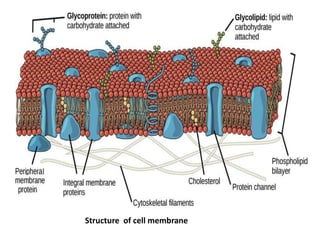
Structure of cell membrane
 The principal components of the plasma membrane are lipids
(phospholipids and cholesterol), proteins and carbohydrate groups that
are attached to some of the lipids and proteins.
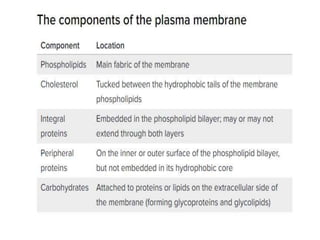
Phospholipids
 The cell membrane consists primarily of a thin layer of phospholipids that
arrange to form two layers of phospholipids (phospholipid bilayer). It is
amphipathic in nature, meaning that they have both hydrophilic and
hydrophobic regions.
 Phosphate head is hydrophilic (water loving). The hydrophilic heads of
phospholipids in a membrane bilayer face outward, contacting the
aqueous (watery) fluid both inside and outside the cell.
 The hydrophobic or “water-fearing,” part of a phospholipid consists of its
long fatty acid tails. It faces inside of the membrane.
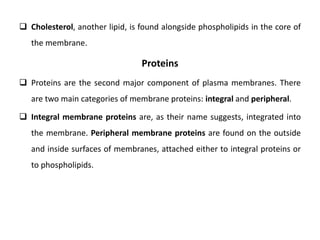
 Cholesterol, another lipid, is found alongside phospholipids in the core of
the membrane.
Proteins
 Proteins are the second major component of plasma membranes. There
are two main categories of membrane proteins: integral and peripheral.
 Integral membrane proteins are, as their name suggests, integrated into
the membrane. Peripheral membrane proteins are found on the outside
and inside surfaces of membranes, attached either to integral proteins or
to phospholipids.
Carbohydrates
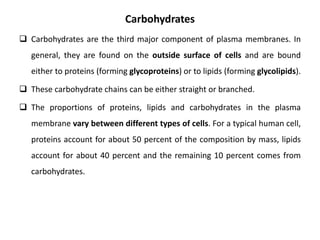
 Carbohydrates are the third major component of plasma membranes. In
general, they are found on the outside surface of cells and are bound
either to proteins (forming glycoproteins) or to lipids (forming glycolipids).
 These carbohydrate chains can be either straight or branched.
 The proportions of proteins, lipids and carbohydrates in the plasma
membrane vary between different types of cells. For a typical human cell,
proteins account for about 50 percent of the composition by mass, lipids
account for about 40 percent and the remaining 10 percent comes from
carbohydrates.
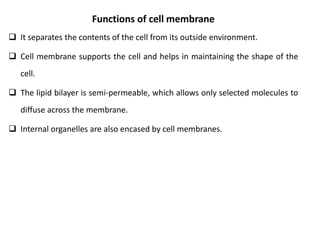
Functions of cell membrane
 It separates the contents of the cell from its outside environment.
 Cell membrane supports the cell and helps in maintaining the shape of the
cell.
 The lipid bilayer is semi-permeable, which allows only selected molecules to
diffuse across the membrane.
 Internal organelles are also encased by cell membranes.
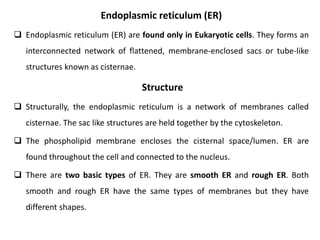
Endoplasmic reticulum (ER)
 Endoplasmic reticulum (ER) are found only in Eukaryotic cells. They forms an
interconnected network of flattened, membrane-enclosed sacs or tube-like
structures known as cisternae.
Structure
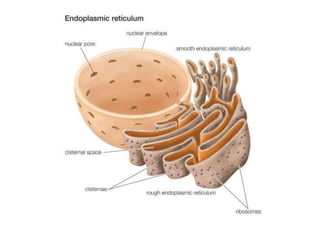
 Structurally, the endoplasmic reticulum is a network of membranes called
cisternae. The sac like structures are held together by the cytoskeleton.
 The phospholipid membrane encloses the cisternal space/lumen. ER are
found throughout the cell and connected to the nucleus.
 There are two basic types of ER. They are smooth ER and rough ER. Both
smooth and rough ER have the same types of membranes but they have
different shapes.
 Rough ER looks like sheets or disks of bumpy membrane while smooth
looks more like tubes. Rough ER is called rough because it has ribosomes
attached to its surface.
 Smooth ER acts as a storage organelle. It is important in the creation and
storage of lipids and steroids.
 Rough ER is very important in the synthesis and packaging of proteins. The
RER is attached to the nuclear envelope that surrounds the nucleus.
Functions
 It is mainly responsible for the transportation of proteins and carbohydrates
to another organelle, which includes lysosomes, Golgi apparatus, plasma
membrane etc.
 They provide increased surface area for cellular reactions.
 They help in the formation of nuclear membrane during cell division.
 They play a vital role in the synthesis of proteins, lipids, glycogen and other
steroids like cholesterol, progesterone, testosterone etc.

Cell membrane and endoplasmic reticulum

  • 1.
    Cell membrane and endoplasmicreticulum PRAKASH DHAKAL M. Sc. Public Health Microbiology Tribhuvan University, Nepal
  • 2.
    Cell membrane  Thecell membrane (also known as the plasma membrane or cytoplasmic membrane) is a biological membrane that surrounds the cytoplasm of the cell.  In animal cell the plasma membrane is the outer boundary of the cell while in plants and prokaryotes it is usually covered by a cell wall. Structure of cell membrane  The currently accepted model for the structure of plasma membrane is Fluid mosaic model. This model was proposed by S.J Singer and G.L Nicholson (1972).  According to the fluid mosaic model, the plasma membrane is mosaic components of phospholipids, cholesterol and proteins that move freely and fluidly in the membrane.
  • 3.
  • 4.
     The principalcomponents of the plasma membrane are lipids (phospholipids and cholesterol), proteins and carbohydrate groups that are attached to some of the lipids and proteins. Phospholipids  The cell membrane consists primarily of a thin layer of phospholipids that arrange to form two layers of phospholipids (phospholipid bilayer). It is amphipathic in nature, meaning that they have both hydrophilic and hydrophobic regions.  Phosphate head is hydrophilic (water loving). The hydrophilic heads of phospholipids in a membrane bilayer face outward, contacting the aqueous (watery) fluid both inside and outside the cell.  The hydrophobic or “water-fearing,” part of a phospholipid consists of its long fatty acid tails. It faces inside of the membrane.
  • 5.
     Cholesterol, anotherlipid, is found alongside phospholipids in the core of the membrane. Proteins  Proteins are the second major component of plasma membranes. There are two main categories of membrane proteins: integral and peripheral.  Integral membrane proteins are, as their name suggests, integrated into the membrane. Peripheral membrane proteins are found on the outside and inside surfaces of membranes, attached either to integral proteins or to phospholipids.
  • 6.
    Carbohydrates  Carbohydrates arethe third major component of plasma membranes. In general, they are found on the outside surface of cells and are bound either to proteins (forming glycoproteins) or to lipids (forming glycolipids).  These carbohydrate chains can be either straight or branched.  The proportions of proteins, lipids and carbohydrates in the plasma membrane vary between different types of cells. For a typical human cell, proteins account for about 50 percent of the composition by mass, lipids account for about 40 percent and the remaining 10 percent comes from carbohydrates.
  • 8.
    Functions of cellmembrane  It separates the contents of the cell from its outside environment.  Cell membrane supports the cell and helps in maintaining the shape of the cell.  The lipid bilayer is semi-permeable, which allows only selected molecules to diffuse across the membrane.  Internal organelles are also encased by cell membranes.
  • 9.
    Endoplasmic reticulum (ER) Endoplasmic reticulum (ER) are found only in Eukaryotic cells. They forms an interconnected network of flattened, membrane-enclosed sacs or tube-like structures known as cisternae. Structure  Structurally, the endoplasmic reticulum is a network of membranes called cisternae. The sac like structures are held together by the cytoskeleton.  The phospholipid membrane encloses the cisternal space/lumen. ER are found throughout the cell and connected to the nucleus.  There are two basic types of ER. They are smooth ER and rough ER. Both smooth and rough ER have the same types of membranes but they have different shapes.
  • 11.
     Rough ERlooks like sheets or disks of bumpy membrane while smooth looks more like tubes. Rough ER is called rough because it has ribosomes attached to its surface.  Smooth ER acts as a storage organelle. It is important in the creation and storage of lipids and steroids.  Rough ER is very important in the synthesis and packaging of proteins. The RER is attached to the nuclear envelope that surrounds the nucleus.
  • 12.
    Functions  It ismainly responsible for the transportation of proteins and carbohydrates to another organelle, which includes lysosomes, Golgi apparatus, plasma membrane etc.  They provide increased surface area for cellular reactions.  They help in the formation of nuclear membrane during cell division.  They play a vital role in the synthesis of proteins, lipids, glycogen and other steroids like cholesterol, progesterone, testosterone etc.