Cytokinins
Dr. Emasushan Minj
Assistant Professor
Department of Botany
St. Xavier’s College,
Mahuadanr, Latehar
Nilamber Pitamber University
Introduction
• Cytokinins are that have
diverse effects on important physiological functions in plants.
• Naturally occurring cytokinins are adenines, which possess
either an isoprenoid or aromatic side chain at the N6
position.
• The first cytokinin was isolated from autoclaved herring
sperm in .
• This compound was named kinetin because of its ability to
promote cytokinesis.
• The first naturally occurring cytokinin was isolated from corn
by independently and it was called
Zeatin.
Biosynthesis and transport
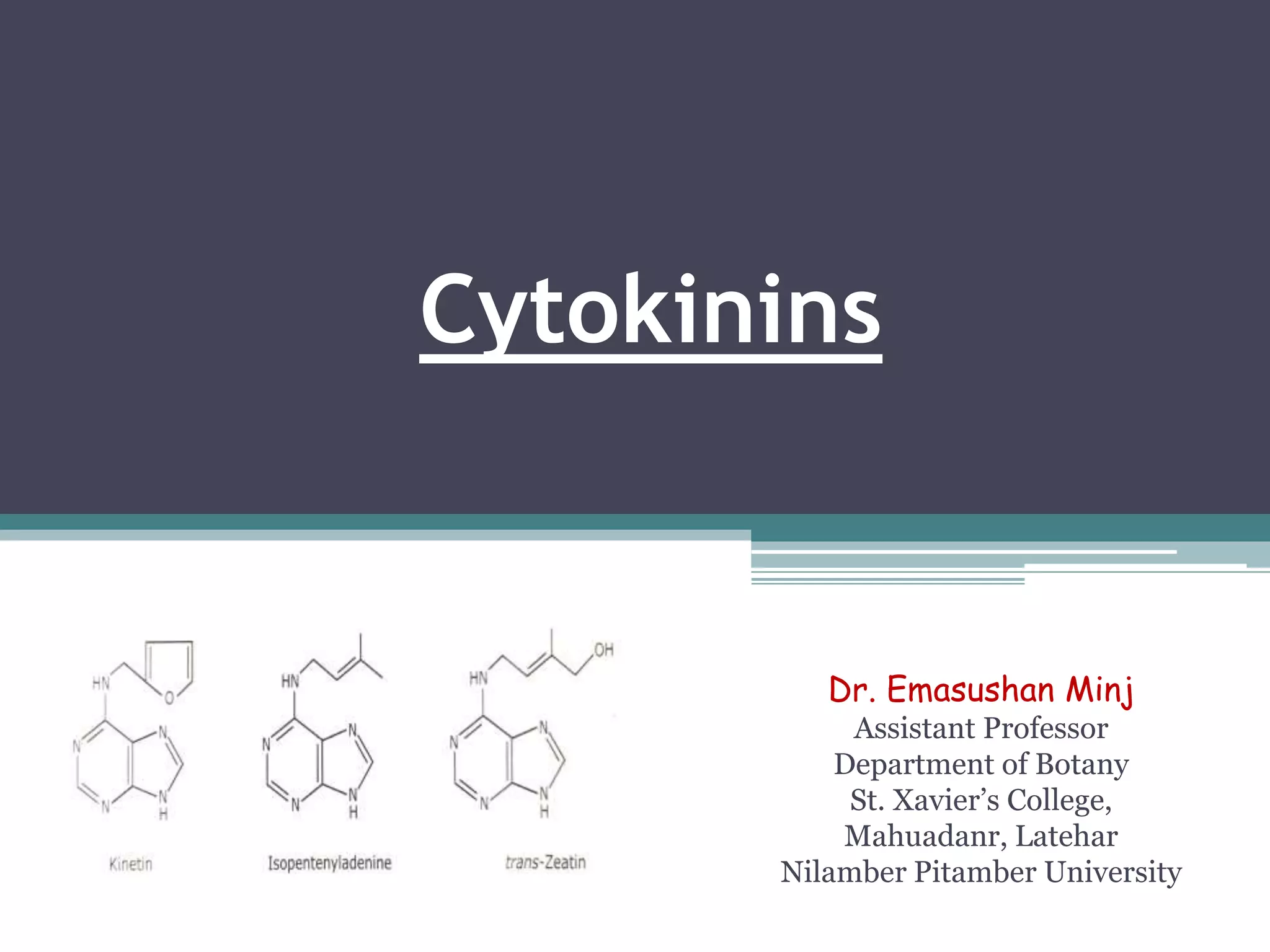
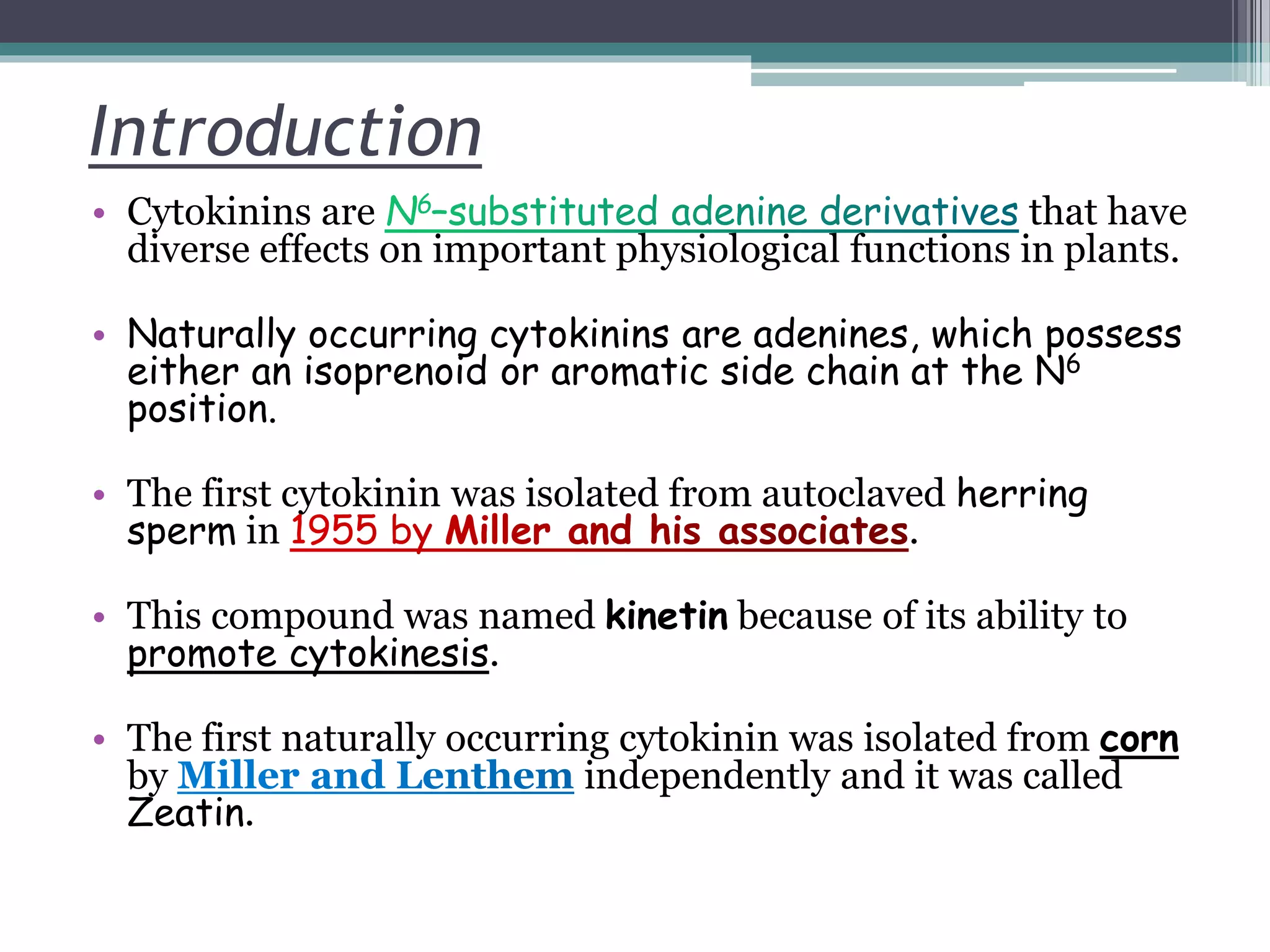
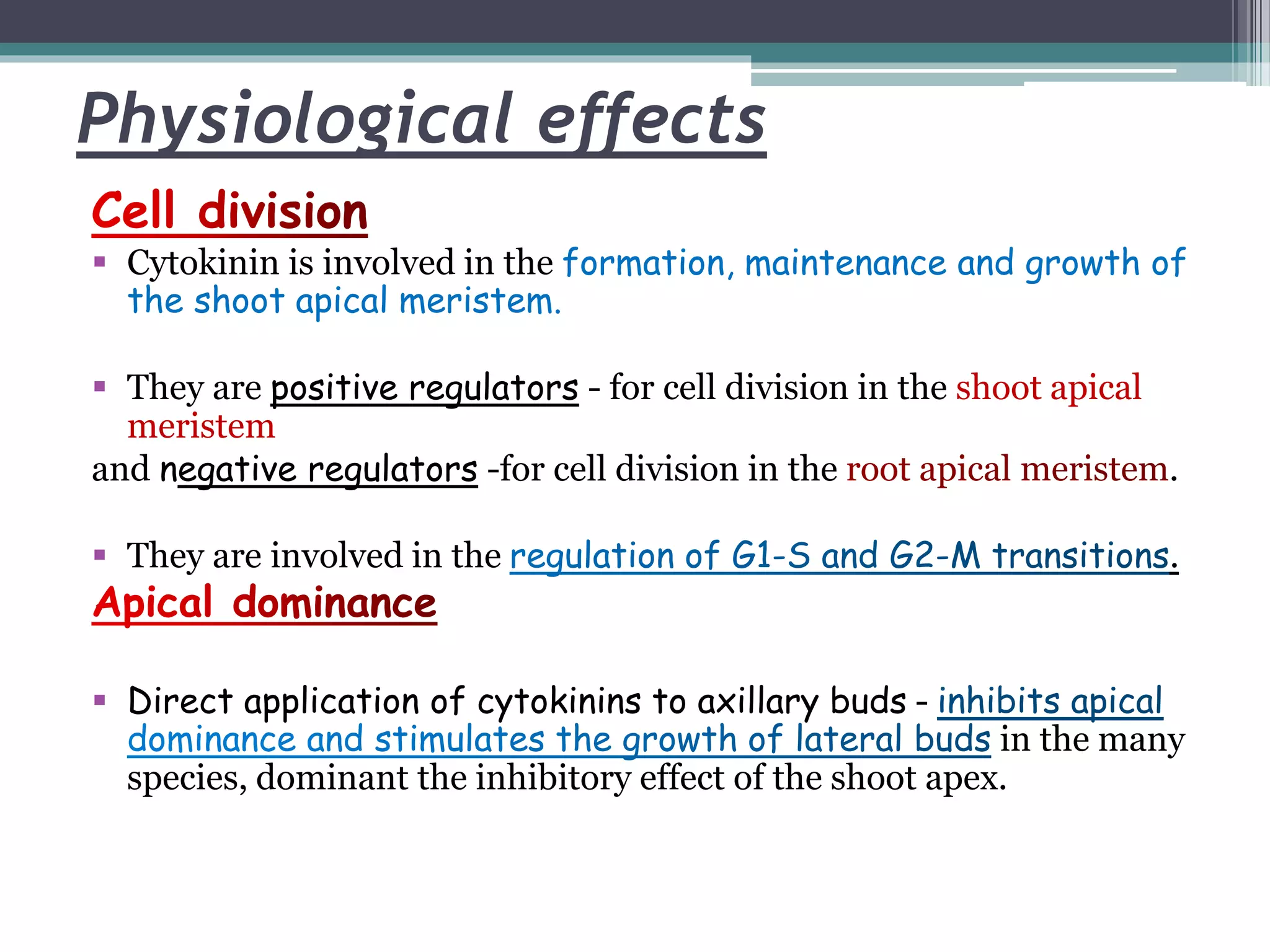
 The common active cytokinins
are-
 Cytokinins are generally found
in
 They are believed to be
synthesized in the roots and
translocation via the xylem to
shoots.
 Its biosynthetic pathway takes
place through the
.
Physiological effects
 Cytokinin is involved in the formation, maintenance and growth of
the shoot apical meristem.
 They are positive regulators - for cell division in the shoot apical
meristem
and negative regulators -for cell division in the .
 They are involved in the .
 Direct application of cytokinins to axillary buds -
in the many
species, dominant the inhibitory effect of the shoot apex.
 Cytokinin and auxin stimulate morphogenesis (shoot and root
initiation) in the callus.
 When is present alone or if the ratio of auxin to cytokinin is
high- callus will initiate root formation.
 Likewise if is present in high concentration- promotes
shoot formation.
 Equal amount of both hormones results- the proliferation of
undifferentiated callus.
 Example- crown gall formation in Agrobacterium tumefaciens.
 Cytokinins promote the
through stimulation of chlorophyll synthesis.
 Dark-grown seedlings are said to be etiolated.
 The internodes of etiolated seedlings are more elongated and
chloroplasts do not mature.

, which contain
protochlorophyll instead of the chloroplast thyllakoid system
and do not synthesize most of the enzymes and structural
proteins for the formation of chloroplast thylakoid system and
photosynthesis machinery.
 Senescence is an essential process of the plant’s growth and
development.
 It is an
which leads to organ death.
 Hormones are key signal molecules that accelerate or delay the
timing of leaf senescence. Some hormones are positive regulators of
senescence, while others act as negative regulators.
 Same hormones can also act as both depending on the age of the
leaf.
 Positive senescence regulators -
 Negative senescence regulators–
Thankyou

Plant hormone (Part-3)- Cytokinins

  • 1.
    Cytokinins Dr. Emasushan Minj AssistantProfessor Department of Botany St. Xavier’s College, Mahuadanr, Latehar Nilamber Pitamber University
  • 2.
    Introduction • Cytokinins arethat have diverse effects on important physiological functions in plants. • Naturally occurring cytokinins are adenines, which possess either an isoprenoid or aromatic side chain at the N6 position. • The first cytokinin was isolated from autoclaved herring sperm in . • This compound was named kinetin because of its ability to promote cytokinesis. • The first naturally occurring cytokinin was isolated from corn by independently and it was called Zeatin.
  • 3.
    Biosynthesis and transport The common active cytokinins are-  Cytokinins are generally found in  They are believed to be synthesized in the roots and translocation via the xylem to shoots.  Its biosynthetic pathway takes place through the .
  • 4.
    Physiological effects  Cytokininis involved in the formation, maintenance and growth of the shoot apical meristem.  They are positive regulators - for cell division in the shoot apical meristem and negative regulators -for cell division in the .  They are involved in the .  Direct application of cytokinins to axillary buds - in the many species, dominant the inhibitory effect of the shoot apex.
  • 5.
     Cytokinin andauxin stimulate morphogenesis (shoot and root initiation) in the callus.  When is present alone or if the ratio of auxin to cytokinin is high- callus will initiate root formation.  Likewise if is present in high concentration- promotes shoot formation.  Equal amount of both hormones results- the proliferation of undifferentiated callus.  Example- crown gall formation in Agrobacterium tumefaciens.
  • 6.
     Cytokinins promotethe through stimulation of chlorophyll synthesis.  Dark-grown seedlings are said to be etiolated.  The internodes of etiolated seedlings are more elongated and chloroplasts do not mature.  , which contain protochlorophyll instead of the chloroplast thyllakoid system and do not synthesize most of the enzymes and structural proteins for the formation of chloroplast thylakoid system and photosynthesis machinery.
  • 7.
     Senescence isan essential process of the plant’s growth and development.  It is an which leads to organ death.  Hormones are key signal molecules that accelerate or delay the timing of leaf senescence. Some hormones are positive regulators of senescence, while others act as negative regulators.  Same hormones can also act as both depending on the age of the leaf.  Positive senescence regulators -  Negative senescence regulators–
  • 8.