
11/24/2017 1RABIA AZIZ
RABIA AZIZ
BS THIRD YEAR CHEMISTRY
Jinnah University for Women Karachi
PINENE
11/24/2017 2RABIA AZIZ
INTRODUCTION
11/24/2017 3RABIA AZIZ
Introduction
Pinene
• Pinene (C10H16) is a bicyclic monoterpene.
• Pinene are fragrant oils.
Properties
• Pinene is a colorless, volatile terpene liquid
• Molecular weight of 136.23
Importance
• It is used as solvents
• It is used in making resins.
• It is used chiefly in the manufacture of camphor.
11/24/2017 4RABIA AZIZ
SOURCES OF PINENE
11/24/2017 5RABIA AZIZ
SOURCES
• It is found in many essential oils of pine trees.
• Pinene can also be found in conifer trees, orange peels,
turpentine, pine needles, rosemary, dill, basil, and parsley.
• Many plants from many botanical families contain the
compound, including:
 Cuminum cyminum
 Humulus lupulus
 Pinus pinaster
 Clausena anisata
 Cannabis sativa
 Cannabis indica
11/24/2017 6RABIA AZIZ
PINENE’S EFFECTS ON HEALTH AND
BENEFITS
11/24/2017 7RABIA AZIZ
Pinene’s Effects and Benefits
Some of pinene’s known effects and benefits
include:
• Anti-inflammatory
• Bronchodilator (helps improve airflow to
lungs)
• Helps counter short-term memory loss
associated with THC
• Promotes alertness
11/24/2017 8RABIA AZIZ
USES OF PINENE
11/24/2017 9RABIA AZIZ
Uses
1. α-Pinene is an anti-inflammatory
2. α-pinene is used in the manufacture of camphor,
solvents, plastics, and insecticides.
3. Turpentine:
It is used as a solvent.
It is used as a source of materials for organic
synthesis.
It is used for thinning oil-based paints, for
producing varnishes, and as a raw material for
the chemical industry.
11/24/2017 10RABIA AZIZ
PINENE ISOMERS
11/24/2017 11RABIA AZIZ
Isomers Of Pinene
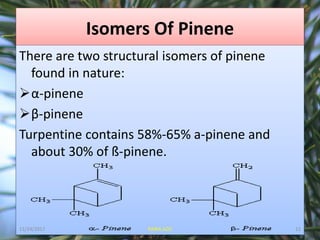
There are two structural isomers of pinene
found in nature:
α-pinene
β-pinene
Turpentine contains 58%-65% a-pinene and
about 30% of ß-pinene.
11/24/2017 12RABIA AZIZ
Alpha Pinene
11/24/2017 13RABIA AZIZ
SYNTHESIS OF PINENE
11/24/2017 14RABIA AZIZ
Synthesis of Pinene
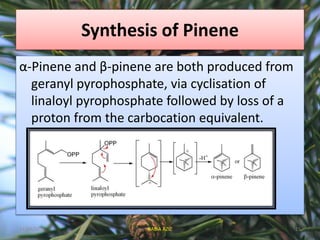
α-Pinene and β-pinene are both produced from
geranyl pyrophosphate, via cyclisation of
linaloyl pyrophosphate followed by loss of a
proton from the carbocation equivalent.
11/24/2017 15RABIA AZIZ

Pinene

  • 1.
  • 2.
    RABIA AZIZ BS THIRDYEAR CHEMISTRY Jinnah University for Women Karachi PINENE 11/24/2017 2RABIA AZIZ
  • 3.
  • 4.
    Introduction Pinene • Pinene (C10H16)is a bicyclic monoterpene. • Pinene are fragrant oils. Properties • Pinene is a colorless, volatile terpene liquid • Molecular weight of 136.23 Importance • It is used as solvents • It is used in making resins. • It is used chiefly in the manufacture of camphor. 11/24/2017 4RABIA AZIZ
  • 5.
  • 6.
    SOURCES • It isfound in many essential oils of pine trees. • Pinene can also be found in conifer trees, orange peels, turpentine, pine needles, rosemary, dill, basil, and parsley. • Many plants from many botanical families contain the compound, including:  Cuminum cyminum  Humulus lupulus  Pinus pinaster  Clausena anisata  Cannabis sativa  Cannabis indica 11/24/2017 6RABIA AZIZ
  • 7.
    PINENE’S EFFECTS ONHEALTH AND BENEFITS 11/24/2017 7RABIA AZIZ
  • 8.
    Pinene’s Effects andBenefits Some of pinene’s known effects and benefits include: • Anti-inflammatory • Bronchodilator (helps improve airflow to lungs) • Helps counter short-term memory loss associated with THC • Promotes alertness 11/24/2017 8RABIA AZIZ
  • 9.
  • 10.
    Uses 1. α-Pinene isan anti-inflammatory 2. α-pinene is used in the manufacture of camphor, solvents, plastics, and insecticides. 3. Turpentine: It is used as a solvent. It is used as a source of materials for organic synthesis. It is used for thinning oil-based paints, for producing varnishes, and as a raw material for the chemical industry. 11/24/2017 10RABIA AZIZ
  • 11.
  • 12.
    Isomers Of Pinene Thereare two structural isomers of pinene found in nature: α-pinene β-pinene Turpentine contains 58%-65% a-pinene and about 30% of ß-pinene. 11/24/2017 12RABIA AZIZ
  • 13.
  • 14.
  • 15.
    Synthesis of Pinene α-Pineneand β-pinene are both produced from geranyl pyrophosphate, via cyclisation of linaloyl pyrophosphate followed by loss of a proton from the carbocation equivalent. 11/24/2017 15RABIA AZIZ