Downloaded 646 times



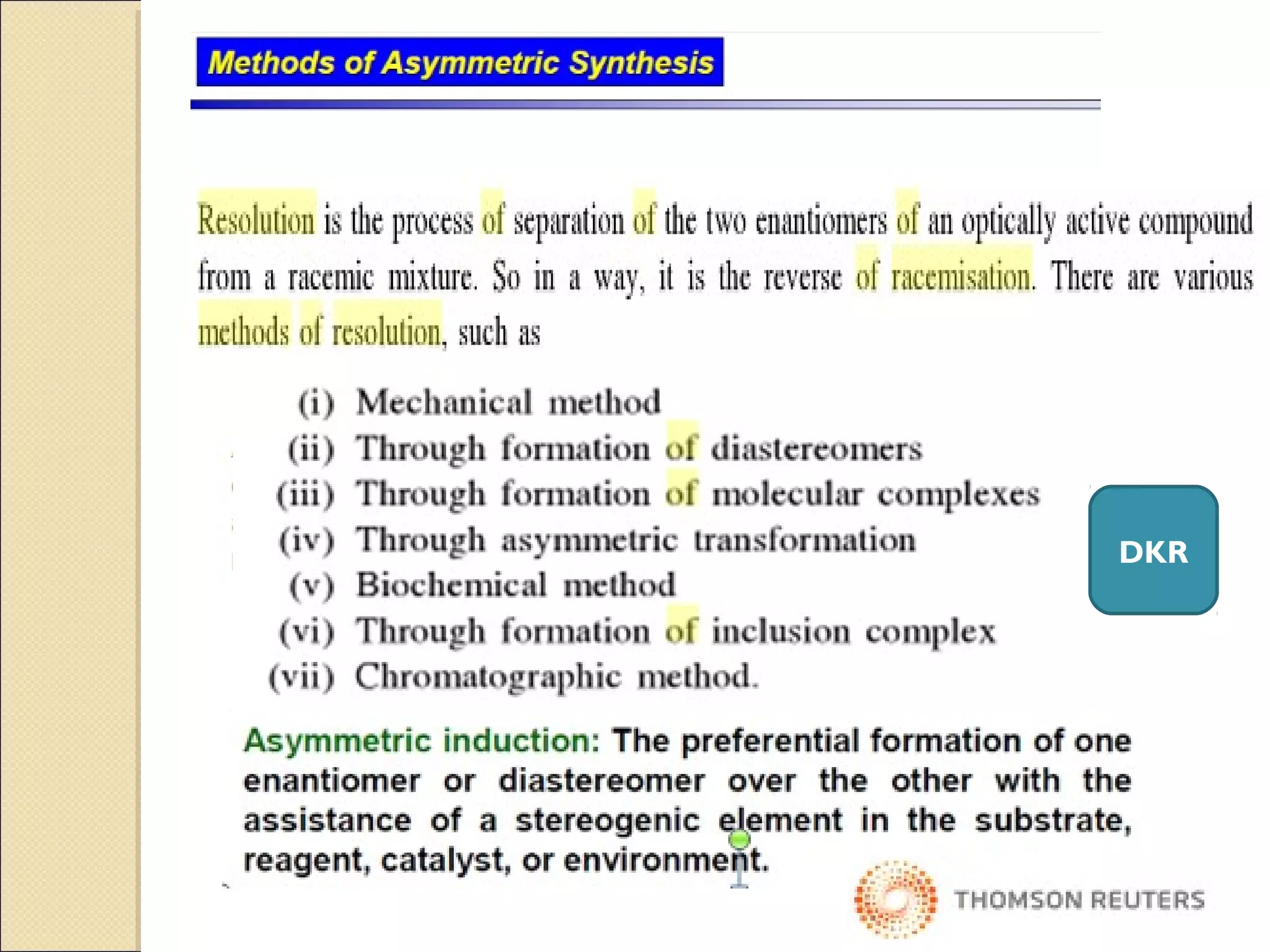
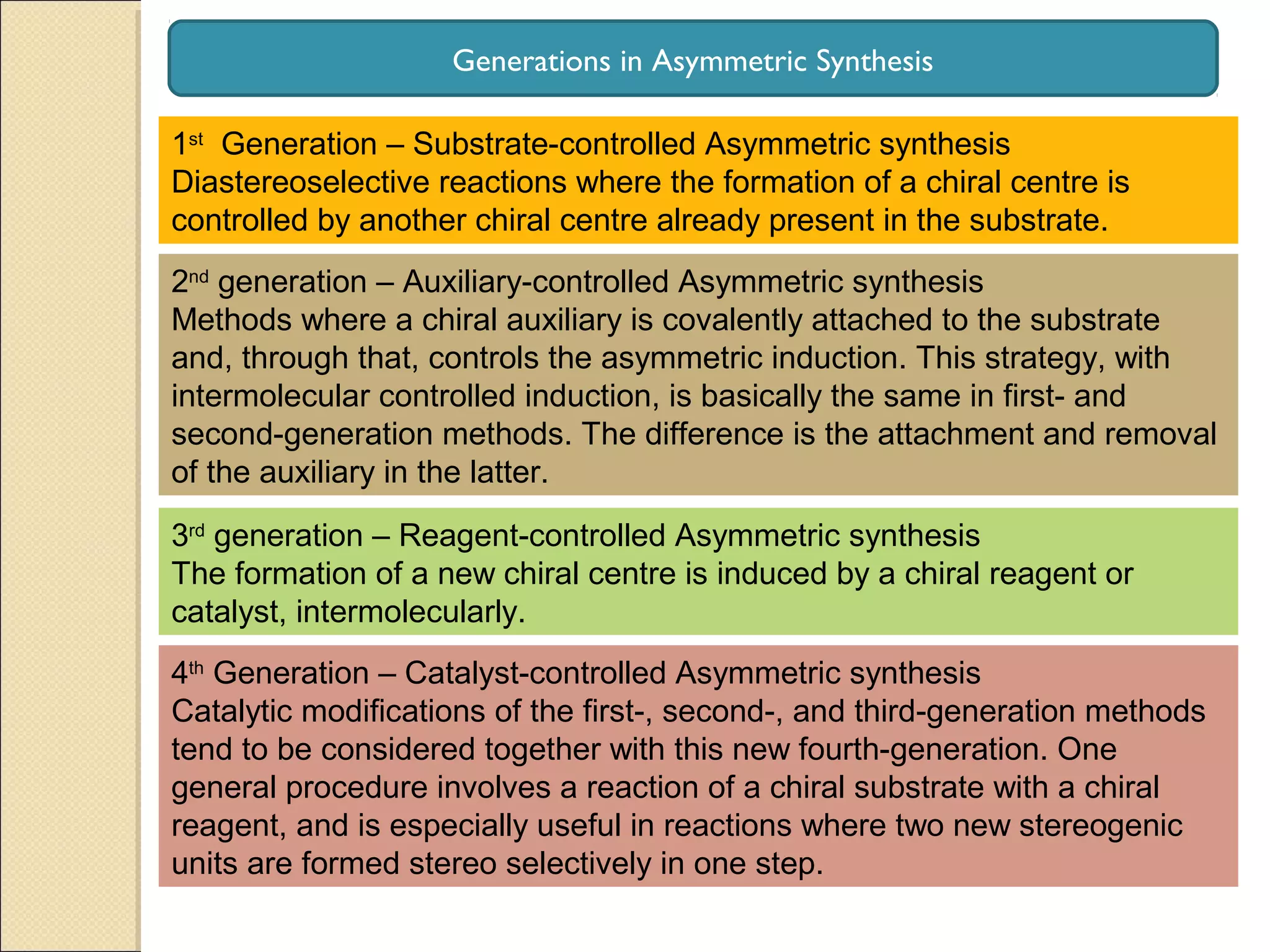


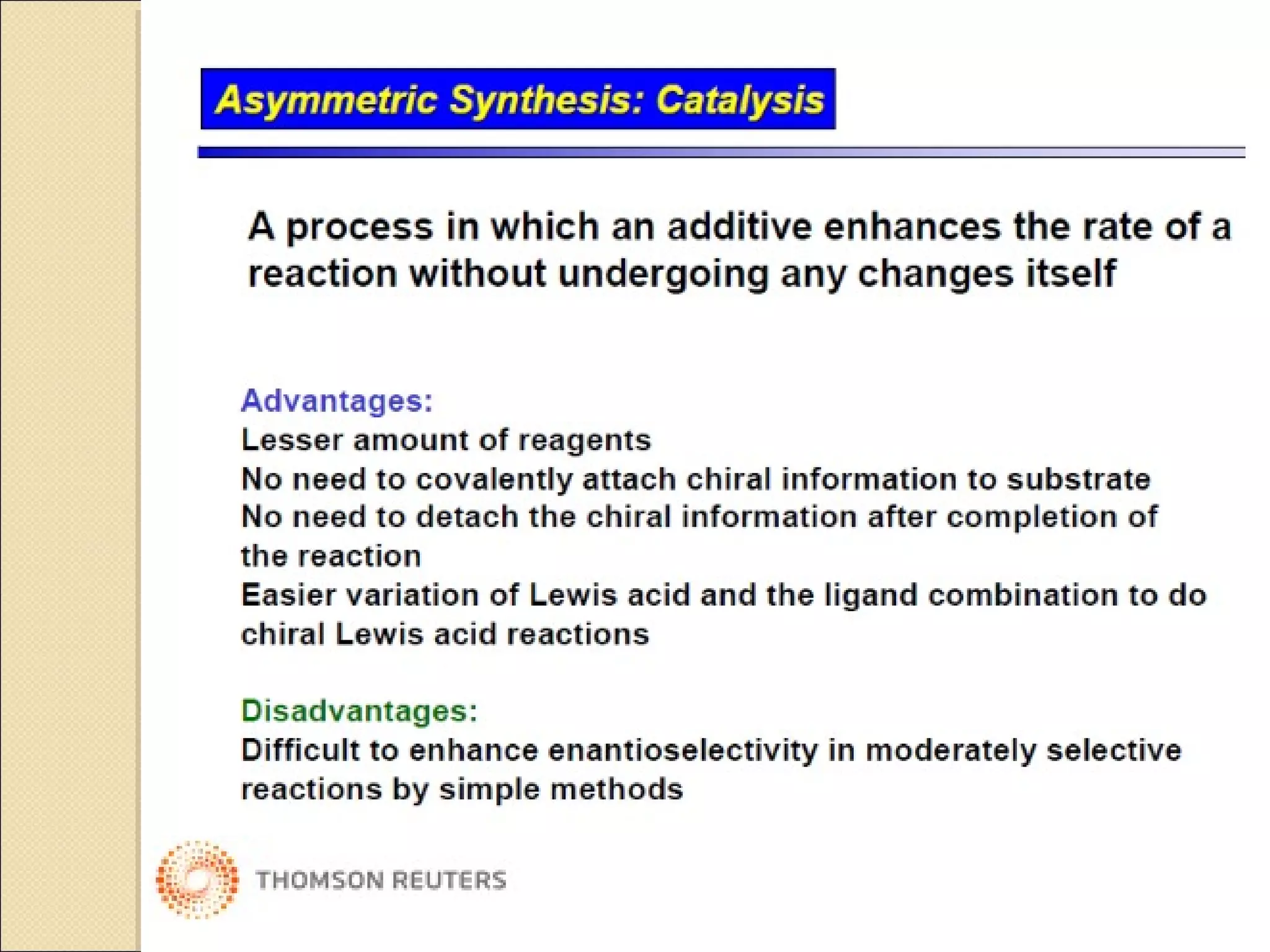


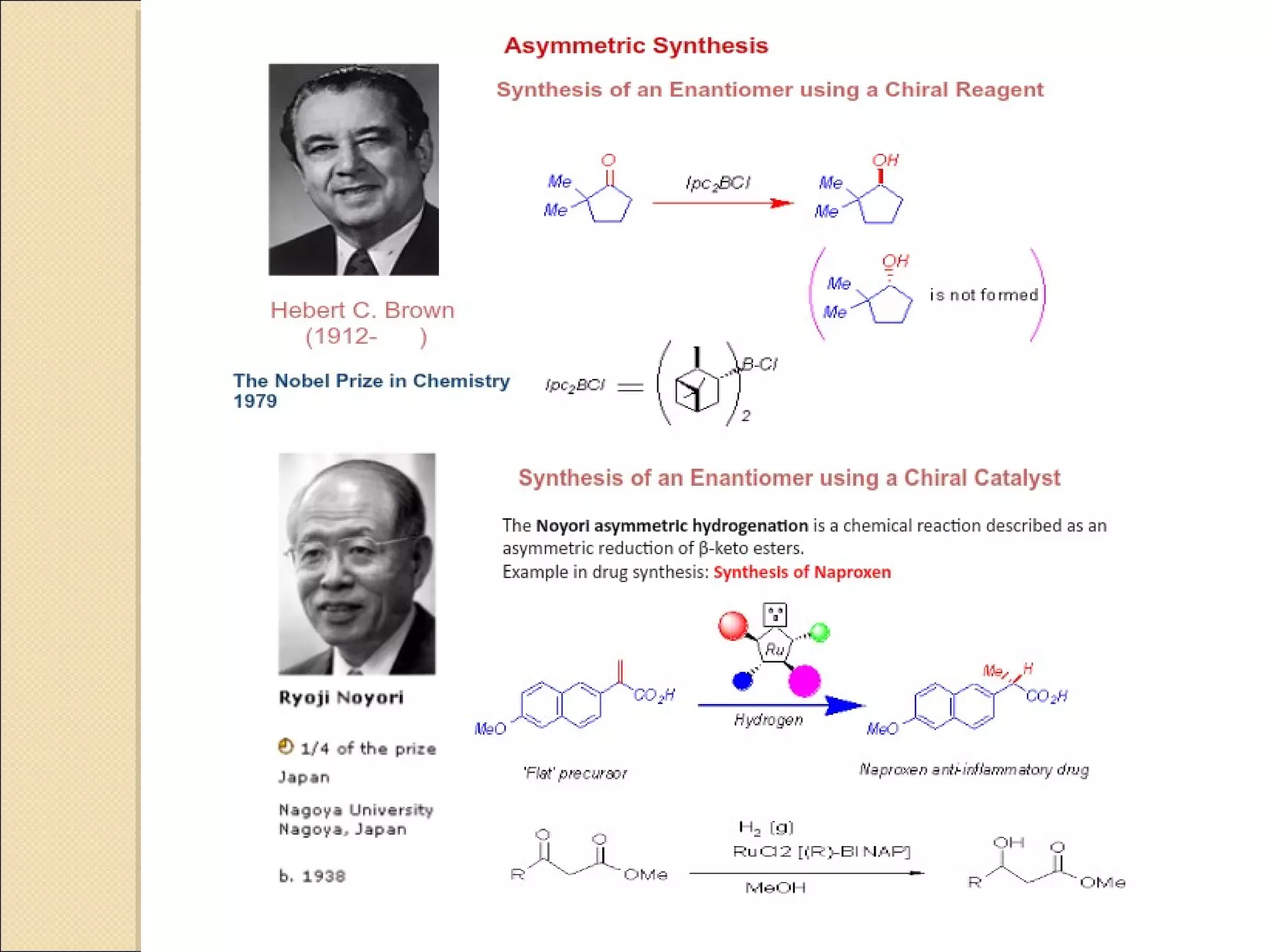
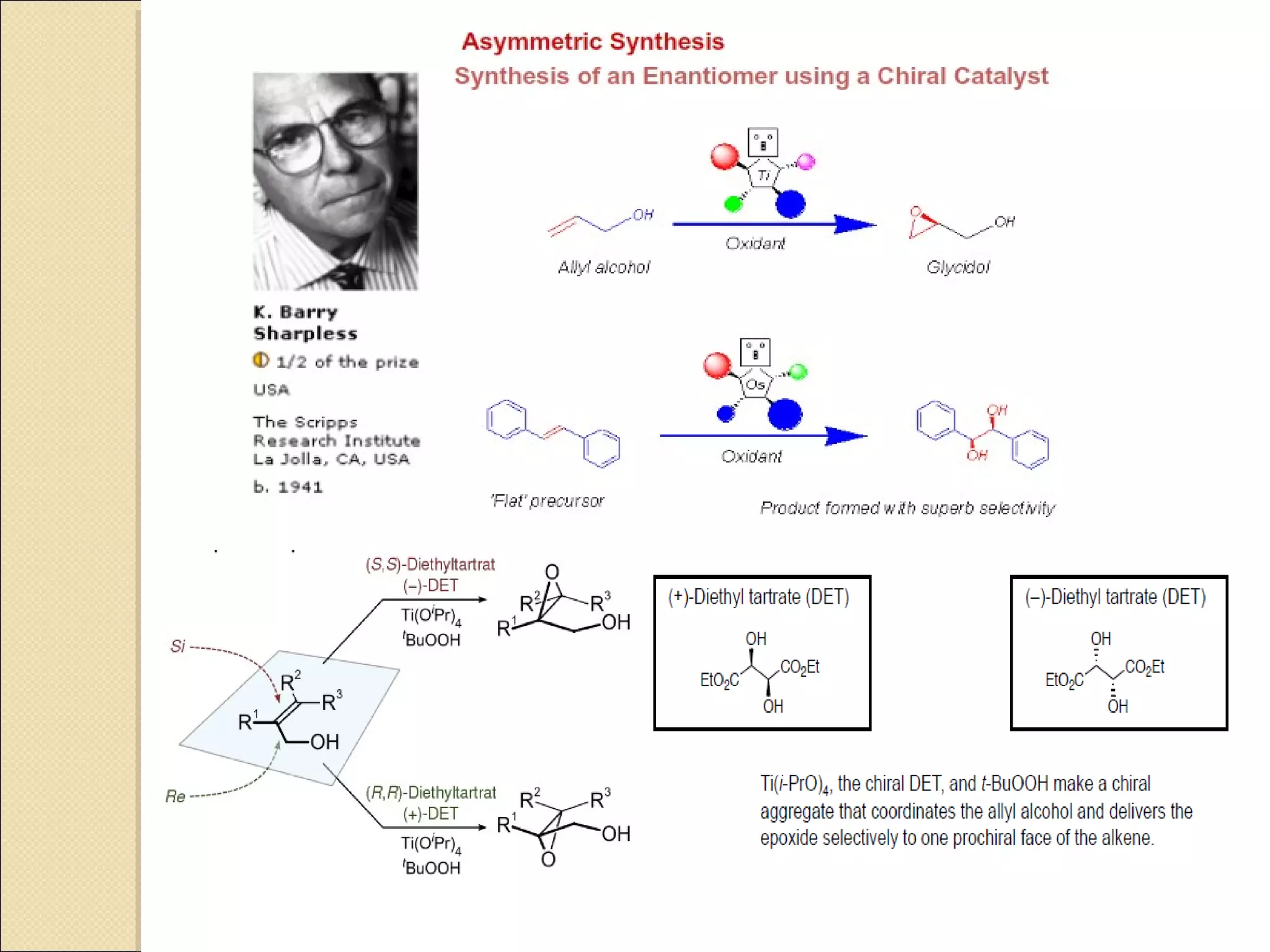


The document discusses four generations of asymmetric synthesis techniques: 1) First generation uses a chiral substrate to control the formation of new chiral centers through diastereoselective reactions. 2) Second generation uses a chiral auxiliary covalently attached to the substrate to control asymmetric induction. 3) Third generation uses a chiral reagent or catalyst to induce asymmetry through intermolecular interactions. 4) Fourth generation involves catalytic versions of the first three generations and reactions where two new stereocenters are formed in one step, often using a chiral substrate and reagent.


