Chapter 13 Health Psychology: Addiction, Emotion, and Stress Impact of Psychological Factors on Health This multimedia product and its contents are protected under copyright law. The following are prohibited by law: any public performance or display, including transmission of any image over a network; preparation of any derivative work, including the extraction, in whole or in part, of any images;  any rental, lease, or lending of the program.
Health Psychology An area of psychological research that focuses on the effects of psychological factors on physical health Multidisciplinary Two major areas addressed here – addiction and emotion
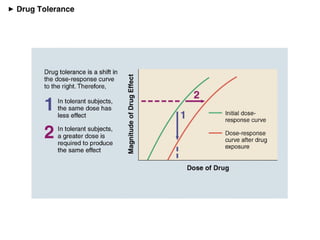
Drug Tolerance Decreased sensitivity to a drug as a consequence of exposure to it Shift in the dose-response curve Cross tolerance – exposure to one drug can produce tolerance to similar drugs Tolerance often develops to some effects and not others More than one form of tolerance
 
Drug Tolerance Metabolic Less drug is getting to the site of action Functional Decreased responsiveness at the site of action - fewer receptors, decreased efficiency of binding at receptors, receptors less responsive
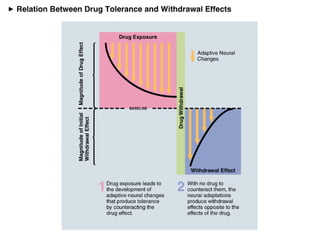
Physical Dependence Indicated by occurrence of withdrawal Seen when drug use is terminated Symptoms are the opposite of the drug’s effects Body has made changes to compensate for drug’s presence – functions normally with the drug present Severity varies with drug and pattern of use
 
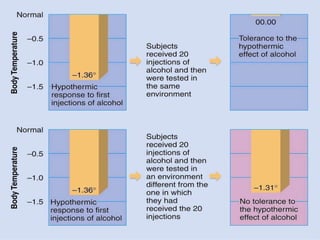
Drug Tolerance and Conditioning Situational specificity of drug tolerance is well-documented Cues associated with drug-taking become conditioned stimuli that elicit conditioned compensatory responses, producing tolerance prior to drug use or withdrawal in the absence of the drug
 
Addiction: What Is It? “Addicts” are those who continue to use a drug despite its adverse consequences Nobody is immune to the addictive effects of drugs
Biological Theories of Addiction Physical-Dependence Theory –  Use continues to avoid withdrawal  Why relapse after detoxification? Why begin use?  Why does addiction develop to drugs that do not produce severe withdrawal? Positive-Incentive Theories Use continues due to craving ( anticipated  pleasure) for drug effects Supported by research
Causes of Relapse Stress  Drug use as a coping mechanism Priming  A single exposure leads to a relapse Environmental cues
5 Commonly Abused Drugs Tobacco Alcohol Marijuana Cocaine  Opiates
Tobacco Nicotine – major psychoactive ingredient About 70% of those who experiment with smoking become addicted Only about 20% of attempts to stop are successful
Effects of Long-Term Tobacco Use Smoker’s syndrome – chest pain, labored breathing, wheezing, coughing, increased susceptibility to respiratory infections Susceptible to various lethal lung disorders – pneumonia, bronchitis, emphysema, lung cancer
Alcohol A depressant High heritability estimate for alcohol addiction - ~55% Metabolic and functional tolerance develops Attacks almost every tissue in the body
Effects of Chronic Alcohol Consumption Severe withdrawal – 3 phases 5-6 hrs post-drinking: tremors, nausea, sweating, vomiting, etc. 15-30 hrs: convulsive activity 24-48 hrs: delirium tremens – may last 3-4 days Korsakoff’s syndrome Cirrhosis
Fetal Alcohol Syndrome (FAS) Alcohol readily penetrates the placental membrane Alcohol disrupts brain development No known “safe” amount
Marijuana Cannabis sativa  – common hemp plant THC – primary psychoactive constituent – although over 80 others are present High doses impair short-term memory and interfere with tasks involving multiple steps Addiction potential is low Negative effects are far less severe than those associated with alcohol and tobacco
Adverse Effects of Heavy Marijuana Use Respiratory problems – cough, bronchitis, asthma Single large doses can trigger heart attacks in susceptible individuals No evidence that marijuana causes permanent brain damage
Medicinal Uses of Marijuana Treat nausea  Block seizures Dilate bronchioles of asthmatics Decrease severity of glaucoma Reduce some forms of pain
THC Fat-soluble Binds to receptors in basal ganglia, hippocampus, cerebellum, and neocortex Endogenous ligand is anandamide Function of anandamide is not known
Stimulants Increase neural and behavioral activity Cocaine and its derivatives – commonly abused Crack – a potent, cheap, and smokable form of cocaine Cocaine is an effective local anesthetic Synthetic analogues procaine and lidocaine used today
Cocaine Cocaine binges or sprees may lead to cocaine psychosis Looks like paranoid schizophrenia While tolerance may develop to some effects of cocaine, sensitization is seen to motor and convulsive effects Although highly addictive, withdrawal is relatively minor
Amphetamine AKA “speed” – another abused stimulant Effects are comparable to those of cocaine – also can produce psychosis MDMA (ecstasy) – a relative of amphetamine Evidence suggests that stimulants are neurotoxins
Ecstasy (MDMA) Studies of lab animals find that MDMA has toxic effects on serotonergic and dopaminergic neurons But are the doses used in studies comparable to what humans use? Human studies do find abnormalities of serotonergic function and deficits in memory, mood, and psychomotor tasks
Opiates: Heroin and Morphine Morphine and codeine obtained from the opium poppy Opiates – these drugs and others with similar structures or effects Medicinal uses Analgesics (painkillers) Treatment of cough and diarrhea High risk of addiction
Factors Increasing Opiate Popularity China’s ban of tobacco smoking led to opium smoking More addicting than eating opium Isolation of morphine  Opium’s most potent constituent The hypodermic needle During the Civil War morphine addiction came to be known as “soldiers’ disease”
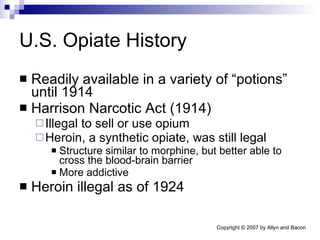
U.S. Opiate History Readily available in a variety of “potions” until 1914 Harrison Narcotic Act (1914)  Illegal to sell or use opium  Heroin, a synthetic opiate, was still legal Structure similar to morphine, but better able to cross the blood-brain barrier  More addictive Heroin illegal as of 1924
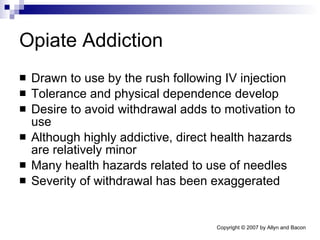
Opiate Addiction Drawn to use by the rush following IV injection Tolerance and physical dependence develop Desire to avoid withdrawal adds to motivation to use Although highly addictive, direct health hazards are relatively minor Many health hazards related to use of needles Severity of withdrawal has been exaggerated
 
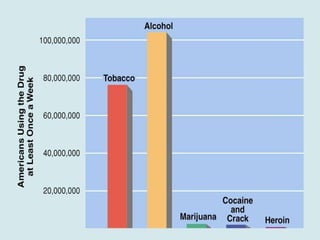
Comparison of the Health Hazards Which drug is our biggest “drug problem”? Which drug harms the individual the most?  Which drug harms society the most?
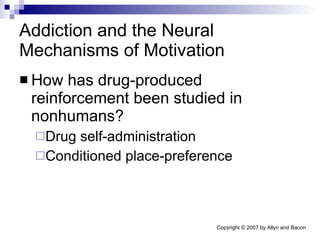
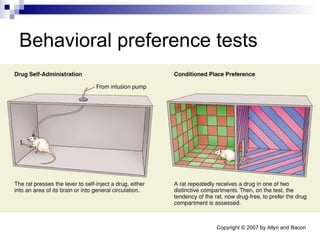
Addiction and the Neural Mechanisms of Motivation How has drug-produced reinforcement been studied in nonhumans? Drug self-administration Conditioned place-preference
Behavioral preference tests
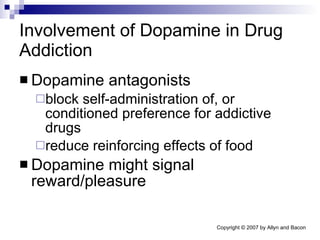
Involvement of Dopamine in Drug Addiction Dopamine antagonists  block self-administration of, or conditioned preference for addictive drugs reduce reinforcing effects of food Dopamine might signal reward/pleasure
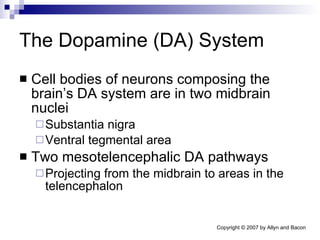
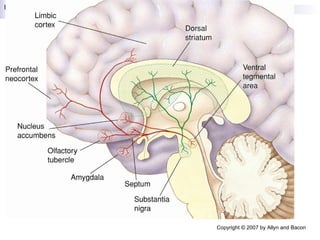
The Dopamine (DA) System Cell bodies of neurons composing the brain’s DA system are in two midbrain nuclei Substantia nigra Ventral tegmental area Two mesotelencephalic DA pathways Projecting from the midbrain to areas in the telencephalon
Mesotelencephalic Dopamine System Nigrostriatal pathway Substantia nigra > Dorsal striatum Degeneration here seen in Parkinson’s  Mesocorticolimbic pathway Ventral tegmental area (VTA) > cortical and limbic sites Involved in reward – VTA > nucleus accumbens
 
Evidence of Dopamine’s Role in Reinforcing Effects of Drugs Lab animals will press a level to self-administer addictive drugs to the nucleus accumbens Lab animals will develop conditioned place preferences with microinjections of addictive drugs to the nucleus accumbens Addicts only report a high when cocaine is effectively blocking DA reuptake, increasing extracellular dopamine IV amphetamine study – euphoria reported correlated with DA levels in nucleus accumbens
Human Studies PET studies find that many addicts have reduced cerebral dopamine levels Dopamine levels increase when addicts are exposed to their drug of choice Dopamine may be involved in the expectation of reward, rather than its experience – a signal, perhaps
Expectation-of-reward Theory Dopamine neurons in monkey VTA – respond to unpredicted reward An expected reward did not lead to a release of dopamine A conditioned stimulus does lead to release of dopamine Consistent with dopamine as a signal of a reward to come, as opposed to a response to a reward
Introduction of the Biopsychology of Emotion Phineas Gage provides an elegant demonstration of the brain’s role in emotion Why would a tamping iron through the skull lead to dramatic changes in personality? Damage to the medial prefrontal lobes
Darwin’s Theory of the Evolution of Emotional Expression Expressions of emotion evolve from behaviors that indicate what an animal is likely to do next If emotional signals are beneficial, they will evolve to more effectively communicate and may lose their original meaning
Evolution of Emotional Expression Opposite messages are often signaled by opposite movements. “Principle of antithesis” Threat displays, for example, are beneficial – intimidate victims without the costs and risks of fighting
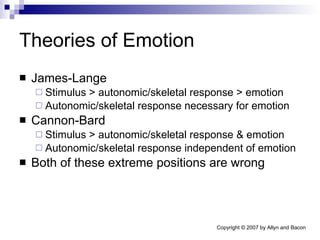
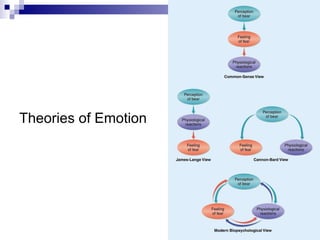
Theories of Emotion James-Lange Stimulus > autonomic/skeletal response > emotion Autonomic/skeletal response necessary for emotion Cannon-Bard Stimulus > autonomic/skeletal response & emotion Autonomic/skeletal response independent of emotion Both of these extreme positions are wrong
Theories of Emotion
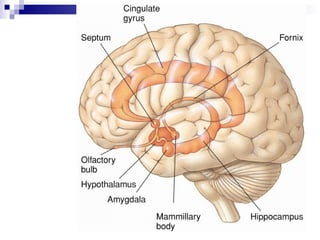
Bard – Sham Rage Decorticated cats exhibit extreme and unfocused aggressive responses Hypothalamus must be intact  Perhaps hypothalamus is needed for expression of aggression and cortex serves to inhibit and direct responses Papez proposed emotional circuit – limbic system, that includes hypothalamus
 
Kluver-Bucy Syndrome Rare cerebral neurological disorder Major symptoms - urge to put objects into mouth, memory loss, extreme sexual behavior, placidity, visual distractibility Bilateral temporal lobes
Stress and Health Stress – reaction to harm to threat Stressors – stimuli that cause stress Chronic psychological stress – most clearly linked to ill health In the short-term stress is adaptive, in the long-term it is maladaptive
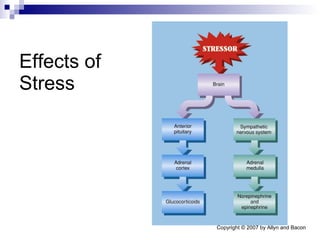
Selye and the Stress Response Activation of the anterior-pituitary adrenal-cortex system Selye neglected the role of the sympathetic nervous system All common psychological stressors are associated with high levels of glucocorticoids, epinephrine, and norepinephrine
Effects of Stress
Stress and Gastric Ulcers Gastric ulcers – lesions of stomach lining and duodenum More common in those who are stressed and readily created in the lab Ulcers are caused by a bacteria – but it appears that stress makes the body susceptible to this bacteria 75% of healthy subjects have the bacteria
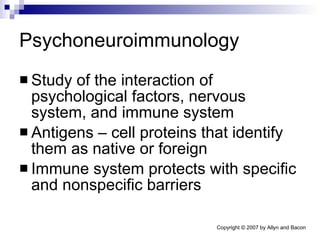
Psychoneuroimmunology Study of the interaction of psychological factors, nervous system, and immune system Antigens – cell proteins that identify them as native or foreign Immune system protects with specific and nonspecific barriers
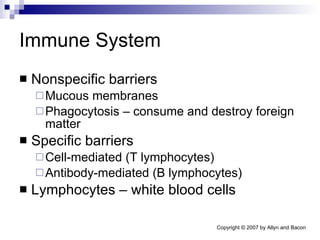
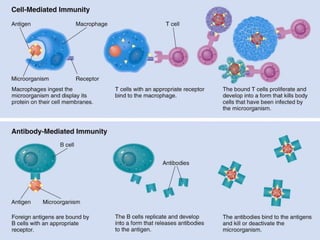
Immune System Nonspecific barriers Mucous membranes Phagocytosis – consume and destroy foreign matter Specific barriers Cell-mediated (T lymphocytes) Antibody-mediated (B lymphocytes) Lymphocytes – white blood cells
 
Stress and Immune Function If stress affects immune function, how might it do so? Why is stress initially adaptive and then, when chronic, harmful?
Meta-Analysis of Stress Studies Effects of stress on immune function depend on the kind of stress Acute stressor improve immune function Chronic stressor impair Many ways that stress could impact immune function Physiological  Behavioral
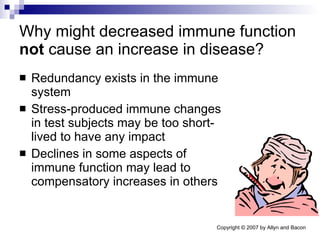
Why might decreased immune function  not  cause an increase in disease? Redundancy exists in the immune system Stress-produced immune changes in test subjects may be too short-lived to have any impact Declines in some aspects of immune function may lead to compensatory increases in others
Early Experience of Stress Early exposure to stress may result in increased intensity of subsequent stress responses While prenatal stress has a negative effects, early neonatal stress can have lasting positive effect – if the stress leads to increased maternal grooming
Stress and the Hippocampus Hippocampus has many glucocorticoid receptors Following stress Dendrites of pyramidal cells are shorter and less branched Adult neurogenesis of granule cells reduced Effects seen with only a few hours of stress
Brain Mechanisms of Emotion What can fear conditioning tell us about the brain’s role in emotion? What does the amygdala do for us?
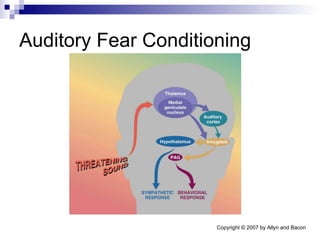
Fear Conditioning Auditory fear conditioning blocked with medial geniculate nucleus (MGN) lesions – not affected by auditory cortex lesions Critical pathways: MGN to amygdala Amygdala lesion blocks fear conditioning
Auditory Fear Conditioning
Contextual Fear Conditioning and the Hippocampus Just as fear of an auditory stimulus can be learned, so can fear of a place Hippocampus involved Lesion before conditioning prevents development of contextual fear Lesion after blocks retention of contextual fear response Other fear responses intact
Role of the Amygdala is Human Emotion Structure most frequently associated with emotion Kluver-Bucy syndrome Study of those with amygdalar damage Damage > problems with recognition of facial expressions of fear Urbach-Wiethe – bilateral amygdala damage > unable to identify fear
Emotion What unique challenges must be overcome in the study of emotion? Why is it important to develop an understanding of the brain mechanisms that underlie emotion?

Pinel basics ch13

  • 1.
    Chapter 13 HealthPsychology: Addiction, Emotion, and Stress Impact of Psychological Factors on Health This multimedia product and its contents are protected under copyright law. The following are prohibited by law: any public performance or display, including transmission of any image over a network; preparation of any derivative work, including the extraction, in whole or in part, of any images; any rental, lease, or lending of the program.
  • 2.
    Health Psychology Anarea of psychological research that focuses on the effects of psychological factors on physical health Multidisciplinary Two major areas addressed here – addiction and emotion
  • 3.
    Drug Tolerance Decreasedsensitivity to a drug as a consequence of exposure to it Shift in the dose-response curve Cross tolerance – exposure to one drug can produce tolerance to similar drugs Tolerance often develops to some effects and not others More than one form of tolerance
  • 4.
  • 5.
    Drug Tolerance MetabolicLess drug is getting to the site of action Functional Decreased responsiveness at the site of action - fewer receptors, decreased efficiency of binding at receptors, receptors less responsive
  • 6.
    Physical Dependence Indicatedby occurrence of withdrawal Seen when drug use is terminated Symptoms are the opposite of the drug’s effects Body has made changes to compensate for drug’s presence – functions normally with the drug present Severity varies with drug and pattern of use
  • 7.
  • 8.
    Drug Tolerance andConditioning Situational specificity of drug tolerance is well-documented Cues associated with drug-taking become conditioned stimuli that elicit conditioned compensatory responses, producing tolerance prior to drug use or withdrawal in the absence of the drug
  • 9.
  • 10.
    Addiction: What IsIt? “Addicts” are those who continue to use a drug despite its adverse consequences Nobody is immune to the addictive effects of drugs
  • 11.
    Biological Theories ofAddiction Physical-Dependence Theory – Use continues to avoid withdrawal Why relapse after detoxification? Why begin use? Why does addiction develop to drugs that do not produce severe withdrawal? Positive-Incentive Theories Use continues due to craving ( anticipated pleasure) for drug effects Supported by research
  • 12.
    Causes of RelapseStress Drug use as a coping mechanism Priming A single exposure leads to a relapse Environmental cues
  • 13.
    5 Commonly AbusedDrugs Tobacco Alcohol Marijuana Cocaine Opiates
  • 14.
    Tobacco Nicotine –major psychoactive ingredient About 70% of those who experiment with smoking become addicted Only about 20% of attempts to stop are successful
  • 15.
    Effects of Long-TermTobacco Use Smoker’s syndrome – chest pain, labored breathing, wheezing, coughing, increased susceptibility to respiratory infections Susceptible to various lethal lung disorders – pneumonia, bronchitis, emphysema, lung cancer
  • 16.
    Alcohol A depressantHigh heritability estimate for alcohol addiction - ~55% Metabolic and functional tolerance develops Attacks almost every tissue in the body
  • 17.
    Effects of ChronicAlcohol Consumption Severe withdrawal – 3 phases 5-6 hrs post-drinking: tremors, nausea, sweating, vomiting, etc. 15-30 hrs: convulsive activity 24-48 hrs: delirium tremens – may last 3-4 days Korsakoff’s syndrome Cirrhosis
  • 18.
    Fetal Alcohol Syndrome(FAS) Alcohol readily penetrates the placental membrane Alcohol disrupts brain development No known “safe” amount
  • 19.
    Marijuana Cannabis sativa – common hemp plant THC – primary psychoactive constituent – although over 80 others are present High doses impair short-term memory and interfere with tasks involving multiple steps Addiction potential is low Negative effects are far less severe than those associated with alcohol and tobacco
  • 20.
    Adverse Effects ofHeavy Marijuana Use Respiratory problems – cough, bronchitis, asthma Single large doses can trigger heart attacks in susceptible individuals No evidence that marijuana causes permanent brain damage
  • 21.
    Medicinal Uses ofMarijuana Treat nausea Block seizures Dilate bronchioles of asthmatics Decrease severity of glaucoma Reduce some forms of pain
  • 22.
    THC Fat-soluble Bindsto receptors in basal ganglia, hippocampus, cerebellum, and neocortex Endogenous ligand is anandamide Function of anandamide is not known
  • 23.
    Stimulants Increase neuraland behavioral activity Cocaine and its derivatives – commonly abused Crack – a potent, cheap, and smokable form of cocaine Cocaine is an effective local anesthetic Synthetic analogues procaine and lidocaine used today
  • 24.
    Cocaine Cocaine bingesor sprees may lead to cocaine psychosis Looks like paranoid schizophrenia While tolerance may develop to some effects of cocaine, sensitization is seen to motor and convulsive effects Although highly addictive, withdrawal is relatively minor
  • 25.
    Amphetamine AKA “speed”– another abused stimulant Effects are comparable to those of cocaine – also can produce psychosis MDMA (ecstasy) – a relative of amphetamine Evidence suggests that stimulants are neurotoxins
  • 26.
    Ecstasy (MDMA) Studiesof lab animals find that MDMA has toxic effects on serotonergic and dopaminergic neurons But are the doses used in studies comparable to what humans use? Human studies do find abnormalities of serotonergic function and deficits in memory, mood, and psychomotor tasks
  • 27.
    Opiates: Heroin andMorphine Morphine and codeine obtained from the opium poppy Opiates – these drugs and others with similar structures or effects Medicinal uses Analgesics (painkillers) Treatment of cough and diarrhea High risk of addiction
  • 28.
    Factors Increasing OpiatePopularity China’s ban of tobacco smoking led to opium smoking More addicting than eating opium Isolation of morphine Opium’s most potent constituent The hypodermic needle During the Civil War morphine addiction came to be known as “soldiers’ disease”
  • 29.
    U.S. Opiate HistoryReadily available in a variety of “potions” until 1914 Harrison Narcotic Act (1914) Illegal to sell or use opium Heroin, a synthetic opiate, was still legal Structure similar to morphine, but better able to cross the blood-brain barrier More addictive Heroin illegal as of 1924
  • 30.
    Opiate Addiction Drawnto use by the rush following IV injection Tolerance and physical dependence develop Desire to avoid withdrawal adds to motivation to use Although highly addictive, direct health hazards are relatively minor Many health hazards related to use of needles Severity of withdrawal has been exaggerated
  • 31.
  • 32.
    Comparison of theHealth Hazards Which drug is our biggest “drug problem”? Which drug harms the individual the most? Which drug harms society the most?
  • 33.
    Addiction and theNeural Mechanisms of Motivation How has drug-produced reinforcement been studied in nonhumans? Drug self-administration Conditioned place-preference
  • 34.
  • 35.
    Involvement of Dopaminein Drug Addiction Dopamine antagonists block self-administration of, or conditioned preference for addictive drugs reduce reinforcing effects of food Dopamine might signal reward/pleasure
  • 36.
    The Dopamine (DA)System Cell bodies of neurons composing the brain’s DA system are in two midbrain nuclei Substantia nigra Ventral tegmental area Two mesotelencephalic DA pathways Projecting from the midbrain to areas in the telencephalon
  • 37.
    Mesotelencephalic Dopamine SystemNigrostriatal pathway Substantia nigra > Dorsal striatum Degeneration here seen in Parkinson’s Mesocorticolimbic pathway Ventral tegmental area (VTA) > cortical and limbic sites Involved in reward – VTA > nucleus accumbens
  • 38.
  • 39.
    Evidence of Dopamine’sRole in Reinforcing Effects of Drugs Lab animals will press a level to self-administer addictive drugs to the nucleus accumbens Lab animals will develop conditioned place preferences with microinjections of addictive drugs to the nucleus accumbens Addicts only report a high when cocaine is effectively blocking DA reuptake, increasing extracellular dopamine IV amphetamine study – euphoria reported correlated with DA levels in nucleus accumbens
  • 40.
    Human Studies PETstudies find that many addicts have reduced cerebral dopamine levels Dopamine levels increase when addicts are exposed to their drug of choice Dopamine may be involved in the expectation of reward, rather than its experience – a signal, perhaps
  • 41.
    Expectation-of-reward Theory Dopamineneurons in monkey VTA – respond to unpredicted reward An expected reward did not lead to a release of dopamine A conditioned stimulus does lead to release of dopamine Consistent with dopamine as a signal of a reward to come, as opposed to a response to a reward
  • 42.
    Introduction of theBiopsychology of Emotion Phineas Gage provides an elegant demonstration of the brain’s role in emotion Why would a tamping iron through the skull lead to dramatic changes in personality? Damage to the medial prefrontal lobes
  • 43.
    Darwin’s Theory ofthe Evolution of Emotional Expression Expressions of emotion evolve from behaviors that indicate what an animal is likely to do next If emotional signals are beneficial, they will evolve to more effectively communicate and may lose their original meaning
  • 44.
    Evolution of EmotionalExpression Opposite messages are often signaled by opposite movements. “Principle of antithesis” Threat displays, for example, are beneficial – intimidate victims without the costs and risks of fighting
  • 45.
    Theories of EmotionJames-Lange Stimulus > autonomic/skeletal response > emotion Autonomic/skeletal response necessary for emotion Cannon-Bard Stimulus > autonomic/skeletal response & emotion Autonomic/skeletal response independent of emotion Both of these extreme positions are wrong
  • 46.
  • 47.
    Bard – ShamRage Decorticated cats exhibit extreme and unfocused aggressive responses Hypothalamus must be intact Perhaps hypothalamus is needed for expression of aggression and cortex serves to inhibit and direct responses Papez proposed emotional circuit – limbic system, that includes hypothalamus
  • 48.
  • 49.
    Kluver-Bucy Syndrome Rarecerebral neurological disorder Major symptoms - urge to put objects into mouth, memory loss, extreme sexual behavior, placidity, visual distractibility Bilateral temporal lobes
  • 50.
    Stress and HealthStress – reaction to harm to threat Stressors – stimuli that cause stress Chronic psychological stress – most clearly linked to ill health In the short-term stress is adaptive, in the long-term it is maladaptive
  • 51.
    Selye and theStress Response Activation of the anterior-pituitary adrenal-cortex system Selye neglected the role of the sympathetic nervous system All common psychological stressors are associated with high levels of glucocorticoids, epinephrine, and norepinephrine
  • 52.
  • 53.
    Stress and GastricUlcers Gastric ulcers – lesions of stomach lining and duodenum More common in those who are stressed and readily created in the lab Ulcers are caused by a bacteria – but it appears that stress makes the body susceptible to this bacteria 75% of healthy subjects have the bacteria
  • 54.
    Psychoneuroimmunology Study ofthe interaction of psychological factors, nervous system, and immune system Antigens – cell proteins that identify them as native or foreign Immune system protects with specific and nonspecific barriers
  • 55.
    Immune System Nonspecificbarriers Mucous membranes Phagocytosis – consume and destroy foreign matter Specific barriers Cell-mediated (T lymphocytes) Antibody-mediated (B lymphocytes) Lymphocytes – white blood cells
  • 56.
  • 57.
    Stress and ImmuneFunction If stress affects immune function, how might it do so? Why is stress initially adaptive and then, when chronic, harmful?
  • 58.
    Meta-Analysis of StressStudies Effects of stress on immune function depend on the kind of stress Acute stressor improve immune function Chronic stressor impair Many ways that stress could impact immune function Physiological Behavioral
  • 59.
    Why might decreasedimmune function not cause an increase in disease? Redundancy exists in the immune system Stress-produced immune changes in test subjects may be too short-lived to have any impact Declines in some aspects of immune function may lead to compensatory increases in others
  • 60.
    Early Experience ofStress Early exposure to stress may result in increased intensity of subsequent stress responses While prenatal stress has a negative effects, early neonatal stress can have lasting positive effect – if the stress leads to increased maternal grooming
  • 61.
    Stress and theHippocampus Hippocampus has many glucocorticoid receptors Following stress Dendrites of pyramidal cells are shorter and less branched Adult neurogenesis of granule cells reduced Effects seen with only a few hours of stress
  • 62.
    Brain Mechanisms ofEmotion What can fear conditioning tell us about the brain’s role in emotion? What does the amygdala do for us?
  • 63.
    Fear Conditioning Auditoryfear conditioning blocked with medial geniculate nucleus (MGN) lesions – not affected by auditory cortex lesions Critical pathways: MGN to amygdala Amygdala lesion blocks fear conditioning
  • 64.
  • 65.
    Contextual Fear Conditioningand the Hippocampus Just as fear of an auditory stimulus can be learned, so can fear of a place Hippocampus involved Lesion before conditioning prevents development of contextual fear Lesion after blocks retention of contextual fear response Other fear responses intact
  • 66.
    Role of theAmygdala is Human Emotion Structure most frequently associated with emotion Kluver-Bucy syndrome Study of those with amygdalar damage Damage > problems with recognition of facial expressions of fear Urbach-Wiethe – bilateral amygdala damage > unable to identify fear
  • 67.
    Emotion What uniquechallenges must be overcome in the study of emotion? Why is it important to develop an understanding of the brain mechanisms that underlie emotion?