FOOD TECNOLOGY
PICKLE
Definition:
• “It is the process of preserving food by
anaerobic fermentation in brine to produce lactic
acid, or marinating and storing it in an acid
solution, usually vinegar (acetic acid). The
resulting food is called a PICKLE”.
History:
Pickling began 4000 years ago using
cucumbers native to India. It is called "achar" in
northern India. This was used as a way to
preserve food for out-of-season use and for long
journeys, especially by sea.
Pickle Etymology:
• The term pickle is derived from the Dutch word
pekel, meaning brine. In the U.S. and Canada,
the word pickle alone almost always refers to a
pickled cucumber. Other types of pickles will be
described as "pickled onion," "pickled
cauliflower," etc.
SALIENT FEATURES:
• Brining or Corning.
• Food salty or sour taste.
• PH less than 4.6.
• Preserve perishable foods
• Antimicrobial herbs and spices.
TYPES OF PICKLES:
 • 1)Brined dill pickles 
• 2)Fresh pack or quick-process pickles
• 3)Relishes 
• 4)Fruit pickles 
Pickling Equipment:
• Utensils made of zinc, iron, brass, copper, or 
galvanized metal should not be used.
• For fresh-pack pickling  large container made of 
stainless steel, glassware.
• For fermenting and brining, a crock or stone jar, 
an un chipped enamel-lined pan, a glass jar, a 
bowl, used for small quantities.
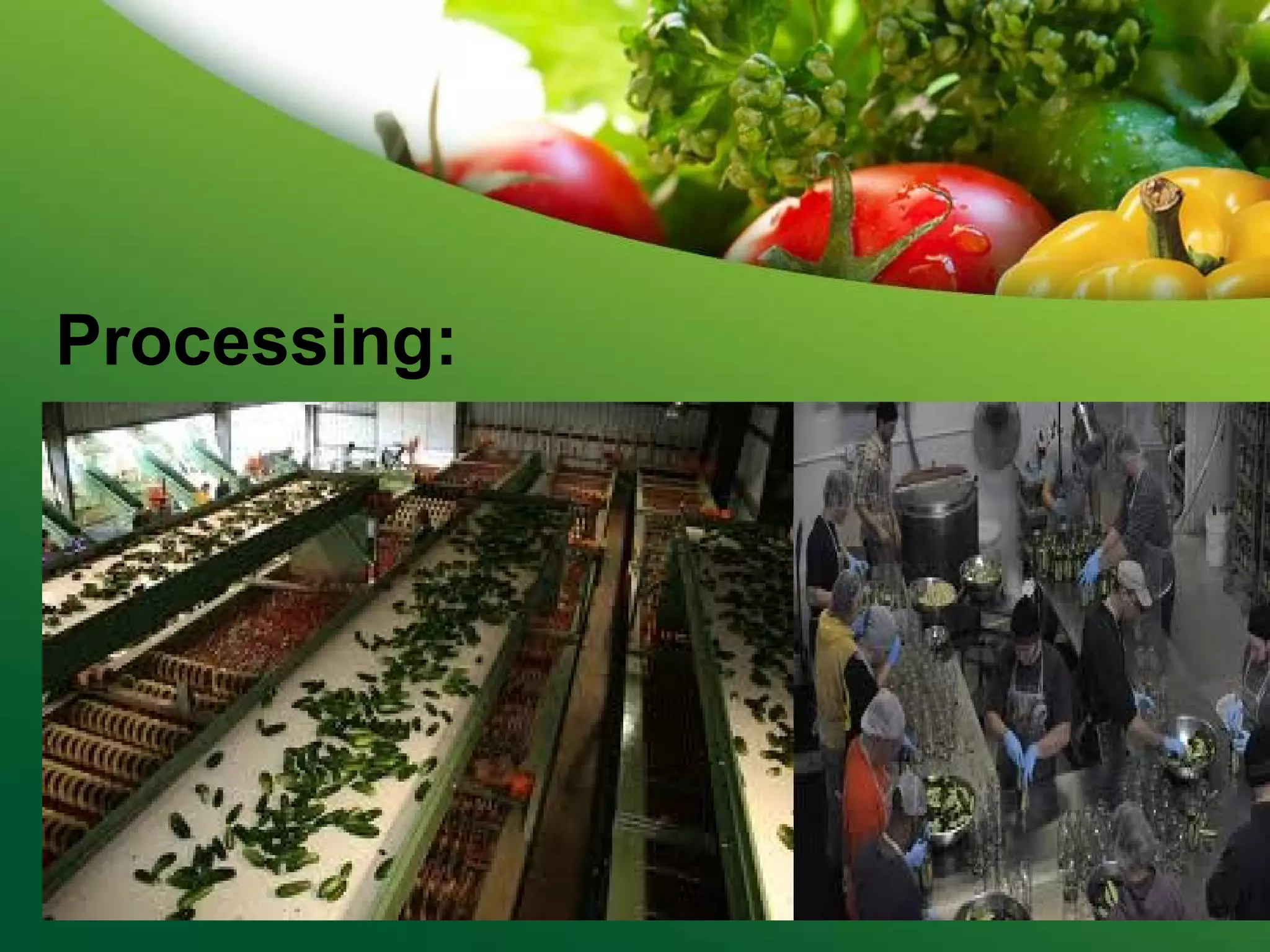
Processing:
Words of Caution:
• The level of acidity 
 
• Vinegar, food, or water proportions
•  tested proportions of ingredients.
Pickles with Salt Content:
• Fresh-pack pickles may be prepared
safely with reduced or no salt; they are
acidified quickly with vinegar.
• salt used in making brine pickles and
fermented sauerkraut .The function of salt
in fermented foods is to encourage the
growth of desirable bacteria
Key ingredients in pickling
Ingredient Why used???
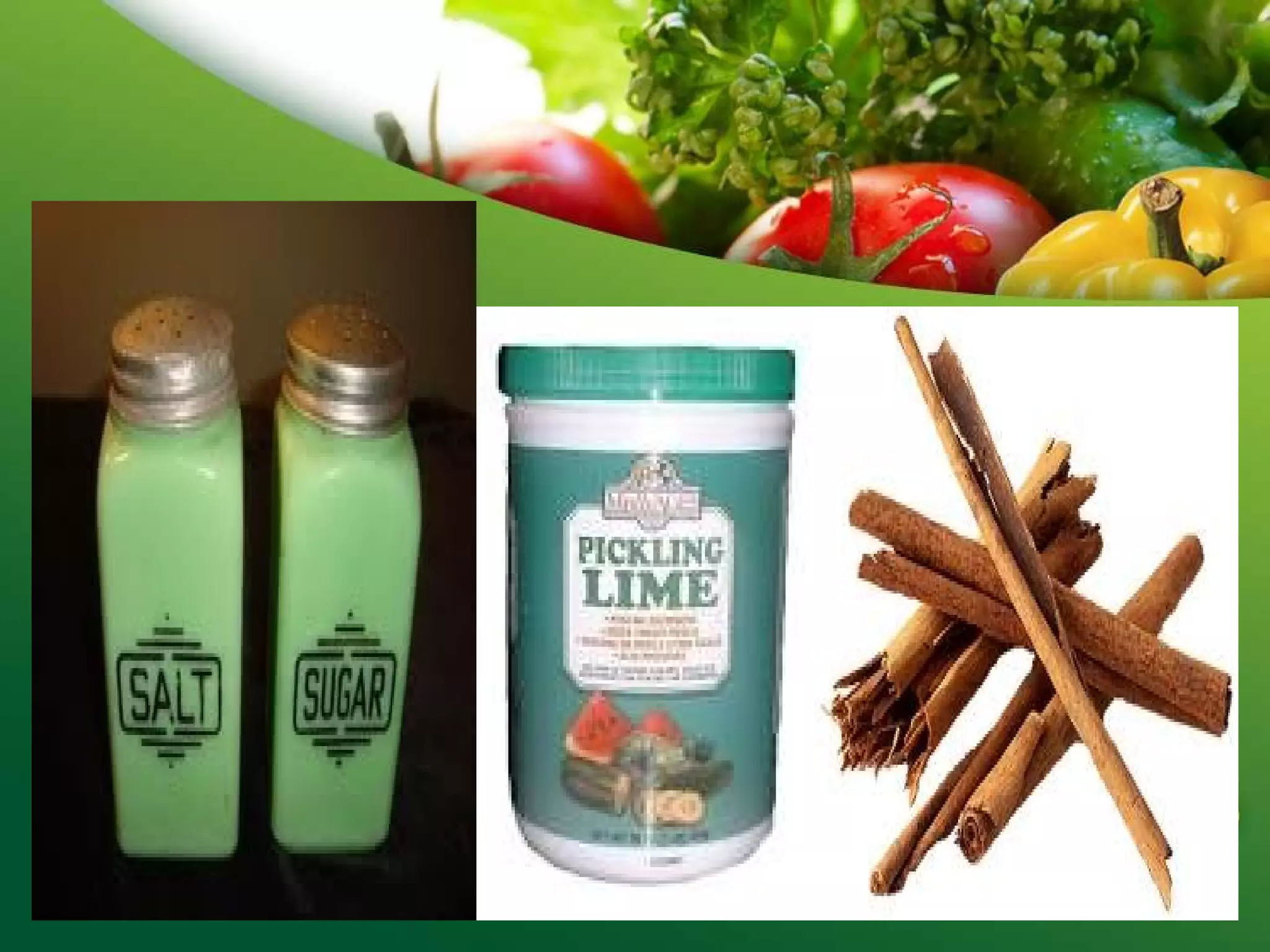
Salt
• Acts as a preservative by encouraging the
growth of desirable bacteria (and inhibiting
undesirable bacteria) which in turn produce
lactic acid, a preservative.
• Helps draw juices and sugar from the produce
to make a brine.
• Adds flavor and crispness.
Vinegar
• Gives pickles a tart taste.
• Acts as a preservative due to the acidity of
vinegar.
Sugar • Sweetens taste; counteracts vinegar.
Spices/Herbs
• Adds flavor
Water • Makes liquid portion of brine.
Alum
• Improves pickle firmness for
fermented pickles; does not improved
firmness of quick-process pickles.
Lime • Improves pickle firmness.
Trouble-shooting pickles
NOTE: These pickles are safe to eat even though they may not look
too good.
This happened: Because of this:
Shriveled pickles
• Vinegar or salt solution too
strong.
• Overcooking or over
processing.
Hollow pickles
• Poory developed cucumbers.
• Cucumbers too ripe.
• Cucumbers held too long
before pickling.
• Fermentation too rapid.
Tips for Successful Pickling:
• SELECTION
• WASHING
• Remove the blossom end of cucumbers
• Measure ingredients
• Use canning or pickling salt.
CONT…….
• Use white granulated sugar
• Use white distilled and cider vinegars of
5% acidity
• fresh spices or herbs
• Use soft water for best-looking pickles.

Pickles

  • 1.
  • 2.
    Definition: • “It isthe process of preserving food by anaerobic fermentation in brine to produce lactic acid, or marinating and storing it in an acid solution, usually vinegar (acetic acid). The resulting food is called a PICKLE”.
  • 3.
    History: Pickling began 4000years ago using cucumbers native to India. It is called "achar" in northern India. This was used as a way to preserve food for out-of-season use and for long journeys, especially by sea.
  • 4.
    Pickle Etymology: • Theterm pickle is derived from the Dutch word pekel, meaning brine. In the U.S. and Canada, the word pickle alone almost always refers to a pickled cucumber. Other types of pickles will be described as "pickled onion," "pickled cauliflower," etc.
  • 5.
    SALIENT FEATURES: • Briningor Corning. • Food salty or sour taste. • PH less than 4.6. • Preserve perishable foods • Antimicrobial herbs and spices.
  • 6.
    TYPES OF PICKLES:  •1)Brined dill pickles  • 2)Fresh pack or quick-process pickles • 3)Relishes  • 4)Fruit pickles 
  • 7.
    Pickling Equipment: • Utensils made of zinc, iron, brass, copper, or  galvanized metal should not be used. •For fresh-pack pickling  large container made of  stainless steel, glassware. • For fermenting and brining, a crock or stone jar,  an un chipped enamel-lined pan, a glass jar, a  bowl, used for small quantities.
  • 9.
  • 10.
    Words of Caution: •The level of acidity    • Vinegar, food, or water proportions •  tested proportions of ingredients.
  • 11.
    Pickles with SaltContent: • Fresh-pack pickles may be prepared safely with reduced or no salt; they are acidified quickly with vinegar. • salt used in making brine pickles and fermented sauerkraut .The function of salt in fermented foods is to encourage the growth of desirable bacteria
  • 12.
    Key ingredients inpickling Ingredient Why used??? Salt • Acts as a preservative by encouraging the growth of desirable bacteria (and inhibiting undesirable bacteria) which in turn produce lactic acid, a preservative. • Helps draw juices and sugar from the produce to make a brine. • Adds flavor and crispness. Vinegar • Gives pickles a tart taste. • Acts as a preservative due to the acidity of vinegar.
  • 13.
    Sugar • Sweetenstaste; counteracts vinegar. Spices/Herbs • Adds flavor Water • Makes liquid portion of brine. Alum • Improves pickle firmness for fermented pickles; does not improved firmness of quick-process pickles. Lime • Improves pickle firmness.
  • 14.
    Trouble-shooting pickles NOTE: Thesepickles are safe to eat even though they may not look too good. This happened: Because of this: Shriveled pickles • Vinegar or salt solution too strong. • Overcooking or over processing. Hollow pickles • Poory developed cucumbers. • Cucumbers too ripe. • Cucumbers held too long before pickling. • Fermentation too rapid.
  • 17.
    Tips for SuccessfulPickling: • SELECTION • WASHING • Remove the blossom end of cucumbers • Measure ingredients • Use canning or pickling salt.
  • 18.
    CONT……. • Use whitegranulated sugar • Use white distilled and cider vinegars of 5% acidity • fresh spices or herbs • Use soft water for best-looking pickles.