Chemical changes caused by microorganisms
in foods
A.Poshadri
Assistant Professor –Food Technology
Introduction
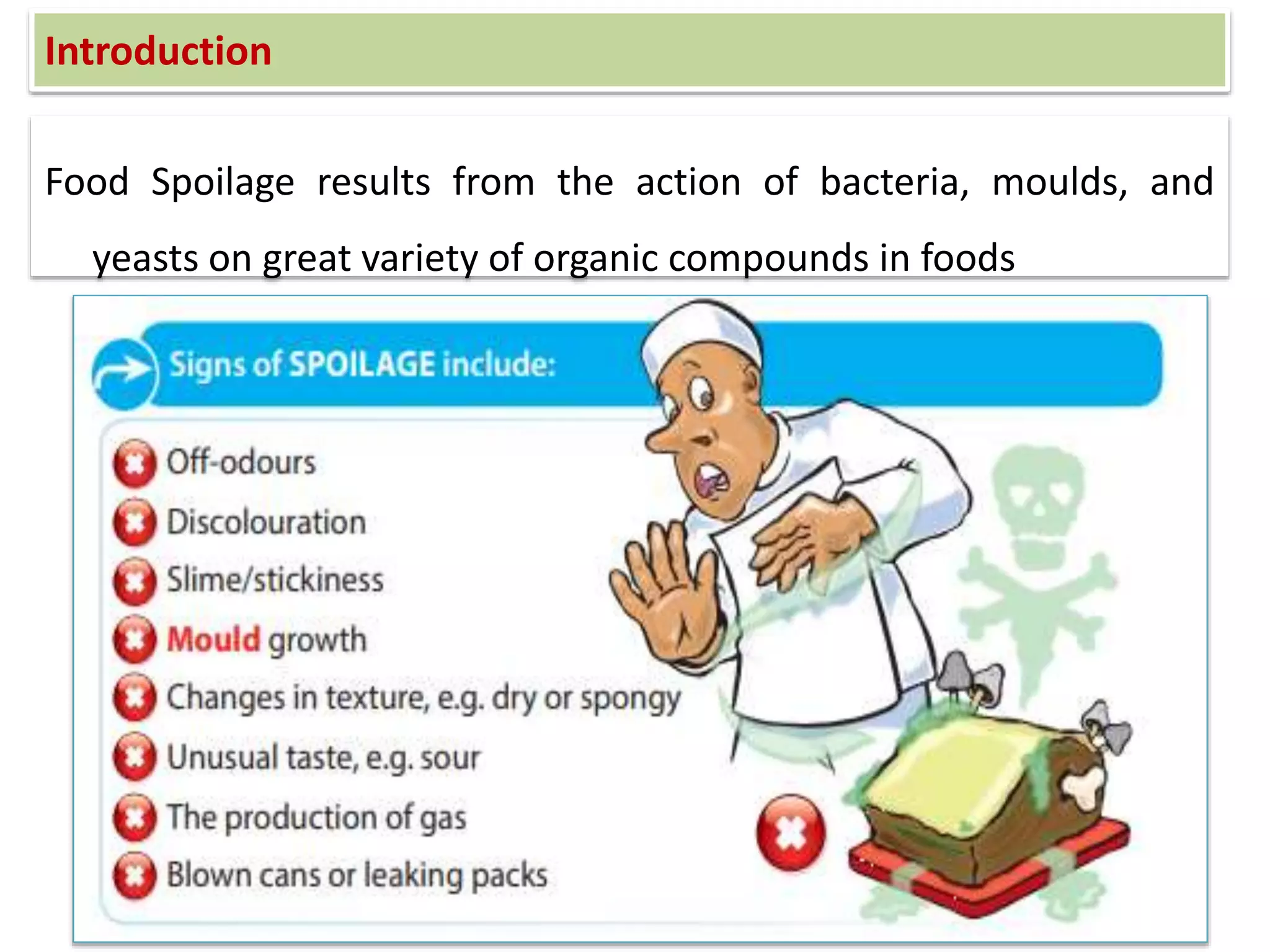
Food Spoilage results from the action of bacteria, moulds, and
yeasts on great variety of organic compounds in foods
Changes in Nitrogenous Organic Compounds
• Nitrogen in food is in the form of proteins and source of food for
most of the microorganisms.
• Enzymes of microorganism hydrolyzed protein into polypeptide,
simpler peptides or amino acid before they can serve as
nitrogenous food for most organisms
• Anaerobic decomposition of proteins, peptides, or amino acids,
however, may result in the production of obnoxious odors and is
then called putrefaction
• Putrefaction results in foul-smelling, sulfur containing products,
such as hydrogen, methyl, and ethyl sulfides and mercaptans,
plus ammonia, amines (e.g., histamine, tyramine, piperidine,
putrescine, and cadaverine), indole, skatole, and fatty acids.
• Proteinases catalyze the hydrolysis of proteins to peptides, which
may give a bitter taste to foods.
• Peptidases catalyze the hydrolysis of polypeptides to simpler
peptides and finally to amino acids. The latter give flavors,
desirable or undesirable, to some foods; e.g., amino acids
contribute to the flavor of ripened cheeses.
Products from the Microbial Decomposition of Amino Acids
Changes in Non nitrogenous Organic Compounds
I. Carbohydrates: A monosaccharide, such as glucose, aerobically
would be oxidized to carbon dioxide and water or anaerobically
would undergo decomposition by 6 types of fermentation.
S.No Type of Fermentation Organisms End Products
1 Alcoholic Yeast C2H5OH, CO2
2 Simple lactic Homofermentative
lactic acid bacteria
Lactic acid
3 Mixed lactic Heterofermentative
lactic acid bacteria
Lactic & acetic acids,
glycerol, C2H5OH, CO2
4 Coliform type of Coliform bacteria Lactic, acetic & formic acids,
CO2, Acetoin, H2 ,
butanediol
5 Propionic Propioni bacteria Acetic, succinic & propionic
acids, CO2
6 Butyric-butyl isopropyl Anaerobic bacteria Butyric & acetic acids, CO2,
H2 & sometimes – 2-
propanol, butanol,
butyleneglycol, aceton
II. Organic Acids
 Aerobically the organic acids may be oxidized completely to
carbon dioxide and water, as is done by film yeasts.
 Saturated fatty acids or lower ketonic derivatives are degraded
to acetic acid, two carbons at a time, aided by coenzyme A.
 Unsaturated or hydroxy fatty acids may be degraded partially in
a similar manner but must be converted to a saturated acid (or
ketonic derivative) for complete beta oxidation
III. Other Compounds
III. Lipids
 Fats are hydrolyzed by microbial lipase to glycerol and fatty
acids.
 Microorganisms are causative agents of hydrolytic rancidity in
fats and oils.
 Molds cause both oxidative and hydrolytic decomposition that
results in rancidity.
 Extensive oxidation, usually following hydrolysis and the release
of fatty acids, can result in ketonic rancidity.
 Phospholipids may be degraded to their constituent phosphate,
glycerol, fatty acids, and nitrogenous base, e.g., choline.
III. Pectic Substances
 Pectinesterase causes hydrolysis of the methyl ester linkage of
pectin to yield pectic acid and methanol.
 Polygalacturonases destroy the linkage between galacturonic
acid units of pectin or pectic acid to yield smaller chains and
ultimately free D-galacturonic acid. Further degraded as simple
sugar to alcohol.

Chemical changes caused by microorganisms in foods

  • 1.
    Chemical changes causedby microorganisms in foods A.Poshadri Assistant Professor –Food Technology
  • 2.
    Introduction Food Spoilage resultsfrom the action of bacteria, moulds, and yeasts on great variety of organic compounds in foods
  • 3.
    Changes in NitrogenousOrganic Compounds • Nitrogen in food is in the form of proteins and source of food for most of the microorganisms. • Enzymes of microorganism hydrolyzed protein into polypeptide, simpler peptides or amino acid before they can serve as nitrogenous food for most organisms • Anaerobic decomposition of proteins, peptides, or amino acids, however, may result in the production of obnoxious odors and is then called putrefaction
  • 4.
    • Putrefaction resultsin foul-smelling, sulfur containing products, such as hydrogen, methyl, and ethyl sulfides and mercaptans, plus ammonia, amines (e.g., histamine, tyramine, piperidine, putrescine, and cadaverine), indole, skatole, and fatty acids. • Proteinases catalyze the hydrolysis of proteins to peptides, which may give a bitter taste to foods. • Peptidases catalyze the hydrolysis of polypeptides to simpler peptides and finally to amino acids. The latter give flavors, desirable or undesirable, to some foods; e.g., amino acids contribute to the flavor of ripened cheeses.
  • 6.
    Products from theMicrobial Decomposition of Amino Acids
  • 8.
    Changes in Nonnitrogenous Organic Compounds I. Carbohydrates: A monosaccharide, such as glucose, aerobically would be oxidized to carbon dioxide and water or anaerobically would undergo decomposition by 6 types of fermentation.
  • 9.
    S.No Type ofFermentation Organisms End Products 1 Alcoholic Yeast C2H5OH, CO2 2 Simple lactic Homofermentative lactic acid bacteria Lactic acid 3 Mixed lactic Heterofermentative lactic acid bacteria Lactic & acetic acids, glycerol, C2H5OH, CO2 4 Coliform type of Coliform bacteria Lactic, acetic & formic acids, CO2, Acetoin, H2 , butanediol 5 Propionic Propioni bacteria Acetic, succinic & propionic acids, CO2 6 Butyric-butyl isopropyl Anaerobic bacteria Butyric & acetic acids, CO2, H2 & sometimes – 2- propanol, butanol, butyleneglycol, aceton
  • 10.
    II. Organic Acids Aerobically the organic acids may be oxidized completely to carbon dioxide and water, as is done by film yeasts.  Saturated fatty acids or lower ketonic derivatives are degraded to acetic acid, two carbons at a time, aided by coenzyme A.  Unsaturated or hydroxy fatty acids may be degraded partially in a similar manner but must be converted to a saturated acid (or ketonic derivative) for complete beta oxidation
  • 11.
  • 12.
    III. Lipids  Fatsare hydrolyzed by microbial lipase to glycerol and fatty acids.  Microorganisms are causative agents of hydrolytic rancidity in fats and oils.  Molds cause both oxidative and hydrolytic decomposition that results in rancidity.  Extensive oxidation, usually following hydrolysis and the release of fatty acids, can result in ketonic rancidity.  Phospholipids may be degraded to their constituent phosphate, glycerol, fatty acids, and nitrogenous base, e.g., choline.
  • 13.
    III. Pectic Substances Pectinesterase causes hydrolysis of the methyl ester linkage of pectin to yield pectic acid and methanol.  Polygalacturonases destroy the linkage between galacturonic acid units of pectin or pectic acid to yield smaller chains and ultimately free D-galacturonic acid. Further degraded as simple sugar to alcohol.