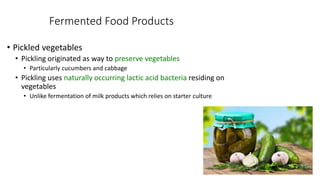
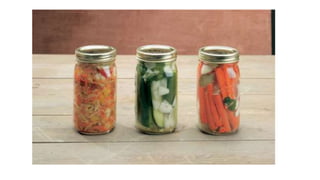
• Pickled vegetables
• Pickling originated as way to preserve vegetables
• Particularly cucumbers and cabbage
• Pickling uses naturally occurring lactic acid bacteria residing on
vegetables
• Unlike fermentation of milk products which relies on starter culture
Fermented Food Products
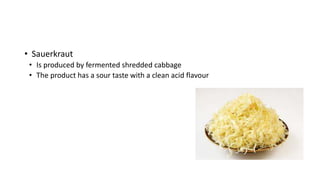
• Sauerkraut
• Is produced by fermented shredded cabbage
• The product has a sour taste with a clean acid flavour
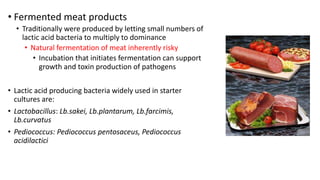
• Fermented meat products
• Traditionally were produced by letting small numbers of
lactic acid bacteria to multiply to dominance
• Natural fermentation of meat inherently risky
• Incubation that initiates fermentation can support
growth and toxin production of pathogens
• Lactic acid producing bacteria widely used in starter
cultures are:
• Lactobacillus: Lb.sakei, Lb.plantarum, Lb.farcimis,
Lb.curvatus
• Pediococcus: Pediococcus pentosaceus, Pediococcus
acidilactici
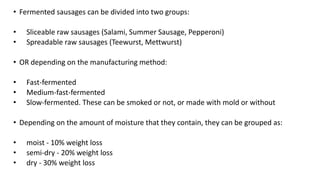
• Fermented sausages can be divided into two groups:
• Sliceable raw sausages (Salami, Summer Sausage, Pepperoni)
• Spreadable raw sausages (Teewurst, Mettwurst)
• OR depending on the manufacturing method:
• Fast-fermented
• Medium-fast-fermented
• Slow-fermented. These can be smoked or not, or made with mold or without
• Depending on the amount of moisture that they contain, they can be grouped as:
• moist - 10% weight loss
• semi-dry - 20% weight loss
• dry - 30% weight loss
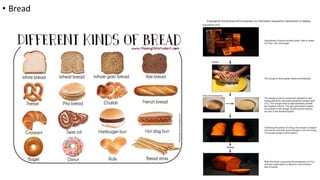
• Bread
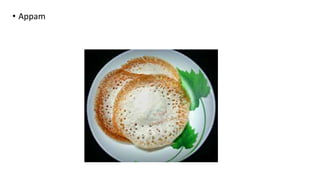
• Appam
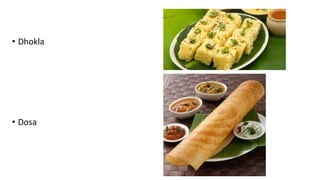
• Dhokla
• Dosa
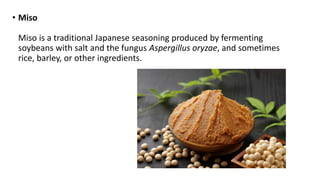
• Miso
Miso is a traditional Japanese seasoning produced by fermenting
soybeans with salt and the fungus Aspergillus oryzae, and sometimes
rice, barley, or other ingredients.
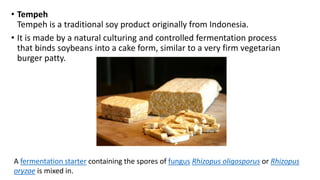
• Tempeh
Tempeh is a traditional soy product originally from Indonesia.
• It is made by a natural culturing and controlled fermentation process
that binds soybeans into a cake form, similar to a very firm vegetarian
burger patty.
A fermentation starter containing the spores of fungus Rhizopus oligosporus or Rhizopus
oryzae is mixed in.
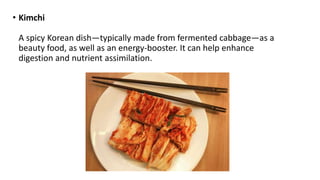
• Kimchi
A spicy Korean dish—typically made from fermented cabbage—as a
beauty food, as well as an energy-booster. It can help enhance
digestion and nutrient assimilation.
• Vinegar
• Aqueous solution of at least 4% acetic acid
• Product of oxidation of ethanol
• Strictly aerobic process
• Fermenting bacteria are obligate aerobes
• Organisms can tolerate high concentration of acid
• Vinegar generator produces available oxygen to hasten
oxidation
• Sprays alcohol on biofilm of acid bacteria on wood chips
• Alcohol trickles down and is oxidized by bacteria

Fermented products

  • 1.
    • Pickled vegetables •Pickling originated as way to preserve vegetables • Particularly cucumbers and cabbage • Pickling uses naturally occurring lactic acid bacteria residing on vegetables • Unlike fermentation of milk products which relies on starter culture Fermented Food Products
  • 3.
    • Sauerkraut • Isproduced by fermented shredded cabbage • The product has a sour taste with a clean acid flavour
  • 4.
    • Fermented meatproducts • Traditionally were produced by letting small numbers of lactic acid bacteria to multiply to dominance • Natural fermentation of meat inherently risky • Incubation that initiates fermentation can support growth and toxin production of pathogens • Lactic acid producing bacteria widely used in starter cultures are: • Lactobacillus: Lb.sakei, Lb.plantarum, Lb.farcimis, Lb.curvatus • Pediococcus: Pediococcus pentosaceus, Pediococcus acidilactici
  • 5.
    • Fermented sausagescan be divided into two groups: • Sliceable raw sausages (Salami, Summer Sausage, Pepperoni) • Spreadable raw sausages (Teewurst, Mettwurst) • OR depending on the manufacturing method: • Fast-fermented • Medium-fast-fermented • Slow-fermented. These can be smoked or not, or made with mold or without • Depending on the amount of moisture that they contain, they can be grouped as: • moist - 10% weight loss • semi-dry - 20% weight loss • dry - 30% weight loss
  • 6.
  • 7.
  • 8.
  • 9.
    • Miso Miso isa traditional Japanese seasoning produced by fermenting soybeans with salt and the fungus Aspergillus oryzae, and sometimes rice, barley, or other ingredients.
  • 10.
    • Tempeh Tempeh isa traditional soy product originally from Indonesia. • It is made by a natural culturing and controlled fermentation process that binds soybeans into a cake form, similar to a very firm vegetarian burger patty. A fermentation starter containing the spores of fungus Rhizopus oligosporus or Rhizopus oryzae is mixed in.
  • 11.
    • Kimchi A spicyKorean dish—typically made from fermented cabbage—as a beauty food, as well as an energy-booster. It can help enhance digestion and nutrient assimilation.
  • 12.
    • Vinegar • Aqueoussolution of at least 4% acetic acid • Product of oxidation of ethanol • Strictly aerobic process • Fermenting bacteria are obligate aerobes • Organisms can tolerate high concentration of acid • Vinegar generator produces available oxygen to hasten oxidation • Sprays alcohol on biofilm of acid bacteria on wood chips • Alcohol trickles down and is oxidized by bacteria

Editor's Notes

  • #2 Sauerkraut is fermented by various lactic acid bacteria, including Leuconostoc, Lactobacillus, and Pediococcus.
  • #5 Lactic acid producing bacteria widely used in starter cultures are: Lactobacillus: Lb.sakei, Lb.plantarum, Lb.farcimis, Lb.curvatus Pediococcus: Pediococcus pentosaceus, Pediococcus acidilactici
  • #7 Bread rises due to carbon dioxide produced through fermentation of sugars by baker’s yeast Any alcohol produced evaporates during baking Characteristic flavor of sour dough bread due to the addition of lactic acid bacteria to bread making ingredients
  • #8 It is a popular food in South Indian states of Kerala and Tamil Nadu. It is also very popular in Sri Lanka where it is commonly referred to by its anglicized name as Hoppers. A type of South Indian pancake made with fermented rice batter and coconut milk.
  • #9 Chickpea- chana Dhokla- A vegetarian food item made with a fermented batter derived from rice and chickpea splits. A fermented crepe or pancake made from rice batter and black lentils. It is a staple food in many parts of India.
  • #10 The result is a thick paste used for sauces and spreads, pickling vegetables or meats, and mixing with dashi soup stock to serve as miso soup called misoshiru
  • #11 Added to a sandwich or eat it tossed in a bowl of steamed veggies. A fermentation starter containing the spores of fungus Rhizopus oligosporus or Rhizopus oryzae is mixed in.