UNCULTURABLE SOIL BIOTA
Presentor
MADHU BHARATH K
M.Sc (Agri)
SOIL SCIENCE AND AGRL. CHEMISTRY
NM CA, NAU.
INTRODUCTION
Some microbes cannot be grown under artificial
medium condition, they only grow in their natural
conditions.
• More than 99% of these species cannot be cultured
by traditional techniques
Uncultivable bacteria
• Bacteria that can not be grown on any artificial non
living conditions
REASONS FOR PROBLEMS IN CULTIVATION
• The chemistry of microbe’s natural habitat
• Change in climatic factors
• Difficulty in mimicking the microbes habitat
• Absense of signals
• Absense of interactions
• Still unknown reasons
• Cellular interactions happens in many soil flora
which is not still unknown
• Ex : bacteria like organisms lives as endosymbionts
in cytoplasm of Gigaspora sp. This BLO’s are
closely related to the burkholderia sp of bacteria
HOW TO CULTURE THE UNCULTURABLE
MICROBES
Air conditions
• Incubation in the presence of air and hypoxic and
anoxic atmosphere was used to isolate various
bacteria that live in different microhabitats in soil
• An elevated concentration of CO2 can be added for
some bacteria
Temperature
• Because lower temperature decreases metabolic rate,
the productivity of growth-inhibiting materials
decreases, inducing more colonies for more isolates.
• In particular, if samples are obtained from cold
regions, then the incubation temperature should be
lowered
• ex: Proteobacteria, Cytophaga-Flavobacteria-
Bacteroides
pH
• Adjusting the pH to acidic, extreme acidic and
alkaline as like the microbes natural habitat
Community culture and co-culture
• Mixed cellular assemblages can perform multistep
degradation of cellulose and the intermediates can be
utilized as carbon sources
• Community culture is an effective way to cultivate
facultative or syntrophic organisms and other
community members
Incubation time
• Increased incubation periods are one of the most
important factors when attempting to identify lower-
growth and fastidious isolates
Modifications to growth media
• The design of media for the growth of different
microorganisms is a difficult task and a real challenge
for microbiologists.
• This requires in-depth insight into the nature and
characterization of samples, including all factors that
are directly related to and mediate growth..
• Ex: Acidobacteria, Actinobacteria
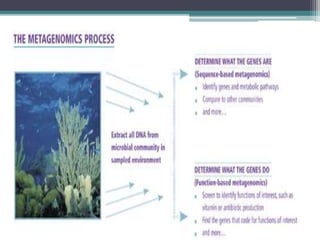
• The Metagenomics - emerging field in which the
power of genomic analysis (the analysis of all the
DNA in an organism) is applied to entire
communities of microbes,
• Bypassing the need to isolate and culture individual
microbial species.
• The metaproteomics is the technique used to study
the proteins
• By studying the proteins of the environment
interactions, possible genes can be known
• Used to prepare the culture media
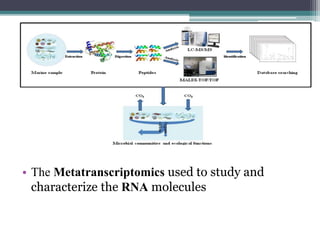
• The Metatranscriptomics used to study and
characterize the RNA molecules
Research paper
 Goel, R., Kumar, V., Suyal, D. C., Narayan & Soni, R
(2018).Toward the Unculturable Microbes for Sustainable
Agricultural Production
Abstract
As per the information available from published researches, a
big portion of microbial wealth is unculturable which may contain
several beneficial traits, including the plant growth-promoting
activities for sustainable agricultural production. Exploitation of
these unculturable microbes can enhance our understanding of
present practices of organic agriculture. The only way to exploit this
unculturable wealth is the “metagenomics,” the culture-independent
approach where we are analyzing microbial DNA extracted directly
from an environmental sample.
Conclusion
• We all believe that microbes are very precious and, if
explored judiciously, can contribute to the sustainable
agricultural development.
• Advance approaches like metagenomics are revealing
interactions between plant and their microbial partner in
exceptionally detail.
• However, without a suitable methodology for confirming
the reliability of metagenomic analyses, assessing
whether the presence and activity of microorganisms are
correctly evaluated is not possible
References
 Pham, V. H. T. & Kim, K. (2004). Cultivation of
unculturable soil bacteria. Microbiology Ecology. 48,
1–13.
 Goel, R., Kumar, V., Suyal, D. C., Narayan & Soni, R
(2018).Toward the Unculturable Microbes
for Sustainable Agricultural Production. Role of
Rhizospheric Microbes in Soil. 107

Unculturable soil biota (microbes)

  • 1.
    UNCULTURABLE SOIL BIOTA Presentor MADHUBHARATH K M.Sc (Agri) SOIL SCIENCE AND AGRL. CHEMISTRY NM CA, NAU.
  • 2.
    INTRODUCTION Some microbes cannotbe grown under artificial medium condition, they only grow in their natural conditions. • More than 99% of these species cannot be cultured by traditional techniques Uncultivable bacteria • Bacteria that can not be grown on any artificial non living conditions
  • 3.
    REASONS FOR PROBLEMSIN CULTIVATION • The chemistry of microbe’s natural habitat • Change in climatic factors • Difficulty in mimicking the microbes habitat • Absense of signals • Absense of interactions • Still unknown reasons
  • 4.
    • Cellular interactionshappens in many soil flora which is not still unknown • Ex : bacteria like organisms lives as endosymbionts in cytoplasm of Gigaspora sp. This BLO’s are closely related to the burkholderia sp of bacteria
  • 5.
    HOW TO CULTURETHE UNCULTURABLE MICROBES Air conditions • Incubation in the presence of air and hypoxic and anoxic atmosphere was used to isolate various bacteria that live in different microhabitats in soil • An elevated concentration of CO2 can be added for some bacteria
  • 6.
    Temperature • Because lowertemperature decreases metabolic rate, the productivity of growth-inhibiting materials decreases, inducing more colonies for more isolates. • In particular, if samples are obtained from cold regions, then the incubation temperature should be lowered • ex: Proteobacteria, Cytophaga-Flavobacteria- Bacteroides
  • 7.
    pH • Adjusting thepH to acidic, extreme acidic and alkaline as like the microbes natural habitat Community culture and co-culture • Mixed cellular assemblages can perform multistep degradation of cellulose and the intermediates can be utilized as carbon sources • Community culture is an effective way to cultivate facultative or syntrophic organisms and other community members
  • 8.
    Incubation time • Increasedincubation periods are one of the most important factors when attempting to identify lower- growth and fastidious isolates Modifications to growth media • The design of media for the growth of different microorganisms is a difficult task and a real challenge for microbiologists. • This requires in-depth insight into the nature and characterization of samples, including all factors that are directly related to and mediate growth.. • Ex: Acidobacteria, Actinobacteria
  • 9.
    • The Metagenomics- emerging field in which the power of genomic analysis (the analysis of all the DNA in an organism) is applied to entire communities of microbes, • Bypassing the need to isolate and culture individual microbial species.
  • 11.
    • The metaproteomicsis the technique used to study the proteins • By studying the proteins of the environment interactions, possible genes can be known • Used to prepare the culture media
  • 12.
    • The Metatranscriptomicsused to study and characterize the RNA molecules
  • 13.
    Research paper  Goel,R., Kumar, V., Suyal, D. C., Narayan & Soni, R (2018).Toward the Unculturable Microbes for Sustainable Agricultural Production Abstract As per the information available from published researches, a big portion of microbial wealth is unculturable which may contain several beneficial traits, including the plant growth-promoting activities for sustainable agricultural production. Exploitation of these unculturable microbes can enhance our understanding of present practices of organic agriculture. The only way to exploit this unculturable wealth is the “metagenomics,” the culture-independent approach where we are analyzing microbial DNA extracted directly from an environmental sample.
  • 14.
    Conclusion • We allbelieve that microbes are very precious and, if explored judiciously, can contribute to the sustainable agricultural development. • Advance approaches like metagenomics are revealing interactions between plant and their microbial partner in exceptionally detail. • However, without a suitable methodology for confirming the reliability of metagenomic analyses, assessing whether the presence and activity of microorganisms are correctly evaluated is not possible
  • 15.
    References  Pham, V.H. T. & Kim, K. (2004). Cultivation of unculturable soil bacteria. Microbiology Ecology. 48, 1–13.  Goel, R., Kumar, V., Suyal, D. C., Narayan & Soni, R (2018).Toward the Unculturable Microbes for Sustainable Agricultural Production. Role of Rhizospheric Microbes in Soil. 107