DEFENSE MECHANISM IN PLANTS AGAINST PATHOGEN
(STRUCTURAL & BIOCHEMICAL)
DEFENSE MECHANISM IN PLANTS AGAINST
PATHOGENs
(STRUCTURAL & BIOCHEMICAL)
INTRODUCTION
 Plants represent a rich source of nutrients for many organisms including
fungi, bacteria, virus, nematodes, insects, and vertebrates.
 Plant lacking an immune system comparable to animals.
 Plants have developed a stunning array of structural, chemical, and protein-
based defenses designed to detect invading organisms and stop them before
they are able to cause extensive damage.
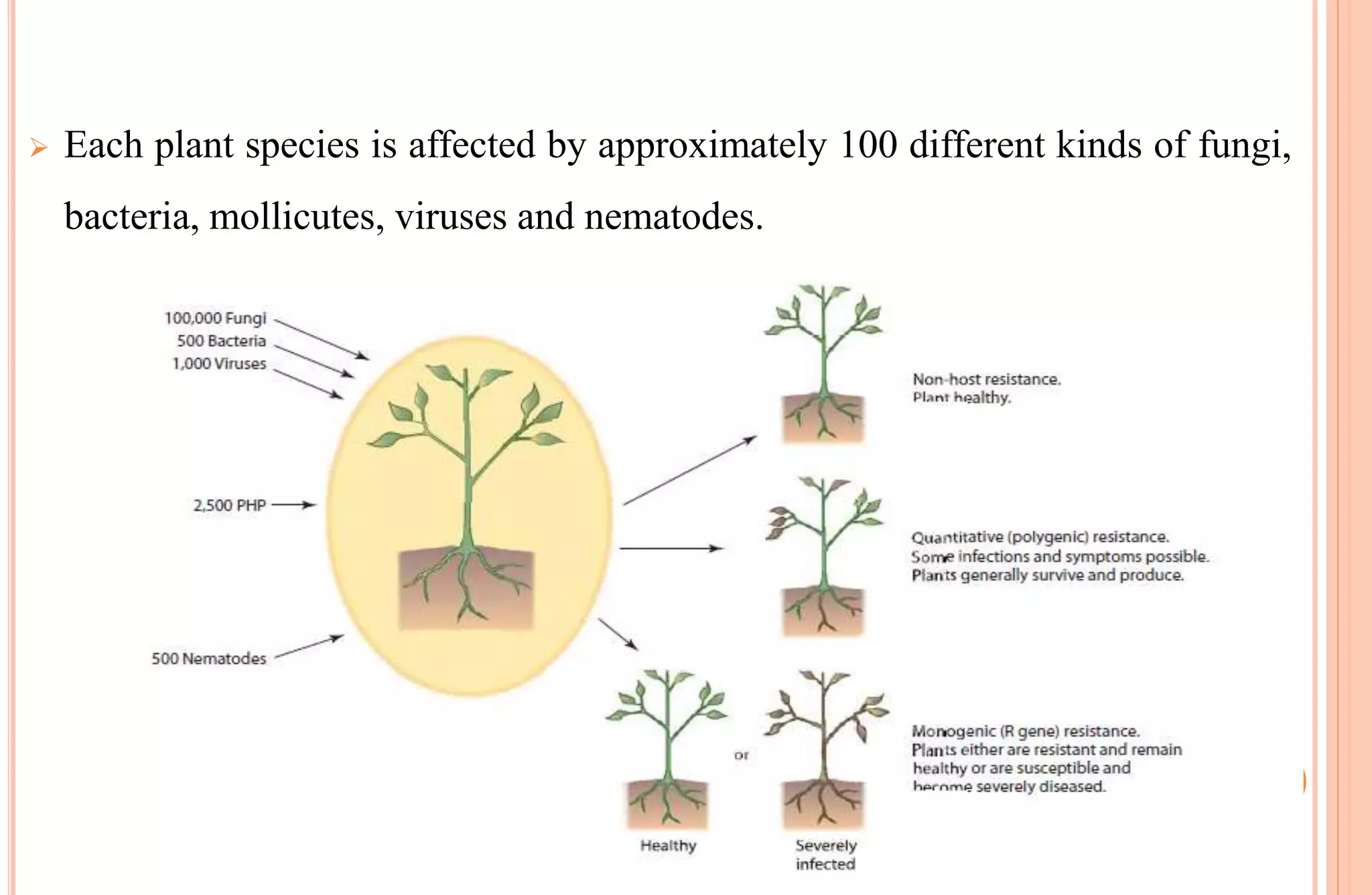
 Each plant species is affected by approximately 100 different kinds of fungi,
bacteria, mollicutes, viruses and nematodes.
HOST:- A living organism from which other organism derive its food.
 PATHOGEN:- Any agent (living organism or virus) which can cause
disease.
 RESISTANCE:-The ability of an organism to exclude or overcome
completely or in some degree, the effect of a pathogens, or other
damaging factor.
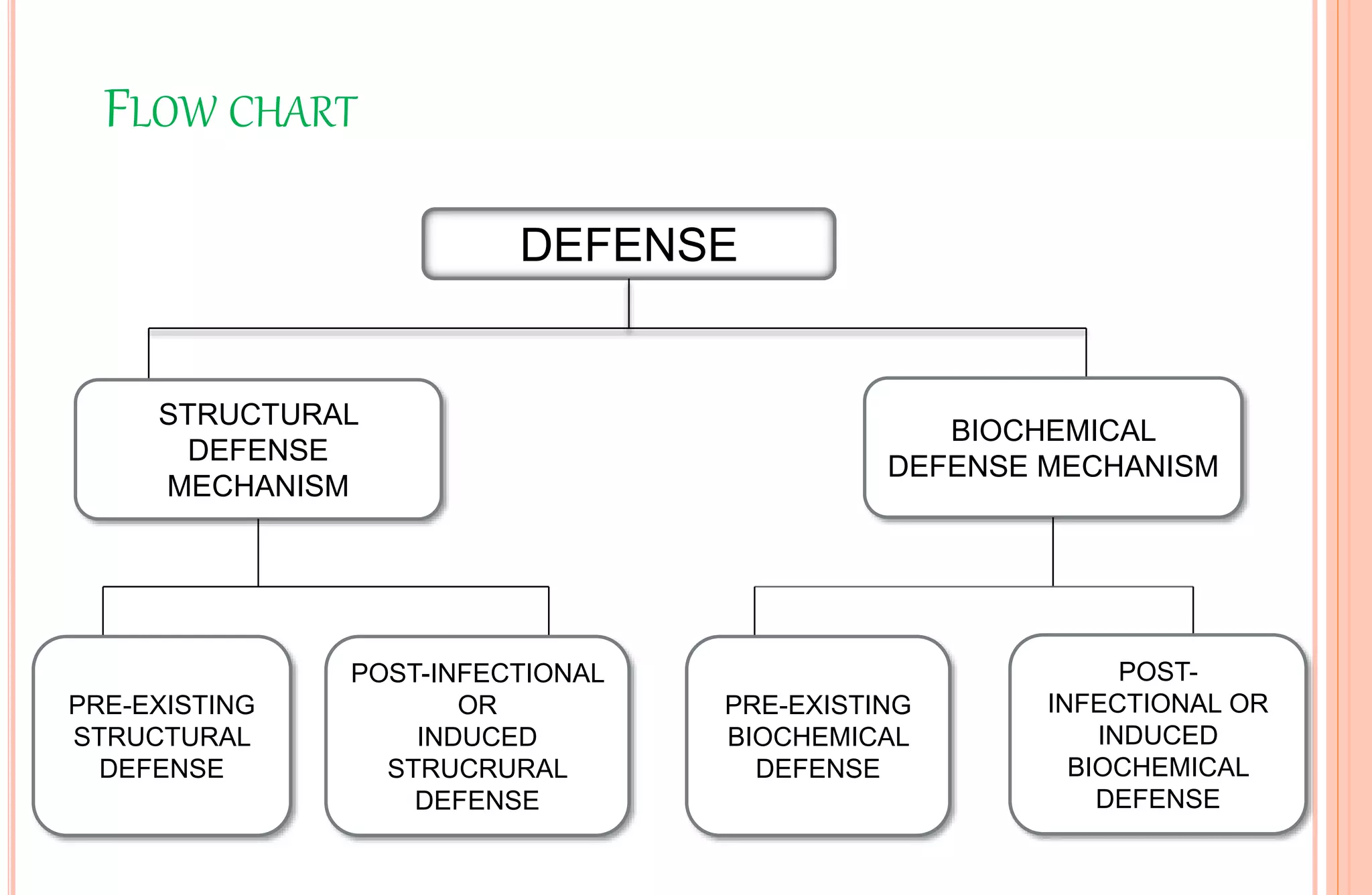
FLOW CHART
DEFENSE
STRUCTURAL
DEFENSE
MECHANISM
BIOCHEMICAL
DEFENSE MECHANISM
PRE-EXISTING
STRUCTURAL
DEFENSE
POST-INFECTIONAL
OR
INDUCED
STRUCRURAL
DEFENSE
PRE-EXISTING
BIOCHEMICAL
DEFENSE
POST-
INFECTIONAL OR
INDUCED
BIOCHEMICAL
DEFENSE
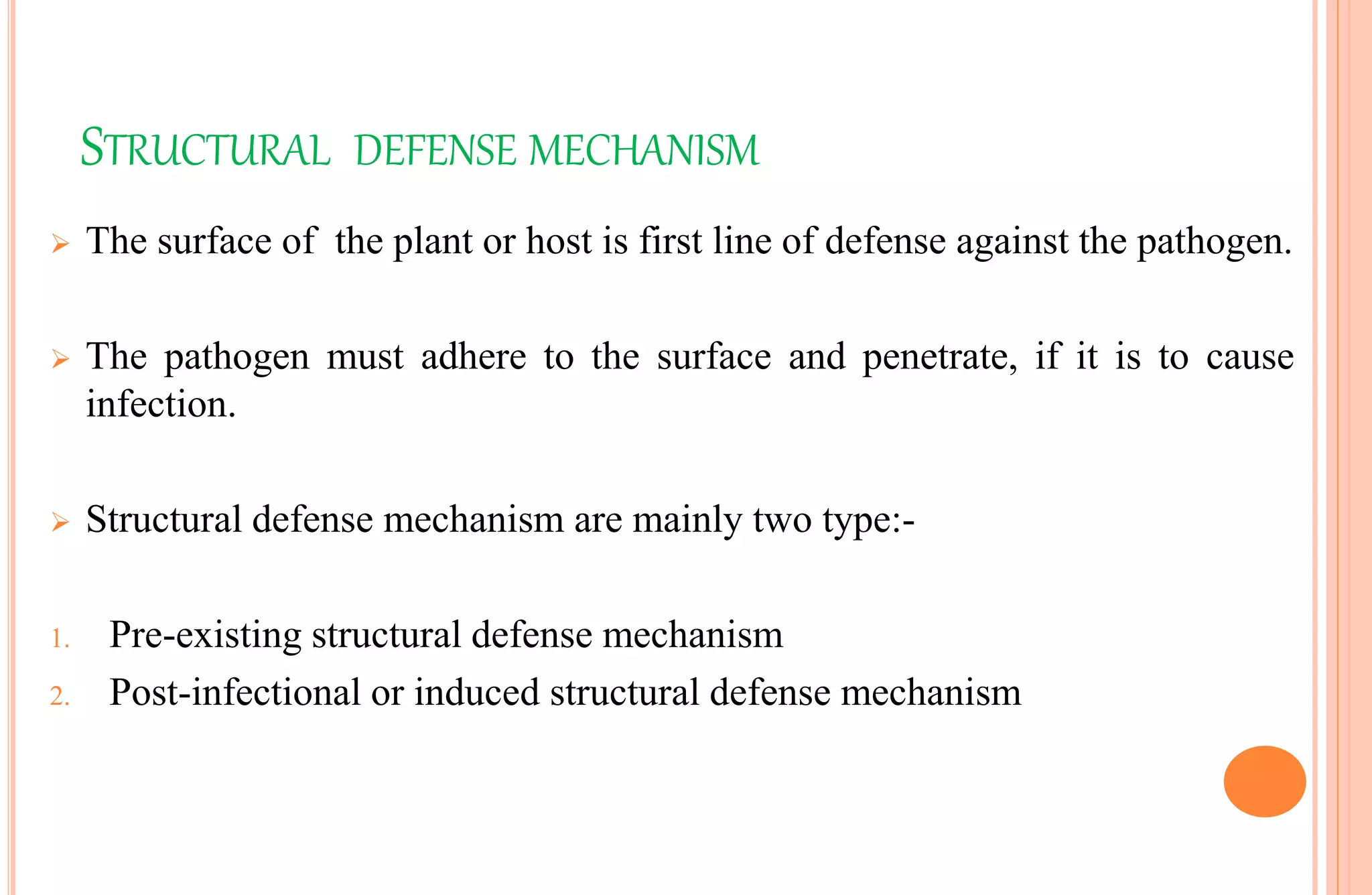
STRUCTURAL DEFENSE MECHANISM
 The surface of the plant or host is first line of defense against the pathogen.
 The pathogen must adhere to the surface and penetrate, if it is to cause
infection.
 Structural defense mechanism are mainly two type:-
1. Pre-existing structural defense mechanism
2. Post-infectional or induced structural defense mechanism
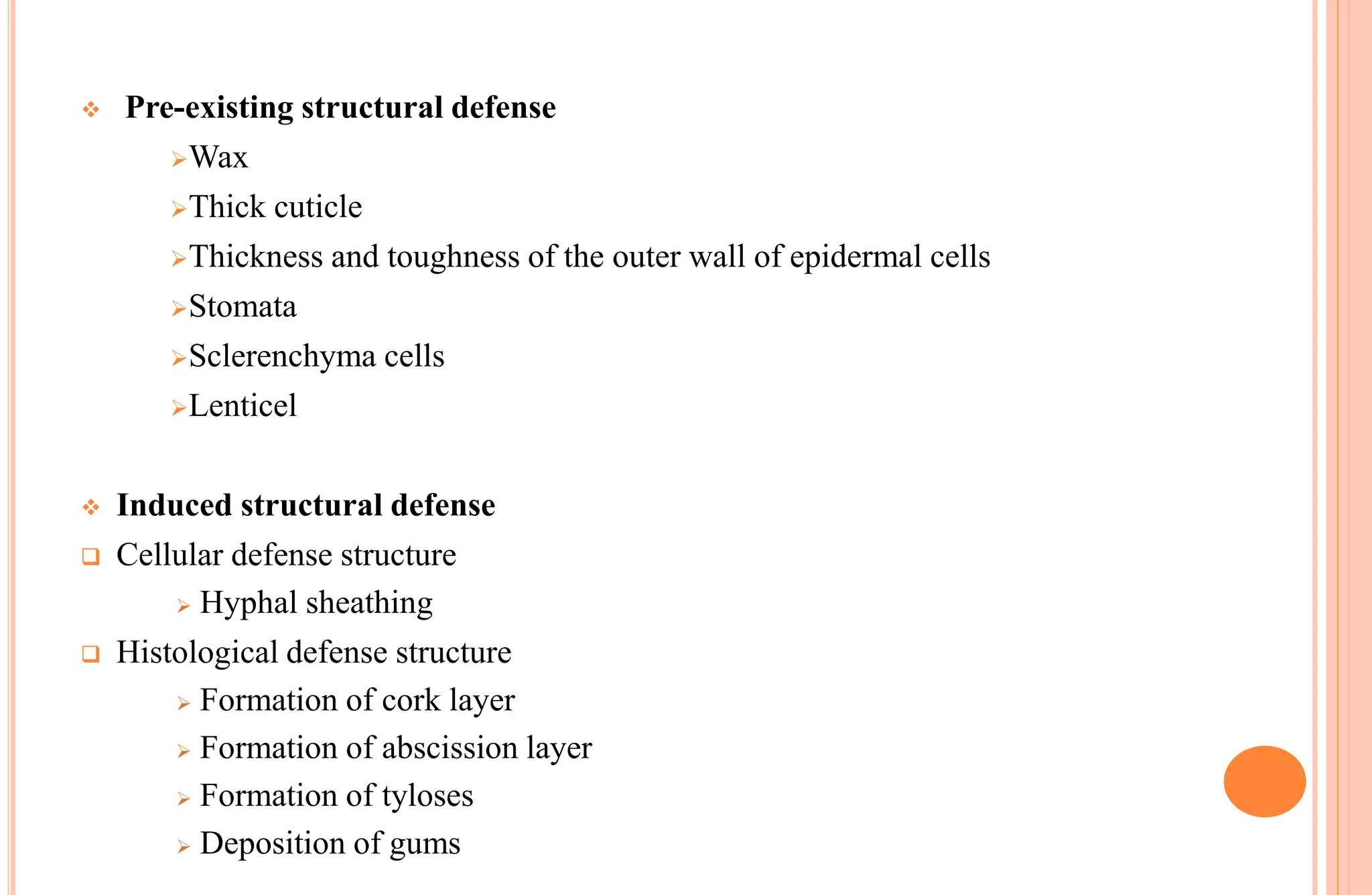
 Pre-existing structural defense
Wax
Thick cuticle
Thickness and toughness of the outer wall of epidermal cells
Stomata
Sclerenchyma cells
Lenticel
 Induced structural defense
 Cellular defense structure
 Hyphal sheathing
 Histological defense structure
 Formation of cork layer
 Formation of abscission layer
 Formation of tyloses
 Deposition of gums
1-PRE-EXISTING STRUCTURAL DEFENSE
 It includes:
 Amount and quality of wax and cuticle.
 Shapes, size and locations of natural openings (stomata and lenticels).
 Presence of thick walled cells in the tissues of the plant that hinder the
advance of pathogen.
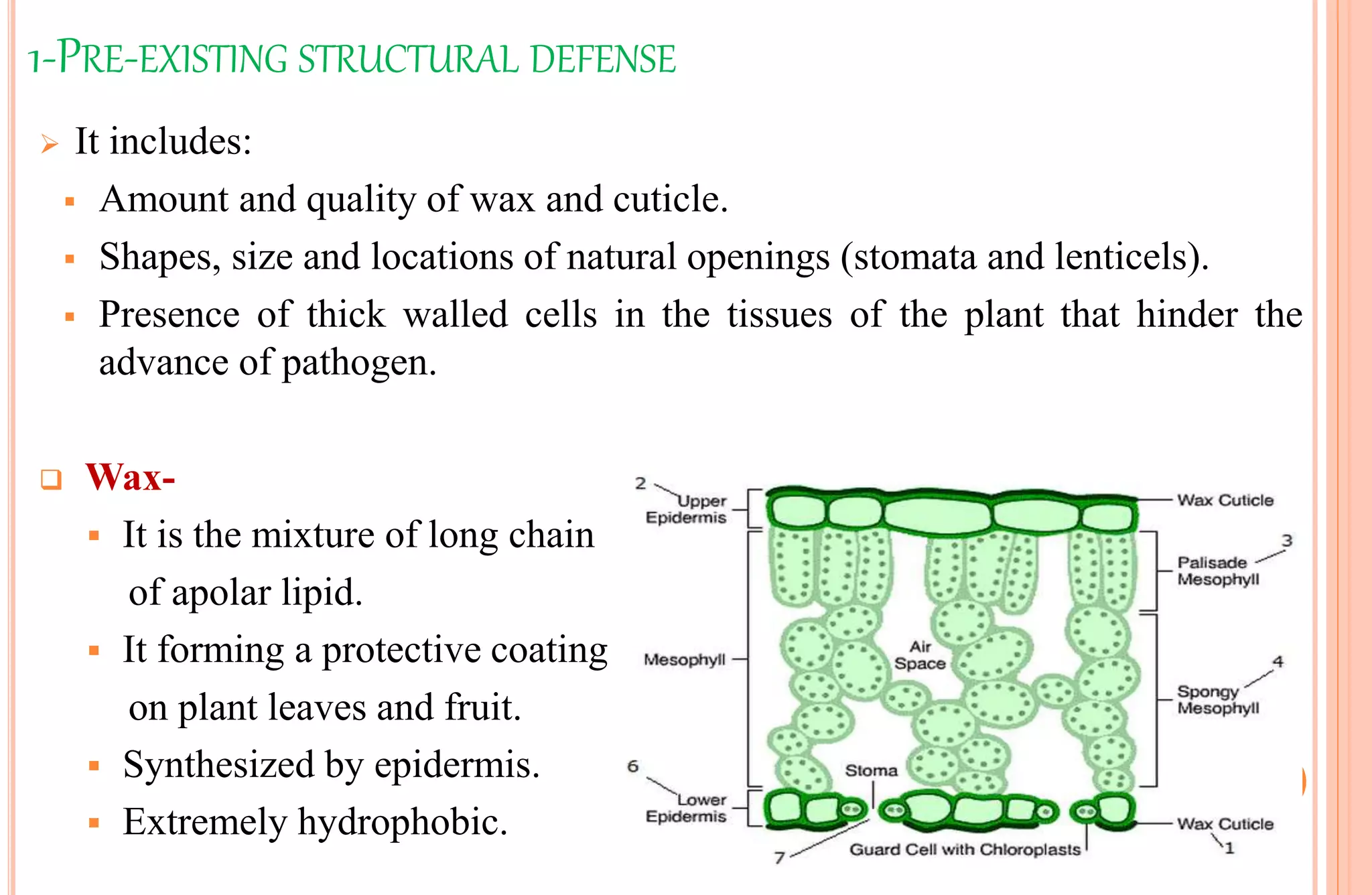
 Wax-
 It is the mixture of long chain
of apolar lipid.
 It forming a protective coating
on plant leaves and fruit.
 Synthesized by epidermis.
 Extremely hydrophobic.
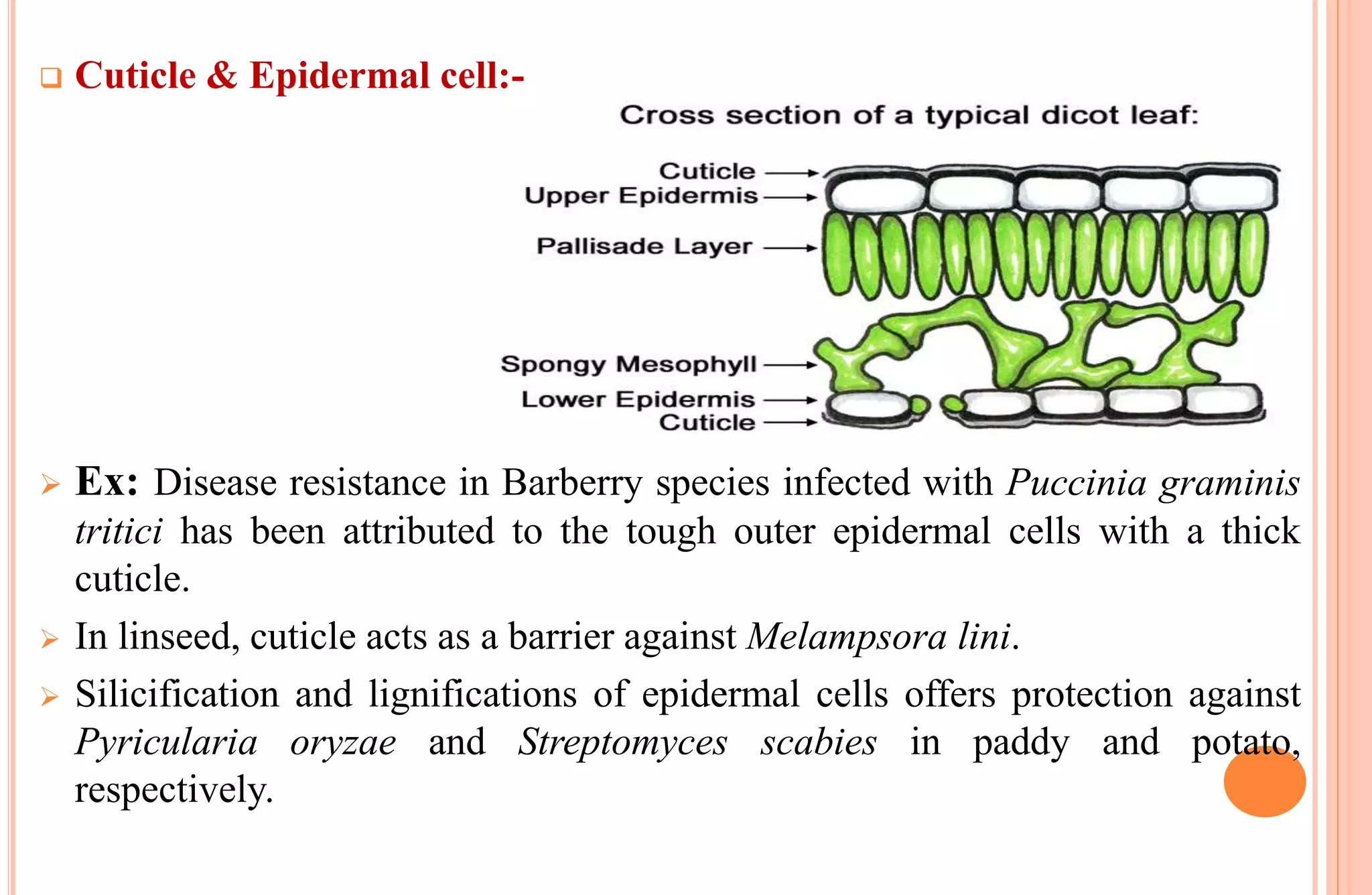
 Cuticle & Epidermal cell:-
 Ex: Disease resistance in Barberry species infected with Puccinia graminis
tritici has been attributed to the tough outer epidermal cells with a thick
cuticle.
 In linseed, cuticle acts as a barrier against Melampsora lini.
 Silicification and lignifications of epidermal cells offers protection against
Pyricularia oryzae and Streptomyces scabies in paddy and potato,
respectively.
 Sclerenchyma cells:-
 It composed of thickened walls of lignin.
 Sclerenchyma cells is present in stem and leaf veins.
 Brittle cells help in mechanical support of the plant.
 Effectively block the spread of some fungal and bacterial pathogens
that cause angular leaf spot.
 Structure of natural opening:-
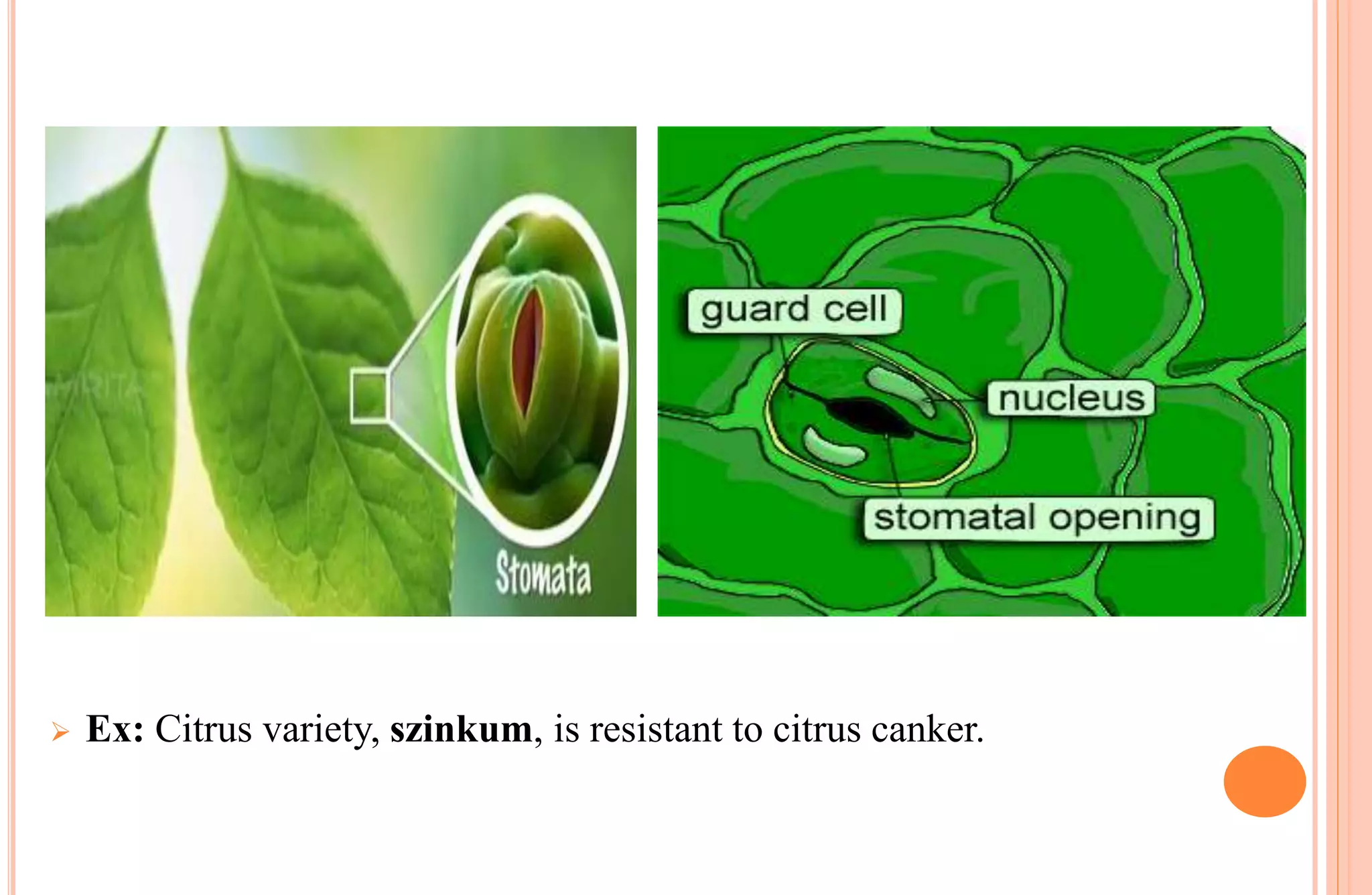
A. Stomata:-
 Most of pathogen enter plants through natural opening.
 Some pathogen like stem rust of wheat (Puccinia graminis f.sp. tritici)
can enters its host only when the stomata are open.
 Structure of stomata provides resistance to penetration by certain plant
pathogenic bacteria.
 Ex: Citrus variety, szinkum, is resistant to citrus canker.
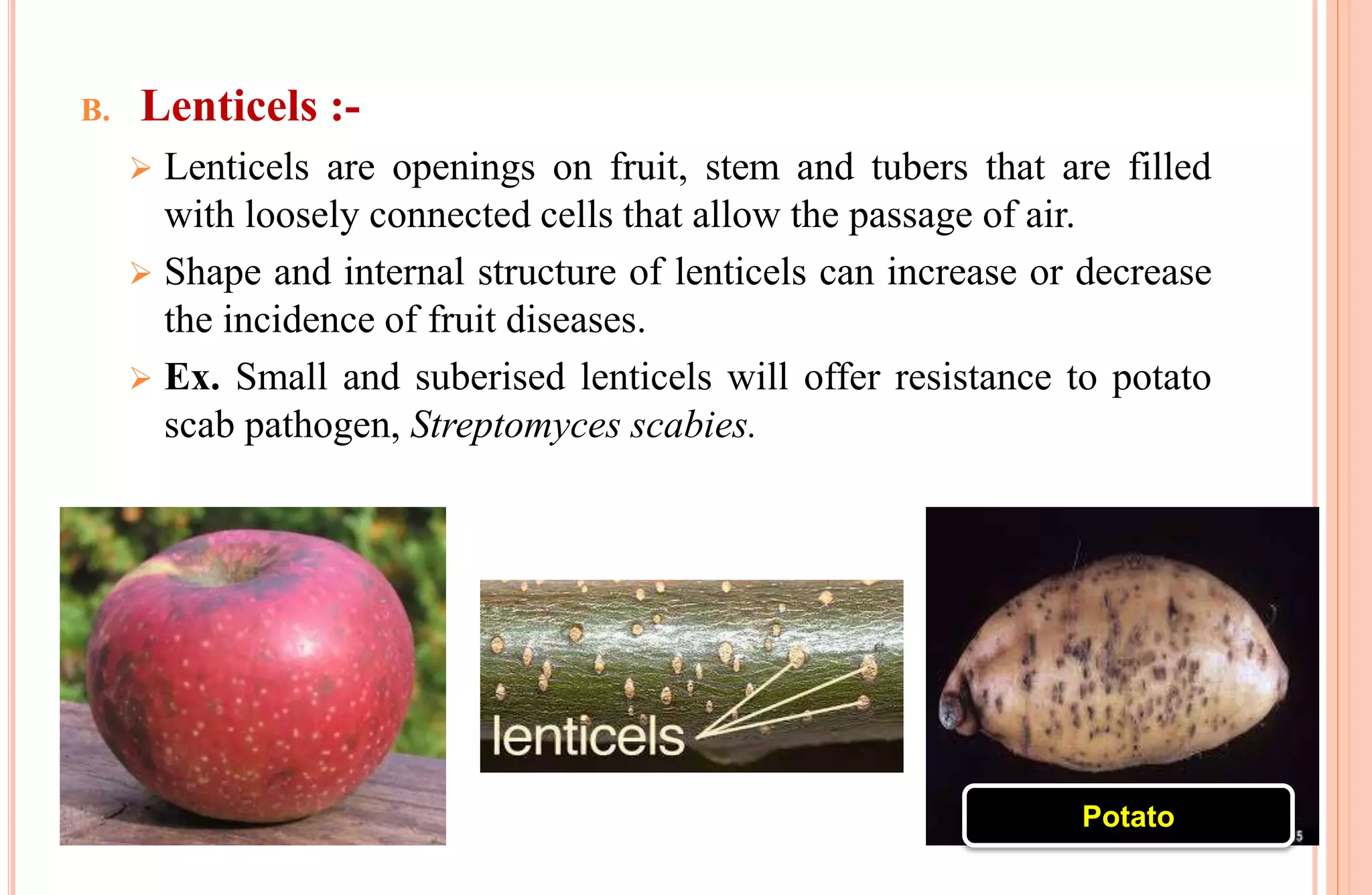
B. Lenticels :-
 Lenticels are openings on fruit, stem and tubers that are filled
with loosely connected cells that allow the passage of air.
 Shape and internal structure of lenticels can increase or decrease
the incidence of fruit diseases.
 Ex. Small and suberised lenticels will offer resistance to potato
scab pathogen, Streptomyces scabies.
Potato
2. POST-INFECTIONAL/INDUCED STRUCTURAL DEFENSE MECHANISM
 Most pathogen manage to penetrate their hosts through wounds
and natural opening and to produce various degree of infection.
 Pathogen penetration through the host surface induced the
structural defense mechanism in the host cells.
 These may be regarded as:-
 Histological defense barriers (cork layer, abscission layers and
tyloses formation)
 Cellular defense structures (hyphal sheathing).
1 HISTOLOGICAL DEFENSE STRUCTURES
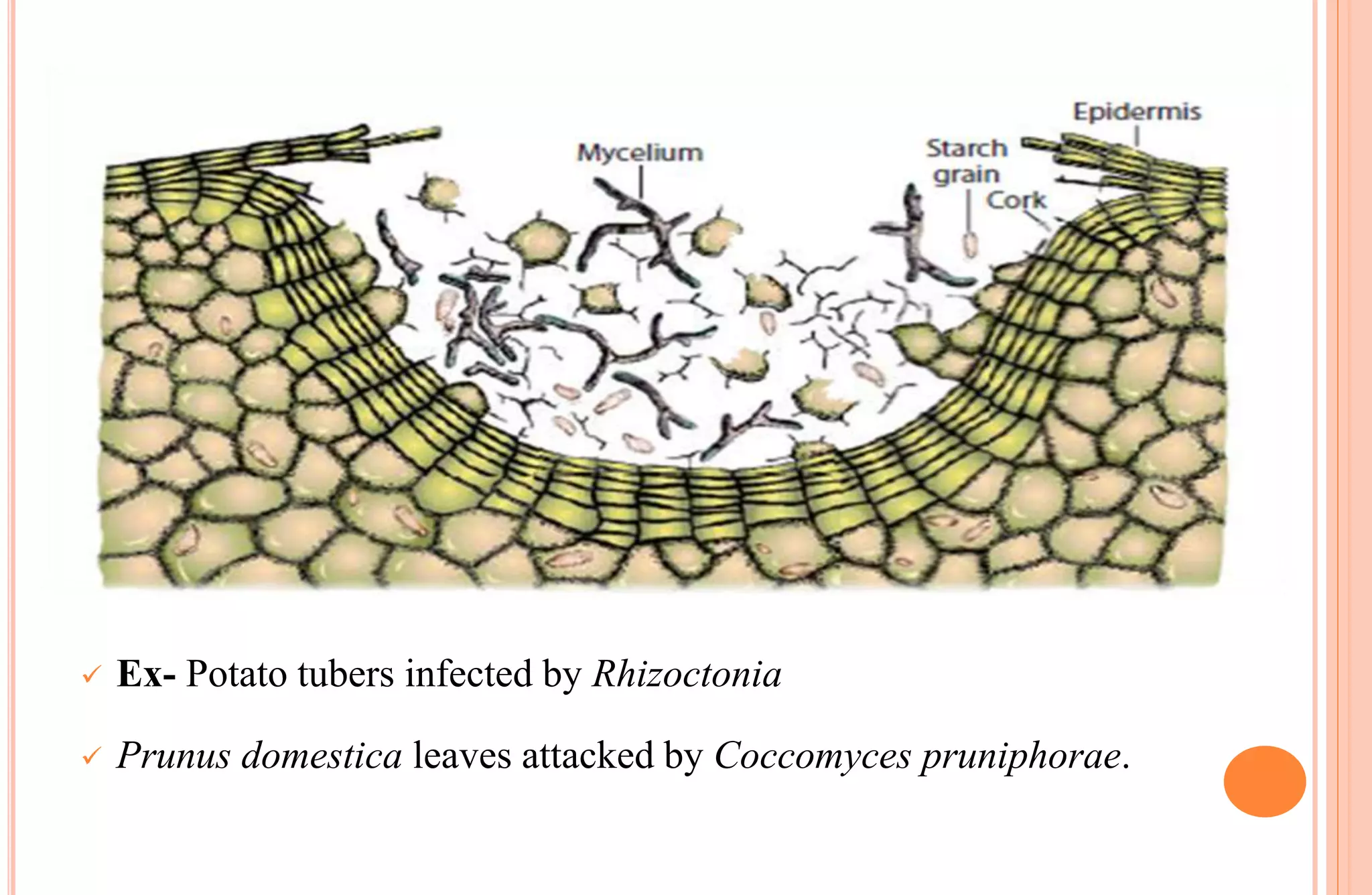
 Cork layer :-
 Infection by fungi, bacteria, some viruses and nematodes induce plants
to form several layers of cork cells beyond the point of infection.
 These cork cells inhibits the further invasion by the pathogen beyond the
initial lesion and also blocks the spread of toxin substances secreted by
the pathogen.
 It also stop the flow of nutrients and water from the healthy to the
infected area and deprive the pathogen of nourishment.
 Ex- Potato tubers infected by Rhizoctonia
 Prunus domestica leaves attacked by Coccomyces pruniphorae.
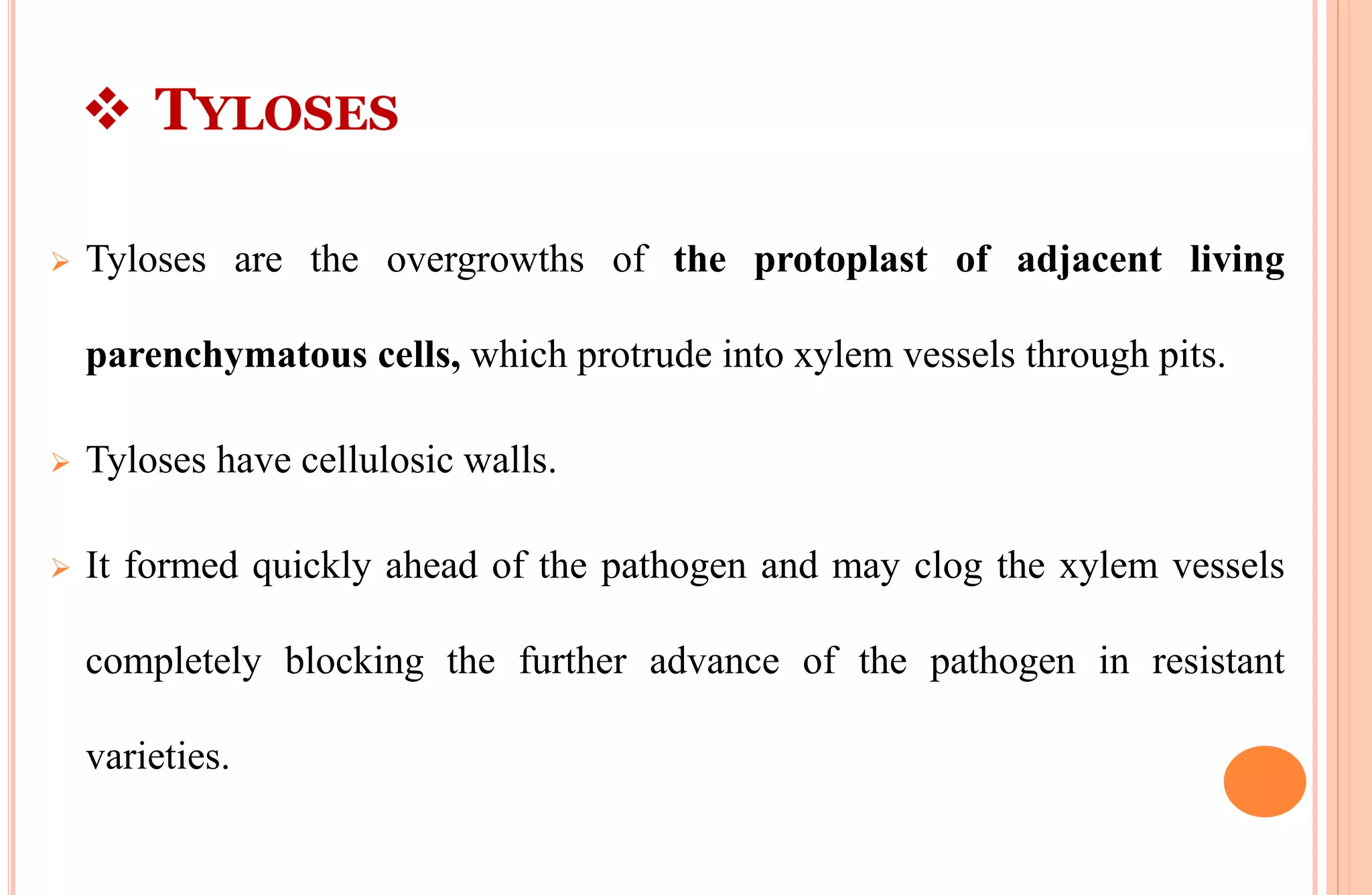
 ABSCISSION LAYERS
 An abscission layer consists of a gap formed between infected and
healthy cells of leaf surrounding the locus of infection.
 Due to the disintegration of middle lamella of parenchymatous
tissue.
 Gradually, infected area shrivels, dies, and sloughs off, carrying
with it the pathogen.
 Abscission layers are formed on young active leaves of stone
fruits infected by fungi, bacteria or viruses.

 Ex: Xanthomonas pruni, and Closterosporium carpophylum on peach
leaves.
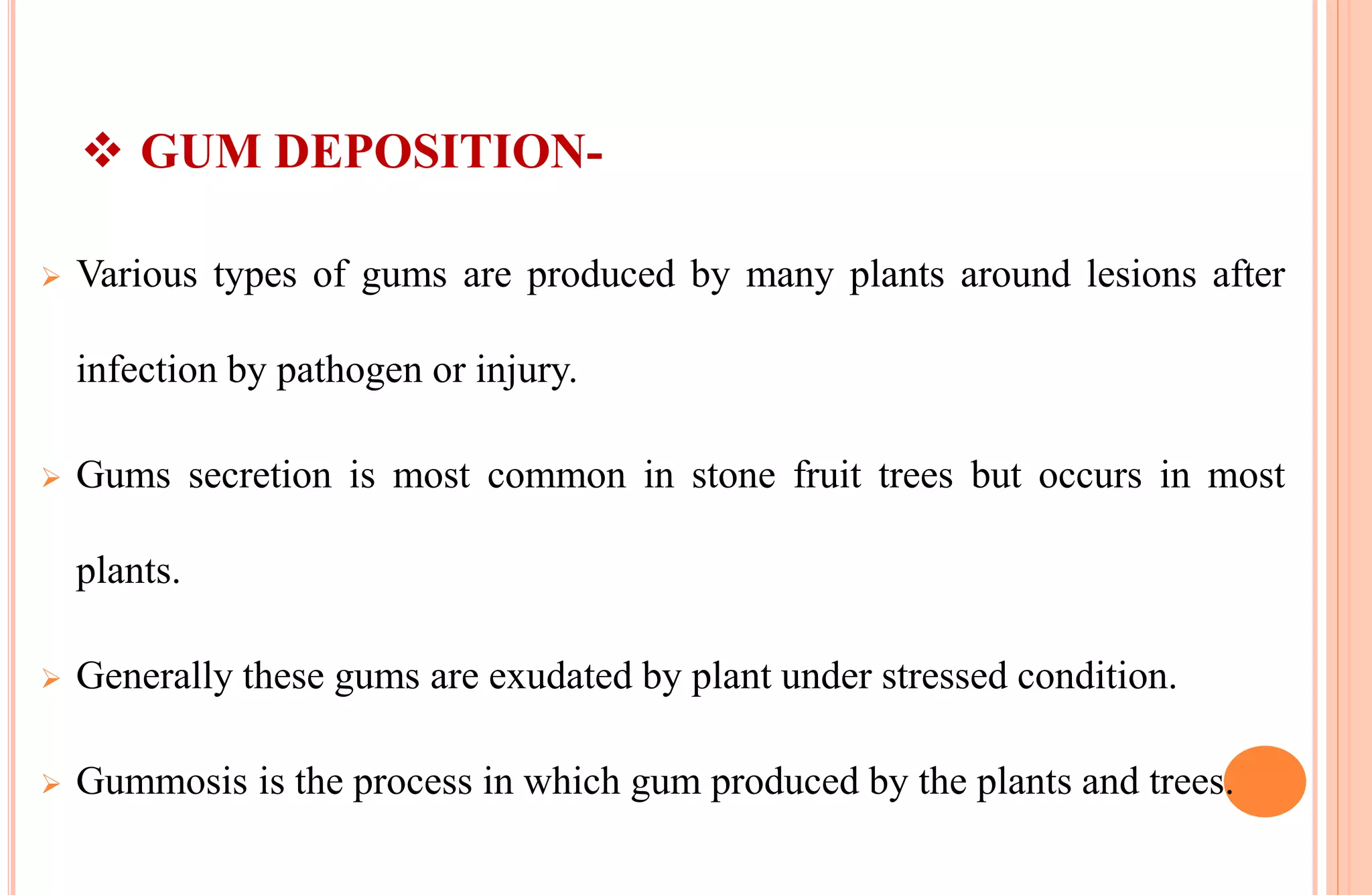
 TYLOSES
 Tyloses are the overgrowths of the protoplast of adjacent living
parenchymatous cells, which protrude into xylem vessels through pits.
 Tyloses have cellulosic walls.
 It formed quickly ahead of the pathogen and may clog the xylem vessels
completely blocking the further advance of the pathogen in resistant
varieties.
 Ex: Tyloses form in xylem vessels of most plants under invasion by most
of the vascular wilt pathogens.
 GUM DEPOSITION-
 Various types of gums are produced by many plants around lesions after
infection by pathogen or injury.
 Gums secretion is most common in stone fruit trees but occurs in most
plants.
 Generally these gums are exudated by plant under stressed condition.
 Gummosis is the process in which gum produced by the plants and trees.
2 CELLULAR DEFENSE STRUCTURE
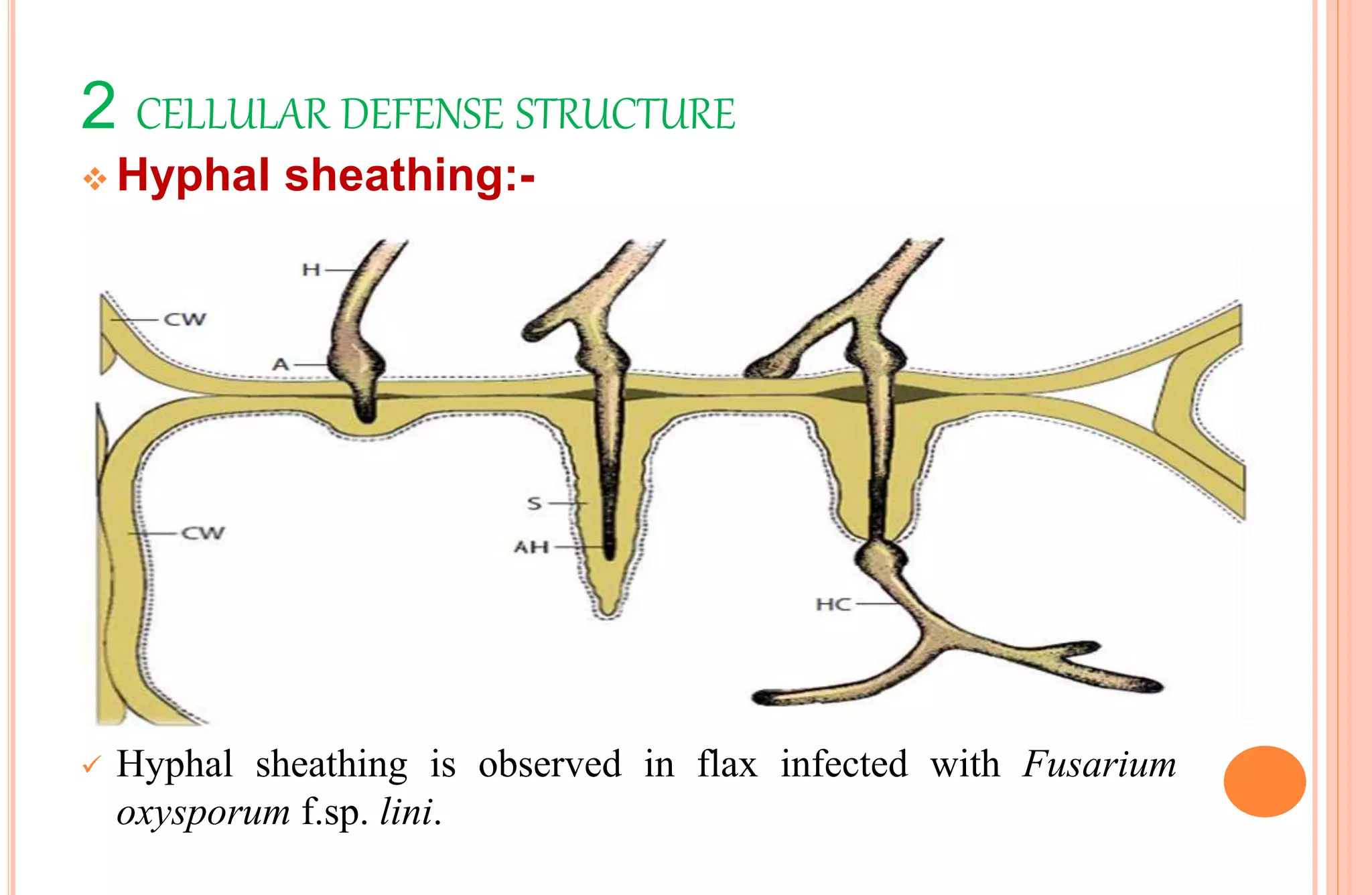
 Hyphal sheathing:-
 Hyphal sheathing is observed in flax infected with Fusarium
oxysporum f.sp. lini.
BIOCHEMICAL DEFENSE MECHANISM
 Pre-existing chemical defense
 1. Inhibitors
 Released by plant in it’s environment
 Present in plant cells before infection
 2. Phenolics
 Tannins
 Glucanases
 Dienes
 Chitinase
 Induced chemical defense
 Hypersensitivity response (HR)
 Production of Antimicrobial substances
 Phytoalexins
 Plantibodies
PRE-EXISTING CHEMICAL DEFENSE
 Although structural characteristics may provide a plant with various degree
of defense against attacking pathogens.
 It is clear that the resistance of a plant against pathogen attack depends not
so much on its structural barriers as on the substances produced in its cell
before or after infection.
 Before infection or penetration of pathogens, host released some chemicals
to defend themselves.
 INHIBITORS RELEASED BY THE PLANT IN IT’S
ENVIRONMENT
 Plants exude a variety of substances through the surface of their
aboveground parts as well as through the surface of their roots.
 Inhibitory substances directly affect micro-organisms or encourage certain
groups to dominate the environment which may act as antagonists to
pathogens.
 Ex 1: Root exudates of marigold contain α-terthinyl which is inhibitory
to nematodes.
 Ex 2: In Cicer arietinum (chickpea), the Ascochyta blight resistant
varieties have more glandular hairs which have maleic acid which
inhibit spore germination.
 Ex 3:Red scales of red onion contain the phenolic compounds,
protocatechuic acid and catechol.
 Production of toxic compounds by the rhizoplane / phylloplane or
rhizosphere/phyllosphere micro flora.
 INHIBITORS PRESENT IN PLANT CELLS BEFORE
INFECTION
 It is becoming increasingly apparent that some plants are resistant to
disease caused by certain pathogens of an inhibitory compound present in
the cell before infection.
 It stored in vacuoles of plant cells.
 Phenolics – onion (catechol and protocatechuic acid ).
 Tannins, and some fatty acid-like compound such as dienes,which are
present in high concentrations in cells of young fruits, leaves or seeds.
 These compounds are potent inhibitors of many hydrolytic enzymes.
 Ex: Chlorogenic acid in potato inhibits common scab bacteria,
Streptomyces scabies,and to wilt pathogen, Verticillium alboatrum
 Saponins:-
 It have antifungal membranolytic activity.
 Ex: Tomatine in tomato and Avenacin in oats.
 Lactins:-
 They are protiens.
 Bind specifically to certain sugars and occur in large concentrations in
many types of seeds, cause “lysis” and growth inhibition of many fungi.
 Hydrolytic enzymes:-
 “Glucanases” and “chitinases” enzymes.
 It may cause breakdown of pathogen cellwall.
INDUCED CHEMICAL DEFENSE
Phytoalexins:- (Phyton = plant; alexin = to ward off)
 Muller and Borger (1940) first used the term phytoalexins for fungistatic
compounds produced by plants in response to injury (mechanical or
chemical) or infection.
 Phytoalexens are toxic antimicrobial substances.
 It produced in appreciable amounts in plants only after stimulation by
phytopathogenic micro-organisms or by chemical or mechanical injury.
 Phytoalexins are not produced during compatable reaction.
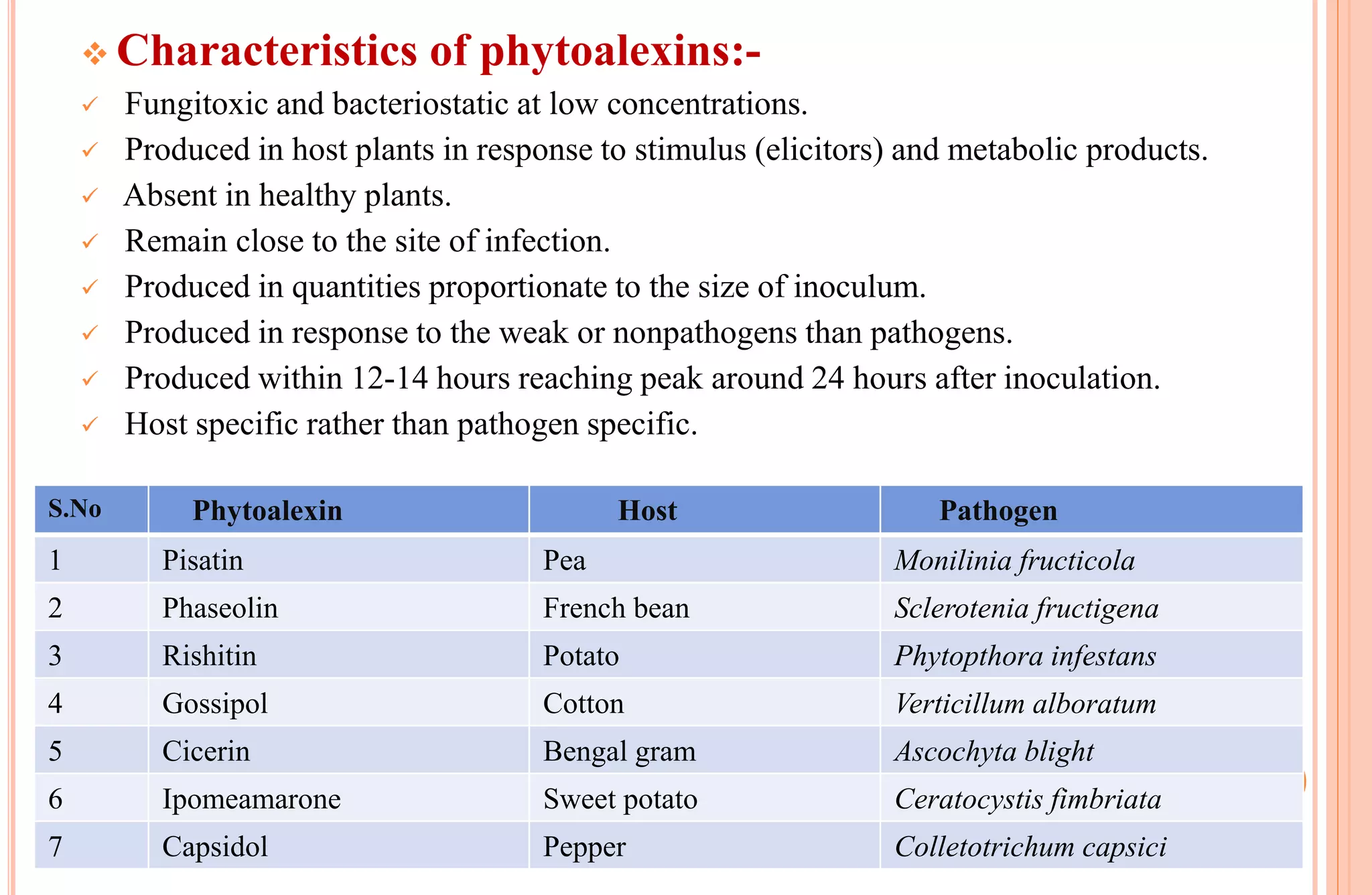
 Characteristics of phytoalexins:-
 Fungitoxic and bacteriostatic at low concentrations.
 Produced in host plants in response to stimulus (elicitors) and metabolic products.
 Absent in healthy plants.
 Remain close to the site of infection.
 Produced in quantities proportionate to the size of inoculum.
 Produced in response to the weak or nonpathogens than pathogens.
 Produced within 12-14 hours reaching peak around 24 hours after inoculation.
 Host specific rather than pathogen specific.
S.No Phytoalexin Host Pathogen
1 Pisatin Pea Monilinia fructicola
2 Phaseolin French bean Sclerotenia fructigena
3 Rishitin Potato Phytopthora infestans
4 Gossipol Cotton Verticillum alboratum
5 Cicerin Bengal gram Ascochyta blight
6 Ipomeamarone Sweet potato Ceratocystis fimbriata
7 Capsidol Pepper Colletotrichum capsici
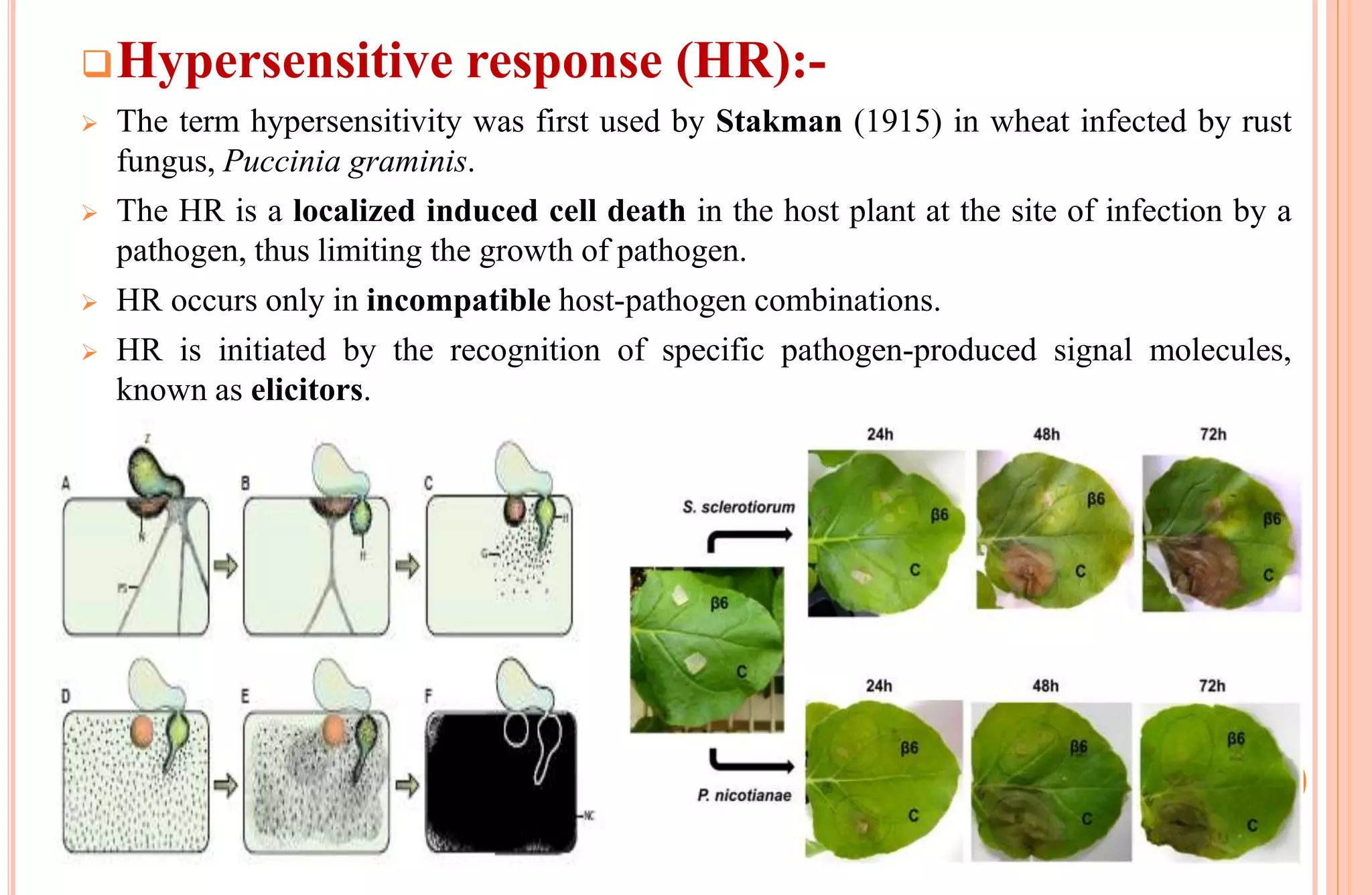
Hypersensitive response (HR):-
 The term hypersensitivity was first used by Stakman (1915) in wheat infected by rust
fungus, Puccinia graminis.
 The HR is a localized induced cell death in the host plant at the site of infection by a
pathogen, thus limiting the growth of pathogen.
 HR occurs only in incompatible host-pathogen combinations.
 HR is initiated by the recognition of specific pathogen-produced signal molecules,
known as elicitors.
Plantibodies:-
 It is generally antibodies.
 It is encoded by animal genes, but produced in and by the plants.
 So that it is called as plantibodies.
 Transgenic plants have been produced which are genetically engineered to
incorporate into their genome, and to express foreign genes.
 Mouse genes that produce antibodies against certain plant pathogens.
 It shown in transgenic plant.
Ex:-Artichoke mottled crinkle virus
CONCLUSION
 Both the host and pathogen evolve in nature side by side.
 Disease development depends upon successful host-pathogen interaction.
 Susceptibility and resistance of a host against various pathogens is
predominantly decided by the gene.
 Different types of chemical and structural defense mechanism provide
plant defenses response to the pathogens.
 Defense mechanism will not work ,when compatible reaction occurs
between host and pathogen.
DEFENCE MECHANISM IN PLANTS AGAINST PATHOGENS (STRUCTURAL & BIOCHEMICAL)

DEFENCE MECHANISM IN PLANTS AGAINST PATHOGENS (STRUCTURAL & BIOCHEMICAL)

  • 1.
    DEFENSE MECHANISM INPLANTS AGAINST PATHOGEN (STRUCTURAL & BIOCHEMICAL) DEFENSE MECHANISM IN PLANTS AGAINST PATHOGENs (STRUCTURAL & BIOCHEMICAL)
  • 2.
    INTRODUCTION  Plants representa rich source of nutrients for many organisms including fungi, bacteria, virus, nematodes, insects, and vertebrates.  Plant lacking an immune system comparable to animals.  Plants have developed a stunning array of structural, chemical, and protein- based defenses designed to detect invading organisms and stop them before they are able to cause extensive damage.
  • 3.
     Each plantspecies is affected by approximately 100 different kinds of fungi, bacteria, mollicutes, viruses and nematodes.
  • 4.
    HOST:- A livingorganism from which other organism derive its food.  PATHOGEN:- Any agent (living organism or virus) which can cause disease.  RESISTANCE:-The ability of an organism to exclude or overcome completely or in some degree, the effect of a pathogens, or other damaging factor.
  • 5.
  • 6.
    STRUCTURAL DEFENSE MECHANISM The surface of the plant or host is first line of defense against the pathogen.  The pathogen must adhere to the surface and penetrate, if it is to cause infection.  Structural defense mechanism are mainly two type:- 1. Pre-existing structural defense mechanism 2. Post-infectional or induced structural defense mechanism
  • 7.
     Pre-existing structuraldefense Wax Thick cuticle Thickness and toughness of the outer wall of epidermal cells Stomata Sclerenchyma cells Lenticel  Induced structural defense  Cellular defense structure  Hyphal sheathing  Histological defense structure  Formation of cork layer  Formation of abscission layer  Formation of tyloses  Deposition of gums
  • 8.
    1-PRE-EXISTING STRUCTURAL DEFENSE It includes:  Amount and quality of wax and cuticle.  Shapes, size and locations of natural openings (stomata and lenticels).  Presence of thick walled cells in the tissues of the plant that hinder the advance of pathogen.  Wax-  It is the mixture of long chain of apolar lipid.  It forming a protective coating on plant leaves and fruit.  Synthesized by epidermis.  Extremely hydrophobic.
  • 9.
     Cuticle &Epidermal cell:-  Ex: Disease resistance in Barberry species infected with Puccinia graminis tritici has been attributed to the tough outer epidermal cells with a thick cuticle.  In linseed, cuticle acts as a barrier against Melampsora lini.  Silicification and lignifications of epidermal cells offers protection against Pyricularia oryzae and Streptomyces scabies in paddy and potato, respectively.
  • 10.
     Sclerenchyma cells:- It composed of thickened walls of lignin.  Sclerenchyma cells is present in stem and leaf veins.  Brittle cells help in mechanical support of the plant.  Effectively block the spread of some fungal and bacterial pathogens that cause angular leaf spot.  Structure of natural opening:- A. Stomata:-  Most of pathogen enter plants through natural opening.  Some pathogen like stem rust of wheat (Puccinia graminis f.sp. tritici) can enters its host only when the stomata are open.  Structure of stomata provides resistance to penetration by certain plant pathogenic bacteria.
  • 11.
     Ex: Citrusvariety, szinkum, is resistant to citrus canker.
  • 12.
    B. Lenticels :- Lenticels are openings on fruit, stem and tubers that are filled with loosely connected cells that allow the passage of air.  Shape and internal structure of lenticels can increase or decrease the incidence of fruit diseases.  Ex. Small and suberised lenticels will offer resistance to potato scab pathogen, Streptomyces scabies. Potato
  • 13.
    2. POST-INFECTIONAL/INDUCED STRUCTURALDEFENSE MECHANISM  Most pathogen manage to penetrate their hosts through wounds and natural opening and to produce various degree of infection.  Pathogen penetration through the host surface induced the structural defense mechanism in the host cells.  These may be regarded as:-  Histological defense barriers (cork layer, abscission layers and tyloses formation)  Cellular defense structures (hyphal sheathing).
  • 14.
    1 HISTOLOGICAL DEFENSESTRUCTURES  Cork layer :-  Infection by fungi, bacteria, some viruses and nematodes induce plants to form several layers of cork cells beyond the point of infection.  These cork cells inhibits the further invasion by the pathogen beyond the initial lesion and also blocks the spread of toxin substances secreted by the pathogen.  It also stop the flow of nutrients and water from the healthy to the infected area and deprive the pathogen of nourishment.
  • 15.
     Ex- Potatotubers infected by Rhizoctonia  Prunus domestica leaves attacked by Coccomyces pruniphorae.
  • 16.
     ABSCISSION LAYERS An abscission layer consists of a gap formed between infected and healthy cells of leaf surrounding the locus of infection.  Due to the disintegration of middle lamella of parenchymatous tissue.  Gradually, infected area shrivels, dies, and sloughs off, carrying with it the pathogen.  Abscission layers are formed on young active leaves of stone fruits infected by fungi, bacteria or viruses.
  • 17.
      Ex: Xanthomonaspruni, and Closterosporium carpophylum on peach leaves.
  • 18.
     TYLOSES  Tylosesare the overgrowths of the protoplast of adjacent living parenchymatous cells, which protrude into xylem vessels through pits.  Tyloses have cellulosic walls.  It formed quickly ahead of the pathogen and may clog the xylem vessels completely blocking the further advance of the pathogen in resistant varieties.
  • 19.
     Ex: Tylosesform in xylem vessels of most plants under invasion by most of the vascular wilt pathogens.
  • 20.
     GUM DEPOSITION- Various types of gums are produced by many plants around lesions after infection by pathogen or injury.  Gums secretion is most common in stone fruit trees but occurs in most plants.  Generally these gums are exudated by plant under stressed condition.  Gummosis is the process in which gum produced by the plants and trees.
  • 21.
    2 CELLULAR DEFENSESTRUCTURE  Hyphal sheathing:-  Hyphal sheathing is observed in flax infected with Fusarium oxysporum f.sp. lini.
  • 22.
    BIOCHEMICAL DEFENSE MECHANISM Pre-existing chemical defense  1. Inhibitors  Released by plant in it’s environment  Present in plant cells before infection  2. Phenolics  Tannins  Glucanases  Dienes  Chitinase  Induced chemical defense  Hypersensitivity response (HR)  Production of Antimicrobial substances  Phytoalexins  Plantibodies
  • 23.
    PRE-EXISTING CHEMICAL DEFENSE Although structural characteristics may provide a plant with various degree of defense against attacking pathogens.  It is clear that the resistance of a plant against pathogen attack depends not so much on its structural barriers as on the substances produced in its cell before or after infection.  Before infection or penetration of pathogens, host released some chemicals to defend themselves.
  • 24.
     INHIBITORS RELEASEDBY THE PLANT IN IT’S ENVIRONMENT  Plants exude a variety of substances through the surface of their aboveground parts as well as through the surface of their roots.  Inhibitory substances directly affect micro-organisms or encourage certain groups to dominate the environment which may act as antagonists to pathogens.  Ex 1: Root exudates of marigold contain α-terthinyl which is inhibitory to nematodes.  Ex 2: In Cicer arietinum (chickpea), the Ascochyta blight resistant varieties have more glandular hairs which have maleic acid which inhibit spore germination.
  • 25.
     Ex 3:Redscales of red onion contain the phenolic compounds, protocatechuic acid and catechol.  Production of toxic compounds by the rhizoplane / phylloplane or rhizosphere/phyllosphere micro flora.
  • 26.
     INHIBITORS PRESENTIN PLANT CELLS BEFORE INFECTION  It is becoming increasingly apparent that some plants are resistant to disease caused by certain pathogens of an inhibitory compound present in the cell before infection.  It stored in vacuoles of plant cells.  Phenolics – onion (catechol and protocatechuic acid ).  Tannins, and some fatty acid-like compound such as dienes,which are present in high concentrations in cells of young fruits, leaves or seeds.  These compounds are potent inhibitors of many hydrolytic enzymes.  Ex: Chlorogenic acid in potato inhibits common scab bacteria, Streptomyces scabies,and to wilt pathogen, Verticillium alboatrum
  • 27.
     Saponins:-  Ithave antifungal membranolytic activity.  Ex: Tomatine in tomato and Avenacin in oats.  Lactins:-  They are protiens.  Bind specifically to certain sugars and occur in large concentrations in many types of seeds, cause “lysis” and growth inhibition of many fungi.  Hydrolytic enzymes:-  “Glucanases” and “chitinases” enzymes.  It may cause breakdown of pathogen cellwall.
  • 28.
    INDUCED CHEMICAL DEFENSE Phytoalexins:-(Phyton = plant; alexin = to ward off)  Muller and Borger (1940) first used the term phytoalexins for fungistatic compounds produced by plants in response to injury (mechanical or chemical) or infection.  Phytoalexens are toxic antimicrobial substances.  It produced in appreciable amounts in plants only after stimulation by phytopathogenic micro-organisms or by chemical or mechanical injury.  Phytoalexins are not produced during compatable reaction.
  • 29.
     Characteristics ofphytoalexins:-  Fungitoxic and bacteriostatic at low concentrations.  Produced in host plants in response to stimulus (elicitors) and metabolic products.  Absent in healthy plants.  Remain close to the site of infection.  Produced in quantities proportionate to the size of inoculum.  Produced in response to the weak or nonpathogens than pathogens.  Produced within 12-14 hours reaching peak around 24 hours after inoculation.  Host specific rather than pathogen specific. S.No Phytoalexin Host Pathogen 1 Pisatin Pea Monilinia fructicola 2 Phaseolin French bean Sclerotenia fructigena 3 Rishitin Potato Phytopthora infestans 4 Gossipol Cotton Verticillum alboratum 5 Cicerin Bengal gram Ascochyta blight 6 Ipomeamarone Sweet potato Ceratocystis fimbriata 7 Capsidol Pepper Colletotrichum capsici
  • 30.
    Hypersensitive response (HR):- The term hypersensitivity was first used by Stakman (1915) in wheat infected by rust fungus, Puccinia graminis.  The HR is a localized induced cell death in the host plant at the site of infection by a pathogen, thus limiting the growth of pathogen.  HR occurs only in incompatible host-pathogen combinations.  HR is initiated by the recognition of specific pathogen-produced signal molecules, known as elicitors.
  • 31.
    Plantibodies:-  It isgenerally antibodies.  It is encoded by animal genes, but produced in and by the plants.  So that it is called as plantibodies.  Transgenic plants have been produced which are genetically engineered to incorporate into their genome, and to express foreign genes.  Mouse genes that produce antibodies against certain plant pathogens.  It shown in transgenic plant. Ex:-Artichoke mottled crinkle virus
  • 32.
    CONCLUSION  Both thehost and pathogen evolve in nature side by side.  Disease development depends upon successful host-pathogen interaction.  Susceptibility and resistance of a host against various pathogens is predominantly decided by the gene.  Different types of chemical and structural defense mechanism provide plant defenses response to the pathogens.  Defense mechanism will not work ,when compatible reaction occurs between host and pathogen.