Syndrome of impaired carbohydrate, fat and
protein metabolism caused by either lack of
insulin or decreased sensitivity of tissues to
insulin.
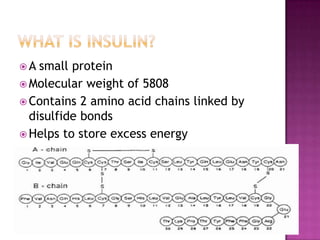
 A small protein
 Molecular weight of 5808
 Contains 2 amino acid chains linked by
disulfide bonds
 Helps to store excess energy
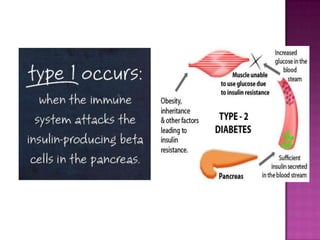
 TYPE I- IDDM (Insulin dependant Diabetes
Mellitus)
Caused by lack of insulin secretion.
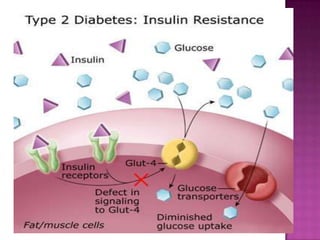
 TYPE II- NIDDM (Non Insulin Dependant
Diabetes Mellitus.
Caused by insulin resistance.
 May develop abruptly or over a period of few
days
 3 important features of TYPE 1 DM:
1. Blood glucose
2. Utilization of fats for energy & formation
of cholesterol by liver
3. Depletion of body proteins
Blood glucose concentration rises to very
high levels
Increased blood glucose causes loss of
glucose in urine
Increased blood glucose leads to
dehydration
Chronic high glucose conc. causes tissue
injury
Increased utilization of fats and
metabolic acidosis
Depletion of body proteins
 More common than TYPE I
 Often between ages 50-60, thus called as
adult-onset diabetes
 Most important risk factor:
Increasing prevalence of OBESITY
 OBESITY
 INSULIN RESISTANCE
 METABOLIC SYNDROME which includes:
 Accumulation of abdominal fat
 Fasting hyperglycemia
 Lipid abnormalities(eg; blood triglycerides)
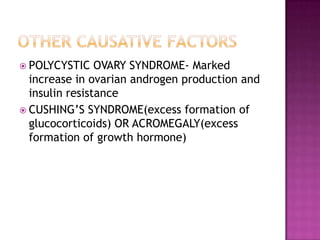
 POLYCYSTIC OVARY SYNDROME- Marked
increase in ovarian androgen production and
insulin resistance
 CUSHING’S SYNDROME(excess formation of
glucocorticoids) OR ACROMEGALY(excess
formation of growth hormone)
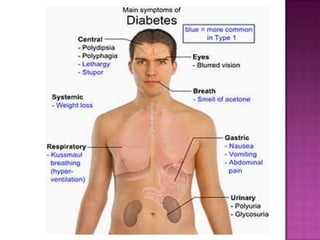
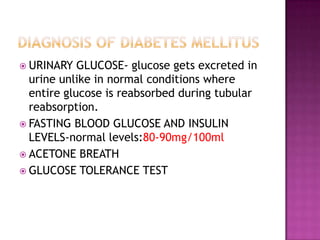
 URINARY GLUCOSE- glucose gets excreted in
urine unlike in normal conditions where
entire glucose is reabsorbed during tubular
reabsorption.
 FASTING BLOOD GLUCOSE AND INSULIN
LEVELS-normal levels:80-90mg/100ml
 ACETONE BREATH
 GLUCOSE TOLERANCE TEST
 Normal fasting person:
1 gm glucose/kg body wt. ingested
Blood glucose rises from 90mg/100ml-
120mg/100ml-140mg/100ml
Falls back to control value in abt 2 hours
 Person with diabetes:
Since blood glucose is already above
110mg/100ml
Blood glucose rises higher on ingestion
Falls back only after 4-6hours but still fails to fall
below control value
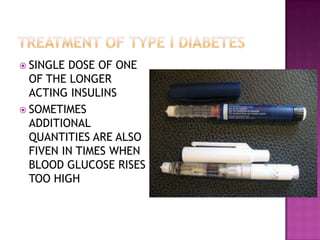
 SINGLE DOSE OF ONE
OF THE LONGER
ACTING INSULINS
 SOMETIMES
ADDITIONAL
QUANTITIES ARE ALSO
FIVEN IN TIMES WHEN
BLOOD GLUCOSE RISES
TOO HIGH
 Dieting and exercises usually recommended
 Drugs may be administered
 EXOGENOUS INSULIN MUST BE USED TO
REGULATE BLOOD GLUCOSE

Diabetes mellitus

  • 2.
    Syndrome of impairedcarbohydrate, fat and protein metabolism caused by either lack of insulin or decreased sensitivity of tissues to insulin.
  • 3.
     A smallprotein  Molecular weight of 5808  Contains 2 amino acid chains linked by disulfide bonds  Helps to store excess energy
  • 4.
     TYPE I-IDDM (Insulin dependant Diabetes Mellitus) Caused by lack of insulin secretion.  TYPE II- NIDDM (Non Insulin Dependant Diabetes Mellitus. Caused by insulin resistance.
  • 6.
     May developabruptly or over a period of few days  3 important features of TYPE 1 DM: 1. Blood glucose 2. Utilization of fats for energy & formation of cholesterol by liver 3. Depletion of body proteins
  • 7.
    Blood glucose concentrationrises to very high levels Increased blood glucose causes loss of glucose in urine Increased blood glucose leads to dehydration Chronic high glucose conc. causes tissue injury Increased utilization of fats and metabolic acidosis Depletion of body proteins
  • 8.
     More commonthan TYPE I  Often between ages 50-60, thus called as adult-onset diabetes  Most important risk factor: Increasing prevalence of OBESITY
  • 9.
     OBESITY  INSULINRESISTANCE  METABOLIC SYNDROME which includes:  Accumulation of abdominal fat  Fasting hyperglycemia  Lipid abnormalities(eg; blood triglycerides)
  • 11.
     POLYCYSTIC OVARYSYNDROME- Marked increase in ovarian androgen production and insulin resistance  CUSHING’S SYNDROME(excess formation of glucocorticoids) OR ACROMEGALY(excess formation of growth hormone)
  • 13.
     URINARY GLUCOSE-glucose gets excreted in urine unlike in normal conditions where entire glucose is reabsorbed during tubular reabsorption.  FASTING BLOOD GLUCOSE AND INSULIN LEVELS-normal levels:80-90mg/100ml  ACETONE BREATH  GLUCOSE TOLERANCE TEST
  • 14.
     Normal fastingperson: 1 gm glucose/kg body wt. ingested Blood glucose rises from 90mg/100ml- 120mg/100ml-140mg/100ml Falls back to control value in abt 2 hours  Person with diabetes: Since blood glucose is already above 110mg/100ml Blood glucose rises higher on ingestion Falls back only after 4-6hours but still fails to fall below control value
  • 15.
     SINGLE DOSEOF ONE OF THE LONGER ACTING INSULINS  SOMETIMES ADDITIONAL QUANTITIES ARE ALSO FIVEN IN TIMES WHEN BLOOD GLUCOSE RISES TOO HIGH
  • 16.
     Dieting andexercises usually recommended  Drugs may be administered  EXOGENOUS INSULIN MUST BE USED TO REGULATE BLOOD GLUCOSE