Phrases
English Grammar
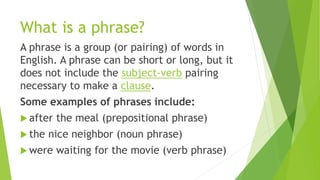
What is a phrase?
A phrase is a group (or pairing) of words in
English. A phrase can be short or long, but it
does not include the subject-verb pairing
necessary to make a clause.
Some examples of phrases include:
 after the meal (prepositional phrase)
 the nice neighbor (noun phrase)
 were waiting for the movie (verb phrase)
Phrases vs. Clauses:
a Hierarchy of Word Units
 A phrase is any group of words that does
not contain a subject completing an action.
 When a group of words contains a subject
doing an action (subject-verb), it becomes
a clause.
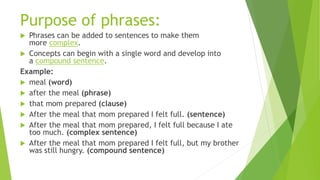
Purpose of phrases:
 Phrases can be added to sentences to make them
more complex.
 Concepts can begin with a single word and develop into
a compound sentence.
Example:
 meal (word)
 after the meal (phrase)
 that mom prepared (clause)
 After the meal that mom prepared I felt full. (sentence)
 After the meal that mom prepared, I felt full because I ate
too much. (complex sentence)
 After the meal that mom prepared I felt full, but my brother
was still hungry. (compound sentence)
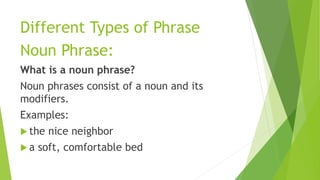
Different Types of Phrase
What is a noun phrase?
Noun phrases consist of a noun and its
modifiers.
Examples:
 the nice neighbor
 a soft, comfortable bed
Noun Phrase:
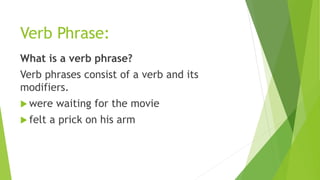
Verb Phrase:
What is a verb phrase?
Verb phrases consist of a verb and its
modifiers.
 were waiting for the movie
 felt a prick on his arm
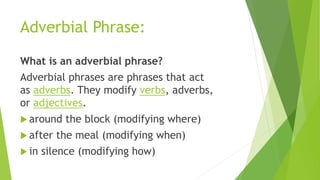
Adverbial Phrase:
What is an adverbial phrase?
Adverbial phrases are phrases that act
as adverbs. They modify verbs, adverbs,
or adjectives.
 around the block (modifying where)
 after the meal (modifying when)
 in silence (modifying how)
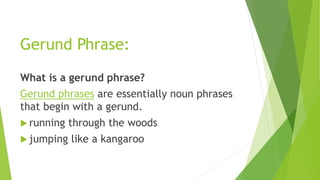
Gerund Phrase:
What is a gerund phrase?
Gerund phrases are essentially noun phrases
that begin with a gerund.
 running through the woods
 jumping like a kangaroo
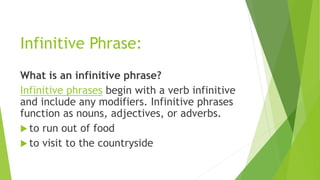
Infinitive Phrase:
What is an infinitive phrase?
Infinitive phrases begin with a verb infinitive
and include any modifiers. Infinitive phrases
function as nouns, adjectives, or adverbs.
 to run out of food
 to visit to the countryside
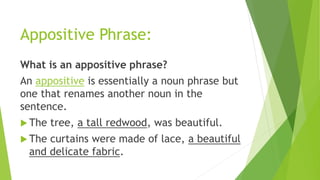
Appositive Phrase:
What is an appositive phrase?
An appositive is essentially a noun phrase but
one that renames another noun in the
sentence.
 The tree, a tall redwood, was beautiful.
 The curtains were made of lace, a beautiful
and delicate fabric.
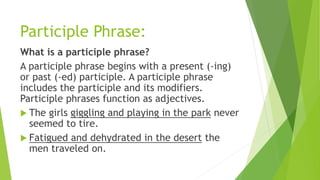
Participle Phrase:
What is a participle phrase?
A participle phrase begins with a present (-ing)
or past (-ed) participle. A participle phrase
includes the participle and its modifiers.
Participle phrases function as adjectives.
 The girls giggling and playing in the park never
seemed to tire.
 Fatigued and dehydrated in the desert the
men traveled on.
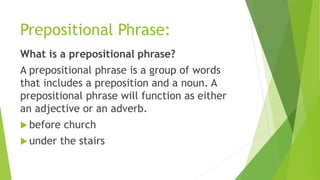
Prepositional Phrase:
What is a prepositional phrase?
A prepositional phrase is a group of words
that includes a preposition and a noun. A
prepositional phrase will function as either
an adjective or an adverb.
 before church
 under the stairs
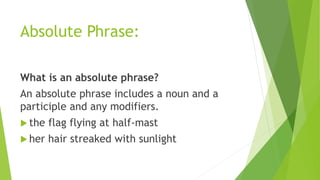
Absolute Phrase:
What is an absolute phrase?
An absolute phrase includes a noun and a
participle and any modifiers.
 the flag flying at half-mast
 her hair streaked with sunlight

Phrases

  • 1.
  • 2.
    What is aphrase? A phrase is a group (or pairing) of words in English. A phrase can be short or long, but it does not include the subject-verb pairing necessary to make a clause. Some examples of phrases include:  after the meal (prepositional phrase)  the nice neighbor (noun phrase)  were waiting for the movie (verb phrase)
  • 3.
    Phrases vs. Clauses: aHierarchy of Word Units  A phrase is any group of words that does not contain a subject completing an action.  When a group of words contains a subject doing an action (subject-verb), it becomes a clause.
  • 4.
    Purpose of phrases: Phrases can be added to sentences to make them more complex.  Concepts can begin with a single word and develop into a compound sentence. Example:  meal (word)  after the meal (phrase)  that mom prepared (clause)  After the meal that mom prepared I felt full. (sentence)  After the meal that mom prepared, I felt full because I ate too much. (complex sentence)  After the meal that mom prepared I felt full, but my brother was still hungry. (compound sentence)
  • 5.
    Different Types ofPhrase What is a noun phrase? Noun phrases consist of a noun and its modifiers. Examples:  the nice neighbor  a soft, comfortable bed Noun Phrase:
  • 6.
    Verb Phrase: What isa verb phrase? Verb phrases consist of a verb and its modifiers.  were waiting for the movie  felt a prick on his arm
  • 7.
    Adverbial Phrase: What isan adverbial phrase? Adverbial phrases are phrases that act as adverbs. They modify verbs, adverbs, or adjectives.  around the block (modifying where)  after the meal (modifying when)  in silence (modifying how)
  • 8.
    Gerund Phrase: What isa gerund phrase? Gerund phrases are essentially noun phrases that begin with a gerund.  running through the woods  jumping like a kangaroo
  • 9.
    Infinitive Phrase: What isan infinitive phrase? Infinitive phrases begin with a verb infinitive and include any modifiers. Infinitive phrases function as nouns, adjectives, or adverbs.  to run out of food  to visit to the countryside
  • 10.
    Appositive Phrase: What isan appositive phrase? An appositive is essentially a noun phrase but one that renames another noun in the sentence.  The tree, a tall redwood, was beautiful.  The curtains were made of lace, a beautiful and delicate fabric.
  • 11.
    Participle Phrase: What isa participle phrase? A participle phrase begins with a present (-ing) or past (-ed) participle. A participle phrase includes the participle and its modifiers. Participle phrases function as adjectives.  The girls giggling and playing in the park never seemed to tire.  Fatigued and dehydrated in the desert the men traveled on.
  • 12.
    Prepositional Phrase: What isa prepositional phrase? A prepositional phrase is a group of words that includes a preposition and a noun. A prepositional phrase will function as either an adjective or an adverb.  before church  under the stairs
  • 13.
    Absolute Phrase: What isan absolute phrase? An absolute phrase includes a noun and a participle and any modifiers.  the flag flying at half-mast  her hair streaked with sunlight