by: babu G

PHRASAL VERB
?

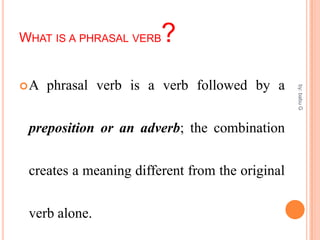
WHAT IS A PHRASAL VERB

phrasal verb is a verb followed by a

preposition or an adverb; the combination
creates a meaning different from the original

verb alone.

by: babu G

A
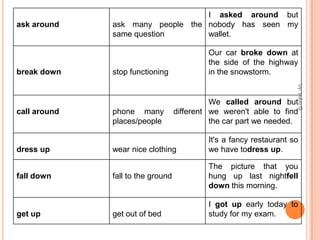
ask around

break down

dress up
fall down

get up

Our car broke down at
the side of the highway
in the snowstorm.

stop functioning

phone many
places/people

We called around but
different we weren't able to find
the car part we needed.

wear nice clothing
fall to the ground

get out of bed

by: babu G

call around

I asked around but
ask many people the nobody has seen my
same question
wallet.

It's a fancy restaurant so
we have todress up.
The picture that you
hung up last nightfell
down this morning.

I got up early today to
study for my exam.
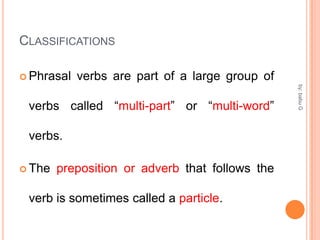
CLASSIFICATIONS
 Phrasal

verbs are part of a large group of

verbs.
 The

preposition or adverb that follows the

verb is sometimes called a particle.

by: babu G

verbs called “multi-part” or “multi-word”
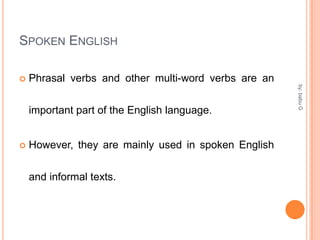
SPOKEN ENGLISH


Phrasal verbs and other multi-word verbs are an



However, they are mainly used in spoken English
and informal texts.

by: babu G

important part of the English language.
TRANSITIVE
AND
INTRANSITIVE PHRASAL VERBS

Some phrasal verbs are transitive. (A transitive
verb always has an object.)
Example : I completed my Homework. ('Excuse' is
the object of the verb.)



Some phrasal verbs are intransitive
intransitive verb does not have an object.)
Example : I completed first.

.

(An

by: babu G


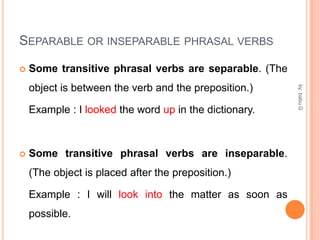
SEPARABLE OR INSEPARABLE PHRASAL VERBS


Some transitive phrasal verbs are separable. (The

Example : I looked the word up in the dictionary.



Some transitive phrasal verbs are inseparable.
(The object is placed after the preposition.)

Example : I will look into the matter as soon as
possible.

by: babu G

object is between the verb and the preposition.)


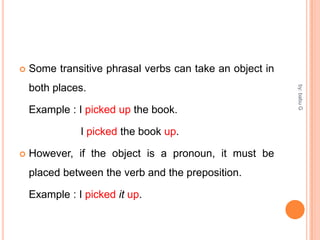
Some transitive phrasal verbs can take an object in

Example : I picked up the book.
I picked the book up.


However, if the object is a pronoun, it must be
placed between the verb and the preposition.

Example : I picked it up.

by: babu G

both places.

Phrasal verb

  • 1.
  • 2.
    ? WHAT IS APHRASAL VERB phrasal verb is a verb followed by a preposition or an adverb; the combination creates a meaning different from the original verb alone. by: babu G A
  • 3.
    ask around break down dressup fall down get up Our car broke down at the side of the highway in the snowstorm. stop functioning phone many places/people We called around but different we weren't able to find the car part we needed. wear nice clothing fall to the ground get out of bed by: babu G call around I asked around but ask many people the nobody has seen my same question wallet. It's a fancy restaurant so we have todress up. The picture that you hung up last nightfell down this morning. I got up early today to study for my exam.
  • 4.
    CLASSIFICATIONS  Phrasal verbs arepart of a large group of verbs.  The preposition or adverb that follows the verb is sometimes called a particle. by: babu G verbs called “multi-part” or “multi-word”
  • 5.
    SPOKEN ENGLISH  Phrasal verbsand other multi-word verbs are an  However, they are mainly used in spoken English and informal texts. by: babu G important part of the English language.
  • 6.
    TRANSITIVE AND INTRANSITIVE PHRASAL VERBS Somephrasal verbs are transitive. (A transitive verb always has an object.) Example : I completed my Homework. ('Excuse' is the object of the verb.)  Some phrasal verbs are intransitive intransitive verb does not have an object.) Example : I completed first. . (An by: babu G 
  • 7.
    SEPARABLE OR INSEPARABLEPHRASAL VERBS  Some transitive phrasal verbs are separable. (The Example : I looked the word up in the dictionary.  Some transitive phrasal verbs are inseparable. (The object is placed after the preposition.) Example : I will look into the matter as soon as possible. by: babu G object is between the verb and the preposition.)
  • 8.
     Some transitive phrasalverbs can take an object in Example : I picked up the book. I picked the book up.  However, if the object is a pronoun, it must be placed between the verb and the preposition. Example : I picked it up. by: babu G both places.