
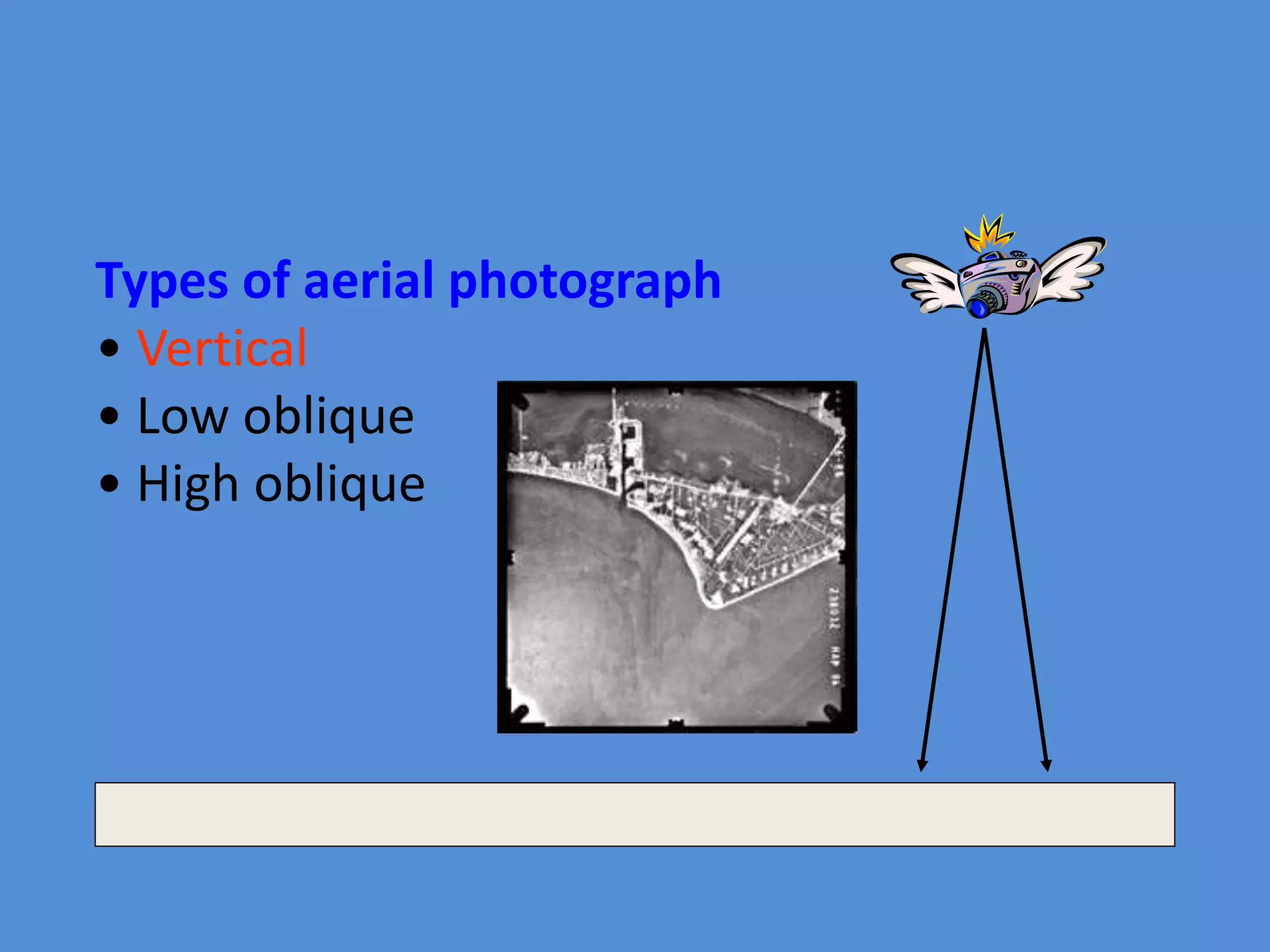
Types of aerial photograph
• Vertical
• Low oblique
• High oblique
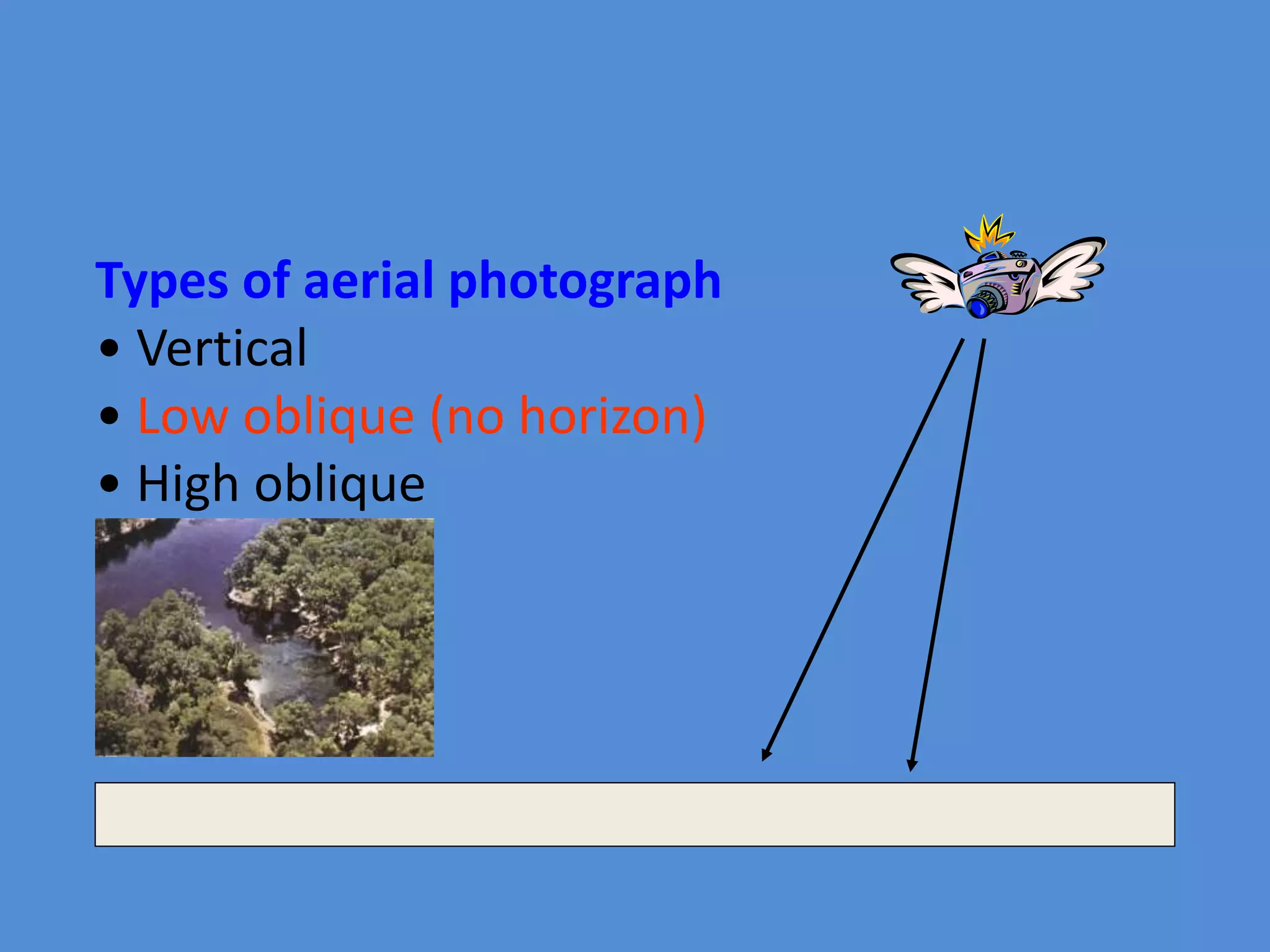
Types of aerial photograph
• Vertical
• Low oblique (no horizon)
• High oblique
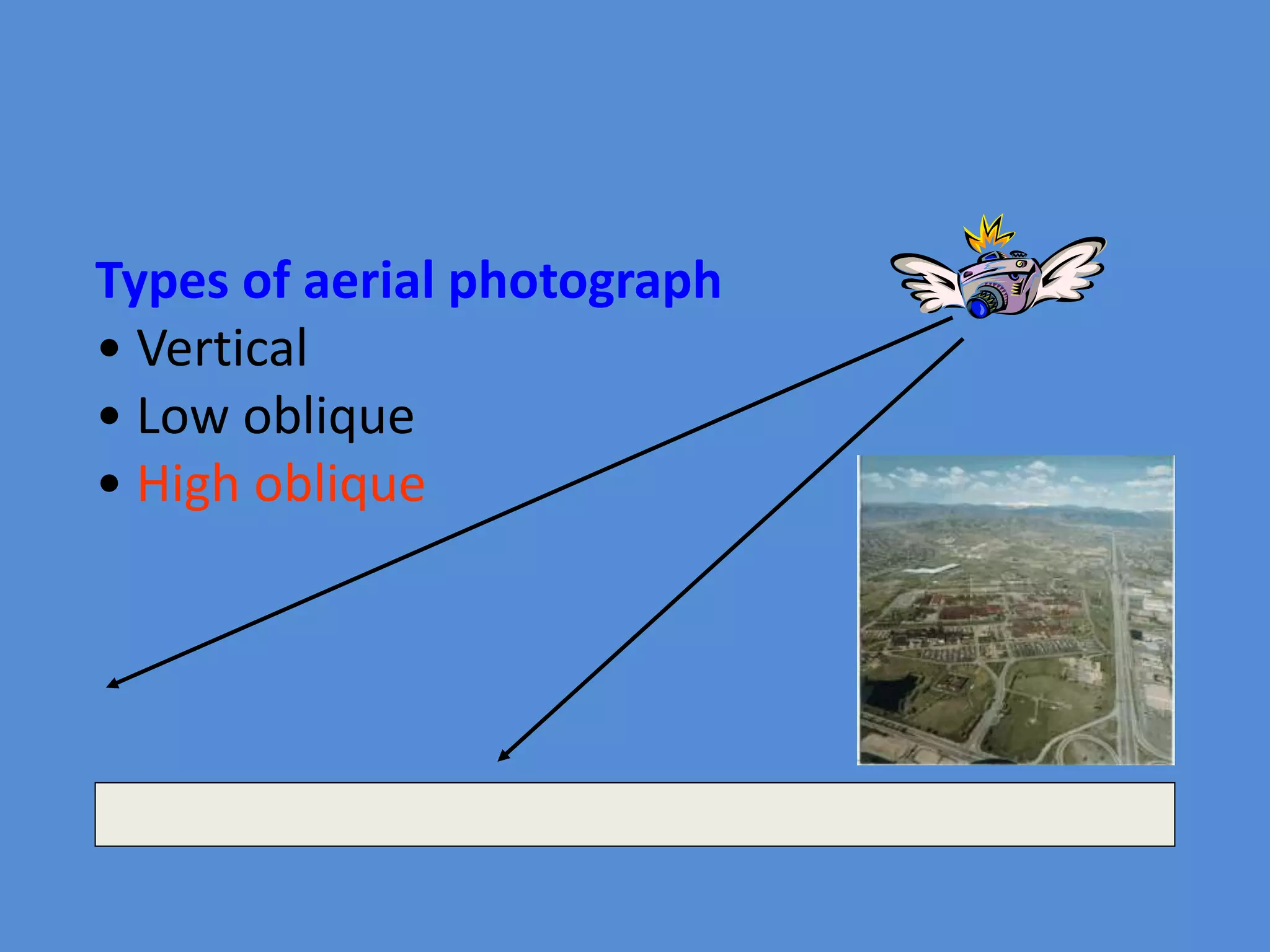
Types of aerial photograph
• Vertical
• Low oblique
• High oblique
Image file formats
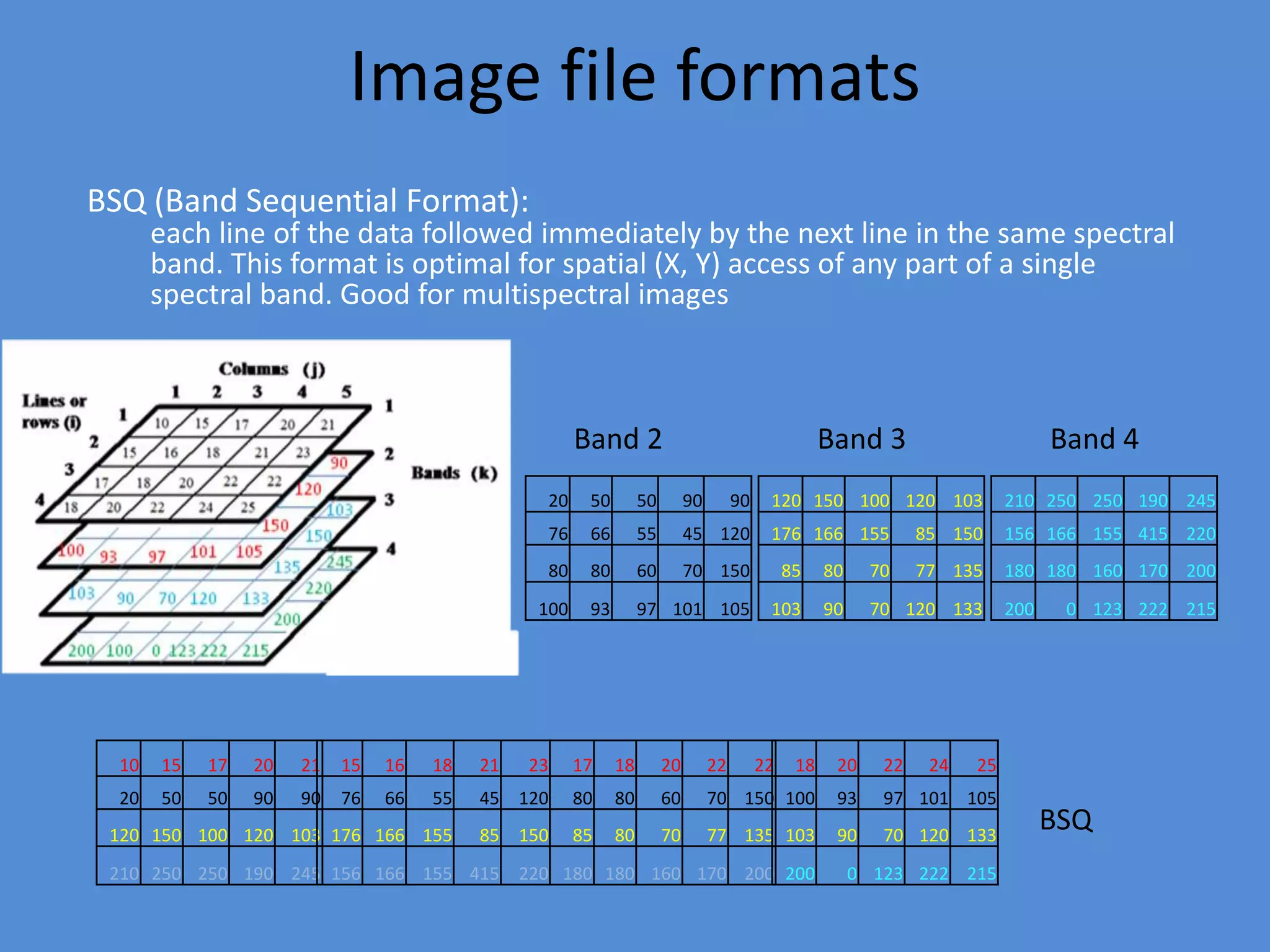
BSQ (Band Sequential Format):
each line of the data followed immediately by the next line in the same spectral
band. This format is optimal for spatial (X, Y) access of any part of a single
spectral band. Good for multispectral images
120 150 100 120 103
176 166 155 85 150
85 80 70 77 135
103 90 70 120 133
20 50 50 90 90
76 66 55 45 120
80 80 60 70 150
100 93 97 101 105
210 250 250 190 245
156 166 155 415 220
180 180 160 170 200
200 0 123 222 215
Band 2 Band 3 Band 4
10 15 17 20 21
20 50 50 90 90
120 150 100 120 103
210 250 250 190 245
15 16 18 21 23
76 66 55 45 120
176 166 155 85 150
156 166 155 415 220
17 18 20 22 22
80 80 60 70 150
85 80 70 77 135
180 180 160 170 200
18 20 22 24 25
100 93 97 101 105
103 90 70 120 133
200 0 123 222 215
BSQ
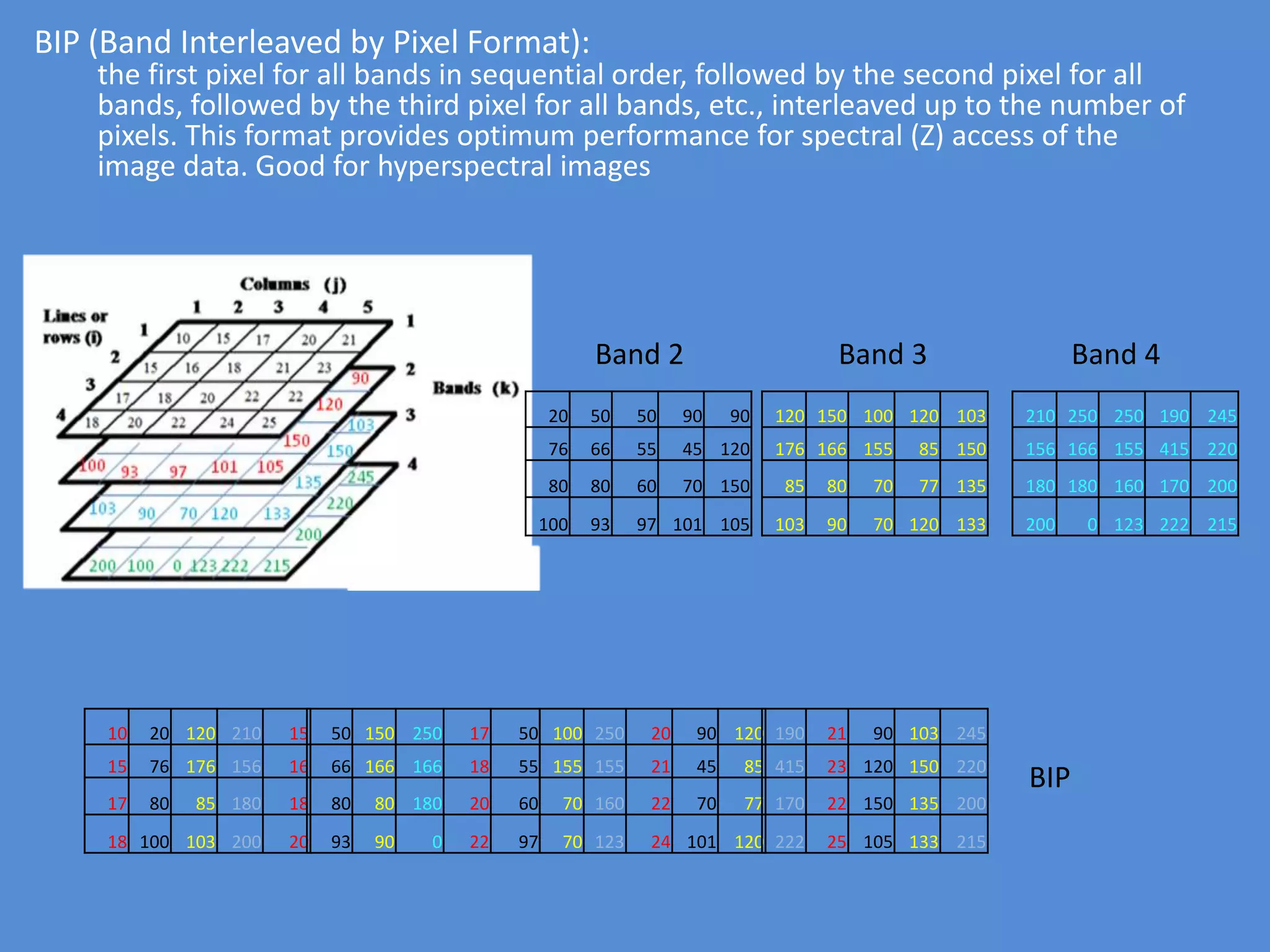
BIP (Band Interleaved by Pixel Format):
the first pixel for all bands in sequential order, followed by the second pixel for all
bands, followed by the third pixel for all bands, etc., interleaved up to the number of
pixels. This format provides optimum performance for spectral (Z) access of the
image data. Good for hyperspectral images
120 150 100 120 103
176 166 155 85 150
85 80 70 77 135
103 90 70 120 133
20 50 50 90 90
76 66 55 45 120
80 80 60 70 150
100 93 97 101 105
210 250 250 190 245
156 166 155 415 220
180 180 160 170 200
200 0 123 222 215
Band 2 Band 3 Band 4
10 20 120 210 15
15 76 176 156 16
17 80 85 180 18
18 100 103 200 20
50 150 250 17 50
66 166 166 18 55
80 80 180 20 60
93 90 0 22 97
100 250 20 90 120
155 155 21 45 85
70 160 22 70 77
70 123 24 101 120
190 21 90 103 245
415 23 120 150 220
170 22 150 135 200
222 25 105 133 215
BIP
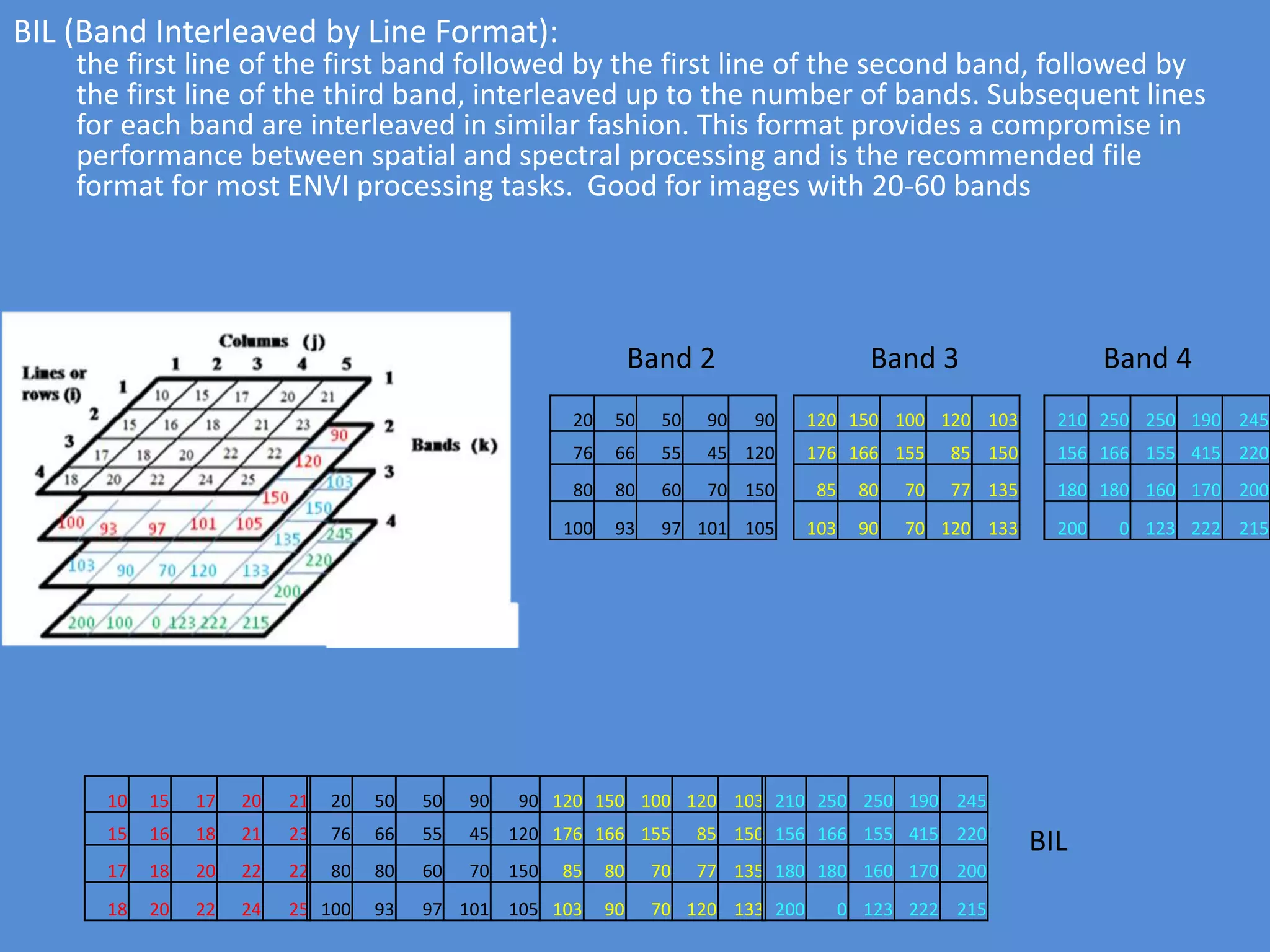
BIL (Band Interleaved by Line Format):
the first line of the first band followed by the first line of the second band, followed by
the first line of the third band, interleaved up to the number of bands. Subsequent lines
for each band are interleaved in similar fashion. This format provides a compromise in
performance between spatial and spectral processing and is the recommended file
format for most ENVI processing tasks. Good for images with 20-60 bands
120 150 100 120 103
176 166 155 85 150
85 80 70 77 135
103 90 70 120 133
20 50 50 90 90
76 66 55 45 120
80 80 60 70 150
100 93 97 101 105
210 250 250 190 245
156 166 155 415 220
180 180 160 170 200
200 0 123 222 215
Band 2 Band 3 Band 4
10 15 17 20 21
15 16 18 21 23
17 18 20 22 22
18 20 22 24 25
20 50 50 90 90
76 66 55 45 120
80 80 60 70 150
100 93 97 101 105
120 150 100 120 103
176 166 155 85 150
85 80 70 77 135
103 90 70 120 133
210 250 250 190 245
156 166 155 415 220
180 180 160 170 200
200 0 123 222 215
BIL
 Applications of Remote
Sensing:-
 Agriculture:-
• Crop type classification.
• Crop condition assessment.
• Crop yield estimation.
• Mapping of soil characteristic.
• Soil moisture estimation.
 Geology:-
• Lithological mapping.
• Mineral exploration.
• Environmental geology.
• Sedimentation mapping and
monitoring.
• Geo-hazard mapping.
• Glacier mapping.
 Urban Planning:-
• Land parcel mapping.
• Infrastructure mapping.
• Land use change detection.
• Future urban expansion planning.
 Hydrology:-
• Watershed mapping and management.
• Flood delineation and mapping.
• Ground water targeting.
 Land Use/Land Cover mapping:-
• Natural resource management.
• Wildlife protection.
• Encroachment.
 Forestry And Ecosystem:-
• Forest cover and density mapping.
• Deforestation mapping.
• Forest fire mapping.
• Wetland mapping and monitoring.
• Biomass estimation.
• Species inventory.
 Ocean applications:-
• Storm forecasting.
• Water quality monitoring.
• Aquaculture inventory and monitoring.
• Navigation routing.
• Coastal vegetation mapping.
• Oil spill.
Characteristics of a Satellite Orbit
1. Orbital period
2. Altitude
3. Apogee and perigee
4. Inclination
5. Nadir, zenith and ground track
6. Swath
7. Sidelap and overlap
15
Characteristics of a Satellite Orbit…
1. Orbital period
 Time taken by a satellite to complete one revolution around
the earth
 Spatial and temporal coverage of the imagery depends on the orbital
period
 It varies from around 100 minutes to 24 hours
Remote Sensing: M2L1 16
Characteristics of a Satellite Orbit…
2. Altitude
 Altitude of a satellite is its height with respect to the surface
immediately below it
 Low altitude ( altitude < 2000 km)
 Moderate altitude
 High altitude (altitude ~36000 km)
Remote Sensing: M2L1 17
Characteristics of a Satellite Orbit…
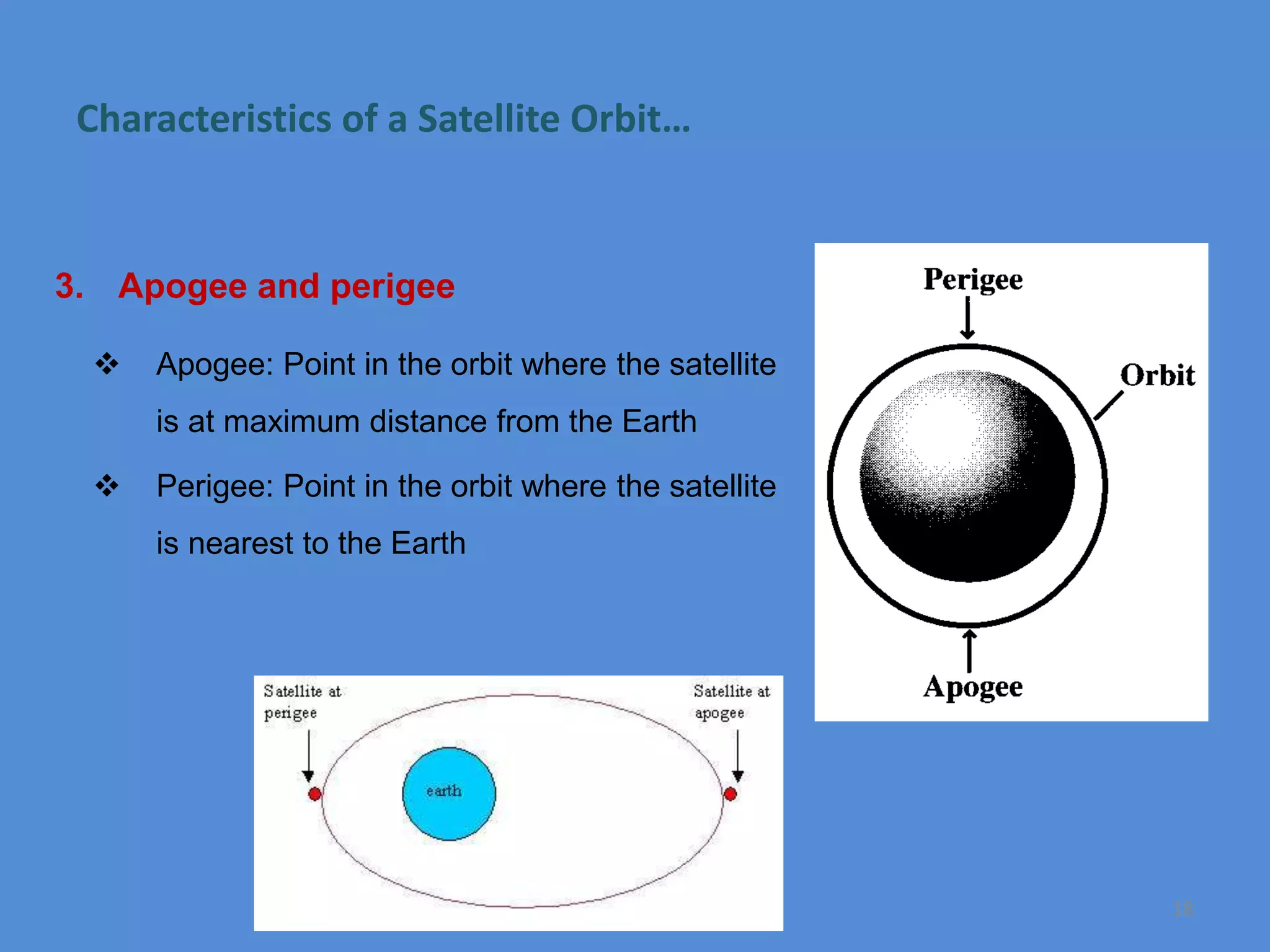
3. Apogee and perigee
 Apogee: Point in the orbit where the satellite
is at maximum distance from the Earth
 Perigee: Point in the orbit where the satellite
is nearest to the Earth
Remote Sensing: M2L1 18
Characteristics of a Satellite Orbit…
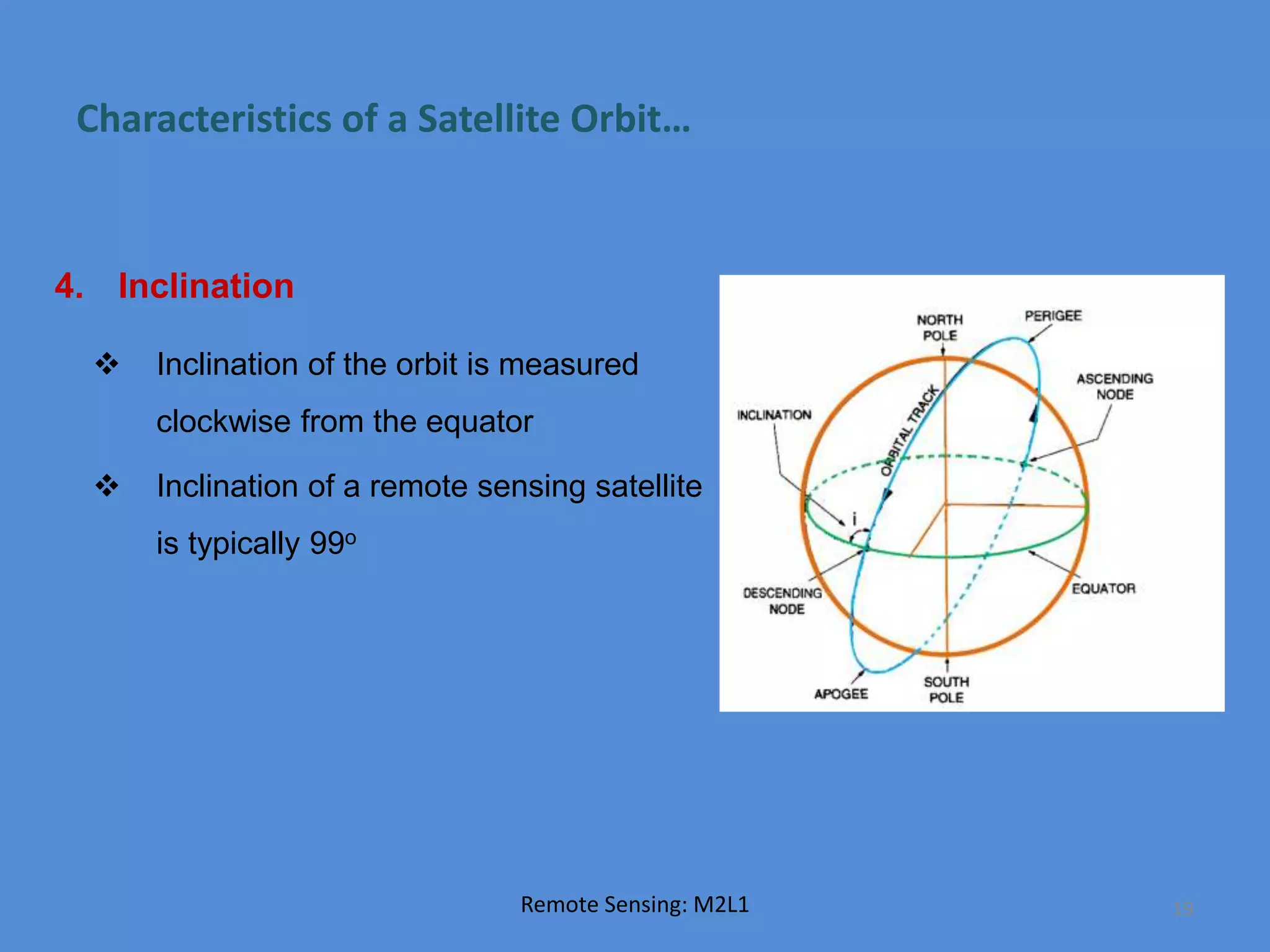
4. Inclination
 Inclination of the orbit is measured
clockwise from the equator
 Inclination of a remote sensing satellite
is typically 99o
Remote Sensing: M2L1 19
Characteristics of a Satellite Orbit…
5. Nadir, Zenith and Ground track
 Nadir : Point where radial line connecting the centre of the Earth and the
satellite intercepts the surface of the Earth
 Point of shortest distance from the satellite to the Earth’s surface
 Zenith : Any point just opposite to the nadir, above the satellite
Remote Sensing: M2L1 20
 Ground track: The circle on the Earth’s surface described by the nadir point as
the satellite revolves
 Projection of the satellites orbit on the ground surface
Characteristics of a Satellite Orbit…
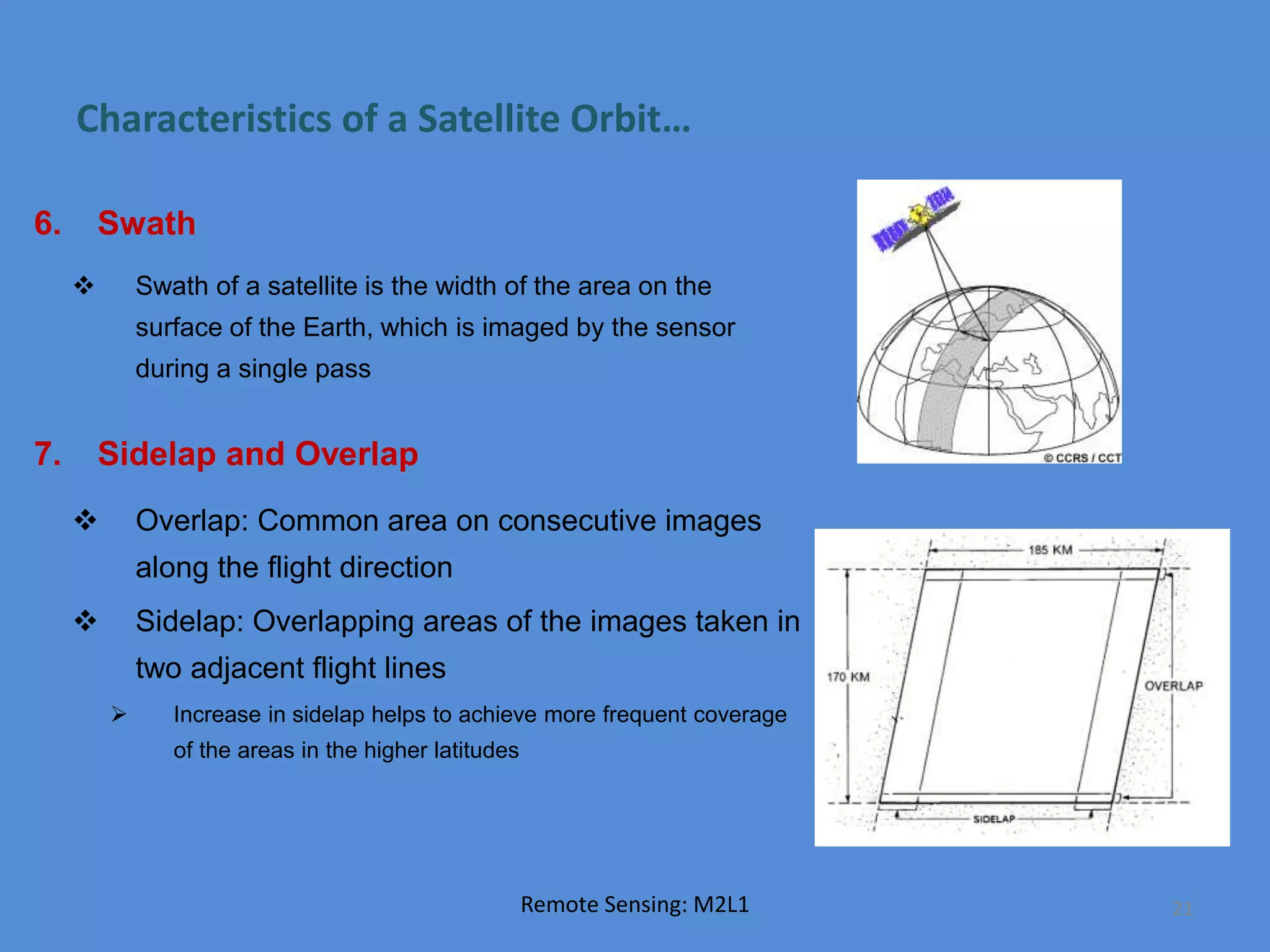
6. Swath
 Swath of a satellite is the width of the area on the
surface of the Earth, which is imaged by the sensor
during a single pass
7. Sidelap and Overlap
 Overlap: Common area on consecutive images
along the flight direction
 Sidelap: Overlapping areas of the images taken in
two adjacent flight lines
 Increase in sidelap helps to achieve more frequent coverage
of the areas in the higher latitudes
Remote Sensing: M2L1 21
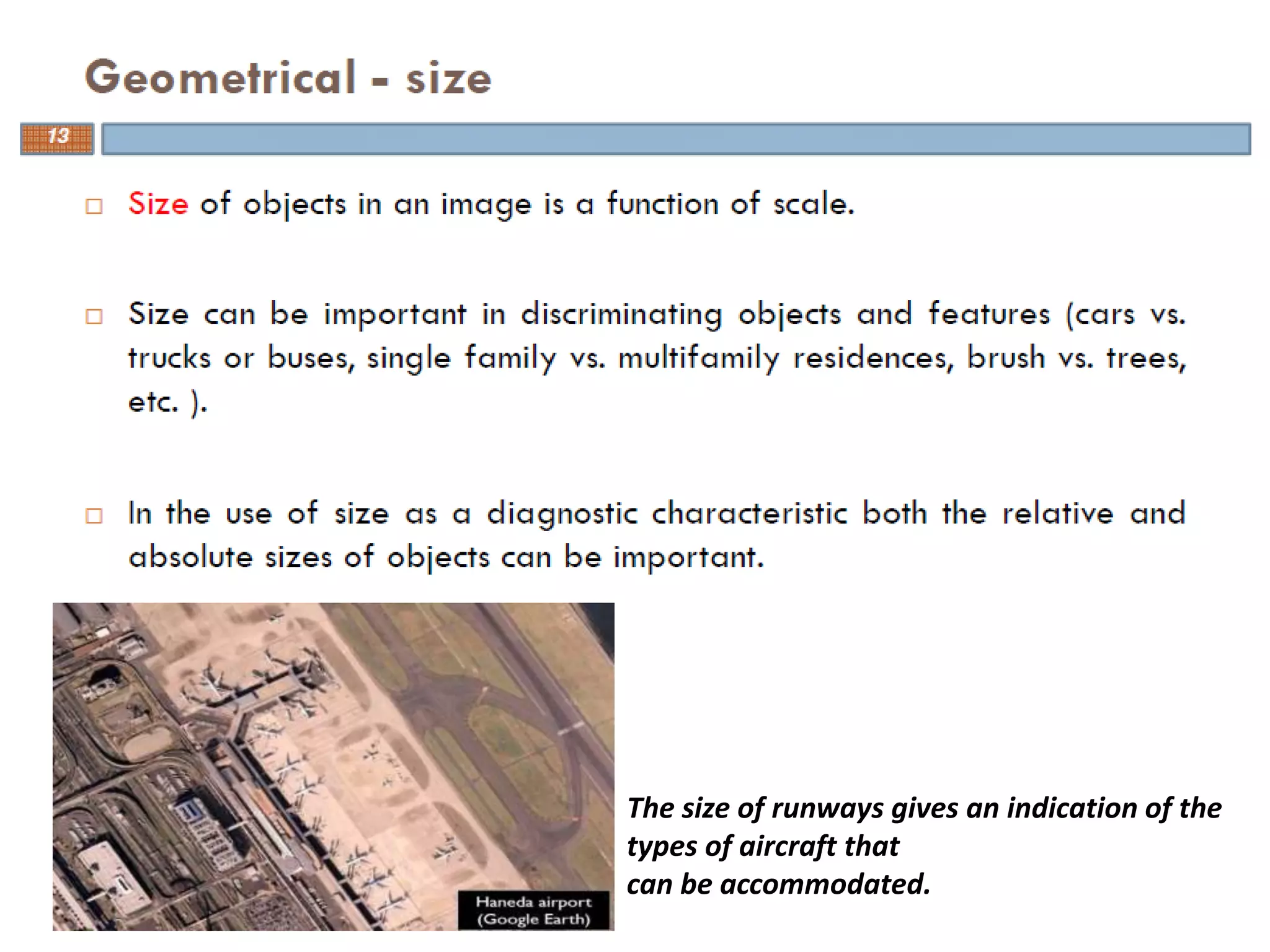
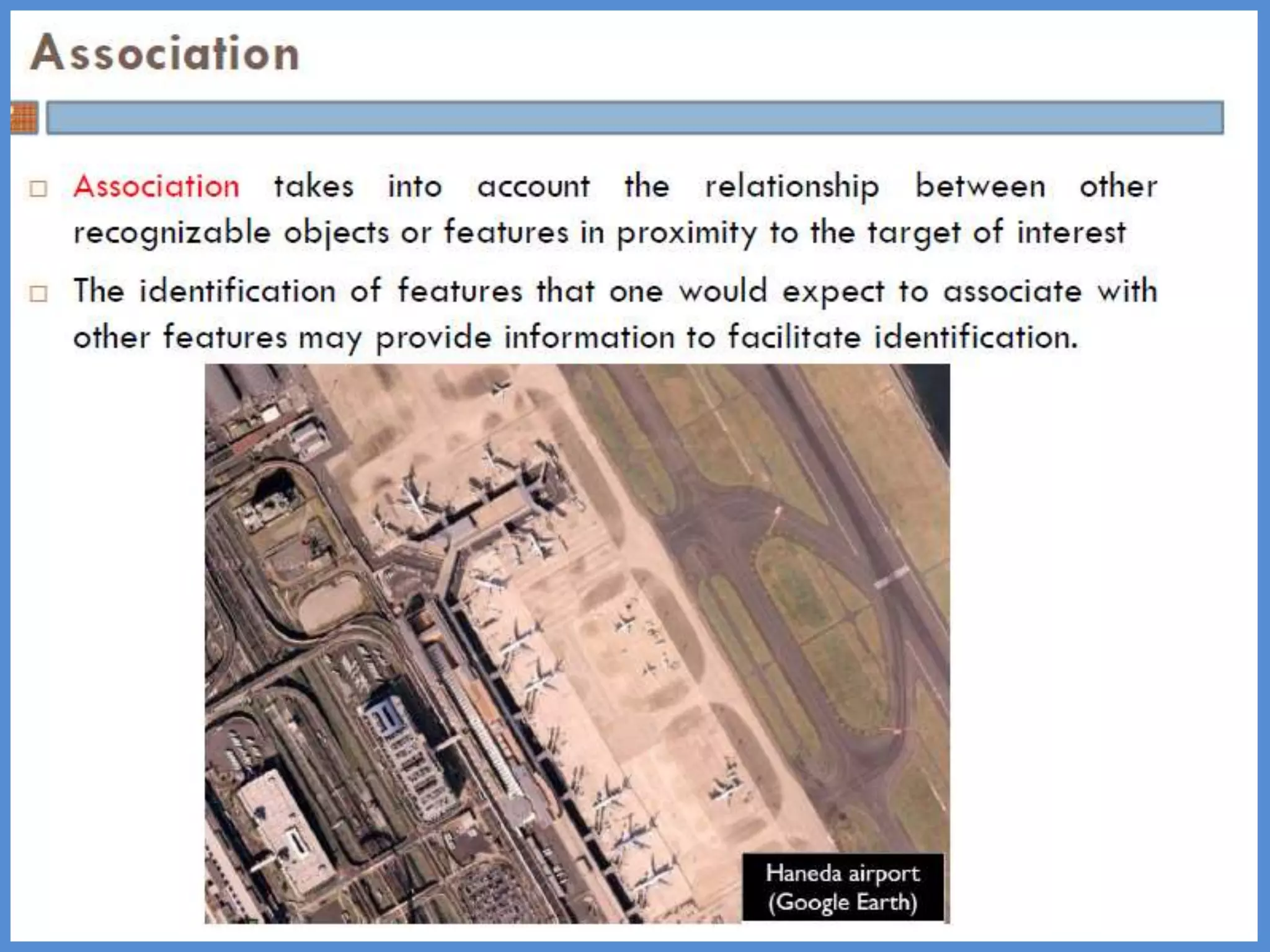
The size of runways gives an indication of the
types of aircraft that
can be accommodated.
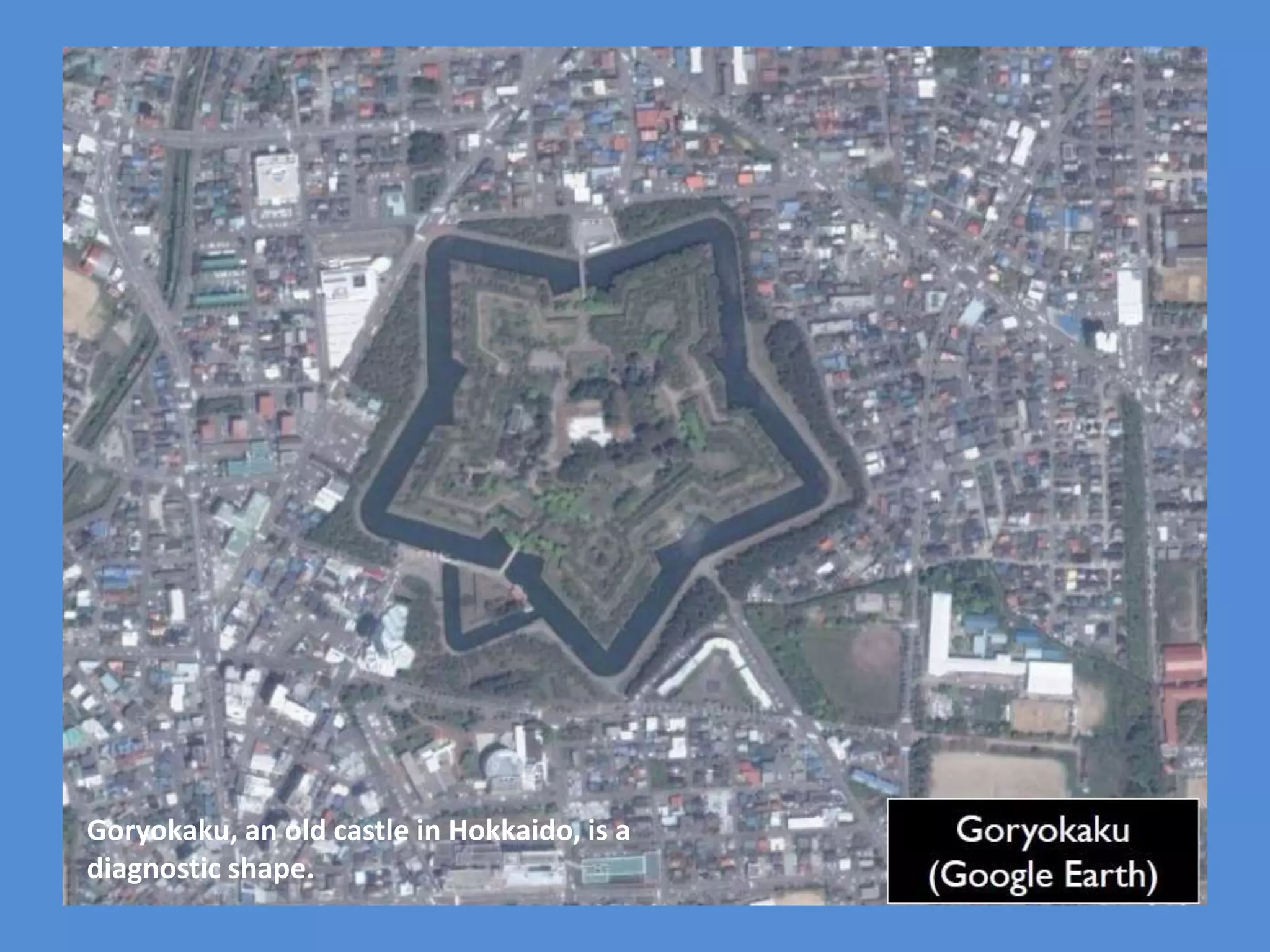
Goryokaku, an old castle in Hokkaido, is a
diagnostic shape.
Photogrammetry 2,Remote sensing-2

Photogrammetry 2,Remote sensing-2

  • 2.
    Types of aerialphotograph • Vertical • Low oblique • High oblique
  • 3.
    Types of aerialphotograph • Vertical • Low oblique (no horizon) • High oblique
  • 4.
    Types of aerialphotograph • Vertical • Low oblique • High oblique
  • 5.
    Image file formats BSQ(Band Sequential Format): each line of the data followed immediately by the next line in the same spectral band. This format is optimal for spatial (X, Y) access of any part of a single spectral band. Good for multispectral images 120 150 100 120 103 176 166 155 85 150 85 80 70 77 135 103 90 70 120 133 20 50 50 90 90 76 66 55 45 120 80 80 60 70 150 100 93 97 101 105 210 250 250 190 245 156 166 155 415 220 180 180 160 170 200 200 0 123 222 215 Band 2 Band 3 Band 4 10 15 17 20 21 20 50 50 90 90 120 150 100 120 103 210 250 250 190 245 15 16 18 21 23 76 66 55 45 120 176 166 155 85 150 156 166 155 415 220 17 18 20 22 22 80 80 60 70 150 85 80 70 77 135 180 180 160 170 200 18 20 22 24 25 100 93 97 101 105 103 90 70 120 133 200 0 123 222 215 BSQ
  • 6.
    BIP (Band Interleavedby Pixel Format): the first pixel for all bands in sequential order, followed by the second pixel for all bands, followed by the third pixel for all bands, etc., interleaved up to the number of pixels. This format provides optimum performance for spectral (Z) access of the image data. Good for hyperspectral images 120 150 100 120 103 176 166 155 85 150 85 80 70 77 135 103 90 70 120 133 20 50 50 90 90 76 66 55 45 120 80 80 60 70 150 100 93 97 101 105 210 250 250 190 245 156 166 155 415 220 180 180 160 170 200 200 0 123 222 215 Band 2 Band 3 Band 4 10 20 120 210 15 15 76 176 156 16 17 80 85 180 18 18 100 103 200 20 50 150 250 17 50 66 166 166 18 55 80 80 180 20 60 93 90 0 22 97 100 250 20 90 120 155 155 21 45 85 70 160 22 70 77 70 123 24 101 120 190 21 90 103 245 415 23 120 150 220 170 22 150 135 200 222 25 105 133 215 BIP
  • 7.
    BIL (Band Interleavedby Line Format): the first line of the first band followed by the first line of the second band, followed by the first line of the third band, interleaved up to the number of bands. Subsequent lines for each band are interleaved in similar fashion. This format provides a compromise in performance between spatial and spectral processing and is the recommended file format for most ENVI processing tasks. Good for images with 20-60 bands 120 150 100 120 103 176 166 155 85 150 85 80 70 77 135 103 90 70 120 133 20 50 50 90 90 76 66 55 45 120 80 80 60 70 150 100 93 97 101 105 210 250 250 190 245 156 166 155 415 220 180 180 160 170 200 200 0 123 222 215 Band 2 Band 3 Band 4 10 15 17 20 21 15 16 18 21 23 17 18 20 22 22 18 20 22 24 25 20 50 50 90 90 76 66 55 45 120 80 80 60 70 150 100 93 97 101 105 120 150 100 120 103 176 166 155 85 150 85 80 70 77 135 103 90 70 120 133 210 250 250 190 245 156 166 155 415 220 180 180 160 170 200 200 0 123 222 215 BIL
  • 8.
     Applications ofRemote Sensing:-  Agriculture:- • Crop type classification. • Crop condition assessment. • Crop yield estimation. • Mapping of soil characteristic. • Soil moisture estimation.
  • 10.
     Geology:- • Lithologicalmapping. • Mineral exploration. • Environmental geology. • Sedimentation mapping and monitoring. • Geo-hazard mapping. • Glacier mapping.
  • 11.
     Urban Planning:- •Land parcel mapping. • Infrastructure mapping. • Land use change detection. • Future urban expansion planning.
  • 12.
     Hydrology:- • Watershedmapping and management. • Flood delineation and mapping. • Ground water targeting.  Land Use/Land Cover mapping:- • Natural resource management. • Wildlife protection. • Encroachment.
  • 13.
     Forestry AndEcosystem:- • Forest cover and density mapping. • Deforestation mapping. • Forest fire mapping. • Wetland mapping and monitoring. • Biomass estimation. • Species inventory.
  • 14.
     Ocean applications:- •Storm forecasting. • Water quality monitoring. • Aquaculture inventory and monitoring. • Navigation routing. • Coastal vegetation mapping. • Oil spill.
  • 15.
    Characteristics of aSatellite Orbit 1. Orbital period 2. Altitude 3. Apogee and perigee 4. Inclination 5. Nadir, zenith and ground track 6. Swath 7. Sidelap and overlap 15
  • 16.
    Characteristics of aSatellite Orbit… 1. Orbital period  Time taken by a satellite to complete one revolution around the earth  Spatial and temporal coverage of the imagery depends on the orbital period  It varies from around 100 minutes to 24 hours Remote Sensing: M2L1 16
  • 17.
    Characteristics of aSatellite Orbit… 2. Altitude  Altitude of a satellite is its height with respect to the surface immediately below it  Low altitude ( altitude < 2000 km)  Moderate altitude  High altitude (altitude ~36000 km) Remote Sensing: M2L1 17
  • 18.
    Characteristics of aSatellite Orbit… 3. Apogee and perigee  Apogee: Point in the orbit where the satellite is at maximum distance from the Earth  Perigee: Point in the orbit where the satellite is nearest to the Earth Remote Sensing: M2L1 18
  • 19.
    Characteristics of aSatellite Orbit… 4. Inclination  Inclination of the orbit is measured clockwise from the equator  Inclination of a remote sensing satellite is typically 99o Remote Sensing: M2L1 19
  • 20.
    Characteristics of aSatellite Orbit… 5. Nadir, Zenith and Ground track  Nadir : Point where radial line connecting the centre of the Earth and the satellite intercepts the surface of the Earth  Point of shortest distance from the satellite to the Earth’s surface  Zenith : Any point just opposite to the nadir, above the satellite Remote Sensing: M2L1 20  Ground track: The circle on the Earth’s surface described by the nadir point as the satellite revolves  Projection of the satellites orbit on the ground surface
  • 21.
    Characteristics of aSatellite Orbit… 6. Swath  Swath of a satellite is the width of the area on the surface of the Earth, which is imaged by the sensor during a single pass 7. Sidelap and Overlap  Overlap: Common area on consecutive images along the flight direction  Sidelap: Overlapping areas of the images taken in two adjacent flight lines  Increase in sidelap helps to achieve more frequent coverage of the areas in the higher latitudes Remote Sensing: M2L1 21
  • 25.
    The size ofrunways gives an indication of the types of aircraft that can be accommodated.
  • 27.
    Goryokaku, an oldcastle in Hokkaido, is a diagnostic shape.