Phonics
Synthetic Phonics
Synthetic phonics
Children are taught to
synthesize (blend)
sounds together in
order to read words.
Letter sounds = alphabetic code
• decode letters in order to read
• encode sounds in order to spell
The rules of the alphabetic code
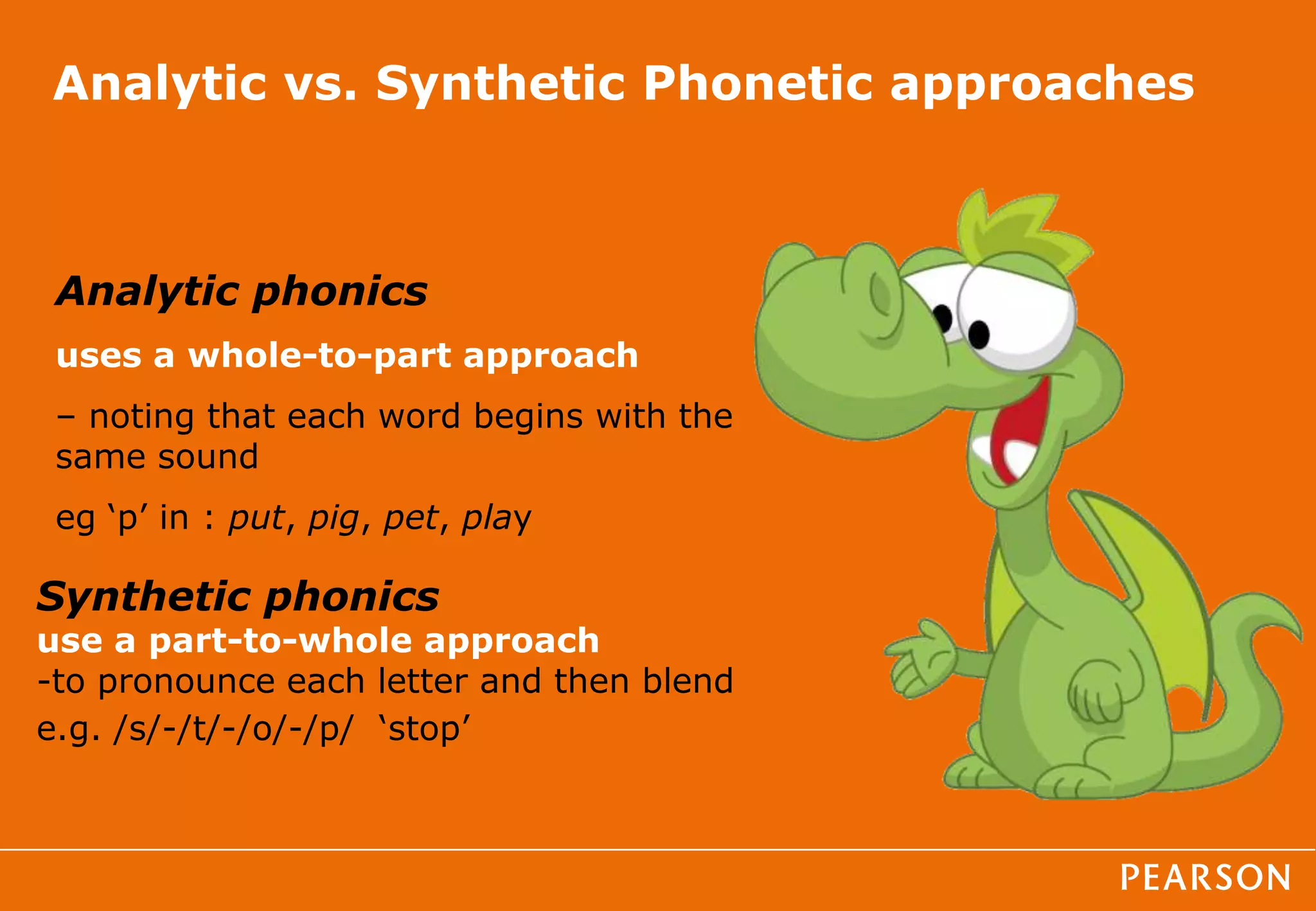
Analytic vs. Synthetic Phonetic approaches
Analytic phonics
uses a whole-to-part approach
– noting that each word begins with the
same sound
eg ‘p’ in : put, pig, pet, play
Synthetic phonics
use a part-to-whole approach
-to pronounce each letter and then blend
e.g. /s/-/t/-/o/-/p/ ‘stop’
Developing learner strategies
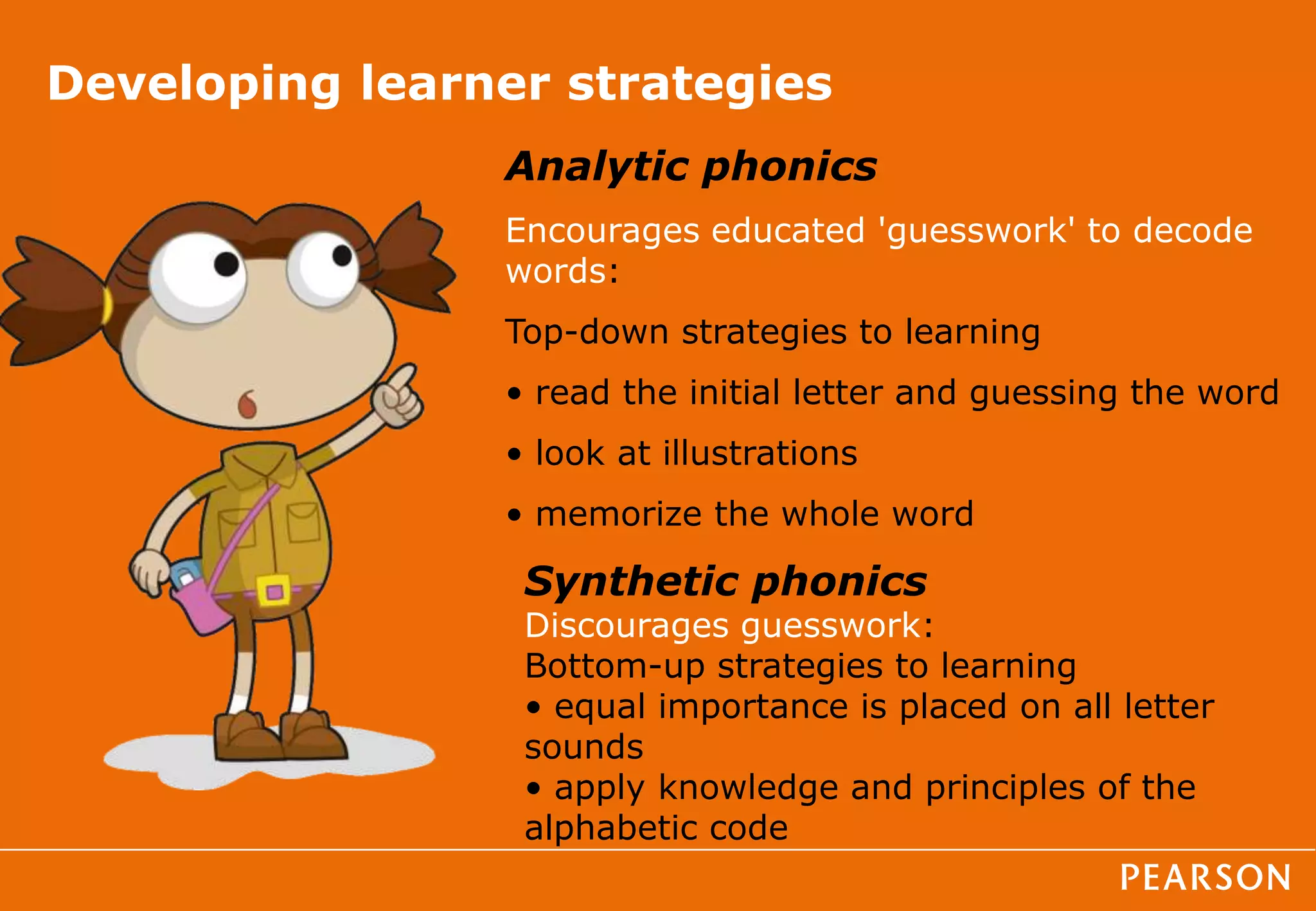
Analytic phonics
Encourages educated 'guesswork' to decode
words:
Top-down strategies to learning
• read the initial letter and guessing the word
• look at illustrations
• memorize the whole word
Synthetic phonics
Discourages guesswork:
Bottom-up strategies to learning
• equal importance is placed on all letter
sounds
• apply knowledge and principles of the
alphabetic code
Developing reading (and spelling) skills
the teacher can assess and address
accurately what a learner does not know
the bottom-up mechanical approach of
synthetic phonics is the process of learning
to read
Which means that…
Phonics
Synthetic Phonics
Islands phonics sequence draws on the UK
Department for Education and Skills Letters and Sounds sequence (3) and
the Loring sequence (4) The Letters and Sounds program teaches
grapheme-phoneme correspondences (GPCs) in terms of frequency
and usefulness to beginner learners.
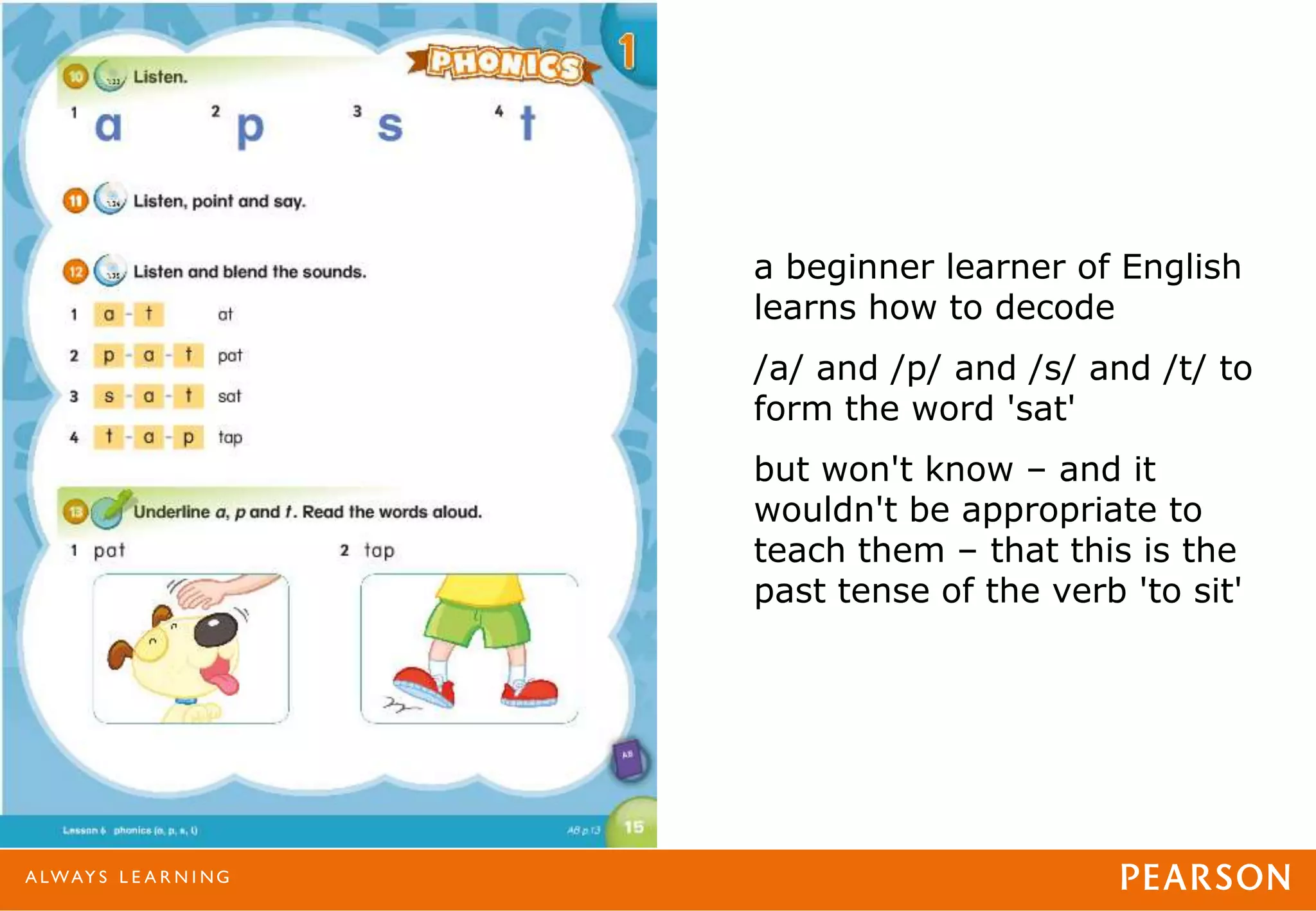
a beginner learner of English
learns how to decode
/a/ and /p/ and /s/ and /t/ to
form the word 'sat'
but won't know – and it
wouldn't be appropriate to
teach them – that this is the
past tense of the verb 'to sit'
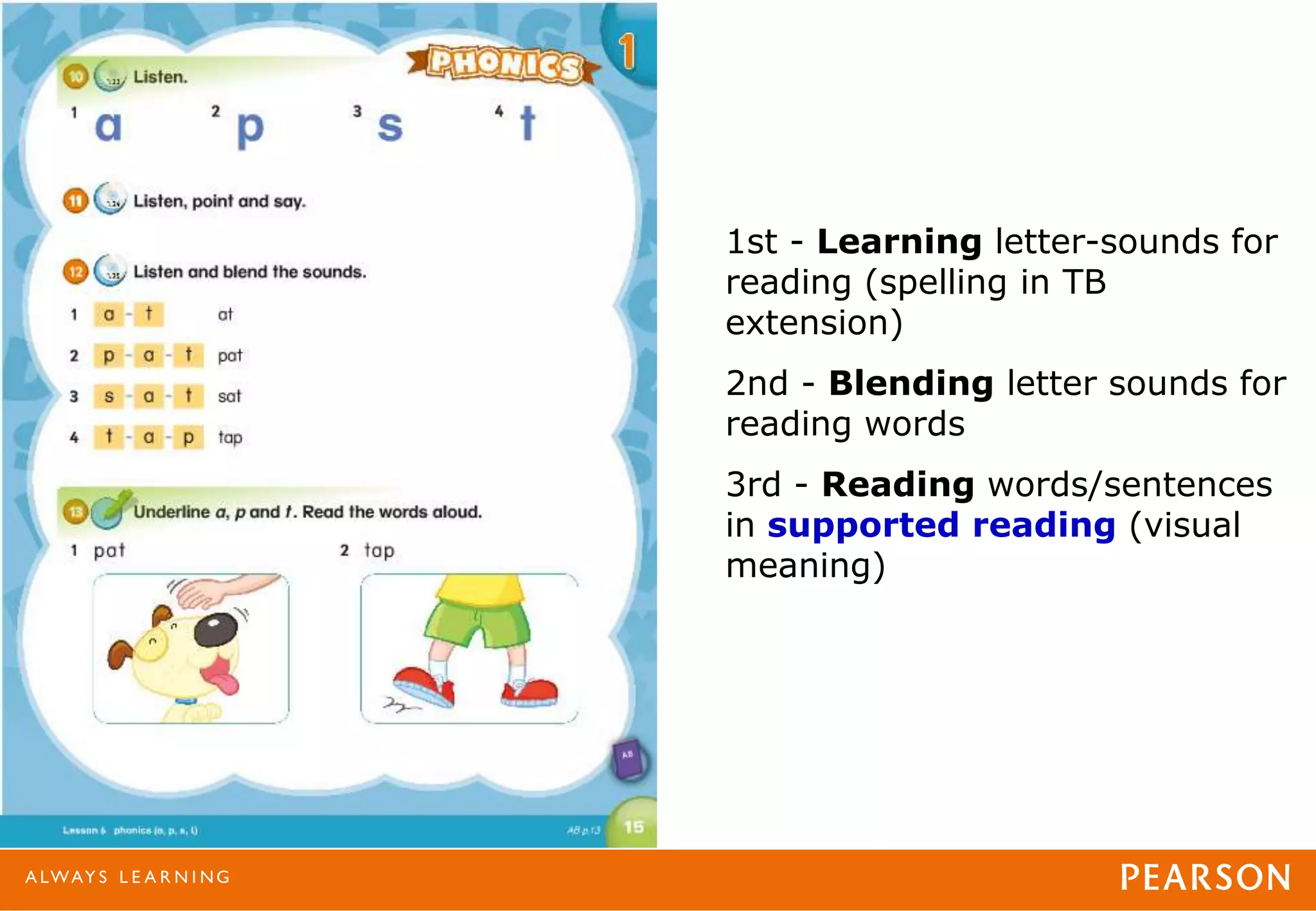
1st - Learning letter-sounds for
reading (spelling in TB
extension)
2nd - Blending letter sounds for
reading words
3rd - Reading words/sentences
in supported reading (visual
meaning)
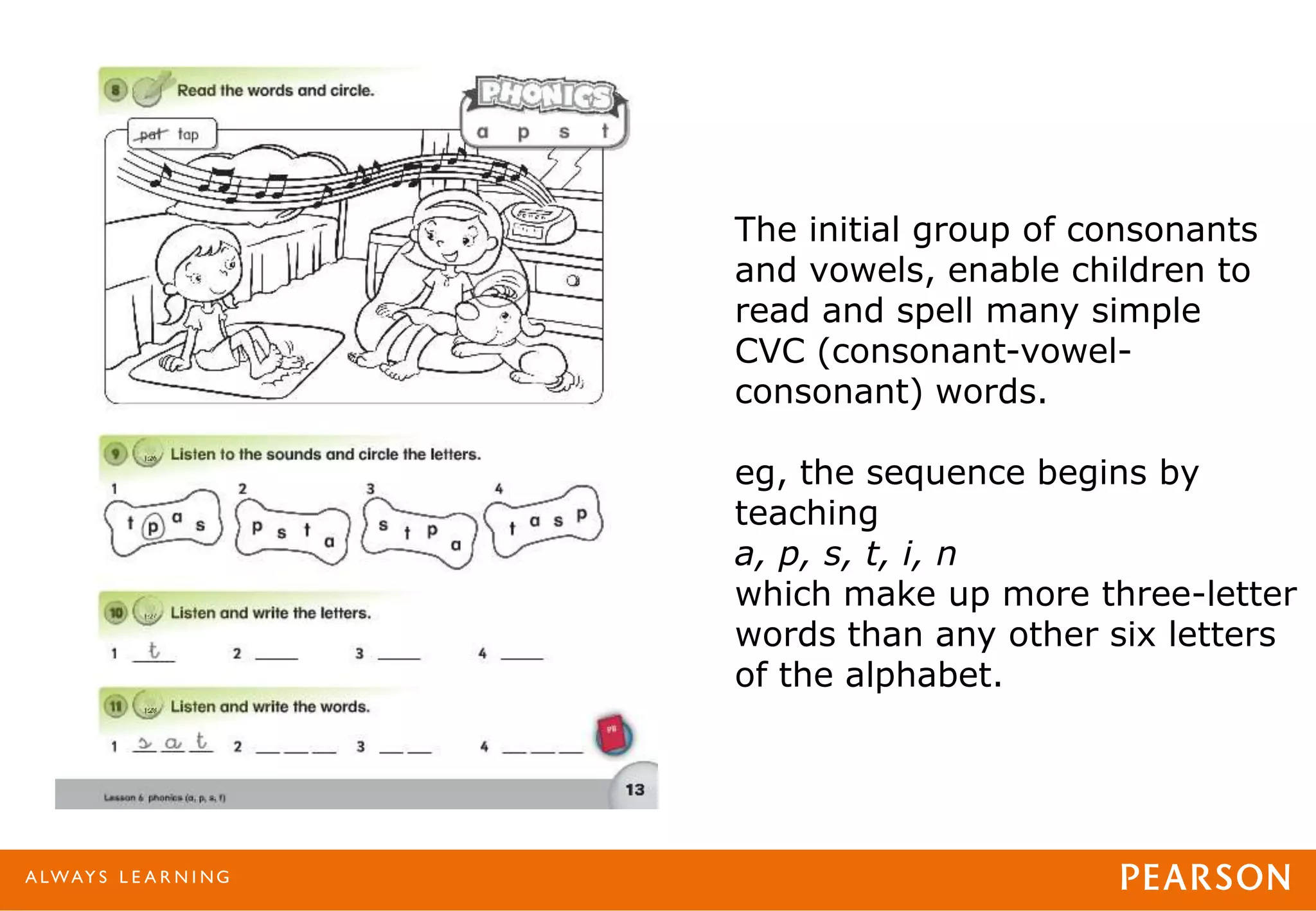
The initial group of consonants
and vowels, enable children to
read and spell many simple
CVC (consonant-vowel-
consonant) words.
eg, the sequence begins by
teaching
a, p, s, t, i, n
which make up more three-letter
words than any other six letters
of the alphabet.
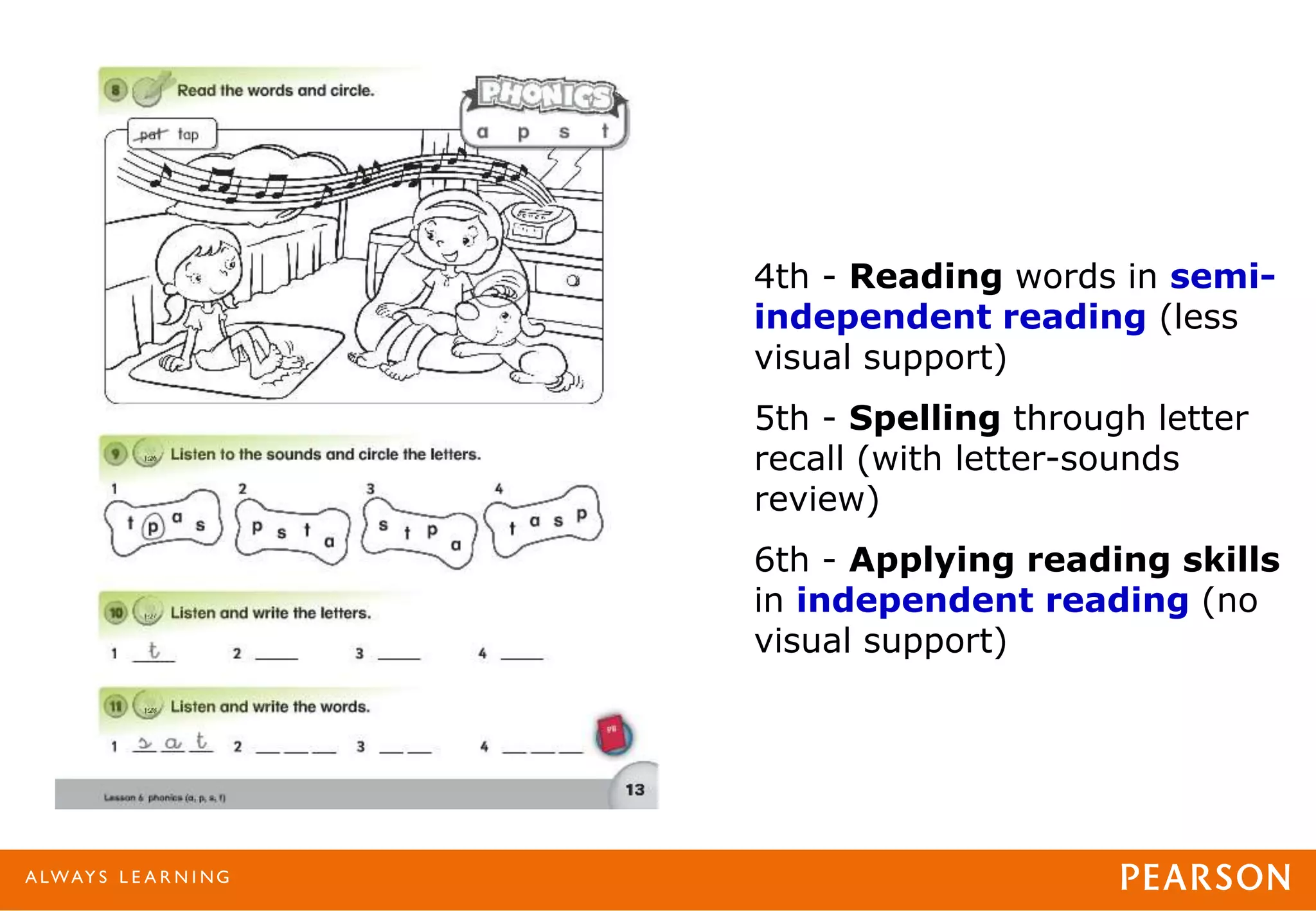
4th - Reading words in semi-
independent reading (less
visual support)
5th - Spelling through letter
recall (with letter-sounds
review)
6th - Applying reading skills
in independent reading (no
visual support)
Phonics
Synthetic Phonics
References
•Rose, J. (2006) Independent Review of the Teaching of Early Reading, Final Report
UK Department for Education and Skills
•Langenberg, D. L. et al. Teaching Children to Read: An Evidence-Based Assessment
of the Scientific Research Literature on reading and Its Implications for Reading Instruction
•U.S. National Reading Panel
•Australian Government Department of Education, Science and Training (2005)
•Teaching Reading, Report and Recommendations. National Inquiry into the
Teaching of Literacy
•UK Department for Education and Skills (2007) Letters and Sounds:
Principles and Practice of High Quality Phonics
•Masterson, J., Stuart, M., Dixon, M. & Lovejoy, S. (2003) Children's
Printed Word Database. Economic and Social Research Council funded Project, R00023406
•Loring, H. (1980) Reading Made Easy with Blend Phonics for First Grade
U.S. Logan Institute for Educational Excellence
www.standards.dfes.gov.uk/phonics/
www.letters-and-sounds.com
www.childrenofthecode.org
www.getreadingright.com
Phonics in Islands

Phonics in Islands

  • 1.
  • 2.
    Synthetic phonics Children aretaught to synthesize (blend) sounds together in order to read words.
  • 3.
    Letter sounds =alphabetic code • decode letters in order to read • encode sounds in order to spell The rules of the alphabetic code
  • 4.
    Analytic vs. SyntheticPhonetic approaches Analytic phonics uses a whole-to-part approach – noting that each word begins with the same sound eg ‘p’ in : put, pig, pet, play Synthetic phonics use a part-to-whole approach -to pronounce each letter and then blend e.g. /s/-/t/-/o/-/p/ ‘stop’
  • 5.
    Developing learner strategies Analyticphonics Encourages educated 'guesswork' to decode words: Top-down strategies to learning • read the initial letter and guessing the word • look at illustrations • memorize the whole word Synthetic phonics Discourages guesswork: Bottom-up strategies to learning • equal importance is placed on all letter sounds • apply knowledge and principles of the alphabetic code
  • 6.
    Developing reading (andspelling) skills the teacher can assess and address accurately what a learner does not know the bottom-up mechanical approach of synthetic phonics is the process of learning to read Which means that…
  • 7.
    Phonics Synthetic Phonics Islands phonicssequence draws on the UK Department for Education and Skills Letters and Sounds sequence (3) and the Loring sequence (4) The Letters and Sounds program teaches grapheme-phoneme correspondences (GPCs) in terms of frequency and usefulness to beginner learners.
  • 8.
    a beginner learnerof English learns how to decode /a/ and /p/ and /s/ and /t/ to form the word 'sat' but won't know – and it wouldn't be appropriate to teach them – that this is the past tense of the verb 'to sit'
  • 9.
    1st - Learningletter-sounds for reading (spelling in TB extension) 2nd - Blending letter sounds for reading words 3rd - Reading words/sentences in supported reading (visual meaning)
  • 10.
    The initial groupof consonants and vowels, enable children to read and spell many simple CVC (consonant-vowel- consonant) words. eg, the sequence begins by teaching a, p, s, t, i, n which make up more three-letter words than any other six letters of the alphabet.
  • 11.
    4th - Readingwords in semi- independent reading (less visual support) 5th - Spelling through letter recall (with letter-sounds review) 6th - Applying reading skills in independent reading (no visual support)
  • 12.
    Phonics Synthetic Phonics References •Rose, J.(2006) Independent Review of the Teaching of Early Reading, Final Report UK Department for Education and Skills •Langenberg, D. L. et al. Teaching Children to Read: An Evidence-Based Assessment of the Scientific Research Literature on reading and Its Implications for Reading Instruction •U.S. National Reading Panel •Australian Government Department of Education, Science and Training (2005) •Teaching Reading, Report and Recommendations. National Inquiry into the Teaching of Literacy •UK Department for Education and Skills (2007) Letters and Sounds: Principles and Practice of High Quality Phonics •Masterson, J., Stuart, M., Dixon, M. & Lovejoy, S. (2003) Children's Printed Word Database. Economic and Social Research Council funded Project, R00023406 •Loring, H. (1980) Reading Made Easy with Blend Phonics for First Grade U.S. Logan Institute for Educational Excellence www.standards.dfes.gov.uk/phonics/ www.letters-and-sounds.com www.childrenofthecode.org www.getreadingright.com