CLASSIFICATION AND DESCRIPTION 
OF CONSONANTS
CONSONANTS 
CONSONANTS are sounds produced with an 
egressive flow of air coming out of the mouth 
or the nose accompanied by obstruction or 
friction in the articulators.
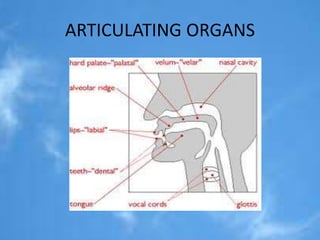
ARTICULATING ORGANS
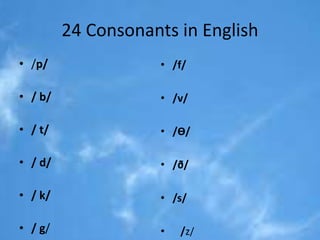
24 Consonants in English 
• /p/ 
• / b/ 
• / t/ 
• / d/ 
• / k/ 
• / g/ 
• /f/ 
• /v/ 
• /Ɵ/ 
• /ð/ 
• /s/ 
• /z/
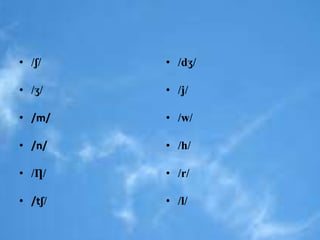
• /ʃ/ 
• /ʒ/ 
• /m/ 
• /n/ 
• /Ƞ/ 
• /tʃ/ 
• /dʒ/ 
• /j/ 
• /w/ 
• /h/ 
• /r/ 
• /l/
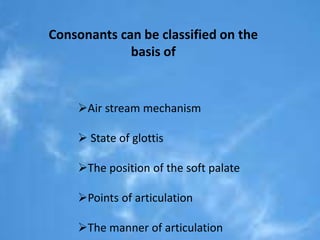
Consonants can be classified on the 
basis of 
Air stream mechanism 
 State of glottis 
The position of the soft palate 
Points of articulation 
The manner of articulation
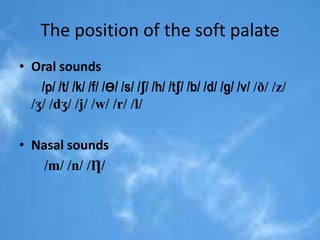
The position of the soft palate 
• Oral sounds 
/p/ /t/ /k/ /f/ /Ɵ/ /s/ /ʃ/ /h/ /tʃ/ /b/ /d/ /g/ /v/ /ð/ /z/ 
/ʒ/ /dʒ/ /j/ /w/ /r/ /l/ 
• Nasal sounds 
/m/ /n/ /Ƞ/
Points of Articulation 
• Bilabial 
made with the two lips (/p/, /b/,/w/ /m/). 
• Labiodental 
the lower lip articulates with the upper 
teeth (/f/, /v/).
• Dental 
the tongue tip articulate with the upper 
teeth (/Ɵ/ , /ð/) 
• Alveolar 
the tongue tip and/or blade articulates with 
the alveolar ridge (/t, d, n, l, s, z/).
• Post-alveolar 
the blade articulates with the alveolar ridge 
(/r/) 
• Palato -alveolar 
The tip ,blade, and front of the tongue 
articulates with the hard palate (/ ʃ ʒ tʃ dʒ/ )
• Palatal 
the front (or blade) of the tongue articulates 
with the hard palate (/j/). 
• Velar 
the back of the tongue articulates with the 
soft palate (/k g Ƞ/).
• Glottal 
sounds involving an obstruction or narrowing 
of the glottis (/h/)
Manner of Articulation 
• Plosives 
A complete closure at some point in the vocal 
tract, behind which the air pressure builds up 
and can be released with a sudden burst 
(plosion) /p, b, t, d, k, g/.
• Affricates 
Affricates are consonants articulated with a 
stricture of firm closure of mouth followed by 
a slow release. /tʃ/ /dʒ/
• Fricatives 
Fricatives are produced with a stricture 
almost approximation. 
/ f, v, Ɵ, ð, h, z, s/
• Frictionless continuent 
These are sounds produced with an open 
approximation /r/
• Semi Vowels 
These are also consonants articulated with 
an open approximation. They are vowel like in 
quality and function like consonants. 
/j/ & /w/
Description of English Consonants 
• /p/ - voiceless bilabial plosive 
• / b/ - voiced bilabial plosive 
• / t/ - voiceless alveolar plosive 
• / d/ - voiced alveolar plosive
• / k/ - voiceless velar plosive 
• / g/ - voiced velar plosive 
• /f/ - voiceless labio-dental fricative 
• /v/ - voiced labio-dental fricative 
• /Ɵ/ - voiceless dental fricative 
• /ð/ - voiced dental fricative
• /s/ - voiceless alveolar fricative 
• /z/ - voiced alveolar fricative 
• / ʃ / - voiceless palato – alveolar fricative 
• / ʒ / - voiced palato-alveolar fricative 
• /h/ - voiceless glottal fricative 
• /tʃ/ - voiceless palato -alveolar affricate
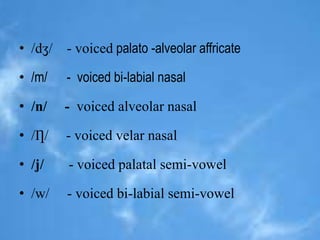
• /dʒ/ - voiced palato -alveolar affricate 
• /m/ - voiced bi-labial nasal 
• /n/ - voiced alveolar nasal 
• /Ƞ/ - voiced velar nasal 
• /j/ - voiced palatal semi-vowel 
• /w/ - voiced bi-labial semi-vowel
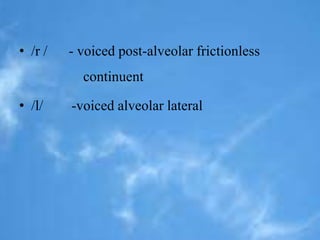
• /r / - voiced post-alveolar frictionless 
continuent 
• /l/ -voiced alveolar lateral
HARIKRISHNA S H 
ENGLISH OPTIONAL 
KUCTE KOLLAM

Classification and description of consonants.ppt

  • 1.
  • 2.
    CONSONANTS CONSONANTS aresounds produced with an egressive flow of air coming out of the mouth or the nose accompanied by obstruction or friction in the articulators.
  • 3.
  • 4.
    24 Consonants inEnglish • /p/ • / b/ • / t/ • / d/ • / k/ • / g/ • /f/ • /v/ • /Ɵ/ • /ð/ • /s/ • /z/
  • 5.
    • /ʃ/ •/ʒ/ • /m/ • /n/ • /Ƞ/ • /tʃ/ • /dʒ/ • /j/ • /w/ • /h/ • /r/ • /l/
  • 6.
    Consonants can beclassified on the basis of Air stream mechanism  State of glottis The position of the soft palate Points of articulation The manner of articulation
  • 7.
    The position ofthe soft palate • Oral sounds /p/ /t/ /k/ /f/ /Ɵ/ /s/ /ʃ/ /h/ /tʃ/ /b/ /d/ /g/ /v/ /ð/ /z/ /ʒ/ /dʒ/ /j/ /w/ /r/ /l/ • Nasal sounds /m/ /n/ /Ƞ/
  • 8.
    Points of Articulation • Bilabial made with the two lips (/p/, /b/,/w/ /m/). • Labiodental the lower lip articulates with the upper teeth (/f/, /v/).
  • 9.
    • Dental thetongue tip articulate with the upper teeth (/Ɵ/ , /ð/) • Alveolar the tongue tip and/or blade articulates with the alveolar ridge (/t, d, n, l, s, z/).
  • 10.
    • Post-alveolar theblade articulates with the alveolar ridge (/r/) • Palato -alveolar The tip ,blade, and front of the tongue articulates with the hard palate (/ ʃ ʒ tʃ dʒ/ )
  • 11.
    • Palatal thefront (or blade) of the tongue articulates with the hard palate (/j/). • Velar the back of the tongue articulates with the soft palate (/k g Ƞ/).
  • 12.
    • Glottal soundsinvolving an obstruction or narrowing of the glottis (/h/)
  • 13.
    Manner of Articulation • Plosives A complete closure at some point in the vocal tract, behind which the air pressure builds up and can be released with a sudden burst (plosion) /p, b, t, d, k, g/.
  • 14.
    • Affricates Affricatesare consonants articulated with a stricture of firm closure of mouth followed by a slow release. /tʃ/ /dʒ/
  • 15.
    • Fricatives Fricativesare produced with a stricture almost approximation. / f, v, Ɵ, ð, h, z, s/
  • 16.
    • Frictionless continuent These are sounds produced with an open approximation /r/
  • 17.
    • Semi Vowels These are also consonants articulated with an open approximation. They are vowel like in quality and function like consonants. /j/ & /w/
  • 18.
    Description of EnglishConsonants • /p/ - voiceless bilabial plosive • / b/ - voiced bilabial plosive • / t/ - voiceless alveolar plosive • / d/ - voiced alveolar plosive
  • 19.
    • / k/- voiceless velar plosive • / g/ - voiced velar plosive • /f/ - voiceless labio-dental fricative • /v/ - voiced labio-dental fricative • /Ɵ/ - voiceless dental fricative • /ð/ - voiced dental fricative
  • 20.
    • /s/ -voiceless alveolar fricative • /z/ - voiced alveolar fricative • / ʃ / - voiceless palato – alveolar fricative • / ʒ / - voiced palato-alveolar fricative • /h/ - voiceless glottal fricative • /tʃ/ - voiceless palato -alveolar affricate
  • 21.
    • /dʒ/ -voiced palato -alveolar affricate • /m/ - voiced bi-labial nasal • /n/ - voiced alveolar nasal • /Ƞ/ - voiced velar nasal • /j/ - voiced palatal semi-vowel • /w/ - voiced bi-labial semi-vowel
  • 22.
    • /r /- voiced post-alveolar frictionless continuent • /l/ -voiced alveolar lateral
  • 23.
    HARIKRISHNA S H ENGLISH OPTIONAL KUCTE KOLLAM