
Phonetics, Phonology, and The Difference
between Phonetics & Phonology
Mohammad Aminur Rahman
Lecturer, Dept. of English, ZHSUST
Phonetics
Phonetics, a branch of linguistics is concerned
with the scientific study of the production, physical
nature, and reception of speech sounds.
Basically, it studies the medium of spoken
language.
The Things It Deals with
It deals with configurations of the vocal tract
used to produce speech sounds (articulatory
phonetics), the acoustic properties of speech
sounds, and the manner of combining sounds as to
make syllables, words, and sentences (linguistic
phonetics).
How Does It Look at Speech?
It looks at speech from three distinct but
interconnected viewpoints: it studies –
 the speech organs, which produce sounds of language;
 waves, the physical form in which sounds are
transmitted through air from one person to another;
 the way in which human beings perceive sounds through
the medium of ear.
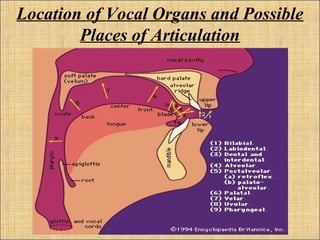
Location of Vocal Organs and Possible
Places of Articulation
Branches of Phonetics
1. Articulatory Phonetics, deals with the way in which speech sounds
are produced. Sounds are usually classified according to the position
of the lips and the tongue, how far open the mouth is, whether or not
the vocal cords are vibrating.
2. Acoustic Phonetics, deals with the transmission of speech sounds
through air form one person to another. When a speech sound is
produced it causes minor disturbances. Various instruments are used
to measure the characteristics of these sound waves.
3. Auditory Phonetics, deals with how speech sounds are perceived by
the listener.
Phonology
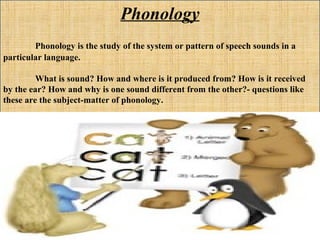
Phonology is the study of the system or pattern of speech sounds in a
particular language.
What is sound? How and where is it produced from? How is it received
by the ear? How and why is one sound different from the other?- questions like
these are the subject-matter of phonology.
The Difference between Phonetics &
Phonology
Thank you………

Phonetics, Phonology

  • 1.
    Phonetics, Phonology, andThe Difference between Phonetics & Phonology Mohammad Aminur Rahman Lecturer, Dept. of English, ZHSUST
  • 2.
    Phonetics Phonetics, a branchof linguistics is concerned with the scientific study of the production, physical nature, and reception of speech sounds. Basically, it studies the medium of spoken language.
  • 3.
    The Things ItDeals with It deals with configurations of the vocal tract used to produce speech sounds (articulatory phonetics), the acoustic properties of speech sounds, and the manner of combining sounds as to make syllables, words, and sentences (linguistic phonetics).
  • 4.
    How Does ItLook at Speech? It looks at speech from three distinct but interconnected viewpoints: it studies –  the speech organs, which produce sounds of language;  waves, the physical form in which sounds are transmitted through air from one person to another;  the way in which human beings perceive sounds through the medium of ear.
  • 5.
    Location of VocalOrgans and Possible Places of Articulation
  • 6.
    Branches of Phonetics 1.Articulatory Phonetics, deals with the way in which speech sounds are produced. Sounds are usually classified according to the position of the lips and the tongue, how far open the mouth is, whether or not the vocal cords are vibrating. 2. Acoustic Phonetics, deals with the transmission of speech sounds through air form one person to another. When a speech sound is produced it causes minor disturbances. Various instruments are used to measure the characteristics of these sound waves. 3. Auditory Phonetics, deals with how speech sounds are perceived by the listener.
  • 7.
    Phonology Phonology is thestudy of the system or pattern of speech sounds in a particular language. What is sound? How and where is it produced from? How is it received by the ear? How and why is one sound different from the other?- questions like these are the subject-matter of phonology.
  • 8.
    The Difference betweenPhonetics & Phonology Thank you………